

Note: This article contains affiliate links. If you click on these links and make a purchase, I may earn a small commission at no extra cost to you. This helps support my research and content. Read my full affiliate disclosure here.
Choosing the right cactus planter matters more than you might expect. The wrong container can hold too much moisture, limit root development, or fail to protect spines when you move plants around. This guide focuses on compact, dry-friendly planters suited for growing cacti indoors, on patios, or in small desert-style displays. We shortlisted seven top cactus planters that balance drainage, material, and size for real-world gardening. Below we explain how we evaluated each option and the factors to consider so you can pick the container that helps your cacti thrive. Read on for practical guidance before you look at specific models.
Top Picks at a Glance
| Best Overall The best all-around choice for most situations | LE TAUCI Ceramic Succulent Planters, Set of 2 (8" & 6.5") with Drainage Hole, Matte White |  |
| Best Quality Built to a higher standard if you want something more solid | LE TAUCI Ceramic Succulent Planter Set of 2 (6.5" + 8") with Drainage Hole, Reactive Glaze Black |  |
| Best Value The sweet spot between price and what you get | Ceramicfor 6-inch Glazed Ceramic Planter with Drainage Hole and Saucer |  |
| Best Budget The cheapest option that still gets the job done reliably | SQKH 4-Inch Plastic Plant Pots, 6-Pack with Drainage Trays |  |
| Highest Rated A top-rated pick with lots of positive feedback | Rivonthex Glazed Ceramic Stretching Cat Planter |  |
| Most Popular A crowd favorite that many people choose with confidence | LamDawn Ceramic Succulent Planter Set of 5 with Drainage and Bamboo Saucers |  |
| Best Seller A high-volume bestseller chosen again and again | Utopia Home Indoor Plant Pots with Drainage, 5‑Pack |  |
LE TAUCI Ceramic Succulent Planters, Set of 2 (8" & 6.5") with Drainage Hole, Matte White

| Material Type | Ceramic |
|---|---|
| Finish Types | Matte |
| Other Special Features of the Product | Drainage Hole |
| Mounting Type | Tabletop |
| Unit Count | 2 Count |
These LE TAUCI planters are built for indoor succulent displays where airflow, drainage, and a clean aesthetic matter. The set includes an 8 inch and a 6.5 inch shallow pot with a wide mouth and raised feet that promote air circulation under the root zone, which helps prevent soggy soil around drought-tolerant species like cacti and aloe. Each pot has a drainage hole plus a removable plug and a mesh pad to stop soil loss and splashing, so you can opt for bottom drainage or a closed container for moisture-sensitive setups. The thick, high-fired ceramic and matte glaze give a substantial, low-glare finish that resists everyday scuffs and wipes clean. These are best used on windowsills, shelves, or grouped on a tabletop where their ribbed texture adds subtle visual height. Expect a relatively heavy, breakable material compared with lightweight plastic and limited outdoor use since they are intended for indoor environments only.
Best for: Buyers who prioritize plant health and a refined indoor look for succulents and small drought-tolerant plants and who want planters that support controlled drainage and good airflow.
Less Ideal for: People who need lightweight, shatterproof pots for outdoor use or who want very large containers for bigger plants.
- Wide-mouth, shallow profile suited for succulent arrangements and better root airflow
- Drainage hole with removable plug and included mesh pad for flexible watering control
- Thick, high-fired ceramic and matte glaze provide a sturdy, low-glare finish that cleans easily
- Footed base raises the pot to improve under-root circulation and reduce sitting water
- Ceramic construction is substantially heavier and more fragile than plastic alternatives
- Intended for indoor use only so not ideal for exposed outdoor planting
Verdict: Choose these planters when you want sturdy, well-draining indoor pots that keep succulent roots healthy while adding a calm, textured look.
LE TAUCI Ceramic Succulent Planter Set of 2 (6.5" + 8") with Drainage Hole, Reactive Glaze Black

| Material Type | Ceramic |
|---|---|
| Other Special Features of the Product | Drainage Hole |
| Mounting Type | Tabletop |
| Finish Types | Glazed |
| Capacity | 6.28 liters |
These LE TAUCI planters are a practical, attractive choice for aloe and other succulents. The set includes an 8" and a 6.5" low-profile pot with wide mouths that make planting and arranging rosette-form succulents easy and allow good airflow around roots. The pots are thick-walled, high-fired ceramic with a reactive glaze finish so each piece has slight color variation and a durable, wipe-clean surface. A drainage hole with a removable plug plus included mesh pads helps control moisture whether you want active drainage for succulents or to switch to a no-drain setup for decorative use. Small raised feet lift the pots off surfaces to improve bottom airflow and reduce waterlogging. Because they are tabletop planters intended for indoor use, they perform best with quick-draining soils and careful watering rather than heavy outdoor exposure. They are heavier and more fragile than plastic alternatives, so handle with care when repotting or moving plants.
Best for: Buyers who prioritize healthy root environments for aloe and succulents and want durable, stylish indoor planters that support quick drainage and airflow.
Less Ideal for: Gardeners who need lightweight, unbreakable outdoor containers or who prefer very large pots for mature aloe plants should look for other options.
- Drainage hole with removable plug and included mesh pads for moisture control
- Wide-mouth, low-profile shape suited to aloe and rosette succulents
- High-fired glazed ceramic with sturdy thick walls and wipe-clean finish
- Footed base improves air circulation beneath the pot
- Indoor-only ceramic construction is heavier and more fragile than plastic or resin pots
- Reactive glaze produces natural variation so finishes may not perfectly match across sets
Verdict: A functional, stylish ceramic planter set that gives aloe and other succulents the drainage and airflow they need while dressing indoor shelves and windowsills.
Ceramicfor 6-inch Glazed Ceramic Planter with Drainage Hole and Saucer

| Material Type | Ceramic |
|---|---|
| Capacity | 2.5 liters |
| Other Special Features of the Product | Drainage Hole, Fade Resistant, Weather Resistant |
| Mounting Type | Tabletop |
| Finish Types | Glazed |
This 6-inch glazed ceramic planter is designed for everyday indoor use with small plants such as succulents, cacti, herbs, and other tabletop specimens. Made of fired ceramic, it feels sturdy and has a clean modern finish that suits windowsills and desks. The built-in drainage hole plus the included saucer make it easy to avoid overwatering and keep surfaces tidy, and the lightweight saucer detaches for routine watering and cleaning. Its weather and fade resistant glazing helps retain appearance in bright light, although ceramic can chip if knocked or dropped and is not frostproof for unprotected outdoor winter use. The pot’s modest volume fits single succulents or small mixed arrangements but will require repotting sooner for faster-growing plants. Overall it is a simple, attractive planter that emphasizes water management and display for small indoor plants while trading off large capacity and outdoor durability.
Best for: Buyers who want a tidy, low-maintenance indoor planter to grow single succulents, small cacti, or herbs and who prioritize reliable drainage and a clean look.
Less Ideal for: Not a good choice for gardeners who need large-capacity planters, heavy outdoor use in freezing climates, or rugged pots that tolerate frequent rough handling.
- Includes drainage hole and matching saucer to manage excess water and protect surfaces
- Durable high-temperature fired ceramic with glazed finish that resists fading
- Compact 6-inch size fits windowsills, desks, and small planting projects
- Comes with a drainage net and saucer for cleaner potting and easier watering
- Ceramic can chip or crack if dropped and is not suited for unprotected freezing conditions
- Limited soil volume means more frequent repotting for vigorous plants
Verdict: A compact glazed ceramic pot with a drainage hole and saucer that makes growing and caring for single succulents simple and tidy.
SQKH 4-Inch Plastic Plant Pots, 6-Pack with Drainage Trays
| Unit Count | 6 Count |
|---|---|
| Material Type | Plastic |
| Other Special Features of the Product | Drainage Hole |
| Indoor Outdoor Usage | Indoor, Outdoor |
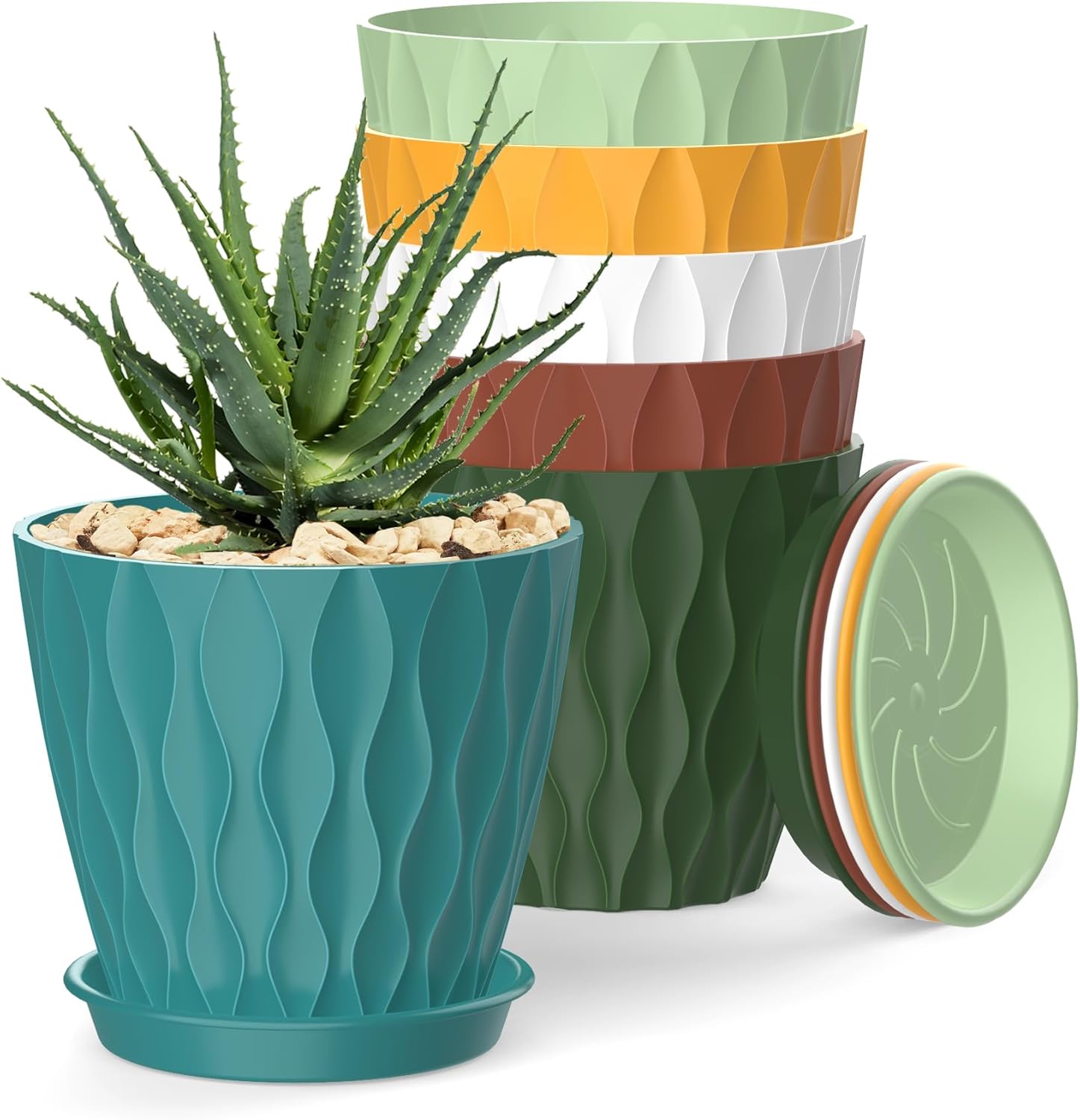
These SQKH 4-inch pots are a practical, no-frills option for growing small houseplants, succulents, herbs, and starters. Each set includes six lightweight matte plastic pots and matching trays, which makes potting multiple plants or replacing nursery containers quick and tidy. The manufacturer highlights a dense pattern of drainage holes at the base and the separate saucers collect excess water, so plants are less likely to sit in soggy soil. The polypropylene construction is thick for this price class, so the pots resist crushing and will tolerate sun exposure without becoming brittle quickly. Because they are small, they work best for seedlings and species that prefer confined root space. There is limited decorative variety beyond the simple striped matte look, and these are not intended for large plants or long-term planting of fast-growing species without repotting. For budget-focused gardeners who need an economical, durable set of starter pots with reliable drainage, these are a solid everyday choice.
Best for: Buyers looking for an affordable, durable set of starter pots to propagate seedlings, house succulents, or pot multiple herbs and small plants quickly and without fuss.
Less Ideal for: Gardeners who want decorative statement planters or need containers for large or long-term plantings should consider larger or higher-end options.
- Six-pack provides good value for potting multiple small plants
- Built-in drainage holes plus trays help prevent overwatering
- Thicker polypropylene construction resists compression and sun damage
- Matte finish and simple striped design suit modern indoor decor
- Small 4-inch size requires frequent repotting for fast-growing plants
- Limited color and decorative options compared with ceramic or designer pots
Verdict: A budget-friendly, durable six-pack of 4-inch pots with reliable drainage that makes potting multiple small plants fast and simple.
Rivonthex Glazed Ceramic Stretching Cat Planter
| Material Type | Ceramic |
|---|---|
| Finish Types | Glazed |
| Other Special Features of the Product | Drainage Hole, Indoor Use, Outdoor Use |
| Mounting Type | Freestanding |
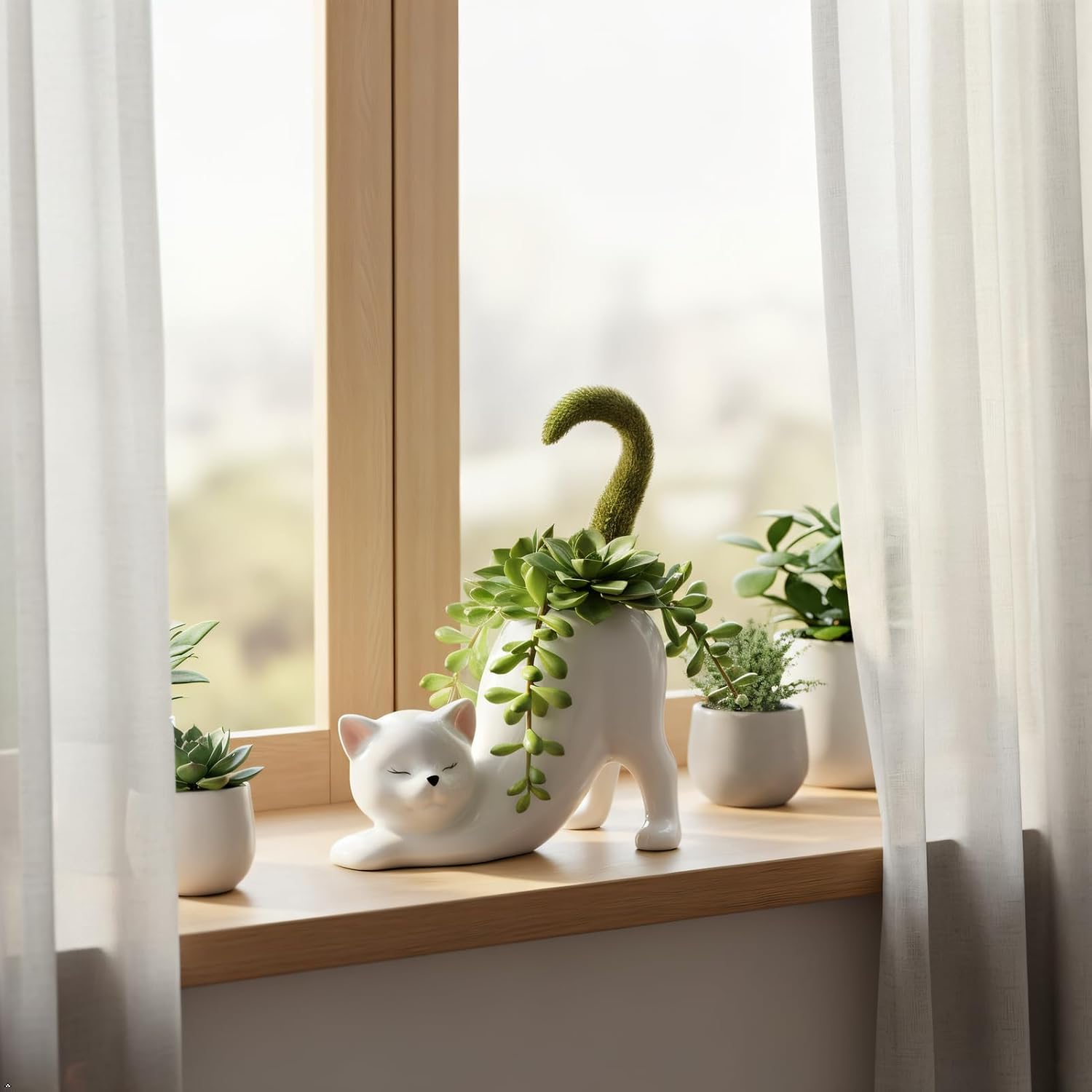
This glazed ceramic stretching cat planter is a decorative indoor pot sized specifically for tiny succulents and mini cacti. The planting cavity sits at the cat's rear and has an inner opening of about 1.42 inches, so it is typically used with small, narrow-based plants placed on desks, windowsills, or shelves. The glossy white finish and sculptural silhouette make it a visible accent while the built-in bottom drainage hole lets excess water escape after watering, which helps prevent overwatering for drought-tolerant plants. Because it is freestanding and glazed ceramic, it presents well in minimalist or modern interiors but should be handled with care to avoid chips or cracks. Practical limitations are the very small planting opening and compact planting volume, so it cannot support plants with broad crowns or substantial root systems and requires a separate saucer or careful watering to protect surfaces. For reliable short-term displays of miniature cacti and succulents, it combines charm with functional drainage.
Best for: Buyers who want a reliable, decorative pot for displaying tiny succulents or mini cacti in indoor spots and prioritize a planter that includes drainage to protect plant health.
Less Ideal for: Gardeners who need larger containers for mature succulents, plants with broad bases, or rugged outdoor pots that tolerate heavy handling.
- Built-in bottom drainage hole reduces risk of waterlogging
- Glazed ceramic finish provides a smooth, attractive decorative surface
- Compact sculptural design works well on shelves, desks, and windowsills
- Clearly sized opening suitable for tiny succulents and mini cacti
- Very small inner opening and planting volume unsuitable for larger succulents
- Fragile ceramic construction can chip or crack if dropped
Verdict: A charming glazed ceramic cat planter that reliably provides drainage and a compact, decorative home for tiny cacti and succulents.
LamDawn Ceramic Succulent Planter Set of 5 with Drainage and Bamboo Saucers

| Material Type | Ceramic |
|---|---|
| Other Special Features of the Product | Drainage Hole |
| Mounting Type | Tabletop |
| Plant or Animal Product Type | succulent |
| Unit Count | 5 Count |
These LamDawn planters are a straightforward option for indoor succulent displays and small desk plants. Each set includes five 4-inch ceramic pots with a center drainage hole and a fitted bamboo saucer so excess water can be caught and cleaned easily. The glazed finish and textured patterns make them attractive grouped on a windowsill or arranged separately around a room. Because they are ceramic with relatively thick walls they feel sturdy and resist tipping when paired with a small plant and soil. Typical use is potting small succulents or cacti with a coarse, quick-draining mix and lifting the saucer to empty excess water after watering. Limitations to keep in mind are their small volume, which means plants will need more frequent watering and occasional repotting as they grow, and ceramic can crack if dropped or exposed to freezing temperatures. The included mesh and saucers help prevent soil loss and surface staining, which is useful for indoor settings where appearance matters.
Best for: Buyers who want an attractive, ready-made set of indoor pots to display multiple succulents or small houseplants with minimal fuss and who value coordinated decor and drainage features.
Less Ideal for: People who need large containers for fast-growing plants or who plan to keep planters outdoors year-round in cold climates should look for bigger or more weatherproof options.
- Glazed ceramic finish with textured design gives a polished, decorative look
- Center drainage hole plus removable bamboo saucer reduces risk of overwatering damage to surfaces
- Set of five identical pots makes it easy to create a coordinated display
- Thick-walled ceramic construction feels sturdy and stable for small plants
- Small capacity means plants will need more frequent watering and repotting as they grow
- Ceramic is fragile if dropped and not suited for freezing outdoor conditions
Verdict: A stylish, coordinated five‑pack of indoor ceramic succulent planters that pairs useful drainage and bamboo saucers with decorative glazing for easy, attractive displays.
Utopia Home Indoor Plant Pots with Drainage, 5‑Pack

| Material Type | Plastic |
|---|---|
| Included Components | Saucers Tray |
| Unit Count | 5 Count |
| Other Special Features of the Product | Frost Resistant, Lightweight, Portable, Rot Resistant |
| Mounting Type | Tabletop |
These Utopia Home planters are a practical starter set for indoor potted trees and other houseplants. The pack includes five nested sizes and matching saucers so you can pot seedlings, small citrus or ficus cuttings and move them around a sunny windowsill or tabletop. Made from reinforced PP plastic, the pots are frost and rot resistant and feel light enough to reposition without strain. Each pot features drainage provisions and removable plugs that help prevent overwatering while the saucers protect furniture from runoff. The minimalist polished finish is unobtrusive with most décor, and the multiple sizes make it easy to repot a sapling as it grows. Limitations are that these are basic plastic planters so they offer less insulation and long-term durability than ceramic or thick fiberstone, and the listed specs emphasize indoor use rather than outdoor longevity in harsh weather. For buyers who prioritize fuss-free, lightweight containers with simple drainage, this set covers common needs for small potted trees and starter transplants.
Best for: Buyers who want a low-risk, practical set of indoor planters for starting or styling small potted trees and other houseplants and who value ease of use and social proof from a popular, well-reviewed product.
Less Ideal for: Gardners seeking heavyweight, display-grade planters for mature large trees or outdoor year-round exposure should consider ceramic, concrete, or fiberstone alternatives.
- Multiple pot sizes in one set for potting and repotting as a tree seedling grows
- Included saucers protect surfaces from drainage and allow indoor placement
- Drainage plugs and design to reduce risk of overwatering
- Lightweight, frost and rot resistant plastic that is easy to move
- Plastic construction provides less thermal insulation and premium appearance than heavier ceramic or stone pots
Verdict: A convenient, well-reviewed five-piece indoor planter set that makes starting and repotting small potted trees simple and low effort.
Choosing the Right Cactus Planter: Key Factors to Consider
Drainage and Water Management
Good drainage prevents root rot and mimics the arid conditions many cacti evolved in. Look for planters with a visible drainage hole or a design that supports an internal liner with drainage. The hole size matters too: it should let excess water escape but not wash away coarse potting mix. In practice you will also use gritty, fast-draining soil and water sparingly; even the best planter needs compatible potting media to keep roots healthy.
Consider whether the planter includes a saucer or if you need a separate drip tray. Saucers collect runoff and can keep a spot tidy, but leaving water sitting in a saucer under a cactus can negate good drainage. If you must use a saucer, empty it shortly after watering to avoid rewetting the pot base.
Material and Thermal Behavior
The planter material affects moisture retention, insulation, and durability in sun or cold. Unglazed terracotta breathes and encourages drying, which helps cactus roots but increases watering frequency. Glazed ceramic holds moisture longer and offers more color options, useful for indoor displays where slower drying is acceptable. Lightweight resin and plastic stay intact if you move plants frequently and are frost-tolerant depending on formulation.
Also consider how materials look with spiny plants. Rough-textured pots pair well with desert aesthetics while smooth glazes make striking contrasts. If you plan to keep a cactus outdoors, choose materials that resist cracking from freeze-thaw cycles and strong sun exposure.
Size, Root Volume, and Growth Habit
A cactus planter should match the current root ball with a little room for slow growth. Too large a pot holds excess moisture and slows drying; too small a pot restricts root development and can destabilize the top growth. Measure the root ball when repotting and choose a container that increases volume moderately, not dramatically.
Keep growth habit in mind: columnar cacti need deeper, narrower pots for taproot support while rounder species benefit from wider, shallower containers. Also account for future offsets or pups that will require space for separate clusters.
Stability and Weight Distribution
Cacti can be top-heavy or develop offsets that shift a planter's center of gravity. A stable base and appropriate pot width reduce tipping risk, which is especially important on balconies, windowsills, or when pets and children are present. Heavier materials like fired clay add ballast but make moving plants harder.
Consider adding coarse gravel at the bottom sparingly for weight rather than to improve drainage. Better drainage comes from soil structure and holes, not a layer of rocks which can create a perched water table if used incorrectly.
Repotting, Access, and Maintenance
Planters that allow safe access during repotting reduce stress to you and the plant. A wider rim or removable inner liner makes it easier to extract a spiny cactus without damage. Some planters have built-in ledges that trap soil when you try to lift a root ball; avoid those if you repot often.
Also think about cleaning and pest checks. Smooth interior surfaces are easier to brush free of old soil and mealybugs. If you reuse the planter, ensure the finish will tolerate sterilization or light scrubbing without degrading.
Matching Planter Shape to Cactus Type
Cactus form dictates container shape. Taller, columnar cacti are more secure in deeper pots that support a central root. Flat or globular types do best in wider, shallower bowls that allow roots to spread without excess depth. For clustering species that produce pups, choose a planter with lateral space so offsets can form without overcrowding.
- Deep narrow pots suit taprooted and columnar cacti
- Shallow wide pots work for globose and clustering species
- Planters with removable inner liners simplify handling of spiny offsets
Indoor Versus Outdoor Placement
Decide where the planter will live before you buy. Indoor planters can prioritize aesthetics and finish because they are shielded from extreme temperatures, while outdoor planters need materials that resist sun bleaching and freeze-thaw damage. Consider UV stability for plastics and whether glazes are rated for frost exposure.
- Outdoor: choose frost-resistant, UV-stable materials
- Indoor: choose color and finish that complement decor
- Ensure drainage works in both settings; outdoor pots may need slotted feet to keep water moving
Using Liners and Cachepots Safely
Cachepots can hide a functional nursery pot but often lack drainage. If you use a decorative outer pot, keep the cactus in a separate nursery container with a drainage hole and lift it out to water or empty the tray. Another option is to modify a cachepot by adding a drainage hole and sealing edges properly.
- Keep a drainable inner pot within a non-draining outer pot
- Water the plant in the nursery pot and let it drain before replacing it in the cachepot
- Do not leave excess water pooled in decorative saucers
Soil Mix and Potting Technique
A free-draining soil mix is as important as the planter itself. Use a mix with coarse sand, pumice, or grit to prevent compaction. When repotting, clean any old soil from the root crown and inspect for rot. Backfill with mix that settles around roots without compressing them, and water lightly to help the soil settle, then wait until the surface is dry before regular watering.
- Use grit-enhanced cactus mix for fast drainage
- Avoid compacted potting soil that holds moisture
- Allow a drying period after repotting before the first full soak
Decor and Display Considerations
Cactus planters are often chosen for visual impact as much as function. Pick shapes and finishes that contrast with spines or complement surrounding foliage. For group displays, vary pot heights and widths to create layers and allow each plant the right amount of light. Remember that heavy decorative pots are harder to rearrange. If you like to rotate plants for even light exposure, favor lighter materials or plan for lifting aids such as pot feet or plant caddies.
- Use varying pot heights to create layered displays
- Contrast pot texture with spines for visual interest
- Choose manageable weights if you rotate plants frequently
How We Chose the Best Cactus Planter
We evaluated candidates using gardener-forward, measurable criteria that predict how a cactus planter will perform in everyday use. Key factors included drainage capability, because cacti are intolerant of standing water; container material and durability, since ceramic, terracotta, and resin age and insulate differently; and pot size and root space, to match growth habits from slow-growing globes to columnar offsets. Stability and tipping resistance were assessed to reduce breakage for top-heavy specimens. Ease of repotting and maintenance was considered so you can manage root checks and soil refreshes without stressing spines. We excluded containers without drainage or those intended only as decorative outer cachepots unless clearly marketed with a functional inner liner. Products with incompatible scale for typical cactus species were rejected, as were planters that require frequent waterproofing or have fragile finishes that crack outdoors. The filters focused on real garden performance: drainage design, material behavior under heat and freeze cycles, appropriate internal volume, stability, and repotting practicality.
FAQ
Do cactus planters need drainage holes?
Often yes. Most cacti require excellent drainage, so planters with holes or that accept a drainable inner pot are preferable. If you keep a cactus in a decorative cachepot without a hole, water the plant in a separate drainable container and remove excess water afterwards.
What material is best for cactus planters?
It depends on placement. Unglazed terracotta encourages drying and suits indoor and sheltered outdoor use. Glazed ceramics retain moisture more but offer color options. Resin or hard plastic is lightweight, durable, and often frost-tolerant. Choose based on your watering habits and where the planter will sit.
How big should a cactus planter be relative to the plant?
Choose a pot only slightly larger than the root ball to reduce excess moisture retention. Increase volume moderately when repotting. Depth versus width should match the cactus growth form: deeper for columnar types, shallower for globular forms.
Can I use a cachepot for my cactus?
Yes, but keep the living plant in a separate pot with drainage and lift it out to water or empty the decorative saucer. Alternatively, modify the cachepot to provide drainage, but ensure any seals and finishes will withstand moisture.
How often should I repot cacti?
Usually every two to four years for actively growing specimens, but this depends on growth rate. Repot when roots circle the pot, soil has compacted, or you need to divide offsets. Use repotting as an opportunity to check root health and refresh fast-draining soil.
Final Verdict
Prioritize drainage, appropriate root volume, and stable footing when choosing a cactus planter. Material choice should match where the pot will live and how often you water. Balance aesthetics with practical needs like repotting access and thermal behavior. Focus on the specific tradeoffs you can live with: terracotta for fast drying, glazed pots for color and slower moisture loss, and light-weight plastics for portability. Use the factors above to weigh those tradeoffs and select the planter that fits your cactus habit and placement needs with confidence.
