

Note: This article contains affiliate links. If you click on these links and make a purchase, I may earn a small commission at no extra cost to you. This helps support my research and content. Read my full affiliate disclosure here.
If you want bug protection without synthetic pesticides, choosing the right chemical free insect repellent matters for comfort and real-world effectiveness. In outdoor tasks like gardening, evening patios, or family playtime, repellent behavior, skin feel, and longevity determine whether you actually stay bite-free. This guide covers seven shortlisted, top-rated chemical free insect repellents that perform well in typical backyard and garden situations. We evaluate each option for how long it lasts, how it feels on skin, and how suitable it is for repeated outdoor use. Read on to understand the tradeoffs so you can pick the option that fits your yard routine and personal preferences.
Top Picks at a Glance
| Best Overall The best all-around choice for most situations | Badger Bug Spray DEET-Free Citronella, 4 fl oz (2-Pack) |  |
| Best Quality Built to a higher standard if you want something more solid | Murphy's Naturals Oil of Lemon Eucalyptus Insect Repellent Spray, 2 fl oz (3-Pack) |  |
| Best Value The sweet spot between price and what you get | Bug Soother Natural Insect Repellent Spray, DEET-Free (4 fl oz, 3-Pack) |  |
| Best Budget The cheapest option that still gets the job done reliably | OFF! Botanicals Plant-Based Insect & Mosquito Repellent Spray, 4 oz |  |
| Most Popular A crowd favorite that many people choose with confidence | Mighty Mint Peppermint Oil Insect Repellent Spray, 16 oz |  |
| Best Seller A high-volume bestseller chosen again and again | Cliganic Mosquito Repellent Stickers, 90-Pack |  |
Badger Bug Spray DEET-Free Citronella, 4 fl oz (2-Pack)

| Active Ingredients | Citronella, lemongrass, cedarwood, rosemary, geranium, peppermint (organic oils) |
|---|---|
| Format | Pump spray fine mist |
| Bottle material | Aluminum recyclable |
| Protection duration | Up to 3 hours (tested on mosquitoes) |
Badger Bug Spray is a natural, DEET-free insect repellent formulated from cold-pressed plant oils and essential oils like citronella, lemongrass, cedar, rosemary, and peppermint. It is sold as a fine pump mist in an aluminum bottle that you shake before use because the oil and water separate at rest. Typical use is spraying directly on exposed skin or lightly on clothing and outdoor gear, and reapplying every few hours for continued protection. The formula is family friendly and marketed for adults and children, with a fresh citrus‑herbal scent instead of synthetic fragrance. Practical benefits include a travel-friendly size, recyclable packaging, and a gentle, vegan formula for people who prefer chemical-free repellents. Important limitations are that independent testing and the product literature limit efficacy claims to roughly three hours and primarily to mosquitoes, and the oil-based ingredients can separate so the bottle needs shaking and may stain fabrics if sprayed too close.
Best for: Buyers who want a chemical‑free, plant‑based repellent for regular outdoor activities and prioritize gentle, sustainable ingredients and recyclable packaging.
Less Ideal for: People needing long‑duration or broad‑spectrum protection against ticks and other pests should consider insecticides or repellents with registered long‑lasting actives.
- Plant‑based DEET‑free formula made from organic essential oils
- Provides independent lab‑tested protection for about three hours
- Light pump mist in infinitely recyclable aluminum bottles
- Family friendly and vegan formulation with a fresh citrus‑herbal scent
- Efficacy claims are limited to mosquitoes and roughly three hours of protection
- Oil and water separate so the bottle requires shaking and may stain fabrics if sprayed too closely
Verdict: Choose this if you want a travel‑friendly, DEET‑free repellent that uses plant oils and recyclable packaging for short periods outdoors.
Murphy's Naturals Oil of Lemon Eucalyptus Insect Repellent Spray, 2 fl oz (3-Pack)

| Active ingredient | Oil of Lemon Eucalyptus (30%) |
|---|---|
| Protection duration | Up to 6 hours (mosquitoes), up to 4 hours (ticks) |
| Application | Spray on exposed skin, clothing, or gear |
| Formula highlights | DEET‑free, picaridin free, non‑greasy |
Murphy's Naturals Oil of Lemon Eucalyptus spray is a DEET‑free, plant‑based repellent designed for on‑skin and gear use. With a 30% oil of lemon eucalyptus active ingredient it delivers documented protection windows of up to six hours for mosquitoes and up to four hours for ticks, making it suitable for hikes, backyard time, and camping. The formula is lightweight, non‑greasy, and has a fresh lemon scent that absorbs quickly and will not damage fabrics or plastics, so you can spray clothing, tents, and backpacks without concern. Directions are straightforward: spray evenly on exposed skin or clothing and reapply as needed. Practical benefits include family‑friendly labeling and an easy mist application for quick coverage. Limitations to note are that protection times are approximate and depend on activity and sweating, and the product is not intended for direct facial spraying. Picaridin and DEET are absent, so users who need the absolute longest-lasting, heavy-exposure protection may prefer synthetic actives, but for chemical‑free performance in everyday outdoor situations this spray is a solid option.
Best for: Buyers who prioritize plant‑based, chemical‑free protection but still want reliable multi‑hour defense for everyday outdoor activities like hiking, camping, and backyard use.
Less Ideal for: People who need the longest possible, professional‑grade protection during prolonged exposure in high‑risk mosquito or tick areas should consider repellents with synthetic actives instead.
- Plant‑based active (30% oil of lemon eucalyptus) offers up to 6 hours mosquito protection and up to 4 hours for ticks
- Lightweight, non‑greasy formula with a pleasant lemon scent that absorbs quickly
- Safe to spray on clothing and gear without damaging fabrics or plastics
- Family‑friendly labeling suitable for use with children when directions are followed
- Protection duration can vary with sweat, water exposure, and activity levels
- Not a DEET or picaridin formula, so it may not match maximum-duration protection for high‑risk, heavy‑exposure situations
Verdict: A high‑performing DEET‑free spray that delivers multi‑hour, plant‑based protection for everyday outdoor activities.
Bug Soother Natural Insect Repellent Spray, DEET-Free (4 fl oz, 3-Pack)

| Ingredients | Purified Water, Castor Oil, Lemongrass Oil, Vanilla |
|---|---|
| Format | Spray |
| Made in | USA |
| Item model number | ABCD |
Bug Soother is a DEET-free insect repellent formulated around lemongrass oil, castor oil, vanilla and purified water to provide a natural alternative to chemical sprays. You apply it to skin, clothing, hats or gear for backyard barbecues, gardening, hiking or beach days; the scent is described as lemony-vanilla rather than the medicinal smell of many repellents. Because it is plant-based and low-odor with a non-greasy feel, it is well suited for families and anyone who avoids harsh chemicals. Practical strengths include simple, recognizable ingredients and versatility for use on people and around pets when used as directed. The main limitation is that plant-based repellents tend to require more frequent reapplication and may be less effective against all mosquito species or in heavy bug pressure, so you may need to rub it in or reapply after several hours or after sweating. For routine outdoor activities in mild to moderate pest conditions it offers a pleasant, safer-feeling option compared with DEET formulations.
Best for: Buyers who prioritize chemical-free, family-safe protection and want a pleasant-smelling repellent for everyday outdoor activities like gardening, walks, and backyard gatherings.
Less Ideal for: People who need long-lasting, heavy-duty protection in high mosquito-density areas or for overnight camping in marshy terrain should consider stronger, clinically proven alternatives.
- DEET-free, plant-based formula using lemongrass oil that avoids harsh chemicals
- Pleasant lemon-vanilla scent that is low odor compared with traditional repellents
- Non-greasy feel suitable for application to skin and clothing
- Safe for family use and commonly used around pets when directions are followed
- May require more frequent application than chemical repellents and sometimes needs rubbing in
- Not effective against every mosquito species or under heavy insect pressure
Verdict: Choose Bug Soother when you want a pleasant-smelling, DEET-free repellent that prioritizes simple, family-safe ingredients for routine outdoor use.
OFF! Botanicals Plant-Based Insect & Mosquito Repellent Spray, 4 oz

| Active Ingredient | p-Menthane-3,8-diol 10% |
|---|---|
| Net Volume | 4 ounces |
| Reapplication Interval | Every 2 hours or after swimming/perspiration |
| Uses | Repels mosquitoes, black flies, gnats, no-see-ums |
OFF! Botanicals is a pocket-size pump spray that offers plant-based protection for short outdoor outings. It uses a p-menthane-3,8-diol active ingredient derived from pine oil to repel mosquitoes, black flies, gnats and no-see-ums, and the pump bottle is easy to apply directly to exposed skin or to a palm for face application. The formula has no added dyes and is intended for reapplication every two hours or after swimming or heavy sweating, making it practical for day hikes, picnics and quick backyard tasks. Notable benefits are the convenient small bottle that fits a backpack and the familiar OFF! instructions and safety guidance printed on the label. Limitations are its relatively short reapplication interval compared with DEET or picaridin products and that it should not be used on children under three or on damaged skin. Users also need to avoid eyes and open flame until dry as directed on the label.
Best for: Buyers who want a chemical-free or non-DEET alternative for short outdoor activities and value portability and easy application.
Less Ideal for: People who need long-lasting, low-maintenance protection for extended outdoor work or parents seeking a repellent for very young children should consider other formulations.
- Plant-based active ingredient derived from pine oil for a non-DEET option
- Compact 4 oz pump bottle that is easy to pack and apply on the go
- Effective against mosquitoes, black flies, gnats and no-see-ums according to the label
- No added dyes, which reduces visible residue on skin or clothing
- Requires reapplication every two hours or after water exposure, so not ideal for long continuous protection
- Not suitable for children under three and should not be used on damaged skin
Verdict: A portable, plant-based spray that gives convenient short-term protection for outdoor activities when you want a non-DEET option.
Mighty Mint Peppermint Oil Insect Repellent Spray, 16 oz
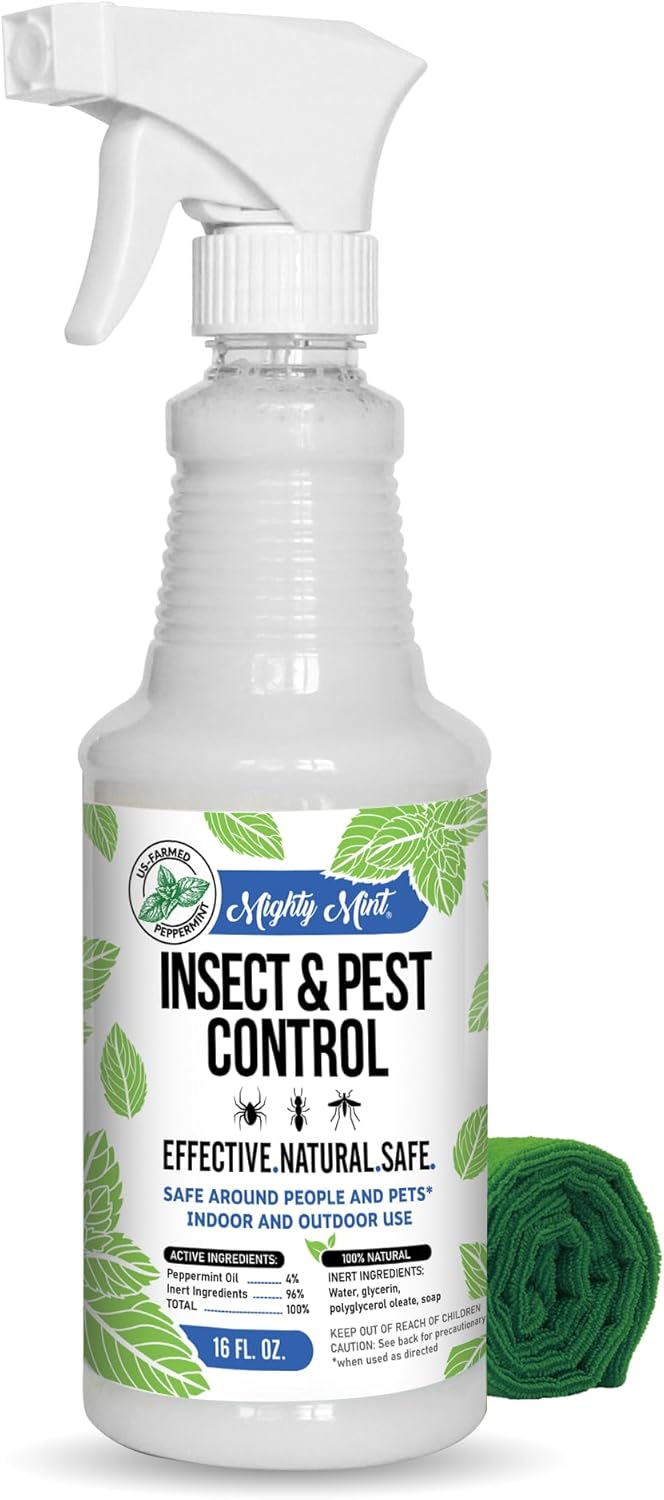
| Ingredients | Water, Glycerine, Polyglycerol oleate, Soap, Peppermint oil |
|---|---|
| Use areas | Indoor / Outdoor |
| Size | 16 oz |
| Pests | Spiders, Ants, Roaches, etc |
Mighty Mint is a plant-based, ready-to-use peppermint spray intended for spot treatments around the home and yard to deter spiders, ants, roaches, and other common pests. It is typically sprayed along baseboards, entryways, patios, sidewalk edges and storage areas; directions recommend covering surfaces and repeating applications at least twice weekly for best results. The formula lists water, glycerine, polyglycerol oleate, soap and concentrated peppermint oil, so it works by scent and surface coverage rather than killing with harsh pesticides. That makes it attractive for homes with pets or children when used as directed, and the mint scent is noticeable but not overpowering. Important limitations are that it is not for skin application and should not be applied when pollinators are present, and efficacy will depend on regular reapplication and thorough coverage rather than a single long-lasting treatment. For targeted, chemical-free deterrence in and around living spaces, Mighty Mint offers a practical, low-toxicity option.
Best for: Buyers who prioritize a low-toxicity, fragrance-based approach to pest control and want a product with wide user acceptance for indoor and outdoor spot treatments.
Less Ideal for: People seeking a one-time, long-lasting residual insecticide or professional-grade elimination of heavy infestations should consider stronger, long-duration control methods.
- Plant-based formula using concentrated peppermint oil rather than synthetic pesticides
- Ready-to-use spray for quick, targeted application
- Safe for indoor and outdoor spot use when directions followed, suitable for pet-friendly households
- Fresh mint scent that doubles as a pleasant odor compared with chemical sprays
- Requires frequent reapplication and surface coverage to remain effective
- Not for topical use on skin and should not be applied around pollinators
Verdict: Choose Mighty Mint if you want a proven, chemical-free peppermint spray for regular spot treatments that is gentle enough for homes with people and pets.
Cliganic Mosquito Repellent Stickers, 90-Pack

| Ingredients | Citronella, Peppermint |
|---|---|
| Quantity | 90 Pk |
| Intended use | Kids & Adults |
| Resealable | Yes |
These are small adhesive patches infused with citronella and peppermint essential oils that stick to clothing, gear, or nearby surfaces to help deter mosquitoes without using DEET. You get 90 easy-peel stickers in assorted colors that are designed for short-term outdoor activities like park visits, hiking, camping, or backyard play. The main benefits are convenience and safety for families who prefer plant-derived repellents: the patches require no sprays, lotions, or direct skin application and are simple to apply and remove. Practical limits include relatively localized protection around the sticker rather than full-body coverage and a likely need to replace patches after several hours or when they lose scent. People seeking long-lasting, high-strength protection in heavy mosquito zones may find them less effective than topical repellents, but for low to moderate exposure they offer a low-risk, user-friendly option.
Best for: Buyers who prioritize low-risk, plant-based mosquito protection for family outdoor activities and want a simple, non-technical solution that avoids direct skin application.
Less Ideal for: Not a good choice for users who need full-body or long-duration protection in high mosquito pressure areas or who prefer quantified, clinical efficacy from chemical repellents.
- DEET-free formula using citronella and peppermint essential oils
- Peel-and-stick design for simple application without touching skin
- Large 90-piece pack good for family outings and repeated use
- Portable and non-messy alternative to sprays and lotions
- Provides localized protection only and does not cover exposed skin broadly
- Effectiveness decreases as the scent dissipates, requiring replacement during extended outings
Verdict: Choose these stickers when you want a convenient, chemical-free mosquito deterrent for low to moderate outdoor exposure.
Choosing the Right Chemical Free Insect Repellent: Key Factors to Consider
Protection Duration
How long a chemical free repellent keeps bugs at bay is central to its usefulness in a garden. Botanicals and mineral actives generally provide shorter windows of protection than synthetic insecticides, so you will often need to plan reapplication for long tasks like weeding or evening projects.
Consider real-world conditions: sweating, water exposure from sprinklers, and wind all shorten protection. Look for products that state typical hours of coverage and understand that manufacturer claims are best treated as guidelines. For active gardeners, carry a compact reapplication option or pick a formulation with longer-lasting natural actives.
Skin Comfort & Safety
Chemical free options are often chosen for gentler profiles, but botanical ingredients can still irritate sensitive skin or cause allergic reactions. Check for formulations labeled hypoallergenic or designed for sensitive skin, and note whether the product is suitable for children, pregnant people, or those with respiratory issues.
Patch testing a small area before extended use helps spot irritation. Pay attention to carrier oils and preservatives, because those are common causes of reactions even when main actives are natural. For gardeners who sweat or wear gloves, also consider whether the product leaves a sticky film that traps dirt.
Application Convenience
Repellents come as sprays, lotions, balms, wipes, and wearable formats. For gardening, ease of reapplication and the ability to cover exposed skin quickly matter. Sprays are fast for full-body coverage, while balms and roll-ons offer precise application around the face and neck.
Container durability is important if you keep a bottle in a shed or tool bag. Consider how easy it is to apply with dirty or gloved hands, whether the product sprays evenly, and if the packaging allows measured application to avoid waste.
Environmental Impact
One reason gardeners choose chemical free repellents is concern for beneficial insects and soil health. While topical repellents primarily affect the person applying them, runoff from repeated spraying near planting beds can introduce residues to soil and foliage.
Look for formulations with low environmental persistence and minimal ecotoxic ingredients. Packaging that is recyclable or refillable reduces waste for frequent users. Consider whether the active ingredients are known to repel pollinators from nearby flowers and balance personal protection with the needs of garden ecology.
Scent & Residue
Natural repellents often rely on essential oils, which bring strong aromas that some gardeners enjoy and others find overpowering. Scent affects comfort while working and may interact with plant smells in a small garden.
Residue matters when you handle plants or food crops after application. Choose products that absorb cleanly or dry without leaving a greasy film if you will be pruning, harvesting, or handling soil soon after applying. Unscented or lightly scented formulas are preferable for multi-hour garden sessions.
Best Application Methods for Garden Tasks
Different application formats suit different gardening activities. For full-body coverage during mowing or intensive weeding, a light spray lets you treat exposed skin quickly. For close-up tasks like deadheading or harvesting, a balm or roll-on limits transfer to hands and plants.
Wearable options such as clip-on diffusers or treated wristbands can add another layer but should not be relied on as the sole protection in high-bug conditions. Think about how often you can realistically reapply when selecting a format.
- Sprays: fast coverage, good for open work
- Roll-ons/balms: precise, less transfer to hands
- Wearables: supplemental protection during short outings
When To Reapply During Outdoor Work
Plan reapplication around heavy sweating, water exposure, and sunset when mosquito activity increases. If you are doing a long gardening session, carry a small reapplication product to maintain protection.
Reapply according to label guidance but expect faster breakdown of botanical actives in humid or wet conditions. Small, frequent reapplications are often more practical than one heavy application for gardeners.
- After heavy sweating or rainfall
- Before evening or dawn work
- Every few hours for prolonged exposure
Protecting Children and Pets in the Garden
Choose formulations specifically labeled safe for children if you expect little ones in the yard. Apply repellent to clothing and exposed skin according to product guidance, and avoid applying near eyes and mouth. For pets, use pet-labeled repellents or physical barriers; many human repellents are not designed for animal skin.
When working around family, prefer mild-scented or low-residue formulas to reduce transfer to toys, tools, and foliage that children handle.
- Apply to clothing as a first line of defense
- Avoid face application on young children; use hands to spread sparingly
- Use pet-safe alternatives rather than human-only products
Combining Repellents with Physical Barriers
Physical measures like long sleeves, gloves, and head nets reduce the amount of topical repellent needed. For gardeners, lightweight, breathable clothing and narrow-mesh gloves let you work comfortably while lowering skin exposure.
Use repellent on exposed areas and rely on clothing for coverage on limbs. This approach extends overall protection and reduces frequency of reapplication.
- Layer clothing over treated skin for extended outings
- Use nets during high-bug periods instead of heavy repellent use
- Choose breathable fabrics to minimize overheating
Storage and Shelf Life in Outdoor Settings
Botanical formulas are sometimes more sensitive to heat and UV than synthetic ones, so store bottles out of direct sun and extreme heat. Keep a compact refill or backup in your garden shed rather than leaving products on a hot patio table.
Check labels for shelf-life guidance; many natural formulations remain usable for months but can lose potency over long storage. Proper storage preserves both scent profile and repellent effect.
- Store in cool, shaded locations
- Use smaller bottles if you infrequently treat large areas
- Discard products past recommended shelf life for best results
How We Chose the Best Chemical Free Insect Repellent
We focused on repellents formulated without synthetic insecticide active ingredients and evaluated them on criteria gardeners care about. Core filters included clearly labeled botanical or mineral actives, transparent ingredient lists, and formulations intended for repeated outdoor use. We excluded products that relied on undisclosed proprietary blends or that included conventional pesticide actives. Evaluation criteria emphasized three practical dimensions: duration of protection in real outdoor conditions, skin and respiratory comfort for adults and children, and application format suitability for yard work and social settings. We also considered environmental impact, such as biodegradability and nonpersistent residues, plus container durability for frequent garden use. Products that offered reasonable protection but failed on labeling clarity, safety guidance for sensitive users, or usability in gardening contexts were removed from consideration. The shortlist reflects options that balance detectable repellent action with safety and convenience for gardeners, rather than laboratory-only claims or niche specialty uses.
FAQ
Are chemical free repellents safe to use every day while gardening?
Often they are safe for daily use but it depends on the formulation and your skin sensitivity. Choose products labeled for frequent use and do a patch test if you have sensitive skin. If irritation appears, stop use and switch to a different formula or rely more on clothing barriers.
Do natural repellents actually work against mosquitoes and ticks?
They can reduce bites, especially for short to moderate outdoor sessions, but protection windows are usually shorter than those of synthetic insecticides. For high-risk areas or long exposures, plan for more frequent reapplication or combine with physical barriers.
Can I use chemical free repellent on children and pregnant people?
Some formulations are specifically labeled as safe for children or pregnancy, while others are not recommended. Follow label instructions closely and consult a healthcare provider when in doubt. Prefer mild, low-residue products for sensitive users.
Will repellent runoff harm my vegetable beds or pollinators?
Topical repellents generally have minimal soil persistence but repeated spraying near planting beds can introduce residues. Avoid direct spraying on edible plants and flowering pollinator-attracting blooms. Use targeted application and consider applying to clothing instead of plant surfaces.
How should I test a new botanical repellent for allergic reactions?
Apply a small amount to an inside forearm and wait 24 hours to check for redness, itching, or swelling. If no reaction occurs, try a short outdoor use period and monitor. Discontinue if any irritation or respiratory discomfort appears.
Final Verdict
When selecting a chemical free insect repellent for garden use, prioritize protection duration, skin comfort, and a format that fits your typical outdoor activities. Expect botanical and mineral options to require more frequent reapplication than synthetic alternatives, and plan clothing and timing strategies to reduce reliance on topical products. Balance environmental concerns and scent preferences with practical needs like container durability and ease of use. By matching protection windows and application format to how you garden, you can keep bites down while minimizing irritation and environmental impact.
