

Note: This article contains affiliate links. If you click on these links and make a purchase, I may earn a small commission at no extra cost to you. This helps support my research and content. Read my full affiliate disclosure here.
If you hunt for coins, relics, or lost hardware around your yard, the right metal detecting garden shovel makes the work easier and protects your finds. You need a tool that cuts roots, lifts soil without damaging delicate objects, and stands up to regular use in clay, sand, and compacted turf. This guide narrows the field to seven shortlisted options that excel for backyard and small-site detecting. Below we evaluate real-world digging strength, shaft durability, ergonomics for repeated use, and tool weight so you can choose the shovel that fits your detecting style and digging conditions.
Top Picks at a Glance
| Best Overall The best all-around choice for most situations | Root Slayer Mini Digger Garden Shovel (Serrated Blade) |  |
| Best Quality Built to a higher standard if you want something more solid | Lesche Sampson T‑Handle 31" Heavy Duty Shovel with Double Serrated Blade |  |
| Best Value The sweet spot between price and what you get | CKG Metal Detecting Shovel with Double Serrated Edge and Sheath |  |
| Best Budget The cheapest option that still gets the job done reliably | LRLXE Metal Detecting Shovel with Double Serrated Edge and Belt Sheath |  |
| Highest Rated A top-rated pick with lots of positive feedback | Lesche Ground Shark Model 38 Shovel |  |
| Most Popular A crowd favorite that many people choose with confidence | Root Slayer Garden Shovel (serrated blade) |  |
| Best Seller A high-volume bestseller chosen again and again | Root Slayer RS220 Heavy Duty Garden Shovel with Serrated Blade |  |
Root Slayer Mini Digger Garden Shovel (Serrated Blade)

| Blade Material | Carbon Steel |
|---|---|
| Handle Material | Alloy Steel |
| Blade Length | 9 inches |
| Grip Type | O-Grip |
The Root Slayer Mini Digger is a short, portable digging shovel built for cutting roots and working in confined areas like raised beds, small plots, or while metal detecting. It pairs a powder-coated carbon steel blade with an inverted V-shaped tip and serrated edge that slices through roots, sod, and compacted soil more effectively than a plain spade. The O-grip handle and reinforced shaft make it comfortable to control and reduce wrist strain during repeated digs, while the lightweight design is easy to carry on long searches. Its sturdy construction and corrosion-resistant finish mean it stands up to frequent use, though occasional sharpening will be needed to keep the serrations working at peak performance. Because it is a compact tool, it sacrifices the leverage and capacity of a full-size shovel, so deep, large-volume excavations will take longer. For anyone who needs a durable, easy-to-transport shovel that excels at precision digging and root cutting, this is a practical choice.
Best for: Gardeners and metal-detecting enthusiasts who need a rugged, portable shovel for precise digging, root cutting, and working in tight or shallow spots where a full-size shovel is impractical.
Less Ideal for: People who frequently need to move large volumes of soil or dig deep holes should choose a full-size shovel with greater leverage and capacity.
- Serrated inverted V-tip blade slices through roots and compacted soil for easier digging
- Powder-coated carbon steel blade resists corrosion and holds up to heavy use
- Compact, lightweight design is easy to carry and maneuver in tight spaces
- O-grip handle and reinforced shaft improve control and reduce hand fatigue
- Smaller size limits leverage and soil capacity compared with full-size shovels
- Serrations require occasional sharpening to maintain cutting performance
Verdict: If you want a durable, easy-to-carry shovel that cuts roots and digs precisely in tight spots, the Root Slayer Mini Digger is a top practical pick.
Lesche Sampson T‑Handle 31" Heavy Duty Shovel with Double Serrated Blade
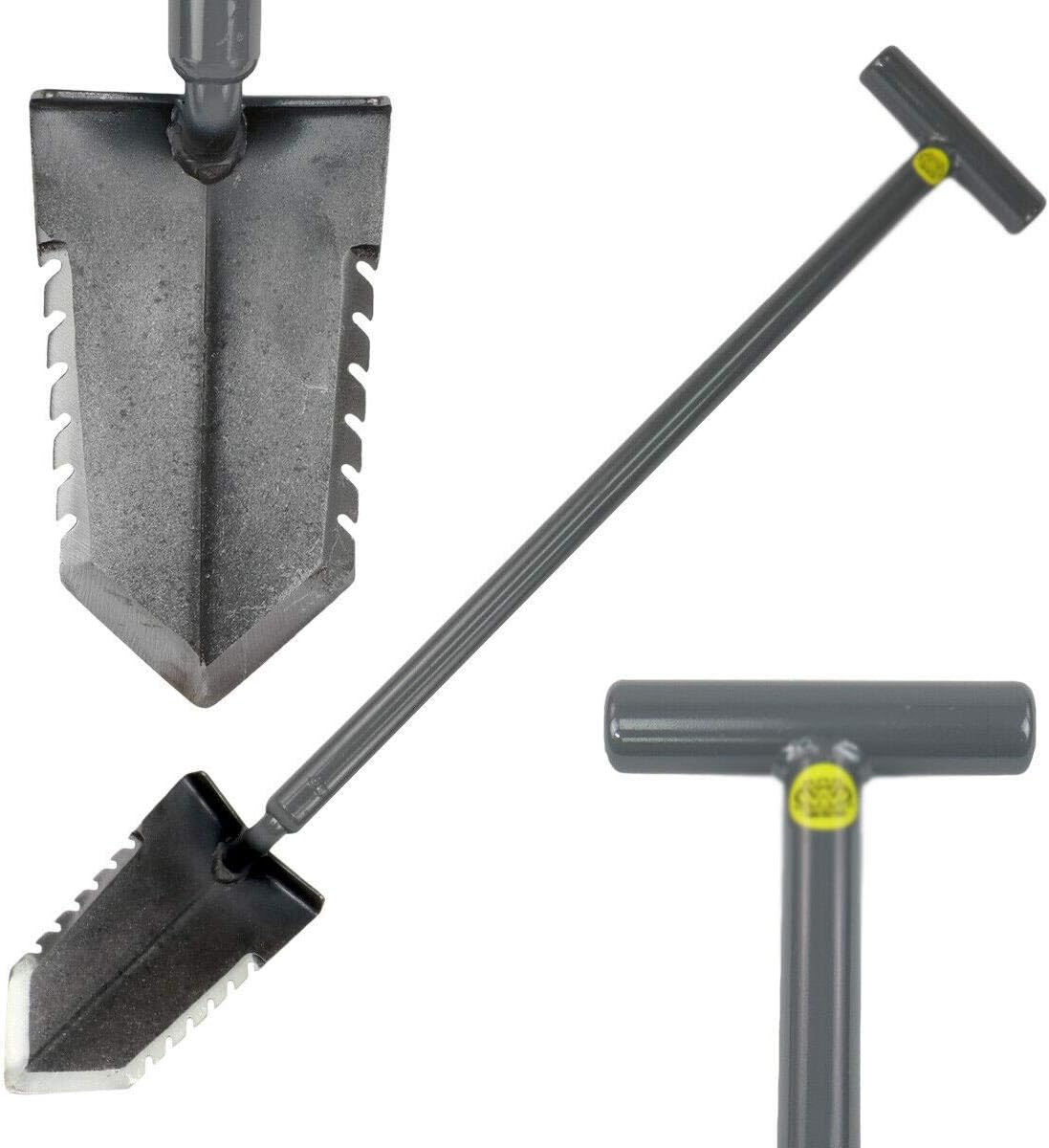
| Blade Material | Alloy Steel |
|---|---|
| Handle Material | Metal |
| Overall Length | 31" |
| Style Name | Double Serrated Blade |
The Lesche Sampson T-handle shovel is built for serious metal detecting and prospecting where durability and digging efficiency matter. Its 31-inch overall length and rigid metal T-handle give good control when prying roots or levering soil, while the heat-treated alloy steel blade resists dents and holds a sharp edge for slicing through compacted ground. The double serrated blade profile helps cut roots and loosen turf, and the aircraft-quality construction keeps the tool lightweight relative to its strength. Typical use cases are relic, coin, and jewelry hunting in fields, old homesteads, and other off-trail locations where you need a compact but heavy-duty digger. Lesche backs the design with a five-year breakage warranty and emphasizes rust resistance and balance so the shovel feels steady during repeated digs. The main limitations are its short shaft compared with full-length digging shovels, which can make deep, prolonged digging less comfortable and requires bending for some users, and the all-metal handle offers less shock damping than models with cushioned grips.
Best for: Serious metal detectorists and prospectors who prioritize a robust, compact digging tool that cuts through roots and compacted soil during frequent field digs.
Less Ideal for: Gardeners who need a full‑length spade for beds or continuous deep digging or casual users who prefer cushioned handles for extended use.
- Heat-treated aircraft-quality alloy steel blade for high strength and dent resistance
- Double serrated blade cuts roots and turf efficiently for cleaner digs
- T-handle design provides solid control and leverage in tight digs
- Made in USA construction with a five-year warranty against breakage
- Short overall length requires more bending for deep or prolonged digging
- All-metal handle lacks cushioning which can transmit more shock to the hands
Verdict: If you want a compact, heavy-duty digger that slices roots cleanly and stands up to frequent metal-detecting use, this Lesche T-handle shovel is a top performance pick.
CKG Metal Detecting Shovel with Double Serrated Edge and Sheath

| Material Type | Metal, Rubber, Stainless Steel |
|---|---|
| Handle Material | Rubber |
| Blade Material | Stainless Steel |
| Grip Type | Ergonomic |
This CKG digging shovel is built for metal-detecting use while doubling as a small garden and campsite tool. The heat-treated stainless/alloy blade is reinforced where it meets the handle, so it resists bending during prying and cutting through roots with its double serrated edge. The rubberized ergonomic handle improves grip and reduces hand fatigue during repeated digs. At roughly 10 inches long the shovel is highly portable and ships with a nylon sheath that clips to a belt for hands-free carry. Practical benefits include corrosion-resistant materials for use in damp conditions, a serrated blade that can saw through roots or fabric, and a well-balanced feel that helps control precision digs. Important limitations are its compact size, which reduces leverage for deep or heavy excavation, and the single-piece design that does not telescope into a longer handle for two-handed leverage. For everyday detectorists who want a durable, easy-to-carry tool for precise holes, this hits the mark; users needing larger-scale trenching or heavy digging will want a full-size shovel instead.
Best for: A practical metal-detecting hobbyist who values a durable, easy-to-carry digging tool for precise holes, campsite use, and occasional gardening tasks.
Less Ideal for: People who frequently need to dig deep holes, move large volumes of soil, or perform heavy-duty landscaping should choose a full-size shovel with longer leverage.
- Reinforced heat-treated stainless/alloy blade resists bending and rust
- Double serrated edge allows sawing through roots and tough material
- Ergonomic rubber handle improves grip and reduces hand fatigue
- Compact and lightweight with included nylon sheath and belt loop for easy carry
- Short overall length limits leverage for deep or heavy digging
- Not suitable as a primary tool for trenching or large garden jobs
Verdict: A sturdy, compact metal-detecting shovel that delivers corrosion-resistant durability and a serrated blade for precise, portable digs.
LRLXE Metal Detecting Shovel with Double Serrated Edge and Belt Sheath

| Material Type | Carbon Steel, Metal, Rubber |
|---|---|
| Blade Material | Carbon Steel |
| Handle Material | Rubber |
| Grip Type | Ergonomic |
The LRLXE metal detecting shovel is a small, lightweight hand digger built for beach and field detecting, backpacking, and basic garden tasks. Its pointed tip and double serrated carbon steel blade let you slice through sod plugs and roots and carve clean plugs in sand, while the ergonomic rubber handle reduces wrist strain during repeated digs. It includes a high-density nylon sheath with a belt loop for hands-free carry and edge protection when stored. The alloy steel construction is marketed as rust-resistant and sturdy enough for most soil types, though very rocky ground will still challenge this compact tool. Because it is short and portable it is easy to pack for hikes or stash on a belt, but that compactness also limits leverage compared with full-size shovels so deep or heavy-duty digging takes more effort. For everyday metal detecting, light planting, and campsite use it balances portability, cutting performance, and affordability.
Best for: Buyers who want an affordable, packable digging tool for metal detecting, beach use, light gardening, and camping where portability and clean plug digging matter more than heavy-duty excavation.
Less Ideal for: Gardeners needing a primary digging shovel for large beds, heavy clay, or frequent deep excavation should choose a full-size, heavy-duty spade instead.
- Double serrated carbon steel blade cuts clean plugs and roots for metal detecting and planting
- Ergonomic non-slip rubber handle reduces wrist fatigue during repeated digging
- Lightweight and compact with a nylon sheath and belt loop for easy carry
- Corrosion-resistant alloy steel construction suitable for beach and general soil use
- Short, compact design offers less leverage than full-size shovels for deep or heavy digging
- Not intended for very rocky ground where a heavier-duty tool is preferable
Verdict: A budget-friendly, portable digger that delivers clean plug cutting and easy carry for metal detecting and light garden or camping tasks.
Lesche Ground Shark Model 38 Shovel

| Material Type | Alloy Steel |
|---|---|
| Blade Material | Alloy Steel |
| Handle Material | Metal |
| Grip Type | D-Grip |
The Lesche Ground Shark Model 38 is built as a no‑nonsense digging tool for demanding outdoor tasks like metal detecting and root removal. Its all‑steel construction and heat‑treated blade give it high durability and resistance to bending, while the sharpened curved leading edge and serrated side help slice through compacted soil and cut through substantial roots without switching tools. The D‑grip handle and bright orange shaft improve control and visibility when working in rough terrain. In practice this shovel excels at digging narrow, deep holes for recovering finds and at prying through root‑filled ground where a simple garden trowel would fail. Expect a very sturdy feel and long service life, but also a heavier, less forgiving tool for extended digging sessions and a metal handle that transmits shock more than a fiberglass shaft. For users who prioritize a lifetime tool that cuts roots and holds an edge, this is a practical, purpose‑built choice.
Best for: Practical buyers who want a hardwearing, maintenance‑free digging tool for metal detecting and heavy rooty soil and who value durability over ultralight comfort.
Less Ideal for: Casual diggers who prefer a lightweight, cushioned shaft for long sessions or users who need a nonmetal handle to reduce vibration and hand fatigue.
- All‑steel, heat‑treated blade for high strength and long life
- Serrated side edge designed to cut through large roots without a saw
- Sharpened curved leading edge slices soil for easier penetration
- D‑grip handle offers good control when prying or levering
- Metal handle increases transmitted shock and can be tiring on long digs
- Heavier than fiberglass‑shaft alternatives, which may fatigue some users
Verdict: Choose this shovel if you need an exceptionally durable, root‑cutting tool that will withstand heavy use while digging for finds.
Root Slayer Garden Shovel (serrated blade)

| Blade Material | Alloy Steel |
|---|---|
| Material Type | Carbon Steel |
| Grip Type | Ergonomic |
| Manufacturer | Radius Garden |
| Model Number | 22011 |
The Root Slayer is a purpose-built digging shovel that combines a sharpened inverted‑V tip, saw‑like serrations, and a long shaft for extra leverage to tackle compacted ground and roots. You use it like a conventional spade for planting, trenching, and transplanting, but the serrated sides and V tip let it slice through small roots and hardpan rather than just prying. Its carbon steel blade is powder coated to resist rust and the resin‑encased steel shaft gives the tool strength for routine heavy digging tasks. The O‑handle and ergonomic grip improve control and reduce wrist strain during repeated scooping or levering motions. Important limitations are that it is a solid digging tool rather than a precision trowel, and the heavier construction makes it bulkier to carry for long hikes. Also it is not intended for extreme prying or levering of very large buried objects, so care is needed when using it on rocks or doing metal detecting recoveries that require twisting or levering large finds.
Best for: Buyers who want a robust, root‑cutting shovel that reduces physical strain and reliably handles compacted soil during regular backyard digging or detector digs.
Less Ideal for: Users needing a lightweight carry‑along digger for long metal detecting treks or those who plan to lever out large, deeply buried objects should look for a specialized recovery tool instead.
- Serrated inverted‑V tip and saw teeth cut through roots and compacted soil effectively
- Heavy‑duty carbon steel blade with powder coating for durability and rust resistance
- Ergonomic O‑handle and long shaft improve leverage and reduce wrist strain
- Multi‑purpose design works for digging, trenching, transplanting and light root removal
- Relatively heavy and bulky compared with small trowels or mini shovels
- Not designed for aggressive prying or levering of very large buried objects
Verdict: If you need a stout garden shovel that actually cuts through roots and hardpan, the Root Slayer delivers durable, leverage‑friendly performance for backyard digging and detector recoveries.
Root Slayer RS220 Heavy Duty Garden Shovel with Serrated Blade

| Material Type | Alloy Steel |
|---|---|
| Handle Material | Alloy Steel |
| Blade Material | Alloy Steel |
| Grip Type | Ergonomic |
The Root Slayer RS220 is a stout digging shovel built for heavy garden and landscaping chores where roots and compacted ground are common. Its serrated, V-shaped tip and sharpened inverted edge let you slice through roots and penetrate hard soil more easily than a standard rounded blade. The powder-coated alloy steel head and full steel shaft add durability for repeated use, while the reinforced O-handle and ergonomic lower grip improve control and reduce wrist strain when levering the blade. Typical uses include digging planting holes, removing root balls, and breaking through compacted trenches. Because it is purpose-built to bite and cut, it can replace multiple tools for tough ground work, saving time on jobs that would otherwise require saws or extra digging tools. Important limitations are its heavier, all-steel construction and aggressive blade profile, which make it less suited to delicate transplanting or working in very soft raised beds where precision and a lighter touch matter.
Best for: A cautious buyer who wants a dependable, heavy-duty shovel that will handle root-filled and compacted ground without failing; great for homeowners who prioritize durability and straightforward performance for outdoor digging tasks.
Less Ideal for: Not a good fit for gardeners who need a lightweight tool for precise planting or frequent long-duration digging where reduced tool weight is the top priority.
- Serrated V-shaped tip slices through roots and compacted soil for faster digging
- Powder-coated alloy steel blade resists rust and stands up to heavy use
- Full steel shaft and reinforced O-handle increase strength and leverage for tough jobs
- Ergonomic lower grip and larger forward foot step improve control and reduce hand and wrist strain
- All-steel construction is heavier than fiberglass-shaft alternatives, which can cause fatigue on long jobs
- Aggressive serrated blade is not ideal for delicate transplanting or fine soil work
Verdict: Choose this shovel when you want a durable, root-cutting tool that reliably handles tough, compacted ground.
Choosing the Right Metal Detecting Garden Shovel: Key Factors to Consider
Blade Design and Edge Geometry
Blade shape and edge type determine how easily the shovel penetrates turf and cuts through roots. A narrow, slightly pointed tip slices into compacted soil more easily than a wide, flat blade, which matters when you are extracting a single coin or relic with minimal soil disturbance.
Edge thickness and whether the tip is heat-treated affect durability. Thin, sharp edges give faster penetration but may chip if hitting rocks. A slightly thicker, hardened tip balances penetration with longevity. Consider a blade with a beveled edge that can be sharpened and maintained between outings.
Shaft Material and Connection Strength
The shaft transmits leverage when you pry out items; weak connections or hollow, low-quality shafts lead to wobble or breakage. Steel and reinforced fiberglass shafts are common for detecting shovels because they resist bending under torque when levering against roots or stones.
Check how the shaft attaches to the blade. Welded or bolted joints that are reinforced reduce play. For shovels with replaceable shafts, confirm the fastener system is robust and that replacement parts are available to extend tool life.
Handle Ergonomics and Grip
You will make many small digs per outing, so handle shape and grip material greatly affect comfort and control. D-shaped or T-grips give good leverage for prying, while longer straight handles allow two-handed digging for deeper holes. Cushioned or textured grips reduce blistering and slipping when hands get wet or sweaty.
Also consider handle diameter and hand size. Thick handles provide more power but can be tiring for smaller hands. A well-designed grip positions the wrist to apply force without strain during repeated extraction motions.
Weight, Balance, and Portability
Weight affects fatigue and digging performance. A heavier shovel can penetrate compact soil with less effort, but carries more strain over hours of use and adds pack weight if you walk to sites. Balance between blade and handle influences how cleanly the blade drives into ground and how easy it is to lift loosened soil.
If you hike to detecting spots, prioritize lighter options or compact folding designs. For backyard detecting where portability is less critical, a heavier, sturdier tool often gives faster, cleaner digs.
Corrosion Resistance and Finish
Detecting shovels often encounter wet soil, salt, or acidic loam that promotes rust. A durable finish, stainless components, or protective coatings extend tool life and reduce maintenance. Corrosion resistance is especially important if you frequently rinse tools or store them outdoors.
Consider blades with powder coatings, galvanization, or stainless steel. Additionally, finishes that wear to bare metal can be re-coated or oiled to preserve the edge and structural integrity.
Ease of Cleaning and Maintenance
Soil, clay, and sand cake onto blades and joints. Designs that minimize crevices and use smooth welds are easier to clean by hand or with a hose. Removable or replaceable parts simplify maintenance and extend overall lifespan because you can service worn components rather than discard the whole tool.
Also evaluate how easy it is to sharpen the edge and whether replacement parts are common. Simple maintenance keeps the shovel performing consistently across seasons.
Best Shovel Shapes for Detecting Tasks
Different blade shapes excel at different detecting jobs. Narrow, pointed blades are best for precise digs where you want to remove minimal soil and expose an object quickly. Wider blades help when moving larger plugs of turf or when recovering multiple targets clustered close together.
Some shovels have a chisel-like square tip that is useful for cutting tidy plugs when you want to replace turf. Others favor a rounded tip that is stronger when hitting stones. Think about the type of digging you do most often and pick a shape that matches that task.
- Pointed tips: precise penetration, good for compact ground.
- Rounded tips: durable against rocks, less likely to chip.
- Square/chisel tips: neat turf plugs for easy patching.
Working in Different Soil Types
Soil composition changes how a shovel performs. Sandy soils need less aggressive edges but can accelerate corrosion if salty. Clay binds to blades and increases the leverage needed to remove plugs. Rocky ground requires hardened tips and strong shaft connections to avoid bending.
In damp or loamy soils, a balanced tool that combines a sharp tip with a comfortable handle will let you dig long enough to find targets without excessive fatigue.
- Sandy soil: lighter blade, corrosion resistance matters.
- Clay soil: strong tip and good leverage for prying.
- Rocky soil: hardened tip and reinforced shaft.
Techniques to Minimize Target Damage
Use a narrow scratch dig to reveal the top of a target before widening the hole. Drive the tip along the contour you plan to remove so you minimize contact with the object. When prying out a plug, use the shovel as a lever at the edge to reduce direct blade contact with the find.
After extracting a plug, remove soil by hand in the final inches to avoid scratching or nicking delicate coins or artifacts. Rinse finds gently and store them in padded containers until proper conservation steps can be taken.
- Start with a small incision to locate the target.
- Leverage at the plug edge to lift rather than cutting through the target.
- Hand-finish the last inches to avoid surface damage.
Storing and Caring for Your Shovel
Clean blades after each use to remove soil and moisture. Dry the tool fully and apply a light coat of oil to steel parts to prevent rust. For coated blades, inspect coating wear and touch up or recoat if bare metal appears.
Store shovels indoors or in a dry shed. If leaving tools outside is unavoidable, hang them off the ground to limit direct contact with damp surfaces and reduce the chance of corrosion or warp.
- Rinse and dry after use.
- Oil bare steel to prevent rust.
- Store off the ground in a dry location.
Compact and Folding Designs for Detecting Walks
If you hike to detecting spots, folding or telescoping shovels save pack space and reduce carry weight. These designs trade some stiffness for portability, so inspect locking mechanisms and shaft thickness closely if you choose a compact model.
Foldable blades with solid locking pins can perform well for light to moderate digging, but for heavy root or rocky work you will likely want a full-length, fixed-shaft tool.
- Telescoping shafts save space but check for play.
- Folding blades reduce pack size but may weaken leverage.
- Choose locking systems rated for outdoor use.
How We Chose the Best Metal Detecting Garden Shovel
We prioritized attributes that directly affect success and durability when digging with a metal detector. Blade strength and edge geometry were assessed to ensure clean cuts through turf and roots without bending. Shaft material and connection type were considered for impact resistance and to prevent wobble when levering out objects. Handle ergonomics and grip quality were included to reduce hand fatigue during repeated digs and extractions. Weight and balance were evaluated to ensure the tool is light enough for extended hunts but heavy enough to penetrate compact soil. Corrosion resistance and finish were considered to prevent rust from wet soils and frequent rinsing. We excluded garden digging tools designed solely for transplanting or ornamental beds that lack a reinforced tip or a robust shaft. Extremely specialized test-only prototypes and novelty items were removed. The final short list contains tools that blend practical digging geometry, durable construction, and user comfort-criteria you would notice on the first outing and over months of use.
FAQ
What blade material resists chipping when hitting small rocks?
Hardened steel tips and heat-treated edges resist chipping better than softer steel. A slightly thicker edge with heat treatment balances penetration with impact resistance, making it less likely to chip when you encounter small stones.
Is a folding shovel good enough for regular backyard detecting?
Folding shovels work well for light or occasional backyard use and are easy to store. For frequent detecting in compacted or rocky soil, a fixed-shaft shovel with a reinforced connection is usually more durable and offers better leverage.
How do I avoid damaging coins when digging?
Expose the target with small, careful cuts and hand-remove soil in the final inches. Use leverage at the plug edge to lift rather than scraping the blade across the object, and rinse finds gently instead of scraping dirt directly from their surfaces.
How often should I sharpen the shovel edge?
Sharpening frequency depends on soil type and use. In abrasive or rocky soils you may need to touch up the edge every few months; in softer sites a few times per year is sufficient. Keep the edge functional rather than razor-sharp to avoid excessive chipping.
What if my shovel shaft develops play at the connection?
Tighten any fasteners and inspect for worn collars or split wood. Many shafts can be replaced if the joint is damaged. If play continues, avoid heavy prying and consider a reinforced shaft design to prevent sudden failure.
Final Verdict
Choose a metal detecting garden shovel that matches the soils and digging style you encounter most. Prioritize a blade shape that lets you expose targets cleanly, a hardened tip and strong shaft connection to survive roots and rocks, and a comfortable handle that reduces fatigue during repeated digs. Consider tradeoffs between portability and stiffness: lighter, folding tools are easier to carry but less robust for heavy-duty work. By focusing on blade strength, shaft durability, ergonomics, and corrosion resistance, you can pick a shovel that will both speed up finds and last through seasons of detecting.
