

Note: This article contains affiliate links. If you click on these links and make a purchase, I may earn a small commission at no extra cost to you. This helps support my research and content. Read my full affiliate disclosure here.
Choosing the right mulch for trees makes a noticeable difference in tree health, soil moisture, and long-term vigor. The wrong material or application can trap moisture against the trunk or hide pests, while the right mulch moderates soil temperature, suppresses weeds, and supports beneficial soil life. This guide looks at the top five mulch options for trees and explains how each behaves in the landscape. We shortlisted options based on how they affect moisture retention, decomposition rate, nutrient contribution, ease of use, and disease risk. Use the evaluation notes below to match a mulch type to your tree species, soil, and maintenance preferences before moving to product choices.
Top Picks at a Glance
| Best Quality Built to a higher standard if you want something more solid | Garden Elements 100% Natural Cocoa Bean Shell Mulch, 2 cu ft |  |
| Best Value The sweet spot between price and what you get | Plantonix Coco Chips Organic Coconut Husk Chips (10 lb) |  |
| Highest Rated A top-rated pick with lots of positive feedback | Capital Forest Products Cedar Mulch 3.0 cu ft |  |
| Most Popular A crowd favorite that many people choose with confidence | USA PINESTRAW Long Needle Pine Straw Mulch Square Bale |  |
| Best Seller A high-volume bestseller chosen again and again | Back to the Roots Organic Premium Mulch, 1 Cubic Foot |  |
Garden Elements 100% Natural Cocoa Bean Shell Mulch, 2 cu ft

| Indoor Outdoor Usage | Indoor, Outdoor |
|---|---|
| Other Special Features | Fragrant |
| Material Features | Organic |
| Unit Count | 1 Count |
| Plant or Animal Product Type | Theobroma cacao |
Garden Elements cocoa bean shell mulch is a decorative organic mulch made from the outer shells of cocoa beans and intended for indoor and outdoor use. Typical uses include top-dressing flower beds, around shrubs, and in container plantings where a refined appearance and a pleasant chocolate-like aroma are desired. The product helps conserve soil moisture and suppress weeds while gradually adding organic matter and nutrients to the soil as it breaks down. It is lightweight and easy to spread, which speeds application over larger beds or around small trees. Notable features are its natural dark brown color that resists fading and an NPK-like nutrient profile noted on the label. Important limitations are that cocoa mulch contains theobromine and caffeine, which are toxic to dogs, so it should not be used where pets may ingest it, and it can wash or compact in heavy rains more readily than heavier bark mulches. For trees, it performs well as a shallow decorative layer but should be kept away from direct contact with trunks and used with caution in pet households.
Best for: Gardeners who prioritize effective moisture retention and an attractive finished look around trees and beds and who do not have curious pets that might eat mulch.
Less Ideal for: Homes with dogs or areas prone to heavy runoff where a heavier, more erosion-resistant mulch would be safer and longer lasting.
- Lightweight and easy to spread, making installation quicker for larger beds
- Helps retain soil moisture and suppress weeds to reduce maintenance
- Natural dark brown color that provides a finished look and resists fading
- Organic material that breaks down to contribute nutrients to the soil
- Contains theobromine and caffeine which are toxic to dogs if ingested
- Can wash away or compact under heavy rain more easily than heavier wood mulches
Verdict: Choose this cocoa shell mulch if you want a lightweight, organic option that improves moisture retention and gives beds and young trees a neat, dark finish.
Plantonix Coco Chips Organic Coconut Husk Chips (10 lb)

| Brand Name | plantonix |
|---|---|
| Unit Count | 160 Ounce |
| Item Type Name | Soil and Soil Amendments |
| Volume | 15 gallons |
This 10 lb compressed block of coco chips expands into a loose, airy mulch that is easy to spread around trees, raised beds, and containers. After hydrating the brick, the coconut husk pieces form a long-lasting mulch layer that reduces surface evaporation, moderates soil temperature, and improves aeration compared with heavier wood mulches. The product is pre-screened and washed to remove dirt and debris and is low in salts with a neutral pH, so it is safe for many plants once rinsed and soaked. Practical uses include topping root zones of young trees to conserve water, mixing into potting mixes to increase drainage, or using as reptile bedding where humidity is wanted. Limitations are that coco chips break down slower than fine mulches so they do not add nutrients rapidly, and the loose chips can be blown by wind on exposed sites without edging. Also handle carefully to avoid dust and protect eyes and lungs during application.
Best for: Buyers who want a low-maintenance, sustainable mulch to conserve moisture around trees and containers and who value easy storage and simple application.
Less Ideal for: Gardeners who need a fast-acting soil amendment to supply nutrients quickly or those with very windy, unprotected planting sites where a heavier mulch is required.
- Expands from a compact brick for easy storage and transport
- High water retention that reduces watering frequency around root zones
- Pre-washed and screened to remove dirt, sand, and rocks
- Lightweight, airy texture improves soil aeration and drainage
- Does not rapidly release nutrients as it is a structural mulch rather than a fertilizer
- Loose chips may migrate or blow away on exposed sites without containment
Verdict: Choose this coco chip brick if you want an easy-to-store, moisture-retaining organic mulch that expands into a lightweight, long-lasting cover for tree root zones.
Capital Forest Products Cedar Mulch 3.0 cu ft

| Unit Count | 1 Count |
|---|---|
| Manufacturer | CAPITAL FOREST PRODUCTS |
| Model Number | CFD_1301215 |
| Item Weight | 40 pounds |
This cedar mulch is a straightforward, no-frills option for mulching trees and landscape beds. Made from processed cedar, the product is used by spreading a 2 to 4 inch layer around trunks and over root zones to suppress weeds, reduce erosion, and help retain soil moisture. The natural cedar aroma and coarse texture make it attractive in ornamental beds and durable under foot traffic compared with finer mulches that break down faster. Practical benefits include longer-lasting coverage and modest weed deterrence from cedar oils, which can reduce maintenance frequency. Important limitations are that cedar will slowly decompose and eventually need replenishing, and it offers minimal nutrient contribution to soil so supplemental fertilization may still be required for tree health. Also, a 3.0 cu ft bag covers a limited area, so multiple bags are needed for larger trees or wide dripline coverage.
Best for: Buyers who prioritize reliable, low-maintenance mulch for tree rings and permanent beds and want a natural product that lasts longer between refreshes.
Less Ideal for: Gardeners seeking a mulch that rapidly improves soil fertility or those wanting to cover very large areas with a single purchase should consider other options or bulk quantities.
- Natural cedar material provides long-lasting coverage and attractive appearance
- Coarse texture resists compaction and holds shape around tree bases
- Helps retain soil moisture and reduce surface erosion
- Cedar oils can discourage some weed growth and reduce maintenance
- Adds little in the way of nutrients as it decomposes
- Single 3.0 cu ft bag covers a limited area for large trees
Verdict: A durable, natural cedar mulch that reduces maintenance by holding moisture and resisting weed growth, making it a dependable choice for tree rings and long-term beds.
USA PINESTRAW Long Needle Pine Straw Mulch Square Bale
| Material Type | Pine |
|---|---|
| Other Special Features of the Product | Organic |
| Package Size Name | Square Bale |
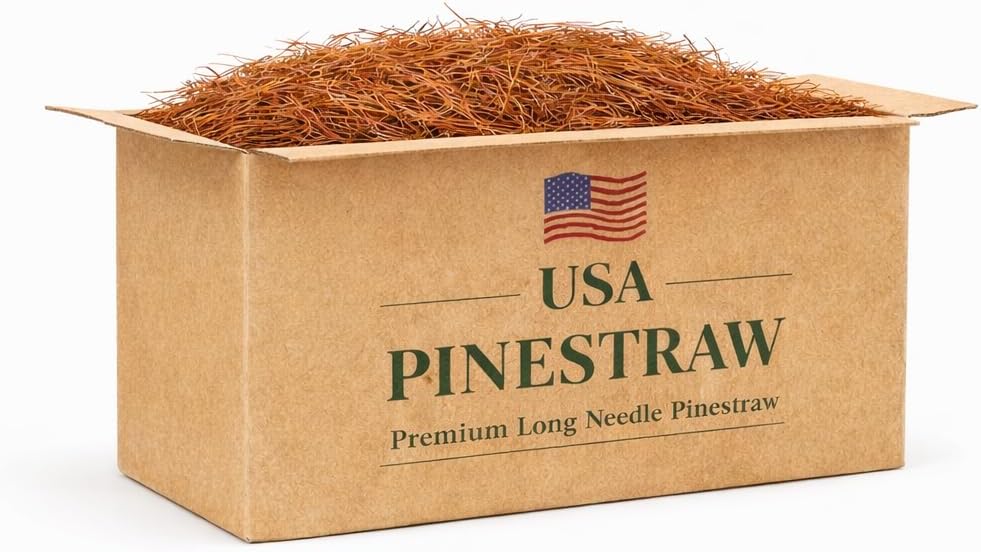
This product is a single premium square bale of long-needle pine straw harvested in the U.S. and sold as an organic landscaping mulch. It is applied by spreading the straw around tree bases, flower beds, and pathways to create an attractive, natural cover that helps hold soil in place and retain moisture. The long needles interlock well to form a stable layer that resists wind displacement better than shorter straw, and the organic material gradually breaks down to feed soil. Because it is a single 14-inch square bale, it is easy to handle for small jobs or to top up around individual trees without buying bulk bags. Limitations are that one bale covers only a modest area so larger jobs require multiple bales, and pine straw does not add the same bulk or soil structure as wood chips. For tree mulching it works well near root zones where a thinner, breathable organic layer is preferred, but plan on replenishing annually as it compresses over time.
Best for: Buyers who want a natural, low-maintenance mulch for tree bases and small beds and value organic material and easy handling backed by consistent positive feedback.
Less Ideal for: Landscapers or homeowners needing to mulch large areas in one go or looking for a heavier, longer-lasting bulk mulch solution.
- Long needles interlock to form a stable, wind-resistant mulch layer
- Organic material that slowly decomposes and contributes to soil health
- Good moisture retention which reduces watering frequency around trees
- Sold as a manageable square bale suitable for small-scale or spot mulching
- Single bale provides limited coverage, so multiple bales are needed for larger trees or beds
Verdict: A convenient single square bale of long-needle pine straw that provides natural, moisture-retaining mulch ideal for topping up around trees and small beds.
Back to the Roots Organic Premium Mulch, 1 Cubic Foot

| Unit Count | 16 Ounce |
|---|---|
| Volume | 23 cubic centimeters |
| Item Highlight | Premium organic garden mulch; peat-free; 25.7 quart bag |
| Brand Name | Back to the Roots |
This Back to the Roots organic mulch is a peat-free, all-purpose landscape mulch intended to nourish plants in garden beds, raised beds, and around trees. The bagged mix is made from upcycled plant matter and wood fines and includes dolomitic limestone to help balance pH, gypsum to improve water absorption, and yucca extract to aid moisture control. In practice it spreads easily around tree bases to suppress weeds, retain soil moisture, and add organic material as it breaks down. Because it is 100 percent organic and formulated for general garden use, it is a low-risk choice for long-term soil health and for homeowners who prefer sustainable materials. Limitations to note are that the bag size is modest for tree projects so larger trees will require many bags, and the product description focuses on garden and raised bed use rather than specialized tree care formulations such as shredded hardwood designed for slow decomposition.
Best for: Home gardeners and homeowners who prioritize sustainable, low-risk materials and want an easy-to-use organic mulch for tree bases and garden beds.
Less Ideal for: Landscapers or property owners who need to cover large areas or who want a long-lasting hardwood mulch specifically formulated for mature trees.
- Peat-free, made from upcycled plant matter and wood fines for a more sustainable base
- Includes dolomitic limestone and gypsum to help with pH balance and water absorption
- Yucca extract included to improve moisture retention and spreadability
- Suitable for vegetable, flower beds and around trees as a general-purpose organic mulch
- Small bag volume makes it impractical to cover large trees or extensive landscapes without buying many bags
- Not marketed as a long-lasting shredded hardwood mulch so it may break down faster and require more frequent replenishing
Verdict: A sustainable, peat-free organic mulch that is a safe, easy choice for homeowners wanting to improve moisture retention and soil health around trees and beds.
Choosing the Right Mulch for Trees: Key Factors to Consider
Moisture Retention and Drainage
Mulch moderates how quickly water leaves the root zone by reducing evaporation and buffering soil from intense rainfall. A material with good moisture retention helps trees through dry spells without keeping the root collar soggy. Consider local rainfall patterns, soil texture, and seasonal irrigation when choosing mulch. In heavy clay soils, choose mulches that allow water to percolate rather than forming an impermeable mat.
Proper application depth and avoiding mulch piled against the trunk are part of this factor. Even high-retention mulches must be kept a few inches away from the main stem to prevent crown moisture buildup that invites rot.
Decomposition Rate and Maintenance Frequency
Different mulches break down at very different rates, affecting how often you need to top up material and how the soil chemistry changes over time. Fast-decomposing mulches add organic matter quickly but require more frequent replenishment. Slow-decomposing options provide longer-lasting coverage with less labor but add organic content more slowly.
Think about the maintenance schedule you want: if you prefer low-effort beds, choose a longer-lasting mulch; if you want to build soil organic matter quickly, choose a compost-rich or finer-textured mulch that integrates into the soil faster.
Nutrient Contribution and Soil Biology
Some mulches actively feed the soil as they break down, improving structure and microbial activity. Hardwood or composted mulches tend to supply carbon and nutrients that benefit root development and soil water-holding capacity. Other materials are largely inert and mainly serve as a physical barrier against weeds and erosion.
Consider the existing soil fertility and whether your trees would benefit from an organic input. Avoid fresh wood chips or unseasoned bark placed directly at the trunk on young trees, as high carbon content can temporarily tie up nitrogen near surface roots while decomposition begins.
Risk of Disease, Rodents, and Fungal Issues
Some mulches can create conditions that favor fungal growth or provide harborage for rodents that gnaw at bark. Fine, compacted mulches may hold moisture against the trunk and increase the chance of collar rot. Coarser, well-aerated mulches reduce that risk, but very coarse wood can shelter voles and other small mammals if piled deep.
Inspect mulch sources and avoid materials with moldy, sodden layers or visible pest activity. Proper depth, keeping mulch a few inches from the trunk, and periodic monitoring reduce disease and pest risks regardless of material choice.
Practical Handling and Aesthetic Fit
How a mulch looks, how easy it is to spread, and whether it compacts into a mat affects day-to-day maintenance. Lightweight mulches blow in exposed sites, while heavy or wet mulches are harder to apply and shift. Color stability and texture influence landscape appearance over seasons.
Choose a mulch you can source and handle given the size of the tree bed, whether you will spread it by hand or with a wheelbarrow, and how often you plan to refresh it. Consider whether the appearance complements surrounding beds and whether you prefer a natural decomposition appearance or a more uniform decorative look.
Environmental and Source Considerations
Where mulch comes from matters for sustainability and safety. Locally sourced arborist chips and compost reduce transport footprint and often contain fewer contaminants than unknown recycled materials. Some recycled mulches may contain treated wood, chemical residues, or invasive plant material.
Ask about the source if possible, and choose certified compost or clean yard waste products to limit weed seed and chemical contamination. For sensitive planting sites near waterways, select materials that minimize nutrient leaching as they decompose.
How to Apply Mulch Around Trees
Start by clearing grass and weeds from the root flare area so the mulch rests on bare soil. Leave a mulch-free ring of several inches directly around the trunk to prevent moisture from collecting at the bark. Spread mulch in an even layer rather than creating a high volcano shape, which can hide root flare and encourage rot.
Aim for a typical depth of 2 to 4 inches for most organic mulches. Thicker layers can be used for weed suppression but may reduce soil oxygen and hold too much moisture if placed against the trunk. Replenish only the top inch or two when maintaining to avoid disturbing shallow roots.
- Measure depth at several spots after spreading to ensure even coverage.
- Avoid piling mulch against the trunk or main stems.
- Keep mulch a few inches away from trunk bases and graft unions.
Best Mulch Practices by Tree Age
Young trees with developing root systems benefit from lightweight, finer mulches that integrate into the soil and supply nutrients. Keep layers thinner and monitor for nitrogen tie-up if using high-carbon materials.
Established trees tolerate a wider range of mulch types. For mature specimens, choose longer-lasting, coarser mulches that reduce maintenance and still protect large feeder root zones. Always avoid deep mounding regardless of tree age.
- Young trees: 1 to 2 inches of well-composted organic mulch.
- Mature trees: 2 to 4 inches of coarser chips or bark for longevity.
Seasonal Considerations and Timing
Apply mulch in late spring or fall to help with moisture control and temperature moderation. Freshly applied mulch insulates roots through heat extremes and cold snaps. Avoid heavy fresh applications in the middle of rainy seasons in poorly drained soils.
Refresh mulch annually or as needed based on decomposition rate. Inspect mulch after storms to ensure it has not compacted or shifted toward trunks.
- Spring application helps with summer drought protection.
- Fall applications insulate roots and reduce winter freeze-thaw stress.
Matching Mulch Type to Soil and Climate
In sandy, well-draining soils, choose mulches that increase water-holding capacity and organic matter as they decompose. In heavy clay soils, prefer mulches that do not mat or impede drainage.
In hot, dry climates, higher‑retention mulches and slightly deeper layers help preserve moisture. In wet climates, select coarse, well-structured materials that dry more quickly and resist compaction.
- Sandy soils: composted materials or fine-textured organic mulches.
- Clay soils: coarse wood chips or bark to maintain porosity.
Common Mulch Mistakes to Avoid
Do not pile mulch against the trunk. The so-called volcano mulch habit is the leading cause of bark rot and girdling roots. Also avoid applying an unreasonably thick layer that restricts oxygen and encourages anaerobic conditions.
Avoid using fresh, unaged wood chips placed right next to trunks of young trees without allowing some composting first. Fresh chips can temporarily reduce available surface nitrogen and may shelter pests if laid excessively deep.
- Keep mulch depth appropriate for both species and soil type.
- Check mulch source for treated wood or contaminants before use.
How We Chose the Best Mulch for Trees
We evaluated mulch options for trees using criteria that reflect real-world outcomes in yards, landscapes, and urban settings. Key factors included moisture retention, because maintaining even soil moisture is crucial for root health, especially during hot or dry seasons. Decomposition rate was used to judge how quickly a mulch breaks down into soil organic matter and how often it needs replenishing. Nutrient contribution assessed whether the material adds beneficial organic matter and supports soil biology. Disease and pest risk considered whether a mulch type is likely to harbor fungal pathogens, insect pests, or encourage rodent activity near trunks. Practical handling and installation looked at how easy the material is to spread, edge, and maintain without excessive labor. We excluded materials that routinely require near-constant replacement or that are known to cause trunk rot when piled against stems. We also screened out options with significant contamination risk, such as those frequently mixed with treated wood or trash. The remaining selections are common, garden-appropriate mulches that balance maintenance, tree safety, and soil benefits.
FAQ
How close should mulch be to the tree trunk?
Keep mulch a few inches away from the trunk and leave the root flare visible. This prevents moisture accumulation at the bark and reduces the risk of collar rot and pest damage.
What is the ideal mulch depth for most trees?
A typical depth is 2 to 4 inches for established trees and about 1 to 2 inches for young or newly planted trees. Adjust depth for climate and soil drainage to avoid oxygen restriction.
Can mulch help trees during drought?
Yes. Mulch reduces surface evaporation and moderates soil temperature, helping to conserve soil moisture during dry periods. However, mulch cannot replace deep, infrequent watering for tree root health.
How often should I replenish mulch around trees?
Frequency depends on decomposition rate. Fast‑breaking mulches may need annual topping, while coarse bark or large chips can last several years. Inspect depth each season and add only enough to restore desired coverage.
Are there mulches to avoid near trees?
Avoid the regular use of shredded materials that compact into a dense mat against trunks or any mulch known to contain treated wood or contaminants. Also be cautious with fresh sawdust that can tie up surface nitrogen if not composted.
Final Verdict
Prioritize mulches that balance moisture control, good aeration, and low disease risk when caring for trees. Match the decomposition rate to how often you want to refresh beds and choose materials that support soil biology without holding moisture against trunks. By following proper application depth and leaving trunk collars exposed, you reduce common problems and let the chosen mulch deliver its benefits with minimal maintenance. Focus on the tradeoffs between longevity and soil-building: faster-decomposing materials improve soil faster but need more attention, while coarse chips lower labor needs but add organic matter slowly. Use the decision criteria above to pick the mulch type that fits your climate, soil, and maintenance plan.
