

Note: This article contains affiliate links. If you click on these links and make a purchase, I may earn a small commission at no extra cost to you. This helps support my research and content. Read my full affiliate disclosure here.
Growing tomatoes in raised beds concentrates roots, improves drainage, and often produces heavier, more abundant crops. The right tomato cage for raised beds keeps stems upright, reduces fruit rot by improving airflow, and makes pruning and harvesting simpler in a compact bed. This guide shortlists seven top options that suit common raised bed widths and soil depths, then evaluates them on durability, stability, and ease of use. Read on to find the cage style and features that match your bed size, tomato type, and season-long maintenance needs.
Top Picks at a Glance
| Best Overall The best all-around choice for most situations | K-Brands 41" Square Tomato Cages, 3-Pack |  |
| Best Quality Built to a higher standard if you want something more solid | Gardener's Supply Company Extra-Tall Heavy-Gauge Square Tomato Cages (Set of 2) |  |
| Best Value The sweet spot between price and what you get | Moirsunt 4-Pack 50.2" Adjustable Tomato Cages (Triangular) |  |
| Best Budget The cheapest option that still gets the job done reliably | Suteck Raised Garden Bed Planter Box with Adjustable Trellis |  |
| Highest Rated A top-rated pick with lots of positive feedback | Happy Trees Heavy Duty Folding Tomato Cages, 3-Pack |  |
| Most Popular A crowd favorite that many people choose with confidence | K-Brands Adjustable 68" Tomato Cages (3-Pack) |  |
| Best Seller A high-volume bestseller chosen again and again | Halatool 48-inch Tomato Cages, 8-Pack |  |
K-Brands 41" Square Tomato Cages, 3-Pack

| Material Type | Steel, Plastic |
|---|---|
| Finish Type | Plastic Coated |
| Unit Count | 3 Count |
| Size | 41 Inches |
These 41-inch square tomato cages are a practical, no-fuss support system for tomatoes, peppers, beans and other vining plants in raised beds or containers. Each cage snaps together from plastic-coated steel rods with interlocking connectors so assembly is tool-free and quick. The square design gives four anchored sides that resist leaning and wind better than many round cages, and the plastic coating helps protect stems while reducing rust over time. At 41 inches the height suits most determinate and mid-size indeterminate varieties, and the 3-pack covers several plants or multiple rows in a raised bed. Limitations to note are the fixed 41-inch height of these sections and the relatively lightweight tubing compared with heavy-duty professional cages, so very large indeterminate varieties or unusually heavy fruit loads may need extra tying or additional external bracing. These cages are easy to store flat when disassembled and work well in soil or containers where you can push the legs in for firm anchoring.
Best for: Gardeners who grow a mix of tomato varieties in raised beds or containers and want stable, easy-to-install supports without heavy-duty hardware.
Less Ideal for: Growers planting very large indeterminate varieties that routinely exceed the cage height or gardeners who need industrial-strength, permanently anchored supports.
- Square design anchors on four sides for better stability in raised beds
- Plastic-coated steel resists rust and is gentle on plant stems
- Tool-free interlocking assembly for fast setup and seasonal storage
- Three cages per pack cover multiple plants or rows
- 41-inch height may be short for very tall indeterminate tomato varieties
- Tubing is not as heavy-duty as commercial-grade supports for extremely heavy fruit loads
Verdict: A practical, easy-to-assemble three-pack that delivers stable, rust-resistant support for typical raised-bed tomato gardening.
Gardener's Supply Company Extra-Tall Heavy-Gauge Square Tomato Cages (Set of 2)

| Unit Count | 2 Count |
|---|---|
| Material Type | Steel |
| Finish Type | Powder Coated |
These extra-tall square tomato cages are built from heavy-gauge, powder-coated steel and meant for gardeners who need strong, long-lasting support for big tomato plants in raised beds. Each cage folds flat for winter storage and assembles quickly without tools; when installed the 65 inch frame provides about 53 inches of aboveground support with large 8 inch square openings that make reaching fruit and pruning easier. The powder-coated finish helps resist weathering season to season and the steel core keeps heavy, fruit-laden vines from sagging so you get cleaner, higher-yield harvests. Because the cages are extra tall and rectangular, they fit well in narrow raised beds while giving vertical space for indeterminate varieties and other climbers like cucumbers or pole beans. The main limitations are size and weight: they require enough bed depth to drive the legs in securely and can be bulky to move when planted, and very windy sites should have the cages anchored to prevent tipping. For growers prioritizing strength and harvest access these cages perform reliably in raised-bed setups.
Best for: Gardeners who grow large, indeterminate tomatoes or heavy-yielding vines in raised beds and prioritize rigid, season-after-season support to maximize harvests.
Less Ideal for: Growers with very shallow or mobile container setups or those who need a lightweight, easily moved cage for small determinate varieties.
- Heavy-gauge powder-coated steel frame resists weathering and supports heavy, fruit-laden vines
- Extra-tall height provides about 53 inches of aboveground support for indeterminate tomatoes
- Large 8 inch square openings improve access for harvesting and pruning
- Folds flat for compact off-season storage and assembles without tools
- Requires sufficient bed depth to seat the legs securely and can be bulky to reposition once planted
- May tip in very windy conditions if not anchored
Verdict: Choose these heavy-gauge, extra-tall square cages when you need durable, high-capacity support for tall tomatoes in raised beds.
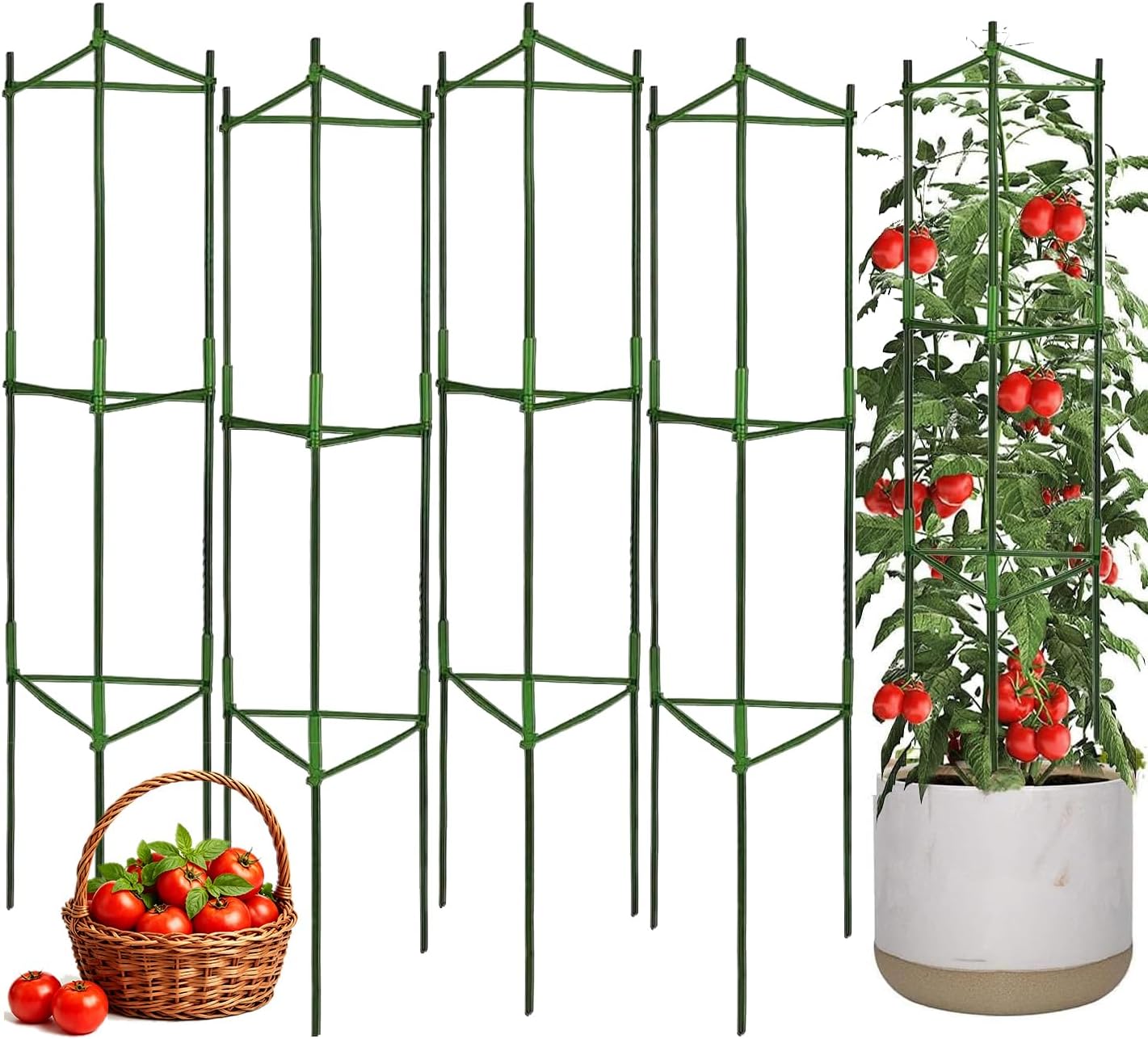
Moirsunt 4-Pack 50.2" Adjustable Tomato Cages (Triangular)
| Number of packs | 4 |
|---|---|
| Material Type | Metal, Plastic |
| Shape | Triangular |
| Size | 50.2 Inch |
These tomato cages are a modular support system made from 11 mm plastic‑coated metal stakes, snap‑on arms, and connecting pipes that you assemble around plants in raised beds or pots. The kit includes parts to build four triangular cages up to 50.2 inches tall and can be reconfigured into different shapes and heights as plants grow, which is handy for staggered planting or taller indeterminate tomatoes. Pointed stake ends make insertion into raised bed soil straightforward and the snap connections allow tool‑free assembly and compact storage when not in use. The plastic coating helps resist weathering and reduces abrasion on stems. Expect a lightweight but sturdy support well suited to medium tomato loads and other climbers like peas or peppers. The main limitations are that the triangular shape offers less internal width than round cages and heavy, fruit‑laden indeterminate varieties may need additional bracing or staking to prevent leaning. For gardeners who want flexible, space‑efficient supports for raised beds, this set covers most common needs without special tools.
Best for: Gardeners optimizing space and efficiency in raised beds who want reusable, adjustable supports they can reconfigure season to season.
Less Ideal for: Growers of very large indeterminate tomatoes or heavy-yield varieties who prefer rigid, wide cages or permanent trellising solutions.
- Modular snap‑on design allows quick, tool‑free assembly and reconfiguration as plants grow
- Plastic‑coated 11 mm metal stakes resist weathering and are reusable across seasons
- Pointed stake ends ease installation in raised bed soil
- Includes enough pieces to build four complete supports, useful for multiple plants or succession planting
- Triangular shape provides less internal space than round cages for very bushy plants
- May need extra bracing for very heavy, fruit‑laden indeterminate tomato varieties
Verdict: A flexible, space‑saving 4‑pack support system that lets raised‑bed gardeners build adjustable cages quickly and reuse them across seasons.
Suteck Raised Garden Bed Planter Box with Adjustable Trellis

| Material Type | Plastic, Steel |
|---|---|
| Finish Type | Powder Coated |
| Item Type Name | Raised Garden Bed Planter Box with Trellis |
| Number of Packs | 1 |
This Suteck raised garden bed combines a shallow planter box with a powder-coated steel trellis to support tomatoes, cucumbers, beans, and other vining vegetables in patios or balconies. It is assembled without tools using snap-together rods and panels, and the modular extension rods let you increase trellis height as plants grow. A bottom water reservoir with drainage ports reduces how often you need to water and helps keep soil moisture consistent. The plastic and steel construction keeps the unit lightweight and rust-resistant for season-to-season use, though its compact footprint means it is best for one or two plants rather than a large tomato crop. Practical benefits include vertical growing that saves floor space, simple setup, and lower maintenance from the self-watering tray. Important limitations are limited soil volume and load capacity compared with full-size raised beds, so heavy indeterminate tomatoes will need close pruning or additional support as they mature.
Best for: A budget-minded urban gardener who wants to grow one or two tomatoes or other vining vegetables on a patio, balcony, or small raised-bed area and values easy setup and low maintenance.
Less Ideal for: Gardeners planning to grow many large indeterminate tomato plants or seeking deep, high-capacity raised beds for full-season production should consider larger, heavier containers or traditional raised beds.
- Adjustable trellis height supports plants through multiple growth stages.
- Built-in water reservoir with drainage reduces watering frequency.
- Powder-coated steel rods resist rust and add stable vertical support.
- Tool-free, quick assembly and modular design for small spaces.
- Small planting volume limits root development and yield for large tomato varieties.
- Lightweight plastic planter may need anchoring in windy conditions.
Verdict: A compact, inexpensive self-watering planter with an adjustable steel trellis that gives small-space gardeners easy vertical support for a couple of tomato plants.
Happy Trees Heavy Duty Folding Tomato Cages, 3-Pack

| Number of Packs | 3 |
|---|---|
| Material Type | Steel |
| Finish Type | Galvanized |
| Item Type Name | tomato cages |
These Happy Trees cages are built for gardeners who want durable, no‑nonsense plant support in raised beds. Each collapsible cage is made from thick gauge galvanized steel and stands tall to accommodate indeterminate tomato varieties, cucumbers, beans and similar climbers. The square, open design gives plants room to branch while improving airflow for healthier growth and easier pruning and harvesting. They fold flat for offseason storage, which keeps shed space tidy compared with bent cone cages or flimsy plastic stakes. Because they are made in the USA with a galvanized finish they resist rust and should last multiple seasons, making them a reliable choice for repeated use in raised beds. The main compromises are weight and handling: the sturdy construction makes them heavier to move and they take a little effort to position in soil compared with lightweight alternatives. Also their fixed width means very compact beds may need a different spacing plan to fit three cages comfortably.
Best for: Gardeners who prioritize durable, long‑lasting supports for indeterminate tomatoes and other climbers in raised beds and want a dependable solution they can reuse year after year.
Less Ideal for: People who need ultra‑light or highly adjustable supports for very small or unusually shaped raised beds should consider simpler, narrower, or modular options instead.
- Thick gauge galvanized steel construction for season-to-season durability
- Collapsible design folds flat for compact offseason storage
- Large open square frame provides room for branching and good airflow
- Sold as a 3-pack for consistent support across multiple plants
- Heavier and bulkier to move than lightweight plastic or wire cone cages
- Fixed 18" width may be tight in very narrow raised beds
Verdict: A robust, no‑frills set of collapsible galvanized steel cages that reliably support larger tomato plants in raised beds season after season.
K-Brands Adjustable 68" Tomato Cages (3-Pack)

| Unit Count | 3 Count |
|---|---|
| Material Type | Alloy Steel, Plastic |
| Product Style | Adjustable |
| Shape | Triangular |
These K-Brands tomato cages are a simple, no-frills support system for tomatoes and other vining vegetables in raised beds. Each kit includes three adjustable triangular cages built from alloy steel with plastic connectors; the height extends to 68 inches and the cages assemble from rod sections and notched connectors. In practice they hold heavy stems upright, keep fruit off the soil, and let air and light reach the canopy to reduce disease pressure. The adjustable width and modular assembly make them easy to size for young plants or mature indeterminate varieties, and the green finish blends into garden beds. Expect basic weather resistance from the steel and coating but plan to check connectors annually for corrosion where moisture accumulates. These are best for gardeners who want a low-cost, space-efficient way to stake multiple plants in raised beds or large containers, but they are not a heavy-duty permanent trellis for very windy sites or extremely heavy yields.
Best for: Gardeners growing indeterminate tomatoes or other tall vining vegetables in raised beds or large containers who want an affordable, adjustable support that installs quickly and covers several plants.
Less Ideal for: Those needing a permanent, heavy-duty trellis for high-yield commercial crops or gardeners in exposed, high-wind locations should consider anchored or heavier steel options.
- Adjustable height and width to accommodate young plants through maturity
- Triangular cage shape gives stable multi-point support around stems
- Three-cage pack covers multiple plants or rows in a raised bed
- Alloy steel construction provides sturdier support than thin wire cages
- Plastic connectors and coating may show wear over multiple seasons in wet conditions
- Not engineered as an anchored solution for very windy sites
Verdict: A practical, adjustable three-pack of tall cages that gives raised-bed growers an affordable way to support multiple indeterminate tomato plants.
Halatool 48-inch Tomato Cages, 8-Pack

| Material Type | Alloy Steel, Plastic |
|---|---|
| Finish Type | Plastic Coating |
| Shape | Triangular |
| Number of Items | 8 |
| Size | 48 Inches |
These Halatool tomato cages are a modular, tool-free support system sold as an eight-pack of 48-inch triangular cages intended for tomatoes and other climbing vegetables in raised beds or containers. The set uses alloy steel stakes with a plastic coating and snap-on arms that assemble without tools; pointed stake ends make insertion into soil straightforward and the connecting pipes allow modest height adjustments. In practice the cages provide vertical support and improve air circulation and light exposure for plants, and they disassemble for compact storage when not in use. The plastic coating helps resist rust and protects fruit and stems from abrasion. Important limitations are that the pieces are lightweight compared with heavy-duty wire cages, so extra anchoring or grouping may be needed in very windy sites or for extremely heavy indeterminate tomato varieties. Also the product contains sharp stake heads and will need periodic inspection for weathering over seasons. For gardeners who want easy setup and space-saving storage, these are a practical, reusable option for raised beds.
Best for: Gardeners who want a low-effort, reusable support system for tomatoes and other climbers in raised beds or containers and prefer easy assembly and compact storage.
Less Ideal for: Growers who need heavy-duty, permanent supports for very large indeterminate varieties or who prefer all-metal welded cages for maximum rigidity.
- Tool-free snap-together assembly for quick setup and adjustments
- Plastic-coated alloy steel resists rust and reduces abrasion to plants
- Pointed stake ends make insertion into raised bed soil easier
- Disassembles for compact storage when not in use
- Lighter construction may need extra anchoring for very heavy vines or windy sites
- Sharp stake heads require careful handling during installation
Verdict: A convenient eight-pack of easy-assembling, plastic-coated 48-inch cages that give raised-bed tomato plants tidy vertical support with minimal effort.
Choosing the Right Tomato Cage for Raised Beds: Key Factors to Consider
Material and Corrosion Resistance
The material determines how long a cage will last in the damp microclimate of a raised bed. Steel offers strong support but needs a rust-resistant finish such as powder coat or galvanization to avoid flaking and structural weakening. Plastic and composite options resist corrosion but can flex or break under heavy fruit loads or during winter storage.
Consider how often you water, whether you live in a salty coastal area, and how the cage will be stored between seasons. A durable finish reduces the need to replace cages annually and keeps connections tight so plants remain supported all season.
Anchoring and Stability in Narrow Beds
Raised beds are often shallower and narrower than in-ground plantings, so a cage that relies on deep soil for stability may tip as plants fill it out. Look for cages with wide bases, legs that can be driven into the soil, or external anchoring points that accept stakes or ties.
Stability affects plant health and harvest ease. A wobbly cage can damage stems and roots as you harvest, so choose designs that match your bed depth and allow secure anchoring without disturbing nearby plants.
Size and Adjustability for Different Tomato Types
Tomato varieties range from compact determinate types to sprawling indeterminate vines. The best cage for raised beds lets you choose height and diameter appropriate for the variety you grow. Some cages telescope or stack for taller plants while others have fixed rings that offer immediate support.
Consider the mature height and spread of your plants and the width of your raised bed. A too-narrow cage will cause rubbing and poor airflow; an overly large cage can crowd neighboring rows or paths.
Plant Access, Airflow, and Maintenance
Good access to stems and fruit makes pruning, tying, and harvesting easier. Cage designs with larger openings or removable panels let you reach inside without forcing branches through tight gaps. Adequate spacing between support rings also improves airflow, which reduces humidity around leaves and lowers disease risk.
Think about how often you will prune and how much room you need to maneuver in your bed. Designs that balance confinement with access reduce accidental damage and speed routine tasks.
Setup Time and Reusability
Time-conscious gardeners prefer cages that are quick to install and remove. Simple, tool-free assembly speeds spring setup, while collars, sleeves, or collapsible panels help with off-season storage. Reusable constructions that resist bending or warping will save time and money over several seasons.
Also evaluate whether parts are replaceable. Cages with modular pieces let you repair a broken section rather than replacing the entire unit.
Compatibility With Raised-Bed Practices
Raised-bed growers often practice succession planting, interplanting, and intensive spacing. Choose a cage that works within those practices by allowing companion plants around the base and not monopolizing the bed footprint. Consider whether the cage design interferes with row covers, drip irrigation lines, or seasonal hoops.
A compatible cage integrates with your bed layout, irrigation, and crop rotation plans so it supports not only the tomatoes but the overall productivity of the bed.
Cage Styles and How They Behave in Raised Beds
Round ring cages, spiral stakes, and tall cylindrical frames each behave differently in a shallow raised bed. Ring-style cages give even radial support and are easy to slip around young plants, but narrow bases can be unstable in shallow soil. Spiral and stake systems concentrate support at single points and need good anchoring to resist levered load from heavy fruit clusters.
Stackable or telescoping cages are useful when you start with a shorter support and later need to add height without disturbing roots. Foldable or panel-style cages simplify access for pruning and harvest, making them a pragmatic choice for beds where you want quick entry to the plant canopy.
- Ring cages: uniform support, can be unstable unless base is wide or anchored
- Spiral stakes: low-profile and tidy, require deep anchoring to avoid tipping
- Panel or foldable cages: best access, may need more storage space off-season
- Telescoping cages: adaptable height without heavy replant disturbance
Anchoring Techniques for Better Stability
Anchoring is often the difference between a supportive cage and a leaning, broken one. For raised beds, use soil-penetrating legs, external ground stakes driven beside the cage, or tie the cage to bed rails. If your bed has a wooden frame, short screws or U-wraps attached to the frame can secure the cage without harming roots.
When soil is shallow, add supplemental stakes or use wider-footed bases that spread the load. In windy areas, cross-ties between cages or tying cages to fixed structures can prevent catastrophic collapse during storms.
- Drive legs fully into soil until the base feels snug
- Use bed frame anchors to secure cages in shallow beds
- Add exterior stakes or cross-ties for windy sites
- Check anchors mid-season as soil settles and roots expand
Fitting Cages to Common Raised Bed Dimensions
Most raised beds are between 3 and 4 feet wide. For beds narrower than 36 inches, choose cages with smaller diameters or designs that place supports along the long axis of the bed. For wider beds, larger-diameter cages or paired supports placed side-by-side give better coverage without crowding the plant.
Also consider bed depth. In shallow beds, prioritize anchoring solutions over extreme height. You can combine a shorter, wider cage with supplemental vertical stakes if you need extra height for indeterminate varieties.
- Narrow beds: prefer slender cages or linear supports
- Standard beds: medium diameter cages work well
- Deep beds: taller cages with robust bases are suitable
- Combine short cages with stakes to increase height safely
Seasonal Care and Long-Term Storage
At season end, collapse or disassemble cages to prevent winter damage and free up storage space. Metal cages should be cleaned of soil and plant debris and inspected for corrosion. Repair bent sections before storing to avoid permanent warping.
Label or group compatible parts to speed spring reassembly. If you plan to reuse cages year after year, consider a light coat of rust inhibitor on metal finishes and store components off the ground in a dry location.
- Clean and dry cages before storage
- Disassemble modular pieces and label them
- Repair bent or broken sections promptly
- Store off the ground in a dry area to extend life
Integrating Cages With Irrigation and Row Covers
Cage design should not obstruct drip lines or soaker hoses. Plan your irrigation layout so lines run under or between cages. If you use row covers early in the season, choose cages with removable or wide-opening panels to let you put covers on and take them off without damage.
Consider how integrated hoops or low tunnels will interact with cages. Combining supports can save space, but make sure attachment points are secure and do not pinch irrigation tubing or stress fabric covers during wind.
- Route irrigation lines around cage bases
- Use removable panels for easy row-cover access
- Avoid tying covers tightly to cages where abrasion may occur
- Check irrigation emitters after installing cages to ensure flow
How We Chose the Best Tomato Cage for Raised Beds
We focused on features that matter in raised-bed tomato growing and excluded low-clearance designs or supports intended only for open-field use. Key evaluation criteria included material strength and corrosion resistance because constant moisture and soil contact in raised beds accelerate rust and wear. Stability in narrow beds and shallow soils was assessed to ensure cages do not tip as plants grow heavier. Ease of installation and adjustability were included because gardeners often need quick setup and occasional repositioning during the season. Plant health considerations such as airflow around stems and accessibility for pruning and harvesting were evaluated since dense foliage in beds can promote disease. Finally, long-term maintenance and storage were considered to reflect how a cage performs over multiple seasons. Products that lacked sufficient anchoring options or were unsuitable for common raised-bed dimensions were excluded from the shortlist.
FAQ
What cage height is best for indeterminate tomatoes in raised beds?
Indeterminate varieties often need taller support, typically 5 to 7 feet of vertical structure. In raised beds with shallow soil, combine a shorter cage with stakes or a telescoping extension to reach necessary height without sacrificing stability.
Can I use a single cage for multiple plants in a small raised bed?
You can if the bed is wide enough to accommodate the spread and the cage diameter matches the mature canopy. Crowding can reduce airflow and increase disease risk, so use wider cages or separate supports when spacing allows.
How should I anchor a cage in a raised bed with compacted or rocky soil?
In compacted or rocky beds, drive anchors beside the cage into more workable soil or attach the cage to the raised-bed frame. External stakes or tie-downs connected to the bed sides often work better than relying on deep insertion.
Are lightweight plastic cages adequate for heavy-fruiting tomato varieties?
Lightweight plastic can work for small or determinate tomatoes, but heavy-fruiting indeterminate plants often need stiffer metal or reinforced supports. Lightweight materials may flex under fruit weight and require supplemental bracing.
Will a cage affect my ability to rotate crops in raised beds?
Cages themselves do not prevent crop rotation, but bulky or permanently installed anchors can be inconvenient. Use removable or easily extracted supports so you can adjust bed layout for rotation and different crops between seasons.
Final Verdict
Match cage style to your bed dimensions, tomato type, and maintenance routine. Prioritize anchoring and corrosion resistance if your beds are shallow or you water frequently. Balance access and airflow against the need for tall, rigid support. The right tomato cage for raised beds will stabilize vines without crowding the bed or obstructing irrigation. Focus on the tradeoffs outlined here and choose a design that fits your bed layout and seasonal gardening practices so you get reliable support year after year.
