

Note: This article contains affiliate links. If you click on these links and make a purchase, I may earn a small commission at no extra cost to you. This helps support my research and content. Read my full affiliate disclosure here.
If you grow citrus in containers or need to repot young trees, the right potting mix changes how well they root, flower, and set fruit. Citrus prefer a balance of free drainage and enough moisture retention plus steady nutrients. Using a mix formulated for citrus conditions reduces root rot risk, improves gas exchange around roots, and helps maintain consistent feeding between applications. This guide covers the top shortlisted potting mixes for citrus trees and explains why each type made our list. We evaluate mixes for drainage, nutrient retention, and how they behave in real container and greenhouse settings, so you can choose a blend that fits your planting plan.
Top Picks at a Glance
| Best Overall The best all-around choice for most situations | GARDENWISE Citrus Potting Soil Mix (10 Quarts) |  |
| Best Quality Built to a higher standard if you want something more solid | Soil Sunrise Citrus Tree Potting Soil Mix (30 Quarts) |  |
| Best Value The sweet spot between price and what you get | Duspro Pre-Mixed 4‑in‑1 Citrus Tree Potting Soil Mix, 10 Quart |  |
| Best Budget The cheapest option that still gets the job done reliably | Doter Citrus Tree Potting Soil Mix (1 qt) |  |
| Highest Rated A top-rated pick with lots of positive feedback | E.B. Stone Organics Citrus & Palm Mix Potting Soil, 1.5 cu ft |  |
| Most Popular A crowd favorite that many people choose with confidence | Miracle-Gro Cactus, Palm & Citrus Potting Mix, 8 qt. |  |
GARDENWISE Citrus Potting Soil Mix (10 Quarts)

| Unit Count | 320 Ounce |
|---|---|
| Included Components | Perlite, coarse sand, coconut coir, vermiculite, compost, peat moss, dolomite, organic fertilizer |
| Volume | 10 quarts |
This Citrus Potting Soil mix is built specifically to support potted and container citrus trees from planting through fruiting. The formula combines extra perlite and coarse sand for fast drainage with coconut coir and vermiculite to keep the mix light and airy so roots get oxygen while compost and peat retain moisture. The blend is enriched with organic acidic compost and a special organic fertilizer to deliver micronutrients like iron, magnesium and manganese that citrus need for healthy foliage and fruit development. Dolomite lime is included to help stabilize the advertised pH range of 5.5 to 6.5, reducing the need for constant adjustments. In practice this mix suits repotting, new plantings and periodic top-dressing for indoor or patio citrus where good drainage and slightly acidic soil are important. Expect easier watering management and fewer signs of iron chlorosis compared with generic potting soils. Limitations: the 10-quart bag is best for small to medium containers and you will still need to monitor fertility over multiple seasons for mature trees.
Best for: Gardeners who want an off-the-shelf, citrus-specific potting mix that makes repotting and container care simpler and helps young to mid-size citrus establish and produce.
Less Ideal for: Large established citrus grown in big landscape beds or growers who need bulk volumes for multiple trees should look for larger commercial blends or custom mixes.
- Designed for citrus with a pH-targeting acidic compost and peat moss
- Includes perlite and coarse sand for improved drainage and reduced root rot risk
- Light, airy texture from coconut coir and vermiculite promotes root aeration
- Fortified with micronutrients (iron, magnesium, manganese) useful for fruit quality
- 10 quarts is a relatively small volume for larger trees or multiple pots
- Contains peat and dolomite so gardeners preferring peat-free or strictly lime-free mixes may object
Verdict: Pick this mix when you want a purpose-built, drainage-focused potting soil that simplifies container citrus care and supports fruiting in small to medium trees.
Soil Sunrise Citrus Tree Potting Soil Mix (30 Quarts)

| Volume | 30 quarts |
|---|---|
| Ingredients | Peat moss, perlite, sand, worm castings, lime |
| Style Name | Sandy |
| Unit Count | 1 Count |
This 30-quart Soil Sunrise Citrus Tree Potting Mix is built specifically for potted lemons, limes, mandarins and other container citrus. The blend uses peat moss for moisture retention, perlite and coarse sand for fast drainage and aeration, worm castings to supply slow-release nutrients, and lime to keep the pH in the range citrus prefer. In practice it is best used when repotting or establishing young dwarf citrus in containers indoors or on a patio where avoiding soggy roots is critical. The resealable bag and natural ingredients make handling tidy and minimize added chemicals. Performance-oriented growers will appreciate the mix’s emphasis on structure and nutrient-holding components that support root growth and reduce rot risk. Limitations to note are that it is a potting medium not a complete fertilization program so periodic feeding will still be required, and its peat base means it will compress over time and may need refreshment during re-potting cycles.
Best for: Buyers who prioritize vigorous, healthy container citrus and want a purpose-built, performance-focused potting medium for repotting and long-term container culture.
Less Ideal for: People looking for a fully organic peat-free mix or those who prefer an all-in-one potting mix with built-in slow-release fertilizer.
- Formulated blend for citrus with peat, perlite, sand, worm castings and lime
- Good drainage and aeration to reduce root rot in containers
- Contains worm castings for natural nutrient support
- Resealable packaging for convenient storage
- Not a substitute for regular fertilizing; additional feedings needed
- Peat-based so it will compress and may require replacement over time
Verdict: Choose this mix when you want a performance-focused, citrus-specific potting medium that promotes fast drainage and healthy root development.
Duspro Pre-Mixed 4‑in‑1 Citrus Tree Potting Soil Mix, 10 Quart

| Style Name | 10 Quarts |
|---|---|
| Item Highlight | Indoor Fruit Tree Mix for Potted Lemon Tree, Oranges & Other Citrus Trees, Drainage, Root Aeration & Balanced Moisture |
| Brand Name | Duspro |
| Unit Count | 1 Ounce |
This Duspro 4‑in‑1 citrus potting mix is a pre-mixed blend intended for repotting potted lemon, lime, orange and other container citrus. It combines coco coir and coco fiber to retain moisture while vermiculite helps hold water and nutrients and perlite improves drainage and root aeration. The product is easy to use straight from the bag for one-step repotting or as a base to tweak with additional amendments. Practical benefits include a lighter, cleaner texture from double-screened ingredients that pour and settle predictably in pots and sizes that match common container counts so you can choose enough mix for one tree or several. Important limitations are that the bag is dry and dusty on opening so dust precautions are wise and the 10 quart size only covers a few repots for larger trees. For growers who prefer to blend components themselves the fixed ratio may be less flexible, but for someone wanting a reliable, grab-and-pour citrus mix this saves time and reduces measuring.
Best for: Buyers who want a time-saving, ready-to-use potting mix for repotting potted citrus and value consistent, predictable results without measuring or blending ingredients.
Less Ideal for: Growers who prefer to customize media ratios for specific trees or who need large volumes for many mature trees should look at bulk or DIY substrate options.
- Pre-mixed 4-in-1 blend (coco coir, coco fiber, perlite, vermiculite) made for container citrus
- Double-screened ingredients for a cleaner, consistent texture that pours easily
- Balanced moisture retention with improved drainage and root airflow
- Available in common bag sizes to match how many 8-inch pots you need to fill
- Dry, dusty texture on opening requires dust precautions
- Fixed ingredient ratio limits customization for growers who mix their own media
Verdict: A convenient, reliably blended citrus potting mix that saves time and delivers balanced moisture and drainage for potted lemon and other container citrus.
Doter Citrus Tree Potting Soil Mix (1 qt)
| Brand Name | Doter |
|---|---|
| Item Type Name | Garden soil |
| Volume | 1 quarts |
| Item Weight | 224 g |
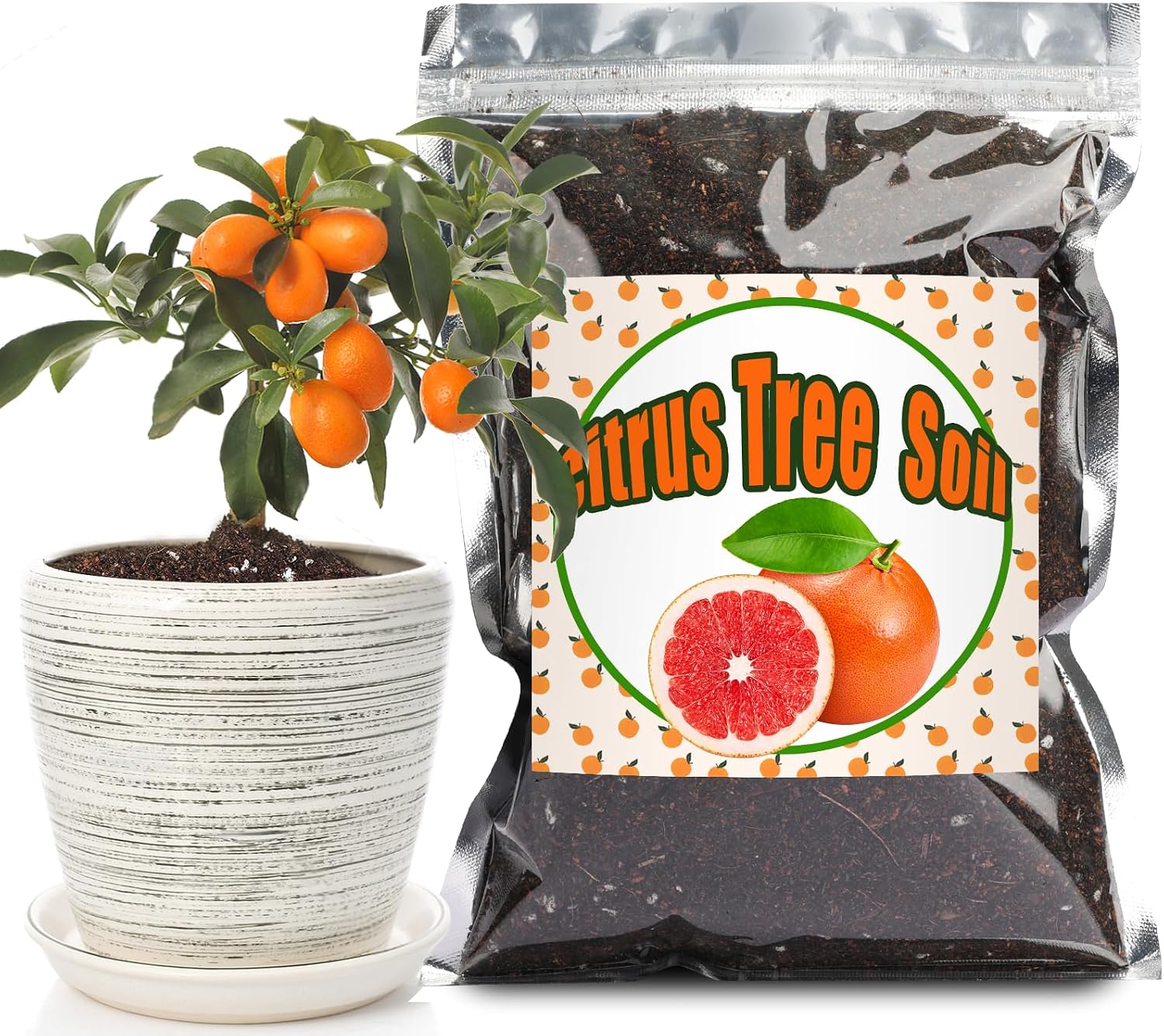
This Doter citrus potting mix is a small, 1-quart, ready-to-use blend designed specifically for potted citrus like lemons, limes, and oranges. It aims to keep pH between about 6.0 and 7.1 so trees can take up nutrients efficiently, and the formula includes components that improve drainage to reduce the risk of waterlogged roots. You would typically use it for repotting young citrus saplings or topping up containers where quick aeration and a nutrient boost are helpful. The mix is convenient for container gardeners because it combines organic matter and mineral nutrients so you do not need to premix multiple amendments for short-term use. Limitations are its small volume and single-quart packaging, which means it is best for trialing a soil or for small pots rather than filling large containers or multiple trees. Also there is no detailed guaranteed analysis on nutrient levels, so heavier feeders or long-term container plantings will still need periodic fertilization.
Best for: Citrus hobbyists on a tight budget who need a small, convenient ready-made mix for single potted trees or for testing a citrus-specific soil without buying large bags.
Less Ideal for: Gardeners who need to fill large containers, multiple citrus trees, or who require precise fertilizer formulations for heavy-feeding plants should consider larger or more specified mixes.
- Formulated pH suited for citrus (about 6.0–7.1) to aid nutrient uptake
- Designed for improved drainage to help prevent root rot in containers
- Pre‑enriched with organic and mineral nutrients for healthier growth
- Ready-to-use mix convenient for quick repotting or topdressing
- Sold in a small 1‑quart volume, not practical for large pots or multiple trees
- No detailed nutrient analysis or guaranteed N-P-K values provided
Verdict: A compact, citrus-specific ready mix that gives small potted lemon and lime trees balanced pH and improved drainage for an affordable quick fix.
E.B. Stone Organics Citrus & Palm Mix Potting Soil, 1.5 cu ft

| Brand Name | E.B. Stone Organics |
|---|---|
| Unit Count | 1536 Ounce |
| Volume | 1.5 cubic feet |
| Style Name | Potting Soil |
E.B. Stone Organics Citrus & Palm Mix is a ready-to-use organic soil blend designed for container and in-ground planting of citrus, palms, avocados and tropical foliage. The mix pairs aged fir bark and pumice to keep the root zone well aerated and fast-draining so plants that dislike soggy feet avoid root rot, while added mycorrhizae improve nutrient and water uptake. It is intended to be used straight from the bag for potting or worked into beds when planting, which simplifies planting and repotting tasks. For gardeners seeking reliability, this blend delivers consistent structure and moisture retention without heavy amendments, and the organic base supports longer-term soil biology. Limitations are the single bag volume of 1.5 cubic feet, which means larger projects will require multiple bags and mixing on site, and it does not list N-P-K numbers or slow-release fertilizer content so supplemental feeding may be needed for heavy-feeding specimens.
Best for: Gardeners who prioritize reliable, low-maintenance potting media for citrus and tropical plants and want a ready-made organic blend that supports healthy roots.
Less Ideal for: People who need large volumes for landscaping projects or who prefer a potting mix with specified fertilizer content and tailored nutrient ratios.
- Formulated specifically for citrus, palms and tropicals to match their root needs.
- Aged fir bark and pumice provide good drainage and aeration to reduce risk of root rot.
- Contains beneficial mycorrhizae to enhance root nutrient and water uptake.
- Ready-to-use bag simplifies repotting or planting without on-site blending.
- Single bag is only 1.5 cubic feet so multiple bags are required for larger trees or beds.
- No detailed fertilizer analysis provided so additional feeding may be necessary for heavy feeders.
Verdict: Choose this mix when you want a consistent, ready-to-use organic soil that promotes healthy, well-aerated roots for citrus and tropical plants.
Miracle-Gro Cactus, Palm & Citrus Potting Mix, 8 qt.
| Volume | 8 quarts |
|---|---|
| Item Weight | 16 ounces |
| Suitable for | Cactus, palm and citrus |
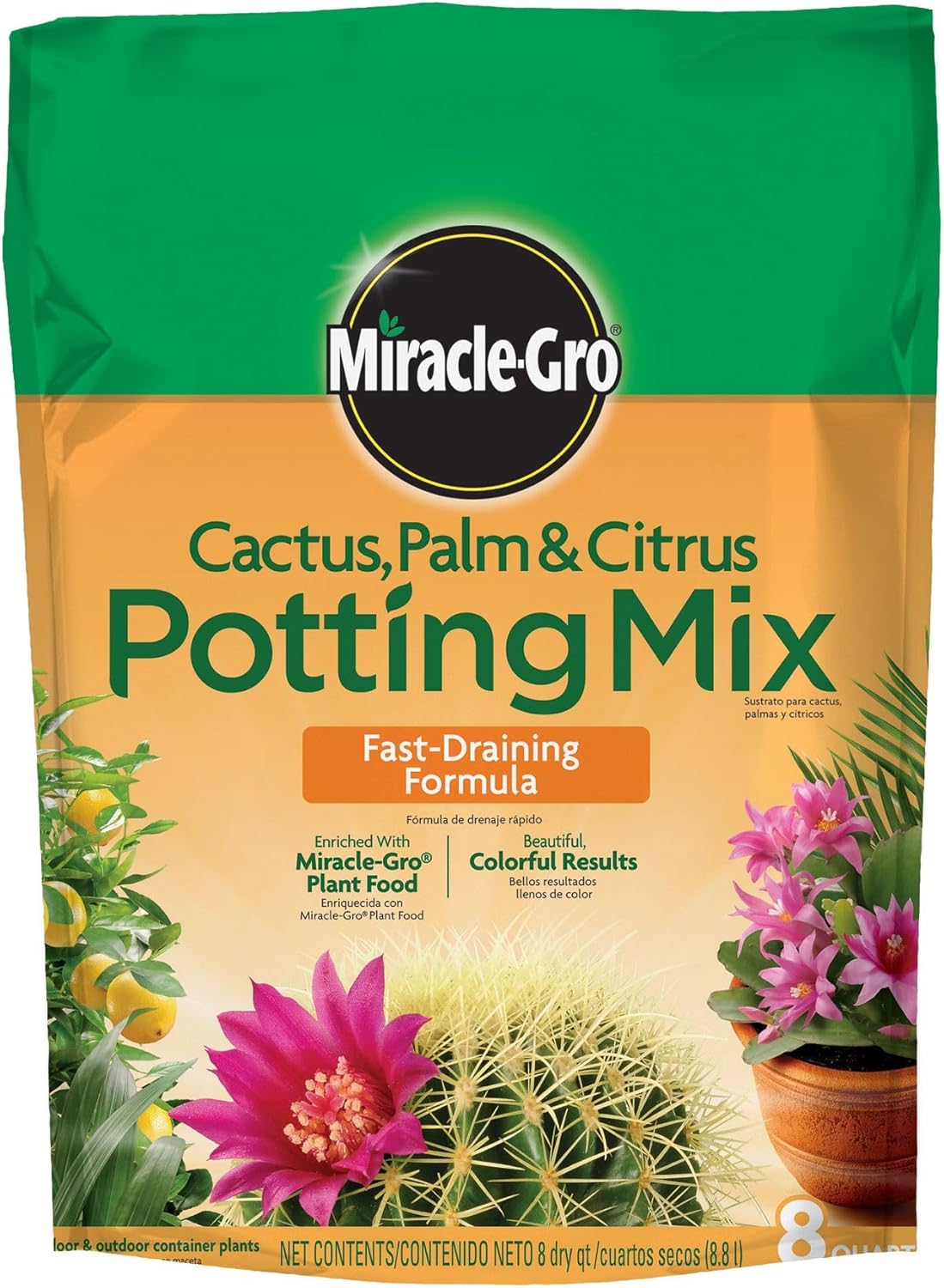
This 8 qt. Miracle-Gro Cactus, Palm & Citrus Potting Mix is a ready-to-use container soil aimed at succulents and citrus trees grown in pots. The blend of forest products, sphagnum peat moss, sand, and perlite creates a fast-draining medium that helps prevent compaction and reduces the risk of root rot when used in pots with drainage holes. It is enriched with Miracle-Gro plant food, so newly potted plants get an initial nutrient boost. Typical use is simple: fill a drain-holed pot, set the root ball, top up with mix, water thoroughly and allow to drain; the manufacturer also recommends letting the soil dry to the touch between waterings. Practical benefits include easier repotting for small citrus and less frequent soil maintenance compared with plain garden soil. The main limitation is volume — an 8 qt bag covers only a couple of small to medium containers, so larger citrus or repeated repotting will require multiple bags or a larger supply. Also the peat-based blend is intended for containers and may dry faster outdoors in hot conditions.
Best for: Buyers who want a convenient, container-focused potting mix that supports healthy root drainage and gives new citrus plants an immediate nutrient start while relying on proven product formulations.
Less Ideal for: Gardeners who need bulk soil for in-ground planting or those looking for large-volume professional mixes for mature citrus trees in big containers.
- Fast-draining formula reduces risk of waterlogged roots in containers
- Enriched with Miracle-Gro plant food to give newly potted plants an initial nutrient boost
- Contains sand and perlite to help prevent soil compaction and improve aeration
- Formulated specifically for container-friendly plants like succulents and citrus
- Small 8 qt volume means you will need multiple bags for larger citrus or multiple pots
- Peat-based mixes can dry out faster in hot outdoor conditions and may require more frequent watering
Verdict: A convenient, fast-draining container mix enriched with plant food that makes potting small citrus and succulents simple and low-risk.
Choosing the Right Potting Mix for Citrus Trees: Key Factors to Consider
Drainage and Aeration
Citrus roots need oxygen as much as water. A potting mix that drains well prevents waterlogging and reduces root-rot risk, especially in cool weather or with infrequent watering. Good aeration comes from coarse components like pine bark, perlite, or pumice that create stable pore space even after repeated wetting and drying.
Poorly draining mixes compact and limit oxygen exchange, causing slow growth, yellowing leaves, and poor fruit set. When evaluating mixes, look for visible coarse particles and an open texture rather than a fine, soil-like feel.
Moisture Retention Balance
While drainage is essential, citrus trees also need steady moisture between waterings to avoid stress. A good citrus potting mix holds enough water to feed the tree for several days but releases excess quickly when you water. Components like coconut coir or aged compost add retention without turning the mix into a sponge.
The ideal balance reduces the frequency of watering without risking prolonged saturation. Consider your container size and local climate: smaller pots and hot, windy conditions demand mixes with slightly higher retention.
Nutrient Release and Buffering
Citrus are moderate feeders that benefit from consistent, available nutrients. A quality potting mix contains stable organic matter or slow-release components that provide a baseline of nitrogen, phosphorus, and potassium while allowing supplemental fertilizer to be effective.
Buffering capacity matters because it keeps pH and available nutrients stable between applications. Mixes with too little organic matter may require more frequent feeding, while mixes overloaded with fresh compost can have unpredictable nutrient spikes.
pH and Mineral Availability
Citrus trees prefer a slightly acidic substrate, usually around pH 5.5 to 6.5. The potting mix should either be within that range or easy to adjust and maintain. pH affects micronutrient availability; iron and manganese become less available in alkaline media, which can cause yellowing on new growth.
Choose mixes with materials that do not strongly raise pH, and be prepared to monitor and adjust pH if you use alkaline water or lime-rich amendments. A mix with some natural buffering makes pH management simpler.
Structural Stability and Longevity
Over seasons, a potting mix that breaks down quickly will compact, lose aeration, and demand replacing. Stable components like bark, perlite, pumice, and aged coir keep structure longer and reduce how often you need to repot.
Longevity matters when you grow citrus in large containers or bonsai-style forms where repotting is disruptive. Think about whether you prefer a seasonally refreshed topdress or a long-lasting mix that only needs repotting every few years.
Pest, Disease, and Salt Management
Container-grown citrus can accumulate salts from fertilizer and water, and some mixes retain salts more than others. A good potting mix drains excess salts away from the root zone to limit buildup. Materials that encourage microbial balance can also suppress damping-off and other soil-borne problems.
Avoid mixes with a history of carrying persistent pests or that include large amounts of uncomposted organic material likely to harbor pathogens. Regular flushing and periodic substrate refresh prevent salt stress and disease pressure.
Container Size and Mix Ratio
Container volume affects how a mix behaves. Smaller pots dry faster and magnify the effects of poor drainage, so mixes for small containers should lean more heavily on coarse components. Larger containers buffer moisture swings and allow mixes with a bit more organic matter.
Adjust the ratio of bark, mineral aggregate, and organic matter to match pot size. For small patio containers, increase pumice or perlite for quick drainage. For larger tubs, include more well-aged compost or coir to hold steady moisture between waterings.
- Small pots: higher coarse particle content to speed drainage
- Large pots: more moisture-retentive components for steady supply
- Very large containers: consider layered substrate or internal drainage to prevent buried wet zones
How Watering Frequency Changes Mix Needs
Your watering schedule should inform mix choice. If you water daily, a faster-draining mix reduces the risk of saturation. If you water less frequently, choose a mix with more retention so roots do not dry out completely between cycles.
Also consider your watering method. Soaker systems and drip lines deliver water slowly and favor mixes that distribute moisture evenly, while overhead or manual watering benefits from mixes that shed excess quickly to limit surface pooling.
- Frequent watering: prioritize drainage and aeration
- Infrequent watering: prioritize moisture-holding materials
- Drip irrigation: aim for uniform particle sizes to reduce channeling
Amendments and Fertilizer Strategy
Decide whether you want a mix that supplies steady nutrients on its own or one that is essentially inert and requires regular feeding. Slow-release organic amendments reduce fertilizer chores but need checking for salt accumulation. Inert mixes give you control over feeding schedules and rates.
Match fertilizer form to the mix: soluble feeds work quickly in inert mixes, while organic slow-release feeds pair well with mixes containing active organic matter. Always monitor foliage and fruiting to adjust feed frequency and strength.
- Organic amendments for slow, steady nutrition
- Inert mixes for precise liquid feeding
- Flush containers occasionally to control salts
Seasonal Care and Repotting Timing
Spring and early summer are the best times to repot citrus, when growth resumes and roots recover quickly. Use repotting as an opportunity to refresh degraded mix and adjust the root ball size gently rather than aggressively pruning roots.
Between repots, top-dress with fresh mix or compost to replenish lost organic matter and nutrients. Inspect root health annually; if the mix shows compaction or poor drainage, full replacement is preferable to repeated top-dressing.
- Repot in spring for fastest recovery
- Top-dress annually instead of full repot when structure is still good
- Replace mix every few years if it compacts or drains poorly
pH Monitoring and Adjustment
Test substrate pH periodically, especially if you see yellowing on new leaves or reduced fruit set. Small adjustments with sulfur or acidifying fertilizers can correct a slowly rising pH. If water supply is alkaline, choose mixes with higher buffering capacity or plan for more frequent pH corrections.
Use soil pH test kits or a handheld meter for quick checks. Maintain regular fertilizer and flushing routines to keep the root environment stable and avoid sudden swings after large amendments.
- Test pH at least once per season
- Correct pH slowly to avoid shocking roots
- Account for water alkalinity when choosing a mix
How We Chose the Best Potting Mix for Citrus Trees
We prioritized mixes that address the specific root and moisture needs of citrus trees grown in containers and small yards. Evaluation focused on drainage and aeration, moisture-holding capacity, and nutrient release behavior under typical container watering cycles. We also assessed pH suitability and buffering, since citrus prefer slightly acidic, stable media. Physical stability and resistance to compaction were checked to ensure mixes keep pores open through repeated wet-dry cycles. For organic-minded gardeners we considered the presence and longevity of natural amendments and whether the mix supports steady biological activity without rapid depletion. We excluded blends intended only for indoor houseplants or heavy water-retaining potting soils that lack adequate drainage for citrus. Final selections favor mixes that perform well across container sizes, survive regular watering schedules, and simplify fertilization needs while protecting root health.
FAQ
How often should I repot citrus in containers?
Usually every 2 to 4 years depending on mix breakdown and root crowding. Young trees in fast-draining mixes may need repotting sooner, while large containers with stable mixes can go longer between full replacements.
Can I use regular houseplant soil for citrus trees?
Often houseplant soils are too fine and retain too much moisture for citrus, increasing root-rot risk. If you use them, amend heavily with coarse materials to improve aeration and drainage.
What amendments improve a potting mix for citrus?
Coarse pine bark, pumice, or perlite improve aeration and drainage. Coconut coir or well-aged compost add moisture holding without turning the mix into a sponge. Choose amendments that are stable and well-aged to avoid nitrogen drawdown or compaction.
How important is pH for citrus grown in pots?
pH is important because it controls micronutrient availability. Citrus favor slightly acidic media. If pH drifts too high, you may see iron chlorosis and reduced fruit quality, so periodic testing and gentle correction are useful.
Should I worry about salt buildup in container mixes?
Yes. Regular fertilizing and alkaline water can lead to salt accumulation. Flush containers occasionally with extra water and consider replacing the top few inches of mix annually to reduce buildup.
Final Verdict
Choose a potting mix for citrus trees by prioritizing drainage and aeration first, then balancing enough moisture retention and steady nutrient release for your watering routine and container size. Factor in pH stability and structural longevity to reduce repotting frequency and minimize root stress. The right mix depends on whether you prefer low-maintenance slow-release nutrition or precise control with inert media and regular feeding. Focus on the tradeoffs above to pick a blend that keeps roots healthy and helps your citrus thrive.
