

Note: This article contains affiliate links. If you click on these links and make a purchase, I may earn a small commission at no extra cost to you. This helps support my research and content. Read my full affiliate disclosure here.
Choosing the right fish pond liner shapes how well your backyard water feature holds up to seasons, plants, and fish. A liner that tears, becomes brittle, or fails to seal properly turns pond maintenance into constant repair. This guide covers seven top shortlisted options for Best Fish Pond Liner and explains the practical reasons those liners earn consideration. We evaluated each liner on real gardener concerns: material thickness, puncture and tear resistance, ease of installation, and longevity in outdoor conditions. Read on to understand the tradeoffs so you can pick a liner suited to your site, soil, and fishkeeping goals.
Top Picks at a Glance
| Best Overall The best all-around choice for most situations | Firestone 45mil EPDM Rubber Pond Liner, 15 ft x 20 ft |  |
| Best Quality Built to a higher standard if you want something more solid | Firestone PondGard 45 mil EPDM Pond Liner, 15 x 15 ft |  |
| Best Value The sweet spot between price and what you get | Adroiteet 14 x 14 ft HDPE Pond Liner, 20 mil |  |
| Best Budget The cheapest option that still gets the job done reliably | DGSL 20 mil HDPE Pond Liner, 7 x 10 ft |  |
| Highest Rated A top-rated pick with lots of positive feedback | MERXENG 10 x 15 ft 45 mil EPDM Pond Liner |  |
| Most Popular A crowd favorite that many people choose with confidence | UWIOFF 20 mil HDPE Pond Liner, 10 x 13 ft |  |
| Best Seller A high-volume bestseller chosen again and again | ToLanbbt HDPE Pond Liner, 7 x 10 ft, 20 mil UV-Resistant |  |
Firestone 45mil EPDM Rubber Pond Liner, 15 ft x 20 ft

| Material | EPDM rubber |
|---|---|
| Thickness | 45 mil (0.045 inch) |
| Shape | Pre-cut sheet |
| Intended use | Pond liner for water gardens |
This Firestone 45 mil EPDM pond liner is a performance-focused, pre-cut rubber liner intended for medium to large backyard ponds and water features. Its 0.045-inch (45 mil) thickness gives noticeable puncture and weather resistance compared with thinner liners, and the flexible EPDM material makes it easy to form around irregular shapes and rockwork during installation. The liner arrives boxed and ready to unroll, which speeds setup for DIY installers or professionals. Because EPDM is fish-safe and chemically stable, it suits planted ponds and ornamental fish. The main practical limitations are that a pre-cut sheet requires careful measuring and overlap planning for very large or unusually shaped excavations, and heavier liners need two people to position without stretching. If you plan to anchor edges with rocks or a preformed underlayment, the liner performs well, but expect to add protective underlayment where the substrate is sharp. Overall it is a durable, low-maintenance choice when longevity and resilience are priorities.
Best for: Buyers who prioritize a long-lasting, resilient liner for planted or fish ponds and want a performance-oriented material that handles rockwork and irregular designs.
Less Ideal for: People planning very large commercial ponds or those who need a fully custom-shaped preformed liner should consider alternatives tailored to larger scales or exact shapes.
- 45 mil EPDM thickness for strong puncture and weather resistance
- Flexible material conforms to irregular pond shapes for easier installation
- Fish- and plant-safe EPDM chemistry suitable for biological ponds
- Pre-cut, boxed sheet simplifies purchasing and speeds setup
- Pre-cut dimensions limit use for ponds larger than the sheet without seams
- Heavier roll can require two people to position and smooth during install
Verdict: Choose this 45 mil EPDM liner when you want a durable, fish-safe pond liner that resists punctures and conforms to irregular backyard pond designs.
Firestone PondGard 45 mil EPDM Pond Liner, 15 x 15 ft

| Material | EPDM rubber |
|---|---|
| Thickness | 45 mil (0.045") |
| Manufacturer | Firestone |
| Warranty | 20 Year Limited Manufacturers Warranty |
The Firestone PondGard 45 mil EPDM liner is a heavy-duty rubber membrane meant for building backyard ponds, water gardens, and waterfalls. Installers typically lay it over shaped excavations and trim it to fit shelves for plants or cascade steps; the material conforms well so creating natural-looking contours is straightforward. Notable features include a 45 mil thickness, fish- and plant-safe EPDM formulation, and a long expected service life supported by a 20 year limited warranty and a stated 75 year life expectancy. In practice that thickness gives good puncture and UV resistance compared with thinner flexible liners, while remaining flexible enough for shaping and easy to handle for one or two people on moderate-sized projects. Limitations are that large installations require careful seaming or overlap techniques and professional-grade adhesives if you need joined panels, and the product weight makes transport and precise placement more strenuous. For a balanced all-round pond build this liner offers a durable, low-maintenance base that performs well for long-term water containment.
Best for: Gardeners and DIYers building backyard ponds or water features who want a durable, fish-safe liner that balances ease of shaping with long-term performance.
Less Ideal for: People needing a very lightweight, temporary liner for small seasonal ponds or users unwilling to handle heavier material and the seam work required for large installations.
- 45 mil EPDM thickness for strong puncture and UV resistance
- Formulated to be safe for fish and aquatic plants
- Flexible material conforms to shelves and waterfalls for natural shaping
- Long expected lifespan supported by a 20 year limited warranty
- Heavy weight can make handling and placement difficult for solo installers
- Joining multiple panels requires proper seams and adhesives for a watertight result
Verdict: A heavy-duty, fish-safe EPDM liner that gives reliable long-term protection and natural shaping for backyard ponds.
Adroiteet 14 x 14 ft HDPE Pond Liner, 20 mil

| Material | HDPE |
|---|---|
| Thickness | 20 mil |
| Use | Outdoor ponds |
This Adroiteet 14 x 14 ft pond liner is a heavy-duty HDPE sheet intended to create a long-lasting waterproof basin for outdoor ponds. With a 20 mil thickness and UV protection, it resists punctures, tears, and sun degradation better than thin LDPE liners, which makes it suitable for installations where durability matters. Typical use is straightforward: place underlayment, fit the liner into the excavated pond shape, trim excess and anchor the edges, then fill with water. The material is described as smooth and easier to clean, helping keep soil and contaminants out of the water and simplifying maintenance. The liner’s robust construction is well suited to ponds that see activity from waterfowl or occasional abrasion from rocks and landscaping. Limitations are that the product is a single sheet requiring careful handling during installation and seams or custom shapes may need welding or professional joining for larger or complex ponds; it also requires a proper underlayment and careful site prep to avoid sharp objects that could compromise it.
Best for: Practical owners building a durable backyard pond who prioritize a tough, low-maintenance liner that stands up to sun exposure and regular use by ducks or other waterfowl.
Less Ideal for: People looking for a ready-made molded pond or a liner for very small decorative containers should consider alternatives that are preformed or sized for tiny installations.
- 20 mil HDPE construction offers superior puncture and tear resistance compared with thinner liners
- UV-protected material reduces degradation from sunlight for longer outdoor life
- Smooth surface that limits soil infiltration and makes pond cleaning easier
- Sized for medium backyard ponds and suitable for common pond features like waterfalls and fountains
- Single-sheet liner may require welding or professional joining for custom or very large ponds
- Requires careful site preparation and an underlayment to prevent damage from sharp objects
Verdict: Choose this 20 mil HDPE liner when you need a durable, UV-resistant base that will hold up to ducks and heavy backyard pond use.
DGSL 20 mil HDPE Pond Liner, 7 x 10 ft

| Material | HDPE |
|---|---|
| Thickness | 20 mils |
| Maximum size listed | 20 x 36 ft |
This DGSL 20 mil HDPE pond liner is a simple, no-frills option for building or repairing small fish ponds and water features. Made from HDPE, it resists stress cracking and tears and is described as plasticizer-free for long-term outdoor use. You would typically lay a soft underlayment, shape the liner into the excavated pond, and secure edges with pebbles or soil; the material’s flexibility helps it conform to irregular contours and gentle slopes. The liner is suitable for DIY installs where durability at a lower cost matters, and the 20 mil thickness offers better puncture resistance than thin plastic sheeting. Limitations are that it is a basic liner with no preformed shapes, no welded seams included, and installation on rough ground still requires careful preparation and an underlayment to avoid damage. For larger or heavily landscaped ponds you may want a thicker or welded option, but for straightforward small pond builds this liner does the core job affordably.
Best for: Buyers who need an affordable, practical liner for building or repairing a small backyard fish pond or water garden and prefer a DIY installation approach.
Less Ideal for: Not ideal for owners planning large, heavily landscaped ponds, ponds with sharp rocky bottoms, or those who want a preformed or factory-welded liner solution.
- Durable HDPE material resists stress cracking and tears
- 20 mil thickness provides reasonable puncture resistance for small ponds
- Flexible enough to conform to irregular shapes and gentle slopes
- Suitable for DIY installation with simple edge finishing
- Not a preformed or welded pond shell so installation requires careful site prep and securing edges
- May be less protective on very rough or rocky bottoms without additional underlayment
Verdict: A budget-friendly HDPE liner that gives small pond builders a durable, flexible, and DIY-friendly option for reliable water containment.
MERXENG 10 x 15 ft 45 mil EPDM Pond Liner

| Material | EPDM |
|---|---|
| Size | 10 ft x 15 ft |
| Thickness | 45 Mil |
| Lifespan | 10-50 years |
This MERXENG pond liner is a heavy-duty EPDM membrane sized for a 10 by 15 foot installation and built to resist UV, punctures, and weathering. In practice you lay the flexible sheet into a dug pond or water feature, trim it to fit shelves and contours, secure the edging, then add water and equipment. Notable features include a 45 mil thickness that improves tear and puncture resistance, fish-safe material chemistry, and good flexibility that makes it easier to shape around rocks and waterfalls. The liner’s UV resistance and stated lifespan make it suitable for long-term outdoor use, and the smooth surface reduces soil buildup for easier cleaning. Important limitations are that installation still requires careful bedding and protection against sharp stones or roots despite the thickness, and you will need to plan seams or overlap for larger ponds since this sheet only covers a modest footprint. Overall it is a practical choice when you want a robust, flexible liner for a small to medium water garden.
Best for: Buyers who prioritize a durable, long-lasting liner for a small to medium fish pond or water feature and want a product that stands up to sun and seasonal weather.
Less Ideal for: Those building very large ponds, complex multi-section systems, or installations where a custom prefabricated liner or rigid pond shell is needed.
- 45 mil EPDM material offers enhanced puncture and tear resistance
- UV and weather resistance suited to long outdoor service life
- Flexible and easy to cut so it conforms to shelves and irregular pond shapes
- Fish-safe material that prevents soil contaminants from entering the water
- Size is limited to 10 x 15 ft so larger ponds require additional seaming or multiple sheets
- Proper installation still needs good underlayment and edging to avoid damage from sharp objects
Verdict: Choose this 45 mil EPDM liner when you need a rugged, UV-resistant membrane built for reliable long-term pond performance.
UWIOFF 20 mil HDPE Pond Liner, 10 x 13 ft
| Thickness | 20 Mil |
|---|---|
| Material | HDPE |
| Intended use | Outdoor ponds, waterfalls, water features |
| Safe for | Fish and plants |
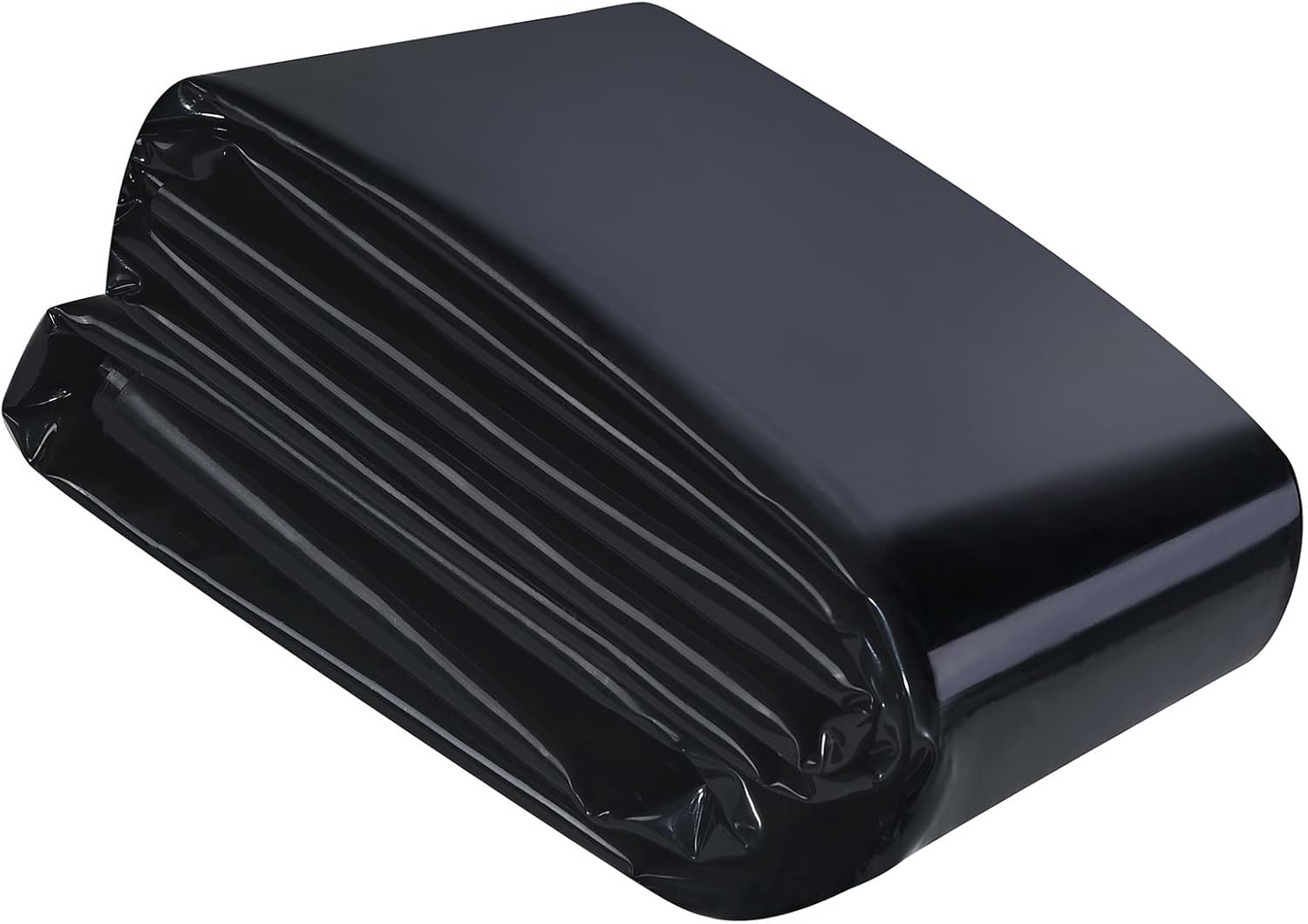
This UWIOFF 20 mil HDPE pond liner is a heavy-duty, flexible sheet intended to form the watertight base of backyard ponds, waterfalls, or raised water features. Typical use is to cut the oversize sheet to shape, lay it over a prepared bed with underlayment, and secure the edges with stones or edging. The 20 mil thickness and HDPE material mean it resists UV exposure, punctures, and aging better than thinner LDPE sheets, so it suits installations with fish and aquatic plants. It provides a smooth, low-soil-accumulation surface that is easy to clean and helps keep groundwater and soil from contaminating the pond. The liner is available in multiple sizes so you can pick a panel close to your pond footprint or seam pieces together for larger ponds. Important limitations are that large installations require careful underlayment and seam work to avoid tears and leaks and that HDPE is less forgiving around sharp rocks or roots, so site prep matters for longevity.
Best for: Buyers who want a robust, longer-lasting pond liner and who will prepare the site properly or hire installation help for a reliable water feature.
Less Ideal for: If you need a ready-made rigid pond shell or plan quick installs over rough ground without prep, choose a molded pond or thicker professional installation instead.
- 20 mil HDPE construction offers stronger UV and puncture resistance than typical thin liners
- Smooth surface reduces soil accumulation and simplifies cleaning
- Available in multiple pre-cut sizes so you can choose a close fit or seam for larger ponds
- Suitable for fish and aquatic plants when installed with proper underlayment
- Requires careful ground preparation and underlayment to prevent punctures from rocks or roots
- Seaming multiple sheets for very large ponds adds complexity and needs proper technique
Verdict: Choose this 20 mil HDPE liner when you want a durable, UV- and puncture-resistant base for a backyard pond that will last with proper site preparation.
ToLanbbt HDPE Pond Liner, 7 x 10 ft, 20 mil UV-Resistant

| Size | 7 x 10 Feet |
|---|---|
| Material | HDPE |
| Thickness | 20 Mil |
| Manufacturer | ToLanbbt |
This ToLanbbt pond liner is a straightforward HDPE sheet sized for small ponds and water features. It is 20 mil thick, flexible enough to shape around corners and shelves, and the material is described as UV resistant and puncture tolerant so it can be used outdoors without added plasticizers. Typical use is to clean and flatten the excavation, lay the liner, trim to fit, and cover exposed edges with pebble or edging material; the manufacturer also recommends removing sharp stones or debris before installation. The liner’s thin, lightweight construction makes it easy to handle and cut to irregular shapes, and its waterproof, impermeable surface helps keep soil and contaminants out of the pond. Limitations are that 20 mil HDPE is not as durable as heavier EPDM or reinforced PVC liners for areas with heavy foot traffic or large koi and it offers less protection against sharp objects unless an underlayment is used. For a budget build or a small decorative pond, this liner provides a simple, usable solution but expect to add protections if you need longer-term durability.
Best for: Buyers who need an economical, easy-to-handle liner for a small decorative pond, fountain, or water garden and prioritize low cost and simple installation.
Less Ideal for: Gardeners planning large koi ponds, heavy foot traffic around the pond, or long-term, high-durability installations should consider thicker or reinforced liners instead.
- 20 mil HDPE material offers good flexibility for shaping around corners and shelves
- UV resistant and advertised as puncture tolerant for outdoor use
- Lightweight and easy to cut to fit irregular pond shapes
- Waterproof surface prevents soil and contaminants from seeping into the pond
- 20 mil thickness is thinner than heavy-duty EPDM liners and may wear faster in high-abrasion situations
- Requires careful site preparation or an underlayment to avoid punctures from sharp stones
Verdict: A budget-friendly, easy-to-cut 20 mil HDPE liner that works well for small decorative ponds and simple DIY water features.
Choosing the Right Fish Pond Liner: Key Factors to Consider
Material Type
The liner material determines flexibility, lifespan, and repairability. Common options include flexible synthetic membranes and thicker compounded rubbers. Each material behaves differently in cold weather and under tension. Flexible membranes can conform to complex pond shapes and are usually easier to install around planted shelves and irregular rockwork. Thicker rubberized materials offer stronger puncture resistance but can be heavier and harder to drape into place.
Material choice also affects how you patch small tears and what adhesives or welding techniques are appropriate. Some materials bond readily with common pond-safe adhesives while others require heat welding or specially formulated seam tapes. Consider the material's documented compatibility with fish-safe treatments and whether it off-gasses when new, since that can temporarily affect water quality.
Thickness and Durability
Thickness is a primary defense against punctures from roots, rocks, and gardening activity. Thicker liners generally resist accidental tears and abrasions better, especially where gravel paths or heavy edging sit near the pond edge. However, thicker does not always mean better if it becomes too stiff to conform to the planned pond shape.
Longevity is also connected to thickness because a thicker cross-section withstands UV degradation and mechanical wear longer before becoming brittle. Match thickness to site risk: shallow, simple ponds in protected locations can use lighter liners, while heavily planted, koi-holding, or garden ponds with expected foot traffic benefit from heavier gauges.
Puncture and Tear Resistance
Resilience to punctures is essential when ponds are near tree roots, sharp stones, or tools. A liner with higher tear resistance withstands the initial gouge better and prevents small damages from propagating into larger rips. Tear resistance influences how seams behave under stress and how much buffering you need beneath rocks and edging.
Consider also the ease of repairing punctures. Some liners allow simple patching with adhesive tape or patches that bond well to the base material. Others need mechanical fixes or professional welding for reliable long-term repairs. Choosing a product with straightforward repair options reduces future maintenance hassle.
UV Stability and Weather Performance
Sun exposure and seasonal temperature swings degrade many polymers over time. UV-stable liners are formulated to resist breakdown from sunlight, keeping elasticity and tensile strength longer. If your pond sits in full sun, prioritize UV resistance alongside thickness and material chemistry.
Weather performance covers cold tolerance and how the liner behaves during freeze-thaw cycles. Some flexible liners stay pliable at low temperatures and are easier to install in cool months without cracking. Consider local climate when selecting a liner so it endures typical winter conditions without losing integrity.
Installation and Handling
How easy a liner is to install affects both cost and the chance of damage during setup. Lightweight, highly flexible materials are simpler for one or two people to drape and shape. Heavier materials may need additional hands but can be advantageous once positioned because they resist shifting.
Installation factors include whether seams are necessary for your pond size, how seams are executed, and whether the liner tolerates being folded or creased during placement. Also think about anchoring options at the perimeter, compatibility with underlayments to protect against stones or roots, and how the liner interfaces with edging, boulders, and waterfall structures.
Fish and Plant Compatibility
A liner should not leach harmful substances that stress fish or plants. Look for materials with documented chemical stability in freshwater and mention of compatibility with aquatic life. Some liners require initial rinsing or airing to dissipate manufacturing residues before filling with fish.
Also consider how the liner interacts with pond plants and substrate. Certain liners may be more prone to puncture from planted root systems, while others permit planting pockets or integrated planting shelves. If you plan to raise koi or other large fish, prioritize liners with extra strength and chemical stability to handle higher bioloads.
Sizing and Seam Planning
Proper sizing reduces the need for seams and junctions that can become weak points over time. Start by mapping the pond footprint, adding overlap at edges and access areas. For large or irregular ponds, seams are often unavoidable, so plan seam placement in low-stress areas away from waterfalls or heavy edging.
When seams are required, decide on a seam method that suits the material and installer skill. Good seam planning considers future access for repairs and how liners will be anchored or concealed under edging.
- Measure horizontally and vertically to calculate required sheet size plus overlap
- Place seams on flat benches or below waterline where possible
- Allow extra material at edges for anchoring and ground movement
Underlayments and Protection Layers
A protective underlayment cushions the liner from stones, roots, and shifting soils. Options range from simple sand beds or geotextile fabric to purpose-made pad materials. Underlayments extend liner life and make installations more forgiving for less experienced installers.
Choose an underlay that does not retain water against the liner or foster root growth that could compromise the material. Installation technique matters: smooth the subgrade, remove sharp debris, and lay the underlayment without folds under final liner placement.
- Clear and level the pond site, removing sharp rocks and debris
- Use geotextile fabrics for long-term protection in planted beds
- Avoid organic underlayers that can decompose and create voids
Anchoring and Edge Treatments
How you anchor and finish the perimeter affects both aesthetics and liner longevity. Common approaches include burying the liner, using rocks for ballast, or installing edging that clamps down on the material. Choose an edge treatment that keeps the liner secure while allowing small adjustments for settling.
Avoid pinning or tacking methods that concentrate stress at single points. Create continuous support and distribute loads across the edge, especially in areas with heavy foot traffic or where water level will fluctuate.
- Bury liner edges to protect from UV and mechanical damage
- Use wide rocks or timber to hold liners without sharp contact
- Leave a small access flap for later inspection and repairs
Maintenance and Repair Techniques
Routine inspection and simple repairs keep a liner performing for decades. Check the perimeter and visible surfaces for small punctures, seam separation, or areas where UV exposure is highest. Early detection allows faster, simpler patching that restores integrity without major work.
Learn the specific repair methods compatible with your liner material. Many modern liners can be patched with adhesive-backed patches or tapes for small holes, while larger damage may require sewing plus a welded or taped overlay. Keep spare patch material on hand that matches the liner to simplify emergency fixes.
- Inspect pond liner edges and visible surfaces seasonally
- Patch small holes quickly using manufacturer-compatible materials
- Keep a repair kit with adhesive patches and cleanup supplies
Environmental and Regulatory Considerations
Local regulations or homeowners association rules can influence liner choices, especially for larger ponds or those that alter drainage patterns. Check any permit requirements if you plan significant excavation or water management changes.
Also consider environmental factors like runoff, nearby tree roots, and groundwater level. A liner installation that ignores drainage pathways may create pressure points or seepage issues. Design the pond with surrounding landscape and water movement in mind to avoid future problems.
- Confirm any local permitting or setback requirements
- Plan for drainage and overflow to avoid undermining the liner
- Minimize proximity to large trees when possible
How We Chose the Best Fish Pond Liner
We focused on selection criteria that matter in real pond projects rather than marketing claims. Primary filters included material type and thickness ranges commonly used for backyard fish ponds, measured puncture and tear resistance, and resistance to UV and weathering. We also prioritized products with proven installation flexibility, including adaptability to irregular shapes and the ability to accept typical seam or adhesive repair techniques. Editorial exclusions removed anything intended solely for temporary or decorative water use, lightweight preformed basins, or liners lacking clear material specifications. We required clear specification of gauge or mil thickness and evidence of chemical compatibility with aquatic life. Durability factors such as puncture resistance, UV stability, and freeze-thaw performance were weighed along with practical installation factors like flexibility at low temperatures and available seam methods. Finally, we considered long-term maintenance: how easy a liner is to clean, patch, or anchor without disturbing plantings or fish. The result is a shortlist that balances robustness, installability, and pond-keeping compatibility for a range of backyard situations.
FAQ
What thickness should I choose for a backyard fish pond liner?
Thickness depends on site risk and intended use. Small decorative ponds in protected areas can use lighter gauges, while koi ponds, heavily planted setups, or ponds near roots should use heavier liners for better puncture resistance and longevity.
Can I install a liner myself or should I hire a pro?
Many homeowners can install liners for small to medium ponds with careful planning and at least one helper. Larger ponds, complex waterfalls, or jobs requiring welded seams often benefit from professional installation to ensure seam integrity and long-term performance.
How do I repair a small hole in a pond liner?
Small holes are usually patched with compatible adhesive patches or tape after cleaning and drying the area. Follow the liner material's recommended repair method and keep patch material on hand. Larger tears may require overlapping patches or professional welding.
Are all pond liners safe for fish and plants?
Not all materials are equally inert. Look for liners that specify chemical compatibility with aquatic life and avoid those with unknown additives. New liners sometimes need airing or rinsing to reduce residual manufacturing coatings before introducing fish.
Do I need a protective underlayment under the liner?
Yes. An underlayment cushions the liner from sharp stones and roots and reduces the chance of punctures. Choose nonorganic, durable underlayments such as geotextile fabrics or purpose-made pads for long-term protection.
How long do good pond liners typically last?
Lifespan varies by material, thickness, UV exposure, and site conditions. With proper installation, protection, and maintenance, many quality liners last years to decades. Regular inspection and prompt patching extend practical life.
Final Verdict
Selecting a fish pond liner means balancing durability, ease of installation, and compatibility with fish and plants. Prioritize material type and adequate thickness for your site risks, and plan seams and anchoring to reduce stress points. Invest time in proper underlayment and edge treatment to extend service life. Your final choice should reflect local climate, expected pond traffic, and whether you need seams for size and shape. Focus on liners that offer straightforward repair options and clear chemical stability so you can maintain a healthy pond without frequent interventions.
