

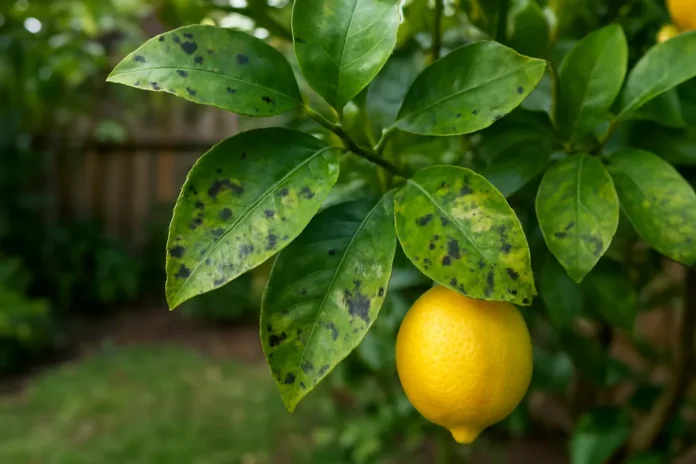
Black spots on lemon tree leaves are most often caused by fungal leaf diseases or sooty mold growing on sticky honeydew left behind by sap-sucking pests. Less often, cold damage, poor airflow, and chronic moisture problems can contribute to dark spotting.
Seeing lemon tree leaves with black spots can be alarming, especially when a tree looked healthy just a week or two earlier. In my experience, this symptom usually comes down to a handful of likely causes, and the exact look of the spots matters a lot. Some spots are dry and embedded in the leaf tissue, while others look more like a black film sitting on the surface.
The good news is that black spotting is often manageable once you know whether you are dealing with a leaf disease, a pest problem, or stress that is making the tree more vulnerable. On home citrus, I usually start by checking where the spots appear, whether the leaves feel sticky, and whether new growth looks clean or damaged. Those clues tell you far more than the spots alone.
What Black Spots Usually Mean on Lemon Leaves
Black spots are a symptom, not a single diagnosis. On lemon trees, the most common causes are fungal diseases such as greasy spot or anthracnose, and sooty mold that grows on honeydew from aphids, scale, whiteflies, or mealybugs. In some cases, leaves also develop dark necrotic spots after environmental stress, especially when wet foliage, poor airflow, and temperature swings all happen together.
- Greasy spot often starts as yellowish blotches and develops darker, oily-looking areas, usually on older leaves.
- Anthracnose can create irregular dark lesions, especially on stressed trees or after prolonged damp weather.
- Sooty mold looks like a black coating on the leaf surface rather than damage inside the leaf tissue.
- Pest injury and stress can leave leaves weakened, making them more likely to spot, curl, or drop early.
When I diagnose citrus leaf spots, I rub a leaf gently between my fingers. If some of the black material smears or lifts, I suspect sooty mold. If the spot is part of the leaf itself and the tissue feels dead or sunken, I lean toward disease or injury.
How to Tell the Difference Between Common Causes
Sooty Mold From Insect Honeydew
Sooty mold is one of the most common reasons lemon leaves turn black. The fungus itself does not usually infect the leaf. Instead, it grows on the sugary honeydew excreted by pests feeding on sap. Leaves may look dusty, smudged, or coated with black soot, and the surface often feels sticky before the mold becomes thick.
Look closely at stems, leaf undersides, and the joints where leaves meet branches. Scale insects can look like small bumps that do not move. Aphids cluster on tender new growth. Whiteflies flutter when disturbed, and mealybugs appear cottony. If you find any of those, the blackening is likely a secondary problem caused by the pests.
Greasy Spot and Other Fungal Leaf Diseases
Greasy spot is a common fungal disease on citrus in humid conditions. It often shows up first on older leaves as yellow mottling or blister-like patches, then darkens into brown to black spots that can look slightly oily. Over time, affected leaves may yellow and drop, thinning the canopy.
Anthracnose and other fungal issues can also cause black lesions, especially after rainy weather or overhead watering. These spots may be irregular, slightly sunken, or concentrated on damaged tissue. If the black spots are part of the leaf and cannot be wiped away, fungal disease becomes much more likely.
Environmental Stress and Physical Damage
Cold injury, sunscald after sudden exposure, and erratic watering can all leave dark dead patches on citrus foliage. These spots are often less uniform than disease lesions and may appear along edges, tips, or the most exposed side of the tree. A stressed lemon tree is also more likely to attract pests or develop fungal issues, so more than one problem may be happening at the same time.
Clues to Look for Before You Treat the Tree
Before spraying or pruning, slow down and read the pattern. The location and texture of the spots can save you from treating the wrong issue. Home gardeners often assume every black spot is a fungus, but sticky leaves and visible insects point you in a very different direction.
- Check whether the black material is on the leaf or in the leaf tissue.
- Inspect the undersides of leaves for scale, aphids, whiteflies, or mealybugs.
- Notice whether older interior leaves are worse than fresh outer growth.
- Look for yellow halos, oily blotches, or early leaf drop, which can suggest fungal disease.
- Think about recent weather, watering habits, and whether the tree has been crowded by nearby plants.
I like to examine at least three different parts of the tree: lower inner leaves, outer sun-exposed leaves, and the newest flush. If only one zone is affected, that usually points to a more specific cause than a tree-wide nutrient or root problem.
What to Do if Pests Are Causing the Black Coating
If you find sticky leaves and sap-sucking insects, focus on the pests first. Sooty mold usually improves once the honeydew source is gone. You do not need to panic over every blackened leaf, because many will function well enough until the tree pushes new growth.
- Remove heavily infested leaves or twigs if the damage is concentrated and easy to prune out.
- Rinse the tree with a steady stream of water, especially the undersides of leaves, to knock down soft-bodied pests.
- Use insecticidal soap or horticultural oil according to the label, covering pests thoroughly.
- Repeat treatments as directed, because eggs and hidden insects often survive the first pass.
- Ant control can help, since ants protect honeydew-producing insects from natural predators.
Once pest pressure drops, rain or gentle washing will gradually remove some of the black mold. Severely coated leaves may remain unattractive, but the goal is to protect healthy new growth rather than restore every old leaf.
What to Do if the Spots Are a Fungal Disease
When the black spots are embedded in the leaf tissue and especially if leaves are yellowing and dropping, improve conditions that favor fungal spread. Wet, crowded canopies are a common setup for citrus leaf disease. Treatment works best when paired with cultural cleanup.
- Prune lightly to improve airflow through the canopy, removing dead, crossing, or congested growth.
- Clean up fallen infected leaves from the soil surface so spores have fewer places to persist.
- Water at the base of the tree rather than wetting the foliage.
- Avoid overfertilizing with nitrogen, which can push soft, disease-prone growth.
- If disease has been recurring, consider a labeled copper fungicide or citrus fungicide at the proper timing.
Fungicides protect healthy tissue better than they cure badly spotted leaves. That means your measure of success should be cleaner new leaves, not perfect recovery of old ones. If the tree continues dropping leaves heavily or lesions spread rapidly onto stems or fruit, the problem may be beyond casual maintenance and worth a local extension diagnosis.
With citrus, I judge recovery by the next flush of leaves. Old damaged leaves often stay blotchy until they fall naturally, so I do not keep escalating treatments just because existing spots remain visible.
Watering, Airflow, and Feeding Mistakes That Make Black Spotting Worse
Lemon trees handle occasional stress better than chronic imbalance. A tree that stays too wet, sits in dense shade, or grows in a tight canopy is much more likely to develop fungal issues and pest outbreaks. Container trees are especially vulnerable because drainage problems build quietly until leaves start showing symptoms.
Too Much Moisture
Soggy roots weaken the tree and keep humidity high around the foliage. Let the top layer of soil dry slightly before watering again, but do not swing to severe drought. Consistent moisture is better than frequent extremes.
Poor Airflow
Citrus packed against fences, walls, or other shrubs often stays damp longer after rain or irrigation. Even a small amount of selective pruning can help leaves dry faster and reduce the favorable conditions for leaf pathogens.
Unbalanced Feeding
Heavy doses of fertilizer, especially quick nitrogen, can lead to tender flushes that attract pests. On the other hand, a nutrient-starved tree may struggle to replace damaged foliage. Use a balanced citrus fertilizer on a sensible schedule and avoid feeding when the tree is already stressed by heat, cold, or root problems.
When Black Spots Are Affecting Fruit and Branches Too
If you are seeing black lesions not just on leaves but also on stems, twigs, or fruit, take the problem more seriously. Sooty mold can coat fruit surfaces, but black sunken spots on fruit or dieback on young twigs suggest disease or significant stress. That can affect both yield and long-term tree health.
- Black coating on fruit with sticky residue usually points to pests and sooty mold.
- Sunken dark lesions on fruit may indicate fungal infection rather than surface mold.
- Twig dieback alongside spotting can mean the tree is stressed, diseased, or suffering repeated pest pressure.
- Widespread spotting after freeze events may include cold-damaged tissue that later darkens.
If fruit is becoming blemished across much of the tree, or branch tips are dying back, it is smart to combine cleanup, pest control, and disease prevention rather than trying a single fix. Severe citrus decline is rarely solved by one spray alone.
How to Prevent Black Spots From Coming Back
Prevention is mostly about keeping the tree vigorous and reducing conditions that let pests and fungi build up. Once a lemon tree settles into a stable routine, black spotting usually becomes much less frequent.
- Inspect new growth regularly so pests are caught before honeydew and mold spread.
- Prune for light and airflow, especially in dense interior growth.
- Water deeply but not constantly, and make sure containers drain freely.
- Avoid wetting foliage late in the day.
- Clean up fallen leaves and dropped fruit around the tree.
- Feed with a citrus-appropriate fertilizer instead of frequent high-nitrogen quick fixes.
- Protect the tree from cold snaps when possible, because damaged foliage becomes more vulnerable.
In my garden, the trees with the fewest recurring leaf problems are the ones I check often but fuss over less. Good drainage, reasonable feeding, and early pest control beat heavy treatment after the canopy is already coated or spotted.
FAQ
Can Black Spotted Lemon Leaves Turn Green Again?
Usually no. Affected leaves may stay marked until they drop naturally. The real sign of recovery is that new growth comes in cleaner and healthier.
Should I Remove Every Leaf with Black Spots?
No. Remove badly damaged, heavily infected, or heavily pest-covered leaves, but do not strip the tree bare. Citrus still needs foliage to support recovery.
Is Sooty Mold Dangerous to My Lemon Tree?
Sooty mold itself is often more of a symptom than a direct killer, but a heavy coating can reduce photosynthesis and signal a serious pest issue. The insects producing honeydew are the bigger concern.
Will Neem Oil Help Black Spots on Lemon Leaves?
Neem oil may help if pests are causing honeydew and sooty mold, and it can suppress some fungal issues when used properly. It is not a cure-all, so match it to the actual cause and follow the label carefully.
Can Overwatering Cause Black Spots on Citrus Leaves?
Overwatering can contribute indirectly by stressing roots and creating humid conditions that favor fungal disease. It may not be the only cause, but it often makes the problem worse.
Why Are Only the Older Leaves on My Lemon Tree Getting Black Spots?
Older interior leaves are often the first to show greasy spot and similar fungal issues, especially in humid or crowded canopies. Newer leaves may still look fine at first.
Are Black Spots on Lemon Leaves Contagious to Other Plants?
Some fungal pathogens can spread under favorable conditions, and honeydew-producing pests certainly can move to nearby plants. Good spacing, cleanup, and early treatment help limit spread.
Need the right product for citrus pests or fungal leaf spots? See our recommended citrus treatment guide to choose sprays, oils, and care tools that actually match the problem.
