

Note: This article contains affiliate links. If you click on these links and make a purchase, I may earn a small commission at no extra cost to you. This helps support my research and content. Read my full affiliate disclosure here.
Growing fruits and vegetables in containers or small raised beds depends more on the growing mix than most gardeners realize. The right potting soil for fruits and vegetables gives seedlings and established plants steady moisture, good aeration, and a nutrient profile suited to producing fruit. Poor mixes compact, dry out quickly, or lock up nutrients, which reduces yields and invites pests. This guide shortlists the seven top potting soils for fruits and vegetables across common container situations and budgets. We evaluated mixes for water-holding, drainage, fertility, and suitability for edible production so you can pick the best option for your space and crops.
Top Picks at a Glance
| Best Overall The best all-around choice for most situations | FoxFarm Ocean Forest Potting Soil, 12 Qt |  |
| Best Quality Built to a higher standard if you want something more solid | BuildASoil Potting Soil Recipe 3.0 — Organic Living Potting Soil Mix |  |
| Best Value The sweet spot between price and what you get | Espoma Organic Potting Mix, 16-Quart |  |
| Best Budget The cheapest option that still gets the job done reliably | Miracle-Gro Organic Outdoor Potting Mix, 16 qt. |  |
| Highest Rated A top-rated pick with lots of positive feedback | FoxFarm Happy Frog Potting Soil, Container Garden, 2 cu ft (with 2 Plant Tags) |  |
| Most Popular A crowd favorite that many people choose with confidence | Back to the Roots Premium Organic Potting Mix, 6 Quart |  |
| Best Seller A high-volume bestseller chosen again and again | Miracle-Gro Organic Indoor Potting Mix, 16 qt. |  |
FoxFarm Ocean Forest Potting Soil, 12 Qt

| Unit Count | 12 Count |
|---|---|
| Item Form | Granules |
| Specific Uses For Product | Dry Fertilizer |
| Coverage | 4.8 sq ft |
| Mixing Ratio | 1:1 |
FoxFarm Ocean Forest is a premixed potting soil designed to be used straight from the bag for container gardens, houseplants, and seedlings. The blend of aged forest products, sandy loam, and sphagnum peat moss produces a light, aerated texture that helps roots breathe and drains excess water while retaining enough moisture for young plants. Built-in amendments such as fish meal, crab meal, and earthworm castings supply organic nutrients so you typically do not need to add fertilizer for the first month. It is commonly used to fill pots, top-dress containers, or to mix with other soils at a 1:1 ratio when heavier media need lightening. Practical benefits include easier transplanting, strong early growth from nutrient-rich inputs, and good structure for both fruiting vegetables and transplant starts. Important limitations are that it is a bagged potting mix sized for containers rather than bulk garden beds and it can be heavier than soilless mixes, so large projects may require multiple bags or blending for cost efficiency.
Best for: Gardeners who want a ready-made, nutrient-rich potting mix to start seedlings and grow fruiting vegetables in containers with minimal mixing or immediate fertilizing.
Less Ideal for: People planning to fill large in-ground beds or those who need a very lightweight soilless medium for hanging baskets or hydroponic systems.
- Ready to use out of the bag with no immediate fertilizer required for the first 30 days
- Light, aerated texture that promotes drainage and root oxygenation
- Contains organic amendments (fish meal, crab meal, earthworm castings) to support early growth
- Suitable for seedlings, transplants, and container fruit and vegetable plants
- Sold in relatively small 12 quart bags, so multiple bags are needed for larger container gardens
- Contains peat and loam so it is denser than lightweight soilless mixes
Verdict: A nutrient-packed, ready-to-use potting soil that gives container-grown fruits and vegetables a strong start without immediate fertilizing.
BuildASoil Potting Soil Recipe 3.0 — Organic Living Potting Soil Mix

| Brand Name | BUILD A SOIL |
|---|---|
| Volume | 1 cubic feet |
| Item Weight | 28.3 pounds |
BuildASoil Potting Soil Recipe 3.0 is a fully amended living soil designed for growers who want a low-maintenance, high-performance potting mix for containers. The mix combines organic compost, worm castings, peat moss, and mineral amendments to create a biologically active medium that supplies nutrients through microbial activity rather than bottled fertilizers. In practice you pot or repot fruits, vegetables, or long-term container plants and simply water; the soil is intended to sustain vegetative growth through flowering without frequent feeding. Its chunky, well-draining structure promotes oxygen around roots and reduces waterlogging risk while supporting strong root development. Because it is formulated as a complete, organic medium, it is especially useful for growers prioritizing consistent, hands-off performance and clean inputs. Limitations include a single offered volume per unit and the expectation that growers understand living soil practices for best results, since it relies on biological processes rather than immediate soluble nutrients.
Best for: Growers who want high-performance, organic container soil that delivers consistent, low-maintenance nutrition through biological activity for fruits and vegetables grown in pots.
Less Ideal for: Gardeners seeking an inert starter medium for frequent liquid feeding or those who prefer exact, fast-release nutrient control should consider a blended or fertilizer-based potting mix instead.
- Fully amended water-only formula reduces need for bottled fertilizers
- Biologically active blend with compost and worm castings supports nutrient cycling
- Chunky, well-draining structure promotes strong root aeration and reduces compaction
- Formulated to support full growth cycle from vegetative growth through flowering
- Requires familiarity with living soil concepts to maximize long-term performance
- Only listed as a single 1 cubic foot / 28.3 lb bag which may require multiple units for larger projects
Verdict: Choose this living, fully amended organic potting soil if you want a hands-off, nutrient-rich medium that supports the full growth cycle of container-grown fruits and vegetables.
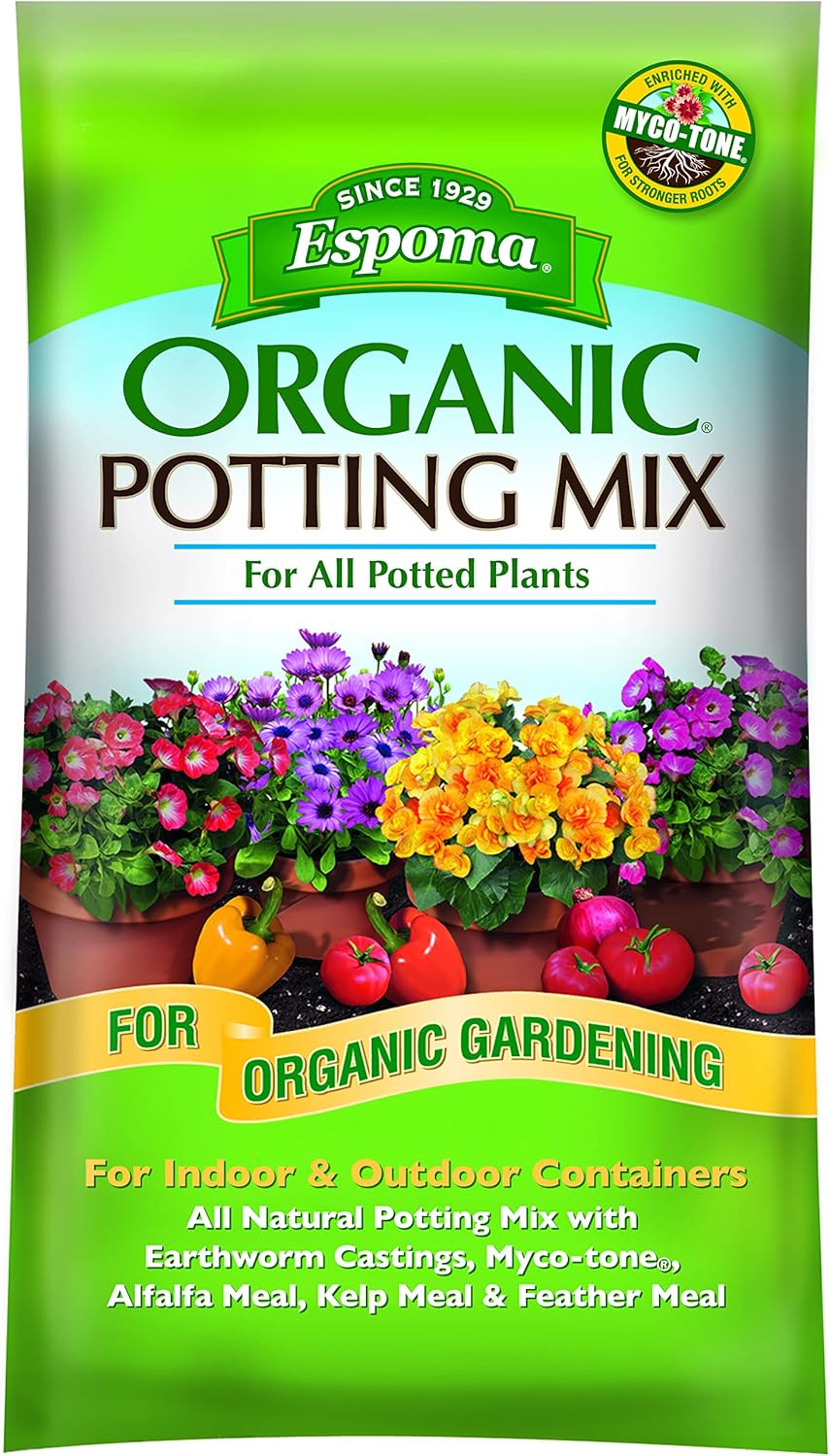
Espoma Organic Potting Mix, 16-Quart
| Brand | Espoma |
|---|---|
| Volume | 16 quarts |
| Style Name | Mix |
Espoma Organic Potting Mix is a ready-to-use organic soil blend designed for container vegetables, herbs and other potted plants. It combines sphagnum peat moss, humus and perlite with organic amendments such as earthworm castings, alfalfa meal, kelp meal and feather meal to supply slow-release nutrients and improved texture. The included Myco-tone mycorrhizal inoculant helps root establishment in new transplants and larger repotted containers. In practical use this bag is easy to work with when starting seedlings, repotting herbs, or refreshing container soil for vegetables, and its organic inputs reduce the need for immediate synthetic feeding. Expect lighter weight and good drainage from the perlite and peat components, though heavy-feeding plants will still benefit from periodic fertilizer applications as the mix is formulated for balanced, long-term feeding rather than high initial fertility. The 16-quart size is convenient for multiple small pots but may require multiple bags for larger raised containers or heavy vegetable production.
Best for: Gardeners who want an off-the-shelf organic potting mix that supports vegetables and herbs in containers and who prioritize easy transplanting and steady nutrient release.
Less Ideal for: Growers focused on intensive, high-yield vegetable production in large beds or very heavy-feeding crops should consider larger-volume commercial mixes or targeted fertilizers.
- Organic ingredient blend with earthworm castings, alfalfa, kelp and feather meal for slow-release nutrients
- Myco-tone mycorrhizae to support root growth and transplant establishment
- Light, well-draining texture from peat moss and perlite suited to container culture
- Suitable for both indoor and outdoor containers including vegetables and herbs
- 16-quart bag is small for gardeners who need soil for many or large vegetable containers
- Contains peat moss which can compress over time and may require periodic fluffing or amendment
Verdict: A convenient organic potting mix that helps container-grown fruits and vegetables establish strong roots and receive steady, natural nutrition.
Miracle-Gro Organic Outdoor Potting Mix, 16 qt.

| Volume | 16 qt. |
|---|---|
| Feeds up to | 2 months |
| OMRI Listed | Yes |
| Intended use | Outdoor container plants |
Miracle-Gro Organic Outdoor Potting Mix is a ready-to-use soil blend intended for outdoor container gardening, including vegetables, fruits, herbs, annuals, and perennials. The bag contains a peat-based mix with responsibly sourced peat and upcycled green waste, plus a quick-release natural fertilizer that feeds plants for up to two months. Typical use is filling pots or containers, loosening root balls, planting and watering; one 16 qt. bag is enough to fill a 12-inch container. For vegetable and fruit containers this mix helps retain moisture in warm, windy outdoor conditions and gives a short-term nutrient boost so transplants and young plants establish faster. It is OMRI listed, so it fits organic growing systems. Limitations are that the feed lasts about two months so ongoing fertilization or repotting will be needed for longer-season crops, and the product is formulated for containers rather than in-ground beds, so gardeners wanting bulk garden amendment will need a different product.
Best for: Gardeners on a budget who grow vegetables, fruits, or herbs in pots and want an organic, ready-made mix that helps young plants establish quickly with minimal prep.
Less Ideal for: People working on large in-ground vegetable beds or anyone needing a long-lasting slow-release fertility plan for season-long crops should consider bulk garden soil or amendment alternatives.
- OMRI listed for use in organic container gardening
- Includes quick-release natural fertilizer that feeds plants for up to two months
- Formulated to retain moisture and resist outdoor sun and wind stress
- Made with responsibly sourced peat and upcycled green waste
- Fertilizer effect is short term and requires follow-up feeding for long-season vegetable crops
- Designed for containers only and not intended as an in-ground garden soil replacement
Verdict: A convenient organic potting mix that gives container-grown fruits and vegetables a moisture-retentive, short-term nutrient boost ideal for budget-minded container gardeners.
FoxFarm Happy Frog Potting Soil, Container Garden, 2 cu ft (with 2 Plant Tags)

| Brand Name | FoxFarm |
|---|---|
| Item Highlight | Ready-to-Use Amended Container Blend with Soil Microbes, Earthworm Castings, Bat Guano, and Aged Forest Products |
| Volume | 2 cubic feet |
| Style Name | Container Garden |
FoxFarm Happy Frog Potting Soil is a premium container mix designed to give potted fruits, vegetables, and ornamentals a nutrient-rich, biologically active growing medium right out of the bag. It is typically used to fill planters, grow bags, and large pots where roots cannot access garden soil; the formula includes earthworm castings, bat guano, and aged forest products plus beneficial microbes to improve nutrient breakdown and root uptake. For edible container gardening this means stronger root development and better vegetative growth that supports flowering and fruiting. The bagged 2 cu ft volume is convenient for repotting small trees, tomato or pepper plants, and multiple vegetable containers, and the included plant tags help track varieties and planting dates. Limitations are that it is a ready mix so heavy feeders may still need periodic fertilizer top-ups and very large containers will require multiple bags; also the premium ingredients make it heavier than some lightweight soilless mixes. Use it when you want a robust, biologically active medium for consistent container harvests.
Best for: Gardeners who grow fruits and vegetables in containers and prioritize a biologically active, nutrient-rich medium that promotes steady, reliable growth and fruiting.
Less Ideal for: If you need an ultra-lightweight soilless mix for hanging baskets or want a completely inert base for precisely controlling fertilization, this product is not the best fit.
- Formulated for containers with beneficial microbes and mycorrhizal fungi to aid root health and nutrient uptake
- Contains organic amendments like earthworm castings and bat guano for immediate nutrient availability
- Ready-to-use out of the bag so no mixing or pre-conditioning is required
- Includes two plant tags for labeling varieties and planting dates
- Not as lightweight as soilless mixes, which can matter for very large hanging or elevated containers
- May require supplemental fertilizer for heavy-feeding vegetables over a full growing season
Verdict: Choose this potting soil when you want a ready-made, microbe-rich container mix that supports dependable root development and consistent fruit and vegetable production.
Back to the Roots Premium Organic Potting Mix, 6 Quart

| Unit Count | 192 Fluid Ounces |
|---|---|
| Item Highlight | Peat-free potting soil for outdoor plants, indoor plants, vegetables, herbs and flowers |
| Volume | 6 quarts |
| Item Weight | 6 pounds |
This 6 quart Back to the Roots Premium Blend is a ready-to-use organic potting mix designed for growing fruits, vegetables and herbs in containers and raised beds. The formula combines upcycled plant matter and wood fines with added organic plant food, yucca extract for improved moisture control, and dolomitic limestone to help balance pH. In practice it gives a lighter, well-draining texture that is easier to work with than heavy garden loam and holds moisture more evenly, which helps seedling and container-grown veggies avoid drought stress. It is peat-free and made in the USA, which reduces peat-related environmental concerns. Limitations to expect are the small 6 qt bag size for larger projects and the lack of specific N-P-K numbers or long-term feeding schedule on the label, so you may need to supplement with fertilizer for heavy-feeding fruiting crops over the season.
Best for: Practical home gardeners who want an eco-friendlier, ready-to-use potting mix for growing vegetables, herbs, and fruit in containers or small raised beds and who value proven brand reputation.
Less Ideal for: Gardeners tackling large-scale raised beds or full-season heavy-feeding vegetable plots that need bulk soil and explicit nutrient formulations.
- 100% organic and peat-free composition suitable for eco-conscious gardeners
- Yucca extract improves moisture management in containers and pots
- Dolomitic limestone helps moderate soil pH for general garden plants
- Light, well-draining texture that is easy to use for seedlings and container-grown vegetables
- Small 6 quart bag is insufficient for larger raised beds or multiple containers without buying multiple bags
- No specific fertilizer N-P-K breakdown or detailed feeding guidance on the package
Verdict: A peat-free, organic potting mix that gives container-grown fruits and vegetables reliable moisture control and an eco-friendlier option for small-scale edible gardening.
Miracle-Gro Organic Indoor Potting Mix, 16 qt.

| Unit Count | 1 Count |
|---|---|
| Volume | 1 cubic feet |
| Item Highlight | Protects Against Over & Under Watering, Planting Soil For Indoor Container Plants, Houseplants & Starter Plants, OMRI Listed |
| Brand Name | Miracle-Gro |
Miracle-Gro Organic Indoor Potting Mix is a ready-to-use organic container soil designed for indoor gardens and seed starting. The blend uses coir and sphagnum peat moss to increase air space while holding moisture, plus a quick-start natural fertilizer to give seedlings and transplants an early nutritional boost. Typical uses are filling pots for houseplants, herbs, or shallow seed trays; the product instructions recommend containers with drain holes and describe simple transplanting and seed-starting steps. The OMRI listing and responsibly sourced peat messaging make it a sensible choice for gardeners wanting organic inputs. Practical benefits include improved moisture regulation to help prevent over- or under-watering and convenience from a pre-mixed, plant-ready formula. Important limitations for the article focus: it is formulated for indoor container use and comes in a 16 qt. bag that fills roughly one 12-inch pot, so it may not be the most economical option for larger vegetable beds or heavy-feeding fruiting crops that need greater volume or long-term in-ground amendments.
Best for: Buyers who want a low-risk, ready-made organic potting mix for indoor herbs, houseplants, and seed starting and who prioritize consistent moisture control and simple setup.
Less Ideal for: Gardeners needing bulk soil for raised beds or in-ground vegetables, or those growing large, heavy-producing fruiting plants that require custom fertilizer schedules or more soil volume.
- OMRI listed for organic use, suitable for organic indoor growing
- Blend of coir and peat moss balances aeration and moisture retention
- Includes quick-start natural fertilizer to feed seedlings and recent transplants
- Clear usage guidance for seed starting and repotting makes it beginner-friendly
- Sized and packaged for indoor container use so not ideal for large-scale vegetable plots
Verdict: A dependable, OMRI-listed indoor potting mix that simplifies seed starting and houseplant repotting for gardeners who prefer an organic, low-risk option.
Choosing the Right Potting Soil for Fruits and Vegetables: Key Factors to Consider
Water Retention and Drainage Balance
How a mix holds and releases water determines how often you need to water and how susceptible plants are to root rot. A good potting soil for fruits and vegetables keeps enough moisture near roots between waterings while still allowing excess to drain freely. This balance depends on ingredients like peat, coco coir, pine bark fines, and perlite or pumice.
If a mix retains too much water without drainage, roots can suffocate and rot. If it drains too quickly, especially in warm weather or small containers, plants may wilt and experience nutrient stress. Think about the container size, plant water use, and your tolerance for frequent watering when choosing a mix.
Nutrient Content and Feeding Compatibility
Potting soils vary from near-sterile, low-fertility bases to mixes that contain balanced slow-release fertilizers. For fruits and vegetables you will need a steady supply of nitrogen, phosphorus, and potassium plus micronutrients. A mix with some built-in fertility reduces early feeding needs, but long-season crops usually benefit from additional liquid feeding or sidedressing.
Also consider how the mix interacts with fertilizers. Some high-organic mixes bind nutrients differently and may require different feeding schedules. If you prefer organic feeding, check that the soil uses composted organics and compatible slow-release sources.
Aeration and Root Development
Roots need oxygen to grow and take up water and nutrients. A potting soil that compacts will reduce pore space and slow root development. Particle size and the presence of coarse materials such as bark, perlite, or pumice help maintain good aeration and a crumbly texture that encourages branching roots.
Good aeration also helps beneficial microbes thrive and reduces the chance of anaerobic conditions that cause slumping and foul smells. For heavy fruiting plants with long root systems, choose mixes with larger particle profiles and a reputation for staying loose over a season.
Disease and Weed Seed Control
Because container-grown edibles rely on contained media, starting with pathogen- and weed-free potting soil reduces early losses. Sterilized or carefully composted mixes are less likely to introduce damping-off pathogens, root rots, or weed seeds that compete with seedlings and young plants.
Look for mixes made in controlled facilities and described as screened or pasteurized when growing transplants or starting seeds. That lowers the risk of introducing unwanted organisms into your containers and greenhouse spaces.
pH and Salt Levels
pH affects nutrient availability for fruits and vegetables. Most edible crops prefer a slightly acidic to neutral pH range. Some potting soils include lime or acidic peat that changes the starting pH. Equally important are soluble salts from fertilizers or composts, which can stress seedlings and salt-sensitive crops if levels are too high.
For seedlings and salt-sensitive plants, choose mixes that report low initial soluble salts and a pH in the recommended range, or allow the mix to leach before planting. For mature, heavy-feeding crops, a slightly higher fertilizer load may be acceptable if paired with regular watering and feeding management.
Longevity and Reusability
Some potting soils break down quickly as organic components decompose and compress, reducing aeration and drainage later in the season. Longevity matters if you want to reuse mix or keep long-season crops in the same container for months.
Durable mixes include more stable components like aged bark and inert mineral amendments. Reusing soil also requires inspection for pests, diseases, and nutrient depletion; plan to refresh with compost or replace the media if structure has declined significantly.
Best Mixes by Container Type and Crop
Container size and crop choice should guide the mix you pick. Small pots for herbs and salad greens need lighter mixes that retain moisture but do not become waterlogged. Larger containers for tomatoes, peppers, and dwarf fruit trees benefit from mixes with greater water-holding capacity and more stable structure to support heavy root systems and long fruiting periods.
For hanging baskets and strawberry pots prioritize lighter mixes with good water retention and fast drainage. For deep containers and grow bags, choose mixes with extra organic matter and slow-release fertility to support the crop through its fruiting cycle.
- Small pots: fine-textured, quick-wetting mixes with modest aeration
- Large containers: coarse particle mix with stable organic matter and added water-holding components
- Hanging baskets: mixes designed to wick moisture and resist drying
Adjusting Mixes for Heavy Feeders
Some fruiting vegetables such as tomatoes, eggplants, and peppers are heavy feeders that require steady nutrients and water. You can start with a general-purpose vegetable potting mix and amend it with compost, worm castings, or an organic slow-release fertilizer to provide a longer nutrient profile.
If you amend a premixed soil, avoid overcompacting the container. Mix amendments gently so air pockets remain. Also be careful with fresh uncomposted manures or high-salt fertilizers that can burn roots; use well-aged materials and test soluble salts if unsure.
- Blend in well-aged compost or worm castings for sustained fertility
- Add mineral amendments like perlite or pumice if the mix becomes too dense after amending
Seed Starting and Transplanting Considerations
Seed-starting mixes should be lighter and low in soluble salts so delicate roots and cotyledons are not damaged. Use a light, sterile germination medium for the first few weeks, then move seedlings into a richer potting soil formulated for edibles once roots begin to develop.
When transplanting into final containers, encourage root establishment by firming the surrounding soil gently and watering thoroughly to eliminate air pockets. Avoid planting too deeply and keep the root crown at the same level as in the original plug to reduce stress.
- Use sterile seed mix for germination, then transition seedlings to a nutrient-containing potting soil
- Water transplants slowly to settle the mix and avoid compacting it
Organic Labels and What They Mean in Practice
Organic-labeled potting soils often use composted organics, rock minerals, and organic-approved fertilizers. In practice these mixes can support organic gardening systems but may vary widely in nutrient availability and initial soluble salts. Read ingredient details to understand whether fertility is front-loaded or reliant on ongoing feeding.
Even with organic mixes, you may need to supplement with liquid organic feeds during the growing season, especially for high-yielding crops. Be prepared to adjust feeding frequency rather than assuming a single organic charge will suffice for the whole season.
- Check ingredient lists for composted versus fresh organics
- Expect to supplement fertility for long-season or heavy-producing plants
Storage and Handling Tips
Store unopened bags in a dry place to prevent molding and loss of structure. Once opened, keep the bag sealed or transfer the mix to a covered container to prevent moisture and critter access. Avoid storing mixes directly on soil where moisture and pests can infiltrate.
When using old bags of potting soil, inspect for sour smells, clumping, or obvious pests. Sift or refresh with fresh amendments if the structure has collapsed before using for seedlings or sensitive crops.
- Keep bags dry and sealed
- Refresh old mix with fresh compost and mineral amendments before reuse
How We Chose the Best Potting Soil for Fruits and Vegetables
We prioritized attributes that directly affect edible plant growth in containers and small beds. Key evaluation criteria included water management, nutrient profile, organic matter content and stability, pathogen and weed-free status, and physical texture for root development. Water management meant assessing a mix's ability to hold moisture without becoming waterlogged and its ability to drain excess water quickly after heavy irrigation or rain. Nutrient profile considered both starting fertility and how well the mix supports scheduled feeding, including slow-release sources and compatibility with liquid feeds. We also examined organic matter sources and their stability so mixes do not collapse or compact over a single season. Pathogen and weed-free status was important because contaminated mixes can introduce disease or weed seeds into containers. Physical texture and particle size were evaluated for root penetration, aeration, and prevention of compaction. Exclusions: we did not include soils intended strictly for lawns, heavy clay garden soils, or products designed only for decorative houseplants. The result is a focused list of mixes suited to growing edible crops in containers, hanging baskets, and small raised beds.
FAQ
Can I use regular garden soil for container-grown fruits and vegetables?
Usually garden soil compacts in containers, reducing aeration and causing drainage problems. For container-grown fruits and vegetables it is best to use a purpose-made potting soil or an amended mix designed to stay loose and drain well.
How often should I feed plants in potting soil for fruits and vegetables?
Feeding frequency depends on the mix's starting fertility and the crop. Many gardeners use a balanced liquid feed every one to two weeks for heavy feeders, while mixes with slow-release fertilizer may need less frequent supplemental feeding.
Is coconut coir better than peat for growing vegetables in pots?
Coco coir and peat both hold water but behave differently. Coir drains more quickly and is more sustainable in many regions, while peat holds moisture longer but can compact. Both can work well when blended with coarse amendments for aeration.
How can I tell if potting soil has too much salt?
A simple way is to leach the soil by watering heavily and observing plant response; persistent leaf tip burn or poor germination suggests high salts. For certainty use a soil test or a hand-held salinity meter to check soluble salt levels.
Can I reuse potting soil from last season for new vegetables?
You can reuse potting soil if it still has good structure and shows no disease or pest signs, but expect reduced fertility and some compaction. Refresh with compost, mineral amendments, and possibly pasteurize or solarize if disease was a previous issue.
What pH should potting soil for most fruits and vegetables be?
Most fruits and vegetables prefer a slightly acidic to neutral pH, roughly 6.0 to 7.0. If a mix is outside that range, adjust with lime or sulfur as appropriate or choose a different mix aligned with the crop's pH needs.
Final Verdict
When choosing potting soil for fruits and vegetables prioritize a balance of water retention and drainage, stable organic matter, and a fertility profile that matches your planting timeline. Consider container size, crop vigor, and whether you prefer instant fertility or the flexibility to control feeding. A good mix sets the foundation for strong roots, steady yields, and easier watering and feeding routines. Focus on the decision factors above to pick a mix that fits your garden style and the crops you want to grow confidently.
