

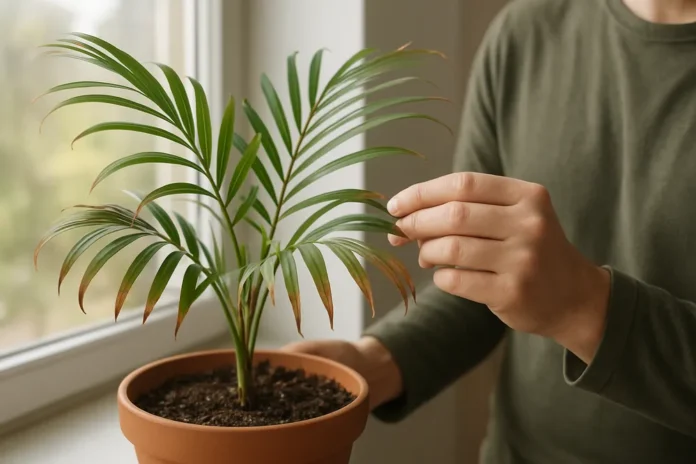
Palm tree leaves usually curl because the plant is stressed by inconsistent watering, dry air, temperature extremes, salt buildup, pests, or root damage. The exact cause often shows up in where the curling starts and whether the fronds also turn brown, yellow, or limp.
When a palm starts looking tired, curled leaves are often one of the first warning signs. I have seen this happen on indoor parlor palms, majesty palms on patios, and even landscape palms after weather swings. In most cases, palm leaves curling is not a random cosmetic issue. It is the plant's way of telling you something in its growing conditions is off.
The tricky part is that several problems can produce a similar look. A palm can curl from too little water, too much water, dry indoor air, fertilizer salts, pest feeding, or cold damage. The good news is that palms usually give more clues than people realize. If you look at which fronds are affected, how dry the soil feels, and whether the tips are browning or yellowing, you can usually narrow the cause down pretty quickly.
Below, I will walk through the most common reasons palm tree leaves curling happens, how to tell them apart, and what to do next without making the problem worse.
What Curling Leaves Usually Mean on a Palm
Curling is a stress response. Palm leaflets may fold inward, twist, cup, or look tighter than normal when the plant is trying to conserve moisture or when its roots are not supplying water properly. Sometimes the curling is mild and mostly affects leaflet edges. In more serious cases, entire fronds look pinched, shriveled, or rigid.
Unlike some broadleaf houseplants, palms do not always bounce back quickly once damaged tissue appears. A curled frond may stay curled even after you correct the problem. What you are really watching for is whether new growth comes in straighter and healthier.
When I diagnose a palm, I pay close attention to whether the newest spear and upper fronds are affected or just the older outer ones. Damage on older fronds often points to care issues that built up over time, while distorted new growth makes me think harder about root stress, nutrient issues, or pests hiding in the crown.
Water Stress Is the Most Common Cause
Underwatering and Dry Soil
A thirsty palm often curls its leaflets inward to reduce water loss. You may also notice crispy brown tips, drooping fronds, lightweight pots, or soil that has pulled away from the container edges. Outdoor palms may show curling during long hot stretches, especially if they are newly planted and their root systems are still shallow.
Indoor palms are especially prone to this when they are watered on a rigid schedule instead of by soil moisture. A potting mix can go from evenly moist to bone dry surprisingly fast near sunny windows, vents, or on covered porches.
Overwatering and Soggy Roots
Too much water can also make palm leaves curl. This seems backward, but waterlogged roots cannot take up oxygen well, and stressed roots stop delivering moisture properly to the fronds. In that case, curling may come with yellowing, limp growth, blackened roots, fungus gnat activity, or a sour smell from the soil.
- Signs it leans dry: crisp tips, fast-draining soil, pot feels very light, fronds feel papery
- Signs it leans wet: yellowing with curl, constantly damp mix, soft lower stem area, musty soil smell
- Mixed pattern: compacted soil can leave the root ball dry in spots and soggy in others
If the potting mix has become so dry that water runs straight down the sides, I like to rehydrate it slowly in stages instead of flooding it once. That gives the root ball time to absorb moisture evenly and prevents a cycle where the center stays dry but the saucer stays full.
Low Humidity and Dry Indoor Air Can Curl Palm Fronds
Many palms sold as houseplants come from humid conditions, so dry indoor air can show up as curling, browning tips, and a rough or brittle feel. This is especially common in winter when heating systems run daily. The plant may not be badly underwatered, but the air is dry enough that the fronds lose moisture faster than the roots can replace it.
Majesty palms, areca palms, and parlor palms often show this indoors. Curling from low humidity usually starts subtly at the leaflet edges and tips rather than causing the entire frond to collapse. If your palm sits near a heating vent, fireplace, radiator, or strong air conditioning stream, that dry airflow can be the main trigger.
- Move the palm away from direct hot or cold air blasts
- Group humidity-loving plants together to create a slightly moister pocket of air
- Use a room humidifier if the palm lives indoors year-round
- Keep soil moisture steady, since dry air and dry soil together are much harder on palms than either one alone
Salt Buildup and Fertilizer Burn Often Show Up at the Tips
Palms can be sensitive to salt accumulation from tap water, softened water, or overfertilizing. As salts build up in the potting mix, roots have a harder time taking up water. The result can look a lot like drought stress: curled leaflets, brown margins, dry tips, and weak growth.
This is one of the more overlooked causes indoors. I often see it when a palm is fed too often with liquid fertilizer or watered repeatedly with mineral-heavy water and never flushed thoroughly. The soil surface may develop a pale crust, or the container may show white deposits around drainage holes.
How to Correct Salt Stress
- Pause fertilizer until you see healthy new growth.
- Flush the pot thoroughly with plain water if the container has good drainage.
- Empty any saucer so the roots are not left sitting in the runoff.
- Switch to a gentler feeding routine during active growth only.
- Use filtered, distilled, or rainwater if your tap water is especially hard or softened.
For landscape palms, fertilizer burn can happen if lawn products or fast-release fertilizers are applied too heavily near the root zone. Browning and curling may show up after a feeding, especially during hot weather.
Temperature Swings and Weather Damage Can Distort Fronds
Palms dislike sudden extremes. Cold snaps, chilly drafts, scorching reflected heat, and abrupt moves from indoors to full sun can all cause curling or folding leaves. Cold-damaged fronds may curl, gray out, bronze, or develop water-soaked patches that later turn brown. Heat stress often causes dry curling with scorched edges.
Container palms are especially vulnerable because their root systems heat up and cool down faster than those in the ground. A palm sitting on a hot patio in summer or next to a cold window in winter can show stress even when watering seems reasonable.
- Indoor palms prefer stable room temperatures without cold drafts
- Outdoor container palms need gradual acclimation before moving into stronger sun
- Cold-damaged foliage often worsens a few days after the actual weather event
- Heat-stressed palms may curl most during the afternoon and look slightly better by morning
If a palm starts curling right after you moved it, I would suspect environmental shock before I assume disease. Palms can react dramatically to a new light level, stronger wind, or hotter surface temperatures even when the potting mix is fine.
Pests Can Make Palm Leaves Curl, Pucker, or Look Distorted
Spider mites, scale, mealybugs, and thrips can all stress palms enough to cause curling. Spider mites are especially common indoors and on dry-stressed palms. They feed by piercing plant tissue, which can leave leaflets stippled, faded, dusty-looking, or lightly curled. Fine webbing may appear between leaflets when infestations build.
Scale and mealybugs tend to gather along stems, leaflet undersides, or where fronds meet the crown. Thrips are smaller and harder to spot, but they can distort tender new growth. Pest damage is more likely if the palm also looks sticky, speckled, mottled, or unusually dull.
Where to Look First
- Undersides of leaflets
- Along the midrib and stems
- Inside crowded foliage near the crown
- New unfurling fronds where pests hide before damage becomes obvious
If you confirm pests, isolate indoor palms from other plants and start treatment promptly. In many cases, repeated rinsing, insecticidal soap, or horticultural oil works better than a one-time spray, because palms have lots of crevices where insects and eggs can hide.
Root Problems and Pot Issues Can Show Up Above the Soil
Roots drive everything in a palm. If they are cramped, rotting, damaged, or growing in exhausted potting mix, the fronds may curl because the plant cannot move water and nutrients normally. A rootbound palm often dries out too quickly. A palm in dense, old mix may stay wet too long while still starving the roots of oxygen.
You may be dealing with a root-related issue if watering never seems to hit the right balance, if roots are circling densely around the pot, or if the plant has stopped growing despite decent light. Newly purchased palms can also struggle if they were potted too tightly for store display and then kept in the same container too long.
Repotting Considerations for Palms
- Choose a pot only slightly larger than the current root ball
- Use a well-draining mix that still holds some moisture
- Avoid burying the trunk deeper than it was before
- Do not break roots apart aggressively unless rot forces you to remove dead portions
Palms generally prefer a somewhat snug pot and can resent rough handling. If you repot, think of it as correcting conditions, not giving the roots a major renovation.
Nutrient Deficiencies Are Possible, but They Are Not the First Thing I Assume
Some nutrient problems can contribute to curling or distorted fronds, especially potassium, magnesium, manganese, or general underfeeding in long-neglected plants. But nutrient deficiency is often blamed too early. In many home settings, watering errors, salt stress, and low humidity are more common than a true deficiency.
That said, outdoor palms in poor soil and container palms that have not been fed appropriately for a long time can develop weak, discolored, or malformed foliage. Deficiency symptoms usually come with color changes such as yellowing, banding, spotting, or frizzled leaflet tips rather than curling alone.
If you suspect nutrition is part of the issue, use a palm-appropriate fertilizer during the active growing season and avoid overcorrecting. More fertilizer is not better, especially if the roots are already stressed.
How to Tell Which Cause Is Most Likely
Because several issues can lead to the same symptom, the fastest way to diagnose a curling palm is to look for patterns instead of focusing on one damaged frond. Ask yourself where the problem began, how the soil behaves, and what changed recently.
- Curling with crisp brown tips and very dry soil usually points to underwatering or dry air
- Curling with yellowing and constantly wet soil often points to overwatering or root stress
- Curling after feeding may suggest salt buildup or fertilizer burn
- Curling after a cold night, heat wave, or move to a new location often indicates temperature or acclimation stress
- Curling with stippling, stickiness, webbing, or visible insects suggests pests
- Curling mostly on old fronds may reflect a long-running care issue, while distorted new growth deserves a closer look at pests, roots, and nutrition
I try not to make three changes at once with a struggling palm. If you repot, change the watering pattern, and fertilize heavily all in the same week, it becomes much harder to tell what actually helped or what pushed the plant further.
What to Do Right Now to Help a Curling Palm Recover
Once you have a likely cause, the goal is to stabilize conditions. Palms recover best when the environment becomes predictable. They do not love repeated swings from dry to soaked, shady to scorching, or cool to hot.
- Check soil moisture several inches down instead of watering by the calendar.
- Adjust watering so the soil stays evenly moist but never swampy.
- Improve humidity for indoor palms if the air is very dry.
- Inspect carefully for mites, scale, mealybugs, and thrips.
- Flush excess salts from container soil and pause heavy feeding.
- Protect the palm from drafts, cold snaps, or sudden intense sun.
- Evaluate the roots if the plant never seems to dry correctly or declines despite good care.
Trim fully brown fronds if they are dead, but leave partially green fronds in place for now. They still help the plant photosynthesize while it recovers. More importantly, judge improvement by the condition of new leaves, not by whether old damage disappears.
FAQ
Will Curled Palm Leaves Uncurl After I Fix the Problem?
Usually not completely. Damaged palm tissue often stays curled or browned, but healthy new fronds should emerge normally once conditions improve.
Should I Cut Off Curled Palm Leaves?
Only remove fronds that are mostly or fully brown. If a curled frond still has a good amount of green, leave it on the plant so it can keep supporting recovery.
Can Too Much Sun Make Palm Leaves Curl?
Yes. Sudden exposure to stronger sun, reflected heat, or hot afternoon light can dry and scorch fronds, leading to curling, browning, and a brittle texture.
Do Indoor Palms Need Misting to Stop Leaves From Curling?
Misting gives only brief humidity relief, so it is rarely enough on its own. A humidifier, better placement, and steadier watering usually help more than occasional misting.
Can Tap Water Cause Curling on Palm Leaves?
It can over time, especially if your water is hard or softened. Mineral and salt buildup can stress roots and lead to curled tips, browning, and poor overall vigor.
Why Are Only the New Palm Leaves Curling?
Curling in new growth can point to pests in the crown, root stress, or a nutrient problem affecting fresh tissue. It deserves quicker attention than minor curling on old outer fronds.
How Often Should I Water a Palm with Curling Leaves?
There is no perfect schedule for every palm. Water when the top portion of the soil has dried to the level appropriate for your palm type, then water thoroughly and let excess drain away.
Need the right fix fast? Read our detailed palm care and treatment guides to compare watering tools, humidifiers, pest controls, and fertilizers that actually help stressed palms recover.
