

Note: This article contains affiliate links. If you click on these links and make a purchase, I may earn a small commission at no extra cost to you. This helps support my research and content. Read my full affiliate disclosure here.
If grassy weeds are crowding your lawn, beds, or pathways, choosing the right herbicide for grassy weeds determines whether you recover turf or make the problem worse. You want a product that selectively targets unwanted grass species without stressing desirable lawn grasses or ornamentals. This guide looks at seven carefully shortlisted options suited to common home situations, from spot-treatment in flower beds to blanket control on thin turf. We evaluated products based on weed-killing effectiveness, safety for nearby plants, ease of application, and timing flexibility. Read on to understand which traits matter for your yard and how to match a herbicide to your growing conditions before you treat.
Top Picks at a Glance
| Best Overall The best all-around choice for most situations | BASF Drive XLR8 Crabgrass Killer Herbicide Concentrate, 64 oz |  |
| Best Quality Built to a higher standard if you want something more solid | The Andersons Barricade Granular Pre-Emergent Weed Control (40 lb) |  |
| Best Value The sweet spot between price and what you get | Spectracide Weed & Grass Killer Concentrate, 40 oz |  |
| Best Budget The cheapest option that still gets the job done reliably | Spectracide Weed Stop for Lawns Plus Crabgrass Killer, Ready-To-Use, 1 Gal |  |
| Highest Rated A top-rated pick with lots of positive feedback | LebanonTurf Prodiamine 0.58% Granular Pre-emergent Crabgrass Preventer (640 oz) |  |
| Most Popular A crowd favorite that many people choose with confidence | Spectracide Weed & Grass Killer with AccuShot Power Sprayer, 1.33 gal |  |
| Best Seller A high-volume bestseller chosen again and again | Roundup Weed & Grass Killer4 with Pump 'N Go 2 Sprayer, 1.33 gal. |  |
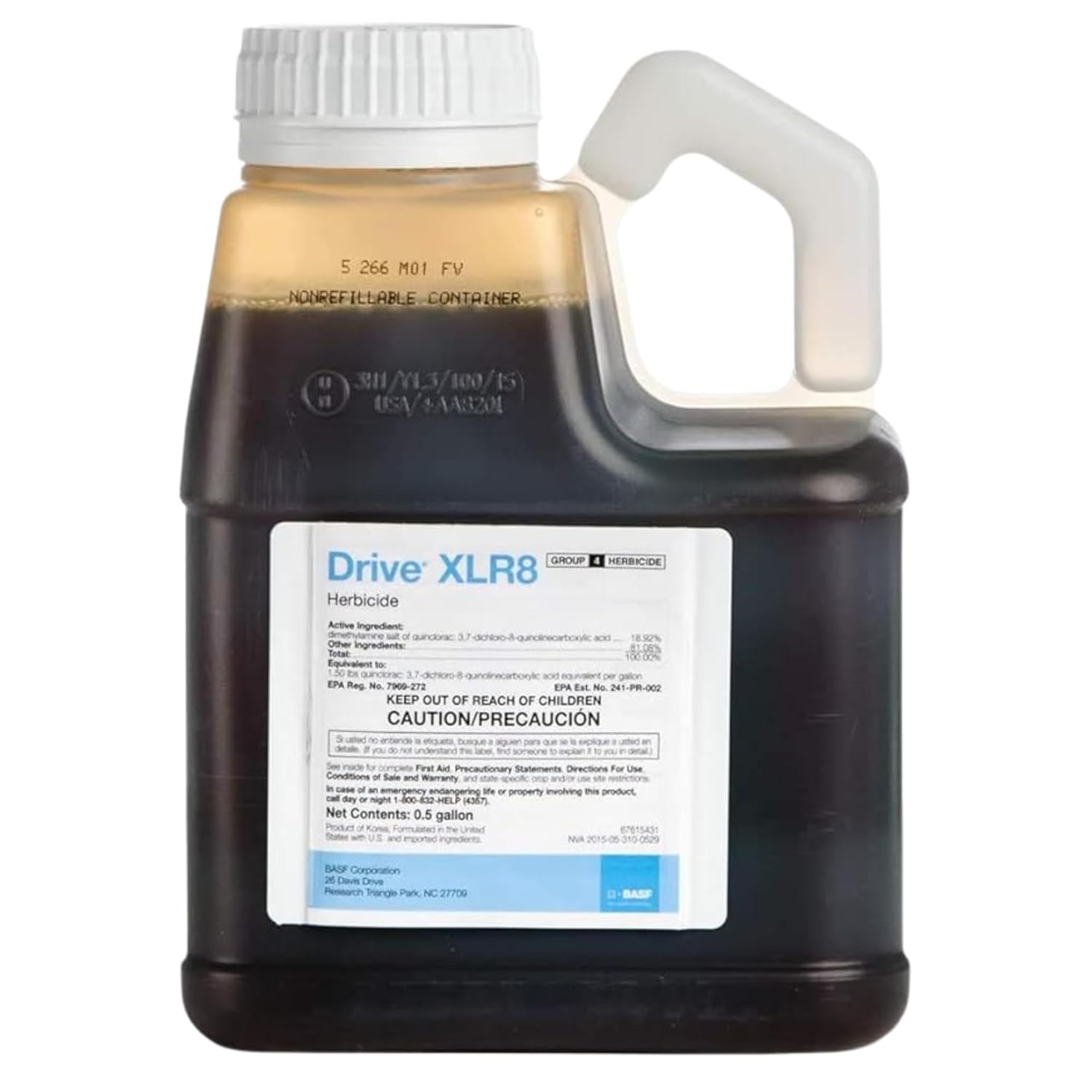
BASF Drive XLR8 Crabgrass Killer Herbicide Concentrate, 64 oz
| Unit Count | 64 Ounce |
|---|---|
| Item Form | Liquid |
| Active Ingredients | Quinclorac 18.92% |
| Coverage | Full |
Drive XLR8 is a concentrated liquid herbicide formulated primarily to control crabgrass and a range of other grassy weeds plus several broadleaf species when applied correctly. It is mixed with water (label gives mixing rates) and is typically applied with a garden sprayer to uniformly cover infested turf; one recommended mix treats roughly 1,000 square feet. The active ingredient quinclorac and the water-based formula promote rapid uptake and a rainfast result in under an hour, while the product advertises up to 30 days of residual control. Practical benefits include versatility across warm- and cool-season turf and compatibility with some tank mixes for broader programs. Important limitations are that it is a chemical herbicide requiring careful personal protective equipment and strict label adherence, some state-specific restrictions apply, and it is intended for turf settings rather than ornamental beds. Users should follow mowing and irrigation guidance around applications to get the best results.
Best for: Homeowners and groundskeepers who want a strong, versatile post-emergent option to manage crabgrass and other grassy weeds across typical lawn turf and who are comfortable following label safety and application steps.
Less Ideal for: Gardeners looking for an organic or non-chemical solution or those wanting a product suitable for use on ornamental flower beds or near sensitive plants should consider alternatives.
- Effective on crabgrass and a wide range of grassy weeds plus several common broadleaf species
- Water-based concentrate promotes quick plant uptake and becomes rainfast in under an hour
- Provides up to 30 days of residual control, reducing frequency of repeat applications
- Labeled for use on both warm-season and cool-season turf and can be tank-mixed with compatible products
- Requires careful handling and personal protective equipment because it is a chemical herbicide
- Not labeled for use in some jurisdictions without restrictions and may be limited to spot treatments in certain states
Verdict: Choose Drive XLR8 when you need a concentrated, fast-acting post-emergent herbicide that delivers reliable crabgrass and grassy weed control with up to a month of residual protection.
The Andersons Barricade Granular Pre-Emergent Weed Control (40 lb)

| Item Form | Granule |
|---|---|
| Coverage | 12880 square_feet |
| Active Ingredients | Herbicide (prodiamine 0.48%) |
The Andersons Barricade is a 40 lb granular pre-emergent designed to prevent common grassy and broadleaf weeds such as crabgrass, poa annua, and goosegrass across large lawns. You apply it to established turf or landscape beds before weed seeds germinate, then water it in so the dispersible granules dissolve and move the active ingredient, prodiamine, into the soil. The DG Technology and small particle size aim to give more uniform coverage per square foot, which is useful when treating up to the stated 12,880 square feet with a single bag. Practical benefits include long-lasting pre-emergent control for early spring and fall windows and a formulation that is easy to broadcast with a spreader. Important limitations are that it will not kill existing weeds and requires accurate timing and label-following application rates to avoid harming desirable plants. Also, because it contains an herbicide, users must handle it with care and follow safety directions to reduce exposure.
Best for: Gardeners and lawn care-minded homeowners who prioritize reliable, performance-oriented prevention of grassy weeds across medium to large turf areas and who are comfortable following label directions for timing and application.
Less Ideal for: People who need a product to eliminate current weed patches or those unwilling to follow safety and application instructions should consider post-emergent solutions instead.
- Professional-grade active ingredient (prodiamine) for effective pre-emergent control
- Dispersible granule (DG) technology that dissolves quickly when watered in
- Small particle size for more uniform coverage per square foot
- Large coverage per bag suitable for treating big lawns
- Not effective on existing weeds since it is strictly a pre-emergent
- Requires correct timing and application rates to be effective and avoid damage
Verdict: Choose this product when you want a professional-strength pre-emergent that covers large lawns and delivers consistent prevention of grassy weeds.
Spectracide Weed & Grass Killer Concentrate, 40 oz

| Unit Count | 40 Fluid Ounces |
|---|---|
| Item Form | Spray |
| Coverage | 1200 square feet |
| Visible Results | As fast as 3 hours |
Spectracide Weed & Grass Killer Concentrate is a mix-with-water, nonselective herbicide intended for spot treatments on driveways, walkways, patios and around fences, foundations and landscape beds. You mix the concentrate into a tank sprayer (7 fl oz per gallon covers about 300 sq ft) and spray to thoroughly coat leaves; the formula becomes rainproof in 15 minutes and can show visible browning in as little as three hours. Practical features include fast action, root-killing activity so regrowth is reduced, and the ability to replant in treated areas after roughly one day. The product is designed for use when temperatures are above 60 F and requires care to avoid contact with desirable plants since it is nonselective. It is best used for targeted clearing rather than blanket treatments across lawns because it will kill any green vegetation it contacts and the label limits applications per area. For homeowners who want a reliable, quick way to clear stubborn grassy weeds from hard surfaces or prepare small patches for replanting, this concentrate is straightforward and effective, but it demands cautious application and protective measures for nearby plants and people.
Best for: Buyers who want a practical, cost-efficient solution to remove grassy weeds from driveways, patios and tight landscape spots and who are comfortable mixing and applying a concentrated herbicide carefully.
Less Ideal for: Those who need a selective lawn-only treatment, prefer ready-to-use sprays without mixing, or want to treat large continuous turf areas without risking desirable plants.
- Kills weeds and grasses down to the root for longer-lasting control
- Fast visible results, often within three hours and rainproof in 15 minutes
- Concentrate mixes with tank sprayers for flexible coverage and cost efficiency
- Allows replanting in treated areas after about one day when used as directed
- Nonselective formula will damage any desirable plants it contacts
- Label restricts number of applications per area and use around edible crops
- Requires mixing and a tank sprayer rather than simple ready-to-use application
Verdict: A fast-acting, economical concentrate for targeted removal of grassy weeds and clearing hardscape areas when applied carefully.
Spectracide Weed Stop for Lawns Plus Crabgrass Killer, Ready-To-Use, 1 Gal

| Item Form | Spray |
|---|---|
| Coverage | Up to 5,000 sq ft |
| Liquid Volume | 1 gallons |
Spectracide Weed Stop for Lawns Plus Crabgrass Killer is a one-gallon, ready-to-use spray designed to kill over 470 listed weed types by contact and down to the root. You use it directly from the container without mixing, applying when daytime temperatures are between 45°F and 90°F and after mowing two to three days prior. The formula targets broadleaf and grassy weeds such as dandelion, clover and crabgrass and advertises visible wilting within about five hours. For homeowners treating common grassy weeds across a typical lawn area, the product covers up to 5,000 square feet per gallon and simplifies application with a spray format. Important limitations are temperature restrictions for bermudagrass and the fact that it kills by contact, so thorough coverage is needed for effective control and follow-up treatments may be required for heavy infestations. Users should follow label directions carefully to avoid lawn stress and to apply only under recommended conditions.
Best for: Homeowners wanting an inexpensive, no-mix solution to remove common grassy and broadleaf weeds across a typical lawn who prioritize ease of use and quick visible results.
Less Ideal for: Those managing large professional turf areas, seeking systemic long-term control without repeated spot treatments, or who need an herbicide usable in all high-temperature bermudagrass conditions.
- Ready-to-use spray requires no mixing and is simple to apply
- Claims visible results in about five hours after application
- Broad spectrum control listed for more than 470 weed types including crabgrass
- One gallon covers up to 5,000 square feet, suitable for average lawns
- Kills by contact so missed spots may regrow and repeat applications can be necessary
- Use restrictions for bermudagrass and upper temperature limits limit when it can be applied
Verdict: A budget-friendly, ready-to-use lawn spray that quickly knocks back crabgrass and common grassy weeds with minimal setup.
LebanonTurf Prodiamine 0.58% Granular Pre-emergent Crabgrass Preventer (640 oz)

| Item Form | Granule |
|---|---|
| Coverage | 20,000 sq. ft. |
| Active Ingredients | Prodiamine |
This LebanonTurf granular pre-emergent uses 0.58% prodiamine on a BIODAC carrier to prevent crabgrass and listed grassy weeds before they germinate. It is designed for broadcast granular application across lawns and landscaped areas and claims coverage of up to 20,000 square feet per unit. Typical use is early spring application followed by a second treatment in late spring to maintain protection; the label warns not to overseed or plant grass seed for three to four months after applying. The product’s granular form makes it easy to spread with a common spreader and it is positioned for professional and homeowner maintenance programs. Practical benefits include clear seasonal timing guidance and wide coverage that reduces the number of bags needed for larger yards. Important limitations are that it is a preventive tool only and will not control existing weeds, and label restrictions mean it is not legal for sale in several states, so check local regulations before planning treatments.
Best for: Homeowners or lawn care pros who prioritize predictable, season-long prevention of grassy weeds and want a product that covers large turf areas with minimal reapplication.
Less Ideal for: Gardeners who need a post-emergent solution for existing weeds or those planning to overseed lawns within three to four months should choose a different product.
- Pre-emergent prodiamine formulation specifically prevents crabgrass and other grassy weeds
- Large coverage per unit reduces trips and handling for big lawns
- Granular form on a BIODAC carrier spreads easily with standard broadcast spreaders
- Does not control existing weeds since it is preventive only
- Label prohibits sale in multiple states which limits availability depending on location
Verdict: Choose this granular prodiamine pre-emergent when you need reliable, large-area prevention of crabgrass and other grassy weeds before they germinate.
Spectracide Weed & Grass Killer with AccuShot Power Sprayer, 1.33 gal

| Unit Count | 170 Fluid Ounces |
|---|---|
| Item Form | Spray |
| Coverage | 1 gallon |
| Active Ingredients | Diquat Dibromide 0.12%, Fluazifop-p-butyl 0.06%, Dicamba dimethylamine salt 0.04% |
Spectracide Weed & Grass Killer is a ready-to-use non-selective herbicide packaged with an AccuShot battery-powered sprayer and extendable wand for targeted application. It is typically used to clear weeds and grass from patios, driveways, walkways, fence lines and around ornamentals where vegetation is unwanted. The formula is absorbed through leaves and moves to the root, so treated plants often show visible decline in as little as three hours and are rainproof after about 15 minutes. The included sprayer eliminates manual pumping and improves accuracy for spot treatments or edges, and the extendable wand helps reach low or awkward spots. Practical benefits include fast visible results, the ability to replant treated areas within a day, and an easy-to-use continuous spray mechanism. Important limitations are that it is non-selective so contact with desirable plants will damage them, the sprayer requires four AA batteries and occasional maintenance, and the active ingredients mean you must follow safety and runoff precautions to protect people, pets and aquatic areas.
Best for: Buyers who prioritize proven, fast-acting control of grassy weeds and want the convenience of a ready-to-use product with an accurate powered sprayer for spot treatments.
Less Ideal for: People who need a selective lawn-safe herbicide or who prefer chemical-free weed control methods should look for alternative products or mechanical options.
- Kills both broadleaf weeds and grasses down to the root for lasting control
- Visible results in as little as three hours and rainproof after 15 minutes
- Includes battery-powered AccuShot sprayer with extendable wand for accurate application
- Can replant treated areas the next day due to quick activity and limited residue
- Non-selective formula will damage any desirable plants it contacts
- Sprayer depends on four AA batteries and requires careful cleaning and storage
- Contains active ingredients that are toxic to aquatic life and require careful use
Verdict: Choose this when you want a fast, easy-to-use non-selective herbicide with a powered wand for precise, visible control of grassy weeds.
Roundup Weed & Grass Killer4 with Pump 'N Go 2 Sprayer, 1.33 gal.

| Unit Count | 170 Fluid Ounces |
|---|---|
| Item Form | Spray |
| Coverage | 300 Square_Feet |
| Active Ingredients | Triclopyr, Triethylamine Salt, Fluazifop-P-Butyl, Diquat Dibromide |
This Roundup Weed & Grass Killer4 combines a pre-mixed herbicide with a Pump 'N Go 2 sprayer so you can treat patches of weeds and grassy invaders without mixing concentrated chemicals. The product is intended for spot treatment around flower beds, patios, driveways, mulch and along foundations; the extendable wand helps you spray accurately without bending over and the sprayer can deliver about 10 minutes of continuous spray per fill. It claims visible results in hours, becomes rainproof in as little as 30 minutes, and allows planting again within a short window after application. Active ingredients target both broadleaf weeds and grassy species, so it works on dandelion, crabgrass and similar pests. Important practical limits are standard safety precautions since it will damage desirable plants if contacted, and you must keep people and pets off treated areas until dry. Also it is a chemical control best for spot or patch treatments rather than long-term lawn management or selective grass preservation.
Best for: Homeowners who want a straightforward, ready-to-use product for spot-treating visible grassy weeds and broadleaf weeds around hardscapes and beds and who prioritize convenience and quick results.
Less Ideal for: People looking to maintain a selective lawn care program that preserves turf grasses or those who prefer organic or non-chemical weed control methods.
- Pre-mixed formula with integrated Pump 'N Go sprayer for easy, no-mix application
- Extendable wand provides accurate spray reach without bending
- Works on both broadleaf weeds and grassy weeds, with visible results in hours
- Rainproof in as fast as 30 minutes so light rain is less likely to wash it away
- Non-selective chemical that will harm desirable plants on contact
- Not intended as a long-term preventative lawn treatment for entire lawns
Verdict: A convenient, ready-to-use sprayer system that kills both grassy and broadleaf weeds quickly for homeowners who need fast spot control.
Choosing the Right Herbicide for Grassy Weeds: Key Factors to Consider
Target Grass Species and Labeled Uses
Know the exact grassy weeds in your yard before selecting a product. Different herbicides work on different grass families and species; an agent that controls crabgrass may not affect quackgrass or annual bluegrass. Check label language for listed species and the habitat the product is labeled for, such as lawns, garden beds, or non-crop areas.
Matching the herbicide to the target prevents wasted applications and reduces the likelihood of damaging surrounding plants. If you are uncertain about identification, inspect seedheads and growth habit or consult a local extension resource so you choose a product with the appropriate spectrum of activity.
Selectivity and Turf Compatibility
Selectivity refers to whether a product kills grasses only or harms broadleaf plants as well. For treating grassy weeds in lawns, you need an herbicide that is selective for the weed without injuring the desirable turf species. Labels specify which turfgrasses are tolerant; warm-season and cool-season turf types can differ in sensitivity.
For garden beds and borders, selectivity matters if you plan to treat close to ornamental grasses or low-growing perennials. When in doubt, use targeted spot applications and protect desirable plants with barriers or careful spray patterns to reduce drift and contact damage.
Timing and Growth Stage of Weeds
The effectiveness of many herbicides depends on weed growth stage. Preemergent products prevent seedlings from establishing and are best applied before seeds germinate. Postemergent herbicides work on actively growing plants, but many are most effective on young, tender shoots rather than mature, drought-stressed clumps.
Plan applications for active growth periods and follow label guidance about temperature ranges and moisture conditions. Poor timing wastes product and can allow surviving plants to recover and seed again, so calendar planning and monitoring often matter as much as product choice.
Application Method and Coverage Control
Herbicides come as ready-to-use sprays, concentrates, granules, and water-dispersible formulations. Application method affects how easily you can target grassy weeds without contacting desirable plants. Sprayers with adjustable nozzles and wands help deliver spot treatments, while granular preemergents are useful for even coverage over large areas.
Consider how precise you need to be. Spot-spraying with a pump sprayer gives control for isolated infestations, while hose-end applicators and broadcast spreaders are faster for larger areas. Also evaluate drift risk, droplet size, and whether the product requires surfactants or mixing for optimal uptake.
Residue, Re-treatment Intervals, and Environmental Persistence
Residual activity determines how long the herbicide continues to affect weed seedlings after application. Long-residual products can prevent reestablishment for weeks or months but may restrict planting of new seedlings or certain ornamental transplants.
Check re-treatment intervals and any planting or soil-use restrictions on the label to avoid harming future plantings. Consider environmental persistence as well; products that move in soil or runoff can impact non-target areas, so follow buffer and irrigation guidelines to minimize off-site movement.
Safety, Personal Protective Equipment, and Reentry Times
All herbicides require some degree of personal protective equipment such as gloves, eye protection, and sometimes a respirator for concentrated mixes. Labels list required PPE and reentry intervals for children, pets, and people. Choose a product whose safety requirements fit how you work in the yard.
Also consider pet exposure and whether treated areas need to keep people off for a set period. Products with shorter reentry times allow normal yard use sooner, which is an important practical factor for busy households.
Identifying Common Grassy Weeds in Home Landscapes
Before treatment, identify which grassy weeds you are facing. Annual grassy weeds typically germinate from seed each year and include species that form clumps and produce conspicuous seedheads. Perennial grassy weeds spread by rhizomes or stolons and can be harder to eradicate because of belowground structures.
- Look at growth habit: tufted clumps suggest annuals; spreading stems or underground rhizomes suggest perennials.
- Note seasonality: summer-emerging grasses differ from cool-season types and respond to different treatments.
- Seedhead and ligule characteristics help narrow species when comparing to local guides.
Safe Spot-Treatment Techniques
Spot treatments minimize damage to nearby desirable plants and reduce product use. Use a spray shield, a narrow wand, or hand-apply to individual clumps rather than broadcasting over the whole area. For dense perennial patches, cut back top growth and treat regrowth when plants are actively growing to improve uptake.
- Apply on calm days to avoid drift.
- Use gloves and eye protection and follow label PPE.
- Avoid watering immediately after application unless the label permits; many products require dry foliage for uptake.
Timing Applications Around Lawn Care Tasks
Coordinate weed treatments with mowing, fertilizing, and irrigation schedules. For postemergent herbicides, mow a few days before treatment so weeds are at an optimal height for spray contact. Avoid fertilizing immediately before or after treatments unless the product label allows it, since vigorous growth or salt stress can change plant sensitivity.
- Wait the recommended interval after treatment before reseeding or sod installation.
- Apply preemergent herbicides before soil temperatures trigger seed germination.
- Schedule treatments during active growth and moderate temperatures for best results.
Managing Resistant or Persistent Grassy Weeds
Repeated use of products with the same mode of action can select for resistant populations. If a grassy weed fails to respond after proper application, rotate to a product with a different mode of action and use integrated practices like hand removal and improving lawn vigor to reduce reinfestation risk.
bullets:[
- Combine cultural controls such as improved drainage, overseeding, and proper mowing heights to reduce conditions that favor grassy weeds.
- When mechanical removal is used, remove as much root material as possible to prevent regrowth.
- Document application dates and modes of action to guide future rotations.
How We Chose the Best Herbicide for Grassy Weeds
Our selection process focused on practical gardener concerns relevant to removing grassy weeds across lawns, beds, and hardscape cracks. We prioritized products that offer targeted control of common grassy invaders while limiting harm to desirable turf and ornamentals. Evaluation criteria included labeled weed spectrum and efficacy against grass species, labeled turf and ornamental safety, application method and coverage control, and reentry or waiting periods that affect how quickly gardeners can resume normal use of a treated area. We excluded systemic claims unsupported by labeled directions or products restricted to commercial operators. We also filtered out options with vague labeling about which grass species they control. The final shortlist favors formulations with clear instructions for timing, application rate guidance, and documented compatibility with typical home lawn grasses. The scoring labels reflect these priorities so you can compare control power, safety, and practical usability at a glance.
FAQ
Can I use a lawn herbicide on grassy weeds in flower beds?
Usually not without checking the label. Many lawn-selective herbicides are safe only for turf species and can injure ornamentals. Use products labeled for beds or apply careful spot treatments, shielding desirable plants and avoiding drift.
When is the best time of year to treat grassy weeds?
It depends on the species. Warm-season grassy weeds are best treated in late spring through summer when actively growing. Cool-season grasses respond better in early spring or fall. Preemergent timing is driven by soil temperature and local seed germination cues.
Will one treatment permanently eliminate perennial grassy weeds?
Perennials with rhizomes or stolons often require multiple treatments and cultural controls. A single application may reduce top growth, but follow-up treatments and mechanical removal are usually necessary to deplete underground reserves.
Are granular herbicides safer for spot control than sprays?
Granular products reduce spray drift and are easier to apply when even coverage is needed, but they are not always selective and may still affect nearby plants. Read label restrictions and avoid broadcast granulars near sensitive plantings.
How soon can I reseed or plant after applying a herbicide?
Replanting intervals vary by product and by whether the herbicide has residual soil activity. Labels give specific wait periods for reseeding, sodding, or transplanting. Follow those intervals to avoid harming new seedlings.
Final Verdict
Focus on matching the herbicide to the grassy species and the location you need to treat. Prioritize products with labeled efficacy for the target grass, clear turf or bed safety guidance, and application methods that let you avoid contact with desirable plants. Balance residual needs against planting restrictions and use timing and cultural practices to reduce repeat treatments. With the right combination of product choice and technique, you can regain control of grassy weeds while protecting the lawn and landscape.
