

Note: This article contains affiliate links. If you click on these links and make a purchase, I may earn a small commission at no extra cost to you. This helps support my research and content. Read my full affiliate disclosure here.
If you want to remove broadleaf weeds without damaging grass, choosing the right selective herbicide matters. The right option kills target weeds while leaving desirable turf and garden plants intact, and reduces repeat spot treatments. This guide covers our six shortlisted selective herbicides chosen for common lawn and landscape situations. We evaluated factors like target-spectrum effectiveness, turf safety, and application practicality to help you pick the best fit for your yard. Read on for what we tested and practical tips for safe, effective use.
Top Picks at a Glance
| Best Overall The best all-around choice for most situations | T-Zone Turf Herbicide by PBI Gordon, 1 Quart |  |
| Best Quality Built to a higher standard if you want something more solid | Nufarm Change Up Premium Selective Herbicide, 32 oz |  |
| Best Value The sweet spot between price and what you get | Spectracide Weed Stop for Lawns Concentrate, 40 fl oz |  |
| Best Budget The cheapest option that still gets the job done reliably | Spectracide Weed Stop for Lawns Plus Crabgrass Killer, Ready-to-Use, 1 Gallon |  |
| Highest Rated A top-rated pick with lots of positive feedback | ALLIGARE Triclopyr 4 EC Selective Herbicide, 1 Quart |  |
| Most Popular A crowd favorite that many people choose with confidence | Ortho WeedClear Weed Killer for Lawns with Comfort Wand, 1 gal |  |
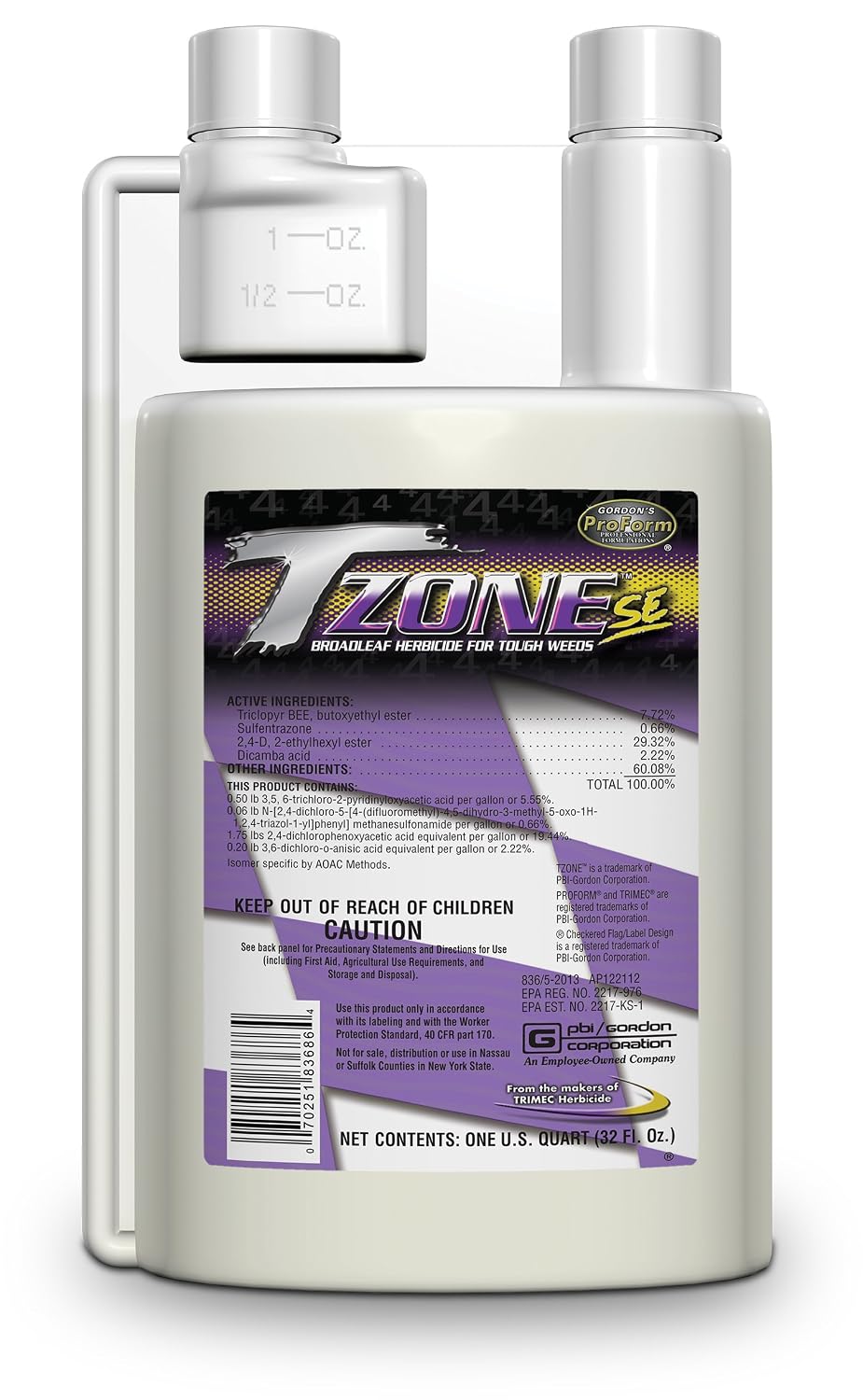
T-Zone Turf Herbicide by PBI Gordon, 1 Quart
| Unit Count | 32 Fluid Ounces |
|---|---|
| Item Form | Liquid |
| Coverage | broad-leaf weeds, grassy weeds |
| Active Ingredients | Dicamba, triclopyr |
T-Zone is a ready-to-mix liquid herbicide intended for use on lawns, commercial turf and golf sites to target broadleaf weeds and some grassy species. It combines active ingredients including triclopyr, dicamba and others to deliver visible weed control in cool temperatures down to about 50°F, and it lists suppression of yellow nutsedge. Typical use is dilution and broadcast or spot application with a sprayer; protective gloves and eyewear are recommended during handling. In practice the formula produces fast visual response on many common broadleaf weeds, which can reduce the need for repeat treatments. The product is designed for professional and homeowner turf care, offering flexible application timing and coverage for both residential and larger turf areas. Limitations to note are the need to follow label directions for turf species and rates to avoid turf injury and the requirement for appropriate PPE because it contains multiple potent herbicide actives. This one-quart size is convenient for mixing to treat moderate lawn areas without buying an industrial volume.
Best for: Buyers who want a versatile, professional-strength selective herbicide for routine lawn and turf weed control and who are comfortable following label directions for safe use.
Less Ideal for: People seeking an all-purpose non-chemical solution or those unwilling to use protective equipment and follow regulatory label instructions should consider alternatives.
- Selective formula targets a wide range of broadleaf weeds and some grassy weeds
- Effective in cool-weather applications down to about 50°F
- Contains multiple active ingredients for faster visible control on many species
- One-quart liquid concentrates for mixing to treat moderate turf areas
- Contains strong active herbicides so protective equipment and careful label reading are required
- Not universal for all turfgrass: label rates and species restrictions must be followed to avoid turf damage
Verdict: Choose T-Zone when you need a professional-strength selective herbicide that delivers fast, broadleaf weed control for lawns and turf.
Nufarm Change Up Premium Selective Herbicide, 32 oz

| Unit Count | 32 Ounce |
|---|---|
| Item Form | Liquid |
| Coverage | 1000 square feet |
| Active Ingredients | MCPA, fluroxypyr, dicamba |
Change Up is a professional-strength selective herbicide designed to knock back a wide range of broadleaf weeds on lawn turf. Mixed and applied at the recommended rates, it targets dandelion, plantain, oxalis, chickweed, thistles and many other hard-to-control species by combining three active ingredients for faster and broader control than single-ingredient products. It is labeled for both cool- and warm-season grasses, so it works across common turf types used in residential and commercial settings. The 32 oz liquid covers about 1,000 square feet per bottle when applied at typical rates, and the formulation is intended to reduce the need for repeat treatments. Important trade-offs are that it is a chemical control requiring careful mixing and safe handling, and it is specific to broadleaf weeds so it will not address grassy weeds or non-plant pests. For landscapers and homeowners prioritizing reliable, fast knockdown of broadleaf weeds, Change Up delivers predictable performance when used as directed.
Best for: Homeowners and landscape professionals who need a fast, reliable treatment for broadleaf weeds across multiple turf types and prioritize strong performance over minimal handling.
Less Ideal for: People seeking an organic, non-chemical option or those who need control of grassy weeds and turf diseases should consider alternative products or integrated pest management approaches.
- Controls over 200 broadleaf weed species with a three‑ingredient formulation
- Labeled for both cool- and warm-season turf for wide turf compatibility
- Starts working quickly to reduce callbacks and repeat treatments
- Covers approximately 1,000 square feet per 32 oz bottle at recommended rates
- Requires careful mixing and personal protective measures due to concentrated active ingredients
- Won't control grassy weeds or non-weed turf problems
Verdict: Buy this if you want a potent, professional-grade selective herbicide that quickly controls a wide range of broadleaf weeds across common turfgrasses.
Spectracide Weed Stop for Lawns Concentrate, 40 fl oz

| Unit Count | 40 Fluid Ounces |
|---|---|
| Coverage | 20000 square_feet |
| Item Form | Liquid |
Spectracide Weed Stop for Lawns is a concentrated liquid herbicide formulated to control more than 200 listed broadleaf weeds, including dandelion, chickweed, and clover. You mix the 40 fl oz bottle with water and apply it with a garden sprayer to treat up to 20,000 square feet; it acts by contact and is marketed to kill weeds down to the root with visible results in hours and more complete control after a few days. The product is rainfast within six hours and is intended for spot or broadcast treatment in spring or fall, with repeat spot treatments for persistent weeds. Practical users will appreciate the high coverage per bottle and clear application guidance for mowing and timing. Important limitations are that it must be mixed and applied with separate spraying equipment, it targets broadleaf weeds rather than grassy weeds, and correct timing and label rates are necessary to avoid turf damage or reduced effectiveness.
Best for: Homeowners who want an efficient, no-nonsense selective herbicide to reduce broadleaf weeds across medium to large lawns and prioritize coverage and speed of control.
Less Ideal for: People seeking a ready-to-use spray or a product to control grassy weeds should consider alternatives designed for those specific needs.
- Controls over 200 listed broadleaf weed species including dandelion, chickweed and clover
- Concentrated formula treats up to 20,000 square feet from a single 40 fl oz bottle
- Rainfast in about six hours so light rain shortly after application is less likely to wash it away
- Produces visible results in hours and kills down to the root for longer control
- Requires a separate garden sprayer and mixing, which adds preparation time
- Not formulated to control grassy weeds or offer a total lawn weed solution
Verdict: Choose this concentrated selective herbicide if you need fast, wide-coverage control of broadleaf lawn weeds without harming turf when used as directed.
Spectracide Weed Stop for Lawns Plus Crabgrass Killer, Ready-to-Use, 1 Gallon

| Item Form | Spray |
|---|---|
| Coverage | Up to 5,000 sq ft |
| Liquid Volume | 1 gallons |
Spectracide Weed Stop for Lawns Plus Crabgrass Killer is a one-gallon, ready-to-use spray formulated to remove common broadleaf and grassy weeds from established lawns without mixing or special equipment. You apply it to a mowed lawn when temperatures are between 45°F and 90°F and the product kills weeds on contact, often showing visible browning in about five hours. The formula lists control of more than 470 weed types and includes crabgrass and yellow nutsedge, so it is useful for neighborhood lawns with mixed weed problems. Practical benefits include the large 1-gallon ready-to-use container that covers up to 5,000 square feet and simple application with no measuring. Limitations are standard for contact herbicides: it affects only treated foliage so repeat applications or spot treatments may be needed for heavy infestations, and care is required on warm-season grasses like Bermudagrass where temporary yellowing can occur if used above recommended temperatures. Read and follow the label directions and timing to avoid turf injury.
Best for: Homeowners looking for an affordable, easy-to-use selective herbicide to treat common lawn weeds across a medium to large yard and who prefer a no-mix product.
Less Ideal for: People needing a systemic, long-term residual solution for perennial deep-rooted weeds or those managing specialty turf where even brief discoloration is unacceptable.
- Ready-to-use formula requires no mixing or special equipment
- Claims control of 470+ listed weeds including crabgrass and common broadleaf species
- Visible results reported in about five hours after application
- Large 1-gallon volume covers up to 5,000 square feet for broad lawn coverage
- Contact-only action means multiple applications may be needed for deep or dense infestations
- May cause temporary yellowing on Bermudagrass if applied above recommended temperatures
Verdict: A convenient, budget-friendly ready-to-use herbicide that quickly knocks back a wide range of common lawn weeds without mixing.
ALLIGARE Triclopyr 4 EC Selective Herbicide, 1 Quart

| Unit Count | 32 Fluid Ounces |
|---|---|
| Item Form | Liquid |
| Coverage | Pastures, rangelands, rights-of-way, lawns, golf courses, sod farms, industrial properties, ditches |
| Active Ingredients | Triclopyr |
This concentrated Triclopyr 4 EC from ALLIGARE is a professional-style selective herbicide designed to target woody plants, broadleaf weeds, and brush while leaving grasses largely unaffected. It is typically mixed with water (3.2 to 6.4 oz per gallon) and a bark penetrant for foliar or stump treatment, making it useful for pasture restoration, right-of-way maintenance, and forestry cleanup. Notable features include its ester formulation for good leaf and root absorption and compatibility with other tank-mix herbicides for customized treatments. In practice the product delivers strong control on tough brush and invasive broadleaves when applied according to directions, and its 1 quart size is concentrated enough for multiple treatments on medium to large areas. Important limitations are that it requires careful protective handling, is not grass-safe in all situations, and needs proper weather and application timing to avoid off-target damage; users should follow safety instructions and local regulations. This is a tool meant for deliberate, regulated vegetation management rather than casual spot-weeding in small ornamental beds.
Best for: Buyers who need a reliable, professional-strength selective herbicide for restoring pastures, managing rights-of-way, or controlling brush on acreage and who prioritize consistent, repeatable results.
Less Ideal for: Home gardeners with small lawns, flower beds, or container plants looking for a mild spot treatment should choose a gentler, easier-to-use product.
- Selective formulation that targets woody plants and broadleaf weeds while preserving grasses in many situations
- Concentrated liquid that mixes with water for foliar, stump, or tank-mix applications, allowing flexible treatment methods
- Ester formulation improves absorption through leaves and roots for more reliable control of stubborn vegetation
- Requires careful PPE and handling because it is a professional-strength herbicide
- Not appropriate for small ornamental plantings or where drift to desirable broadleaf plants is likely
Verdict: Choose this concentrated triclopyr formulation when you need dependable selective control of woody plants and broadleaf weeds across large outdoor areas.
Ortho WeedClear Weed Killer for Lawns with Comfort Wand, 1 gal

| Unit Count | 128 Fluid Ounces |
|---|---|
| Item Form | Spray |
| Coverage | 16000 square feet |
| Kills listed weeds | 250+ weeds |
Ortho WeedClear is a one-gallon ready-to-use herbicide formulated to kill broadleaf lawn weeds down to the root while minimizing harm to turf when applied as directed. It comes with a Comfort Wand applicator for continuous, targeted spraying—handy for spot treatments around flower beds, driveways, and turf. The formula combines three active ingredients to control more than 250 listed weeds including dandelion, clover, and poison ivy, and the label promises visible results within hours and rainproofing after one hour of drying. For larger patch treatments you can mix it per label instructions for broadcast application. Practical benefits include the precision wand for easy spot control and the broad weed list so you are less likely to need multiple products. Important limitations are that it is designed for actively growing broadleaf weeds in spring or fall and not for year-long prevention or woody brush, and users must follow safety directions about drying time and application conditions to avoid off-target damage.
Best for: Buyers who want a proven, easy-to-use selective herbicide for routine lawn weed control and who prioritize visible, fast results backed by widespread use.
Less Ideal for: Homeowners seeking a long‑term residual prevention product or someone needing a brush and vine or woody weed solution should consider other specialized products.
- Ready-to-use formula with an included Comfort Wand for precise, continuous spraying
- Kills over 250 common broadleaf lawn weeds down to the root
- Visible results in hours and becomes rainproof about one hour after drying
- Can be used for both spot treatment and broadcast application when mixed as directed
- Not intended for year-long prevention or to control woody brush and vines
- Requires careful timing and application to active growth periods for best results
Verdict: A convenient, lawn‑friendly selective herbicide with a comfort wand that delivers fast, broadleaf weed control for routine spot and patch treatments.
Choosing the Right Selective Herbicide: Key Factors to Consider
Target Weed Spectrum
Knowing which weeds a selective herbicide controls is the first step to picking the right product. Some formulations specialize in broadleaf weeds like clover, dandelion, and plantain, while others include additional grassy weed actives. Choosing a product whose label lists the species you actually see in your lawn reduces wasted applications.
Labels will also note lifecycle targets such as annuals versus perennials. Annual broadleaf weeds often respond quickly to treatment, while persistent perennials may need repeat applications or a combination of cultural controls. Matching the herbicide's active ingredient profile to your weed list improves success and lowers the chance of repeat treatments.
Turf Safety and Grass Type Compatibility
Different turfgrass species respond differently to herbicide active ingredients. A formula that is safe on tall fescue may injure certain warm-season grasses, and vice versa. Always cross-check the product label for specific turf types before applying.
Application timing also affects turf tolerance. Treating during periods of drought or extreme heat increases stress on grass and raises the risk of injury. Follow label timing windows and avoid applications when turf is under environmental stress to maintain turf health while treating weeds.
Application Method and Equipment
How you apply the herbicide determines both effectiveness and safety. Ready-to-use trigger sprayers are convenient for spot treatments, while concentrates mixed in a pump sprayer offer better economy for larger areas. Application equipment must deliver even coverage without over-application.
Consider nozzle type and spray pressure when targeting small weeds near ornamental plants. Some products permit addition to tank mixes; others warn against combining with fertilizers or surfactants. Using appropriate equipment and following label spray recommendations reduces drift and non-target damage.
Residual Activity and Re-treatment Interval
Residual activity describes how long an herbicide remains active in the soil or on foliage. Short-residual selective herbicides act quickly but may require follow-up treatments for newly emerging weeds. Longer residuals can help prevent later flushes of seedlings but may restrict planting windows for desirable species.
Understand the recommended re-treatment interval and how long you should delay seeding or overseeding after application. For gardeners planning renovation or planting close to treated areas, choose products with label guidance that fits your timeline.
Safety, Handling, and Environmental Considerations
Selective herbicides vary in human and environmental safety profiles. Read label directions for required personal protective equipment, mixing precautions, and reentry intervals. Proper storage and disposal instructions help prevent accidental exposure or contamination.
Pay attention to runoff risk and buffer zone instructions for nearby beds, water features, or storm drains. Some active ingredients have specific restrictions around pollinator-attractive plants. Taking label precautions protects people, pets, and beneficial insects while keeping neighbors safe.
Local Regulations and Label Compliance
Herbicide use is governed by federal and local regulations that may restrict certain actives, application rates, or use patterns. Always follow the product label and local guidelines. Using a product contrary to label directions can be illegal and harmful to the landscape.
Check any municipal or homeowner association rules that affect when and how herbicides may be applied. In some communities you may need to avoid broadcast treatments during certain seasons or use certified applicators for larger properties.
When to Use Spot Treatment Versus Broadcast Application
Spot treatments are best for isolated patches or a few common broadleaf weeds. They reduce chemical exposure for the rest of the lawn and limit the risk of turf injury. Use a targeted sprayer or a dab applicator and focus only on the foliage of the weeds.
Broadcast application can be appropriate when weeds are widespread or when managing a known seasonal flush. For broadcast use, choose products labeled for whole-lawn treatment and follow rate and timing instructions carefully to avoid stressing the turf. Consider watering and mowing timing around the application to maximize uptake and minimize turf disruption.
- Spot treat for individual weeds to limit non-target exposure
- Broadcast treatments are efficient for large infestations
- Avoid broadcast application during drought or heat stress
Timing Treatments for Best Results
Apply most selective herbicides when target weeds are actively growing. Spring and fall are common windows because weeds are metabolically active and absorb herbicide more effectively. Treating during these growth periods increases the likelihood of systemic uptake and translocation to roots.
Avoid treating during periods of heavy rain forecast within 24 hours, as wash-off reduces efficacy. Conversely, if rain is absent for several days, uptake can be limited by drought stress. Check the label for recommended weather-related precautions and plan applications accordingly.
- Target active growth in spring or fall for systemic control
- Avoid applying just before heavy rain or during drought stress
- Follow label guidance on reapplication timing
Minimizing Non-Target Damage and Drift
Drift and non-target injury are common concerns when using herbicides near ornamentals, vegetable beds, or sensitive turf. Use low-drift nozzles, keep spray height low, and apply when wind speeds are calm. Smaller droplet sizes increase drift risk; choose coarse droplets for lawn applications.
Consider physical barriers when treating close to desirable plants, and leave untreated buffers around pollinator beds and water features. If accidental overspray occurs, rinse affected foliage with water promptly when the label allows to reduce the extent of injury.
- Use coarse droplets and low-drift tips for lawn spraying
- Avoid applications during windy conditions
- Create buffer zones near sensitive plants and water
Integrating Cultural Controls With Chemical Treatment
Herbicides are most effective when combined with sound cultural practices. Improve turf density through proper mowing height, irrigation, and fertilization to outcompete weeds. Thicker, vigorous turf reduces open niches where weeds establish.
For persistent perennial weeds, combine chemical treatment with mechanical removal and improving soil health. Overseeding thin areas after appropriate waiting periods can prevent reinfestation and reduce reliance on repeat chemical applications.
- Maintain healthy turf to minimize weed establishment
- Use mechanical removal for large perennial root systems
- Plan overseeding after label-allowed waiting periods
Interpreting Label Instructions and Safe Mixing
Labels provide legally enforceable application rates, tank mix compatibility, and safety precautions. Read the label for maximum allowable rates per season and per application, and do not exceed those limits.
When mixing concentrates, measure accurately and add chemicals to water as directed. Never mix incompatible additives and always test tank mixes on a small area if the label does not explicitly permit combinations. Clean equipment thoroughly after use to prevent cross-contamination.
- Follow label rates and seasonal maximums precisely
- Add chemicals to water in the order the label recommends
- Rinse sprayers and storage containers after use
How We Chose the Best Selective Herbicide
Our shortlist reflects products and formulations that balance targeted weed control with minimal impact on desirable plants. We prioritized real-world performance metrics gardeners can verify in their yards rather than marketing claims. Evaluation criteria focused on which weed species the product controls, how quickly visible results appear, safety for common turf grass species, and ease of correct application in home and small-scale landscape settings. We excluded general-use nonselective products and approach methods that require commercial licensing or specialized equipment. We also filtered out formulations that demand complex mixing procedures or have unusually restrictive reentry or irrigation restrictions for home use. Primary dimensions that mattered were the herbicide's target spectrum against common broadleaf weeds, documented turf tolerance across cool- and warm-season grasses, label instructions and application flexibility, and the persistence and re-treatment interval needed for effective control. We also considered formulation convenience for backyard users such as ready-to-use versus concentrate and compatibility with common spray equipment. Safety guidance and clear label directions were required for inclusion.
FAQ
Can selective herbicides harm my lawn grass?
Selective herbicides are formulated to target certain weed types while sparing common turf grasses, but injury can occur if the product is not labeled for your grass type or if applied during stress. Always check the label for turf compatibility and avoid applications during heat or drought.
How soon will I see weeds die after application?
Visible symptoms can appear within a few days for contact actives and one to several weeks for systemic herbicides as translocation occurs. Speed varies with the herbicide type, weed species, and weather conditions at the time of treatment.
Is it safe to overseed after using a selective herbicide?
It depends on the active ingredient and the product's stated planting intervals. Some selective herbicides allow overseeding within weeks, while others require a longer waiting period. Follow the label instructions to avoid damaging new seedlings.
Can I mix selective herbicides with fertilizer or other lawn products?
Only mix products when the label explicitly permits tank mixing. Incompatible combinations can reduce efficacy or cause turf injury. When in doubt, apply products separately and wait the recommended interval between treatments.
How should I protect pollinators and nearby plants when applying?
Avoid spraying flowering plants and create buffer zones around pollinator-attractive areas. Apply during times of low pollinator activity, such as early morning or late evening when permitted by the label, and prevent drift with coarse droplets and calm wind conditions.
What should I do if I accidentally overspray ornamentals?
Rinse foliage with water as soon as practical if the herbicide label allows rinsing. Monitor the plants for symptoms and provide supportive care like proper watering and avoidance of additional stress. For severe damage, consult local extension resources for recovery steps.
Final Verdict
Selecting a selective herbicide comes down to matching the product's target spectrum and turf compatibility to the weeds and grass in your landscape. Prioritize formulations with clear labeling for your grass type, convenient application methods for the size of the job, and instructions that fit your renovation or overseeding plans. Balance the need for quick control against the risk of turf stress and environmental considerations. When you follow label directions, integrate cultural practices, and time applications for active weed growth, you can remove unwanted broadleaf weeds while keeping your lawn healthy.
