

Note: This article contains affiliate links. If you click on these links and make a purchase, I may earn a small commission at no extra cost to you. This helps support my research and content. Read my full affiliate disclosure here.
If soft‑bodied pests like aphids, whiteflies, mealybugs, or spider mites are stressing your plants, the right insecticidal soap can deliver fast knockdown with minimal harm to beneficial insects and foliage. Good soaps act on contact, break down quickly outdoors, and fit into an integrated pest management plan for gardens, containers, and greenhouses. This guide covers seven shortlisted insecticidal soaps that perform well across common home‑garden situations. We evaluated each option for contact efficacy, plant safety, ease of mixing and application, and suitability for different growing environments. Read on to find the blend that matches your crop, spray routine, and tolerance for reapplication.
Top Picks at a Glance
| Best Overall The best all-around choice for most situations | Safer 5118 Insect Killing Soap Concentrate (6-pack) |  |
| Best Quality Built to a higher standard if you want something more solid | Bonide Captain Jack's Insecticidal Super Soap Ready-to-Use, 32 oz | 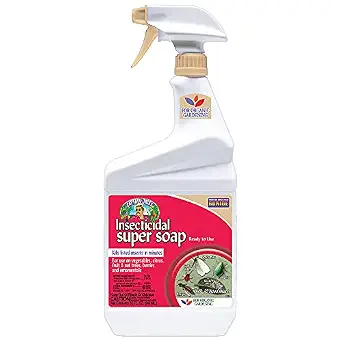 |
| Best Budget The cheapest option that still gets the job done reliably | Garden Safe Insecticidal Soap Ready-to-Use Spray, 32 oz |  |
| Highest Rated A top-rated pick with lots of positive feedback | Bonide Insecticidal Soap 32 oz Ready-to-Use Spray, Pack of 2 |  |
| Most Popular A crowd favorite that many people choose with confidence | Safer 5118-6 Insect Killing Soap Concentrate (16 fl oz) | |
| Best Seller A high-volume bestseller chosen again and again | Bonide Insecticidal Soap Ready-to-Use Spray, 32 oz |  |
Safer 5118 Insect Killing Soap Concentrate (6-pack)

| Unit Count | 96 Fluid Ounces |
|---|---|
| Included Components | 6 pack of concentrates |
| Item Form | Spray |
| Target Species | Insects |
| Specification Met | OMRI |
Safer 5118 is a potassium-salts-based insecticidal soap concentrate intended for spot and broadcast foliar sprays to control aphids, whiteflies, mealybugs, spider mites and other soft-bodied pests. You mix the concentrate with water to make spray solution and apply every 5 to 10 days while pests are present; because it is a contact killer multiple applications are normally required to reach full control. The formula is OMRI listed so it fits into organic vegetable, herb, flower and ornamental programs and it breaks down quickly in the environment. Practical benefits include being gentle on most plants when used as directed and economical because a small bottle dilutes to several gallons of spray. Important limitations are that it only works on contact so it will not control hidden or systemic pests, and it can cause leaf wilting or spotting if applied in hot sun or above recommended temperatures.
Best for: Gardeners who want an organic, economical contact spray to manage common soft-bodied pests across vegetables, herbs, ornamentals and houseplants and who are comfortable reapplying on a schedule.
Less Ideal for: People who need a systemic or long‑lasting solution for hidden or hard-to-reach insect infestations or who want a single-application cure for severe outbreaks.
- OMRI listed for organic gardening, suitable for certified organic use
- Concentrated formula dilutes to multiple gallons, making it economical for season-long use
- Kills a wide range of soft-bodied pests on contact, including aphids and whiteflies
- Breaks down quickly in the environment, minimizing residual chemical persistence
- Only a contact killer so multiple applications are needed and it will miss pests tucked into crevices
- Can cause leaf wilting or browning if applied in hot conditions or during peak sun
Verdict: A budget-friendly, OMRI-listed concentrate that delivers effective on-contact control of common soft-bodied garden pests when used as part of a regular spray routine.
Bonide Captain Jack's Insecticidal Super Soap Ready-to-Use, 32 oz

| Unit Count | 32 Ounce |
|---|---|
| Liquid Volume | 32 fluid ounces |
| Item Form | Spray |
| Active Ingredients | Potassium Salts of Fatty Acids, Spinosad |
| Specification Met | USDA |
Bonide Captain Jack's Insecticidal Super Soap is a ready-to-use spray that controls more than 30 common garden pests including aphids, caterpillars, mites, and whiteflies while also addressing powdery mildew. It is typically applied directly to infested foliage with the built-in spray nozzle, giving fast contact and ingestion-based kill for soft-bodied insects and leaf-feeding pests. Notable features are its USDA specification and active ingredients of potassium salts of fatty acids plus spinosad, which combine a soap-based knockdown with a biologically derived insecticide for broader effectiveness. Practical benefits include easy deployment without mixing, suitability for organic gardening, and use across vegetables, herbs, fruit, ornamentals, containers, and greenhouses. Important limitations are that it requires direct contact or ingestion so thorough coverage is necessary and results may be reduced against heavy or hard-shelled pests; repeated applications may be needed for full control and care should be taken around beneficial insects. For gardeners who prioritize reliable, ready-to-use performance on a wide range of outdoor plants this product offers a practical, effective option.
Best for: Gardeners who want a performance-focused, ready-to-use insect control for edible and ornamental outdoor plants and who value organic-approved options that work quickly on common soft-bodied pests.
Less Ideal for: People who require systemic long-term control of soil-borne pests or need a single-application solution for armored insects should consider alternative chemistries or integrated approaches.
- Ready-to-use spray with built-in nozzle for immediate application
- Active ingredients include potassium salts of fatty acids and spinosad for both contact and ingestion kill
- Approved for organic gardening and labeled for vegetables, fruits, herbs, ornamentals, and greenhouses
- Fast acting formula that also addresses powdery mildew
- Requires complete coverage and direct contact or ingestion, so thorough spraying is necessary
- Less effective against hard-shelled or heavily protected pests and may need repeat applications
Verdict: Choose this ready-to-use, organic-approved spray when you need fast, broad-spectrum control of soft-bodied garden pests across edible and ornamental plants.
Garden Safe Insecticidal Soap Ready-to-Use Spray, 32 oz

| Item Form | Spray |
|---|---|
| Target Species | Insects |
| Liquid Volume | 32 fluid ounces |
| Active Ingredients | Potassium Salts Of Fatty Acids |
Garden Safe Insecticidal Soap is a 32-ounce, ready-to-use contact spray formulated with potassium salts of fatty acids to knock down aphids, whiteflies, thrips, mealybugs and other soft-bodied pests. You spray directly onto infested foliage, including undersides of leaves, and it works by smothering and disrupting insect cell membranes rather than through systemic action. Its main practical benefits are ease of use with no mixing, approval for use on vegetables and fruit up to harvest day, and suitability for indoor, outdoor and greenhouse use. Because it is a contact-only product, it requires thorough coverage and repeat applications to control populations and will not protect new growth once applied. The label also warns against application in full sun and near water where it could harm aquatic invertebrates. For routine, low-cost pest control on edible and ornamental plants this soap is effective when applied carefully, but heavy or hidden infestations may need supplemental methods for full control.
Best for: Buyers who want an affordable, easy-to-use spray for routine control of soft-bodied pests on vegetables, ornamentals and potted plants and who plan to reapply as needed.
Less Ideal for: Gardeners facing severe, established infestations or those who need systemic or long-residual control should consider stronger or different modes of action.
- Ready-to-use spray requires no mixing and is simple to apply.
- Labeled for use on edibles up to the day of harvest, so safe for vegetable and fruit gardens when used as directed.
- Targets a broad list of soft-bodied pests including aphids, whiteflies, thrips and mites.
- Suitable for indoor, outdoor and greenhouse use for flexible garden applications.
- Kills by contact only so it does not provide residual protection or control pests hidden inside plant tissue.
- Can be harmful to aquatic invertebrates if it runs off into water sources.
Verdict: A budget-friendly, ready-to-use contact spray that provides safe, effective short-term control of common soft-bodied garden pests.
Bonide Insecticidal Soap 32 oz Ready-to-Use Spray, Pack of 2

| Item Form | Spray |
|---|---|
| Liquid Volume | 64 fluid ounces |
| Brand | Bonide |
This Bonide insecticidal soap arrives as two 32 oz ready-to-use sprayers designed to kill soft-bodied pests on contact. It is typically used by spraying affected foliage and insects directly in home gardens, ornamentals, greenhouses and on edibles up to the day of harvest. The formula uses potassium salts of fatty acids, which provide quick knockdown of aphids, mites, whiteflies, caterpillars and similar pests while being acceptable for organic production. The spray nozzle and ready-to-use packaging make application simple and consistent without mixing. Because it works by contact, thorough coverage is essential and it will not control pests hidden inside plant tissue or in the soil. Also, repeated applications may be needed for heavy infestations and it can be less effective against hard-bodied insects. For gardeners who prioritize a dependable, low-residue option that is safe around edible plants when used as directed, this product is a practical choice.
Best for: Gardeners who want a reliable, easy-to-use contact insecticide for routine control of soft-bodied pests on vegetables, ornamentals and houseplants and who prioritize organic-approved options.
Less Ideal for: People dealing with soil-borne pests or heavy infestations of hard-shelled insects should consider systemic or targeted alternatives instead.
- Ready-to-use spray requires no dilution and is simple to apply
- Approved for organic gardening and may be used up to the day of harvest
- Effective on a wide range of soft-bodied pests through contact action
- Pack of two provides extended coverage for multiple applications
- Works only by contact so thorough coverage and repeat treatments are often required
- Less effective against hard-bodied or concealed pests
Verdict: Choose this ready-to-use, organic-approved insecticidal soap when you want a straightforward, dependable contact spray for controlling common soft-bodied garden pests.
Safer 5118-6 Insect Killing Soap Concentrate (16 fl oz)
| Unit Count | 16 Fluid Ounces |
|---|---|
| Item Form | Spray |
| Target Species | Insects |
| Active Ingredients | Potassium Salts of Fatty Acids |
Safer 5118-6 is a 16 fl oz concentrate that mixes with water to make an insecticidal spray for controlling aphids, whiteflies, mealybugs, spider mites, thrips and other soft-bodied pests. You dilute the concentrate per the label and spray thoroughly, covering leaf surfaces and undersides; as a contact killer it works best when pests are directly hit and may require repeat applications every 7 to 10 days. The active ingredient, potassium salts of fatty acids, breaks down quickly and is OMRI listed, so it fits into organic vegetable and ornamental programs and can be used up to harvest on edibles. Practical benefits include broad pest coverage, economical coverage (the bottle makes several gallons of finished spray), and low residual impact on the environment. Important limitations are that it is a contact-only product so thorough coverage is essential and multiple treatments may be necessary for heavy infestations, and it should not be applied in very hot conditions to avoid leaf damage.
Best for: Gardeners who prioritize proven, low-residue solutions and want an OMRI-listed product for routine control of soft-bodied pests on vegetables, ornamentals, and houseplants.
Less Ideal for: People looking for a systemic or single-application cure for severe infestations or those who need a product that targets hard-bodied insects or soil pests.
- OMRI listed concentrate suitable for organic gardening
- Broad spectrum control of common soft-bodied pests like aphids, whiteflies, mealybugs and spider mites
- Dilutable concentrate yields multiple gallons of spray for economical coverage
- Active ingredient breaks down naturally within about 7 to 10 days
- Kills by contact only so complete coverage and repeat applications are required for good control
- Can cause leaf damage if applied in hot conditions or at peak sun
Verdict: A reliable OMRI-listed concentrate for gardeners who want an economical, low-residue contact spray to control common soft-bodied garden pests.
Bonide Insecticidal Soap Ready-to-Use Spray, 32 oz

| Unit Count | 32 Ounce |
|---|---|
| Item Form | Spray |
| Target Species | Insects |
| Active Ingredients | Potassium salt of fatty acids |
This Bonide ready-to-use insecticidal soap is a spray-on contact insecticide meant for home gardens, houseplants, vegetables, flowers and fruiting crops. It uses potassium salts of fatty acids to kill many soft-bodied pests on contact, including aphids, mites, whiteflies and caterpillars, and is labeled for use up to the day of harvest on edible plants. The bottle arrives pre-mixed with a spray nozzle so application is straightforward for spot treatments or broad foliar sprays. Practical benefits include its organic-friendly active ingredient, convenience of a quart-sized ready-to-use formula, and low residual persistence so treated plants are safe to handle once dried. Limitations are that it only works by contact so thorough coverage is necessary and repeated applications may be required for heavy or hidden infestations. Also it can damage very tender foliage or beneficial insects if applied indiscriminately, so follow label directions and spray selectively in calm weather for best results.
Best for: Gardeners who prefer low-risk, organic-compatible pest control and want a convenient, ready-made spray for spot treatments on edible and ornamental plants.
Less Ideal for: Users seeking a long-residual or systemic pesticide, or those who need a single-application solution for heavy infestations should consider stronger contact or systemic alternatives.
- Ready-to-use quart with spray nozzle for immediate application
- Active ingredient is potassium salts of fatty acids suitable for organic gardening
- Labeled for use on vegetables, fruits, ornamentals and houseplants including up to day of harvest
- Effective on a wide range of soft-bodied insects when sprayed directly
- Only kills insects by direct contact so requires thorough coverage and repeat sprays for full control
- Can harm tender foliage or non-target beneficial insects if not applied carefully
Verdict: Choose this ready-to-use insecticidal soap when you want a convenient, organic-friendly contact spray for routine spot control of soft-bodied garden pests.
Choosing the Right Insecticidal Soap: Key Factors to Consider
Target Pest Spectrum
Insecticidal soaps are most effective against soft‑bodied insects that rely on open cuticles and soft exoskeletons. This includes aphids, whiteflies, mealybugs, thrips in early stages, and many small mite species when contact is made. Consider the main pests you face and whether they require immediate knockdown or suppression over time.
Choosing a product labeled for your specific pests ensures you get the needed concentration and application frequency. If you face mixed infestations that include tougher pests like scale or hard‑shelled beetles, you may need complementary control methods because soaps work by direct contact and do not penetrate a hard shell.
Plant Safety and Phytotoxicity
Soaps are generally low in systemic toxicity, but they can cause leaf burn under certain conditions. New growth, tender ornamentals, and thin‑leaved plants are more susceptible to phytotoxicity. Labels often note temperature limits and advise testing on a small area before full coverage.
Apply soaps in the cooler part of the day and avoid use when foliage is stressed by drought or heat to reduce damage. Follow dilution rates closely; overconcentrating increases risk. Some formulations include additives that improve spread but may also raise phytotoxic potential, so balance effectiveness against plant sensitivity.
Formulation and Mixing Convenience
Products come as ready‑to‑use cans, concentrates, or water‑dilutable liquids. Concentrates generally offer better economy for larger areas but require accurate measuring and agitation. Look for clear mixing instructions, recommended spray volumes per area, and guidance on adjuvant compatibility.
Ease of mixing matters when you plan to tank‑mix with other products like fungicides or beneficial microbes. Some insecticidal soaps can separate or foam excessively, making them harder to apply uniformly. A formulation that disperses smoothly and remains stable during a typical spray session reduces waste and frustration.
Spray Coverage and Clinging Ability
Contact insecticides need good leaf coverage and retention to reach hiding pests on undersides and in crevices. Products that produce a fine, wetting spray with low runoff improve contact. Look for notes on foaming, surfactant content, or added spreader‑sticker traits that increase cling without harming leaves.
Spray equipment also affects coverage. Handheld sprayers and pump sprayers deliver different droplet sizes; pick a product and nozzle that work together to reach the pest locations typical in your plants.
Environmental and Beneficial Insect Considerations
Insecticidal soaps break down quickly and are generally less harmful to pollinators and predators when used properly, but contact exposure can still kill beneficial insects. Apply sprays late in the day or early morning when pollinator activity is low and avoid spraying flowering plants actively visited by pollinators.
For biological control programs, coordinate with releases of predators and parasitoids. Soaps have low residual toxicity, so careful timing often preserves beneficial populations better than broad‑spectrum chemical options.
Application Frequency and Reapplication Strategy
Because soaps have no systemic activity and limited residual control, repeated applications are often necessary. Understand the recommended reapplication interval on the label and plan follow‑up sprays to target newly hatched nymphs before they reproduce.
Integrate soap treatments with regular scouting so you reapply only where needed. Overapplying increases phytotoxicity risk and can waste product, so base frequency on pest pressure, life cycle timing, and observed knockdown rates.
Best Situations to Use Insecticidal Soap
Insecticidal soap is ideal when pests are localized or present in early population stages. It works best on foliage and in sheltered environments like greenhouses or patios where higher contact rates are achievable. Use it as a short‑term suppression tool while you implement longer‑term cultural or biological controls.
- Early infestation knockdown for soft‑bodied pests
- Safe option for many ornamental and edible plants when used as directed
- Useful in enclosed spaces where spray drift is minimal
How to Test for Phytotoxicity
Before broad application, always perform a small patch test on a few representative plants, especially those with tender new leaves. Apply at the recommended dilution and wait 48 to 72 hours to check for leaf burn, spotting, or discoloration. If damage appears, dilute further or consider alternative controls for those species.
- Test on both young and mature leaves
- Observe for at least three days before proceeding
- Retest if changing concentration or adding adjuvants
Application Tips for Better Coverage
Aim spray droplets to coat the undersides of leaves and the stem bases where pests hide. Use a fine to medium nozzle setting and move slowly to ensure thorough coverage. When treating large numbers of plants, mix only what you will use in a single session to maintain stability.
- Spray in calm conditions to reduce drift
- Avoid application during mid‑day heat
- Rinse sprayers after use to prevent residue buildup
Integrating Soaps Into IPM Programs
Insecticidal soaps are one tool within an integrated pest management approach. Combine regular monitoring, sanitation, and selective biological controls to reduce reliance on any single tactic. Use soaps to reduce populations quickly and then release or conserve natural enemies to maintain control.
- Coordinate timing with predator releases
- Use cultural practices to reduce pest habitat
- Reserve soaps for outbreaks or when immediate reduction is needed
Storage, Safety, and Environmental Notes
Store concentrates and ready‑to‑use sprays in a cool, dry place away from direct sunlight and out of reach of children and pets. Keep original labels intact for dilution and first aid guidance. Dispose of unused diluted product according to local regulations and avoid rinsing containers into storm drains.
- Wear protective eyewear and gloves during mixing
- Keep sprays off pollinator‑visited blooms
- Do not apply before heavy rain expected within 24 hours
How We Chose the Best Insecticidal Soap
We selected products by focusing on attributes that matter in everyday gardening and small‑scale production. Core evaluation criteria included contact efficacy against soft‑bodied pests, plant safety across common ornamental and edible crops, formulation stability and mixing convenience, and suitability for different application contexts such as foliar sprays, greenhouse use, and container gardens. We also considered coverage and foaming behavior, since sprays that cling to leaves improve contact and reduce wasted product. Products were excluded if they relied on broad‑spectrum chemical insecticides, had unclear active ingredients, or provided no usable labeling for home garden scenarios. We prioritized formulations with clear dilution rates, good tank compatibility, and documented label guidance for timing and reapplication intervals. Finally, we checked for manufacturer guidance on phytotoxicity risks and temperature restrictions to reduce the chance of leaf burn during heat stress. The scoring labels below align with these priorities so you can compare options on the attributes that affect real garden outcomes.
FAQ
Can insecticidal soap be used on edible plants?
Often yes. Many formulations are labeled for use on fruits, vegetables, and herbs when applied as directed. Always follow label instructions and check for any post‑harvest interval or pre‑harvest application limits.
How soon will I see results after spraying?
Contact knockdown is usually visible within hours for susceptible pests. Complete control may require follow‑up applications to catch newly hatched stages, so scout treated plants over the following week.
Will insecticidal soap harm pollinators or beneficial insects?
Soaps have low residual toxicity, but direct contact can kill beneficials. Spray when pollinators are inactive and avoid treating open flowers. Coordinated timing helps preserve predator and pollinator populations.
Can I mix insecticidal soap with other garden products?
It depends on the product. Some soaps are compatible with certain fungicides or micronutrients, but others separate or foam. Check label compatibility guidance and perform a small jar test before tank mixing.
Is it safe to use insecticidal soap in a greenhouse?
Yes. Greenhouses are a good environment for soap use because drift is minimal and coverage can be thorough. Monitor humidity and temperature to reduce phytotoxic risk and ventilate after application if recommended.
How often should I reapply insecticidal soap?
Reapplication intervals vary by label and pest pressure but commonly range from 4 to 7 days during active outbreaks. Base timing on life cycle monitoring and observed knockdown rather than on a strict calendar schedule.
Final Verdict
Insecticidal soaps are a practical, low‑residue option for managing soft‑bodied pests in gardens, containers, and greenhouses. Prioritize formulations and dilutions that match your target pests and plant sensitivity, and plan for follow‑up sprays because soaps control by contact rather than systemic action. Balance efficacy and plant safety by testing on vulnerable species, timing applications to avoid heat and pollinator activity, and integrating soaps into a broader IPM routine. That approach gives you quick pest reduction while protecting beneficials and plant health.
