

Note: This article contains affiliate links. If you click on these links and make a purchase, I may earn a small commission at no extra cost to you. This helps support my research and content. Read my full affiliate disclosure here.
If you manage a property with trails, shaded hollows, or a mixed canopy, treating understory weeds is different from open-sun turf work. You need products that suppress invasive grasses, brambles, and broadleaf weeds while limiting harm to tree roots, shrubs, and desirable groundcover. This guide focuses on vetted options for wooded areas and explains why formulation, persistence, and application method matter. We shortlisted seven options that fit this scope and evaluated them against safety to non-target plants, control duration, and ease of targeted application. Read on to understand the tradeoffs and pick the approach that suits the size and sensitivity of your woodlot or shaded landscape.
Top Picks at a Glance
| Best Overall The best all-around choice for most situations | BioAdvanced Brush Killer Plus Concentrate (32 fl oz) |  |
| Best Quality Built to a higher standard if you want something more solid | ALLIGARE Triclopyr 4 EC Selective Herbicide (1 Quart) |  |
| Best Value The sweet spot between price and what you get | Compare-N-Save 75324 Herbicide, 1-gallon (glyphosate concentrate) |  |
| Best Budget The cheapest option that still gets the job done reliably | Bonide Vine & Stump Killer Concentrate, 8 fl oz (2 Pack) |  |
| Highest Rated A top-rated pick with lots of positive feedback | Roundup Pro Concentrate Herbicide (2.5 gal) |  |
| Most Popular A crowd favorite that many people choose with confidence | Bonide Stump-Out Stump & Vine Killer, 8 oz with Applicator | 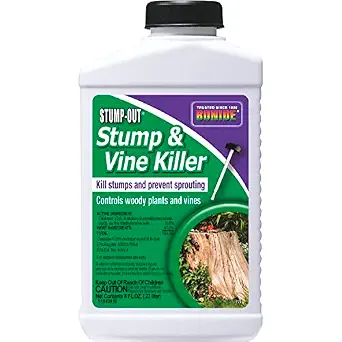 |
| Best Seller A high-volume bestseller chosen again and again | Roundup Weed & Grass Killer4 with Pump 'N Go 2 Sprayer, 1.33 gal |  |
BioAdvanced Brush Killer Plus Concentrate (32 fl oz)

| Unit Count | 32 Fluid Ounces |
|---|---|
| Coverage | 4000 square_feet |
| Item Form | Spray |
| Active Ingredients | triclopyr |
BioAdvanced Brush Killer Plus is a concentrated spray-on herbicide designed to control tough vines and woody brush such as poison ivy, poison oak, kudzu, blackberry and many listed weeds. You mix the concentrate with water using the bottle’s measuring marks, apply it to actively growing, leafed-out plants, and the triclopyr-based formula moves systemically through foliage and roots so treated plants die back over 1 to 6 weeks. It becomes rainproof in about four hours, which helps avoid reapplication after light rain. The product covers up to 4,000 square feet per bottle when diluted to the recommended rate, so it is suited to larger patches rather than single small weeds. Because results take time to appear and the herbicide is selective for brush and broadleaf plants, you may need follow-up treatments for re-sprouts or for species not on the label. Handle with care and follow label directions to avoid contact with desirable plants and to meet local safety and disposal rules.
Best for: Buyers who want an efficient, science-based solution to remove patches of vines and woody brush without repeated spot-spraying and who plan treatments when plants are actively growing.
Less Ideal for: Gardeners who need instant knockdown, require a non-chemical mechanical approach, or who only need to remove small single weeds by hand should consider alternatives.
- Systemic triclopyr formula kills brush down to the root for longer control
- Concentrate mixes for economical coverage up to 4,000 sq ft per bottle
- Rainproof in about 4 hours so light rain is less likely to wash it away
- Label lists many targeted tough species including poison ivy, poison oak, kudzu and blackberry
- Works slowly with visible decline over 1–6 weeks so immediate removal is not achieved
- Selective to brush and broadleaf weeds so not effective on all plant types
Verdict: Choose this concentrated systemic brush killer when you need a practical, economical product to eliminate established vines and woody brush down to the roots.
ALLIGARE Triclopyr 4 EC Selective Herbicide (1 Quart)

| Unit Count | 32 Fluid Ounces |
|---|---|
| Item Form | Liquid |
| Coverage | Pastures, rangelands, rights-of-way, lawns, golf courses, sod farms, industrial properties, ditches |
| Active Ingredients | Triclopyr |
ALLIGARE Triclopyr 4 EC is a concentrated liquid herbicide used to target woody plants, broadleaf weeds, and brush in large outdoor areas. It is typically mixed into a spray tank at recommended rates (about 3.2 to 6.4 oz per gallon) with a penetrant and applied to foliage or cut stems to achieve systemic control. Notable features include an ester formulation that improves leaf and bark absorption and compatibility with many tank-mix partners, which lets you customize treatments for stubborn species. In practice it is effective for restoring pastures, clearing rights-of-way, and reducing invasive broadleaf growth while leaving grasses largely unharmed when used as directed. Important limitations are that it is a professional-strength chemical requiring careful PPE and adherence to safety and application instructions, it can harm non-target broadleaf plants if drift or overspray occurs, and restrictions apply in some states and situations. For spot treatments or large-area brush control it is a dependable option when handled responsibly.
Best for: Gardeners or land managers who need a reliable, selective herbicide to control woody and broadleaf invasives across pastures, rangelands, or larger outdoor areas and who follow safety procedures for concentrated chemicals.
Less Ideal for: Casual home gardeners with small ornamental beds or indoor herb gardens seeking a gentle, non-chemical solution should consider mechanical removal or lower-strength spot treatments instead.
- Targets woody plants, broadleaf weeds, and brush for effective control of invasive species
- Ester formulation promotes absorption through leaves and bark for systemic action
- Tank-mix compatible so you can combine with other herbicides or adjuvants
- Suitable for a wide range of large outdoor sites including pastures, rangelands, and rights-of-way
- Professional-strength concentrate that requires protective clothing and careful mixing
- Can damage non-target broadleaf plants if it contacts desirable species
- Not suitable for use where restrictions or local regulations prohibit triclopyr products
Verdict: Choose ALLIGARE Triclopyr 4 EC when you need a professional-strength, tank-mix compatible herbicide to reliably remove woody and broadleaf invasives across large outdoor areas.
Compare-N-Save 75324 Herbicide, 1-gallon (glyphosate concentrate)

| Active Ingredients | glyphosate |
|---|---|
| Liquid Volume | 1 gallons |
| Item Form | Spray |
| Coverage | 25000 square_feet |
This one-gallon Compare-N-Save concentrate uses glyphosate to kill a wide range of annual and perennial weeds and grasses by foliar uptake down to the roots. It is mixed with water to create ready-to-use spray: the label recommends about 1.5 ounces per gallon for general use and up to 2.5 ounces per gallon for tougher perennials, with the full gallon making multiple gallons of spray for larger areas. Typical uses include clearing driveways, walkways, fence lines, garden preparation, lawn renovation, and stump or brush treatment. Notable features are fast visible results in 2 to 4 days, rainproofing within about two hours, and broad area coverage when diluted (manufacturer states it can cover thousands of square feet at recommended rates). Important limitations are that glyphosate will kill any green plant it contacts so careful targeting and protective gear are required, it has no residual pre-emergent activity, and label directions must be followed for safe use around edible gardens. For commercial lawn work, its concentration and economy make it effective but it demands disciplined application to avoid off-target damage.
Best for: Commercial landscapers or property managers who need an economical, fast-acting nonselective herbicide for clearing large areas and preparing sites for renovation while following safety protocols.
Less Ideal for: Home gardeners seeking a selective lawn-safe product or people who need a long-lasting pre-emergent should consider alternatives.
- Concentrated formula stretches to many gallons of ready-to-use spray for large-area work.
- Fast visible control with results often in 2 to 4 days and rainproofing in about two hours.
- Broad-spectrum activity against annual and perennial weeds and grasses, including root kill.
- Simple dilution instructions let crews mix strength for general or tougher targets.
- Nonselective glyphosate will damage or kill desirable plants if drift occurs.
- No residual activity so repeat treatments or follow-up prevention are required for long-term control.
Verdict: A cost-effective, concentrated glyphosate concentrate that delivers fast, large-area weed and grass control when used with proper precautions.
Bonide Vine & Stump Killer Concentrate, 8 fl oz (2 Pack)

| Unit Count | 16 Fluid Ounces |
|---|---|
| Number of Packs | 2 |
| Item Form | Liquid |
| Coverage | Broadleaf weeds and woody plants |
| Active Ingredients | sodium metabisulfite |
Bonide Vine & Stump Killer is a small-bottle concentrate designed for treating stumps, woody vines, and broadleaf brush where you need targeted, downhill control. The product is mixed and applied with the included applicator cap so you can coat freshly cut stumps or paint onto vine stems to prevent resprouting. Its active ingredient, triclopyr (listed as 8.8% in product notes), makes it effective on persistent woody plants such as kudzu and other tough vines. Practical benefits include precise application that reduces waste and the convenience of two 8 fl oz bottles for multiple small jobs. Because it is a chemical systemic herbicide, users must follow safety directions and avoid contact with desirable plants. The small volume is good for spot treatments but not suited to large-area spraying without repeated purchases or a pump sprayer. Expect reliable stump-killing performance for woodland maintenance, provided you take standard protective precautions when handling and applying concentrated herbicides.
Best for: Gardeners and landowners managing wooded lots who need a cost-aware, targeted solution for killing stumps and invasive vines in spot locations.
Less Ideal for: Do not choose this if you need to treat large tracts quickly or prefer nonchemical or broadcast treatment methods; larger-scale operators should consider bulk formulations or mechanized removal.
- Concentrated systemic formula effective on woody vines and stumps
- Applicator cap allows precise, low-waste treatment of cut stumps and stems
- Two 8 fl oz bottles provide enough product for multiple spot treatments
- Works on persistent species like kudzu when applied correctly
- Small bottle size makes it impractical for treating large acreages without additional applicators or bulk product
- Contains a chemical herbicide so protective gear and careful application are required
Verdict: A compact, applicator-equipped concentrate that delivers targeted, cost-conscious control of stumps and woody vines in wooded areas.
Roundup Pro Concentrate Herbicide (2.5 gal)

| Unit Count | 300 Fluid Ounces |
|---|---|
| Liquid Volume | 2.5 gallons |
| Coverage | Up to 435,600 sq. ft |
| Item Form | Liquid |
Roundup Pro Concentrate is a liquid herbicide intended for mixing in sprayers to treat large lawns, fields, and commercial areas. The 2.5 gallon jug is a concentrate that dilutes at rates from about 1 to 10.5 ounces per gallon of water, letting you cover up to the manufacturer-stated area without frequent refills. It is formulated to be rainfast in roughly an hour and is best applied when weeds are actively growing and temperatures are above 60°F. Practical benefits include high coverage per container and compatibility with stainless steel or plastic sprayers for standard application workflows. Important limitations are the need for careful dilution and protective handling, strict restrictions around water and runoff, and regulatory or local sale limitations in some states. Users should follow label directions for safety, keep people and pets away until spray dries, and expect that effective use requires proper equipment and basic pesticide handling practices.
Best for: Buyers who need a high‑coverage, performance-oriented herbicide for treating large yards, fields, or commercial properties and who are comfortable following pesticide mixing and safety instructions.
Less Ideal for: Casual gardeners with small beds or people unwilling to handle concentrated pesticides should choose ready-to-use alternatives or nonchemical methods.
- Concentrated formula covers very large areas from a single container
- Rainfast within about one hour which reduces loss from light rain
- Compatible with standard stainless steel or plastic sprayers for easy mixing and application
- Requires precise dilution and proper protective equipment during mixing and application
- Not for use near water or where runoff may occur and restricted in some jurisdictions
Verdict: Choose this concentrate when you need a professional-strength herbicide that treats very large areas with fewer refills.
Bonide Stump-Out Stump & Vine Killer, 8 oz with Applicator

| Unit Count | 8 Ounce |
|---|---|
| Item Form | Spray |
| Coverage | Stumps, woody plants, vines, broadleaf weeds |
| Liquid Volume | 8 fluid ounces |
| Active Ingredients | 3,5,6-Tricloro-2-Pyridinyloxyacetic Acid |
Bonide Stump-Out is a concentrated herbicide designed for targeted stump and vine control around homes and walkways. It is typically used undiluted on freshly cut stumps or as a foliar spray on woody vines and broadleaf weeds; the included brush applicator helps apply the product directly to the cut surface to prevent resprouting. The active ingredient listed is a pyridinyloxyacetic acid derivative, and the formula is intended to work within one to six weeks depending on the plant. Practical benefits include focused application that reduces drift onto turf, a small 8 ounce size that is easy to store, and compatibility with hose-end or tank sprayers for foliar work. Important limitations are that it must be applied according to label directions for safety and effectiveness, it is a specialized product for woody plants rather than a general lawn weed killer, and multiple applications or physical stump removal may still be necessary for large or well-established stumps.
Best for: Buyers who want a focused, proven solution to stop stump sprouting and eliminate woody vines around yards and structures and who prioritize products with established user feedback and clear instructions.
Less Ideal for: Homeowners seeking a general yard or turf weed control product or those who need large-volume treatments for extensive properties should consider broader-coverage herbicides or professional services.
- Targeted brush applicator for direct application to stumps and cut surfaces
- Effective on woody plants, vines and broadleaf weeds when used as directed
- Works relatively quickly with visible results in 1–6 weeks
- Can be applied undiluted for stump treatment or via hose/tank sprayer for foliar use
- Small 8 oz volume may require multiple purchases for many or large stumps
- Specialized formulation not intended as a broad-spectrum lawn herbicide
Verdict: Choose this product when you need a targeted, easy-to-apply stump and vine killer that prevents resprouting with minimal off-target spray.
Roundup Weed & Grass Killer4 with Pump 'N Go 2 Sprayer, 1.33 gal

| Unit Count | 170 Fluid Ounces |
|---|---|
| Item Form | Spray |
| Coverage | 300 Square_Feet |
| Active Ingredients | Triclopyr, Triethylamine Salt, Fluazifop-P-Butyl, Diquat Dibromide |
This packaged Roundup kit combines a 1.33 gallon formulated weed-and-grass killer with a Pump 'N Go 2 sprayer, letting you treat patches of weeds and grassy intruders without mixing chemicals or carrying a separate sprayer. The extendable wand and up to 10 minutes of continuous spray make targeted application around flower beds, patios, gravel, and edges easier and reduce bending. The formula claims visible results in hours, becomes rainproof in about 30 minutes, and permits replanting within the stated window. Practical benefits include convenience of an integrated sprayer, good coverage for small to medium areas, and a broad activity spectrum against dandelions, crabgrass, clover, and other common broadleaf weeds. Important limitations are safety precautions and restricted access after application since it is an herbicide that can harm desirable plants and requires protective clothing and keeping people and pets away until dry. Also, this product is for spot and surface treatments rather than long-term lawn renovation or nonchemical weed control approaches.
Best for: Buyers who want a convenient, ready-to-use herbicide for spot-treating visible weeds and grass around hardscapes and landscape beds and who prefer an integrated sprayer to simplify application.
Less Ideal for: People seeking organic, nonchemical weed control or a product for large-scale lawn renovation should consider alternative methods or professional services.
- Includes Pump 'N Go 2 sprayer with extendable wand for accurate, continuous spray
- Ready-to-use formulation so no measuring or mixing is required
- Produces visible results in hours and is rainproof in about 30 minutes
- Designed for use around beds, patios, driveways, gravel, and edging
- Contains potent active ingredients that require safety precautions and restrict access to treated areas
- Not suitable for nonchemical or preventive long-term weed management
Verdict: If you want a no-mixing, spot-treatment herbicide with a built-in sprayer for quick, targeted weed control, this all-in-one Roundup kit is a practical choice.
Choosing the Right Weed Killer for Wooded Areas: Key Factors to Consider
Active Ingredient and Mode of Action
Knowing the active ingredient matters because different chemistries control different plant types. Some act on broadleaf physiology, others on grasses, and a few are systemic and translocate to roots. In wooded areas, systemic products can be effective against perennial weeds with deep roots, but they also raise the risk of moving into root systems of nearby trees if applied carelessly.
Match the active chemistry to the target species and read label directions on buffer distances and root-zone restrictions. Rotating modes of action over time reduces the chance of resistance in recurring invasive species.
Risk to Trees and Shrubs
Trees and larger shrubs can take up herbicide through roots or through drift onto foliage. The proximity of desirable woody plants should influence your choice of product and application method. Products with known root uptake or long soil activity require wider buffers from tree trunks and feeder-root zones.
When treating near roots, favor contact or low-persistence options and use spot treatment techniques. Always inspect canopy dripline and avoid applying herbicide within critical root zones of valuable trees.
Persistence and Environmental Fate
Persistence in soil and leaf litter affects how long treated areas remain weed-free and whether there is ongoing risk to later plantings. Some formulas degrade quickly and are suitable where you want to reestablish native groundcover, while others persist to provide season-long control of re-sprouting woody weeds.
Consider the site's drainage, organic matter, and shade because shaded, cool soils slow breakdown. Longer persistence can reduce retreatment frequency but increases the need for caution around non-target plants and watercourses.
Application Method and Precision
The ability to apply product precisely is critical in wooded settings. Hand-pump sprayers, wiper applicators, and sponge or brush treatments let you target individual stems and minimize drift. Backpack sprayers and spot-gun nozzles add range but require careful nozzle selection and wind management.
Match the applicator to the scale of the task. For small patches use handheld tools to protect roots; for larger corridors choose equipment with shields or low-drift nozzles to avoid off-target exposure.
Label Restrictions and Legal Use
Labels detail legally required rates, buffer distances, and prohibited uses near certain plant types or water bodies. In wooded areas the label may limit broadcast applications, require buffers from streams, or prohibit use within a set distance of trees. Following label instructions is essential for safety and compliance.
Check re-entry intervals, required protective equipment, and any planting restrictions before treatment. If the label does not explicitly allow a use you intend, do not proceed.
Safety, Personal Protection, and Cleanup
Working in shaded, uneven terrain increases the chance of splashes and contact with treated foliage or soil. Choose products with manageable protective equipment requirements and plan for containment of rinsate and leftover mix. Proper mixing, rinsing of applicators, and disposal reduce the chance of accidental contamination of sensitive areas.
Wear the recommended gloves and eye protection, and avoid applying before heavy rain. Post-application, decontaminate tools and clothing to prevent unintended transfer of active ingredients to non-target spots.
Spot Treatment Techniques for Woodland Settings
Spot treatment minimizes exposure of desirable plants and reduces the amount of herbicide used. Options include hand-applied brush-on gels, wick applicators that transfer product directly to stems, and low-volume spot sprayers with narrow nozzles. Each method reduces drift compared with broadcast spraying.
When using a brush or wick, apply only to actively growing tissue and avoid dripping. With a sprayer, choose a coarse droplet nozzle and spray at low pressure to keep droplets heavy and reduce suspension in the air. Work downhill from trees and shrubs when possible to avoid run-off toward root zones.
- Use wand or shielded nozzles to keep spray on the target patch
- Brush-on gels are useful for individual woody stems and vines
- Avoid overhead spraying beneath tree canopies to prevent foliage contact
Timing Treatments in Shaded Environments
Weed growth patterns in shade differ from open areas. Many woodland invasives flush earlier in spring or extend growth later into fall depending on canopy density. Target control when plants are actively translocating carbohydrates to roots, often in spring bud-out or late summer for certain perennials.
Avoid treatment during drought stress or immediately after heavy rains, because uptake can be reduced or run-off increased. Plan applications for calm, cool parts of the day to limit volatility and drift.
- Apply during active growth for systemic uptake
- Avoid treatments during drought or heavy rainfall periods
- Choose calm conditions to limit drift
Protecting Native Groundcover and Tree Roots
Preserving native understory and tree health often matters more than total weed elimination. Use physical removal for small infestations and reserve chemical tools for persistent or widespread problems. When chemicals are needed, create buffer zones around trunks and avoid soil-applied persistent chemistries near feeder roots.
When planning follow-up plantings, select low-persistence options to reduce the wait time for establishing desirable species. Document treated locations so future work crews avoid disturbing or re-treating sensitive spots inadvertently.
- Use physical control near tree trunks and valuable native plants
- Mark treated areas to guide future planting and maintenance
- Favor low-persistence products when planning replanting
Managing Re-Sprouting Woody Weeds
Many woody invasives resprout after cutting. For those species, treating stumps or fresh cut stems with a targeted application shortly after cutting maximizes control. Using a concentrated, brush-applied or dab treatment into the cambium reduces the need for broadcast spraying.
Repeat monitoring is essential. Expect to re-treat resprouts in the first one to two growing seasons. Combine mechanical removal with targeted chemical control for long-term suppression of stubborn understory brush.
- Apply stump treatments immediately after cutting for best uptake
- Monitor treated stumps for resprouts and re-treat as needed
- Combine mechanical and chemical tactics for durable control
Protecting Water and Wetland Areas
Wooded properties often contain streams, ponds, or wetlands that require extra caution. Many labels restrict application near water or require specific chemistries for aquatic proximity. Use physical barriers, no-chem buffer strips, or manual removal in sensitive riparian zones.
If a product is labeled for use near water, follow all application rates and mixing instructions closely. Consider using targeted techniques and portable containment to prevent accidental runoff into channels or pooled water.
- Establish no-spray buffers around streams and ponds
- Use hand tools in immediate riparian zones when possible
- Follow label directions exactly for any near-water use
How We Chose the Best Weed Killer for Wooded Areas
We focused on products and formulations appropriate for shady, tree-dominated settings rather than open turf or agricultural use. Key evaluation dimensions included effectiveness against common woodland weeds and understory brush, the risk of root uptake or drift to trees and shrubs, application options for selective spot treatment, persistence in leaf litter and shaded soils, and label restrictions for use near desirable woody plants. We excluded general lawn herbicides and broadcast formulas intended for agricultural field use because their persistence, active ingredients, or application rates are not suited to sensitive wooded settings. We also excluded products lacking clear label instructions for spot treatment or that require wide-area broadcast equipment. Practical factors such as tank-mix flexibility, available applicator types, and documented re-entry or planting intervals influenced selection. The final shortlist reflects choices that balance reliable weed control with reduced risk to canopy trees and native understory species.
FAQ
Can I use lawn weed killers under trees and near roots?
Often lawn-specific products are formulated for open turf and may have persistence or active ingredients unsuitable for root zones. It depends on the formulation. Check the label for warnings about use near trees and look for products that allow spot treatment without soil residual activity.
Will systemic herbicides move into tree roots if I spray nearby?
Systemic herbicides translocate within plants and can move in soil water under certain conditions. The risk is higher when roots and target plants share the same soil space. Use spot methods, buffers, or contact options if target and desirable root systems overlap.
How long should I wait to plant native groundcover after treatment?
That depends on the active ingredient and its soil persistence. Some products break down in weeks while others remain active for months. Consult the product label for replanting intervals and err on the cautious side in shaded soils where breakdown is slower.
What's the safest way to treat vines climbing trees?
For vines, cut-stump or brush-on treatments applied to the cut surface limit exposure to the tree. Avoid spraying up into the canopy. Mechanical removal followed by targeted herbicide on regrowth is usually effective and minimizes non-target contact.
Can I use a wick or sponge applicator effectively in thick leaf litter?
Yes. Wicks and sponge applicators transfer product directly to stems above the litter, reducing contact with the soil or leaf layer. They work best when stems are accessible and actively growing, and they reduce the chance of runoff and non-target contamination.
How often will I need to re-treat wooded weeds?
Frequency depends on species and persistence of the product used. Annual monitoring and spot re-treatment in the first two growing seasons after initial control are common. Persistent seed banks and root fragments can require ongoing management.
Final Verdict
Choosing the right herbicide approach for wooded areas means balancing effective control of invasive understory plants with protection of trees, shrubs, and water features. Prioritize products and methods that allow precise application, minimize soil persistence when you plan replanting, and reduce the chance of root uptake into desirable plants. Make decisions based on target species, proximity to valuable woody plants, and the application tools you can use safely. With careful timing, targeted techniques, and attention to label restrictions, you can gain durable control while protecting the woodland ecosystem.
