

Note: This article contains affiliate links. If you click on these links and make a purchase, I may earn a small commission at no extra cost to you. This helps support my research and content. Read my full affiliate disclosure here.
Clover in a lawn is common and often persistent. You want a product that removes clover without creating bare patches or stressing desirable grasses. This guide covers five top shortlisted clover weed killers for lawns and explains how each type behaves in normal yard conditions, from spot treatments to whole-lawn applications. We evaluated options for how quickly they act, how selective they are for turf, and how they affect lawn recovery. Read on to understand which product style matches your lawn type, timing window, and maintenance plan before checking the full product details below.
Top Picks at a Glance
| Best Overall The best all-around choice for most situations | Ortho WeedClear Weed Killer for Lawns with Comfort Wand, 1 gal. | 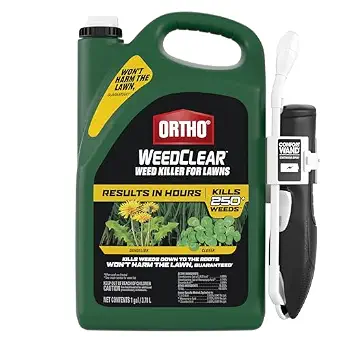 |
| Best Quality Built to a higher standard if you want something more solid | Ortho WeedClear Weed Killer for Lawns Concentrate, 1 gal. |  |
| Best Value The sweet spot between price and what you get | Ortho WeedClear Lawn Weed Killer Ready-to-Spray, 32 fl. oz. |  |
| Best Budget The cheapest option that still gets the job done reliably | Spectracide Weed Stop for Lawns Concentrate, 32 oz Ready-to-Spray | 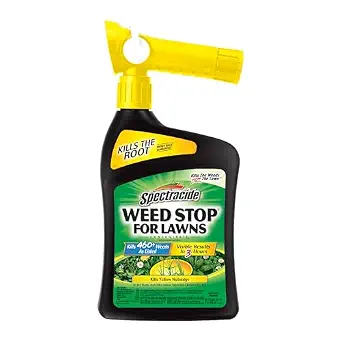 |
| Most Popular A crowd favorite that many people choose with confidence | Scotts Turf Builder Weed & Feed (14.29 lb) |  |
Ortho WeedClear Weed Killer for Lawns with Comfort Wand, 1 gal.

| Unit Count | 128 Fluid Ounces |
|---|---|
| Item Form | Spray |
| Coverage | 16000 square feet |
| Kills listed weeds | 250+ weeds |
Ortho WeedClear is a 1-gallon ready-to-use broadleaf weed killer formulated to remove common lawn weeds without harming grass when applied according to the label. It is typically used for spot treatments or light broadcast applications using the included Comfort Wand, which provides continuous, targeted spray with no pumping. The formula combines three active ingredients to attack weeds down to the root and claims visible results within hours and rainproof performance one hour after drying. Practical benefits include easy application for homeowners, a long coverage claim (up to 16,000 sq ft listed), and a stated control list of more than 250 weeds including clover and dandelions, making it useful for routine clover control. Important limitations are that it works best on small, actively growing weeds in spring or fall and must be applied carefully to avoid contact with desirable plants; reapplication or follow-up may be needed for persistent infestations. Follow safety directions about drying time before allowing people or pets back on treated turf.
Best for: Homeowners who want a simple, all-purpose solution for clover and common broadleaf weeds and prefer an easy wand applicator for spot or light broadcast treatments.
Less Ideal for: Large commercial lawns or heavy infestations where a professional-strength concentrate or long‑term year‑long control product would be more appropriate.
- Ready-to-use formulation with Comfort Wand for precise, continuous spraying
- Targets over 250 broadleaf lawn weeds including clover and dandelions
- Contains a three-ingredient mix that works down to the root for faster visible results
- Rainproof one hour after drying so treatments are less likely to wash off
- Best results require application when weeds are small and actively growing, so timing matters
- Contains multiple herbicide actives so care is needed near desirable plants and landscapes
Verdict: A convenient, ready-to-use wand spray that effectively controls clover and other common broadleaf lawn weeds for typical homeowners seeking an easy, targeted solution.
Ortho WeedClear Weed Killer for Lawns Concentrate, 1 gal.

| Unit Count | 128 Fluid Ounces |
|---|---|
| Item Form | Spray |
| Coverage | 64000 square_feet |
| Active Ingredients | Herbicide |
Ortho WeedClear concentrate is a tank- or hose-applicator mix that targets broadleaf lawn weeds such as clover and dandelions and begins showing visible results within hours. You dilute the gallon per label rates, apply with a tank sprayer or Ortho Dial N Spray hose-end, and the formula becomes rainproof in about an hour so light weather interruptions are less disruptive. The product claims control of over 250 listed weeds and is formulated to spare common lawn grasses when applied as directed, making it suited for spring or fall applications on actively growing weeds. Practical benefits include large coverage—one gallon treats up to 64,000 sq ft at recommended rates—fast activity, and compatibility with common sprayer equipment. Important limitations are that it must be mixed and applied carefully to avoid damage to non-listed plants and that safety gear and drying time are required before people or pets reenter the treated area. Follow temperature and timing guidance for best results and read label directions for grass species exclusions like Floratam St. Augustinegrass.
Best for: Buyers who prioritize fast, reliable control of clover and other broadleaf weeds across medium to large lawns and who plan to use a sprayer and follow label directions.
Less Ideal for: People who need an immediate contact-only solution for hardscape or non-lawn weeds or who prefer ready-to-use products that do not require mixing and protective gear.
- Concentrated formula covers a large area (up to 64,000 sq ft) when mixed per label
- Kills broadleaf weeds down to the root and shows results within hours
- Rainproof in about one hour so light rain is less likely to ruin an application
- Works with tank sprayers or Ortho Dial N Spray hose-end applicator for flexible application
- Requires careful dilution and application to avoid harming non-listed plants
- Safety precautions and waiting for spray to dry are required before people or pets can reenter treated areas
Verdict: Choose this concentrate when you want fast, root-killing control of clover and other broadleaf lawn weeds across large turf areas.
Ortho WeedClear Lawn Weed Killer Ready-to-Spray, 32 fl. oz.

| Coverage | 5000 square_feet |
|---|---|
| Item Form | Spray |
| Liquid Volume | 32 fluid ounces |
| Active Ingredients | 2,4-D; Quinclorac; Dicamba |
Ortho WeedClear Ready-to-Spray is a hose-end weed killer designed to kill common lawn weeds such as clover, dandelion, chickweed and crabgrass with a single application. You attach it to a garden hose, turn the water on, switch the sprayer to on and sweep the nozzle until the lawn surface is wet. The fast-acting formula contains 2,4-D, quinclorac and dicamba and claims visible results in hours and rainproofing within one hour, which makes it practical when weather windows are tight. It is labelled safe for many northern turfgrasses when used as directed and treats up to 5,000 sq. ft. from a 32 fl. oz. bottle, so it covers a typical medium lawn without measuring or mixing. Limitations are the grass types it cannot be used on and temperature restrictions for Bermudagrass, so you must follow the species and timing guidance to avoid damage. Also it requires care around people, pets and ornamentals until the spray dries. For someone who wants a straightforward, hose-end option to remove clover and other common weeds, this is an efficient, no-mess choice.
Best for: Homeowners who want a simple, time-saving solution to eliminate clover and other common lawn weeds without mixing concentrates and who prioritize straightforward application and quick results.
Less Ideal for: Gardeners with lawns composed of excluded grass types or those who prefer organic or non-chemical weed control methods should consider alternative products or approaches.
- Ready-to-use hose-end applicator requires no mixing or measuring
- Fast-acting formula that becomes rainproof in about one hour
- Covers up to 5,000 sq. ft. from a single 32 fl. oz. bottle
- Targets broadleaf weeds and some grassy weeds down to the root
- Not labeled for use on several warm-season grasses and ornamentals
- Contains synthetic herbicides that require precautions for people, pets and nearby plants
Verdict: A hassle-free hose-end weed killer that quickly removes clover and other common lawn weeds for homeowners who want fast, easy results.
Spectracide Weed Stop for Lawns Concentrate, 32 oz Ready-to-Spray

| Unit Count | 32 Ounce |
|---|---|
| Coverage | 8,000 square feet |
| Item Form | Liquid |
| Active Ingredients | 2,4-D, Mecoprop-P, Dicamba, Sulfentrazone |
Spectracide Weed Stop for Lawns is a hose-attach concentrate formulated to kill broadleaf weeds, including clover and dandelions, by contact down to the root. You connect the built-in QuickFlip sprayer to a garden hose, spray the lawn until weeds are wet, and the formula begins showing visible browning in as little as three hours. It lists control for over 460 weed types and is labeled for common turfgrasses such as bluegrass, fescue, Bermuda and established zoysia. Practical benefits include fast action, wide weed coverage and the convenience of a ready-to-spray applicator that removes mixing steps. Important limitations are temperature and turf restrictions: do not apply above 90°F, avoid newly emerging zoysiagrass and wait several weeks before reseeding. Also this product is a nonselective contact killer for listed broadleaf weeds so careful spraying is needed around desirable plants. Follow safety directions to keep people and pets off treated areas until dry.
Best for: Homeowners who need an inexpensive, fast way to knock back clover and other broadleaf weeds across a typical lawn and prefer a simple hose‑connected applicator over manual mixing. They want quick visible results and convenience on a budget.
Less Ideal for: Gardeners who need a selective clover-only solution, who frequently overseed or reseed lawns, or who maintain delicate ornamental beds adjacent to turf should consider a more targeted product or spot treatments.
- Ready-to-spray QuickFlip applicator attaches to hose for fast, no-mix application
- Fast visible results in about three hours for actively growing weeds
- Controls a wide range of listed broadleaf weeds including clover and dandelion
- Labeled for common lawn grasses such as bluegrass, fescue, Bermuda and established zoysia
- Not safe to apply above 90°F and restricted on zoysiagrass coming out of dormancy
- Requires caution to avoid contact with desirable plants since it kills by contact
Verdict: A budget-friendly, ready‑to‑spray concentrate that delivers fast, broadleaf weed control and easy hose‑end application for typical lawns.
Scotts Turf Builder Weed & Feed (14.29 lb)

| Item Form | Granule |
|---|---|
| Coverage | 5000 square_feet |
| Active Ingredients | 2,4-D 1.220%, Mecoprop 0.081% |
Scotts Turf Builder Weed & Feed is a granular lawn product that combines fertilizer with broadleaf weed killers to tackle clover, dandelions, and other common lawn weeds while feeding grass. You apply it with a broadcast or drop spreader when weeds are actively growing and temperatures are between 60 and 90°F, ideally onto a wet lawn so particles stick to weed leaves. Notable features include WeedGrip Technology for better herbicide contact and an NPK-style feeding action that thickens turf to help crowd out future weeds. Practical benefits are visible weed decline within weeks and improved turf density from the feeding component, plus a single 14.29 lb bag covers about 5,000 sq ft for typical suburban lawns. Important limitations: it is not safe for several turf types including St. Augustine and bentgrass, it requires dry weather for 24 hours after application, and it contains synthetic herbicides so it is not suitable for organic lawn care. Follow label directions and keep people and pets off the treated area until dust settles.
Best for: Homeowners who want a straightforward, science-backed way to reduce clover and common broadleaf weeds while feeding their lawn and who prefer proven products with large user experience.
Less Ideal for: People managing sensitive or specialty turf varieties, organic lawn stewards, or anyone who needs a product safe for immediate pet and child re-entry.
- Combines weed control and fertilizer in one application to save time
- WeedGrip Technology improves contact with broadleaf weeds like clover and dandelion
- Covers up to 5,000 sq ft per 14.29 lb bag for typical yard sizes
- Granular form works with common spreaders for even application
- Contains synthetic herbicides not appropriate for organic lawns
- Not safe for several grass types such as St. Augustine and bentgrass
Verdict: A reliable one-step weed-and-feed that effectively knocks back clover and dandelions while thickening lawns, making it a practical choice for homeowners seeking proven results.
Choosing the Right Clover Weed Killer for Lawns: Key Factors to Consider
Active Ingredient and Mode of Action
Knowing the active ingredient tells you how clover is controlled and whether the product is selective for turf. Certain chemistries target broadleaf weeds while leaving grasses largely unharmed when used correctly. Understanding mode of action also helps you avoid repeated use of the same chemistry, which can reduce efficacy if clover populations adapt.
Different active ingredients have different kill rates and residual behavior. Some provide fast visible wilting, while others act more slowly but with longer-lasting suppression. Read labels for mixing rates and whether the product is safe on your grass species before you apply.
Turf Safety and Grass Type Compatibility
Not every clover control option is safe on all lawn grasses. Warm-season and cool-season turf species can tolerate different herbicide classes and rates. Safety depends on timing, growing conditions, and following label limits for application frequency.
Consider lawn age and any recent renovations, because newly seeded or sodded turf is usually more sensitive. When in doubt, test a small area and wait the recommended interval before treating the entire lawn to reduce the risk of patchy damage.
Coverage Method and Application Practicality
How you apply a clover killer affects uniformity and convenience. Spot-spray bottles are efficient for small patches. Hose-end sprayers and pump sprayers speed treatment of larger areas and allow consistent dilution. Granular products can be easier for big lawns if spreaders are calibrated correctly.
Consider typical lawn size, access to water for dilution, and whether you prefer to treat by hand or with equipment. Application practicality also includes storage, mixing mess, and cleanup needs after use.
Timing and Seasonal Considerations
Clover responds differently depending on the season. Active, leafy clover in spring or early fall is often more susceptible because plants are actively growing and transporting herbicide to roots. Very hot, drought-stressed periods reduce uptake and increase the chance of poor control or turf injury.
Plan treatments during cooler, active growth periods and follow re-treatment windows on the label. Consider mowing height and recent irrigation because both influence herbicide contact with clover leaves and overall effectiveness.
Residual Control and Lawn Recovery
Some clover treatments leave a short residual that prevents reinfestation for weeks, while others offer little to no residual and require follow-up. Residual control can be helpful in heavily infested lawns but may restrict overseeding or reseeding windows.
Also factor in how quickly the lawn will recover after clover dies. Treatments that cause visible clover desiccation can temporarily leave bare spots; plan for overseeding or targeted repair if needed and follow label guidance on when seeding is safe after application.
Environmental and Safety Restrictions
Product labels specify aquatic buffers, reentry intervals, pollinator precautions, and runoff warnings. These restrictions matter if your lawn borders water features, pollinator gardens, or community areas where people and pets use the space.
Factor in required waiting periods before irrigation, mowing, or allowing pets back on treated areas. Choose formulations with tolerable safety restrictions for your situation and always follow label directions to minimize off-target impacts.
When to Treat Clover in Lawns
Treat clover when plants are actively growing rather than dormant or stressed. Early spring and early fall are generally the best windows because clover is moving nutrients between shoots and roots, which improves systemic herbicide uptake.
Avoid applying during drought, extreme heat, or immediately after mowing. A well-timed application increases kill success and reduces the number of follow-up treatments required.
- Aim for temperatures in the mild range and at least a few days without heavy rain forecast
- Mow a few days before treatment so clover leaves are exposed but avoid cutting too short
- Watering before treatment should be avoided unless label instructs otherwise
Spot Treatments Versus Whole-Lawn Applications
Spot treating isolated clover patches reduces herbicide use and lowers the chance of stressing healthy turf. Use a targeted sprayer or wand for precision. For larger, widespread infestations, whole-lawn treatments are more practical and ensure consistent coverage.
Match the application method to infestation level and lawn size. Spot treatments are ideal for small yards or isolated plants; broad applications work better for heavy or uniform clover presence.
- Spot spray for visible patches to save time and chemicals
- Use calibrated spreaders or hose-end applicators for even distribution on larger areas
- Follow label mixing rates closely to avoid under- or over-application
Post-Treatment Lawn Care and Repair
After clover control, you may see brown or thinning areas where plants died. Allow turf to recover naturally if grass is healthy; it often fills gaps within a few weeks. If bare soil remains, overseed or patch with appropriate grass seed according to label guidance about reseeding intervals.
Maintain regular mowing, proper fertility, and irrigation to encourage turf density that resists future clover invasion. Improving soil fertility and correcting compaction helps reduce clover's competitive advantage.
- Wait the label-specified window before overseeding
- Fertilize according to soil test recommendations rather than blanket high-nitrogen applications
- Use appropriate seed varieties for your climate and match existing turf species
Minimizing Off-Target Effects
Prevent drift by spraying on calm days and using nozzles that produce coarser droplets for herbicides. Keep spray off desirable landscape plants and food gardens. Rinsing equipment carefully reduces unintended spread when switching between tasks.
Be mindful of rainfall and irrigation timing to reduce runoff risk. Observe any listed buffer zones near water features and pollinator areas to protect beneficial insects.
- Avoid spraying on windy days or when temperatures are very high
- Use shields or low-drift nozzles for precision near sensitive plantings
- Store and dispose of leftover mixes according to label instructions
Integrated Lawn Practices to Reduce Clover Return
Long-term control of clover depends on maintaining a dense, vigorous turf. Practices such as proper mowing height, correcting soil fertility imbalances, and addressing compaction reduce open niches where clover thrives. Regular overseeding of thin areas also helps the grass outcompete clover.
Combine cultural practices with targeted chemical control for best outcomes. Relying solely on herbicides without improving lawn health often leads to repeat treatments and frustration.
- Raise mowing height slightly to shade out clover seedlings
- Test soil and correct pH and nutrient deficiencies
- Aerate compacted areas and overseed in fall for cool-season lawns
How We Chose the Best Clover Weed Killer for Lawns
We focused on tools and formulations that are specifically appropriate for controlling clover in established lawns. Selection required proven selective broadleaf control in turf settings, documented turf safety when used as directed, and practical application formats gardeners rely on, such as ready-to-use sprayers, hose-end concentrates, and granular spreader-applied products. We prioritized options that work across a range of cool- and warm-season grasses and that fit common homeowner timing windows for spring and fall treatment. Evaluation criteria emphasized speed of clover control, selectivity for turf grasses, required reentry and watering restrictions, and ease of application for typical lawn sizes. We excluded general-purpose herbicides that do not distinguish between grasses and broadleaves, as well as experimental or professional-only formulations not intended for consumer backyard use. Final picks balance predictable clover knockdown with minimal turf injury when label directions are followed.
FAQ
Will clover control products harm my grass?
Most products designed for clover in lawns are selective and safe on established turf when used according to label directions. Safety depends on grass species, application rate, timing, and environmental stress. New lawns and recently seeded areas are usually more sensitive.
How soon will I see clover die after treatment?
Visible wilting can appear within days for fast-acting contact products, while systemic treatments may take one to three weeks for full control. Environmental conditions and plant size influence how quickly symptoms develop.
Can I overseed right after treating clover?
Overseeding timing depends on the active ingredient and its residual restrictions. Some formulations require waiting several weeks before seeding. Always check label directions to avoid inhibited germination or poor seedling establishment.
Is one treatment enough to control clover?
Often one properly timed application significantly reduces clover, but heavy infestations or new seedlings may require follow-up treatments. Combining treatment with cultural improvements speeds longer-term control and reduces the need for repeated chemical use.
Are there safer options for lawns near pollinator gardens?
Yes. Choose spot treatments, apply when bees are not actively foraging, and follow label guidance on pollinator precautions. Avoid spraying flowering plants and observe any buffer recommendations near pollinator habitat.
Final Verdict
Choosing the right clover weed killer for lawns means balancing fast, effective clover control with protection of the turf you want to keep. Prioritize products proven to be selective for your grass type, apply in the right seasonal window, and match the delivery method to the size of the infestation. Combine targeted chemical control with cultural lawn practices to limit future clover problems. With correct timing, application, and follow-up care, you can remove clover patches while keeping your lawn healthy and dense.
