

Note: This article contains affiliate links. If you click on these links and make a purchase, I may earn a small commission at no extra cost to you. This helps support my research and content. Read my full affiliate disclosure here.
Choosing the right mulch for boxwoods matters more than many gardeners expect. The wrong material can hold too much water against shallow roots, invite fungal problems, or compact and smother new growth. The correct mulch moderates soil temperature, conserves moisture without waterlogging, and helps maintain neat, pest-resistant beds. This guide covers six shortlisted mulches suitable for boxwoods, selected for real garden conditions like foundation plantings, hedgerows, and containers. We evaluate holding moisture, drainage, disease risk, and installation practicality so you can pick the option that fits your landscape and maintenance style.
Top Picks at a Glance
| Best Overall The best all-around choice for most situations | Hull Farm Cocoa Bean Shell Mulch, 2 Cubic Feet |  |
| Best Quality Built to a higher standard if you want something more solid | Plantonix Coco Chips Coconut Husk Chips Mulch (10 lb brick) |  |
| Best Value The sweet spot between price and what you get | Legigo Coco Coir Chips — Organic Coconut Husk Potting Mix (7 qt, Aerated Drainage) |  |
| Highest Rated A top-rated pick with lots of positive feedback | The Bonsai Supply Pine Bark Nugget Fines 2 qt (1/4" particle) |  |
| Most Popular A crowd favorite that many people choose with confidence | Wood Smith USA 100% Natural Cedar Shavings Mulch (16 Quart) |  |
| Best Seller A high-volume bestseller chosen again and again | HealthiStraw GardenStraw, 3 cu ft compressed bale |  |
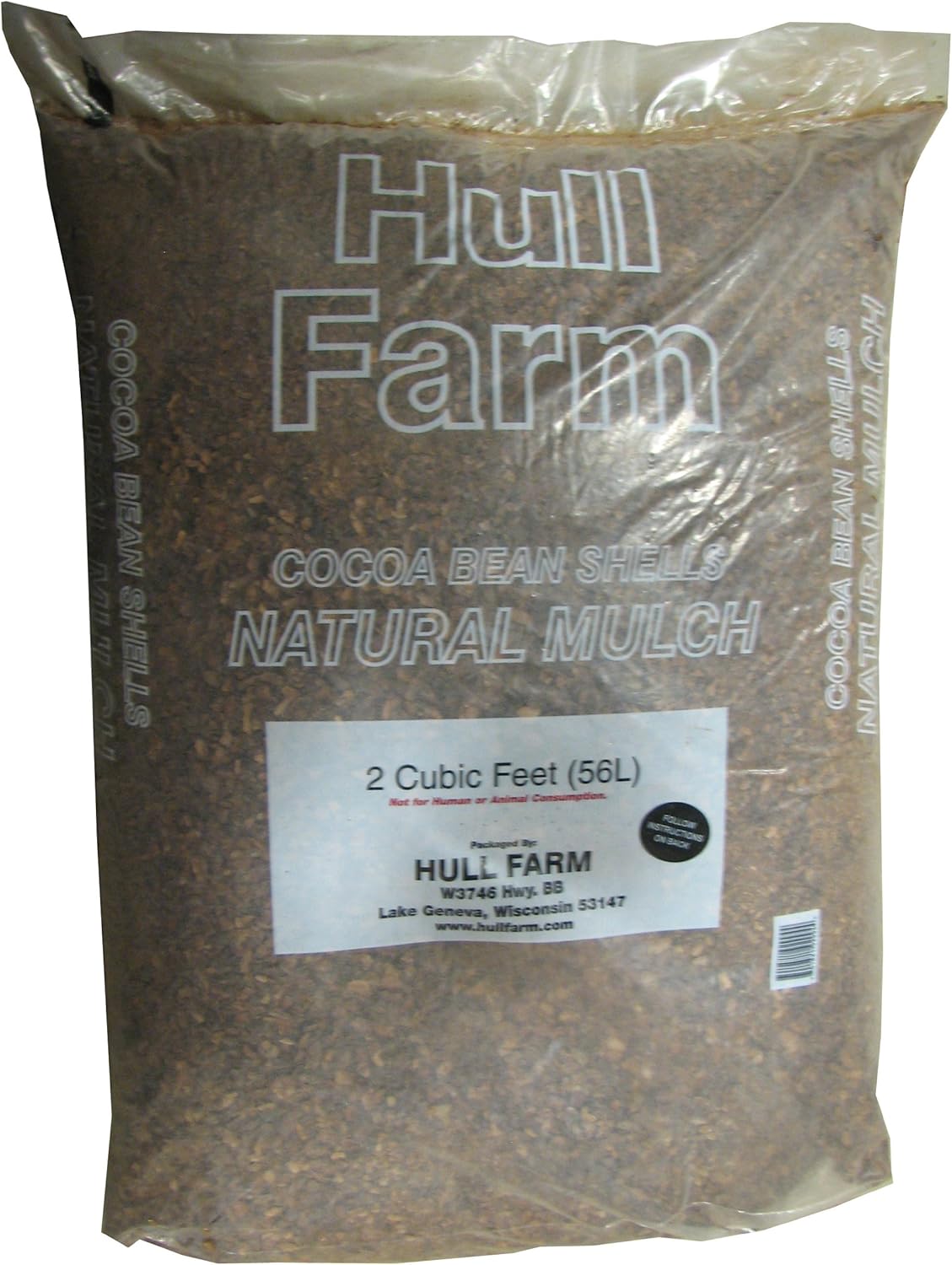
Hull Farm Cocoa Bean Shell Mulch, 2 Cubic Feet
| Volume | 2 Cubic Feet |
|---|---|
| Fertilizer value | Approx. 2.5-1-3 |
| Material | Cocoa bean shells |
| Brand | Hull Farm |
Hull Farm Cocoa Bean Shell Mulch is a decorative organic mulch made from cocoa bean shells sold in a 2 cubic foot bag. It is typically spread around ornamental shrubs and foundation plantings to suppress weeds, retain moisture, and slowly release minor nutrients — the product lists an approximate fertilizer value of 2.5-1-3. The shells have a fine, natural texture that creates an attractive, dark surface layer that complements evergreen foliage such as boxwoods. Because it is an organic material it will gradually break down and improve soil structure over time, but that also means it requires periodic top-ups and can attract wildlife with a faint cocoa scent. The mulch is lightweight and easy to handle in small yards and planting beds, and it does not present the coarse look of bark nuggets. Important limitations are that cocoa shell mulch can be harmful to dogs if ingested and it is less long-lasting than dyed or rubber mulches, so plan for annual replenishment in high-traffic beds.
Best for: Gardeners who want an attractive organic mulch for ornamental beds and hedges and who prioritize soil improvement and appearance over maximum longevity.
Less Ideal for: Large-scale landscapers or homeowners who need a very long-lasting, low-maintenance mulch or who have pets that may ingest mulch.
- Attractive fine texture that gives a clean, dark finish around shrubs
- Adds slow-release nutrients (listed as approximately 2.5-1-3) to the soil
- Lightweight bags are easy to spread in small beds and tight spaces
- Organic material that breaks down to improve soil structure over time
- Will decompose faster than hardwood mulches so requires more frequent replenishing
- Has a cocoa scent that can attract pets or wildlife and may be toxic if eaten by dogs
Verdict: Choose this cocoa shell mulch when you want an attractive organic mulch that adds mild nutrients and improves soil around boxwoods and other ornamentals.
Plantonix Coco Chips Coconut Husk Chips Mulch (10 lb brick)

| Unit Count | 160 Ounce |
|---|---|
| Item Type Name | Soil and Soil Amendments |
| Manufacturer | Plantonix |
| Volume | 15 gallons |
Plantonix Coco Chips come as a compressed 10 lb brick that soaks up water and expands into loose coconut husk chips used as mulch or a soil amendment. You hydrate the brick, break it apart, and spread the chips over beds, containers, or around shrubs; the material is screened and washed to remove grit and small debris. As a mulch it holds moisture, reduces surface evaporation, and helps moderate soil temperature while remaining airy enough to keep root zones from compacting. The chips are long lasting compared with finer organic mulches and resist rapid breakdown, so you do not need to replenish them as often. They are also neutral in pH and low in soluble salts, making them safe for many plants. Important limitations: coco chips do not add much immediate nutrient value like compost or manure, and their chunkier texture can blow around in high winds unless anchored or used with edging. There is also dust during handling, so use a mask if you are sensitive. For performance-focused gardeners maintaining boxwoods, these chips help maintain even moisture and reduce soil stress while giving beds a tidy, tropical look.
Best for: Gardeners focused on consistent, performance-driven moisture management and long-term, low-maintenance mulch solutions for ornamental beds and containers.
Less Ideal for: Those who want a mulch that feeds soil immediately or who need a very fine textured topdress for formal, tightly clipped hedges that require a uniform finish.
- Made from 100% natural recycled coconut husks, an environmentally sustainable peat alternative
- High moisture retention that reduces watering frequency and stabilizes root temperature
- Washed and screened to remove dirt and rocks for a cleaner, more consistent mulch
- Chunky, long-lasting texture that resists rapid decomposition and reduces refill frequency
- Provides little direct nutrient content compared with compost-based mulches
- Larger chips can be displaced by strong wind without edging or anchoring
- Produces dust when handled, so respiratory protection may be needed
Verdict: Choose these coco chips when you want a long-lasting, high–moisture mulch that stabilizes soil conditions around boxwoods and other ornamental plants.
Legigo Coco Coir Chips — Organic Coconut Husk Potting Mix (7 qt, Aerated Drainage)

| Brand | Legigo |
|---|---|
| Material | Coconut Coir |
| Unit Count | 17.64 Ounce |
| Volume | 7 quarts |
Legigo coco coir chips arrive compressed and expand when soaked to create a chunky, fibrous substrate useful as a soil amendment, orchid mix, or mulch. You can mix the chips with potting soil, perlite, or compost to improve drainage and aeration for root systems while increasing moisture retention without waterlogging. The product is screened, desalted, and sold as an organic coconut husk medium with a near-neutral pH and low soluble salts, so it is safe for use around shrubs and container plants. Practical uses include topping boxwood beds to help conserve soil moisture and reduce weeds, blending into potting mixes for improved structure, or using as a component in orchid and hydroponic media. Because it is lightweight and long-lasting it does not compact quickly, but chunky chips provide less nutrient content than composted mulch so you will still need to feed plants separately. The brick format is tidy for storage but requires soaking and some fluffing to break apart before use.
Best for: Gardeners who value efficient, low-mess materials to optimize soil structure and moisture management for container plants and planted beds.
Less Ideal for: Buyers who want a nutrient-rich mulch or finished compost replacement for long-term soil feeding should choose organic compost or bark fines instead.
- Improves drainage and aeration when mixed into potting soil
- High moisture retention that releases water slowly to help reduce watering frequency
- Low EC and near-neutral pH suitable for most plants including shrubs
- Compressed brick format is clean for storage and expands 5–7x when soaked
- Provides little nutrient value so additional fertilization is required
- Chunky chips may need more frequent top-ups for a uniform mulch layer
Verdict: A tidy, long-lasting coco coir chip brick that practical gardeners can use to improve drainage and retain moisture in mixes and mulch layers.
The Bonsai Supply Pine Bark Nugget Fines 2 qt (1/4" particle)

| Brand Name | JK Global Imports |
|---|---|
| Unit Count | 1 Count |
| Volume | 2 quarts |
| Item Weight | 16 ounces |
This 2-quart bag of pine bark fines is a fine-textured organic mulch and soil amendment intended for container plants like bonsai, orchids, succulents, and cacti. You can use it on its own for improved drainage and aeration or mix 10–20% into potting media to boost nutrient retention and moisture buffering. The product’s small particle size and acidic nature make it especially helpful for acid-loving plants and for slowing erosion at the surface of a container. The resealable zip-top pouch keeps the bark drier and easier to store between uses. Practical limitations are its small volume per bag, which means you will need multiple bags for larger planting beds or many boxwoods, and the acidic pH may not suit neutral- or alkaline-loving plants without adjustments. Handle with a mask or gloves to avoid irritation when repotting or topdressing.
Best for: Buyers who prioritize dependable, easy-to-use soil amendments for container-grown and acid-preferring plants and who prefer products that store cleanly between uses.
Less Ideal for: Not a good choice for someone needing bulk mulch for garden beds or for gardeners who require a neutral or alkaline soil amendment for large landscape boxwoods.
- Fine particle size improves soil contact and moisture retention when mixed into potting media
- Resealable zip-top pouch for cleaner storage and easier measuring
- Suitable for container-grown acid-loving plants such as bonsai and orchids
- Small 2-quart volume requires multiple bags for larger shrubs or landscape mulching
Verdict: A convenient, small-batch pine bark fines product for reliably improving moisture and nutrient retention in container-grown, acid-loving plants.
Wood Smith USA 100% Natural Cedar Shavings Mulch (16 Quart)

| Indoor Outdoor Usage | Indoor, Outdoor |
|---|---|
| Other Special Features of the Product | Pet Friendly |
| Material Features | Natural, Organic |
| Moisture Needs | Moderate Watering |
| Unit Count | 595.68 Ounce |
This 16-quart bag of cedar shavings is a lightweight, organic mulch suited for potted plants, hanging baskets and small garden beds such as around boxwoods. The product holds moisture in the soil, helps control odors and brings a mild cedar aroma that can deter some pests. It is pet friendly and marketed for both indoor and outdoor use, so you can top-dress planters or place it around the root zone of established shrub beds. Because the shavings are a natural product, particle size varies, which makes it easy to work into tight container spaces but means it will break down faster than coarser bark mulches. The bag is hand-packed and made in Florida, offering a consistent supply for repeat purchases. Expect to reapply more often than with heavier hardwood mulches and avoid using a very thick layer directly against trunks to prevent moisture trapping against stems.
Best for: Buyers who want a natural, fragrant mulch for container plantings or to freshen and lightly top-dress boxwood beds and who prioritize plant-safe materials and social proof when choosing products.
Less Ideal for: Gardeners seeking a long-lasting, coarse bark mulch for large landscape beds or those who prefer minimal maintenance and infrequent reapplication should consider heavier mulches instead.
- 100% natural cedar that helps retain soil moisture
- Lightweight shavings easy to spread in pots and around small shrubs
- Subtle cedar scent that can freshen air and help deter some pests
- Suitable for indoor and outdoor use and labeled pet friendly
- Shavings are fine and break down faster than coarse mulch, so more frequent replenishment is needed
- Not recommended to pile thickly against plant stems because it can hold too much moisture near trunks
Verdict: A natural, pet-friendly cedar shaving mulch that is ideal for refreshing containers and small boxwood plantings while adding moisture retention and a pleasant cedar scent.
HealthiStraw GardenStraw, 3 cu ft compressed bale

| Product volume | 3 cu ft |
|---|---|
| Item weight | 22.8 pounds |
| Ideal use | Edible gardens & lawn seeding |
| Approximate cut length | 2 inches |
| Sustainably sourced | Yes |
HealthiStraw GardenStraw is a 3 cubic foot compressed bale of filtered wheat straw intended for use as garden mulch and seed cover. It is formulated to be low-dust and largely seed-free, which makes it easier to spread around ornamental plants such as boxwoods and in vegetable or flower beds. The straw interlocks when watered so it stays in place without chemical binders, helping to control weeds, retain soil moisture, and moderate soil temperature. Because it breaks down relatively quickly and adds carbon, it also benefits soil structure and compost piles. Coverage claims are clear: up to about 100 sq ft at a 2–3 inch layer or much more at very thin seeding thicknesses, so you can estimate how many bales you need. Limitations to expect are the usual ones for straw: it will decompose and require replenishing each season and it may hold moisture against plant crowns if applied too thickly near stems. For boxwoods use a light to moderate layer, keeping material pulled slightly away from trunks to avoid rot.
Best for: Gardeners who prefer a natural, low-chemical mulch for foundation plantings and ornamental beds and who prioritize clean, seed-reduced straw that is easy to place and compost.
Less Ideal for: People seeking a permanent, long-lasting synthetic mulch or those who want a decorative colored bark look for formal landscapes.
- Sustainably sourced 100% non-GMO wheat straw with filtration to reduce dust and unwanted seeds
- Locks together when watered so it resists wind and rain without synthetic binders
- Helps conserve soil moisture and reduce watering needs
- Breaks down and adds carbon to soil and compost, improving soil health
- Clear coverage guidance for calculating how many bales are needed
- Will decompose each season and needs periodic replenishing
- Can retain moisture against plant crowns if piled against stems
- Compressed bale requires fluffing and spreading after opening
Verdict: A clean, sustainably sourced straw mulch that holds in place when watered and improves soil health, making it a reliable natural choice for mulching boxwoods and garden beds.
Choosing the Right Mulch for Boxwoods: Key Factors to Consider
Moisture Management
Boxwoods prefer evenly moist but well-drained soil. A mulch that absorbs and slowly releases water helps during dry spells but should not retain enough moisture to keep crowns wet for long periods. Choose a material and application depth that balance water conservation with good drainage.
How a mulch holds and moves water will influence root health. Fine, matted mulches can trap water at the crown while chunkier materials allow better air flow. Consider local rainfall, irrigation practices, and the boxwood site when deciding on a mulch that manages moisture appropriately.
Disease and Pest Risk
Some mulches create humid microclimates or retain fungal spores and insect pests. For boxwoods, the biggest concern is anything that keeps crown tissue damp or contacts stems directly. Materials that compress into dense mats increase the likelihood of foliar or crown rot.
Opt for mulches that shed water from crowns, do not retain surface moisture against stems, and are less likely to harbor pests. Regular inspection and avoiding direct pile-up against trunks will further reduce disease and pest problems.
Soil Aeration and Compaction
Boxwood roots need oxygen as well as water. Mulches that compact or form an impermeable layer reduce oxygen exchange and cause shallow roots to suffer. Particle size and decomposition rate determine whether a mulch will stay loose or consolidate into a crust over time.
Selecting a medium that preserves pore space and allows surface evaporation helps maintain healthy root systems. If a chosen mulch tends to compact, plan for periodic fluffing or thinner application to prevent oxygen loss.
Durability and Replenishment Frequency
Different mulches break down at different rates. Organic materials will add to the soil as they decompose but may require more frequent topping-up. Longer-lasting products reduce maintenance but may be less beneficial as an organic amendment.
Consider how often you want to refresh beds and whether you want the mulch to contribute to soil structure and nutrients. Durability also affects cost over time and the visual consistency of formal boxwood plantings.
Appearance and Garden Style
Boxwoods are often used in formal hedges and foundation plantings where appearance matters. The color, texture, and uniformity of mulch will influence the overall look of the bed. Some mulches offer a tidy, uniform finish while others present a more natural, rustic look.
Choose a finish that complements the planting style and the maintenance level you intend to maintain. Keep in mind that very dark or dyed mulches may fade and require replacement to keep a consistent appearance.
Installation and Maintenance Practicalities
Ease of spreading, potential for staining walkways, and whether the mulch migrates from the bed under wind or irrigation all matter. Heavier, chunkier mulches tend to stay put, while lightweight fibers can blow away or wash into planting rings.
Also consider whether a mulch is easy to rake away from crowns during spring inspections, how it behaves around irrigation heads, and whether it mixes into the topsoil and alters drainage over time.
How Mulch Type Affects Boxwood Health
Different mulch types alter the planting environment in predictable ways. Organic materials slowly add nutrients and improve soil structure as they break down, which can be helpful over several seasons. Inorganic materials do not decompose and therefore maintain consistent physical properties but do not contribute to soil organic matter.
For boxwoods, the balance between moisture retention and evaporation is key. Materials that allow quick drying at the surface while keeping deeper soil evenly moist are usually best. Think about how mulch interacts with regular irrigation and local rainfall patterns to avoid prolonged wet crowns.
- Organic mulches change soil chemistry as they decompose.
- Inorganic mulches are stable but do not feed the soil.
- Particle size determines drainage and aeration.
- Placement around the crown affects disease risk.
Application Best Practices For Boxwood Beds
Proper installation reduces most mulch-related problems. Keep mulch pulled back from direct contact with boxwood stems and crowns to avoid trapping moisture against bark. Apply a uniform layer tailored to the material-usually thinner for denser, slower-draining options and a moderate layer for loose, chunky materials.
Routine seasonal checks are important. Fluff or thin compacted mulch in spring to restore aeration, and replenish only the top couple of inches as needed rather than building depth each year. Maintain a clear planting ring so stems are not buried.
- Leave a small bare ring around the trunk and crown.
- Aim for an even layer adjusted to material drainage.
- Avoid piling mulch against stems during winter mulching.
Mulch and Soil pH Considerations
Some mulches, especially certain wood products, can affect soil pH as they break down. Boxwoods perform best in neutral to slightly acidic soils, so consider how a long-term mulch choice may influence pH and nutrient availability. If pH shifts are a concern, monitor soil tests and adjust mulch choice accordingly.
Compost and many organic mulches will have minor effects on nutrient levels and pH over time. If you rely on a stable pH for other nearby plants, choose neutral-decomposing materials or supplement with soil amendments guided by testing.
- Test soil pH periodically when changing mulch strategy.
- Select neutral-decomposing mulches for mixed borders.
- Adjust lawn or border management if mulch alters pH over years.
Seasonal Timing and Mulch Management
When you apply and refresh mulch affects boxwood growth and disease susceptibility. Late fall mulching can insulate roots but may also prolong surface moisture through wet winters. Spring applications let beds dry before adding fresh material but may miss winter protection.
Plan mulching to match your climate and maintenance schedule. In wet climates, lighter spring applications and careful spring clean-up reduce winter rot risk. In drier regions, thicker initial layers can help preserve moisture through hot months.
- Fall mulching provides winter insulation but may trap moisture.
- Spring refreshing helps reduce winter-damp problems.
- Match timing to local precipitation patterns.
Maintaining Tidy Edges and Preventing Runoff
Mulch migration and erosion can create untidy beds and clog gutters or irrigation lines. Edging solutions and heavier mulch choices limit runoff and keep materials inside beds. For formal boxwood layouts, maintaining crisp edges reinforces the intended look.
Consider simple physical edging or adjusting slope and irrigation to prevent mulch from washing away. Regular bed maintenance will preserve both appearance and the protective benefits mulch provides to roots.
- Use physical edging where beds slope toward paths or drains.
- Select heavier mulches for windy or sloped sites.
- Inspect irrigation patterns to avoid washing mulch from beds.
How We Chose the Best Mulch for Boxwoods
We focused on attributes that directly affect boxwood health and routine hedge care. Criteria included moisture management because boxwoods have relatively shallow roots and dislike prolonged waterlogged soil. Disease and pest risk was another priority, since some mulches can trap humidity or harbor fungal spores near crown tissue. We assessed physical properties that influence aeration and compaction, including particle size and tendency to mat, which affects root oxygen and water movement. Durability and maintenance needs were evaluated to reflect how often you will need to replenish mulch and whether it breaks down into soil that changes pH or nutrient balance. Ease of installation and tidy appearance were included because boxwoods are often used in formal plantings where neatness matters. We excluded any materials known to release harmful chemicals or sharp debris that could injure roots or stems. Products that fail basic drainage or consistently show higher disease association were not considered for the list.
FAQ
How deep should mulch be around boxwoods?
A thin to moderate layer is best. Typically aim for a depth that conserves moisture without burying stems or crowns. Usually 1 to 2 inches is sufficient for many materials; adjust slightly for very coarse or very fine products.
Will mulch help prevent winter root damage?
Mulch can buffer soil temperature swings and reduce frost heave, but heavy insulating layers placed against stems can also trap moisture and increase winter rot risk. Use moderate depth and leave a small clear zone at the crown for best results.
Does mulch attract pests to boxwoods?
Some mulches can harbor slugs, rodents, or fungal pathogens if they remain constantly damp. Choosing a material that dries at the surface and avoiding direct contact with stems reduces pest attraction. Regular checks help catch any issues early.
Can I use dyed or colored mulch around boxwoods?
Dyed mulches are primarily cosmetic. They do not inherently harm boxwoods, but colorants and very fine particles can mask moisture problems and fade over time. Prioritize physical properties and disease risk over appearance when selecting a mulch.
How often should I refresh mulch in boxwood beds?
Refreshment depends on the material and local climate. Organic mulches often need topping every year or two as they decompose, while more durable options last longer. Inspect beds annually and add only what is needed to restore the recommended depth.
Should I mulch boxwoods in containers the same way as in the ground?
Container-grown boxwoods have different drainage and root-volume constraints. Use a lighter, fast-draining mulch and apply a thinner layer to avoid waterlogging. Monitor container moisture more closely than in-ground plantings.
Final Verdict
Select a mulch for boxwoods by prioritizing moisture control, disease risk, and how the material affects soil aeration. Tradeoffs matter: longer-lasting, inert mulches reduce maintenance but do not improve soil, while organic materials feed the soil yet may require more frequent topping. Match the mulch particle size and application depth to your climate and planting situation, keep material pulled away from crowns, and plan for seasonal maintenance. Following these principles will help you protect boxwood roots and maintain a tidy, healthy hedged planting.
