

Note: This article contains affiliate links. If you click on these links and make a purchase, I may earn a small commission at no extra cost to you. This helps support my research and content. Read my full affiliate disclosure here.
A soil test kit for lawns gives you the facts to correct pH, target nutrient deficiencies, and avoid over-application of fertilizer. Choosing the right kit matters because grass responds to relatively small changes in pH and nutrient balance, and improper treatments waste time and can harm turf or the environment. This guide shortlists the top kits designed for lawn care and explains how we evaluated accuracy, convenience, and the kinds of results you can expect. Read on to see practical criteria and clear guidance to help you pick a soil test kit that fits your lawn size and the level of detail you need.
Top Picks at a Glance
| Best Overall The best all-around choice for most situations | MySoil Professional Soil Test Kit — 2-Pack |  |
| Best Quality Built to a higher standard if you want something more solid | MySoil Professional Mail‑In Soil Test Kit (1 Test) |  |
| Best Value The sweet spot between price and what you get | Soil Test Kit 140 Tests — pH, Nitrogen, Phosphorus, Potassium & Ammonia |  |
| Best Budget The cheapest option that still gets the job done reliably | Palinoia 2-in-1 Soil Test Kit for pH and Nitrogen, 100 Strips |  |
| Highest Rated A top-rated pick with lots of positive feedback | Yard Mastery Soil Testing Kit — Professional Grade, 13 Nutrient Analysis, Prepaid Return |  |
| Most Popular A crowd favorite that many people choose with confidence | SONKIR MS02 3-in-1 Soil Moisture, pH and Light Tester |  |
| Best Seller A high-volume bestseller chosen again and again | Luster Leaf Rapitest Soil Test Kit (20 tests) |  |
MySoil Professional Soil Test Kit — 2-Pack

| Number of Packs | 2 |
|---|---|
| Unit Count | 2 Count |
| Manufacturer | Predictive Nutrient Solutions, Inc |
| Tests | Full nutrient & pH analysis |
| Turnaround | Results in 6-8 days |
The MySoil 2‑pack is a mail‑in soil test kit aimed at giving homeowners lab‑quality results for lawns and garden beds. You register online, collect soil in the supplied jars, send the prepaid samples to the lab, and receive a detailed report in about 6 to 8 days that lists nutrient levels and pH plus step‑by‑step amendment recommendations. The kit covers 13 plant‑available nutrients and offers both organic and conventional product suggestions, which makes it practical for deciding what fertilizers or lime your lawn actually needs. The included prepaid envelopes and clear instructions simplify sampling, and the two‑count format lets you test two different areas or recheck trouble spots. Limitations are that each kit is single‑use so repeat monitoring requires additional kits, and turnaround time means it is not an instant field test but a planning tool for seasonal lawn care. For routine, informed lawn maintenance the MySoil kit turns guesswork into an actionable plan.
Best for: Homeowners who want a reliable, evidence‑based plan for improving lawn health and who prefer lab accuracy over instant but less precise field tests.
Less Ideal for: People who need immediate in‑the‑moment readings or those wanting a reusable electronic meter for frequent spot checks.
- Laboratory analysis of pH plus 13 plant‑available nutrients for accurate results
- Includes prepaid mailers and online registration for an easy sample workflow
- Provides custom, actionable fertilizer and lime recommendations for lawn care
- Two kits let you test multiple lawn zones or compare problem areas
- Each test is single‑use so repeated monitoring requires buying more kits
- Results take 6–8 days after mailing so not instantaneous
Verdict: If you want lab‑accurate nutrient and pH analysis with clear, lawn‑specific recommendations, this two‑pack MySoil kit delivers actionable results to guide seasonal care.
MySoil Professional Mail‑In Soil Test Kit (1 Test)
| Number of Packs | 1 |
|---|---|
| Unit Count | 1 Count |
| Manufacturer | Predictive Nutrient Solutions, Inc |
| Item Weight | 4.6 ounces |
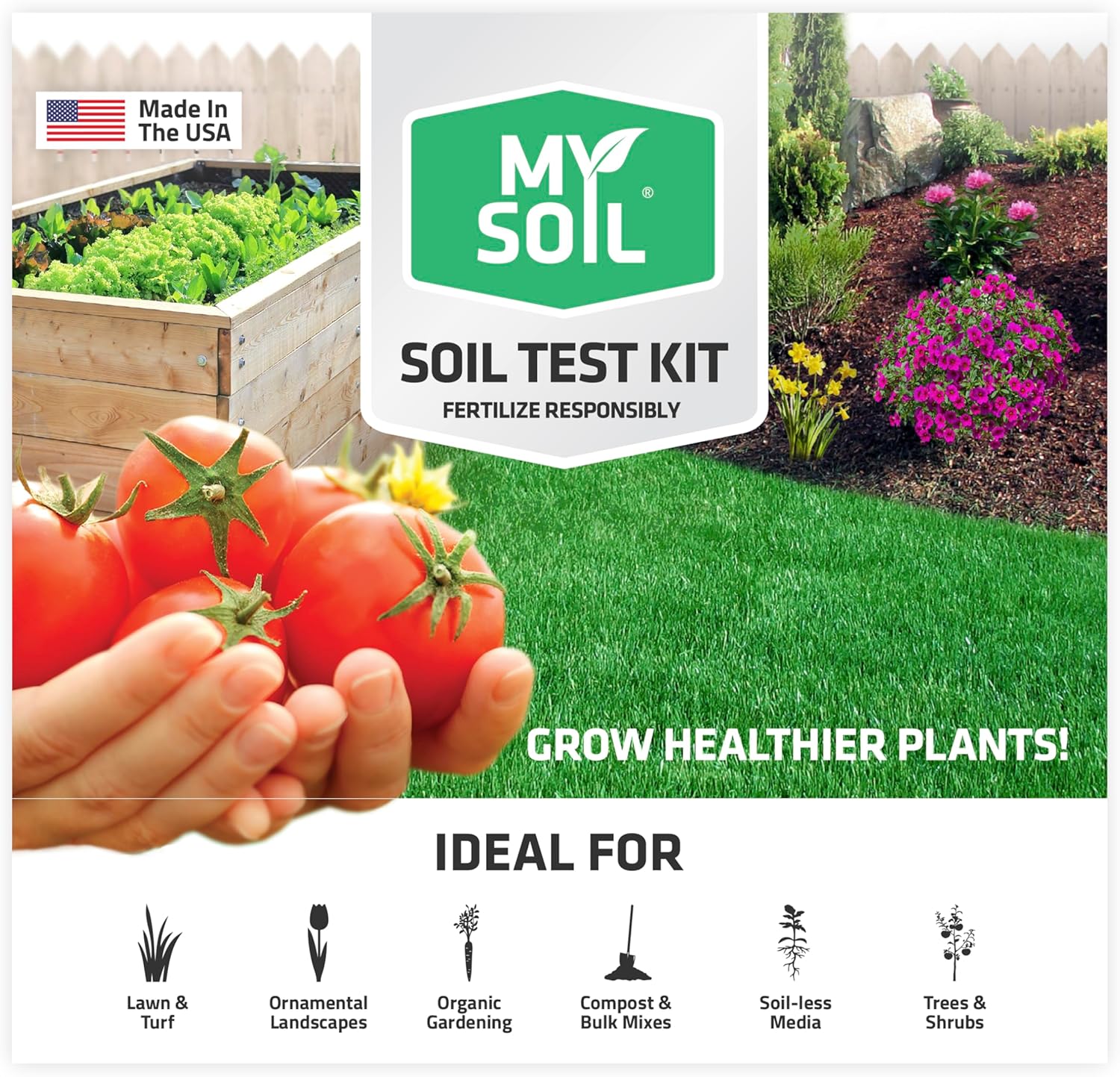
The MySoil kit is a single‑use mail‑in soil test designed to give a professional laboratory analysis rather than an instant at‑home reading. You collect a sample in the included jar, register the kit online, mail the prepaid envelope to the lab, and get a detailed report in about 6–8 days. Results cover pH plus 13 plant‑available nutrients and include step‑by‑step recommendations for what to apply, how much, and when, with both organic and conventional options. That makes it useful for diagnosing lawn problems, planning fertilization for turf or vegetable beds, or checking soil before planting. The kit contains everything needed for one test and saves time by replacing guesswork with specific advice, which can reduce unnecessary product use. The main limitation is that each kit covers only a single sample, so testing multiple areas or repeated checks requires buying multiple kits; turnaround also depends on mailing times. For a homeowner who wants accurate, lab‑grade guidance for improving grass and garden soil, MySoil provides actionable results without complex equipment.
Best for: Homeowners focused on improving lawn health who want reliable, lab‑grade soil data and clear amendment instructions rather than DIY meters or strips.
Less Ideal for: People who need rapid, repeated tests across many spots or instant field readings should consider multi‑test packs or handheld meters instead.
- Laboratory analysis of pH plus 13 plant‑available nutrients for accurate results
- Includes prepaid mail envelope and everything needed to collect and send one sample
- Custom, easy‑to‑follow recommendations for what, when, and how much to apply
- Works for any soil type and a wide range of uses including lawn and turf
- Single‑use kit covers only one sample location
- Results take several days since samples are mailed to a lab
Verdict: For reliable, lab‑grade soil diagnostics and clear fertilizer guidance to improve grass and garden performance, choose this single‑test MySoil kit.
Soil Test Kit 140 Tests — pH, Nitrogen, Phosphorus, Potassium & Ammonia

| Tests included | pH, Nitrogen, Phosphorus, Potassium, Ammonia |
|---|---|
| Total tests | About 140 |
| Manufacturer | Dewilde Trading Co |
This liquid soil test kit is built for routine fertility checks on lawns and gardens, offering about 140 individual tests across pH, nitrogen, phosphorus, potassium and ammonia. You use small soil samples, mix them with reagents, and compare color changes to supplied charts to get quick, on-site readings. The kit’s biggest practical benefit is coverage: multiple parameters in one kit mean you can diagnose common nutrient imbalances and pH issues without sending samples to a lab. That makes it handy for planning lime or fertilizer applications and for checking results after treatment. The instructions appear updated for 2026 which should ease setup, and the included volume of tests supports seasonal monitoring across a small to medium lawn. Expect the usual limitations of colorimetric kits: results are good for directional guidance but less precise than laboratory assays, and accurate interpretation depends on following sample timing and mixing steps closely. For users who want fast, repeatable checks rather than lab-grade precision, this kit is a practical, cost-effective choice.
Best for: Homeowners and lawn care hobbyists who monitor turf fertility regularly and want a single, economical kit to guide fertilizer and lime decisions without sending samples to a lab.
Less Ideal for: Users needing laboratory-accurate nutrient concentrations for commercial production or research should use professional lab testing instead.
- Tests five key soil parameters (pH, nitrogen, phosphorus, potassium, ammonia) in one kit
- Large test count (about 140) supports repeated seasonal checks
- Liquid colorimetric method gives quick on-site results without lab turnaround
- Updated instructions intended to simplify use and reduce user error
- Color chart readings are inherently less precise than laboratory analysis
- Accurate results depend on strict adherence to timing and mixing procedures
Verdict: A practical, all-in-one kit for regular lawn fertility checks that gives fast, actionable results without lab costs.
Palinoia 2-in-1 Soil Test Kit for pH and Nitrogen, 100 Strips

| Unit Count | 100 Count |
|---|---|
| Recommended Uses For Product | Soil Testing, pH Test |
| Sterility Rating | 0.0-14.0 |
The Palinoia 2-in-1 kit uses test strips to measure soil pH and nitrate-nitrogen, giving gardeners a fast way to check lawn soil health without lab work. To use it you mix a soil sample with water, let solids settle, dip a strip, and compare the resulting color to the included chart; the kit includes a sampling spoon, test tube, and resealable pouches so you can test multiple spots and store unused strips. With 100 strips, it is convenient for checking several areas across a yard or repeating tests over the season. The nitrate result reports plant-available nitrate-nitrogen only, not ammonium or urea, so it is useful for diagnosing nitrogen available to grass but not all fertilizer forms. Accuracy depends on careful sampling and following the color chart, so results are best seen as a quick diagnostic rather than a laboratory-grade measurement. For routine lawn monitoring or deciding whether to apply fertilizer or lime, this kit gives clear, inexpensive guidance.
Best for: Homeowners and lawn caretakers who want an affordable, easy way to monitor pH and available nitrogen across multiple lawn areas to guide fertilizer or lime decisions.
Less Ideal for: Users needing laboratory-grade nutrient analysis or a complete breakdown of all nitrogen forms should choose a professional soil test or a more comprehensive kit.
- Includes 100 strips for many tests across a lawn or repeated seasonal checks
- Measures both soil pH and plant-available nitrate-nitrogen in one kit
- Comes with a sampling spoon, test tube, and resealable pouches for organized testing
- Simple procedure suitable for beginners with quick color-chart results
- Nitrate test does not measure ammonium or urea forms of nitrogen
- Color-chart strip method is less precise than lab tests and sensitive to sampling technique
Verdict: A low-cost, easy-to-use option for routine lawn soil checks that delivers fast pH and nitrate-nitrogen guidance for smarter fertilizer and lime choices.
Yard Mastery Soil Testing Kit — Professional Grade, 13 Nutrient Analysis, Prepaid Return

| Included Components | Soil Test Kit |
|---|---|
| Material Type | Paper, Plastic |
| Sterility Rating | 3.0 To 10.0 |
| Recommended Uses For Product | Soil Testing |
The Yard Mastery Soil Testing Kit is a lab-return kit designed for homeowners who want reliable, detailed soil analysis for lawns and gardens. You collect a sample with the included materials, mail it using the prepaid postage, and receive a lab report that lists 13 essential nutrient levels plus tailored fertilizer recommendations. That makes it useful for diagnosing deficiencies in turf, vegetable plots, ornamental beds, and compost-amended soils. Notable features are the broad nutrient panel, clear fertilizer guidance tied to results, and the convenience of prepaid return postage which reduces setup friction. The kit is presented as professional grade yet aimed at DIY users, so it balances thorough lab-level data with simple sampling instructions. Limitations are typical of mail-in kits: you must wait for lab turnaround and you cannot get instant field readings, and accuracy depends on taking representative samples. For homeowners prioritizing dependable, lab-based guidance for lawn care, this kit delivers meaningful, actionable results.
Best for: Homeowners and lawn care-minded gardeners who want dependable, lab-quality nutrient analysis and specific fertilizer guidance to improve turf and garden health.
Less Ideal for: People who need instant in‑field readings or want to run frequent spot checks with handheld meters should consider rapid-test alternatives.
- Provides a comprehensive lab report covering 13 essential plant nutrient levels
- Includes prepaid return postage for simple sample submission
- Offers customized fertilizer recommendations tied to your soil results
- Presented as professional-grade testing while remaining accessible for DIY users
- Requires mailing samples to a lab so results are not immediate
- Accuracy depends on correct, representative sampling by the user
Verdict: Choose this kit if you want lab-grade, 13-nutrient analysis and clear fertilizer recommendations to reliably improve lawn and garden health.
SONKIR MS02 3-in-1 Soil Moisture, pH and Light Tester
| pH range | 3.5-8 pH |
|---|---|
| Moisture range | 1-10 scale |
| Probe length | 7.9 inches |
| Power | No battery required |
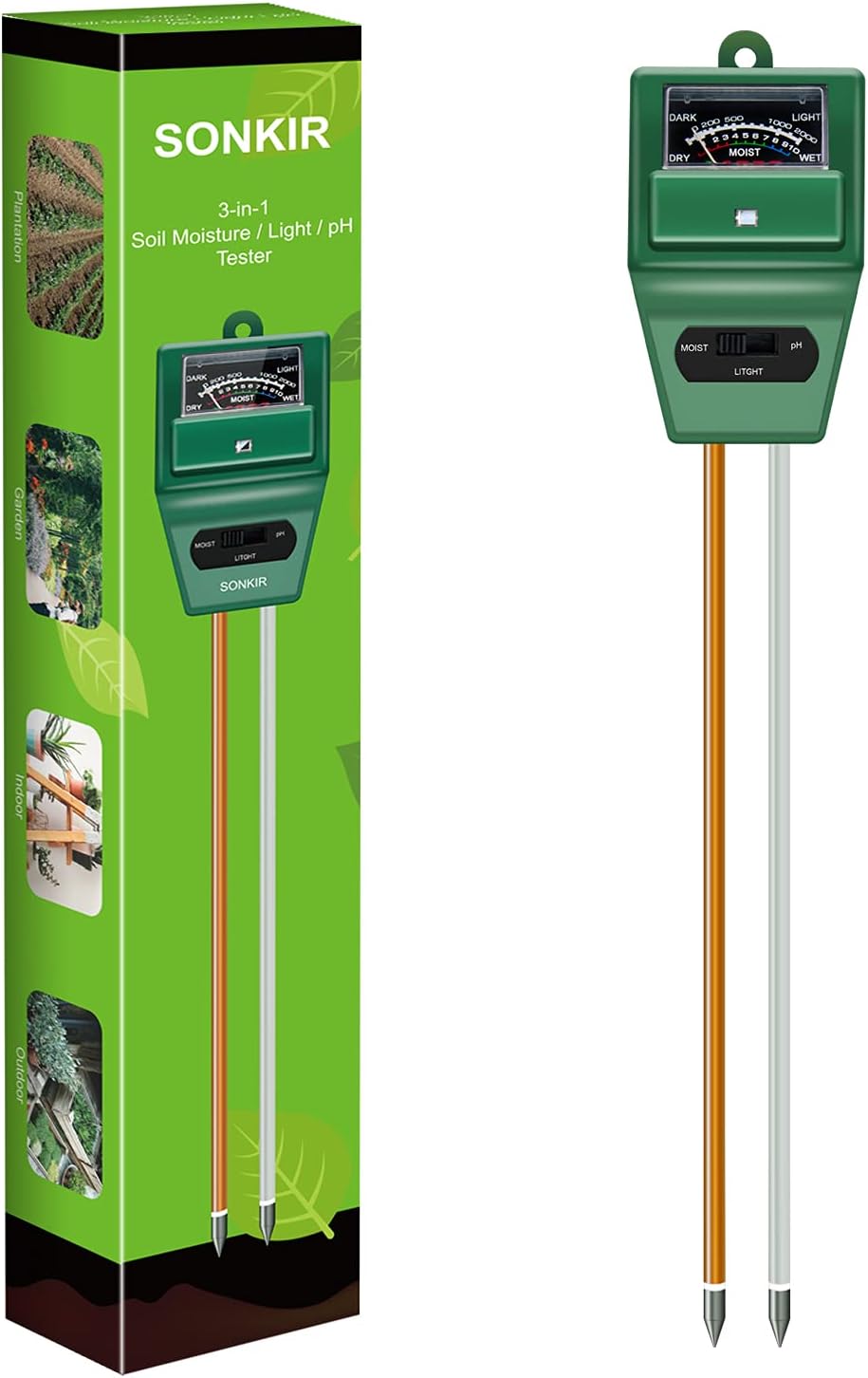
The SONKIR MS02 is a handheld, no-battery soil meter that gives quick, visual readings of moisture, pH and sunlight to help you maintain healthier grass and garden plants. You switch the dial to the desired function, push the probe into the soil about 6 to 7 inches, wait roughly 10 minutes and read the needle on the analog display. The meter covers a practical pH range for lawns and gardens and shows moisture on a 1 to 10 scale so you can decide when to water. Its long probe and compact, lightweight body make it convenient for spot-checking multiple areas of a lawn or garden bed. Important limitations are that the pH probe is intended for soil only and the analog needle can be slow to move in very dry soils or close-to-neutral pH, so readings sometimes require rechecking after moistening the sample or testing several spots. The unit is best for gardeners who want an affordable, easy-to-use tool for routine soil checks rather than laboratory-accurate analysis.
Best for: Someone who wants an inexpensive, easy-to-use tool for routine soil checks across a lawn or garden and values practical, repeatable guidance over laboratory precision.
Less Ideal for: Users who need lab-grade pH or moisture measurements, continuous data logging, or digital readouts for precise record keeping should consider more advanced instruments.
- 3-in-1 functionality measures moisture, pH and sunlight without extra tools
- No battery required so it is always ready to use and low maintenance
- Long probe and compact form factor make spot checks across a lawn or garden quick
- Simple analog dial is straightforward for fast, at-a-glance decisions
- pH function is designed for soil only and cannot test water or other liquids
- Analog needle can be unresponsive in very dry soil or near-neutral pH, requiring repeated tests
Verdict: A straightforward, no-battery 3-in-1 tester that gives fast, practical soil moisture, pH and light checks for everyday lawn and garden care.
Luster Leaf Rapitest Soil Test Kit (20 tests)

| Brand Name | Luster Leaf |
|---|---|
| Unit Count | 20 Count |
| Item Type Name | Soil Test Kit |
| Model Number | 1602 |
The Luster Leaf Rapitest Soil Test Kit provides a simple, low-tech way to check garden soil pH and the three main nutrients gardeners track: nitrogen, phosphorus and potash. The kit includes reagents and comparators for 20 tests total (five tests per measurement), so you can sample several areas across a lawn or vegetable bed. Use involves mixing small soil samples with the provided capsules or solutions, then matching the resulting color against the included chart. That makes it fast and approachable for beginners and steady gardeners who want a practical snapshot before amending or fertilizing. The clear instructions and plant pH preference list for over 450 species are helpful for making actionable adjustments. Limitations are the coarse resolution of color-based readings and the limited number of tests compared with lab analysis, so it is best for routine spot checks rather than precise scientific monitoring.
Best for: Gardeners who want a straightforward, low-cost way to check soil health before amending and prefer practical, easy-to-follow results over lab-level precision.
Less Ideal for: Users who need laboratory-grade accuracy, quantitative nutrient concentrations, or frequent high-volume testing for professional soil management.
- Covers core measurements gardeners need: pH, nitrogen, phosphorus and potash.
- Includes materials for 20 total tests to sample multiple garden spots.
- Patented color comparator system makes results easy to read without special tools.
- Comes with detailed instructions and a plant pH preference list for many common species.
- Color-matching gives approximate results and is less precise than laboratory testing.
- Only five tests per measurement limits long-term or frequent monitoring without repurchasing.
Verdict: Buy this kit if you want an easy, affordable way to spot-check soil pH and basic nutrient levels across your garden before amending.
Choosing the Right Soil Test Kit for Lawns: Key Factors to Consider
pH Accuracy and Resolution
Soil pH strongly influences nutrient availability for turf. Small pH shifts can change how grass absorbs iron, manganese, and other micronutrients, so a kit that reports pH to at least one decimal or gives narrow ranges is more useful than a broad acidic/neutral/alkaline label.
When choosing a kit focus on its calibration method and whether it includes a reliable buffer or lab analysis. For lawns that slog along or show patchy discoloration, accurate pH results guide lime or sulfur applications and prevent unnecessary treatments.
Nutrient Coverage Relevant to Turf
Turf fertility is most often managed around nitrogen, phosphorus, and potassium, but secondary elements and micronutrients such as magnesium, calcium, and iron can also affect color and resilience.
Select a kit that measures the key macronutrients at minimum and flags common deficiencies. Kits that only test pH without nutrient data limit your ability to create a targeted feeding plan for greener, denser turf.
Sampling Method and Representativeness
A good sample strategy matters more than a marginally more precise test. Lawns are rarely uniform: compaction, shade, pet spots, and past repair areas create variability across the yard.
Choose a kit that explains how many subsamples to collect, how deep to sample for turf roots, and how to combine them into a composite sample. Clear instructions and the right sampling tools reduce user error and produce results that actually reflect your lawn's needs.
Ease of Use and Time to Result
Kits vary from instant color-strip tests to mail-in lab services. Instant kits give quick guidance for simple fixes but can be less precise. Mail-in labs typically return more complete nutrient panels and calibrated pH values, but require shipping and waiting time.
Think about how quickly you need results and how comfortable you are preparing and mailing samples. For routine seasonal maintenance, a slightly slower lab report that provides clear recommendations is often worth the wait.
Result Interpretation and Actionability
Raw numbers are helpful only when paired with practical recommendations. For lawns this means suggested lime or sulfur rates, fertilizer type and timing, or targeted micronutrient correction.
Prefer kits that translate results into simple application rates or maintenance steps for common turfgrass species. If a kit provides only raw data, ensure you have access to trusted interpretation resources or extension guidance to avoid misapplication.
Sample Capacity and Long-Term Use
Consider how many tests you will need. A single large lawn or multiple properties will require more samples over time. Some kits include multiple test vials or multiple reaction strips, while others are single-use.
Buying a kit with enough capacity for seasonal checks or follow-up tests can be more economical and convenient. Also check whether additional sampling supplies are available separately if you plan recurring testing.
When to Test Your Lawn
Test your soil before major renovations, before the first seasonal fertilizer application, and when you notice slow growth, yellowing, or patchy turf. Routine checks every two to three years help catch gradual pH drift or nutrient depletion.
Test different spots if your lawn has shade variations, high-traffic paths, or known problem areas. Targeted tests of repair patches can reveal whether poor establishment is due to nutrient deficits or pH issues.
- Test in early spring or fall for pre-application guidance
- Sample after dry spells are over and soil is workable
- Avoid testing immediately after heavy fertilization or lime applications
How to Collect a Good Lawn Soil Sample
Use a clean soil probe, trowel, or sharp spade to extract samples from the root zone, generally 2 to 4 inches deep for most cool- and warm-season turf. Remove surface thatch and collect only mineral soil for reliable results.
Take multiple subsamples across defined zones and mix them in a clean bucket. For a typical yard, combine 10 to 15 subsamples into one composite sample for each management zone to account for variability.
- Label samples clearly with date and zone
- Avoid sampling directly from recent repair patches unless testing that area specifically
- Dry samples lightly at room temperature if the kit requires dry material before mailing
Understanding Lab Reports and Color-Chart Results
Instant color charts are intuitive for pH and basic nutrient hints but can be affected by lighting and subjective color matching. Lab reports usually provide numeric values and may include recommended application rates.
When reading a report, compare nutrient levels to turf-specific sufficiency ranges rather than garden ranges. Look for notes on organic matter and texture if available, because these influence nutrient retention and fertilizer scheduling.
- Prefer numeric pH values or narrow bands where possible
- Check whether phosphorus and potassium values are reported as parts per million or relative categories
- Use the report's recommendations as a starting point, then adapt by observing turf response
Matching Test Results to Lawn Care Actions
Low pH usually means a lime application is needed, while high pH may require sulfur or iron amendments depending on the issue. Nutrient shortages inform fertilizer formulation choices and timing for best uptake by grass roots.
Keep in mind that nitrogen needs are often driven by growth stage and time of year, whereas phosphorus and potassium corrections are typically less frequent. Use test guidance to prioritize which inputs are necessary now versus long-term adjustments.
- Address pH imbalances before making repeated fertilizer changes
- Apply micronutrient corrections only when tests show deficiencies
- Re-test after major amendments to verify correction
Using Soil Tests to Improve Lawn Sustainability
Targeted soil testing helps avoid over-fertilization, reducing runoff and protecting local waterways. Precise application also reduces costs and prevents excess growth that can increase mowing and disease pressure.
Soil test data can guide cultural practices such as aeration, overseeding, and organic matter additions that improve root health and long-term nutrient cycling, not just short-term color fixes.
- Combine test-based fertilization with aeration and mowing best practices
- Use organic matter amendments where tests indicate poor structure or low organic content
- Retest periodically to confirm long-term improvements
How We Chose the Best Soil Test Kit for Lawns
We shortlisted kits that deliver actionable lawn-focused results rather than general garden guesses. Primary evaluation centered on accuracy of pH and nutrient readings, the clarity and usefulness of the report or color chart, and whether the kit measures the nutrients most relevant to turf health such as nitrogen, phosphorus, and potassium. We also evaluated ease of sample collection and processing, lab turnaround or instant-read reliability, and the level of interpretation offered for common lawn problems. Durability and kit completeness mattered: included sampling tools, clear instructions, and enough test capacity for typical lawn sampling patterns earned higher marks. We excluded kits that only offer vague pH ranges, single-use strips without quantifiable results, or tests built exclusively for houseplants rather than turf. The final picks emphasize dependable measurements, straightforward guidance for lawn applications, and formats that suit both casual homeowners and more meticulous turf stewards.
FAQ
How often should I test my lawn soil?
Usually every two to three years for routine maintenance. Test sooner if you see persistent yellowing, poor growth, or after major amendments to verify effects.
Can a home kit give reliable pH results for a lawn?
Many home kits provide serviceable pH estimates, especially instant-read kits for broad ranges. For precise pH correction or tricky issues, lab-based measurements are generally more reliable.
Do I need to test for nitrogen?
Nitrogen fluctuates quickly with season and management, so many kits focus on phosphorus and potassium plus pH. If you suspect chronic nitrogen shortage, combine soil testing with turf observation and clippings tests since soil N can be transient.
How many subsamples should I collect across my lawn?
Collect 10 to 15 subsamples for a typical lawn management zone and mix them into one composite sample. For very small yards fewer subsamples may be fine; for large or variable properties divide the yard into zones.
Will soil moisture affect test results?
Moisture can affect some instant tests and shipping conditions. Follow kit instructions about drying samples if required and avoid testing immediately after heavy rain for best consistency.
Can soil tests tell me about compaction or drainage issues?
Not directly. Tests report chemical properties; physical problems like compaction or poor drainage are best diagnosed with simple field checks such as a hollow-tine probe or percolation tests and should be addressed alongside chemical corrections.
Final Verdict
Choose a soil test kit that balances the level of detail you need with how you prefer to work. For most homeowners, a kit that reliably reports pH and key macronutrients, includes clear sampling instructions, and offers actionable recommendations is the best investment for healthier turf. If you manage a large or problem-prone lawn, lean toward more thorough lab-based analyses and plan follow-up tests after major corrections to confirm progress.
