

Note: This article contains affiliate links. If you click on these links and make a purchase, I may earn a small commission at no extra cost to you. This helps support my research and content. Read my full affiliate disclosure here.
Testing your lawn soil before seeding, overseeding, or fertilizing saves time and prevents common turf problems. The right home lawn soil test kit tells you pH, primary nutrient levels, and often secondary elements so you can match amendments and avoid overapplication. This guide shortlists the top kits suited to typical yards and small properties and explains how we evaluated accuracy, turnaround, and usability. Read on to learn what each kit measures and which test features matter for making confident lawn care decisions.
Top Picks at a Glance
| Best Overall The best all-around choice for most situations | MySoil Professional Mail‑In Soil Test Kit (1 Test) |  |
| Best Quality Built to a higher standard if you want something more solid | MySoil Test Kit PRO Pack — 2 Lab Mail-In Soil Tests with Soil Probe |  |
| Best Value The sweet spot between price and what you get | Soil Test Kit 140 Tests — pH, Nitrogen, Phosphorus, Potassium & Ammonia |  |
| Best Budget The cheapest option that still gets the job done reliably | Dewilde Trading Co Soil pH Test Strips, 100 Count (pH 3.5–9.0) |  |
| Highest Rated A top-rated pick with lots of positive feedback | Jxikatx 7-in-1 Soil Test Kit with Dual Display (Moisture, pH, Fertility, Light, Temp, Humidity) |  |
| Most Popular A crowd favorite that many people choose with confidence | Luster Leaf Rapitest Soil Test Kit (20 tests) |  |
| Best Seller A high-volume bestseller chosen again and again | Luster Leaf Rapitest 40-Test Soil Test Kit (pH, N, P, K) |  |
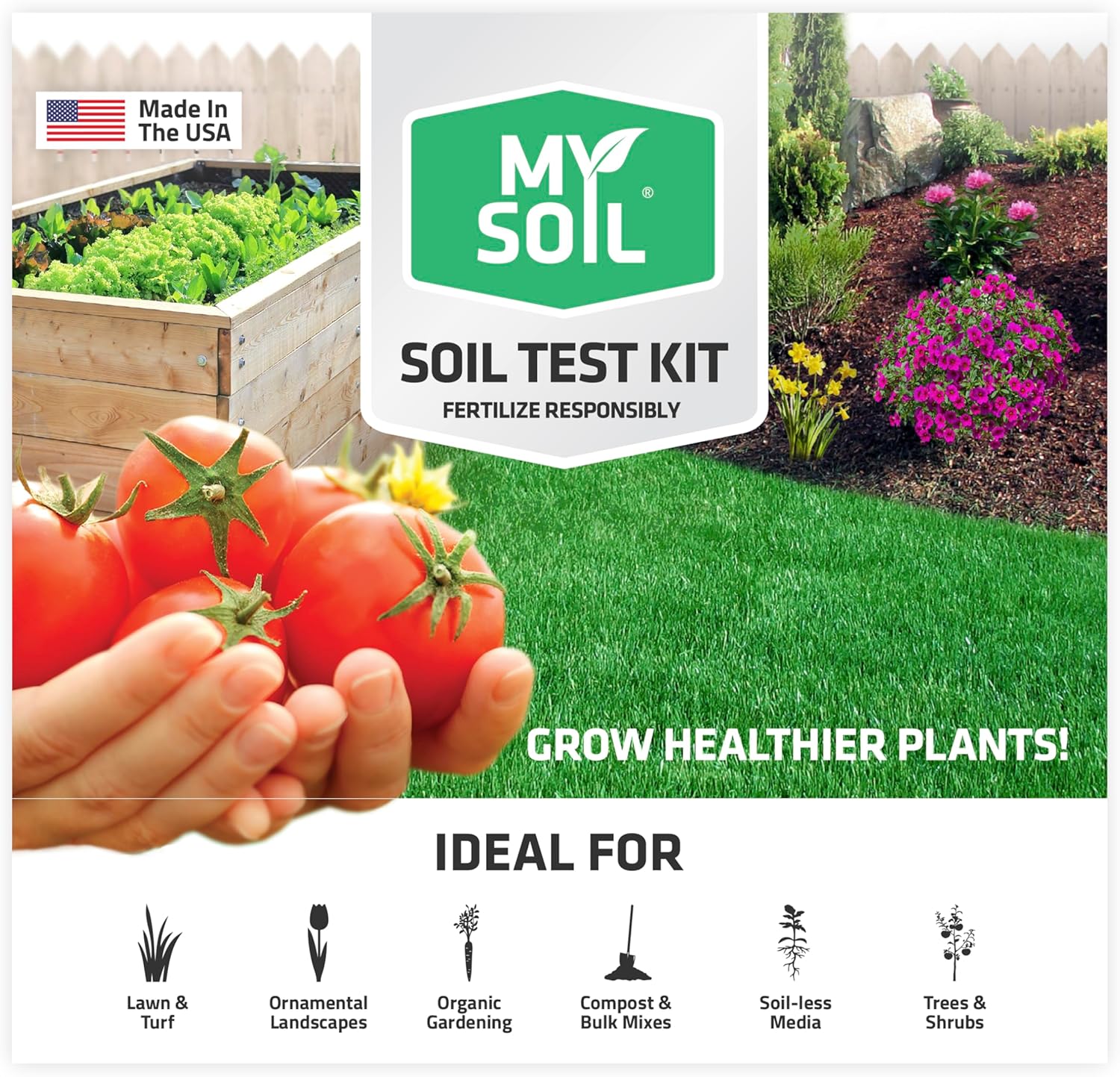
MySoil Professional Mail‑In Soil Test Kit (1 Test)
| Number of Packs | 1 |
|---|---|
| Unit Count | 1 Count |
| Manufacturer | Predictive Nutrient Solutions, Inc |
| Item Weight | 4.6 ounces |
The MySoil kit is a single‑use mail‑in soil test designed to give a professional laboratory analysis rather than an instant at‑home reading. You collect a sample in the included jar, register the kit online, mail the prepaid envelope to the lab, and get a detailed report in about 6–8 days. Results cover pH plus 13 plant‑available nutrients and include step‑by‑step recommendations for what to apply, how much, and when, with both organic and conventional options. That makes it useful for diagnosing lawn problems, planning fertilization for turf or vegetable beds, or checking soil before planting. The kit contains everything needed for one test and saves time by replacing guesswork with specific advice, which can reduce unnecessary product use. The main limitation is that each kit covers only a single sample, so testing multiple areas or repeated checks requires buying multiple kits; turnaround also depends on mailing times. For a homeowner who wants accurate, lab‑grade guidance for improving grass and garden soil, MySoil provides actionable results without complex equipment.
Best for: Homeowners focused on improving lawn health who want reliable, lab‑grade soil data and clear amendment instructions rather than DIY meters or strips.
Less Ideal for: People who need rapid, repeated tests across many spots or instant field readings should consider multi‑test packs or handheld meters instead.
- Laboratory analysis of pH plus 13 plant‑available nutrients for accurate results
- Includes prepaid mail envelope and everything needed to collect and send one sample
- Custom, easy‑to‑follow recommendations for what, when, and how much to apply
- Works for any soil type and a wide range of uses including lawn and turf
- Single‑use kit covers only one sample location
- Results take several days since samples are mailed to a lab
Verdict: For reliable, lab‑grade soil diagnostics and clear fertilizer guidance to improve grass and garden performance, choose this single‑test MySoil kit.
MySoil Test Kit PRO Pack — 2 Lab Mail-In Soil Tests with Soil Probe

| Number of Packs | 2 |
|---|---|
| Manufacturer | Predictive Nutrient Solutions, Inc |
| Tests reported | 13 nutrients plus pH |
| Results turnaround | 6-8 days |
The MySoil Test Kit PRO Pack is a mail-in laboratory soil test targeted at gardeners and turf managers who want accurate, actionable data rather than guesswork. You collect soil in the included sample jars using the supplied 8" soil probe, register the samples online, and send them in with prepaid mailers; results and tailored fertilizer recommendations arrive in about 6 to 8 days. The kit reports 13 plant-available nutrients plus pH and translates lab values into step-by-step organic and non-organic amendment plans, which helps you stop applying unnecessary products and tune applications for better plant performance. Practical strengths are the professional lab analysis, clear online dashboard, and customer support for interpreting results. Limitations are that each test is single-use so the two-kit pack requires repurchasing for recurring checks, and you must wait several days for lab results rather than getting instant readings in the field. For a performance-focused grower who values accuracy and targeted corrections, this delivers far more useful guidance than strip tests or handheld meters.
Best for: Gardeners, turf managers, or hobby growers who prioritize accurate, lab-grade soil data to optimize fertilizer and amendment decisions and maximize plant performance.
Less Ideal for: Casual gardeners who want instant, on-site readings or those looking for a reusable electronic meter for frequent spot checks.
- Laboratory analysis of 13 plant-available nutrients plus pH for accurate results
- Includes prepaid mailers and online dashboard with clear, custom amendment recommendations
- Comes with an 8" soil probe and all sampling materials for reliable, repeatable samples
- Results returned in about 6–8 days so you get data-backed application plans
- Each test is single-use so ongoing monitoring requires buying additional kits
- No immediate in-field readings since samples must be mailed to the lab
Verdict: If you need lab-grade soil nutrient and pH analysis with clear, custom recommendations to maximize garden or lawn performance, this two-test pro kit is the practical choice.
Soil Test Kit 140 Tests — pH, Nitrogen, Phosphorus, Potassium & Ammonia

| Tests included | pH, Nitrogen, Phosphorus, Potassium, Ammonia |
|---|---|
| Total tests | About 140 |
| Manufacturer | Dewilde Trading Co |
This liquid soil test kit is built for routine fertility checks on lawns and gardens, offering about 140 individual tests across pH, nitrogen, phosphorus, potassium and ammonia. You use small soil samples, mix them with reagents, and compare color changes to supplied charts to get quick, on-site readings. The kit’s biggest practical benefit is coverage: multiple parameters in one kit mean you can diagnose common nutrient imbalances and pH issues without sending samples to a lab. That makes it handy for planning lime or fertilizer applications and for checking results after treatment. The instructions appear updated for 2026 which should ease setup, and the included volume of tests supports seasonal monitoring across a small to medium lawn. Expect the usual limitations of colorimetric kits: results are good for directional guidance but less precise than laboratory assays, and accurate interpretation depends on following sample timing and mixing steps closely. For users who want fast, repeatable checks rather than lab-grade precision, this kit is a practical, cost-effective choice.
Best for: Homeowners and lawn care hobbyists who monitor turf fertility regularly and want a single, economical kit to guide fertilizer and lime decisions without sending samples to a lab.
Less Ideal for: Users needing laboratory-accurate nutrient concentrations for commercial production or research should use professional lab testing instead.
- Tests five key soil parameters (pH, nitrogen, phosphorus, potassium, ammonia) in one kit
- Large test count (about 140) supports repeated seasonal checks
- Liquid colorimetric method gives quick on-site results without lab turnaround
- Updated instructions intended to simplify use and reduce user error
- Color chart readings are inherently less precise than laboratory analysis
- Accurate results depend on strict adherence to timing and mixing procedures
Verdict: A practical, all-in-one kit for regular lawn fertility checks that gives fast, actionable results without lab costs.
Dewilde Trading Co Soil pH Test Strips, 100 Count (pH 3.5–9.0)

| pH measurement range | 3.5-9.0 |
|---|---|
| Unit count | 100 Count |
| Recommended uses | Soil Testing |
This product is a simple, low-cost way to check soil pH for gardens, lawns and indoor plants. You mix a soil sample with water, wait, dip a strip for a few seconds and compare the strip color to the chart; the kit covers pH 3.5 to 9.0 and includes 100 strips so you can test multiple beds or repeat tests over a season. The clear instructions and compact bottle make it easy to carry to different planting areas, and the large strip count keeps per-test cost low. Accuracy is appropriate for routine gardening decisions such as choosing amendments or confirming general acidity versus alkalinity, but these strips will not match lab-precision meters for fine-scale adjustments. The product requires care when handling and storage to keep strips dry and uncontaminated, and best results depend on following the wait and reading times. For gardeners who want an inexpensive way to track soil pH without technical setup, this kit delivers straightforward, repeatable field checks.
Best for: Gardeners and hobby growers focused on controlling costs who need a quick, repeatable way to check soil acidity across multiple beds and seasons.
Less Ideal for: Users who need laboratory-level accuracy or continuous digital monitoring for professional soil management should consider a meter or lab testing instead.
- Includes 100 strips, keeping the per-test cost low
- Covers a wide pH range useful for most garden and indoor plants (pH 3.5–9.0)
- Compact bottle is portable and easy to store for spot checks
- Simple test procedure with a provided color chart for quick results
- Less precise than laboratory analysis or digital pH meters
- Strips can be affected by moisture or contamination if not stored properly
Verdict: If you want an inexpensive, no-fuss way to monitor soil pH across garden beds, these 100 strips give fast, repeatable results for routine gardening decisions.
Jxikatx 7-in-1 Soil Test Kit with Dual Display (Moisture, pH, Fertility, Light, Temp, Humidity)

| Measurements | Moisture, pH, Fertility, Light, Soil temp, Air temp, Humidity |
|---|---|
| Display | Analog dial + LCD screen |
| Probe | Multi-metal single probe |
| Adjustable head | 90° rotating with 6 viewing angles |
The Jxikatx 7-in-1 Soil Test Kit is a compact handheld meter that gives you a quick snapshot of soil and microclimate conditions. It uses a single multi-metal probe with an analog dial for moisture, pH, fertility and light and an LCD for soil temperature plus air temperature and humidity. Typical use is simple: insert the probe into moist soil (about 5 inches recommended), angle the rotating head for easy viewing, and read the dial and screen to guide watering, fertilizing and siting decisions. Notable features are the dual-display layout that separates stable analog readings from digital temperature and humidity, the 90° adjustable head for ergonomic use, and a durable probe designed to minimize root disturbance. Practical benefits include faster, consolidated checks across multiple parameters and the ability to use it across houseplants, raised beds and lawns. Limitations to note are that it is designed for moist soil only, will not work accurately in very dry or waterlogged media or hydroponics, and some parameters are analog rather than precise numeric outputs which can reduce resolution for fine adjustments.
Best for: Gardeners who want a dependable, all-in-one meter for routine checks and practical decision-making on watering and fertilizing across houseplants, vegetable beds and lawns.
Less Ideal for: Users who need laboratory-grade numeric precision, continuous monitoring, or devices built for hydroponics and very dry or saturated media should look elsewhere.
- Measures seven relevant parameters in one compact tool for quick spot checks
- Dual display separates digital temperature/humidity from analog soil readings for clear viewing
- 90° adjustable head reduces bending and makes readings easier in beds and pots
- Single-probe design minimizes root disturbance during testing
- Not accurate in dry soil, waterlogged media, stones, or hydroponic setups
- Analog dial for pH, moisture and nutrients provides approximate ranges rather than exact numeric precision
- Probe should not be left in soil for extended periods to prevent damage
Verdict: Buy this if you want a reliable, easy-to-use multi-parameter soil tester for routine, practical gardening checks rather than lab-grade precision.
Luster Leaf Rapitest Soil Test Kit (20 tests)

| Brand Name | Luster Leaf |
|---|---|
| Unit Count | 20 Count |
| Item Type Name | Soil Test Kit |
| Model Number | 1602 |
The Luster Leaf Rapitest Soil Test Kit provides a simple, low-tech way to check garden soil pH and the three main nutrients gardeners track: nitrogen, phosphorus and potash. The kit includes reagents and comparators for 20 tests total (five tests per measurement), so you can sample several areas across a lawn or vegetable bed. Use involves mixing small soil samples with the provided capsules or solutions, then matching the resulting color against the included chart. That makes it fast and approachable for beginners and steady gardeners who want a practical snapshot before amending or fertilizing. The clear instructions and plant pH preference list for over 450 species are helpful for making actionable adjustments. Limitations are the coarse resolution of color-based readings and the limited number of tests compared with lab analysis, so it is best for routine spot checks rather than precise scientific monitoring.
Best for: Gardeners who want a straightforward, low-cost way to check soil health before amending and prefer practical, easy-to-follow results over lab-level precision.
Less Ideal for: Users who need laboratory-grade accuracy, quantitative nutrient concentrations, or frequent high-volume testing for professional soil management.
- Covers core measurements gardeners need: pH, nitrogen, phosphorus and potash.
- Includes materials for 20 total tests to sample multiple garden spots.
- Patented color comparator system makes results easy to read without special tools.
- Comes with detailed instructions and a plant pH preference list for many common species.
- Color-matching gives approximate results and is less precise than laboratory testing.
- Only five tests per measurement limits long-term or frequent monitoring without repurchasing.
Verdict: Buy this kit if you want an easy, affordable way to spot-check soil pH and basic nutrient levels across your garden before amending.
Luster Leaf Rapitest 40-Test Soil Test Kit (pH, N, P, K)

| Tests included | pH, Nitrogen, Phosphorus, Potash |
|---|---|
| Number of tests | 40 total (10 per test type) |
| Mounting type | Tabletop |
| Battery description | No batteries required |
The Luster Leaf Rapitest kit gives quick, at-home readings for soil pH and the three primary nutrients gardeners watch for: nitrogen, phosphorus and potash. It ships with reagents and a patented color comparator system plus instructions and a plant pH preference list, and is designed to perform 40 total tests (10 each for pH, N, P and K). Typical use is straightforward: collect small soil samples, add the provided capsules or solutions, and compare the resulting color to the chart to determine whether your lawn needs lime, fertilizer, or other amendments. The tabletop format and printed recommendations make it useful for routine checks through the growing season. Limitations are that results are qualitative rather than lab-accurate numbers and interpretation depends on correct sampling and careful color matching under good light. For gardeners who want fast, actionable guidance for lawn feeding and pH adjustment, this kit balances simplicity and coverage; it is less suitable when precise ppm measurements are required.
Best for: Buyers who want a practical, no-fuss way to monitor lawn soil health and adjust fertilizer or lime between seasons; ideal for homeowners who prefer actionable, easy-to-read guidance over laboratory testing.
Less Ideal for: Users who require laboratory-grade nutrient concentrations or professional soil reports for diagnostics or commercial turf management.
- Covers four key tests (pH, nitrogen, phosphorus, potash) in one kit for routine lawn checks
- Includes enough reagents for 40 tests, allowing multiple checks through a season
- Patented color comparator and clear instructions make results easy to interpret for beginners
- Includes plant pH preference recommendations to help translate results into amendment choices
- Provides color-based, qualitative results rather than lab-precise numeric readings
- Accuracy depends on sampling technique and consistent lighting when matching colors
Verdict: An affordable, easy-to-use kit for routine lawn and garden checks that delivers quick, actionable pH and nutrient guidance.
Choosing the Right Home Lawn Soil Test Kit: Key Factors to Consider
pH Measurement and Soil Reaction
Soil pH controls nutrient availability to turfgrass. A kit that measures pH reliably tells you whether lime or sulfur is needed and roughly how much to apply. Small pH errors can lead to incorrect amendment decisions, so look for kits with repeatable pH readings and clear guidance on interpretation.
Different grasses prefer slightly different pH ranges, so the kit should let you relate readings to your turf type. Also consider whether the method measures pH in the field quickly or requires sending samples to a lab, since turnaround affects timing of corrective treatments.
Primary Nutrient Detection (N, P, K)
Nitrogen, phosphorus, and potassium are the nutrients lawn managers use most often. A useful kit quantifies available P and K and either estimates N or explains how to approach nitrogen feeding based on other results and lawn conditions.
Pay attention to detection limits and units reported. Turf care decisions often depend on whether phosphorus is low or sufficient and whether potassium meets stress tolerance needs. Kits that only give broad 'low/medium/high' categories can still be helpful but should include clear thresholds tied to practical application rates.
Secondary Nutrients and Micronutrients
Calcium, magnesium, iron, and other micronutrients affect color, root growth, and resistance to stress. Kits that include these tests offer a fuller picture for persistent issues like yellowing or slow recovery.
However, many home kits only report the most common secondary elements or omit them entirely. Decide whether you need this extra detail based on past lawn problems. If your turf has chronic discoloration or poor recovery, a kit that measures iron and magnesium can guide spot treatments.
Sampling Protocol and Representativeness
A single core sample rarely represents a whole yard. Good kits provide clear sampling protocols: how many cores to take, depth to sample for turf roots, and how to composite samples from different lawn zones.
Following the kit's sampling guidance improves the usefulness of results and reduces the chance of misleading readings caused by localized anomalies such as pet spots or recent amendments. Also note whether the kit requires drying or special storage before sending or testing; this affects convenience.
Ease of Testing and Results Delivery
Home testers range from simple color charts to mail-in lab services. Ease-of-use includes straightforward chemistry steps, clear visual guides, and simple digital or printed result formats.
If you prefer immediate feedback, pick a kit with on-site tests and clear color/readout scales. If you want more accurate, interpreted data, a mail-in option with a timely digital report may be better. Consider whether the kit needs extra tools you must supply, like distilled water or clean containers.
Actionable Recommendations and Guidance
Raw numbers are only useful if tied to action. The most practical kits give amendment recommendations framed for lawns: lime or sulfur rates to correct pH, starter fertilizer suggestions, or targeted micronutrient applications.
Look for kits that explain how to adjust recommendations for lawn size, grass species, and seasonal timing. Guidance that references common lawn tasks such as overseeding or core aeration is particularly helpful.
Interpreting Nutrient Results for Turf Management
Understanding what a nutrient reading means for your lawn is the bridge between a test and a healthier turf. For phosphorus and potassium, the critical question is whether levels are sufficient for root development and stress tolerance. Low phosphorus can slow seedling establishment, so you may need a starter program when overseeding. Low potassium lowers winter hardiness and drought resilience, which matters more for cool-season lawns.
For nitrogen, many home kits estimate available soil nitrogen poorly. Practically, nitrogen scheduling often relies on season and turf type rather than a single soil test. Use soil nutrient readings together with mowing height, irrigation, and seed timing to build a feeding plan.
- Relate P and K results to seeding and stress periods.
- Use pH readings to fine-tune lime or sulfur timing.
- Treat N as a management schedule input rather than a fixed lab value.
Sampling Patterns for Different Lawn Sizes
How you sample depends on yard size and variation. For small, uniform yards, a handful of cores combined into one composite is usually sufficient. For larger yards or ones with distinct areas-shaded patches, high-traffic zones, or recently amended beds-take separate composite samples for each zone.
Map your yard into sampling zones before collecting. Label each composite so results map back to the right area and you can target amendments without overapplying across the whole lawn.
- Combine 6 to 10 cores per composite for small yards.
- Sample to the depth of active turf roots, commonly 2 to 4 inches.
- Keep samples from problem areas separate for targeted treatments.
When to Test During the Year
Test soil before major interventions: prior to spring fertilization, before overseeding, or before lime or sulfur applications. Testing in fall is useful for planning winter preparation and correcting pH ahead of spring growth.
Avoid testing right after heavy amendments or recent topdressing because results may not reflect the long-term soil condition. For seasonal monitoring, an annual test is sufficient for most home lawns unless you have known nutrient imbalances.
- Test before seeding or large fertilizer applications.
- Avoid testing immediately after applying amendments.
- Consider annual tests for routine monitoring.
Common Limitations of Home Test Methods
Colorimetric pads and test strips give quick readings but can be less precise than lab analysis. Mail-in services usually offer better analytical depth but require proper sampling and slightly longer turnaround. Some home kits do not measure organic matter or cation exchange capacity, which limits understanding of nutrient retention.
Know what the kit does not tell you so you can interpret results properly. Use a combination of observations-turf color, recovery speed, and thatch depth-with soil test data to form a complete management plan.
- Understand whether tests are qualitative or quantitative.
- Check if the kit measures organic matter or CEC if retention is a concern.
- Pair test results with visual lawn assessments.
How We Chose the Best Home Lawn Soil Test Kit
We prioritized kits that deliver clear, actionable results for home lawns rather than agricultural or lab-only services. Primary evaluation criteria included measurement accuracy for pH and the main nutrients used in turf maintenance, clarity and usefulness of the report, the breadth of nutrients tested, and the time and method required to get results. We also weighed ease of sample collection, required equipment or steps, and whether results include amendment recommendations tailored to turf. Durability of test reagents and shelf life were considered for seasonal gardeners who store kits over winter. Kits that required specialized equipment or complex lab-grade handling were excluded, as were services that only provide raw data without interpretation. The selected products passed practical usability checks: simple sampling instructions, realistic turnaround times for the homeowner, and result formats that translate into concrete next steps for lawn feeding and pH adjustment.
FAQ
How often should I test my lawn soil?
Usually once every one to three years is enough for established lawns. More frequent testing can help if you are correcting pH, diagnosing persistent decline, or managing new turf establishment.
Will a home kit measure nitrogen accurately?
Many home kits are limited in measuring available nitrogen because N cycles quickly in soil. Kits often report nitrogen as an estimate; for precise N management combine test output with seasonal feeding schedules and turf observations.
Can I rely on test-strip color readings?
Color-based strips are useful for quick checks but can be affected by lighting and user interpretation. For definitive answers or complex deficiencies, send a composite sample to a lab-style service if the kit offers that option.
How many samples should I take across my yard?
Take separate composite samples for distinct zones. For a uniform small lawn, combine 6 to 10 cores into one composite. For varied properties, sample each shaded, high-traffic, or amended area separately.
Do soil tests tell me how much lime or fertilizer to apply?
Many kits provide recommended treatment rates or ranges for lime and common fertilizers tied to results. Where rates are not given, results should still indicate whether amendments are needed so you can follow standard application guidelines for your lawn size.
Does soil moisture affect test results?
Yes. Very wet or very dry samples can influence some readings. Follow kit instructions on sample drying or storage to avoid skewed results, especially for mail-in services.
Final Verdict
A solid home lawn soil test kit gives the data you need to correct pH, address nutrient shortfalls, and plan feeding for seeding or seasonal stress. Prioritize reliable pH measurement, clear nutrient breakdowns for P and K, and sampling guidance that matches your yard's variability. Decide between instant on-site methods and mail-in analysis based on whether you value immediacy or greater analytical depth. With the right kit and proper sampling, you can target amendments effectively and avoid unnecessary inputs.
