

Note: This article contains affiliate links. If you click on these links and make a purchase, I may earn a small commission at no extra cost to you. This helps support my research and content. Read my full affiliate disclosure here.
If you manage more than a small vegetable patch, a tractor garden tiller can cut the time and effort needed to prepare beds and maintain large garden areas. The right tiller makes a big difference for how quickly you break sod, mix amendments, and create a seedbed without overtaxing your tractor or tearing up soil structure. This guide looks at seven shortlisted options selected for common garden sizes and tractor categories. We evaluate how each unit handles real-world tasks like initial sod breaking, working heavy clay, and finishing a fine seedbed, so you can pick a tiller that suits your tractor, soil type, and maintenance style.
Top Picks at a Glance
| Best Overall The best all-around choice for most situations | COSTODIA 53.55" PTO Rotary Tiller Attachment for 20–30 HP Compact Tractors |  |
| Best Quality Built to a higher standard if you want something more solid | Ag-Rite 60-Inch Gear-Driven PTO Rotary Tiller (60-TLR) |  |
| Best Value The sweet spot between price and what you get | Farmer-Helper FH-TL85 33" Adjustable Offset 3-Point Rotary Tiller |  |
| Best Budget The cheapest option that still gets the job done reliably | ALMULOO 3-Point Cultivator for Category 1 Tractors with 6 Spring Shanks |  |
| Highest Rated A top-rated pick with lots of positive feedback | MIVA 59" Rear-Mount Rotary Tiller for 25–30 HP Tractors |  |
COSTODIA 53.55" PTO Rotary Tiller Attachment for 20–30 HP Compact Tractors
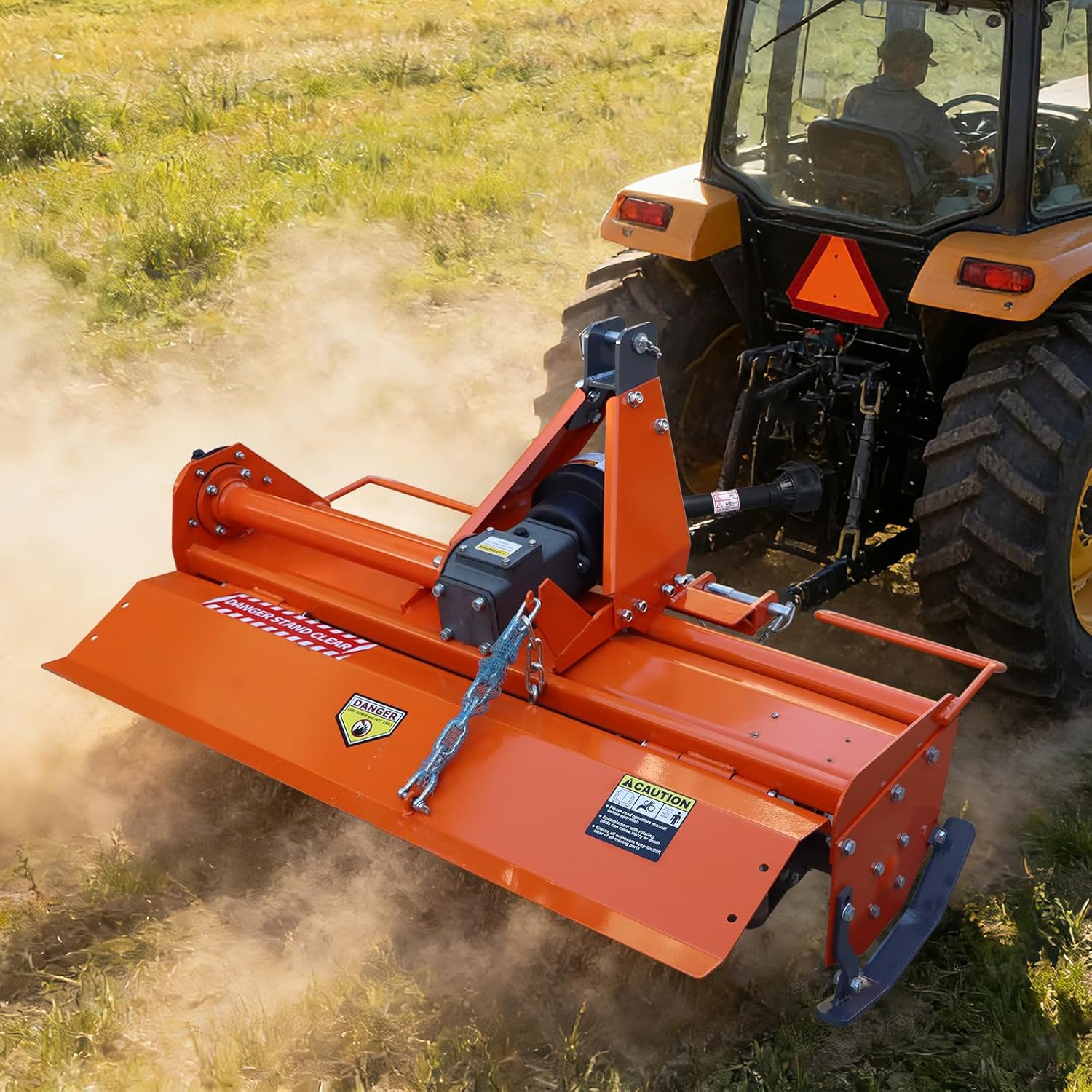
| Power Source | PTO (Power Take-Off) |
|---|---|
| Working Width | 53.55 inches |
| Max Working Depth | 4.7 inches |
| Recommended Tractor Power | 20–30 HP |
This COSTODIA rotary tiller is a tractor-mounted attachment designed for small farms, backyard plots, and seasonal seedbed work. It connects to a tractor PTO at the industry-standard 540 RPM and uses a one-piece carbon steel frame with L-shaped tines to break and mix soil across a 53.55 inch swath. Typical use is preparation of vegetable beds, grain plots, and row-crop strips on loam, sandy, or lightly compacted soils; the adjustable maximum depth of 4.7 inches lets you loosen surface layers without heavy excavation. Notable practical features include a standardized gearbox for steady torque and a lightweight frame that reduces draw on 20–30 HP tractors. Important limitations are that the PTO drive shaft is not included and the unit is intended for moderate soils and slopes rather than heavy clay or rocky fields. Assembly and safe hookup to the tractor require basic mechanical familiarity and a compatible right-rotating PTO shaft.
Best for: Gardeners and small-farm owners who want a robust, tractor-powered tiller that balances coverage and ease of use for seasonal seedbed preparation using a 20–30 HP compact tractor.
Less Ideal for: Large-scale operators needing heavy-duty tillage in compacted or rocky fields and users without a compatible PTO shaft or experience hooking up tractor implements.
- Wide 53.55 inch working width covers more ground per pass for quicker bed preparation
- Standard 540 RPM PTO gearbox provides steady torque compatible with common tractor outputs
- Adjustable maximum working depth of 4.7 inches for surface soil loosening and seedbed finishing
- One-piece carbon steel frame and L-shaped tine design suitable for loam, sandy, and lightly compacted soils
- PTO drive shaft is not included and must be sourced separately
- Not intended for very heavy clay, rocky ground, or steep slopes
Verdict: A practical PTO rotary tiller that gives balanced coverage and depth control for 20–30 HP compact tractors, ideal for efficient seasonal seedbed preparation.
Ag-Rite 60-Inch Gear-Driven PTO Rotary Tiller (60-TLR)

| Power Source | PTO Driven |
|---|---|
| Operation Mode | PTO Driven |
| Item Highlight | Heavy-Duty Gear-Driven PTO Tiller |
| Compatible Tractor Range | 25–40 HP |
This Ag-Rite 60-inch rotary tiller is built for horsepower and consistent field performance. It mounts on a Category 1 three-point hitch and connects to a standard 540 RPM PTO using the included PTO shaft, letting 25–40 HP tractors deliver steady, direct power to the gear-driven transmission. The unit’s 48 C-shaped tines on a 2.36-inch rotor tube bite through compacted soil to break, mix, and prepare seedbeds across a 59.09-inch working width so you cover more ground in fewer passes. The gear drive system favors durability and lower maintenance compared with chain-driven alternatives, and the heavy alloy-steel construction helps it stand up to tough conditions. Expect effective soil penetration and a cleaner finish on large gardens, food plots, and landscape preparation, though the tiller’s size and weight mean it is intended for tractors in the specified power range and for users comfortable with three-point implement handling. Safety precautions and correct PTO hookup are important before operating.
Best for: Farmers and serious gardeners who prioritize fast, durable tillage on medium-size plots and have a compatible Category 1 three-point hitch tractor and PTO to match.
Less Ideal for: Casual gardeners, small-tract owners, or anyone with tractors under 25 HP who need a lighter, more compact tiller solution.
- Wide 59.09-inch working width covers more ground per pass to reduce field time
- Gear-driven transmission offers consistent torque and lower maintenance than chain drives
- Includes PTO shaft for direct hookup to 540 RPM tractors
- 48 C-shaped tines on a 2.36-inch rotor tube provide strong soil penetration and mixing
- Heavy and large unit requires a compatible 25–40 HP tractor and careful handling during hookup
Verdict: Choose this heavy-duty, gear-driven 60-inch tiller when you need reliable, high-coverage soil preparation from a 25–40 HP PTO tractor.
Farmer-Helper FH-TL85 33" Adjustable Offset 3-Point Rotary Tiller

| Power Source | gasoline, corded_electric, manual, PTO Driven |
|---|---|
| Operation Mode | PTO Driven |
| Material Type | Alloy Steel |
| HP Required at the PTO | 12 – 35 hp |
The Farmer-Helper FH-TL85 is a 3-point rotary tiller built for subcompact tractors and small hobby farms, aimed at preparing seedbeds and breaking new ground. It mounts to a tractor PTO and uses forward rotation tines and a 33" working width with a 12" right offset so you avoid compacted tire tracks in the finished bed. Key features include a heavy oil-bath chain drive with automatic tensioning, an overrunning clutch gearbox to protect the tractor, a slip-clutch driveline for impact protection, and 16 hardened tool-steel L-shaped tines that are sharpenable and replaceable. In practice this means reliable tilling with reduced chain maintenance and a level finish controlled by an adjustable rear deflector and side runners for 2"–4" working depth. The tiller needs 12–35 hp at the PTO, so it is matched to subcompact and small utility tractors rather than compact or lawn tractors. Because it is PTO-driven and fairly heavy, expect routine tractor hookup, safety checks, and occasional tine or gearbox servicing rather than a plug-and-play experience.
Best for: Buyers who want a durable, serviceable tiller for a subcompact tractor to efficiently prepare beds on small farms, nurseries, or larger home gardens and value reduced maintenance and protective driveline features.
Less Ideal for: Casual gardeners who lack a compatible PTO tractor or prefer lightweight, walk-behind tillers should look elsewhere.
- Designed for subcompact tractors with a 33" working width and 12" right offset to avoid tire tracks
- Heavy oil-bath chain drive with automatic tension reduces chain wear and maintenance
- Slip-clutch driveline and overrunning clutch gearbox protect the tractor and tiller from shock loads
- Replaceable hardened tool-steel L-shaped tines allow sharpening and long-term serviceability
- Adjustable rear deflector and side runners let you control finish level and working depth
- Requires a tractor with 12–35 hp at the PTO so not suitable for riders without a compatible tractor
- At about 310 lb it is heavy and needs proper tractor lift capacity and careful handling
- No standalone power option; it cannot operate without a PTO-equipped tractor
Verdict: A robust, serviceable PTO tiller built for subcompact tractors that delivers durable seedbed preparation while minimizing chain and driveline maintenance.
ALMULOO 3-Point Cultivator for Category 1 Tractors with 6 Spring Shanks

| Brand Name | ALMULOO |
|---|---|
| Model Number | AI-3049 |
| Material Type | Alloy Steel |
| Power Source | Engine |
This ALMULOO 3‑point cultivator attaches to Category 1 three‑point hitches and is built to handle routine soil prep on gardens, small farms, and homesteads. It mounts directly to standard Cat‑1 tractors and uses six spring shanks to penetrate and loosen compacted topsoil, pull weeds, and mix in amendments before planting. The alloy steel, powder‑coated frame should resist bending and corrosion during normal use, and the included mounting hardware and straightforward installation make setup quick. Practical benefits include faster seedbed prep compared with hand tools and a durable design that stands up to rocky or compacted conditions. Important limitations are that it is a basic cultivator without powered tilling or adjustable working widths, so it is not intended to replace larger rotary tillers for deep tilling or large acreage work. Expect better results on gardens and small plots where you need a robust, simple implement to maintain soil structure and control weeds.
Best for: Buyers who need a sturdy, no‑frills cultivator to speed up soil preparation on gardens, small acreage, or homesteads and prefer a simple attachment they can install and maintain themselves.
Less Ideal for: Large‑scale farmers or anyone needing deep rotary tilling, variable working widths, or implements for high‑acreage continuous use should consider larger powered tillers or different category attachments.
- Category 1 three‑point fitment for direct attachment to standard small tractors
- Alloy steel, powder‑coated construction for durability and corrosion resistance
- Six spring shanks provide effective soil penetration and weed uprooting
- Includes mounting hardware and instructions for straightforward installation
- No adjustable working width or powered tilling — suited for surface cultivation rather than deep rotary tilling
- Limited to Category 1 tractors so not compatible with larger implements
Verdict: A practical, heavy‑duty Cat‑1 cultivator that gives budget‑minded owners a durable, easy‑to‑install tool to speed up soil prep on small gardens and homesteads.
MIVA 59" Rear-Mount Rotary Tiller for 25–30 HP Tractors

| Working Width | 58.7 inches |
|---|---|
| Tractor Power Range | 25 – 30 HP |
| PTO Input Speed | 540 rpm |
| Blades Count | 32 |
| Working Depth | 5 inches |
This MIVA 59-inch rotary tiller is built for reliable, wide-coverage tilling on hobby farms and large gardens using a Category 1 3-point hitch tractor. It mounts to a standard 540 RPM PTO and the universal driveline makes hookup straightforward. The tiller uses 32 replaceable L-shaped alloy-steel blades and a gear-driven transmission to break hardpacked soil to about 5 inches deep, producing a fine seedbed in fewer passes than narrower implements. Replaceable blades reduce downtime and make maintenance economical because you can change individual cutters rather than the whole rotor. The unit’s heavy construction and gearbox-driven design favor durability under repeated field use, though its mass and rear-mounted layout mean you need a properly sized tractor and a secure hitch setup. Expect straightforward seedbed prep, light field cultivation, and good performance on compacted soils, while transport and storage will require space and a suitable tractor for safe handling.
Best for: Buyers who prioritize a durable, no-nonsense implement for regular seedbed preparation on hobby farms or large gardens and who already own a compatible 25–30 HP Category 1 tractor.
Less Ideal for: Gardeners with subcompact tractors under 25 HP or those who need a lightweight, easily storable tiller for small urban plots should consider smaller models or walk-behind tillers instead.
- Wide 58.7 inch working width covers more ground per pass to save time
- Gear-driven transmission and heavy construction for durable field use
- Thirty-two replaceable L-shaped alloy-steel blades that are easy to service
- Compatible with standard 540 RPM PTO and Category 1 3-point hitch for simple hookup
- Requires a 25–30 HP tractor and adequate lifting capacity which limits use to appropriately sized equipment
- Large and heavy unit can be awkward to transport and store on small properties
Verdict: Choose this tiller if you want a rugged, wide-capacity implement that delivers durable, serviceable seedbed preparation with fewer passes on a 25–30 HP tractor.
Choosing the Right Tractor Garden Tiller: Key Factors to Consider
Tractor Size and PTO Power
Matching the tiller to your tractor's rated PTO horsepower is essential. A tiller that demands more torque than your tractor can supply will stall, leave unworked strips, and stress the driveline. Conversely, oversizing the tractor relative to the tiller wastes fuel and can make the implement harder to control.
Look at recommended PTO ranges rather than peak numbers. Consider how often you will work dense turf or compacted clay, which significantly raises power demand. If you plan to attach other implements on the three-point hitch, confirm hitch lift capacity and stability when the tiller is mounted.
Tine Shape, Orientation, and Material
Tine geometry determines how aggressively a tiller digs and how it handles rocks and roots. L-shaped or C-shaped tines generally offer strong break-up action and good self-cleaning, while flail or spiral configurations provide smoother finishes but may require more power.
Check the tine material and hardness treatment. Hardened steel or replaceable tine designs extend service life in abrasive soils. Also consider how easily tines can be replaced in the field and whether spares are commonly available.
Working Width and Sectional Design
The working width affects efficiency and tractor requirements. Wider tillers cover more ground per pass but need more power and a wider transport footprint. Narrower units are easier to maneuver around garden beds and fit through gates.
Some tillers use foldable or modular wings that let you change width for transport or match rows. Consider whether the tiller's width aligns with your garden layout, beds, and trailer or storage constraints.
Depth Adjustment and Control
Consistent depth control is crucial for repeatable seedbed preparation. Look for mechanical or hydraulic depth skids, adjustable skids, or rear rollers that provide reliable settings across the full width. Simple, positive stops are better than loose chain systems.
Depth control also affects rear tine engagement and soil pulverization. If you will alternate between rough breaking and fine finishing, a tiller with a wide and easily reachable adjustment range is more versatile.
Gearbox Robustness and Maintenance Access
The gearbox transfers PTO torque to the tines and is the most failure-prone component on many tillers. A heavy-duty gearbox with adequate lubrication capacity and serviceable seals reduces downtime. Check whether the gearbox has standard input spline sizes and whether replacement units or rebuild kits are available.
Ease of accessing grease points, shielded chains or belts, and replaceable wear plates matters for long-term ownership. Lower maintenance complexity keeps the implement in the field and reduces repair bills.
Transport, Storage, and Safety Features
Practical considerations like transport locks, shear bolts, and shielded PTO driveline safety affect day-to-day usability. A tiller that is difficult to secure for road moves or that lacks a clear safety shield will be harder to live with.
Also think about storage footprint and whether wings or tines fold for compact storage. Accessories such as counterweights, transport stands, and clear labeling on adjustment points add to overall safety and convenience.
Matching Tiller Width to Garden Layout
Choose a working width that aligns with bed spacing, gate clearances, and how you plan to move the tractor through the property. A width that is slightly wider than a bed can finish an edge faster, but it may need trimming near fences and fixed obstacles.
For long, open runs, a wider tiller reduces passes and saves time. For mixed-size plots with narrow access, a modular or narrower unit gives better control and reduces the risk of hitting plants.
- Wider units increase productivity but demand more PTO torque.
- Modular wings help adapt width for transport and tight spaces.
Preparing Soil Before Using a Tractor Tiller
Even a robust tractor tiller performs better when the soil is prepared. Remove large debris, mow heavy cover crops close to the ground, and, if possible, allow recently turned sod to dry a little to reduce clumping.
For very rocky or root-filled areas, consider an initial pass with lighter tools or manual clearing to avoid tine damage. Working wet, sticky soils often results in smearing rather than true fracturing, so time tillage for drier conditions when appropriate.
- Clear rocks and large roots to prevent tine damage.
- Avoid deep tilling in overly wet soils to reduce compaction.
Routine Maintenance to Extend Service Life
Regular maintenance keeps a tiller reliable and safe. Grease fittings, gearbox oil level checks, and inspection of tine bolts should be part of a pre- and post-season checklist.
Replace worn tines and guard plates promptly to maintain cutting efficiency and protect the gearbox from extra load. Keep the PTO shield intact and ensure shear pins or clutch systems are functioning so a sudden bind does not cause catastrophic damage.
- Check and change gearbox oil per manufacturer guidance.
- Keep a small kit of common wear parts and fasteners on hand.
Working Techniques for Different Soil Types
Adjust speed, depth, and pass count to match soil texture. In heavy clay, make multiple shallow passes rather than a single deep cut to avoid creating a compacted layer. In sandy or loose soils, you can usually increase depth in fewer passes.
Finish the seedbed with a light pass at higher PTO speed and shallower depth for a crumbly surface. For incorporating amendments, spread materials evenly and follow with one or two passes to mix rather than overworking the soil.
- Multiple shallow passes are gentler on heavy soils.
- Higher PTO speed and shallow depth help produce a fine finish.
Transport and Storage Best Practices
Secure the tiller properly for road moves using transport locks and lowered hitch positions where possible. Fold or detach wings as recommended to reduce width during transport and storage.
Store the tiller with tines off the ground or supported to prevent deformation. Cover exposed gearboxes and moving parts to protect from moisture and corrosion during the off-season.
- Use transport locks and clear hitch pins for safe movement.
- Support tines off the ground in long-term storage.
How We Chose the Best Tractor Garden Tiller
We limited the shortlist to tillers designed for tractor three-point hitches and PTO drives, excluding small walk-behind units and powered attachments that require custom fabrication. Each candidate was judged on several concrete, garden-relevant dimensions: power and PTO compatibility to ensure torque matches tractor output; tine design and durability to handle rocky or compacted soils; width and modularity so you can match tilling swath to garden layout; depth control and adjustability for consistent seedbed preparation; and build quality related to gearbox robustness and wear parts availability. We prioritized attachments with straightforward hitch geometry and common PTO spline sizes to reduce installation issues. Units with excessively fragile gearboxes, limited spare-part support, or unclear depth control systems were excluded. The emphasis throughout was on real-world garden performance rather than spec-sheet numbers alone, and on gear that will tolerate repeated use across clay, loam, and mixed soils.
FAQ
What tractor horsepower do I need for a standard garden tiller?
It depends on the tiller width and soil type, but many garden tillers work well with moderate PTO ranges. Expect higher horsepower needs for wider units and for breaking compacted clay. Refer to specified PTO ranges and match to the lower end for heavy soils.
Can I use a tractor tiller on rocky ground?
You can, but take precautions. Remove large rocks when possible and use tines designed for impact resistance. Expect more wear and plan for more frequent tine replacement or maintenance if rocks are common.
How deep should I till for seedbed preparation?
For most garden seedbeds, shallow tilling of 3 to 6 inches over one or two passes produces a fine finish without disturbing deep soil layers. Heavier initial passes up to 8 inches may be used for sod breaking but follow with shallower passes to refine the seedbed.
How often should I service the gearbox and tines?
Check grease points and fasteners before each season and after heavy jobs. Gearbox oil should be inspected periodically and changed according to the implement's maintenance schedule. Replace or rotate tines as they show visible wear or loss of cutting effectiveness.
Is it better to do multiple shallow passes or one deep pass?
Multiple shallow passes are usually better, especially in heavy or compacted soils. They reduce the risk of smearing, provide more uniform breakup, and are easier on the tractor's driveline.
Final Verdict
When choosing a Tractor Garden Tiller, prioritize matching PTO compatibility and tine durability to your soil conditions and tractor capacity. Balance working width with maneuverability so the implement fits your garden layout and storage constraints. Expect tradeoffs between aggressive breakup and finish quality. Focus on depth control, a robust gearbox, and ease of maintenance to get the longest service life. With those priorities in mind, you can confidently select a tiller that handles the tasks you need without unnecessary strain on your tractor.
