

Note: This article contains affiliate links. If you click on these links and make a purchase, I may earn a small commission at no extra cost to you. This helps support my research and content. Read my full affiliate disclosure here.
If you share your home with cats, dogs, or other companion animals, choosing the right bug spray matters more than simply killing insects. Many indoor insecticides release residues or strong odors that can irritate sensitive noses, contaminate bedding, or be tracked around the house. This guide focuses on options formulated and recommended for homes with pets, weighing how they perform in real indoor situations. We shortlisted seven top-rated bug sprays that balance effectiveness with pet safety and ease of use. Below we explain our evaluation criteria, what to consider before buying, and practical tips for using any product safely around animals.
Top Picks at a Glance
| Best Overall The best all-around choice for most situations | Mighty Mint Peppermint Oil Insect Repellent Spray, 16 oz |  |
| Best Quality Built to a higher standard if you want something more solid | EcoVenger Bed Bug Killer Spray, Plant-Based 16 oz (EcoRaider) |  |
| Best Value The sweet spot between price and what you get | Safer Home Indoor Pest Control Multi-Insect Spray, 24 fl oz |  |
| Best Budget The cheapest option that still gets the job done reliably | STEM Plant-Based Bug Spray for Ants, Roaches and Flies, 12 fl oz |  |
| Highest Rated A top-rated pick with lots of positive feedback | Lavanova Lemongrass & Geraniol Spider and Insect Repellent Spray, 13.5 oz |  |
| Best Seller A high-volume bestseller chosen again and again | PetArmor Home & Carpet Spray, 16 oz — 7-Month Flea and Tick Control |  |
Mighty Mint Peppermint Oil Insect Repellent Spray, 16 oz
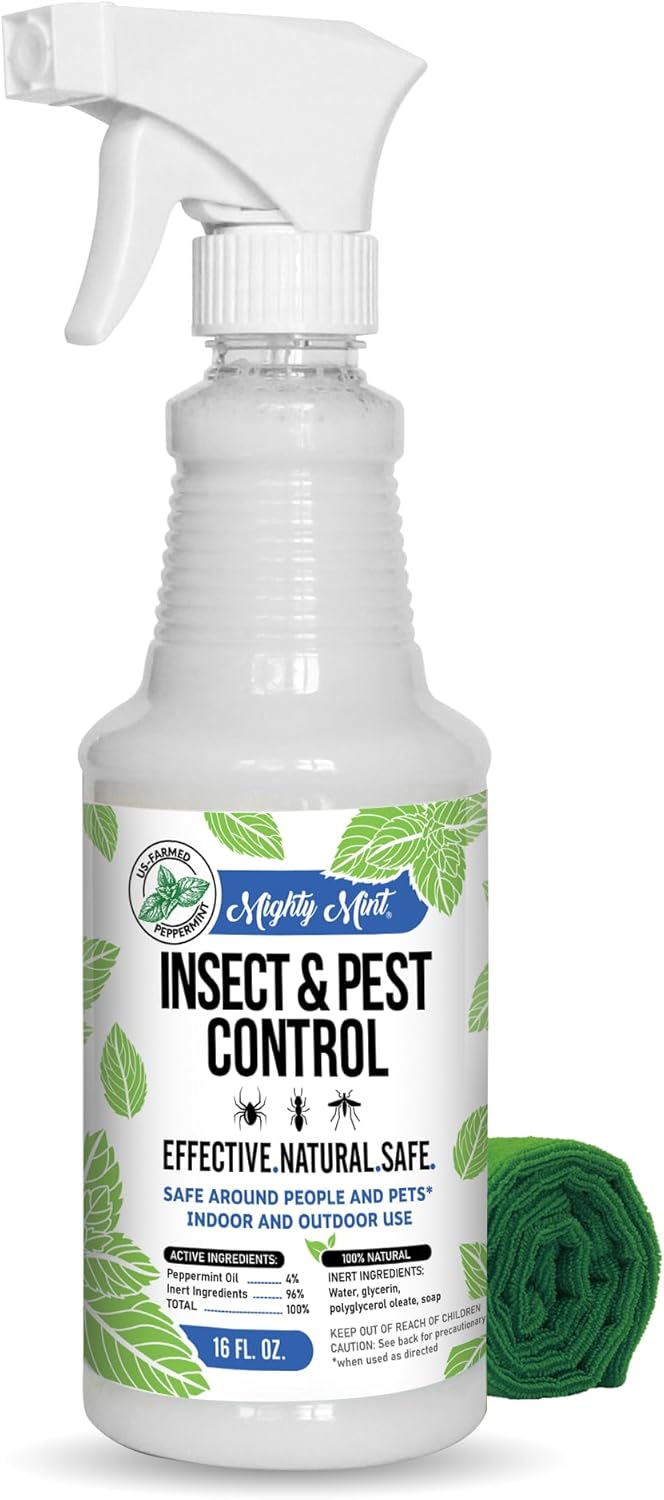
| Ingredients | Water, Glycerine, Polyglycerol oleate, Soap, Peppermint oil |
|---|---|
| Use Areas | Indoor / Outdoor |
| Size | 16 oz |
Mighty Mint is a plant-based, ready-to-use spray that uses concentrated peppermint oil to repel a broad range of household and patio pests. You apply it directly to problem areas such as baseboards, entryways, patios and around outdoor seating; the manufacturer recommends shaking and spraying until surfaces are covered and repeating applications two or more times per week for best results. Notable features include a peppermint-only scent profile, a formulation that avoids synthetic fragrances and the convenience of a 16 oz spray bottle for targeted spot treatments. Practical benefits are that it is safe to use around people and pets when dry and does not leave obvious stains on most surfaces, and the scent can make treated areas smell fresher than chemical alternatives. Important limitations are that it is a repellent rather than a pesticide so it works by discouraging pests rather than killing them, effectiveness depends on regular reapplication and it should not be applied when pollinators are present or to skin or food-contact surfaces.
Best for: Buyers who prioritize natural, low-toxicity solutions and want a targeted spray to reduce insects around patios and entryways while keeping family and pets in mind.
Less Ideal for: Anyone needing a one-time extermination or long-term residual pesticide for severe infestations should consider professional treatments or products formulated to kill pests rather than repel them.
- Plant-based peppermint formula that avoids synthetic fragrances
- Ready-to-use spray for quick, targeted indoor and outdoor applications
- Safe for people and pets when used as directed and allowed to dry
- Nonstaining on most surfaces and leaves a fresh mint scent
- Repels rather than kills insects so regular reapplication is needed to maintain protection
- Strong peppermint concentration may bother scent-sensitive individuals and requires keeping children and pets away until dry
Verdict: Choose Mighty Mint when you want a pet-friendly, plant-based spray to reduce patio and entryway insects with a fresh peppermint scent.
EcoVenger Bed Bug Killer Spray, Plant-Based 16 oz (EcoRaider)

| Volume | 16 oz |
|---|---|
| Active ingredients | Geraniol, Cedarwood oil, Sodium Lauryl Sulfate |
| Residual protection | Up to 14 days |
| Target pests | Bed bugs, eggs, nymphs, resistant strains |
EcoVenger Bed Bug Killer is a ready-to-use, plant-derived spray designed to eliminate all life stages of bed bugs, including pesticide-resistant adults and eggs. In typical use you shake the bottle, spray mattress seams, box springs, bed frames, cracks, and crevices, then repeat weekly until activity stops. The formula lists botanical actives such as geraniol and cedarwood oil and claims rapid knockdown with proven ovicidal activity; independent field studies cited by the brand report high efficacy and roughly two weeks of dry residual protection. Practical benefits include a non-staining, mild woody scent and a safety profile that allows use around bedding and in occupied spaces where children and pets are present. Important limitations are that it is a topical spray only and may require repeated treatments for heavy infestations or hidden harborage sites; nozzle parts are noted as delicate and could need replacement if mishandled. For best results pair targeted spray applications with laundering, vacuuming, and monitoring to break infestations completely.
Best for: Buyers who prioritize proven, high-efficacy solutions that are safe to use in occupied bedrooms and sensitive settings and who plan to apply focused, repeated treatments where bed bugs hide.
Less Ideal for: Users seeking a single-treatment, whole-house remediation service or those who prefer professional fumigation or non-spray control methods.
- Plant-based formula effective against adults, nymphs, and eggs according to studies
- Provides up to two weeks of residual protection after drying
- Safe for use on mattresses and around children and pets when used as directed
- Mild, non-staining formula with a pleasant natural scent
- Not a whole-home solution; repeated spot treatments and integrated housekeeping are needed for severe infestations
- Spray nozzle contains delicate parts that may break with rough handling
Verdict: Choose EcoVenger when you want a research-backed, plant-based spray that kills all bed bug life stages and gives up to two weeks of residual protection for in-room treatments.
Safer Home Indoor Pest Control Multi-Insect Spray, 24 fl oz

| Item model number | SH110 |
|---|---|
| Ingredients | Clove Oil 0.05%, Cottonseed Oil 0.05%, Inert Ingredients 99.90% |
| Volume | 24 fl oz |
| Manufacturer | Woodstream Corporation |
Safer Home Indoor Pest Control Spray is a ready-to-use contact insecticide formulated with natural oils like clove and cottonseed to tackle ants, roaches, flies, spiders, fleas, mosquitoes, ticks, wasps and many other indoor pests. You use it by switching the nozzle between a spray setting for general areas and a stream setting for crack-and-crevice work, holding the bottle about 8 to 12 inches from the target. The formula claims fast knockdown, killing ants, flies, and roaches within minutes, and it dries without leaving a residue so no wiping is required. Its main practical benefit is offering a broad-spectrum, easy application for spot treatments around kitchens, baseboards, windows, doors and crawl spaces while relying on naturally derived active ingredients that are presented as safer for homes with children and pets when directions are followed. The limitations are that it is a contact killer rather than a residual barrier product and effectiveness against heavy infestations may be slower than synthetic insecticides, so repeated or complementary measures may be needed for persistent problems.
Best for: Households that prioritize practical, lower-toxicity solutions for spot-treating common indoor pests and want an easy, no-mess spray safe for use around kids and pets when directions are followed.
Less Ideal for: Homes facing severe or persistent infestations that need long-lasting residual control or professional-strength treatments should consider stronger or specialized options.
- Made with naturally derived oils (clove oil and cottonseed oil) instead of harsh synthetic chemicals
- Ready-to-use spray with adjustable nozzle for both general spray and crack-and-crevice stream
- Fast contact kill for common pests with no residue to wipe up after application
- Broad-spectrum label covering many common indoor insects including ants, roaches, flies, spiders, fleas and mosquitoes
- Contact-only action offers limited residual protection, so repeat applications may be necessary
- May be less effective than conventional synthetic insecticides on heavy infestations
Verdict: A convenient, low-toxicity indoor spray for quick spot control of common household pests in pet-friendly homes.
STEM Plant-Based Bug Spray for Ants, Roaches and Flies, 12 fl oz

| Active ingredients | Geraniol 6.2%, Lemongrass Oil 0.5% |
|---|---|
| Other ingredients | White Mineral Oil, Isopropyl Myristate, (+)-Ethyl Lactate 93.9% |
| Form | Trigger spray |
| Use | Indoor and outdoor spot treatments |
This STEM bug spray is a trigger-spray insecticide formulated with plant-derived actives such as geraniol and lemongrass oil to kill ants, roaches and flies on contact. It is intended for targeted indoor and outdoor spot treatments: shake, hold about a foot from the insect and spray directly on or where insects congregate. The product’s botanical formula and absence of added dyes or strong chemical fragrances make it a reasonable choice for homes where users prefer less synthetic-smelling options. The trigger bottle gives control for spot application and repeated short bursts, and the directions note it is oil-based so spills should be cleaned promptly. Important limitations are that it is not for spraying on people, pets or plants and requires direct hits for best effect rather than long-range fogging. For persistent infestations you may need supplemental measures because this is designed for surface and contact kills rather than residual baiting or area-wide control.
Best for: Buyers who want an affordable, low-odor botanical spray for quick spot control of common household pests and who prioritize a simple, easy-to-use trigger bottle for targeted treatments.
Less Ideal for: People facing large or hidden infestations who need long-lasting residual control or bait-style solutions should consider professional products or integrated pest control approaches.
- Plant-based active ingredients (geraniol and lemongrass oil) that reduce strong chemical odor
- Trigger-spray bottle for controlled, targeted application
- Labeled for both indoor and outdoor spot treatments when used as directed
- No added dye or fragrance listed, which minimizes residue and scent
- Oil-based formula can leave slippery residue if spilled
- Requires direct spraying of insects for effectiveness and offers limited residual control
- Not safe to spray on people, pets or plants
Verdict: A budget-friendly, low-odor plant-based trigger spray that provides quick, targeted kills of ants, roaches and flies for everyday spot treatments.
Lavanova Lemongrass & Geraniol Spider and Insect Repellent Spray, 13.5 oz

| Ingredients | lemongrass oil, geraniol |
|---|---|
| Net weight | 13.5 OZ |
| Use | Indoor and outdoor |
This ready-to-use Lavanova spray uses lemongrass oil and geraniol to repel spiders, ants, roaches, and similar pests around entryways, baseboards, garages and patios. You apply it as a targeted spray to problem spots such as doors, windows, corners and storage areas; the label recommends using it wherever spiders tend to appear. The formula is plant-based and carries a fresh lemongrass scent, so it is more pleasant than solvent-heavy aerosols and is marketed as safe to use around dogs, cats and kids when directions are followed. Practical advantages include simple spray application, indoor and outdoor versatility, and no-staining claims for common surfaces. Expect the effect to be preventative rather than an instant kill, so repeat applications in high-traffic infestation zones will be needed. If you prioritize low-toxicity, easy spot treatment for everyday pest control in a pet household, this spray is a sensible, user-friendly option.
Best for: Households that want a gentler, plant-based repellent they can use regularly around pets and family to discourage spiders and common household insects.
Less Ideal for: People facing an active, heavy infestation who need a fast-acting insecticide or professional-grade elimination methods.
- Plant-based active ingredients (lemongrass oil and geraniol) for a lower-toxicity option
- Ready-to-use spray allows targeted application around doors, windows, baseboards and patios
- Formulated for indoor and outdoor use so one product covers multiple problem areas
- Marketed as safe to use around dogs, cats and children when used as directed
- Works primarily as a repellent and preventative rather than an immediate insecticide
- Effectiveness may require frequent reapplication in heavy infestation areas
Verdict: Choose this spray if you want a pet-friendly, plant-based repellent for routine indoor and outdoor prevention of spiders and common household bugs.
PetArmor Home & Carpet Spray, 16 oz — 7-Month Flea and Tick Control

| Unit Count | 16 Ounce |
|---|---|
| Item Form | Spray |
| Target Species | Cat |
| Volume | 16 fluid ounces |
| Active Ingredients | Contains pyrethroid, permethrin-type, and pyriproxyfen (0.10%) |
PetArmor Home & Carpet Spray is a household spray designed to reach fleas and related pests hiding in carpets, rugs, furniture, drapes, closets, and pet bedding. You use it after vacuuming: shake the bottle and apply in a sweeping motion over the affected area, then allow about two hours to dry. The formula lists an adulticide plus an insect growth regulator so it kills fleas and ticks and helps prevent flea eggs and larvae from developing, which is why the label claims up to seven months of residual protection and coverage up to roughly 500 square feet. Practical benefits include odor-free application and ability to treat multiple surfaces without leaving visible residue. Important limitations are that it is intended for home surfaces rather than direct application to pets and it requires careful vacuum disposal and drying time before re-entry. For heavy or established infestations you may need repeated treatments or to combine this with on-pet flea control for full effectiveness.
Best for: Buyers who prioritize efficient, long‑lasting home flea control and want a surface treatment that complements on‑pet flea products to reduce household reinfestation.
Less Ideal for: People looking for a treatment to spray directly on pets or those who need an immediate one‑time fix for a heavy infestation without follow-up treatments.
- Kills adult fleas and ticks and also targets flea eggs and larvae through an insect growth regulator
- Up to seven months of residual protection on treated surfaces
- Covers multiple household surfaces including carpets, rugs, upholstery, drapes, and pet bedding
- No noticeable residue or strong odor after drying
- Not formulated for direct use on animals so must be used alongside pet flea treatments
- Requires thorough vacuuming and disposal of vacuum bag before application to be most effective
- May need repeat treatments or professional help for severe infestations
Verdict: A practical, long‑lasting surface spray to reduce household flea and tick populations when used alongside pet flea treatments.
Choosing the Right Bug Spray for House with Pets: Key Factors to Consider
Pet Safety Labels and Re-Entry Guidance
Look for clear wording about use around pets and recommended re-entry intervals. Products that specify how long to keep animals away after application reduce guesswork and help you plan safe treatment. Re-entry time matters because inhalation and skin contact risks change over the course of drying and residue formation.
Also consider whether the product gives specific instructions for different types of animals. Cats metabolize some chemicals differently than dogs, and small mammals can be more sensitive to inhaled particles. A label that addresses common household pets is a strong indicator the product designers considered companion-animal safety.
Active Ingredients and Toxicity
Examine what the spray uses to kill or repel insects. Some products rely on synthetic insecticides with established efficacy, while others use botanical or lower-toxicity actives intended to minimize risk to mammals. Knowing the ingredient class helps you balance speed of knockdown against potential harm to pets.
Consider how an ingredient behaves when it contacts fur or is ingested accidentally during grooming. Even low-toxicity botanicals can be problematic in concentrated form. If your pet has pre-existing health issues, consult a veterinarian before using treatments with systemic or potent nervous-system-active ingredients.
Application Method and Placement
Where and how you apply a spray changes pet exposure. Trigger-spray bottles and foam applicators allow targeted treatment to baseboards, cracks, and furniture seams, which keeps active material off open surfaces where pets lie or play. Aerosol mists and foggers create airborne particles that settle on surfaces and can be inhaled by animals.
Also think about reach and control. A bottle with a narrow spray or directional nozzle helps you treat pest hotspots and avoid bedding, food bowls, and litter areas. Ease of rinsing or wiping treated surfaces after the product dries is another practical consideration for pet safety.
Residual Activity and Surface Persistence
Residual sprays that remain active on surfaces offer longer protection but increase the chance pets will contact or ingest residues. For high-traffic pet areas, you may prefer shorter-residual options that kill on contact but allow quicker safe re-entry. Where long residual protection is needed, choose products with established safe-contact profiles and follow label instructions for restricted areas.
Consider cleaning routines and whether treated furniture or floors will need to be wiped before pets are allowed back. Some products break down quickly under light and washing, reducing long-term exposure, while others are designed to persist through cleaning.
Target Pest and Indoor Effectiveness
Different sprays are optimized for biting flies, mosquitoes, fleas, ants, or pantry pests. Choose an option proven against the pest you actually see in your home. A formula that lists the target insects and typical control timeline lets you set expectations for follow-up treatments and monitoring.
Indoor effectiveness also depends on how well the product reaches hiding spots like carpet edges, baseboards, and upholstery seams. Products that include guidance for integrated use with traps or sanitation measures will be more useful when dealing with established infestations.
Scent, Residual Smell, and Pet Sensitivity
Strong fragrances can be very aversive or irritating to animal noses. Even if an active ingredient is low-toxicity, an overpowering scent can cause sneezing, drooling, or stress in pets. Choose products with low odor or that use mild, natural fragrances when scent sensitivity is a concern.
Think about the size of your living space and ventilation. In small apartments or poorly ventilated rooms, a low-odor formulation or careful targeted application will reduce the chance of lingering smells that bother pets.
Preparing Your Home Before Treatment
Clear pet bedding, bowls, and toys from the treatment area and move animals to a different room or outside during application and the specified re-entry time. Vacuuming first removes dust and debris that can hide insects and improves spray contact with target surfaces.
Open windows for a short, controlled ventilation period if the label allows. After the product dries and the recommended re-entry interval has passed, wipe any surfaces your pet frequently contacts if the label recommends cleaning.
- Remove or cover pet food and water dishes
- Relocate animals and provide a safe waiting area
- Vacuum carpets and upholstery before applying
- Follow label drying and re-entry instructions exactly
Using Sprays with Young, Senior, or Sick Pets
Young and elderly animals often have weaker detoxification systems and can react differently to chemicals. If a pet is pregnant, nursing, very young, elderly, or has chronic illness, consult your veterinarian before any insecticide use.
Plan treatments during times when vulnerable pets can be kept well away from treated rooms for longer than the minimum label interval. After treatment, monitor animals for unusual behavior such as lethargy, vomiting, excessive drooling, or respiratory distress and seek veterinary attention if symptoms occur.
- Prefer spot treatments over whole-room fogging
- Increase ventilation and extend re-entry time when practical
- Have fresh water and a calm recovery space ready for pets
Combining Spray Use with Nonchemical Methods
Integrated pest strategies reduce reliance on chemical sprays and lower ongoing exposure risk for pets. Use physical barriers, sticky traps, and sanitation to reduce pest food and shelter. Sealing cracks, fixing screens, and storing food in airtight containers are effective complements to targeted sprays.
For fleas and ticks, regular grooming and vacuuming disrupt life cycles. Combining mechanical controls with a targeted, pet-safe spray for spots of activity often gives faster, longer-lasting results than repeated broad spraying.
- Seal entry points to prevent indoor reinfestation
- Use traps in non-pet-accessible zones
- Maintain cleanliness to reduce pest attractants
Spot Treatment Techniques That Minimize Pet Exposure
Focus spray application on baseboards, cracks, crevices, and under furniture where pests hide, rather than broad surface spraying. Applying products to tight spaces reduces the amount of residue pets can contact on open floors and upholstery.
Allow treated areas to dry fully and follow any recommended wiping or cleaning steps before returning pets. For elevated surfaces like curtains or high furniture, consider dusting or vacuuming instead of spraying when possible.
- Target seams and edges rather than open floor areas
- Use applicators that deliver a controlled stream, not a fine mist
- Wipe or wash surfaces pets lick after the drying period if suggested
When to Call a Professional
If you face a heavy or persistent infestation that requires whole-house treatments, a licensed professional can offer solutions designed to protect pets, such as targeted interior treatments and professional-grade products applied with safety protocols. Professionals can advise on re-entry intervals and containment to limit pet exposure.
Ask any technician about their protocols for pet safety, whether they will remove animals during treatment, and what post-treatment steps they recommend for cleaning and ventilation.
- Consider professional help for large-scale or persistent problems
- Confirm pet-safe procedures before service begins
- Request written instructions for post-treatment pet re-entry and cleaning
How We Chose the Best Bug Spray for House with Pets
We evaluated products based on criteria practical for pet-owning households. Key evaluation points included the spray's labelled pet safety and recommended re-entry time, the active ingredient profile and whether it includes low-toxicity or botanical actives, demonstrated effectiveness against common indoor pests, and the method of application that reduces pet exposure. We required clear manufacturer guidance for use around cats, dogs, and small mammals, and we favored products with minimal residual odor and limited dust or fine spray drift. Long-term residue and surface persistence were considered because pets often lick floors and furniture. We excluded sprays whose labels lacked specific pet guidance, products intended only for outdoor use, and aerosol foggers that present high inhalation risk for animals. In short, we filtered for options with explicit pet-focused directions, measurable insect control, practical indoor application methods, and ingredient profiles that reduce acute risk to companion animals. Those dimensions align with the scoring metrics used in this guide.
FAQ
Are botanical sprays always safer for pets than synthetic insecticides?
Not always. Botanical actives can be lower in mammalian toxicity, but concentrated botanical formulations or certain essential oils can irritate or be toxic to some animals. Always follow label directions and consult a veterinarian if you are unsure about a specific ingredient.
How long should I keep my pet out of a room after applying a bug spray?
Follow the product's labeled re-entry time because it varies by formulation. Many pet-safe sprays recommend keeping animals out until the product dries, while others specify a longer interval. If in doubt, extend the time and ventilate the room.
Can I spray bedding or carpets where my pet sleeps?
Avoid spraying pet bedding directly. Instead, treat baseboards, cracks, and areas adjacent to bedding, then wash bedding separately if label instructions allow. Direct treatment of bedding increases ingestion and contact risk.
Will using a pet-safe spray eliminate fleas or ticks entirely?
A single spray rarely eliminates a full flea or tick infestation. Break the pest life cycle with combined steps: vacuuming, treating pet resting areas, grooming pets with veterinarian-recommended products, and repeated targeted treatments according to the label.
How can I reduce odor and airborne particles during application?
Choose low-odor formulations, use a targeted applicator instead of broad misting, and ventilate per label guidance. Keeping pets out until the product dries and using directional sprays reduces airborne exposure.
Final Verdict
When selecting an indoor bug spray for a home with pets, prioritize clear pet-safety labeling, a suitable active ingredient profile, and an application method that minimizes contact with animals. Balance the need for residual control against the likelihood pets will come into contact with treated surfaces. Decide based on the pest you need to control, your household composition, and how much isolation you can provide during and after treatment. Following label instructions and combining sprays with nonchemical measures will deliver the best results while protecting your animals.
