

Note: This article contains affiliate links. If you click on these links and make a purchase, I may earn a small commission at no extra cost to you. This helps support my research and content. Read my full affiliate disclosure here.
Removing sod is physically demanding and the right shovel makes the job faster, cleaner, and easier on your back. Whether you are renovating a lawn, installing a patio, or clearing an area for planting, a purpose-built garden shovel for removing sod changes how efficiently you can slice, lift, and roll sections of turf. This guide covers six top options shortlisted for everyday gardeners and landscapers. We evaluate blade strength, handle ergonomics, soil penetration, and overall durability to help you pick the tool best suited to your yard and technique. Read on to see which shovel features align with your turf removal project.
Top Picks at a Glance
| Best Overall The best all-around choice for most situations | Lesche Digging Tool with Serrated Edge and Belt Sheath (Left-Handed) |  |
| Best Quality Built to a higher standard if you want something more solid | Bully Tools Sod Lifter with Fiberglass D-Grip Handle |  |
| Best Value The sweet spot between price and what you get | Suchtale Flat Shovel Floor Scraper with 11-Inch Blade and Long Handle |  |
| Best Budget The cheapest option that still gets the job done reliably | BlumeTrec Garden Flat Shovel with Adjustable 60" Handle |  |
| Highest Rated A top-rated pick with lots of positive feedback | Root Slayer RS225 Long-Handle Serrated Garden Shovel |  |
| Most Popular A crowd favorite that many people choose with confidence | Root Slayer Garden Shovel with Serrated V-Tip |  |
Lesche Digging Tool with Serrated Edge and Belt Sheath (Left-Handed)

| Blade Length | 7 inches |
|---|---|
| Material Type | Chrome-Moly steel |
| Included Components | Cordura belt sheath |
This Lesche digging tool is a short, rugged hand shovel designed for quick plug cutting and light sod removal. The 7-inch blade combines a straight cutting edge and a serrated edge intended to saw through roots and tough grass while the comfortable rubber grip and hand guard make repeated use less tiring. Its short overall length makes it easy to control for precise work in nursery beds, landscaping edges, and when removing small sections of sod. The chrome-moly steel blade is durable and holds up to scraping in compacted soil, and the included Cordura belt sheath keeps the tool handy on the job. Because it is a hand tool with a 12-inch overall length, it is best for small-scale sod removal, spot repairs, and working where a long-handled shovel would be awkward. It will not replace a full-size sod cutter for removing wide strips or large areas, and users should expect more bending and kneeling compared with long-handled options.
Best for: Gardeners who need a durable, easy-to-control hand tool for spot sod removal, nursery work, and landscape edging and who value precision and portability over speed on large areas.
Less Ideal for: Homeowners planning to remove large lawns or continuous strips of sod who should choose a long-handled shovel or a mechanized sod cutter instead.
- Double-edged blade with serrated side for cutting roots and straight edge for slicing sod plugs
- Durable chrome-moly steel construction suitable for scraping and digging in compacted soil
- Comfortable rubber grip with hand guard reduces hand fatigue during repeated use
- Includes Cordura belt sheath for convenient carry and quick access on the job
- Short overall length makes it inefficient for removing large swaths of sod or deep digging
Verdict: A compact, tough hand digging tool that makes precise plug cutting and small-area sod removal faster and more controllable than a standard trowel.
Bully Tools Sod Lifter with Fiberglass D-Grip Handle

| Blade gauge | 12 |
|---|---|
| Blade material | Alloy Steel |
| Handle material | Fiberglass |
| Grip type | D-Grip |
The Bully Tools sod lifter is built for serious turf work: a thick 12-gauge steel blade and overwelded connection let you lever heavy sod without the blade bending, and the angled shaft is shaped to slide cleanly between grass and soil so you get flatter cuts and less damage to the turf. It assembles quickly and the triple-wall fiberglass handle with a D-shaped polypropylene grip reduces hand fatigue while resisting breakage. In practice you cut the sod into sections, press the blade in with your foot, then tilt the handle to lift the grass layer free — that workflow saves time and effort compared with using a standard shovel or spade. The tool is noticeably robust and feels commercial-grade, and the fiberglass handle keeps overall weight manageable for repeated use. The primary limitations are its single, fixed blade shape which is purpose-built for sod rather than general digging, and the 52 inch length requires storage space and may feel long for users under 5 feet tall. For performance-focused gardeners and landscapers this is a durable, no-nonsense sod lifter that stands up to frequent use.
Best for: Gardeners and landscapers who prioritize durable, high-performance tools for repeated sod removal and want a tool that reduces back and hand strain during heavy turf work.
Less Ideal for: Casual gardeners who need a multi-purpose digging tool or people with very limited storage space should consider a different, more compact shovel.
- 12-gauge steel blade and overwelded connection resist bending during heavy leverage
- Angled shaft and blade profile separate turf from soil for cleaner sod lifts
- Triple-wall fiberglass handle offers strength while keeping weight manageable
- D-shaped polypropylene grip improves leverage and reduces hand fatigue
- Designed specifically for sod removal so it is less versatile for other digging tasks
- 52-inch length may be awkward to store and long for shorter users
Verdict: Pick this sod lifter if you want a rugged, performance-focused tool that cleanly separates and removes turf with minimal strain.
Suchtale Flat Shovel Floor Scraper with 11-Inch Blade and Long Handle

| Blade Material | Alloy Steel |
|---|---|
| Handle Material | Alloy Steel |
| Grip Type | Ergonomic |
| Item Highlight | 11-Inch Garden Cleaning Shovel with Foot Step |
This Suchtale flat shovel is built around an 11-inch alloy-steel blade and a long adjustable handle to make scraping weeds, moss, dried mud, and thin layers of sod easier without constant bending. The blade has a foot-step on top so you can drive it into turf or compacted debris for cutting and lifting, and the connection is reinforced with multiple rivets and screws for stability. The ergonomic grip and the 54-inch adjustable handle help keep your back straighter during edging and sidewalk scraping, and the alloy-steel edge is tough enough for light snow and thin ice. Assembly is straightforward and the handle breaks down for compact storage. It is not intended for heavy-duty prying or cutting through deeply rooted turf like a full sod cutter, so expect limited performance on very thick sod or rocky ground. For routine yard cleanup, seam scraping, and small-scale sod removal, it offers a practical, durable option.
Best for: Buyers who want a practical, durable hand tool to speed up routine yard cleanup, edging, and small-scale sod lifting while minimizing back strain.
Less Ideal for: Landscapers or homeowners who need a machine-grade sod cutter for removing large areas of thick, deeply rooted turf should choose a powered or purpose-built sod removal tool instead.
- Wide 11-inch alloy-steel blade for efficient scraping and edging
- Foot-step leverage and reinforced blade connection for easier penetration into turf and compacted debris
- Adjustable long handle reduces bending and improves ergonomics during use
- Alloy steel construction across blade and handle for durability
- Compact disassembly for easier storage
- Not designed for heavy-duty sod cutting or prying in rocky soil
- May struggle with very thick roots or deeply compacted turf
Verdict: A sturdy, ergonomically designed floor scraper that speeds small-scale sod lifting, edging, and seam scraping while reducing back strain.
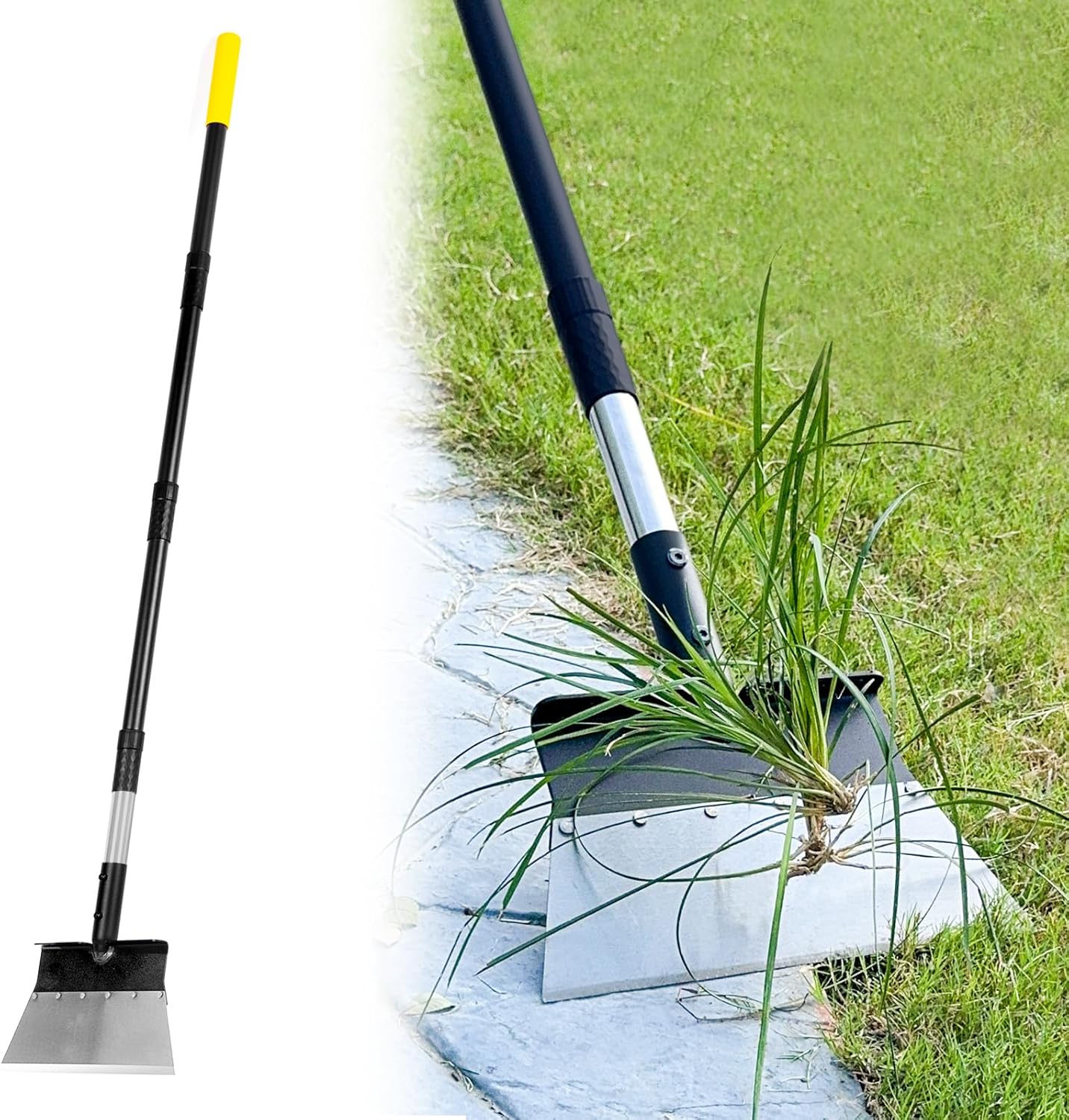
BlumeTrec Garden Flat Shovel with Adjustable 60" Handle
| Blade Material | Metal |
|---|---|
| Handle Material | Stainless Steel |
| Gauge | 1.25 |
| Grip Type | Steel |
This BlumeTrec garden flat shovel is built around an extra-wide 11-inch metal blade and a 60-inch adjustable stainless steel handle to tackle scraping, weeding, and surface sod removal without swapping tools. The reinforced blade base with six rivets and two heavy-duty screws keeps the head stable while the built-in foot pedal helps drive the blade into compacted soil or under sod edges. The wide, sharp flat edge covers more surface per stroke, so you can cut and lift strips of shallow sod, scrape moss from patios, or clear compacted debris efficiently. The handle detaches for storage and the metal is treated to resist rust for year-round outdoor use. Expect limitations when trying to cut very deep or rooted sod because the flat blade and lack of a pointed tip are optimized for surface work rather than deep digging. Assembly is straightforward and the tool favors broad scraping and edging tasks over precision trenching.
Best for: Practical gardeners and homeowners who want a single, affordable tool to strip shallow sod, edge beds, and scrape hard surfaces without buying multiple specialty tools.
Less Ideal for: If you regularly need to remove deep, heavily rooted turf or dig trenches, a pointed digging spade or dedicated sod cutter would be a better choice.
- Extra-wide 11-inch blade covers more surface per stroke for faster sod stripping and scraping
- Reinforced blade base with six rivets and two screws for stable, durable head attachment
- Built-in foot pedal lets you apply more downward force without bending over
- 60-inch adjustable stainless steel handle accommodates different user heights and disassembles for compact storage
- Flat blade design is not ideal for cutting very deep or heavily rooted sod
- All-metal construction may be heavier than composite-handled alternatives for extended use
Verdict: A tough, budget-friendly flat shovel that speeds up surface sod stripping and scraping tasks with a wide blade and adjustable handle.
Root Slayer RS225 Long-Handle Serrated Garden Shovel

| Handle Material | Fiberglass |
|---|---|
| Blade Material | Alloy Steel |
| Grip Type | Ergonomic |
| Unit Count | 1 Count |
The Root Slayer RS225 is a long-handle garden shovel built to speed up tough digging and sod removal by combining a shovel, root cutter, and saw in one tool. Its serrated, V-shaped blade slices through roots and compacted ground more effectively than a plain spade, while the extended handle gives extra leverage for deep digs and pulling sod. The fiberglass shaft keeps the tool relatively light and resists rot, and the ergonomic grips plus a padded forward foot step make it more comfortable during extended use. The powder-coated alloy steel blade resists corrosion and holds up to repeated contact with roots and rocky soil. Limits to expect are that the serrated blade concentrates force on a narrower edge, so careful technique is needed in dense rock to avoid bending, and the longer, heavier construction is less handy for very tight beds or fine edging. For routine sod stripping, trenching, and root removal the RS225 speeds the job and reduces strain compared with a standard shovel.
Best for: Gardeners who need a dependable, heavy-use shovel for removing sod, cutting roots, and preparing beds and prefer a tool that lasts and eases physical strain.
Less Ideal for: People doing delicate edging, potted-plant work, or tight landscaping details should choose a smaller spade or hand tool instead.
- Serrated V-shaped blade designed to cut through roots and compacted soil
- Long handle provides added leverage for deep digging and sod removal
- Fiberglass shaft resists rot and keeps tool balanced for extended use
- Ergonomic grips and padded forward foot step reduce hand and back strain
- Narrow, serrated edge can be vulnerable if struck against large rocks
- Longer, heavier design is less maneuverable in tight or decorative beds
Verdict: Choose the Root Slayer RS225 when you want a durable, root-cutting shovel that makes sod removal and tough digging faster and less tiring.
Root Slayer Garden Shovel with Serrated V-Tip

| Blade Material | Carbon Steel |
|---|---|
| Handle Material | Carbon Steel |
| Blade Length | 13 inches |
| Grip Type | Ergonomic |
The Root Slayer is a purpose-built digging shovel that combines a sharpened inverted-V tip, sawtooth edges, and a sturdy carbon steel blade so you can cut through roots and packed soil without switching tools. In use it functions as a spade, root saw, and hatchet for tasks like digging planting holes, removing stubborn grasses, and trenching in clay or compacted ground. The resin-encased steel shaft and ergonomic O-handle give good leverage and a comfortable grip during repeated digs, while the powder-coated carbon steel resists rust and holds up to heavy garden work. Because the blade focuses force on a narrow point it penetrates hard-packed areas more easily than a flat shovel, and the serrated sides let you slice roots instead of yanking them. Expect a robust, long-lasting tool suited to regular backyard landscaping, but be mindful it is built for cutting and digging rather than prying or levering large stones, and the heavier construction adds noticeable weight compared with lightweight trowels or fiberglass-handled alternatives.
Best for: Gardeners who need a single robust tool for digging in compacted soil and cutting roots while valuing proven design and positive user feedback.
Less Ideal for: If you mainly need a lightweight transplanting trowel, long-handled pry tool, or a shovel for moving large volumes of loose material, this specialized root-cutting shovel is not the best match.
- V-shaped sharpened tip concentrates force to penetrate compacted soil and break through roots
- Serrated blade edges allow cutting through roots without switching tools
- Powder-coated carbon steel blade offers durability and rust resistance for repeated outdoor use
- Ergonomic O-handle and resin-encased steel shaft provide good leverage and a comfortable grip
- Heavier construction makes it less convenient for prolonged overhead or fine-detail tasks
- Not designed for heavy prying or levering large rocks
Verdict: Buy this if you want a durable, root-cutting shovel that makes digging holes in compacted soil and slicing roots significantly easier than a standard spade.
Choosing the Right Garden Shovel for Removing Sod: Key Factors to Consider
Blade Material and Edge Hardness
The blade material determines how well the shovel will hold a sharp edge when slicing through turf and roots. Hardened steel or heat-treated alloys retain a cutting edge longer, making repeated clean cuts without frequent sharpening possible.
A well-hardened edge reduces the effort needed to slice sod cleanly, which minimizes tearing and root damage if you plan to replant or roll the turf. Softer metals blunt quickly and force you to push harder or re-sharpen often, increasing fatigue and slowing progress.
Blade Shape and Cutting Width
Blade profile affects how the shovel penetrates soil and how much turf each cut removes. Narrower blades concentrate force for deeper penetration and are useful in compacted or rooty soils. Wider blades remove larger sod strips and reduce the number of passes required for a given area.
The leading edge geometry matters too. A slightly beveled or angled toe helps start the cut, while a straight sharp edge gives a cleaner slice across the turf. Consider the typical soil and the size of sod sections you want to lift when selecting blade width and shape.
Handle Length and Ergonomic Grip
Handle length controls leverage and back posture during cutting and lifting. Longer shafts let you stand more upright and use leg and hip power, which reduces strain on the lower back. Shorter handles can be easier to control for tight areas but increase bending.
Grip shape and material affect comfort and control. A comfortable D-grip or contoured handle reduces hand slippage when pulling sod and improves leverage when prying. Ergonomic grips that absorb shock and resist moisture will maintain comfort during long sessions.
Shaft Strength and Connection Durability
The junction between blade and shaft takes the highest stress while cutting and lifting sod. A robust socket, reinforced rivets, or welded connection prevents wobble and failure when you push or torque the shovel against roots and compacted layers.
Shaft materials like solid hardwood or metal with anti-rotation fittings reduce twisting under load. A weak connection can lead to early breakage, making a seemingly affordable tool a poor long-term choice for repeated sod removal.
Weight, Balance, and Fatigue
Total tool weight determines how tiring repeated lifts will be. Heavier blades can cut better and carry sod more easily, but too much weight amplifies fatigue. Balance between blade and handle reduces wrist strain when lifting and rolling turf sections.
Consider the tradeoff between a heavier, more durable build and the extra effort per lift. For larger projects, prioritize a balanced tool that slices well but does not require excessive lifting energy for each sod section.
Corrosion Resistance and Maintenance
Exposure to damp soil and corrosive elements accelerates rust and wear on blades and fasteners. Blades with rust-resistant coatings or stainless alloys require less immediate maintenance and keep cutting edges serviceable longer.
Regular sharpening, cleaning soil off after use, and storing the tool dry extend service life. Since sod work often means wet conditions, prioritize finishes and fittings that tolerate moisture and are easy to maintain between jobs.
When to Use a Sod-Specific Shovel
A sod-specific shovel is worth choosing when you need clean strips of turf for transplanting, precise patio or pathway preparation, or when removing turf quickly across larger areas. These shovels are shaped to slice roots and separate grass from underlying soil with minimal tearing.
For small spot repairs you might manage with a trowel or edging spade, but for larger renovations or any job where you want reusable sod rolls, a dedicated sod shovel saves time and produces better results.
- Renovating lawn sections before re-seeding or re-sodding
- Laying hardscape where turf must be removed intact
- Transplanting strips of turf to patch bare spots
Techniques for Cutting and Lifting Sod
Start by marking the area and moistening the turf lightly if soil is very dry to ease penetration. Angle the shovel slightly toward the turf and use a firm, controlled step-on motion with your foot if the shovel has a step plate. Aim for consistent depths to keep sod sections uniform.
Work in manageable lengths so you can lift and roll or stack sections without overloading your back. Use knees and hips when lifting, and try to keep the lifted sod close to the body to reduce leverage and strain.
- Score a perimeter first to create clean edges
- Make parallel cuts at a consistent spacing for uniform strips
- Roll or stack sod immediately to avoid dehydration
Caring for Your Shovel After Sod Work
Remove soil and grass from the blade right after use to prevent caked-on residue. A stiff brush and water are usually sufficient, then dry the blade to slow corrosion. Periodic light oiling on the metal and a check of fasteners keeps the connection solid.
Sharpen the edge as needed with a file or grinder, maintaining the original bevel. Inspect the handle for cracks or looseness and replace or reinforce fittings before the next heavy sod project.
- Clean and dry blade after each use
- Sharpen edge lightly when cutting performance drops
- Tighten or replace loose rivets and check handle integrity
Choosing the Right Blade Width for Your Project
Narrow blades concentrate force and are better where penetration is difficult, such as compacted clay or root-filled soil. Wider blades remove more turf per cut and reduce the number of passes, which speeds work on open lawns.
If you plan to roll sod for reinstallation, choose a blade width that produces sections you can comfortably lift and transport. For very large areas, wider blades reduce total time but may increase lifting strain per section.
- Narrow blades: easier penetration in tough soils
- Wider blades: faster coverage on open lawns
- Match blade width to the size of the sod rolls you can handle
Alternatives and Complementary Tools
For some jobs, powered sod cutters may be appropriate, but they require more storage and maintenance. A manual sod shovel pairs well with a half-moon edger or a flat spade for border finishing and clean edges.
Rakes and a wheelbarrow are useful complements for collecting loosened soil and hauling sod sections. A sharp hand saw or pruning tool can help where roots are particularly dense and the shovel alone is not enough.
- Pair with an edging tool for tidy borders
- Use a wheelbarrow to move removed sod efficiently
- Consider powered cutters only for very large commercial areas
How We Chose the Best Garden Shovel for Removing Sod
We prioritized features that matter when cutting and lifting living turf in real yards. Key evaluation criteria included blade construction and edge hardness for clean turf cuts, blade shape and width to balance slice depth with leverage, handle length and grip comfort to reduce bending and wrist strain, and overall durability for regular use in clay, loam, and rooty soils. We also considered shaft stiffness and connection integrity so the tool resists twisting under load, and weight distribution so gardeners can lift sod sections without excessive fatigue. Excluded items included multipurpose digging tools that lack a defined sod-cutting profile and lightweight decorative shovels not built for repeated turf removal. We filtered out tools designed only for light gardening tasks, focusing instead on shovels with specifications and build suitable for removing sod efficiently and lasting through season-to-season use. Final selections emphasize real-world performance indicators rather than brand reputation alone.
FAQ
What blade width is best for removing sod?
Blade width depends on soil type and how large you want your sod sections. Narrow blades penetrate compact or rooty soils more easily, while wider blades remove larger sections and speed work on open lawns. Choose a width that produces pieces you can comfortably lift.
How deep should I cut when removing sod?
Aim for a consistent depth that captures the turf and its root layer, usually around 1 to 2 inches depending on turf type. Deeper cuts pull more soil with the sod and increase weight, so balance cleanliness of the cut with manageability when lifting.
Can I reuse removed sod for patching?
Often yes. Sod removed cleanly with a proper shovel and kept moist can be reused to patch bare areas. Avoid tearing the turf and store sections shaded and damp until reinstallation for the best survival.
How do I prevent the shovel handle from loosening?
Select shovels with reinforced sockets or secure rivet connections and inspect them before heavy use. After each season, tighten fittings and replace worn rivets or handle plugs. Avoid levering the tool sideways, which stresses the connection.
Is a heavier shovel always better for sod removal?
Not always. Heavier blades may cut and carry sod more effectively, but they also increase lifting fatigue. For long projects, prioritize a balanced tool that cuts well but remains comfortable to lift repeatedly.
Final Verdict
Choosing the right garden shovel for removing sod means weighing blade strength, shape, and handle ergonomics against the size of the job and your physical comfort. Prioritize a hardened blade and a secure shaft connection for clean, repeatable cuts, then match blade width and handle length to the soil conditions and how you plan to lift sod sections. For most gardeners, a balanced tool that reduces bending and distributes weight efficiently will deliver the best combination of speed and lower fatigue.
