

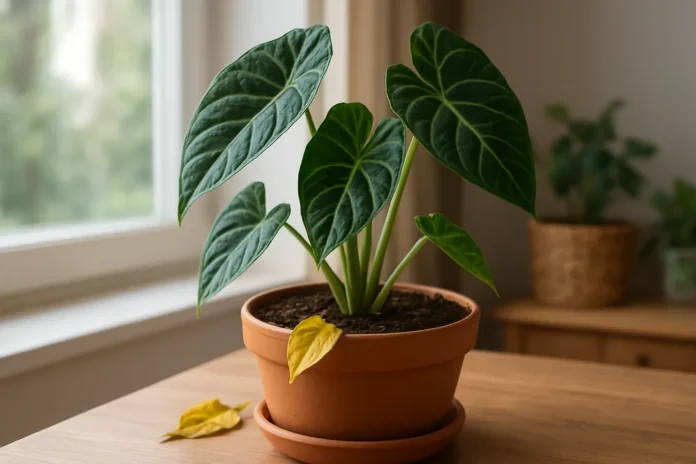
Alocasia usually loses leaves because of watering stress, low humidity, temperature shock, low light, or natural leaf turnover. In some seasons, older leaves also drop as the plant slows down or goes partially dormant.
When an Alocasia losing leaves starts to look thin or unbalanced, it usually means the plant is reacting to stress rather than failing for no reason. These plants are dramatic by nature, and they often respond quickly to changes in watering, light, temperature, and humidity.
In my experience, Alocasias rarely drop leaves without leaving clues first. A yellowing lower leaf, a drooping stem, browned edges, soggy soil, or a sudden change after moving the plant all point in different directions. The good news is that once you match the symptom pattern to the cause, leaf drop is often fixable and new growth can return.
What Leaf Loss Is Normal for Alocasia
Not every dropped leaf means something is wrong. Alocasia plants often replace older leaves as they grow, especially smaller or medium-sized varieties that can only support a limited number of leaves at one time. It is common for the oldest, lowest leaf to yellow and die off as a fresh new leaf emerges from the center.
This kind of normal turnover is usually slow and predictable. One older leaf fades, the rest of the plant still looks firm, and new growth continues. If your Alocasia is losing multiple leaves at once, dropping leaves without producing new ones, or declining fast after a change in care, that points to stress instead of ordinary aging.
I worry less when a single outer leaf drops right as a new leaf unfurls. I pay much closer attention when the newest leaves are shrinking, several stems soften at once, or leaf loss starts after I changed the plant’s spot or watering routine.
Watering Problems Are the Most Common Cause
Overwatering and Root Stress
Alocasia roots need moisture, but they also need air. If the potting mix stays wet too long, roots begin to struggle and may rot. Once the roots are damaged, the plant cannot support its leaves properly, so lower leaves yellow, stems droop, and leaves eventually fall off.
Overwatered Alocasias often have soil that feels heavy for days, limp leaves despite wet soil, yellowing that spreads quickly, and sometimes a musty smell from the pot. In severe cases, the base of the stems can become soft.
Underwatering and Repeated Dry Downs
Underwatering can also trigger leaf drop. When an Alocasia gets too dry, the leaves may droop, curl, develop crisp edges, or collapse suddenly. Repeated cycles of getting bone dry and then soaked again are especially hard on these plants because they prefer more even moisture than many common houseplants.
- Overwatering usually shows up as yellowing, softness, and lingering wet soil.
- Underwatering usually shows up as drooping, dry edges, curling, and a very light pot.
- Inconsistent watering can cause both yellowing and browning, which makes the plant look confusingly stressed.
I get the best results when I water thoroughly, let excess drain fully, and then wait until the top inch or two of mix is slightly dry before watering again. Tiny sips on a fixed schedule usually create weaker roots and more leaf loss.
Low Humidity and Dry Indoor Air Can Trigger Leaf Drop
Alocasias come from warm, humid environments, so dry air indoors can make them shed leaves, especially during winter. Low humidity does not always cause immediate leaf drop on its own, but it weakens the plant and makes other problems worse. You may see browning edges, crispy tips, slower growth, and leaves that fail to expand properly before they decline.
This issue is especially common near heating vents, radiators, fireplaces, or drafty windows. If your plant looked fine in summer and then started losing leaves after indoor heat came on, dry air is a strong suspect. Grouping plants, using a humidifier, and moving the plant away from hot or cold airflow often helps more than misting.
Light Levels Strongly Affect How Many Leaves Alocasia Can Keep
Alocasias need bright light to support their large leaves. In low light, the plant cannot produce enough energy to maintain all of its foliage, so it starts sacrificing older leaves. This can happen slowly over several weeks, and it often looks like one leaf declines as another struggles to emerge.
A healthy Alocasia usually does best near a bright window with filtered light or a few hours of gentle morning sun. If it is sitting deep in a room, in a dark corner, or behind heavy curtains, leaf drop becomes more likely. On the other hand, harsh direct afternoon sun can scorch leaves and stress the plant enough to cause decline.
- Too little light often causes smaller new leaves, stretched stems, slower growth, and dropped older leaves.
- Too much direct sun can cause bleached patches, crisp brown areas, and curled leaves.
- The goal is bright, indirect light with enough intensity to support active growth.
Temperature Swings and Seasonal Dormancy Matter More than Many Growers Expect
Alocasias dislike sudden shifts in temperature. Cold drafts, air conditioning, chilly windows, and nighttime drops can shock the plant and lead to yellowing or leaf loss. These plants generally prefer warmth, and many begin to struggle when kept too cool for long periods.
Seasonal slowdown also plays a role. In fall and winter, some Alocasias naturally reduce growth and may drop one or more leaves, especially in lower light and cooler conditions. This is often described as partial dormancy. The plant is not necessarily dying. It is simply using less energy and reducing top growth until conditions improve.
If your Alocasia loses leaves in winter but the corm and roots remain firm, it may recover well in spring with warmth, brighter light, and careful watering. During a slowdown, soggy soil becomes even more dangerous because the plant is using less moisture.
Transplant Shock and Root Crowding Can Both Lead to Dropped Leaves
Stress After Repotting
Alocasias can be touchy after repotting. Even if the repot was necessary, disturbing the roots can cause temporary drooping and leaf loss while the plant adjusts. This is more likely if the roots were heavily handled, divided, or moved into a much larger pot that stays wet too long.
When the Pot Is Too Tight
On the other side, a severely rootbound Alocasia may start declining because water runs straight through, roots dry out too fast, or the plant no longer has enough room to support fresh growth. You might notice roots circling the pot, very fast drying, and smaller new leaves before leaf drop begins.
When I repot Alocasia, I expect one older leaf to sulk. What concerns me is a chain reaction after repotting, especially if the mix is much denser or the new pot is oversized. In that case, the problem is often not the repot itself but the slower drying that follows.
Pests and Disease Can Cause Sudden Decline
Spider mites, thrips, aphids, and mealybugs can all weaken Alocasias enough to make them lose leaves. Spider mites are especially common in dry indoor air. They feed on leaf tissue and can cause stippling, dull leaves, fine webbing, and steady decline. Thrips may leave silvery scarring, distorted new growth, and black specks.
Root rot and fungal issues are also possible, especially after overwatering. If leaves yellow rapidly, stems soften, or the pot smells sour, check the roots. Healthy roots should be firm and light-colored. Rotting roots are dark, mushy, and often easy to pull apart.
- Inspect the undersides of leaves and along stems for insects, webbing, or sticky residue.
- Separate the plant from others if you suspect pests.
- Treat pests early because repeated feeding quickly pushes Alocasia into leaf loss.
- If root rot is present, improving drainage and removing dead roots is often necessary.
How to Tell Which Cause Is Most Likely
The fastest way to diagnose leaf drop is to look at the full pattern instead of focusing on one damaged leaf. Ask what changed recently, how the soil behaves, where the plant sits, and whether the oldest or newest leaves are affected first.
- If the soil stays wet for a long time and leaves are yellowing, suspect overwatering or poor drainage.
- If the pot gets very light and leaves curl or crisp, suspect underwatering or very dry air.
- If the plant is losing older leaves without strong new growth, suspect low light or seasonal slowdown.
- If the decline started after moving, repotting, or a cold snap, suspect environmental shock.
- If leaves show speckling, webbing, or distorted growth, inspect closely for pests.
Alocasia problems often overlap, so more than one factor may be involved. For example, a plant in low winter light may also be overwatered because the mix dries slowly. A plant in dry air may become more vulnerable to spider mites. The real fix usually comes from correcting the main stress, not chasing every symptom separately.
What to Do to Stop Further Leaf Loss
Start with the root zone. Make sure the pot has drainage holes and the mix is airy enough to hold moisture without staying swampy. If the soil is dense and soggy, consider repotting into a chunkier mix with ingredients like bark, perlite, and quality potting soil.
Next, adjust the environment. Move the plant into bright, indirect light, keep it away from cold drafts and heater blasts, and raise humidity if your home is dry. Water only when the top layer has begun to dry, then water thoroughly and let extra water drain away.
If pests are present, treat them consistently rather than once. If the plant is in winter slowdown, reduce watering frequency and avoid heavy feeding until active growth resumes. Remove fully dead leaves, but leave any leaf that is still partly green because the plant may continue using it.
Change one major variable at a time when possible. If you repot, move, fertilize, and change watering all in the same week, it becomes much harder to tell whether the plant is recovering or reacting badly to another new stress.
When to Be Patient and when to Intervene Fast
Some leaf loss just needs patience. If your Alocasia dropped one old leaf after producing a new one, or if it slowed down slightly during winter but still has firm stems and a healthy base, give it stable care and time. These plants often rebound once conditions improve.
Intervene quickly if several leaves are falling in a short period, the stems are soft, the soil smells bad, pests are visible, or the plant has no sign of active growth and keeps collapsing. Those are signs that the root system or overall growing conditions need prompt correction.
The most encouraging sign is healthy new growth. Even if older leaves continue to fade for a while, a firm new leaf or active growth point usually means the plant still has enough strength to recover.
FAQ
Is It Normal for an Alocasia to Lose an Old Leaf when a New One Grows?
Yes. Many Alocasias naturally drop an older outer leaf as a new one develops, especially younger plants or compact varieties that can only support a limited number of leaves at once.
Will My Alocasia Grow Back After Losing All Its Leaves?
It can, as long as the corm and roots are still healthy. A leafless Alocasia may resprout when warmth, light, and moisture are balanced again.
Why Is My Alocasia Losing Yellow Leaves From the Bottom?
Bottom yellow leaves often point to normal aging, overwatering, low light, or seasonal slowdown. The pace of yellowing and the condition of the soil help narrow it down.
Can Low Humidity Alone Make Alocasia Drop Leaves?
Yes, especially indoors during winter, though it often works together with other stresses like underwatering or spider mites. Dry air weakens the plant and makes leaves more likely to decline.
Should I Cut Off Drooping Alocasia Leaves?
Only remove leaves that are mostly yellow, brown, or clearly dying. If a leaf still has a good amount of green tissue, leave it in place so the plant can continue using it.
How Often Should I Water an Alocasia That Is Dropping Leaves?
There is no fixed schedule that works for every home. Water based on how fast the potting mix dries, the season, and the amount of light and warmth the plant receives.
Does Alocasia Go Dormant Indoors?
Yes, some do. In cooler temperatures and lower winter light, they may slow down sharply and drop leaves, then resume growth when conditions become warmer and brighter.
Need help choosing the right soil, humidifier, or pest treatment for a struggling Alocasia? Read our recommended indoor plant care guides and product picks to speed up recovery and prevent more leaf loss.
