

Note: This article contains affiliate links. If you click on these links and make a purchase, I may earn a small commission at no extra cost to you. This helps support my research and content. Read my full affiliate disclosure here.
Choosing the right hand saw for wood matters whether you are trimming a board in the workshop or pruning rough lumber outdoors. The right saw makes straighter cuts, reduces effort, and keeps edges cleaner so joints fit without extra sanding. This guide looks at seven shortlisted hand saws for wood that meet practical needs across common woodworking and yard tasks. We evaluated each option for cutting speed, blade life, comfort, and control so you can match a saw to the tasks you do most. Read on for the decision factors we used and practical advice on which features matter for different woodworking situations.
Top Picks at a Glance
| Best Overall The best all-around choice for most situations | IRWIN Marathon ProTouch 15-Inch Coarse-Cut Carpenter Saw |  |
| Best Quality Built to a higher standard if you want something more solid | GreatNeck 74003 15" Hand Saw with SK-5 Steel Blade |  |
| Best Value The sweet spot between price and what you get | Jorgensen 15-Inch Hand Saw with 8 TPI Black-Coated Blade |  |
| Best Budget The cheapest option that still gets the job done reliably | Frocopo 6-inch Double-Edge Pull Hand Saw with Wooden Handle | 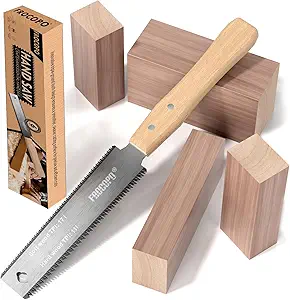 |
| Highest Rated A top-rated pick with lots of positive feedback | Jorgensen 20-Inch Hand Saw with 11 TPI Black-Coated Blade and Ergonomic Non-Slip Handle |  |
| Most Popular A crowd favorite that many people choose with confidence | REXBETI 11-Inch Folding Pruning Saw with SK-5 Steel Blade |  |
| Best Seller A high-volume bestseller chosen again and again | REXBETI 14-Inch Folding Pruning Saw (SK-5 Steel) |  |
IRWIN Marathon ProTouch 15-Inch Coarse-Cut Carpenter Saw

| Blade Material | Alloy Steel |
|---|---|
| Number of Teeth | 14 |
| Blade Shape | Rectangular |
| Power Source | Hand powered |
The IRWIN Marathon ProTouch 15-inch carpenter saw is built for heavy-duty, performance-focused wood cutting. Its M2 tooth geometry and Tri-Ground teeth deliver fast, efficient cutting across and with the grain, while deep gullets clear chips quickly to maintain cutting speed. The tapered-pitch nose improves clearance and control when starting cuts and working near corners, and the thick-body blade adds rigidity for straighter strokes when ripping or crosscutting. The wood ProTouch handle is shaped for comfort during extended use but remains robust for jobsite wear. This saw is best used for framing, rough carpentry, and general-purpose wood cutting where speed and aggressive material removal matter more than super-fine finish. Limitations include a coarse 9-point tooth pattern that leaves a rougher cut compared with fine-tooth saws and a wooden handle that some users may find less ergonomic than modern composite grips.
Best for: Buyers who prioritize fast, aggressive cutting for framing, rough carpentry, or frequent jobsite use and want a reliable, high-performance hand saw.
Less Ideal for: People who need very fine, smooth finish cuts for trim, cabinetry, or finish carpentry should choose a finer-toothed saw designed for precision.
- Aggressive M2 and Tri-Ground teeth for fast cutting and efficient chip removal
- Deep gullets reduce clogging and keep the cut moving quickly
- Thick-body blade improves rigidity for straighter, controlled strokes
- Tapered-pitch nose aids clearance and starting cuts in tight spots
- Coarse 9-point tooth pattern produces a rougher finish not ideal for fine joinery
- Wooden handle offers durability but less modern ergonomic padding
Verdict: Choose this saw when you need a durable, high-performance carpenter saw that cuts fast and clears chips efficiently for rough and framing work.
GreatNeck 74003 15" Hand Saw with SK-5 Steel Blade

| Blade Length | 15 inches |
|---|---|
| Blade Material | SK5-Steel |
| Number of Teeth | 9 |
| Handle Material | Composite |
| Power Source | Hand Powered |
The GreatNeck 74003 is a performance-focused 15-inch hand saw built around an SK-5 steel blade and a lightweight aluminum frame. It is used for ripping and crosscutting wood, basic carpentry, and light pruning where a fast, aggressive cut is required. The tri-bevel, induction-hardened teeth (9 TPI) cut quickly and stay sharp longer than softer blades, while the composite anti-slip handle improves control and reduces hand fatigue during longer sessions. Integrated 45° and 90° cutting guides make it simple to lay out straight or miter cuts without extra tools. Because it is a traditional hand-powered saw, it delivers predictable control and does not require power or maintenance beyond keeping the blade clean and occasionally sharpening. Limitations include the aggressive tooth count, which produces a rougher finish than finer-tooth saws, and the fixed 15-inch blade length that is less suited to very fine joinery or very large timbers.
Best for: Buyers who prioritize cutting speed and durable performance for general woodworking, framing, and pruning tasks and who prefer a robust hand saw over power tools.
Less Ideal for: Fine furniture makers or hobbyists needing very smooth, tear-free finishes or those who require a longer blade for large timbers should consider a different saw.
- SK-5 steel blade for durability and good edge retention
- Tri-bevel, induction-hardened teeth (9 TPI) for fast, efficient cuts
- Lightweight aluminum frame that balances strength and maneuverability
- Composite anti-slip handle that improves grip and reduces fatigue
- Built-in 45° and 90° guides for quicker, accurate layout
- Aggressive tooth pitch yields a rougher finish compared with finer-tooth saws
- Fixed 15-inch blade length limits efficiency on very large lumber or delicate joinery
Verdict: Choose this hand saw when you want a fast, durable cutter that balances lightweight handling with aggressive, performance-oriented teeth for general woodworking and jobsite tasks.
Jorgensen 15-Inch Hand Saw with 8 TPI Black-Coated Blade

| Number of Teeth | 8 |
|---|---|
| Blade Material | Alloy Steel |
| Handle Material | Aluminum |
| Surface Recommendation | Plastic,Wood |
The Jorgensen 15-inch hand saw is a straightforward, heavy-cut handsaw aimed at general woodworking and outdoor trimming tasks. Its 8 TPI triple-ground teeth deliver aggressive, fast cuts through dimensional lumber and framing stock, while the SK5 high-carbon steel blade holds an edge and resists bending under regular use. The black Teflon-like coating reduces friction and helps keep sap and debris from building up on the blade. The reinforced aluminum frame and TPE/ABS ergonomic grip make it comfortable to hold for extended sessions and the handle includes 45° and 90° angle guides useful for marking cuts. Practical uses include rip and cross cuts on rough lumber, pruning thick branches, and cutting PVC or trim where speed matters more than ultra-fine finish. Limitations are inherent to the coarse 8 TPI: it is not intended for fine finish work or precise joinery and will leave a rougher cut on delicate stock. Also, being a fixed non-folding saw it requires safe storage with the included edge protector.
Best for: A buyer who wants a reliable, fast-cutting handsaw for general carpentry, framing, and heavier trimming tasks and values durability and comfort during frequent use.
Less Ideal for: Not the best choice for woodworkers focused on fine finish work, delicate trimming, or precision joinery who need higher-tooth-count saws.
- Aggressive 8 TPI triple-ground teeth for fast, efficient cutting of rough lumber
- SK5 high-carbon steel blade offers good edge retention and resists bending
- Black low-friction coating reduces material buildup and helps corrosion resistance
- Ergonomic aluminum-framed handle with TPE/ABS grip and built-in angle guides
- Coarse 8 TPI tooth pattern produces a rougher finish not suited to fine joinery
- Fixed blade requires careful storage and is less portable than folding saws
Verdict: Choose this saw if you want a durable, comfortable hand saw that makes fast, aggressive cuts for general carpentry and trimming.
Frocopo 6-inch Double-Edge Pull Hand Saw with Wooden Handle

| Blade Material | SK5 Steel |
|---|---|
| Blade Length | 6 inches |
| Number of Teeth | 17 |
| Power Source | Hand Powered |
| Handle Material | Wood |
This Frocopo 6-inch hand saw is a small pull-style saw built for accurate finishing and quick trim work. The thin, flexible SK5 steel blade is double-edged—11 TPI on one side for faster cuts and 17 TPI on the other for finer finishes—so you can switch between speed and precision without changing tools. Its triple-ground, hardened teeth help produce cleaner cuts, and the lightweight wooden handle makes the saw comfortable for extended use when working on small projects, flush cuts, or detail carpentry. The compact blade length and flexibility make it especially useful for flush-cutting trim, model making, and cutting engineered wood in tight spots. Limitations are its short 6-inch blade and small size, which are not suited to ripping large boards or heavy demolition; larger saws will cut faster on big stock. For shoppers focused on straightforward, affordable finishing work, this saw offers sharp teeth, an ergonomic grip, and versatility between coarse and fine cutting in a single, pocketable tool.
Best for: Practical buyers who need an affordable, precise hand saw for trim, small woodworking projects, and flush cuts and who prioritize value and versatility in a compact tool.
Less Ideal for: Tradespeople who regularly cut large lumber or need a saw for heavy demolition should choose a larger handsaw or power tool instead.
- Double-edged SK5 steel blade provides both coarse and fine cutting options
- Triple-ground hardened teeth for cleaner, more accurate cuts
- Lightweight wooden handle designed for comfortable, fatigue-free use
- Compact 6-inch blade fits tight spaces and enables flush cuts
- Short blade length limits efficiency on large or long boards
- Not intended for heavy-duty ripping or pruning tasks
Verdict: A budget-friendly, compact pull saw that gives you both coarse and fine cutting in one lightweight tool for precise trim and small woodworking tasks.
Jorgensen 20-Inch Hand Saw with 11 TPI Black-Coated Blade and Ergonomic Non-Slip Handle

| Power Source | hand_powered |
|---|---|
| Number of Teeth | 11 |
| Blade Material | High Speed Steel |
| Handle Material | ABS and TPE |
The Jorgensen 20-inch hand saw is a straightforward, reliability-minded tool for cutting wood, PVC and similar materials. Its 11 TPI triple-ground teeth and induction hardened high-speed steel blade are designed to hold an edge and cut quickly on both push and pull strokes, while the low-friction black coating helps reduce binding. The molded ABS and TPE handle is shaped for a firm, non-slip grip and includes 45 and 90 degree guide marks to help keep cuts square. Practical touches include a cardboard sleeve and plastic tooth protector for safe storage and transport. In use the saw excels at fast, coarse ripping and trimming tasks around the workshop or yard, and the robust blade construction makes it suitable for repeated use without frequent re-sharpening. It is not a fine-tooth finish saw, so expect rougher edges on delicate joinery and slower performance on very hard, dense timbers. For routine framing, pruning and general carpentry where dependable, aggressive cutting is the priority, this saw performs well.
Best for: Buyers who prioritize a durable, workhorse handsaw for everyday cutting tasks like framing, pruning and general carpentry and who want a tool that stays sharp through repeated use.
Less Ideal for: Woodworkers needing a fine-tooth saw for smooth finish cuts or hobbyists doing delicate joinery should choose a finer TPI saw instead.
- Triple-ground 11 TPI teeth and induction hardened high-speed steel blade for durable, fast cutting
- Low-friction black coating reduces binding for smoother strokes
- Ergonomic ABS+TPE non-slip handle with angle guides for comfortable, accurate cutting
- Includes blade protector and cardboard sleeve for safer storage
- Coarse 11 TPI tooth pattern produces rougher cuts not suited for fine finish work
Verdict: A tough, no-nonsense 20-inch handsaw built for fast, reliable cutting on everyday woodworking and yard tasks.
REXBETI 11-Inch Folding Pruning Saw with SK-5 Steel Blade

| Blade Material | Alloy Steel (SK-5) |
|---|---|
| Blade Length | 11 inches |
| Number of Teeth | 7 TPI |
| Handle Material | Rubber coated polymer |
| Other Feature | Foldable |
The REXBETI 11-inch folding pruning saw is a portable hand saw built for yard work, camping, and basic bushcraft tasks. Its SK-5 steel blade with aggressive 7 TPI staggered teeth cuts green wood efficiently and is rated by the maker to handle branches roughly 6–7 inches in diameter. The blade folds into an ergonomic rubber-coated polymer handle for safe storage and easy carrying in a backpack or tool kit, and the reinforced blade design improves stability during heavier cuts. In practice this saw is handy for pruning limbs, cutting small firewood, and quick campsite tasks where a compact, manual tool is preferable to a chainsaw. Notable features include the triple-cut tooth pattern for smoother sawing and a lightweight foldable design that reduces bulk. Limitations to expect are the usual ones for a folding hand saw: it requires more physical effort and time than a powered saw, and long or repeated heavy-duty cutting will eventually dull the blade and may push it beyond what a foldable tool can handle comfortably.
Best for: Buyers who want a reliable, portable manual saw for routine pruning, campsite woodwork, and occasional firewood tasks and who value compactness and proven user feedback when choosing tools.
Less Ideal for: People who need to fell large trees, cut long runs of hardwood, or want the speed and convenience of a motorized saw should choose a powered saw instead.
- SK-5 steel blade with 7 TPI staggered teeth for efficient cutting of green wood
- Folding design and light weight make it easy to carry in backpacks and tool kits
- Ergonomic rubber-coated handle provides a secure grip in varied conditions
- Reinforced blade structure improves stability during tougher cuts
- Manual operation is slower and more physically demanding than powered saws
- Blade will dull with heavy use and will need sharpening or replacement over time
Verdict: A compact, well-reviewed folding pruning saw that delivers strong manual cutting performance for routine pruning and campsite wood tasks.
REXBETI 14-Inch Folding Pruning Saw (SK-5 Steel)

| Blade Material | SK-5 steel |
|---|---|
| Blade Length | 14 inches |
| Teeth | 5.5 TPI staggered |
| Handle Material | Rubber coated polymer |
| Special Feature | Foldable |
The REXBETI 14-inch folding pruning saw is a portable hand saw built for cutting medium to large branches in the yard or on outdoor trips. Its full blade extends to about 28 inches when open while folding in half for safer storage and easy transport. The SK-5 hardened steel blade with 5.5 TPI staggered teeth cuts on both push and pull strokes, which helps you power through green and dry wood up to the manufacturer’s suggested 7 to 10 inch branch diameter. The long rubber-coated handle gives extra reach and a secure grip in wet or cold conditions. Practical benefits include fast, efficient cutting without power tools and a compact folded size that fits a backpack or tool bag. Important limitations are that it is a manual tool so heavy or prolonged cutting becomes tiring, and the aggressive teeth are optimized for thicker branches rather than detailed pruning or fine carpentry. Users should keep the blade clean and occasionally sharpen or replace it to maintain peak performance.
Best for: Buyers who want a dependable, portable saw for occasional to moderate branch cutting while gardening, camping, or maintaining property and who prioritize reliable performance and safety when carrying tools outdoors.
Less Ideal for: People who need a tool for fine pruning, detailed pruning work, or frequent heavy-duty cutting that would be better handled by a powered saw or pruning tool set.
- Long 14-inch SK-5 steel blade delivers reach for larger branches and faster cutting.
- Folding design makes it easy and safe to carry for camping, hiking, or storage.
- Aggressive 5.5 TPI staggered teeth cut on both push and pull strokes for efficient sawing.
- Rubber-coated polymer handle provides a secure grip in wet or cold conditions.
- Manual operation can be tiring for extended use or frequent heavy cutting.
- Aggressive tooth profile is not suited for delicate or precision pruning work.
Verdict: A robust, easy-to-carry manual saw that gives reliable cutting power for larger branches when you need a safe portable tool for garden or outdoor use.
Choosing the Right Hand Saw for Wood: Key Factors to Consider
Tooth Type and TPI
Tooth geometry and teeth per inch (TPI) determine how a saw slices through wood. Coarse teeth (lower TPI) remove material faster and are better for rough cuts in dimensional lumber, while finer teeth (higher TPI) produce smoother edges that need less cleanup. Different tooth patterns such as rip teeth and crosscut teeth are optimized for cutting along or across the grain. Understanding the tooth type helps you match a saw to the task-fast framing work or precise joinery.
Tooth set and sharpening angle also affect how the saw tracks and how often it will need resharpening. If you plan to use a saw frequently on hardwoods, choose a tooth geometry that balances durability with the finish you want.
Blade Material and Coating
Blade thickness, steel hardness, and any protective coatings influence the saw's lifespan and cutting behavior. Thicker blades resist flexing for straighter cuts but create a wider kerf that removes more material. Hardened steel teeth hold an edge longer, which matters if you use the saw often or on abrasive, knotty wood. A corrosion-resistant coating helps when the saw is used outdoors or stored in damp environments.
Consider whether the blade is replaceable or designed for resharpening. Replaceable blades are convenient for modular saws, while resharpenable blades are better for tools you expect to maintain over many years.
Handle Design and Comfort
Handle shape, material, and attachment method affect control, fatigue, and safety. Ergonomic handles with a pronounced palm swell and secure finger placement reduce hand strain during long cuts. Textured grips or softer overmolds improve traction when your hands are sweaty or wearing gloves. The way the handle mounts to the blade matters too; riveted or bolted joints feel more secure and keep the blade aligned.
Pay attention to handle size relative to your hand. A handle too large or too small will reduce leverage and cut accuracy. For tasks requiring fine control, a smaller, well-shaped handle helps guide the blade precisely.
Kerf Width and Cut Control
Kerf width affects both the effort required to cut and the amount of material removed. Narrow kerf blades reduce resistance and waste, which can matter when milling limited-stock boards. Wider blades provide more stability and help keep long cuts from binding in the cut. Blade stiffness and the presence of a reinforced spine or backer help maintain a straight kerf, especially in long rip cuts.
Think about the balance you need: a narrow kerf for easier handling and less waste, or a stiffer, wider blade when straightness and stability are the priority.
Ease of Maintenance and Sharpening
A saw that is easy to maintain will stay useful longer. Some blades are made to be sharpened with conventional files, while others are hardened and intended to be replaced rather than resharpened. Consider whether you have the skill and tools to sharpen saw teeth, or if you prefer a replaceable-blade system. Also check if the handle and blade attachment allow straightforward disassembly for maintenance or replacement.
Routine care such as cleaning pitch buildup, drying after use, and applying a light protective oil will slow rust and prolong cutting performance.
Choosing Between Rip and Crosscut Saws
Rip saws and crosscut saws are optimized for different motions. Rip saws cut with the grain and remove material quickly by acting like a chisel on each stroke. Crosscut saws slice across fibers and are shaped to sever wood cells cleanly, giving a smoother finish. Choosing the right type for the majority of your work will reduce sanding and fitting time.
If you do both kinds of cuts regularly, consider a hybrid tooth pattern or keeping one dedicated saw of each type so you do not compromise finish for speed.
- Rip saws: fewer, larger teeth for fast stock removal
- Crosscut saws: smaller teeth for cleaner edges
- Hybrid patterns: balanced performance for mixed tasks
Using Hand Saws Safely and Accurately
Proper technique improves cut accuracy and reduces wear on the blade. Secure the workpiece with clamps, mark your cut line clearly, and start with a shallow guiding notch to prevent the blade from wandering. Use steady, full-length strokes and let the saw do the cutting rather than forcing it.
Keep your wrists aligned with the blade and maintain a consistent stroke rhythm. For long cuts, periodically inspect the kerf and clear sawdust so the blade does not bind.
- Clamp work at comfortable height to reduce fatigue
- Begin cuts with a short backstroke to establish the kerf
- Keep cutting angle and pressure consistent for straighter cuts
Maintaining Blade Sharpness and Rust Prevention
Remove pitch and resin buildup after each use to retain cutting efficiency. Use a plastic scraper or light solvent and wipe the blade dry. Apply a thin coat of light oil or a rust inhibitor before storing a saw in a workshop or shed that experiences humidity.
When teeth dull, either file them back to shape or replace the blade if it is designed that way. Regular maintenance saves time and keeps cuts predictable.
- Clean pitch with solvent or warm soapy water, then dry thoroughly
- Protect blades with a light oil or rust preventative
- Sharpen or replace teeth as soon as cutting quality drops noticeably
Selecting a Saw for Outdoor Carpentry and Yard Work
Outdoor use often means exposure to dirt, moisture, and knotty wood. Choose blades with corrosion-resistant finishes and sturdy teeth geometry that can handle knots without chipping prematurely. A comfortable, weather-resistant handle can make a big difference during longer yard projects.
For mixed outdoor tasks, favor durability and ease of maintenance over the finest possible finish. You can always finish cuts with a finer saw or sanding if needed.
- Prioritize rust-resistant blades and robust tooth profiles
- Look for handles that shed water and provide solid grip
- Expect to clean and oil outdoor saws more frequently
When to Use a Backsaw or Fine Carcass Saw
Backsaws and fine carcass saws have reinforced spines and fine teeth for precise joinery. Use them for tenons, dovetails, and other fine woodworking tasks where a square shoulder and minimal tear-out are essential. Their stiffer blades make them ideal for short, controlled cuts.
These tools are not designed for heavy stock removal. If you need to break down large pieces of lumber, pair a backsaw with a more aggressive saw for the roughing stage.
- Backsaws provide stiffness for square, repeatable cuts
- Fine teeth reduce tear-out in joinery work
- Use with a miter box or guide for highest accuracy
How We Chose the Best Hand Saw for Wood
We focused on traits that affect real-world cutting performance and day-to-day usability. Key evaluation criteria included cut speed and tooth geometry to identify how efficiently each saw removes material and how cleanly it cuts across and along the grain. Blade durability and corrosion resistance were judged to predict how long a saw will stay sharp and usable in a workshop or outdoor setting. Handle ergonomics and vibration control were assessed to determine comfort during extended use and accuracy during fine cuts. Ease of sharpening or blade replacement was included for saws with replaceable teeth or modular blades. Finally, overall control and kerf consistency were evaluated to understand how reliably each saw produces repeatable, square cuts. We excluded specialized masonry, metal, or pruning saws not intended for typical wood cutting. We also filtered out surplus items with unclear blade specifications or poor durability reports. The result is a selection focused on general-purpose and task-specific hand saws that perform well across the core dimensions above.
FAQ
What tooth count should I choose for general woodworking?
For general woodworking, a medium tooth count around 7 to 10 TPI strikes a balance between speed and smoothness. Lower TPI is better for fast rip cuts and rough framing, while higher TPI suits fine trim and finish work.
Can I sharpen a modern hardened blade at home?
Some hardened blades are intended to be replaced rather than resharpened, while others can be filed by hand. Check whether the teeth are heat-treated; if so, sharpening may be difficult. For hand filing, use the correct file shape and take care to match the original tooth geometry.
How do I prevent a hand saw from wandering when starting a cut?
Start with a shallow backstroke to create a guiding notch and use a marking knife or sharp pencil to score the cut line. Secure the workpiece and maintain light pressure on the forward stroke until the kerf has established itself.
Is a replaceable blade system worth choosing?
Replaceable blades are convenient if you expect heavy use or want to switch tooth types quickly. They are also helpful when you do not want to invest time in sharpening. However, fixed blades that can be resharpened may last longer overall if you maintain them properly.
How often should I oil my saw blade?
Lightly oil the blade after cleaning if it will be stored for more than a few days or if you store tools in a humid environment. Frequent outdoor use may require oiling after each session to prevent rust.
Final Verdict
Focus on the cuts you do most and prioritize tooth geometry, blade stiffness, and handle comfort accordingly. Faster, coarse-toothed saws save time on rough work, while finer-toothed and stiffer blades pay off for joinery and finish tasks. Maintain blades and protect them from rust to preserve performance. Choose the saw that best matches your typical projects and maintenance preferences. Balancing cutting speed, control, and durability will help you get the most practical value from a hand saw for wood.
