

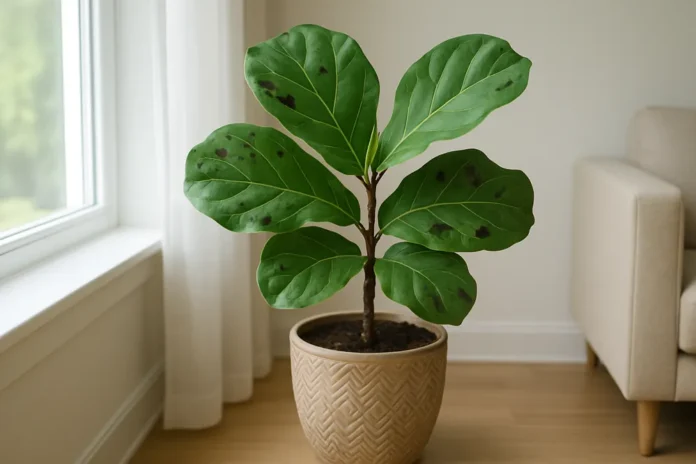
A fiddle leaf fig usually gets black spots from overwatering, bacterial or fungal leaf problems, cold damage, or stressed roots. The spots often appear when moisture stays too high or the plant has been exposed to sudden stress.
Black spots on a fiddle leaf fig are a warning sign that something in the plant's environment is off. Sometimes the problem is minor, like a splash of cold air or a missed watering routine. Other times, black spots signal root stress, leaf infection, or damage that needs quick attention.
The good news is that the spot pattern usually gives useful clues. Small scattered specks, large dark blotches, soft edges, yellow halos, and spots that start near the leaf base can each point to a different issue. Once you narrow down the cause, it is much easier to protect healthy leaves and prevent the problem from spreading.
What Black Spots Usually Mean on a Fiddle Leaf Fig
Black spotting is not a single disease. It is a symptom that can come from waterlogged soil, damaged roots, fungal or bacterial leaf issues, cold injury, physical damage, or a combination of stress factors. On fiddle leaf figs, the most common culprit is too much moisture around the roots, especially when the potting mix stays wet for long periods.
The location and texture matter. Dark, soft spots often suggest rot or moisture-related damage. Dry, crisp dark spots can point to old physical injury, sun scorch after stress, or low humidity combined with watering inconsistencies. Spots with yellowing around them may indicate a leaf spot disease or root stress that is affecting nutrient and water movement.
- Large black or very dark brown patches near the base of leaves often connect to overwatering or root problems.
- Tiny speckled spots that spread may be linked to fungal or bacterial leaf spot.
- Blackened edges after a cold draft or temperature swing often indicate cold damage.
- A few isolated black marks on older leaves may simply be old stress damage that will not reverse.
Overwatering and Root Stress Are the Most Common Causes
Why Too Much Water Causes Black Spots
Fiddle leaf figs like evenly moist soil, but they do not tolerate constantly soggy roots. When the potting mix stays wet, oxygen levels around the roots drop. Stressed roots cannot move water and nutrients properly, and leaf tissue begins to fail. That damage often shows up as dark spots, especially on lower or older leaves first.
Overwatering is not only about how often you water. It can also happen when the pot is too large, the drainage hole is blocked, the mix is too dense, or the plant is sitting in a dim room where soil dries very slowly.
Signs the Problem Is Excess Moisture
- Black or deep brown spots that expand over time
- Leaf drop, especially from the bottom half of the plant
- Soil that feels wet several days after watering
- A musty smell from the potting mix
- Yellowing leaves along with dark spotting
- Soft or mushy areas on leaves or roots
How to Correct It
Let the top portion of the soil dry before watering again. In many homes, that means waiting until the top 2 to 3 inches feel dry, not watering on a rigid calendar. Empty saucers after watering so roots are not left sitting in runoff.
If the soil stays wet for a week or more, repot into a faster-draining indoor plant mix amended with bark, perlite, or pumice. Trim away any black, mushy roots with clean scissors and place the plant back in bright, indirect light so it can recover.
Root Rot Can Turn Small Spots Into a Serious Problem
Root rot is the advanced version of chronic overwatering. It develops when fungi and other rot organisms attack roots that have been weakened by saturated conditions. At that stage, black spots on leaves are only part of the story. The root system is losing function, so the whole plant may decline.
A fiddle leaf fig with root rot may have drooping leaves even when the soil is wet, a foul smell from the container, blackened roots, stem softness near the base, and rapid leaf drop. New growth may be small, weak, or absent.
- Remove the plant from the pot and inspect the roots.
- Cut off mushy, black, or slimy roots with sterilized pruners.
- Discard old saturated soil and clean the pot thoroughly.
- Repot in fresh, airy mix in a container with open drainage.
- Water lightly after repotting, then wait until the upper soil dries before watering again.
Severely rotted plants may continue dropping damaged leaves after treatment, but healthy recovery usually starts with stable moisture and new root growth. Do not expect old black spots to fade. Judge improvement by the condition of new leaves and whether spotting stops spreading.
Bacterial and Fungal Leaf Spots Can Also Be to Blame
How Disease-related Spots Look
Leaf spot diseases often create distinct circular or irregular dark lesions. Some begin as water-soaked patches and then turn brown or black. Others develop a faint yellow halo around the spot. If leaves stay wet for long periods, humidity is high, and air circulation is poor, those problems spread more easily.
On houseplants, fungal and bacterial spotting is often encouraged by overhead watering, crowded placement, persistently damp leaves, and reusing contaminated tools or pots.
What to Do if Disease Is Likely
- Remove badly spotted leaves if the plant has enough healthy foliage left.
- Disinfect pruners before and after each cut.
- Avoid misting and avoid splashing water onto leaves.
- Increase airflow around the plant with better spacing or a nearby fan set on low.
- Water the soil directly instead of wetting the foliage.
- Isolate the plant from others if spotting is spreading quickly.
Mild cases often stop progressing once the foliage stays dry and the plant is not under additional stress. If a disease issue keeps worsening, a houseplant-safe copper-based fungicide or bactericide may help, but only if used according to the label. Treatments work best when combined with better watering and airflow habits.
Cold Damage and Drafts Can Create Dark Blotches Fast
Fiddle leaf figs are sensitive to sudden cold. A plant placed near a drafty window, exterior door, air conditioner vent, or chilly car ride can develop dark spots or blackened patches shortly after exposure. These marks may look dramatic, but they are often injury rather than infection.
Cold-damaged tissue usually appears on leaves closest to the draft or cold glass. The spots may be irregular, dark, and dry as the tissue dies back. If the roots were also chilled in wet soil, leaf spotting can become worse because the plant is dealing with both root stress and cold injury.
- Keep fiddle leaf figs away from vents and frequent door drafts.
- Do not let leaves press against cold window panes.
- Maintain indoor temperatures roughly between 60 and 85 degrees Fahrenheit.
- Avoid watering with very cold water during winter.
Inconsistent Watering Can Damage Leaves Even Without Rot
Inconsistent moisture can also make the plant more vulnerable to disease. A healthy, steadily growing fiddle leaf fig is better able to resist leaf issues than one that repeatedly dries out and then gets drenched.
A Better Watering Routine
Instead of watering by date, check soil moisture with your finger or a wooden skewer. Water thoroughly when the upper few inches are dry, then let excess water drain away completely. In bright summer conditions that may mean watering more often, while winter often calls for longer gaps between waterings.
Container, Soil, and Light Issues Often Contribute
- Use a pot with at least one drainage hole.
- Choose a chunky, fast-draining mix rather than dense peat-heavy soil alone.
- Place the plant in bright, indirect light near a sunny window.
- Rotate the pot occasionally for balanced growth, but avoid constant moving.
- Do not leave standing water in an outer pot or saucer.
If your fiddle leaf fig is in a very large pot relative to its root ball, downsizing can help. Oversized containers hold extra wet soil that roots cannot use quickly, which raises the risk of spot-causing root stress.
Pests and Physical Injury Are Less Common but Possible
Physical damage can leave blackened areas too. Leaves bruised during moving, rubbed against walls, bent sharply, or torn while unfurling may develop dark scars as injured cells die. Those marks tend to stay localized and do not spread in the way disease-related spots do.
- Inspect the undersides of leaves and stems for tiny insects, webbing, or sticky residue.
- Wipe dusty leaves so you can clearly see new damage.
- Treat confirmed pests promptly with insecticidal soap or horticultural oil labeled for indoor plants.
How to Tell Which Cause Is Most Likely
- Large dark blotches plus wet soil: overwatering or root rot is likely.
- Distinct spots with yellow halos: bacterial or fungal leaf spot is more likely.
- Dark damage after a cold window or draft: cold injury is a strong possibility.
- A few black scars on one leaf after handling: physical damage is likely.
- Spotting with lower leaf drop and a sour smell: inspect roots right away.
If you are unsure, start with the safest correction: improve drainage, avoid wet foliage, provide bright indirect light, and stabilize watering. Those steps help in most non-pest cases and reduce the chances of making the problem worse.
Can Black Spotted Leaves Recover?
If a leaf is mostly green and still functioning, you can usually leave it on the plant. Remove leaves that are heavily damaged, mushy, diseased, or dragging down the plant's appearance. Avoid stripping too many leaves at once, because indoor figs depend on that foliage for energy.
How to Prevent Black Spots From Coming Back
- Water only when the top layer of soil has dried appropriately.
- Use a potting mix that drains well and a container with drainage holes.
- Keep the plant in bright, indirect light so the soil does not stay wet too long.
- Avoid cold drafts, heater blasts, and sudden temperature swings.
- Do not mist leaves or let water sit on foliage for long periods.
- Clean tools and remove fallen leaves from the soil surface.
- Check the plant regularly so small spot issues are caught early.
Most fiddle leaf figs stop developing black spots once their moisture, light, and temperature conditions become more consistent. Prevention is less about a special product and more about stable care.
FAQ
Should I Cut Off Leaves with Black Spots on My Fiddle Leaf Fig?
Remove leaves only if they are heavily damaged, mushy, or clearly worsening. Leaves with a few stable spots can usually stay, since they still help the plant photosynthesize.
Can Overwatering Cause Black Spots Even if the Plant Looks Dry on Top?
Yes. The surface can dry while deeper soil stays wet around the roots, especially in a large pot or dense mix. That hidden moisture can still cause root stress and leaf spotting.
Are Black Spots on Fiddle Leaf Fig Leaves a Sign of Root Rot?
They can be, especially when the spots are large and dark and the soil stays wet for a long time. Root rot is more likely if you also notice drooping, yellowing, a sour smell, or mushy roots.
Will Neem Oil Fix Black Spots on a Fiddle Leaf Fig?
Not always. Neem may help with some pest issues, but it will not solve overwatering, root rot, or cold damage. Use it only when pests or a labeled plant disease treatment calls for it.
Can I Save a Fiddle Leaf Fig with Black Spots and Falling Leaves?
Usually yes, if the stem and part of the root system are still healthy. Correcting watering, improving drainage, and removing severe root rot early give the best chance of recovery.
Do Black Spots Spread From One Leaf to Another?
They can if the cause is bacterial or fungal and leaves stay wet or crowded. Spots caused by old physical damage or cold injury usually do not spread once the stress has ended.
How Long Does It Take for a Fiddle Leaf Fig to Recover After Black Spots Appear?
Visible recovery is measured by healthy new growth, not by old spots disappearing. If conditions improve quickly, you may see stabilization within a few weeks and stronger new leaves over the following months.
Need help choosing the right potting mix, fungicide, or moisture meter for a struggling fiddle leaf fig? Read our recommended indoor plant care tools and treatments to fix problems faster and prevent repeat damage.
