

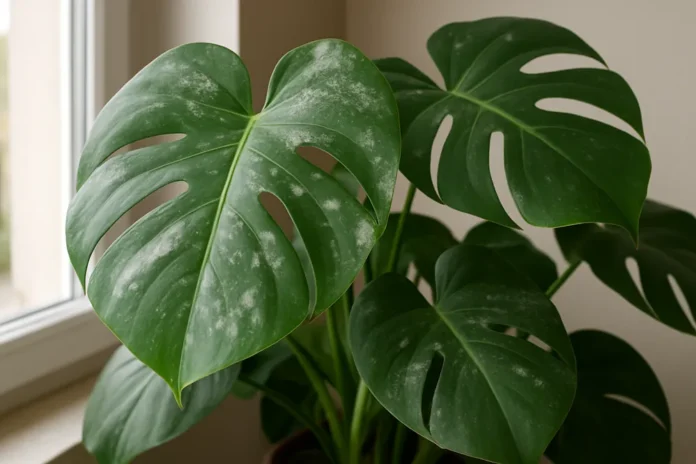
White powder on Monstera leaves is most often powdery mildew, hard water residue, or a buildup of dust or spray minerals. In some cases, it can also be linked to pests that leave behind white, cottony material.
If you have noticed white powder on your monstera leaves, the cause is not always the same. Sometimes it is a harmless film left behind by hard water or foliar sprays, but it can also signal powdery mildew or a pest issue that needs attention.
The key is how the white coating looks and behaves. A light chalky residue that wipes off cleanly points to one problem, while fuzzy patches that keep returning often point to fungal growth. Cottony clumps near leaf joints and stems suggest insects rather than mildew.
The good news is that most causes are manageable at home. Once you match the white coating to the right source, you can clean the plant, adjust care, and prevent the problem from coming back.
What the White Powder Usually Is
White powder on a Monstera usually falls into one of four categories: fungal disease, mineral residue, environmental buildup, or pest-related material. The most common disease culprit is powdery mildew, which creates a soft, dusty coating on leaf surfaces. Mineral residue from hard tap water or fertilizer splash can leave behind a chalky white film. Dust mixed with indoor humidity can also settle into a dull powdery layer. Finally, mealybugs and similar pests can leave white cottony masses that some gardeners first describe as powder.
- Powdery mildew looks like a thin, flour-like coating that may spread across multiple leaves.
- Hard water residue appears chalky or spotty and often wipes away without returning quickly.
- Dust or spray buildup tends to look dull, even, and superficial rather than patchy and alive.
- Mealybugs look more like fuzzy white tufts or cotton clustered near stems, nodes, and leaf undersides.
Because the treatment depends on the cause, it helps to avoid assuming every white mark is mildew. Monsteras grown indoors often collect residue from tap water misting, humidifiers, fertilizer overspray, or household dust long before they develop a true disease problem.
How to Tell the Difference at a Glance
Signs of Powdery Mildew
Powdery mildew usually starts as small pale patches that look dusted with flour. Over time, the patches can expand and merge. The coating often appears on the tops of leaves first, though it may spread to undersides, petioles, and new growth. It tends to come back after wiping if the growing conditions stay favorable to the fungus.
Signs of Mineral or Hard Water Residue
Mineral deposits usually look more flat and chalky than fuzzy. They often appear after misting with tap water, using a humidifier filled with hard water, or splashing fertilizer solution onto leaves. The marks may form rings, speckles, or a general haze. They wipe off fairly easily and do not seem to spread from leaf to leaf like a disease.
Signs of Dust or Product Buildup
Monsteras with large leaves naturally collect dust. If the plant is near a vent, window, kitchen, or high-traffic room, a dull whitish layer can build up. Leaf shine products, neem spray residue, and soap sprays can also dry into a powdery or filmy coating. This type of buildup is usually uniform and does not damage the tissue beneath it right away.
Signs of Mealybugs or Other Pests
Mealybugs do not create a smooth powder. Instead, they leave clumps of white, cotton-like wax, often tucked into leaf axils, stem joints, and under leaves. You may also notice sticky honeydew, yellowing, distorted new growth, or black sooty mold growing on the sticky residue.
- If it looks like flour and slowly spreads, think powdery mildew.
- If it looks chalky and appears after misting, think mineral residue.
- If it looks cottony and clumped, think mealybugs.
- If it is dull, even, and easy to wipe away, think dust or spray buildup.
Why Powdery Mildew Shows Up on Monstera
Powdery mildew is a fungal disease that thrives when air circulation is poor and leaves stay in a humid, stagnant environment. Unlike many leaf diseases, it does not need standing water on the leaf for long periods to spread. Indoor plants can develop it when they are crowded together, placed in dim rooms, or kept in consistently humid conditions without enough airflow.
Monsteras are especially vulnerable when they are producing dense foliage, sitting close to walls or curtains, or growing in low light where leaves dry slowly and the plant stays soft and lush. Stress can also make infection more likely. Overfertilizing, inconsistent watering, and sudden environmental changes can weaken growth and make leaves more susceptible.
- Crowded houseplants with leaves touching
- Low light combined with high humidity
- Poor airflow from enclosed corners or shelves
- Overhead misting that adds moisture but not air movement
- Soft, tender new growth pushed by excess fertilizer
Powdery mildew can start small, so early treatment matters. Left alone, it can reduce photosynthesis, weaken new leaves, and make the plant look dull and unhealthy even if the roots are otherwise fine.
Why Mineral Residue Is so Common Indoors
Many indoor gardeners use tap water for misting or for humidifiers near tropical plants. If that water contains calcium, magnesium, or other dissolved minerals, a white residue can dry on the leaf surface. This is especially common on dark green leaves like Monstera, where every spot stands out.
Fertilizer residue can look similar. If diluted fertilizer splashes onto the foliage during watering, it can dry into a pale crust or film. Some foliar sprays, insecticidal soaps, and homemade treatments also leave visible residue if they are mixed too strongly or applied in repeated layers without cleaning the leaves.
This kind of white powder is mostly cosmetic at first, but heavy buildup can block light, reduce the leaf's natural shine, and make it harder to spot real pest or disease problems. In severe cases, strong product residue may even contribute to leaf burn.
How to Remove White Powder Safely
If You Suspect Dust or Mineral Residue
Wipe each leaf gently with a soft microfiber cloth dampened with lukewarm water. For stubborn mineral spots, use distilled water or a very light mix of water and white vinegar, then follow with a plain water wipe so no acidic residue remains. Support the leaf from underneath while cleaning to avoid tears.
If You Suspect Powdery Mildew
Isolate the Monstera from other houseplants first. Remove heavily affected leaves if only a few are infected and the plant can spare them. Then wipe or rinse the leaf surfaces and apply a houseplant-safe fungicidal product labeled for powdery mildew. Neem oil, potassium bicarbonate products, and sulfur-free indoor fungicides are common options, but always follow the product label and test a small area first.
If You Suspect Mealybugs
Use a cotton swab dipped in isopropyl alcohol to dab individual mealybugs and remove cottony clusters. Follow with a thorough inspection of stems, leaf undersides, and new growth. Repeat treatments are often needed because hidden insects can keep the infestation going.
- Move the plant into bright, indirect light where you can inspect it clearly.
- Check both sides of several leaves, along the petioles, and at each node.
- Wipe away visible residue before deciding whether it is returning or spreading.
- Treat based on the likely cause rather than using multiple products at once.
- Monitor new growth over the next two to three weeks for recurrence.
When the White Powder Is Actually a Pest Problem
Mealybugs are a common indoor pest on tropical foliage plants, including Monstera. They feed by piercing plant tissue and sucking sap. Their white waxy coating protects them and makes them look like bits of cotton or powdery fuzz. Because they hide in tight crevices, an infestation can go unnoticed until the plant starts to look weak or sticky.
If the white material is clustered around leaf joints, stem nodes, aerial roots, or the underside of newer leaves, pests are more likely than mildew. Sticky residue on nearby surfaces is another clue. Ants are less common indoors, but if you see them around a houseplant, they may be attracted to honeydew from sap-sucking insects.
- Look for soft, oval insects hidden inside the white material.
- Check whether the leaves feel sticky rather than dusty.
- Inspect nearby plants because mealybugs spread easily indoors.
- Expect repeat treatments, since eggs and hidden juveniles are easy to miss.
How to Prevent the Problem From Coming Back
Prevention is mostly about matching tropical-plant care with clean indoor conditions. Monsteras like humidity, but they do not like stale air. They also benefit from occasional leaf cleaning, careful watering, and enough space around the plant for airflow and light penetration.
- Use distilled, filtered, or rainwater for misting and humidifiers if hard water leaves residue in your home.
- Skip frequent misting if it creates moisture without improving air circulation.
- Keep the plant in bright, indirect light so leaves stay strong and dry more efficiently.
- Rotate and space houseplants so leaves are not packed tightly together.
- Wipe large leaves every few weeks to remove dust before it builds up.
- Avoid overfertilizing, especially during slow winter growth.
- Inspect new plants before bringing them near your Monstera.
A small fan in the room, used gently and not aimed directly at the plant, can help reduce stagnant air that favors fungal growth. Good airflow is often the missing piece for indoor gardeners who keep tropical plants in otherwise healthy humidity ranges.
Common Treatment Mistakes to Avoid
One of the biggest mistakes is treating every white mark as disease. If the issue is only hard water residue, repeated fungicide sprays add more buildup and may irritate the foliage. Another common mistake is applying homemade mixes too strongly. Concentrated vinegar, baking soda, dish soap, or essential oils can damage Monstera leaves, especially in bright light.
It is also easy to overlook the underside of leaves and the leaf axils, where pests often hide. Cleaning only the top surfaces may make the plant look better for a few days without actually fixing the source of the problem. Finally, many gardeners forget to adjust the environment. If low airflow and crowding caused mildew, it will often return after treatment unless those conditions change.
- Do not use leaf shine products to cover the residue.
- Do not mix multiple sprays together unless the label says they are compatible.
- Do not treat in hot direct sun or under intense grow lights.
- Do not ignore repeat appearances after cleaning, since recurring white coating usually means an active cause remains.
When to Worry About Plant Health
A little residue is usually not an emergency, especially if it wipes off and does not return quickly. You should be more concerned when the white coating spreads across several leaves, new growth emerges distorted, or the plant also shows yellowing, wilting, brown patches, or sticky surfaces. Those signs suggest a living problem such as fungal disease or pests rather than harmless residue.
Pay special attention if the plant is already stressed from root issues, poor drainage, or low light. A healthy Monstera can often recover well from a mild mildew flare or small pest outbreak. A stressed one declines faster and may need more aggressive cleanup and care adjustments.
If the white material keeps returning despite careful cleaning and targeted treatment, or if you cannot tell whether it is mildew or insects, it may help to take close-up photos and compare multiple affected areas. Consistency in appearance often tells you more than a single spot does.
A Simple Rule for Diagnosing It
Think about texture, location, and behavior. Texture tells you whether the coating is chalky, fuzzy, or cottony. Location tells you whether it is mainly on broad leaf surfaces or concentrated at stems and nodes. Behavior tells you whether it wipes away once, spreads over time, or returns quickly after cleaning.
If the white powder is flat and tied to watering or misting, it is probably residue. If it is flour-like and slowly expanding, powdery mildew is the likely cause. If it is tufted, sticky, and hiding in crevices, suspect mealybugs. This simple framework helps you avoid guesswork and gives you a much better chance of using the right fix the first time.
FAQ
Can I Just Wipe the White Powder Off My Monstera and Leave It at That?
You can if it is only dust or mineral residue, but if the coating comes back quickly or spreads, it is likely mildew or pests and needs treatment beyond simple cleaning.
Is White Powder on Monstera Leaves Dangerous to People or Pets?
Mineral residue and dust are generally not harmful. Powdery mildew is not usually a serious household hazard, but it can aggravate sensitivities for some people and should still be cleaned up and managed.
Does Misting Cause White Powder on Monstera Leaves?
It can. Misting with hard tap water often leaves a white mineral film, and frequent misting in low-airflow rooms can also encourage powdery mildew.
What Does Powdery Mildew Look Like on a Monstera?
It usually looks like soft white or grayish flour dusted across the leaf surface. The patches may start small and then spread into larger areas over time.
How Do I Know if It Is Mealybugs Instead of Mildew?
Mealybugs look more like white cottony clumps than a smooth powder. They often hide at nodes, under leaves, and along stems, and they may leave sticky honeydew behind.
Should I Cut Off Leaves with White Powder?
Remove leaves only if they are heavily infected, badly damaged, or packed with pests. If the issue is mild residue or early mildew, cleaning and treatment may be enough without pruning.
Will Hard Water Spots Hurt My Monstera?
Usually they are mostly cosmetic, but repeated buildup can block light on the leaf surface and make the plant look dull. It is still worth cleaning the leaves and switching to lower-mineral water if possible.
Need the right product for mildew, mealybugs, or leaf cleaning? See our recommended Monstera care treatments and indoor plant pest control picks to solve the problem faster.
