

Note: This article contains affiliate links. If you click on these links and make a purchase, I may earn a small commission at no extra cost to you. This helps support my research and content. Read my full affiliate disclosure here.
If you work a small to medium yard or need a reliable machine for prepping vegetable beds, a front tine garden tiller can save hours of backbreaking work. The right tiller loosens compacted soil, mixes amendments evenly, and lets you finish seedbeds faster than hand tools. In this guide we shortlisted the top picks for common home garden tasks and evaluated them on power delivery, maneuverability, and durability. Expect concise, gardener-focused notes on how each unit behaves in typical soil conditions and what setup works best. Read on for practical guidance to match a tiller to your garden size and soil type.
Top Picks at a Glance
| Best Overall The best all-around choice for most situations | Greenworks 40V 10" Cordless Tiller/Cultivator with 4.0Ah Battery and Charger |  |
| Best Quality Built to a higher standard if you want something more solid | Earthquake Versa 2-in-1 Front-Tine Tiller/Cultivator with 99cc Viper Engine |  |
| Best Value The sweet spot between price and what you get | TAZZ 2-in-1 Front Tine Tiller Cultivator, 79cc Viper Engine |  |
| Best Budget The cheapest option that still gets the job done reliably | MAXLANDER 14-Inch 12A Electric Corded Tiller & Cultivator |  |
| Highest Rated A top-rated pick with lots of positive feedback | Mutaomay 212cc Gas-Powered Front-Tine Garden Tiller (21" Width) |  |
| Most Popular A crowd favorite that many people choose with confidence | Sun Joe TJ603E 16-Inch Corded Electric Garden Tiller & Cultivator |  |
| Best Seller A high-volume bestseller chosen again and again | Sun Joe Corded Electric Garden Tiller & Cultivator TJ604E |  |
Greenworks 40V 10" Cordless Tiller/Cultivator with 4.0Ah Battery and Charger

| Power Source | Battery Powered |
|---|---|
| Battery | 40V 4.0Ah removable |
| Tines | Four 8-inch forward-rotating tines |
| Operation Mode | Electric |
The Greenworks 40V 10" cordless tiller is a lightweight, battery-powered front-tine cultivator designed for small to medium garden beds and light soil preparation. It uses a removable 40V 4.0Ah battery to deliver about 45 minutes of run time per charge and starts with a push-button electric switch, so it is simple to use for quick jobs. Four 8-inch forward-rotating tines work across an adjustable tilling width (about 8.25" to 10") and a cultivating depth of roughly 5 inches, which makes it good for turning over planting rows, breaking compacted topsoil, and mixing in compost. The 6-inch rear wheels aid maneuverability and transport around beds. Because it is battery powered there is no gas, oil, or exhaust to manage and maintenance is minimal. Limitations are moderate power compared with gas tillers and the limited run time means it is best for intermittent passes rather than long continuous use on large plots. For a gardener who wants easy startup, low upkeep, and quiet operation, this is a practical all-round front-tine tiller.
Best for: Home gardeners who want an easy-to-use, low-maintenance front-tine tiller for prepping vegetable beds, raised beds, and small plots without the fuss of gas equipment.
Less Ideal for: People with large acreage, heavy clay soils, or those who need long uninterrupted run time should consider a more powerful gas or professional-grade tiller.
- Cordless 40V battery power offers quiet operation and no gas or oil maintenance
- Adjustable tilling width (8.25"–10") for working narrow rows or small beds
- Included 4.0Ah battery and charger provide about 45 minutes run time per charge
- Lightweight design with 6" rear wheels improves maneuverability and transport
- Less torque and continuous power than comparable gas-powered tillers for heavy clay or large areas
- Run time may require recharging or a spare battery for extended jobs
Verdict: A user-friendly cordless front-tine tiller that balances quiet, maintenance-free operation with enough power for routine garden bed prep.
Earthquake Versa 2-in-1 Front-Tine Tiller/Cultivator with 99cc Viper Engine
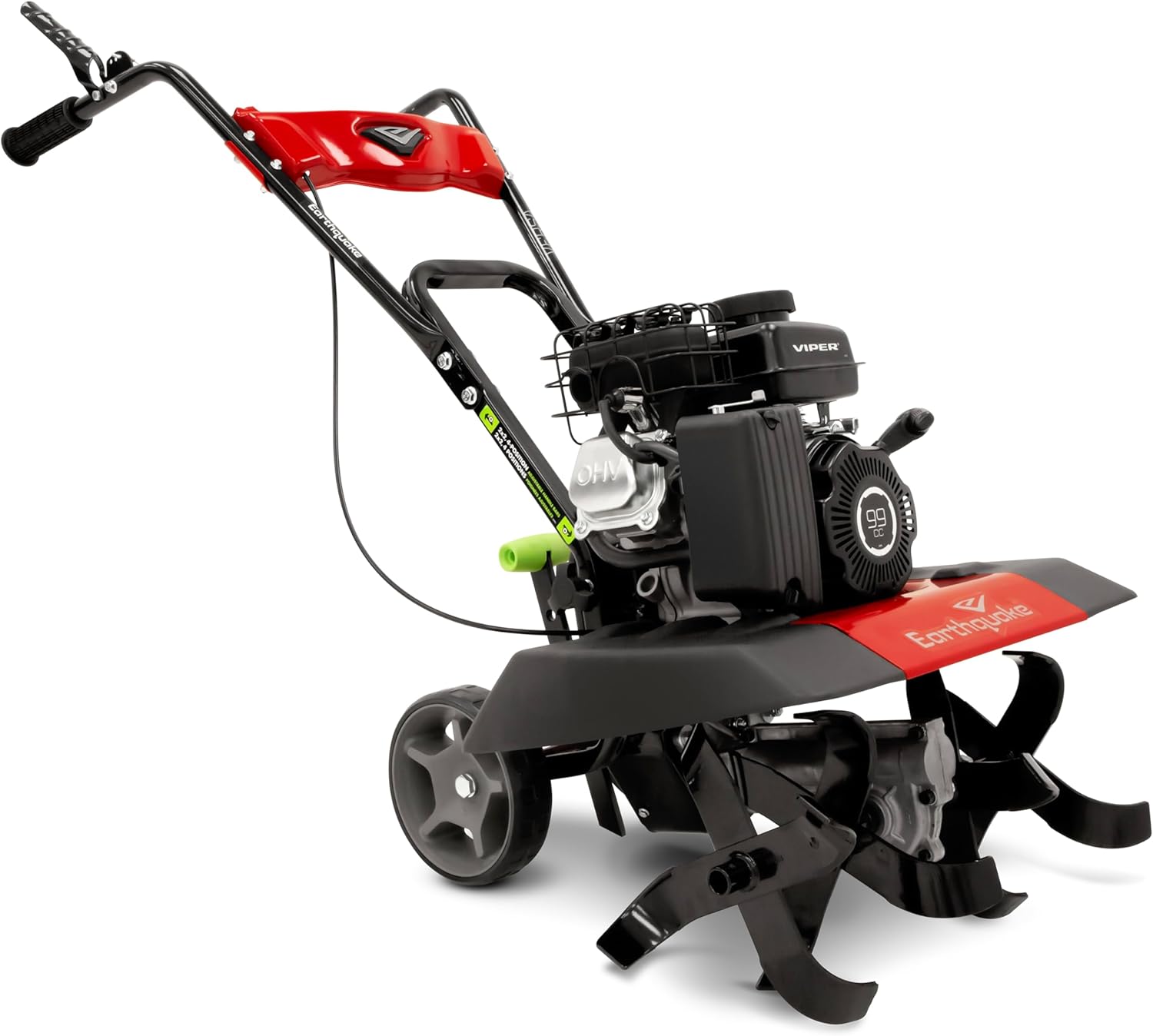
| Engine | 99cc 4-cycle Viper |
|---|---|
| Tilling width | Adjustable 11" to 21" |
| Tilling depth | Up to 11" |
| Power source | Gas powered |
The Earthquake Versa is a two-in-one front-tine tiller and cultivator built around a 99cc 4-cycle Viper engine; it handles both preparing large garden beds and working narrow rows by removing outer tines and side shields. In tiller mode the 21-inch maximum width and deep 11-inch depth let you break compacted soil and prepare seedbeds quickly, while the 11-inch cultivator setting makes it easy to work between plants and along fences. Tool-less removal of outer tines and integrated transport wheels speed conversion and moving the unit around the yard. The low center of gravity and adjustable handlebar height improve control during use, and the onboard wheels reduce lifting when transporting. Because it is gas powered, expect routine engine maintenance, noise, and fuel handling compared with electric alternatives, and its front-tine design is better for garden rows than heavy-duty sod or clay in large acreage jobs. For homeowners who want a reliable, convertible gasoline tiller for regular garden prep and midseason cultivating, the Versa covers both roles without specialized tools.
Best for: Home gardeners who want a dependable gas machine that can both prepare full beds in spring and work narrow rows midseason, and who prioritize a versatile, easy-to-convert tool over quieter electric alternatives.
Less Ideal for: People who need a quiet, low-maintenance electric option or who must till very large areas of heavy sod or clay where a rear-tine, heavy-duty machine would be more efficient.
- Convertible 2-in-1 design switches quickly between 21" tiller and 11" cultivator without tools
- Powerful 99cc 4-cycle Viper engine suitable for breaking compacted garden soil
- Tilling depth up to 11" lets you prepare deep seedbeds and remove stubborn roots
- Integrated transport wheels and adjustable handlebar height improve maneuverability and handling
- Gas engine requires regular maintenance, fuel, and produces noise and exhaust
- Front-tine layout is less efficient than rear-tine tillers for very large or heavy sod removal
Verdict: Choose the Versa if you want one gas tiller that reliably converts to a narrow cultivator so you can both prep large beds and work tight rows with the same machine.
TAZZ 2-in-1 Front Tine Tiller Cultivator, 79cc Viper Engine
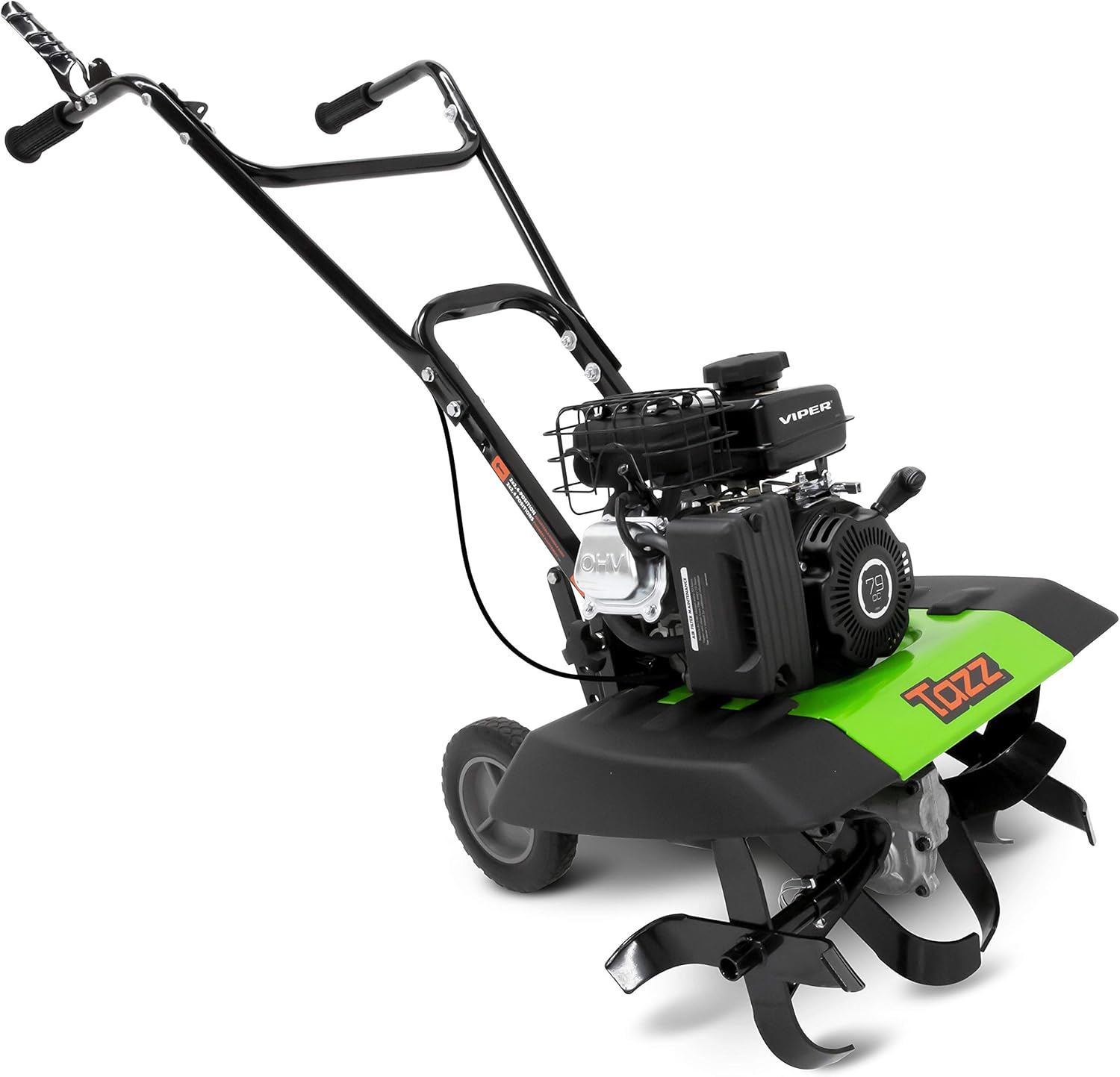
| Engine | 79cc 4-cycle Viper |
|---|---|
| Tilling width | Adjustable 11", 16", 21" |
| Max tilling depth | 11" |
| Power source | Gas Powered |
The TAZZ 2-in-1 front tine tiller/cultivator is a gas-powered tool designed to prepare seedbeds and maintain garden rows without needing separate machines. It pairs a 79cc Viper 4-cycle engine with a bronze gear drive and forged steel tines to deliver enough torque to break compacted soil while remaining maneuverable for smaller plots. Switching between full tiller mode and narrower cultivator widths is tool-free: removing outer tines and side shields lets you choose 21, 16, or 11 inch working widths, and a multi-position drag stake controls depth up to 11 inches. Four handle height positions and a low center of gravity make it easier to steer and control at the end of rows. For a cautious buyer, the use of proven mechanical components and a simple recoil start make operation predictable, and the included three-year limited warranty and US-based support add reassurance. Bear in mind it is gas powered, so it requires fuel, routine maintenance, and storage space compared with electric alternatives.
Best for: Shoppers who want a reliable, conventional gas-powered tiller that handles both initial bed preparation and seasonal row maintenance and who prioritize proven mechanical durability and straightforward service.
Less Ideal for: Gardeners who need a zero-emission, low-maintenance electric option or who routinely work very large plots where rear-tine commercial tillers are more efficient.
- Powerful 79cc 4-cycle Viper engine provides strong tilling performance
- Forged steel tines and bronze gear drive for durable, long-lasting operation
- Tool-free adjustment between 11", 16", and 21" widths for versatile use
- Adjustable tilling depth up to 11" and four handle heights improve control and ergonomics
- Requires gasoline and routine engine maintenance
- Front-tine design is better for smaller beds and may struggle in very large acreage tasks
Verdict: A sturdy, two-mode gas cultivator that gives risk-averse buyers a dependable, serviceable solution for prepping and maintaining garden beds.
MAXLANDER 14-Inch 12A Electric Corded Tiller & Cultivator

| Cutting width | 14 inches |
|---|---|
| Tilling depth | 8 inches |
| Motor | 12 Amp |
| Power source | AC electric |
| Tines | 4 steel tines |
The MAXLANDER 14-inch corded tiller is a budget-friendly front-tine cultivator aimed at small to medium garden beds and light soil work. It uses a 12-amp AC motor driving four steel tines to till up to a 14-inch width and roughly 8 inches deep, making it suitable for breaking up topsoil, mixing amendments, and preparing planting rows. The collapsible handle and small transport wheels help with storage and moving the unit around a yard. Safety features include a dual-start control and overload protection for safer operation. Practical benefits are simple plug-and-play power, modest weight for one-person handling, and enough cutting width for efficient passes in narrow beds. Important limitations are that corded power restricts range and performance compared with heavier gas models, the tine arrangement and motor are best for light to medium soils rather than heavy clay or rocky ground, and the shallow depth means multiple passes may be needed for deep cultivation. For its class it offers a sensible, straightforward option for routine garden prep where portability and cost matter most.
Best for: Gardeners on a tight budget who need an easy-to-use, low-maintenance tiller for small beds, raised planters, and light soil preparation.
Less Ideal for: Landscape professionals or gardeners with large plots, compacted clay, or rocky soil who need higher power, deeper tilling, or cordless mobility.
- 14-inch cultivating width covers narrow beds efficiently
- 12-amp electric motor provides plug-in power without fuel maintenance
- Foldable handle and wheels for easier storage and transport
- Steel tines suitable for light to medium soil mixing
- Corded design limits working range compared with cordless or gas tillers
- Not intended for heavy clay, roots, or rocky conditions
Verdict: A cost-conscious, easy-to-handle corded tiller that does a solid job on small beds and light soil prep.
Mutaomay 212cc Gas-Powered Front-Tine Garden Tiller (21" Width)

| Power Source | gas_powered |
|---|---|
| Material Type | High Carbon Steel |
| Unit Count | 1 Count |
| Number of Items | 1 |
This Mutaomay gas tiller is built for heavy-duty garden work: a 212cc 4-stroke engine drives 4×4 steel tines across a 21-inch path to break compacted soil, mix compost, and prepare seedbeds. It uses forward and reverse transmission, which makes maneuvering in long rows and turning in tight spaces much easier than a simple push-only machine. The adjustable multi-height handlebar helps reduce operator strain during long sessions and the large fuel tank supports extended runs between refills. Notable practical benefits are the aggressive tine design for clay and hard-packed ground and the transport/cultivation wheel that switches modes for moving the machine versus deep tilling. Limits to consider are the machine weight and size, which make it better suited to larger plots and users comfortable with gasoline equipment, plus higher maintenance compared with electric models. For gardeners who need reliable, continuous power for big areas, this tiller delivers robust performance but requires regular fuel and engine upkeep.
Best for: Gardeners and small-scale farmers who need dependable, continuous power to prepare and maintain large beds or tough soil and who prioritize a rugged, workhorse machine over lightweight convenience.
Less Ideal for: Those with very small urban plots, users who prefer low-maintenance electric tools, or anyone unable or unwilling to perform regular engine maintenance.
- Powerful 212cc 4-stroke engine for sustained performance on large or compacted plots
- Forward and reverse transmission for easier maneuvering and better control
- Heavy-duty 4×4 steel tines that penetrate hard soil and resist clogging
- Adjustable multi-height handlebar reduces operator fatigue during long jobs
- Heavy overall weight makes transport and storage more difficult
- Requires gasoline engine maintenance and occasional tuneups
Verdict: If you need a robust, gas-powered tiller that can reliably break hard soil and cover large garden areas, this Mutaomay 212cc front-tine tiller is built for the job.
Sun Joe TJ603E 16-Inch Corded Electric Garden Tiller & Cultivator

| Power Source | Corded Electric |
|---|---|
| Motor | 12 Amp |
| Tilling Width | 16 Inch |
| Tine Material | Steel |
The Sun Joe TJ603E is a compact corded tiller and cultivator built to break up soil and prepare garden beds quickly. It uses a 12-amp electric motor to power six angled steel tines that cultivate a 16-inch swath and reach about 8 inches deep, making it a good choice for turning small to medium vegetable plots, flower beds, and prepping new planting rows. The folding handle and three-position wheel adjustment make it easy to set working depth and transport or store in a garage. Being electric, it runs cleaner and quieter than gas models and requires little maintenance beyond keeping tines clean. Practical limitations are the corded power source, which restricts reach without an extension, and the unit is intended for lighter soils and moderate workloads rather than heavy, compacted ground or commercial-scale tilling. For gardeners who want reliable, low-maintenance performance for routine bed preparation, this machine delivers straightforward, efficient results.
Best for: Gardens where routine bed preparation and moderate digging are the priority; ideal for homeowners who want a low-maintenance, reliable electric tool to prep vegetable plots and flower beds quickly.
Less Ideal for: Large acreage, professional landscapers, or anyone who needs to break up dense, compacted clay or heavy turf should consider a more powerful gas or heavy-duty tiller instead.
- Decent 12-amp motor for consistent power during typical home gardening tasks
- Six angled steel tines for effective soil turnover and durability
- 16-inch tilling width covers beds efficiently for quicker passes
- Folding handle and adjustable wheel positions for easier transport and storage
- Electric operation reduces maintenance and eliminates gas fumes and oil
- Corded design limits working range without an outdoor extension cord
- Not intended for very hard, compacted soils or commercial-scale tilling
Verdict: A practical, low-maintenance electric tiller that delivers dependable performance for routine garden bed preparation.
Sun Joe Corded Electric Garden Tiller & Cultivator TJ604E

| Power Source | Corded Electric |
|---|---|
| Motor | 13.5-Amp |
| Tilling Width | Up to 16 inches |
| Tilling Depth | Up to 8 inches |
The Sun Joe TJ604E is a compact corded electric tiller built to prepare small garden plots and flower beds without the fuss of gas maintenance. It runs on a 13.5-amp motor that tills a 16-inch-wide swath up to 8 inches deep, using six angled alloy steel tines that resist rust and handle light to medium soil. The folding handle and three-position wheel adjustment make it easy to store and to control working depth across different soil types. As an electric machine it delivers quieter, cleaner operation and continuous power as long as you have an outlet nearby, which simplifies upkeep compared with small gas tillers. Limitations include dependence on a cord for power, which restricts range and requires care to avoid tangling, and it is best suited for softened or loamy soils rather than heavy clay or rocky ground where a more powerful gas model would perform better.
Best for: Gardeners who want a low-maintenance, easy-to-use cultivator for preparing and refreshing small vegetable beds, flower borders, or starter plots and who prioritize simplicity and reliable electric power.
Less Ideal for: Large-acreage gardeners or those who regularly work compacted clay or rocky ground should consider a heavier gas-powered tiller or professional equipment instead.
- 13.5-amp motor provides steady power for small to medium garden beds
- Six angled alloy steel tines designed to resist rust and cultivate effectively
- Folding handle and compact footprint for easy storage and transport
- Three-position wheel adjustment for better control of tilling depth
- Corded electric design means quieter operation and low maintenance
- Corded power limits working range and requires attention to avoid the cord
- Not intended for very heavy clay, large roots, or rocky conditions
Verdict: If you need a simple, low-maintenance electric tiller to quickly prepare and maintain small gardens, the Sun Joe TJ604E delivers reliable power and easy storage.
Choosing the Right Front Tine Garden Tiller: Key Factors to Consider
Engine or Motor Power and Torque
How much power a front tine tiller delivers determines whether it can break through compacted ground or only skim loose soil. Higher torque helps the tines bite into clay or previously untilled ground without stalling. For small vegetable patches, moderate power can be sufficient, but heavier soils require a stronger engine or motor to maintain forward progress and consistent tine speed.
Power delivery also affects fuel or electricity consumption and how the machine manages load changes when you hit roots or rocks. Consider the availability of service for engines and whether an electric model provides enough continuous torque for your soil type.
Tine Design, Tilling Depth, and Mixing Action
Tine shape, number, and rotation speed dictate how finely the soil is broken and how well amendments are incorporated. Deeper tilling capability is useful when you need to loosen compacted layers or incorporate compost deeply, while shallower settings are better for seedbed finishing. A reversible tine setup or adjustable depth control gives you more flexibility for different tasks.
Tine spacing and action influence clumping and the need for follow-up raking. Narrow, closely spaced tines tend to produce a finer tilth, while wider tines move more soil faster but can leave larger clods. Think about the mix of tasks you will do most often.
Working Width and Coverage
The effective tine width determines how many passes you need to cover a bed. Wider units reduce time on large plots but are harder to maneuver in narrow beds and between established plants. Narrower tillers excel in tight spacing and around row crops but require more passes for bigger areas.
Consider garden layout, gate and storage access, and whether you will be tilling raised beds, pathways, or open rows. A balance between width and maneuverability often offers the best all-around performance for home gardens.
Maneuverability and Operator Control
Front tine tillers are used in close proximity to beds, beds edges, and other obstacles, so steering responsiveness and balance are critical. Good operator controls include accessible throttle, clear depth adjustment, and a handle design that reduces vibration and fatigue. Lighter units are easier to pivot but can be blown off line in heavier soil, while heavier machines can steer more steadily but require more effort to turn.
Check how easily the machine reverses or backs out of tight spots and whether the handles allow comfortable control while walking at a steady pace.
Construction Quality and Component Durability
Materials and assemblies that contact soil take the most abuse. Look for robust tine shafts, sealed gearboxes or drives, and sturdy frames that resist flexing. Corrosion-resistant finishes and replaceable wear parts extend service life in wet or acidic soils. Bolted connections and accessible fasteners make future repairs or part swaps simpler.
Durability affects long-term ownership costs and how often you need to service bearings, belts, or gearbox seals. For a home gardener, a midweight durable build usually offers the best balance of longevity and usability.
Serviceability and Maintenance Access
Daily garden tasks demand straightforward routine care. Easy access to air filters, spark plugs, belts, and grease fittings reduces downtime and keeps performance consistent. Clear owner controls for depth adjustment and simple tine removal speed up seasonal storage or winterization.
Consider how parts are accessed with basic tools and whether the design makes routine checks quick. Machines that hide key components behind complex panels increase service time and can discourage proper maintenance.
When a Front Tine Tiller Is the Right Choice
Front tine tillers excel at breaking new ground in home gardens and for tasks that need a mix of power and precision. They are especially useful when you need to loosen compacted topsoil, incorporate compost, or create planting rows without the footprint of rear-tine commercial machines.
Choose a front tine tiller when your beds are narrow, you need quick turning, or you want a lighter, more maneuverable machine for spot work. They are also easier to store than larger tillers and typically require less physical effort to handle around established plants.
- Best for garden beds, pathways, and small plots
- Good balance between power and maneuverability
- Easier storage and lighter handling than large rear-tine tillers
Preparing Soil Before Tilling
Walk the area and remove large surface debris, rocks, and woody roots that can damage tines. If the soil is extremely dry or baked, lightly moisten the area a day before tilling to reduce dust and improve tine bite.
Mark any irrigation lines, shallow cables, or buried features to avoid damaging them. Pre-spreading compost or bulk amendments can help a tiller incorporate organic matter more evenly, but avoid piling too much in a single pass as it can bog down the machine.
- Clear debris and obstacles before starting
- Water very dry soils lightly the day before
- Mark buried utilities and irrigation lines
Operating Tips for Consistent Results
Start with a shallow pass to cut through surface crust and then increase depth in a second pass for compacted areas. Keep a steady walking pace and avoid forcing the tiller; let the tines pull the machine through the soil. If you hit resistance, ease off the throttle and re-evaluate depth or make a narrower pass.
To avoid creating a hardpan, vary your depth across seasons and avoid always working at the exact same depth. Finish with a light pass or a rake to break clods and create a smooth seedbed.
- Begin with a shallow pass then deepen as needed
- Maintain steady pace and let tines set the rhythm
- Use a final rake pass to refine the seedbed
Storing and Winterizing Your Tiller
Clean soil from tines, gearbox areas, and air intakes after use to prevent corrosion and buildup. Drain or stabilize fuel for long-term storage and follow basic engine winterization steps for gas models.
Store the tiller in a dry, covered location off the ground if possible. Periodically check for loose bolts, worn tines, and belt tension to catch small issues before the next season.
- Clean tines and drive areas after each use
- Stabilize fuel and follow engine winterization steps
- Inspect fasteners and wear parts before storage
Alternatives and Complementary Tools
For very small plots or container gardens, hand tools or mini cultivators may be sufficient and offer more control around plantings. For large, heavily compacted areas, a rear-tine tiller or hiring mechanized prep may be more efficient.
Consider complementary tools such as a garden fork for deep loosening, a broadfork for no-till beds, or a lightweight power rake for finishing. Matching the tool to the specific task reduces the need for overpowered machines.
- Hand tools for very small or delicate work
- Rear-tine machines for large, compacted plots
- Broadforks and forks for deep, no-till loosening
How We Chose the Best Front Tine Garden Tiller
We focused on machines suited to small and medium home gardens and evaluated models against gardener-centered, measurable criteria. Key evaluation criteria included engine or motor torque and usable tilling depth to judge how well a machine breaks compacted soils. We assessed tine design and width for how quickly a unit cultivates and mixes amendments. Maneuverability tests focused on steering, weight balance, and ease of reversing or pivoting in tight beds. Build durability examined drivetrain components, tine shafts, and frame robustness for seasonal use. Ease of maintenance and access to common service points rounded out the criteria to reflect long-term ownership. We excluded heavy-duty commercial rototillers and extremely lightweight cultivators that are not designed to penetrate compacted ground. Models that performed poorly in simulated compacted soil or lacked clear maintenance features were not considered. The final list balances usable power, practical handling in garden beds, and long-term serviceability so gardeners get reliable performance for common prep and planting tasks.
FAQ
How deep will a typical front tine tiller dig?
Depth varies by model but many front tine tillers reach 4 to 8 inches on a single pass. Multiple passes or a heavier unit are usually needed to break deeper compaction.
Can I use a front tine tiller in clay soil?
Yes, but clay often requires higher torque and a couple of passes. Lightly moistening the soil before tilling and using shallower, successive passes helps prevent clumping.
Are front tine tillers hard to maneuver in tight beds?
They are generally easier to handle than larger rear-tine machines, but width and weight matter. Narrower tines and a well-balanced frame improve control in tight spaces.
How often do I need to replace tines or service the gearbox?
Tine lifespan depends on soil abrasiveness and use frequency. Inspect tines annually for wear and check gearbox seals and oil levels according to the operator manual. Frequent use in rocky soil accelerates wear.
Is an electric front tine tiller powerful enough for a home garden?
Electric models can be adequate for light to moderate tasks and offer cleaner operation. For compacted or heavy clay soils, a gas model with higher torque may perform better.
Can I adjust the working width on a front tine tiller?
Some models offer removable or adjustable tine assemblies to change effective width. If width flexibility is important, look for tine designs that allow easy configuration changes.
Final Verdict
Choose a front tine garden tiller that matches your soil conditions and garden layout rather than the highest power rating alone. Prioritize torque and tine action for breaking compacted ground, then consider working width and maneuverability for the beds you maintain. Good construction and easy maintenance will extend service life and reduce downtime. Balanced tradeoffs between power, handling, and serviceability will deliver the most practical machine for most small to medium home gardens. Focus on the criteria outlined here to pick a tiller that makes seasonal prep faster and more consistent.
