

Note: This article contains affiliate links. If you click on these links and make a purchase, I may earn a small commission at no extra cost to you. This helps support my research and content. Read my full affiliate disclosure here.
Getting trenches right matters whether you are installing irrigation, laying cable, or planting root crops. The wrong shovel costs time and effort and can leave uneven bottoms or ragged sides that complicate the next steps. This guide focuses on garden shovels for digging trenches and narrows the field to five well-suited options chosen for their digging geometry, durability, and day-to-day handling. You will find short summaries of each shortlisted shovel and clear notes on the performance aspects that matter in real digging work. We evaluated blade profile, shaft length and strength, and ergonomic features so you can pick a tool that matches your soil and the trench depth you need. Read on to compare the top picks and find the right trenching shovel for your garden tasks.
Top Picks at a Glance
| Best Overall The best all-around choice for most situations | Nohovu 4-Inch Trench Shovel with Fiberglass Handle, 56-Inch |  |
| Best Value The sweet spot between price and what you get | WIKER Drain Spade Shovel with Fiberglass Handle |  |
| Best Budget The cheapest option that still gets the job done reliably | Truper Tru Pro 47-Inch Trenching Shovel with 4-Inch Blade and Ash Handle |  |
| Highest Rated A top-rated pick with lots of positive feedback | Truper TruPro 47" Trenching Shovel with 5" Narrow Steel Blade |  |
| Most Popular A crowd favorite that many people choose with confidence | VNIMTI 4-inch Trenching Shovel with Fiberglass Handle, 56-inch |  |
Nohovu 4-Inch Trench Shovel with Fiberglass Handle, 56-Inch

| Blade Material | Carbon Steel |
|---|---|
| Handle Material | Fiberglass |
| Blade Length | 11.4 inches |
| Gauge | 4 |
This Nohovu 4-inch trench shovel is built for narrow, precise digging tasks like utility trenches, transplanting, and edging. The V-shaped, sharp carbon steel blade holds soil while you lift it out of a trench, and the narrow 4-inch profile makes it easy to work in confined rows and between plants. The fiberglass handle keeps the tool relatively light and reduces shock transfer, while the ergonomic rubberized grip improves control during repetitive digging. At 56 inches overall length the long handle reduces bending and helps preserve the lower back when digging deeper runs. Expect a durable blade that will stand up to routine garden and landscaping use, though very rocky ground will blunt the edge faster and extremely heavy clay may require more leverage or a sturdier gauge. For balanced gardeners who need a single shovel that handles trenching, planting, and narrow digging tasks, this tool offers a practical mix of precision and durability.
Best for: Gardeners who want one reliable, all-around trenching shovel for transplanting, narrow trenches, and general beds where precision and reduced back strain matter.
Less Ideal for: Landscapers who primarily dig through rock, hardpan, or remove large sections of sod should consider a heavier-duty or wider-head shovel instead.
- 4-inch narrow V-shaped blade ideal for precise trenching and working between plants
- Carbon steel blade provides sharpness and durability for routine garden digging
- Fiberglass handle keeps the tool lightweight and reduces shock transfer
- Long 56-inch handle reduces back bending during deeper trenches
- Ergonomic non-slip grip improves control during repetitive use
- Blade may dull faster in very rocky or abrasive soils
- Not optimized for heavy sod removal or extremely compacted clay where a heavier-duty shovel is preferable
Verdict: A practical, lightweight trench shovel that balances precision and durability for most backyard trenching and transplanting tasks.
WIKER Drain Spade Shovel with Fiberglass Handle

| Blade Length | 14.4 inches |
|---|---|
| Handle Material | Fiberglass |
| Blade Material | Metal |
| Grip Type | Ergonomic D-grip |
This WIKER drain spade is built for precise digging tasks like trenching for irrigation, transplanting, and narrow hole digging near existing plants. The narrow 14.4-inch blade and hardened steel construction let you cut neat, deep trenches and pull intact root balls with less disturbance to surrounding soil. The fiberglass handle provides good toughness and weather resistance compared with wood while the ergonomic D-grip helps apply leverage during longer jobs. Practical features include a rust-resistant multi-layer blade finish and a slim profile that makes it easier to work in tight beds or beside established plants. It is best suited to homeowners and gardeners who need a durable, purpose-built tool for repeated trenching and targeted digging rather than broad scooping. The shovel is not a substitute for a spade with a wide blade when you need to move large volumes of soil, and users should expect a narrower blade to be slower for bulk digging but superior for accuracy and working in confined areas.
Best for: Gardeners who prioritize efficient, accurate trenching and transplanting in beds or around plants and want a durable tool that stands up to frequent outdoor use.
Less Ideal for: People who mostly need to move large amounts of soil, mix compost, or perform heavy-duty scooping should choose a wider spade or digging shovel instead.
- Narrow hardened-steel blade cuts clean trenches and precise planting holes
- Fiberglass handle resists weathering and offers stronger toughness than wood
- Ergonomic D-grip improves leverage and reduces hand fatigue during digging
- Multi-layer anti-corrosion coating increases blade durability in wet soil
- Narrow blade is slower for moving large volumes of soil compared with wide spades
- Metal blade may require occasional sharpening or rust care over many years
Verdict: Choose this narrow drain spade when you need a weather-resistant, precise digging tool for clean trenches and careful transplanting.
Truper Tru Pro 47-Inch Trenching Shovel with 4-Inch Blade and Ash Handle

| Blade Material | Alloy Steel |
|---|---|
| Handle Material | Ash Wood, Alloy Steel |
| Gauge | 14 |
| Blade Width | 4-Inch |
This Truper Tru Pro trenching shovel is a traditional long-handled tool aimed at cutting narrow trenches for irrigation, edging, or cable runs. The 4-inch alloy steel blade and 14-gauge construction provide a rigid cutting edge for slicing through topsoil and light compacted dirt, while the 47-inch white ash handle offers reach and a bit of shock absorption during repetitive digging. It is typically used by planting beds, lawn irrigation, or running drip lines where a narrow trench is needed. The socket is riveted to the handle for a secure connection and the wood grip gives familiar feel and control. Expect straightforward, dependable performance for routine trenching tasks, and a tool that is easy to swing and position in tight lines. The main limitations are that the narrow blade is not suited for heavy rock, very compacted clay, or prying large roots, and a wooden handle needs occasional maintenance to avoid splintering or weathering over time.
Best for: Practical gardeners and landscapers who need an affordable, no-frills trenching shovel for regular narrow trenches and irrigation lines.
Less Ideal for: Those who frequently dig in rocky ground, dense clay, or need a pry-capable tool for large roots should choose a heavier-duty or specialized shovel instead.
- Narrow 4-inch alloy steel blade designed for clean, precise trench cuts
- 47-inch white ash handle provides good reach and natural shock absorption
- 14-gauge steel blade and riveted socket offer solid durability for routine garden work
- Not intended for heavy rock, very compacted clay, or extensive root removal
- Wood handle requires periodic care to prevent weather damage or splintering
Verdict: A straightforward, budget-friendly trenching shovel that delivers precise narrow cuts and dependable performance for routine garden trenching tasks.
Truper TruPro 47" Trenching Shovel with 5" Narrow Steel Blade

| Blade Width | 5-inch |
|---|---|
| Handle Material | Ash Wood |
| Blade Material | Steel Alloy |
| Gauge | 14 |
| Item Count | 1 |
The Truper TruPro trenching shovel is built for focused trench work like drainage lines, irrigation ditches, and laying small conduit. Its 5-inch narrow steel blade lets you cut a clean, precise channel and scoop out loose soil without disturbing too much surrounding ground. Rolled forward steps across the blade give secure foot placement for driving the blade into compacted soil, and the reinforced steel socket anchors the head to the hardwood handle for a solid connection suited to repeated use. The 47-inch overall length provides good leverage for digging while the contractor-grade construction and 14-gauge blade indicate it can withstand tougher jobs than a light garden shovel. Limitations are its narrow profile, which is not for moving large volumes of soil, and the wooden handle requires occasional care to avoid weather damage compared with fiberglass or composite options. For anyone needing a dependable tool for narrow trenches, this model focuses on durability and control rather than bulk excavation.
Best for: Buyers who prioritize a durable, no-nonsense tool for making neat, narrow trenches and who prefer proven mechanical reliability over lighter multiuse shovels.
Less Ideal for: Gardeners who need to move large volumes of soil quickly or who prefer maintenance-free composite handles should consider other shovel types.
- 5-inch narrow steel blade for precise trenching and clean channels
- Rolled steps across the blade for comfortable, secure foot placement
- Reinforced steel socket joint that firmly secures the head to the handle
- 47-inch ash wood handle gives strong leverage and traditional durability
- 14-gauge blade built for heavier, contractor-grade use
- Narrow blade is not efficient for moving large amounts of soil
- Wood handle needs periodic maintenance to protect from rot and weathering
Verdict: Choose this shovel when you want a reliable, contractor-grade tool that makes neat, controlled trenches and stands up to regular use.
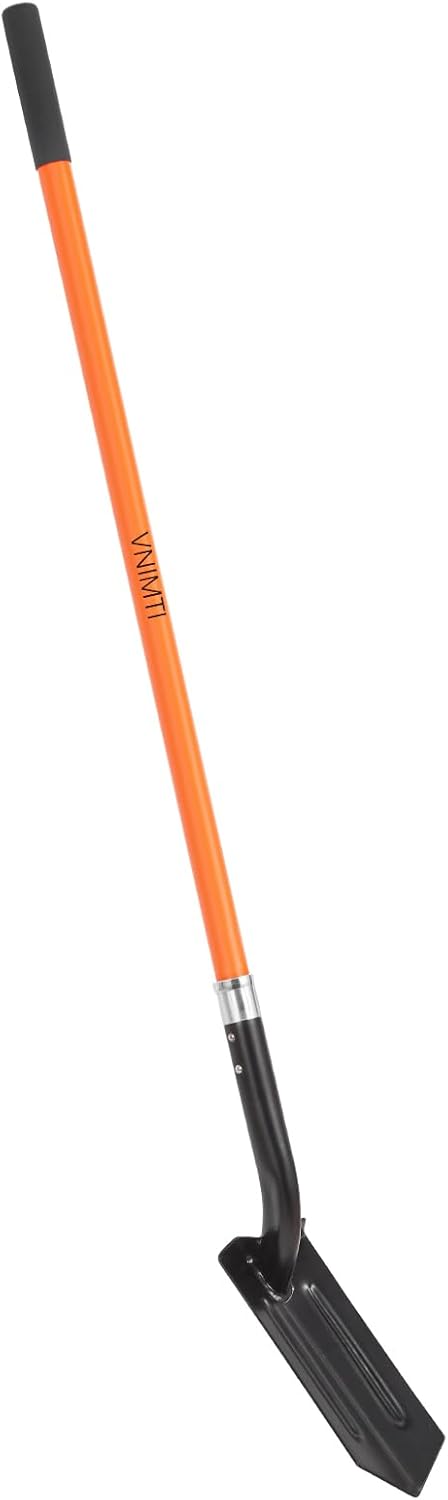
VNIMTI 4-inch Trenching Shovel with Fiberglass Handle, 56-inch
| Material Type | Fiberglass, High Carbon Steel |
|---|---|
| Handle Material | Fiberglass |
| Blade Material | Alloy Steel |
| Grip Type | Ergonomic |
The VNIMTI trenching shovel is built for narrow, precise digging tasks like irrigation lines, cable trenches, and transplanting small shrubs. Its 4-inch V-shaped alloy steel blade concentrates force for clean, straight trenches and slices through compacted soil more easily than a wide shovel. A fiberglass handle keeps the tool relatively lightweight and reduces vibration transfer to the hands while the ergonomic grip area improves hold when wet. At 56 inches overall, the handle reduces stooping and eases back strain during longer runs of trenching. The construction blends high-carbon steel for blade strength with a fiberglass shaft for durability, but the narrow blade is not suited to moving large volumes of soil or digging very rocky ground where a sturdier all-steel shaft might be preferable. For routine garden trenching and precise digs around plants, it does the job efficiently; for heavy demolition or deep rocky trenches you may want a heavier-duty digging bar or broader shovel instead.
Best for: Gardeners who need a reliable tool for accurate trenching, irrigation lines, or transplanting and who prioritize clean cuts and reduced back strain during repetitive digging.
Less Ideal for: Contractors or gardeners who regularly move large volumes of soil, dig deep rocky trenches, or need a heavy-duty demolition tool should consider a broader or all-steel digging tool instead.
- 4-inch V-shaped alloy steel blade for narrow, precise trenches
- Fiberglass handle keeps weight down and reduces vibration
- Ergonomic non-slip grip area for secure handling even when wet
- 56-inch length reduces bending and eases back strain during extended use
- Narrow blade limits how much soil can be moved per pass and slows large-volume work
- Fiberglass shaft may be less impact-resistant than a full steel handle in very rocky conditions
Verdict: Buy this shovel if you want a lightweight, long-handled tool that makes narrow, accurate trenches quickly and with less back strain.
Choosing the Right Garden Shovel for Digging Trenches: Key Factors to Consider
Blade Shape and Profile
Blade shape dictates how cleanly you can cut a trench wall and how much soil the shovel lifts with each stroke. A narrow, elongated blade with a straight or slightly rounded face usually makes the neatest vertical cuts, while a wide, curved blade is better for scooping but tends to gouge. Blade thickness and edge geometry also influence how well it holds a sharp edge and resists bending when you push into compacted earth.
When trenching, look for a bevel and width that match the trench purpose. For narrow irrigation or cable trenches, a long, narrow blade produces consistent depth and a straight bottom. For wider shallow trenches, a slightly broader blade can reduce the number of passes. Blade profile also affects how easily you can pry out roots or rocks without spreading the trench sides.
Shaft Length and Stiffness
Shaft length changes leverage, posture, and how deep you can work before stooping. A longer shaft reduces bending and lets you drive the blade deeper with body weight, but excessive length can reduce control when you need precise, straight cuts. Stiffness matters because a flexing shaft wastes energy and makes it harder to direct the blade vertically.
Choose a shaft length that matches your height and the typical trench depth you plan to dig. For frequent deep trenches, a stiffer, slightly longer shaft helps transfer force efficiently. For fine, short trenches or tight spaces, a shorter shaft gives better maneuverability and turning control.
Handle Comfort and Ergonomics
Comfortable grips reduce fatigue in repetitive trenching. Handle shape, diameter, and material determine how well you can maintain control while driving the blade and levering out soil. A D-handle helps with two-handed pulling motions, while a straight long handle is better for body-weight drives. Textured or cushioned grips reduce slipping in wet conditions and limit blisters during extended work.
Ergonomic details matter most when you are digging for long periods or in compacted clay that requires extra force. Look for handles with secure fastenings to the shaft and designs that allow you to shift hand position easily between pushing and levering motions.
Material and Durability
Material choice affects how the shovel stands up to rocks, roots, and moisture. Heat-treated steel or forged heads resist bending and edge damage better than stamped thin metal. Coatings that resist rust extend service life when the tool is stored in a damp shed. The point where blade meets shaft is a frequent failure zone, so solid welds, socketed heads, or mechanical fasteners matter for longevity.
Durable materials also mean the tool keeps a usable edge longer and requires fewer repairs. Consider replaceable or serviceable parts if you expect heavy use or encounter abrasive soils regularly.
Soil Penetration and Ground Conditions
Different soils demand different shovel behavior. Sandy loam allows fast penetration and clean lifts, while clay or compacted ground requires sharper edges and more force. Rocky soils place emphasis on a tougher blade edge and impact resistance. Some shovels are shaped to slice roots and wedge under packed soil; others are built to scoop loosened material after initial cuts.
Assess your garden's predominant ground type before choosing. A shovel that excels in soft soil may dull quickly in rocky clay; conversely, a heavy-duty trenching blade can be overkill for light, sandy beds and add unnecessary weight.
Weight and Balance
Weight affects how tiring the tool is to use over a session and how much force it delivers on each blow or push. Heavier heads increase penetration with less effort but add to fatigue during repeated lifts. Balance between head and shaft influences control for straight cuts and precise depth work.
Seek a tool with enough mass to help drive the blade without being so heavy that frequent lifting becomes punishing. Well-balanced designs let you guide the blade vertically while still using body weight effectively for deeper trenches.
Matching Shovel Geometry to Trench Type
Not all trenches are the same. Narrow utility trenches for pipes and cables need a long, narrow blade to keep walls straight and minimize soil collapse. Planting trenches or root-row trenches for vegetables are often shallower and benefit from slightly wider blades that move more soil with each pass.
Think about the finished trench profile you need and match the shovel geometry accordingly. For long runs where consistency matters, a tool that produces the same width and depth with each cut will save rework and reduce the amount of backfilling required later.
- Narrow, long blades for deep, straight trenches
- Wider blades for shallow, broader trenches
- Serrated edges can help slice roots but may be harder to sharpen
Technique Tips for Cleaner Trenches
Good technique reduces effort and improves trench quality. Start with a shallow guide cut along the trench line to establish a straight path, then deepen the cut incrementally rather than trying to force a full-depth pass at once. Use your foot to drive the blade but keep your back aligned and use leg power to avoid strain.
Remove loosened soil in short sections to prevent it from falling back in. For consistent depths use a measuring stick or repeatable foot placement and consider knocking down the outer lip after each pass to prevent overcutting on curves.
- Make an initial shallow guide cut
- Deepen the trench in controlled increments
- Clear spoil regularly to avoid collapse
Maintaining Your Shovel for Trenching Work
Regular maintenance keeps a trenching shovel effective and reduces the risk of failure on tough jobs. Clean soil from the blade after each use and dry the metal to prevent rust. Sharpen the edge periodically to restore slicing ability in compacted soils.
Check the head-to-shaft attachment and tighten or repair loose fittings before they become a safety hazard. Treat wooden handles with linseed oil to prevent drying and splitting; inspect fiberglass or metal shafts for cracks or bends and replace if compromised.
- Clean and dry after use
- Sharpen edge as needed
- Inspect attachment points and handles before each season
Adapting Tools to Seasonal Conditions
Seasonal changes alter soil behavior and affect the shovel you want at hand. Cold weather can harden soil and make it more likely you will need a heavier-duty blade or to pre-soak the trench line before digging. Conversely, very wet soils can stick to blades and benefit from slick coatings or more aggressive scraping technique.
Plan for storage and seasonal care. Keep spares or a secondary lighter tool for quick surface work if the main trenching shovel is too heavy for daily light tasks.
- Pre-soak hard, dry ground before digging
- Use coatings or regular cleaning to reduce sticking in wet seasons
- Store in a dry place to protect metal and wooden handles
Safety Considerations When Trenching
Trenching can stress the body and expose you to buried utilities or roots that can snag a blade. Always clear the area of known utility lines before digging, and wear gloves and eye protection when cutting through roots and rocky ground. Maintain a stable stance when driving the blade to avoid slips that could result in muscle strain or accidental blade contacts.
When working alone, pace yourself and take breaks to avoid fatigue-related mistakes. If a trench requires mechanical depth beyond hand-tool capability, consider switching to equipment designed for excavating to reduce risk.
- Check for buried utilities before digging
- Wear gloves and eye protection
- Avoid overexertion; take regular breaks
How We Chose the Best Garden Shovel for Digging Trenches
We started by identifying shovel features that directly affect trench digging performance and excluded tools intended for scooping, edging, or heavy excavation that sacrifice blade control. Editorial filters prioritized blade geometry, material strength, handle length and attachment method, and ergonomics for repeated forward-and-back motions. Evaluation criteria included blade profile and thickness for clean vertical cuts, shaft length and stiffness for leverage and control, handle comfort and grip for reduced fatigue, and overall durability including attachment points and corrosion resistance. We also considered typical soil conditions and how a shovel's geometry performs in clay, loam, and mixed soils. Tools that were primarily designed for transplanting, edging, or utility scooping were excluded because their shapes and sizes do not produce neat trench walls or consistent depths. To produce a practical shortlist we reviewed specifications and user feedback focused on real-world trenching tasks, emphasizing longevity and repairability. The final picks balance trenching efficiency, user comfort, and durability so gardeners can rely on a single shovel for repeated trenching jobs.
FAQ
What blade width is best for a narrow irrigation trench?
A long, narrow blade is usually best for irrigation trenches because it keeps walls straight and limits disturbance. Narrow blades reduce the amount of fill to remove and make it easier to achieve a consistent bottom.
How often should I sharpen a trenching shovel?
Sharpening frequency depends on soil type and use. In abrasive or rocky soils you may need to touch up the edge several times per season. In softer soils, once or twice a season is often enough to maintain good penetration.
Is a D-handle or straight handle better for trenching?
Both have advantages. D-handles provide secure two-handed pulls and are helpful when levering out tight clods. Straight handles allow better use of body weight to drive the blade for deeper cuts. Choose based on the typical motion you use most.
Can I use a spade instead of a trenching shovel?
A spade with a broad, flat blade tends to be better for scooping and edging rather than making vertical trench walls. For neat, deep trenches a narrower trenching-style blade will produce cleaner sides and a more consistent depth.
How should I store a shovel to prolong its life?
Clean off soil and dry the metal before storage. Keep the tool in a dry, ventilated area and treat wooden handles with oil to prevent cracking. Hanging the shovel off the ground reduces moisture exposure and accidental warping.
Final Verdict
Choosing the right garden shovel for digging trenches comes down to matching blade geometry, shaft length, and handle ergonomics to your soil and the trench profile you need. Prioritize a blade shape that produces clean vertical cuts, a stiff shaft for control, and a comfortable grip if you expect extended work. Expect tradeoffs between weight and ease of penetration versus day-long comfort. Focus on the criteria discussed here to pick a shovel that balances efficiency and durability so you can dig straighter, deeper trenches with less effort and less rework.
