

Note: This article contains affiliate links. If you click on these links and make a purchase, I may earn a small commission at no extra cost to you. This helps support my research and content. Read my full affiliate disclosure here.
If your irrigation system runs at low pressure or you want to conserve water, choosing the right low pressure garden sprinkler matters for plant health and yard appearance. Low-pressure sprinklers are designed to deliver even coverage without blasting soil or damaging seedlings, which makes them a better match for older systems, drip-support setups, and water-restricted landscapes. This guide shortlists six top options that perform well in low-flow conditions and explains the practical criteria used to evaluate them, including coverage patterns, flow efficiency, and build durability. Read on to see which sprinkler style suits your lawn, vegetable bed, or container garden and why those factors matter.
Top Picks at a Glance
| Best Overall The best all-around choice for most situations | Eden Adjustable 4-Way Mini Turbo Oscillating Sprinkler with Quick Connect Starter Set |  |
| Best Quality Built to a higher standard if you want something more solid | RESTMO 3-Pack All-Metal Rotary Lawn Sprinklers |  |
| Best Value The sweet spot between price and what you get | Melnor MiniMax Turbo Oscillating Sprinkler with Metal Spike |  |
| Best Budget The cheapest option that still gets the job done reliably | SYOOY 360° Metal Spot Sprinkler (Circular) |  |
| Highest Rated A top-rated pick with lots of positive feedback | Gilmour Metal Bubbler Spot Sprinkler (Aluminum) |  |
| Most Popular A crowd favorite that many people choose with confidence | Eden Weighted Essential Oscillating Sprinkler with Quick Connect Starter Set |  |
Eden Adjustable 4-Way Mini Turbo Oscillating Sprinkler with Quick Connect Starter Set

| Maximum Pressure | 125 psi |
|---|---|
| Maximum Flow Rate | 12.56 liters per minute |
| Inlet Connection Size | 0.5 inches |
| Material Type | Acrylonitrile Styrene |
This Eden mini turbo oscillating sprinkler brings the performance of a larger oscillating head into a compact, easy-to-position unit. It sprays from a set of 16 clog-resistant nozzles and is adjustable in four ways: width, length, flow, and a full 360 degree rotation so you can target narrow strips or broad lawn areas up to roughly 4,069 sq. ft. The turbo-drive motor maintains smooth operation across low and high water pressures while the integrated flow control dial lets you fine-tune output to avoid runoff or overspray. Practical touches include a heavy weighted H-shaped base for stability, a water filter to reduce nozzle clogs, and a quick-connect starter kit with a swivel to prevent hose kinks and allow fast tool swaps. Because the body is molded ABS plastic, it is lightweight and rustproof but not as heavy-duty as metal-drive commercial heads, so it is best for residential yards rather than heavy professional use. The included quick-connect and replacement filter make maintenance straightforward for regular seasonal watering routines.
Best for: Home gardeners who want precise, easy-to-adjust watering for mixed lawns, flower beds, and narrow strips and who value straightforward setup and low maintenance guided by other shoppers' positive experiences.
Less Ideal for: Large commercial lawns or contractors who need metal gear-drive durability and maximum long-term wear resistance.
- Adjustable width, length, flow, and 360° rotation for precise coverage of different lawn shapes
- Turbo-drive motor for consistent operation at low and high water pressures
- Includes quick-connect starter set and swivel to prevent hose kinks and simplify tool changes
- Weighted H-shaped base and impact-resistant ABS shell provide stable, rustproof performance
- Inline filter and clog-resistant nozzles reduce maintenance and nozzle blockages
- Plastic construction is less durable than metal gear-drive sprinklers for heavy commercial use
- Coverage claims apply under ideal conditions and may be lower on low-pressure systems
Verdict: Choose this Eden mini turbo oscillating sprinkler if you want a compact, highly adjustable residential sprinkler with reliable performance and easy quick-connect setup.
RESTMO 3-Pack All-Metal Rotary Lawn Sprinklers

| Number of Packs | 3 |
|---|---|
| Material Type | Metal |
| Item Highlight | Durable Brass Nozzle, Premium Sprinkler Spike Base, 360° Large Area Coverage |
| Unit Count | 3 Count |
The RESTMO 3-pack all-metal rotary sprinklers are built for durability and straightforward yard irrigation. Each unit uses a solid copper nozzle you twist to change spray from a wide gentle fan to a more focused stream, which makes it useful for delicate beds or deeper lawn watering. The metal spike base anchors the sprinkler in soil so the heads stay stable while running, and the full-metal construction resists corrosion compared with plastic alternatives. The flow-through design lets you chain multiple sprinklers together to cover larger areas without complex hookups. For a small lawn the wide coverage cuts watering time, but the rotary pattern and larger spray radius mean you may need to reduce run time or reposition units to avoid overspray on narrow beds or paths. Installation is simple with a standard hose connection and the robust spike handles firmer ground, though the heavier metal parts make them less convenient to move frequently than lightweight plastic models.
Best for: Gardeners who prioritize durable, performance-oriented irrigation and want a reliable sprinkler set that can deliver adjustable spray patterns and be linked for broader coverage.
Less Ideal for: People who need ultra-portable, lightweight sprinklers for frequent repositioning or very narrow, intricately shaped small lawns that require tight, localized watering.
- All-metal construction with a copper nozzle for improved durability and corrosion resistance
- Adjustable spray pattern from wide fan to focused stream for different watering needs
- Sturdy spike base provides stable installation in firm soil and reduces tipping
- Flow-through design allows multiple sprinklers to be linked to expand coverage
- Heavier metal build is less convenient to move frequently compared with plastic sprinklers
- Wide rotary spray can cause overspray on small or irregular lawns without careful placement
Verdict: Buy this if you want a rugged, performance-focused sprinkler set that delivers adjustable spray and stable placement for efficient small-lawn watering.
Melnor MiniMax Turbo Oscillating Sprinkler with Metal Spike

| Maximum Flow Rate | 15 gpm |
|---|---|
| Material Type | Plastic |
| Coverage | 4,000 sq. ft. |
| Features | Dirt-Resistant Drive, 360° Adjustability, QuickConnect Set |
The Melnor MiniMax Turbo is a compact oscillating sprinkler built to give the control of a larger unit in a smaller footprint. It mounts on a metal step spike so you can position it quickly in new sod or garden beds and adjust width, range, and flow to match the area you need to keep moist. The sprinkler covers up to 4,000 sq. ft. and includes a 360 degree top that lets you redirect spray without moving the spike. Practical features include a dirt-resistant drive that tolerates grit in well water and a flow-through base so multiple units can be linked for continuous coverage. The QuickConnect starter set makes swapping hoses and tools fast. Expect reliable, customizable watering for establishing new sod, but be aware the unit is plastic-bodied so long-term durability will depend on care and storage; it also lacks fine mist settings for very delicate seedlings. For homeowners who want precise coverage and easy repositioning, this delivers sensible performance without unnecessary complexity.
Best for: Homeowners who want efficient, adjustable coverage to establish new sod and prefer tools that are easy to position and tune for different lawn shapes.
Less Ideal for: Gardeners needing a gentle mist for very young seedlings or those seeking an all-metal, heavy-duty permanent fixture for commercial use.
- Adjustable width, range, and flow for tailored watering of new sod
- Covers up to 4,000 sq. ft. so fewer units are needed for medium lawns
- Metal step spike holds the sprinkler steady in turf and beds
- Dirt-resistant drive keeps it operating reliably with gritty water
- Flo-through base and QuickConnect make linking and swapping hoses easy
- Primarily plastic construction that can degrade if left in sun or freezing conditions
- No very fine mist option for extremely delicate seedings or seedlings
Verdict: Choose this sprinkler if you want precise, adjustable coverage to get new sod established with minimal repositioning and easy hose hookups.
SYOOY 360° Metal Spot Sprinkler (Circular)

| Material Type | Metal |
|---|---|
| Maximum Pressure | 71.12 psi |
| Inlet Connection Size | 0.75 inches |
| Coverage | Up to 30ft diameter |
The SYOOY 360° metal spot sprinkler is a compact, all‑metal sprinkler head that converts a standard garden hose into a fountain‑style 360‑degree emitter for spot watering. You set it in the lawn or garden and control coverage by water pressure and placement rather than fiddly adjustments. Built from zinc alloy, it is more durable than plastic heads and intended for outdoor exposure. It produces an even, circular spray that is well suited to patchy turf, new seed, flower beds, and patios where you need gentle, water‑saving coverage. Installation is straightforward: attach the 0.75‑inch inlet to a standard hose and vary pressure to change radius. Limitations include no sector adjustment or pattern control and reliance on water pressure to set range, so it is not ideal for irregularly shaped beds or precision irrigation. Also it is a single head best used for small to medium areas rather than replacing a multi‑zone sprinkler system.
Best for: Buyers who want a low‑cost, durable, easy‑to‑use sprinkler for spot watering small lawns, seed patches, patios, or garden beds and prefer simple setup over adjustable features.
Less Ideal for: People needing precision watering for irregularly shaped beds, multi‑zone irrigation, or long‑distance coverage should consider adjustable or pop‑up sprinkler options.
- Heavy‑duty metal construction for better outdoor durability than plastic heads
- 360° circular spray provides even, fountain‑like watering for small patches
- Simple hose connection and no complex adjustments make setup fast
- Water‑saving gentle spray suitable for new seed and sensitive plants
- No adjustable spray sector or pattern control for irregular areas
- Range depends entirely on water pressure so coverage can vary
Verdict: A rugged, budget‑friendly metal spot sprinkler that delivers simple, even 360° watering for small lawns and garden patches.
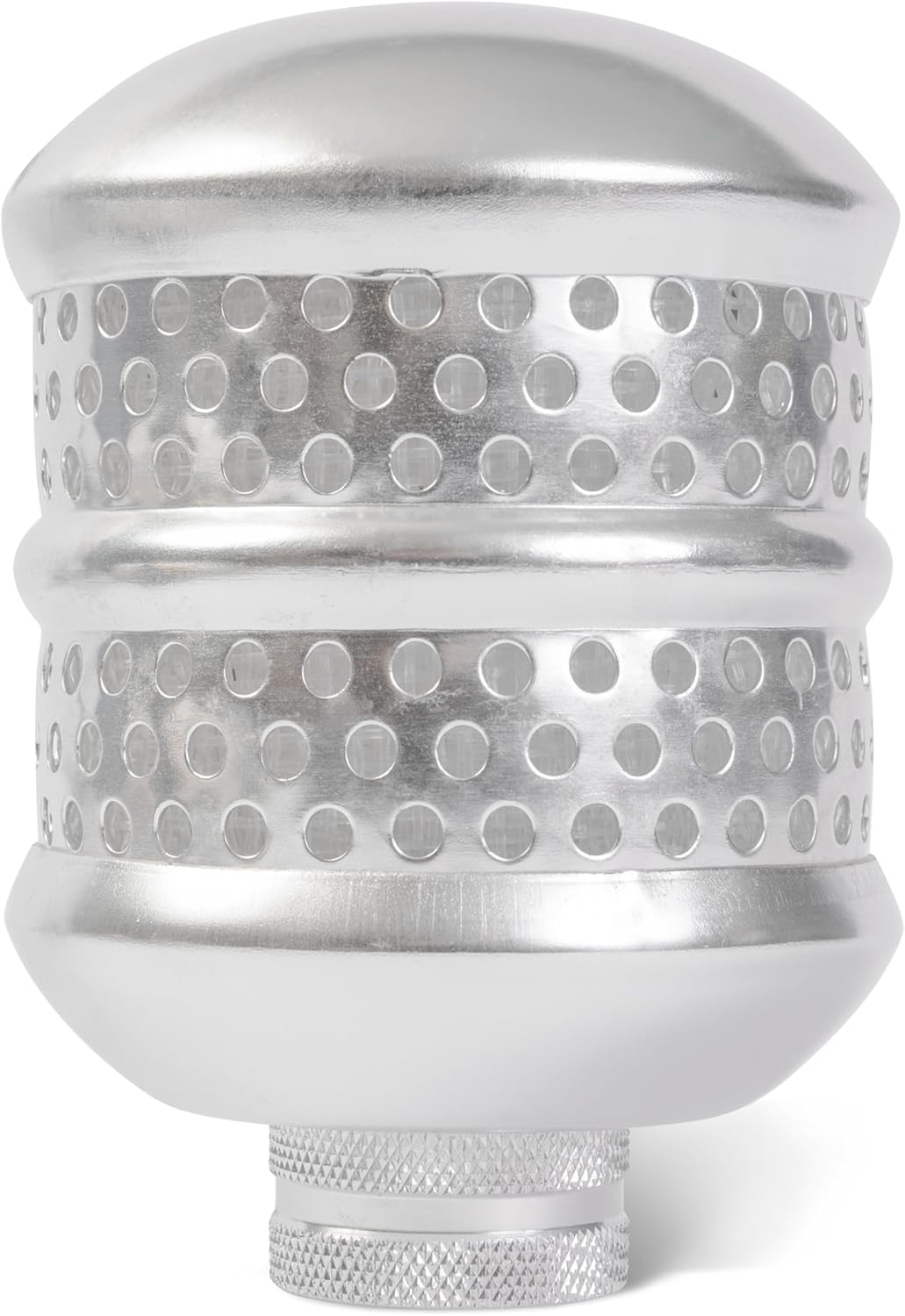
Gilmour Metal Bubbler Spot Sprinkler (Aluminum)
| Material Type | Aluminum |
|---|---|
| Unit Count | 1 Count |
| Included Components | Clinch Mender |
| Manufacturer Warranty Description | Lifetime Replacement Policy |
The Gilmour Metal Bubbler is a simple, heavy-duty aluminum spot sprinkler built for low-pressure, root-focused watering. It attaches to a standard garden hose and produces a soft bubbling flow that soaks the soil where the plants need it most, which helps prevent erosion and limits water runoff. Use it for vegetable rows, flower beds, hanging baskets and container gardens when you want concentrated watering without disturbing seedlings or compacting soil. The metal construction feels sturdy and should hold up to repeated use, and the design minimizes leaks at the hose connection. Because it delivers water straight into the ground rather than spraying over a wide area, coverage is limited to small spots so you may need multiple bubblers or to move it around for larger beds. Also there are no adjustable spray patterns or built-in timers, so it is best paired with a simple timer or manual scheduling for consistent irrigation.
Best for: Gardeners who prioritize a reliable, long-lasting spot-watering solution for small beds, containers, and delicate plants and who prefer low-pressure, root-directed irrigation.
Less Ideal for: Those who need wide-area lawn coverage, automated multi-zone scheduling, or variable spray patterns should consider different sprinkler types.
- Heavy duty aluminum construction for season-to-season durability
- Soft bubbler flow delivers water directly into soil to reduce erosion and runoff
- Easy connection to standard garden hoses and designed to minimize leaks
- Gentle low-pressure output suitable for seedlings, flowers and containers
- Very limited coverage area requires moving the unit or multiple pieces for larger beds
- No adjustable spray patterns or built-in flow control for fine-tuning output
Verdict: Buy this if you want a dependable, low-pressure metal bubbler that soaks soil at the roots for gentle, erosion-free spot watering.
Eden Weighted Essential Oscillating Sprinkler with Quick Connect Starter Set

| Maximum Pressure | 60 psi |
|---|---|
| Maximum Flow Rate | 30 gpm |
| Nozzle Count | 16 precision nozzles |
| Coverage | Up to 3,600 sq. ft. |
The Eden Weighted Essential Oscillating Sprinkler delivers steady, even watering across mid‑to‑large lawns and garden beds up to about 3,600 square feet. It mounts on a weighted base so it stays put while a sealed turbo drive motor oscillates a bar with 16 precision nozzles for consistent spray distribution. Sliding range tabs let you limit how wide the spray is, and a built‑in nozzle cleaning tool helps clear clogs without disassembly. The included quick connect starter set and stainless steel filter washers simplify hookups and let you swap tools without shutting off the water. In practice this model is quiet, simple to position, and keeps water patterns uniform on level turf. Expect best results on relatively flat lawns where the coverage matches the stated footprint; very large properties will need multiple units or a different sprinkler type to avoid gaps. The unit is plastic, so durability under heavy seasonal use may lag behind metal alternatives, but the design and filters reduce maintenance and leaks for routine garden watering needs.
Best for: Buyers who want a reliable, easy‑to‑use sprinkler that produces uniform coverage for medium to large lawns and value social proof and low maintenance features when choosing a dependable product.
Less Ideal for: Not a great choice for very large estates or professional irrigation needs where metal, higher‑capacity, or multi‑zone systems are preferred.
- Even coverage from 16 precision nozzles for consistent watering patterns
- Weighted base provides stability during operation
- Adjustable range tabs allow precise area control to target lawns or beds
- Quick connect starter set and stainless steel filters simplify hookups and reduce leaks
- Built‑in nozzle cleaning tool makes maintenance fast and simple
- Plastic construction may wear faster than metal sprinklers under heavy seasonal use
- Coverage limited to about 3,600 sq. ft., so large properties may need multiple units
Verdict: A user‑friendly oscillating sprinkler that combines even coverage, a stable weighted base, and quick‑connect hookups for dependable mid‑sized lawn watering.
Choosing the Right Low Pressure Garden Sprinkler: Key Factors to Consider
Spray Pattern and Coverage
Spray pattern determines how well a sprinkler wets differently shaped beds and lawns. A rotary or oscillating pattern may be better for rectangular areas, while pop-up rotary heads can provide circular coverage for small lawns.
Coverage matters because low-pressure systems deliver less kinetic energy to push water far. A more efficient pattern spreads water more evenly at lower pressure, reducing dry spots and overwatering near the head. Look for adjustable arcs, sector stops, or interchangeable nozzles so you can tailor coverage to borders, islands, and narrow strips.
Flow Rate and Water Efficiency
Flow rate, usually measured in gallons per minute, sets how much water a sprinkler uses to wet a given area. In low-pressure setups you often have a limited flow budget, so a sprinkler that wets more area per gallon is preferable.
Water-efficient designs use lower throw distances, finer droplet sizes that settle instead of spraying away, or multiple low-volume outlets to reduce runoff. Consider how long the head needs to run to reach target soil moisture and whether that runtime fits within your system's available flow.
Compatibility With Low-Pressure Systems
Not every sprinkler performs well when water pressure is below typical municipal levels. Some heads require a minimum pressure to rotate or to produce consistent droplets; others are explicitly engineered to operate at low pressure.
Check connection sizes, whether the head requires a dedicated riser or can screw onto a standard hose, and if any additional fittings or pressure regulators are needed. Compatibility reduces frustration during installation and helps avoid poor patterns caused by undersupply.
Durability and Weather Resistance
Sprinklers live outdoors and face sun, freezing cycles, and abrasive sediment. Materials affect how long a unit keeps working and how well seals and moving parts resist wear.
Metal components in critical areas can improve longevity, but high-quality plastics and UV-stabilized polymers are acceptable when designed well. Pay attention to the quality of threads, O-rings, and seals that prevent leaks and to whether moving parts are serviceable or replaceable.
Clogging and Maintenance Requirements
Low-pressure systems are sometimes fed from sources with more particulate matter, such as rain barrels or older irrigation mains. Sprinklers with accessible filters or easily replaceable nozzles reduce downtime.
Regular maintenance includes flushing lines, cleaning screens, and checking nozzles. Choosing a head with simple access to internal parts lets you clear sediment without disassembling the entire unit, which is especially useful for seasonal gardeners.
Adjustment Controls and Ease of Use
Gardeners need to fine-tune radius, arc, and droplet size to match plant needs and avoid overspray onto paths or structures. Controls should be intuitive and usable without special tools.
Clear adjustment marks, tactile stops for arcs, and nozzles that swap by hand all speed setup. Ease of use matters when you are calibrating multiple heads across a yard and when you need to tweak settings during different seasons.
Which Sprinkler Styles Work Best With Low Pressure
Certain sprinkler styles are inherently better suited to low-pressure conditions. Rotary and multi-stream rotary heads are often efficient because they deliver multiple low-volume streams that travel farther than a single gentle spray. Oscillating sprinklers can be effective across rectangular beds if their internal design moves enough water without requiring high pressure.
Fixed spray heads and micro-sprinklers work well for small plots, raised beds, and container groups where you want short throw and gentle coverage. Pop-up models designed for low-pressure operation avoid partial pop-up issues that occur when pressure is insufficient to raise the nozzle fully.
- Rotary heads for circular or semi-circular zones
- Oscillating units for long rectangular beds
- Fixed or micro-sprays for close, gentle watering
Adapting Existing Systems to Lower Pressure
When retrofitting a system, first measure the static and dynamic pressure at the point of connection and calculate available flow. This informs nozzle selection and head spacing. Reducing head spacing or switching to lower-flow nozzles can help keep coverage even when pressure falls short.
In some cases a pressure regulator or a simple flow-dividing valve can balance zones and reduce pressure loss. For watering from tanks or rain barrels, consider a small pump sized to the sprinkler type if gravity feed cannot achieve the minimum operating pressure.
- Measure pressure and flow before changing heads
- Choose lower-flow nozzles or add more heads for even coverage
- Consider simple mechanical regulators or small boosters if necessary
Placement and Head Spacing Tips for Even Wetting
Low-pressure sprinklers need thoughtful placement to avoid dry patches. Overlap spray patterns slightly so edges meet but do not significantly overwater borders. For irregular beds, mix head types to match shapes-use oscillating heads along long edges and rotary heads for open centers.
Adjust the throw and arc at installation and revisit settings after a week of operation. Soil type affects how quickly water infiltrates, so on clay soils reduce runtime and increase spacing, while sandy soils often need shorter, more frequent cycles.
- Aim for light overlap, not full redundancy
- Match head type to bed geometry
- Calibrate runtime to soil drainage characteristics
Maintenance Routines to Keep Low-Pressure Heads Performing
Set a simple seasonal maintenance routine: flush lines at the start of the watering season, inspect screens and nozzles monthly, and replace worn seals. Low-pressure systems are more sensitive to partial blockages because reduced flow amplifies the effect of debris.
Store or winterize heads that are not freeze-resistant and keep spare nozzles and O-rings on hand. Small preventive steps keep patterns consistent and extend the practical life of a sprinkler installation.
- Flush and inspect at season start
- Keep spare nozzles and seals
- Service rotating parts to prevent binding
Watering Strategies With Low Pressure
Low-pressure systems often benefit from shorter, more frequent watering cycles to avoid runoff and to allow water to soak in. Use multiple short cycles spaced an hour apart rather than one long soak when wetting heavy soils.
Time your watering for cooler parts of the day to minimize evaporation and make the most of limited flow. Group zones by similar plant water needs so you do not waste pressure trying to serve vastly different areas at once.
- Prefer short, repeat cycles over a single long run
- Water during cooler hours to reduce evaporation
- Zone by plant type and sun exposure for efficiency
How We Chose the Best Low Pressure Garden Sprinkler
We focused on attributes that predict reliable performance on systems with limited water pressure and flow. Key evaluation criteria included spray pattern adaptability so a sprinkler can cover different shapes and planting areas; flow-to-coverage efficiency to measure how much area the unit wets per gallon; nozzle design and clog resistance because low-pressure systems are often paired with small orifices; construction materials and connection fittings for outdoor durability; and ease of adjustment so gardeners can fine-tune radius and arc without wasting water. We also considered installation flexibility, including compatibility with common hose and riser sizes and whether the unit mounts on stakes or pop-up bases. We excluded products designed primarily for high-pressure systems, decorative-only units with negligible irrigation capability, and emitters intended only for potted plants or micro-irrigation. Our shortlist contains sprinklers that demonstrably operate across a range of low pressures and offer clear adjustment options rather than fixed, narrow patterns.
FAQ
Can low-pressure sprinklers cover a typical small lawn?
Often yes. With the right head style and spacing, low-pressure sprinklers can deliver uniform coverage for small lawns. You may need more heads placed closer together and nozzles designed for low-flow operation to avoid dry areas.
Will a low-pressure sprinkler work with a rain barrel or tank system?
It depends. Gravity-fed tanks often provide very low pressure, so choose heads rated for minimal operating pressure or add a small pump. Measuring available static head and flow helps determine feasibility before installation.
How do I prevent clogging when using a low-pressure system?
Install a fine screen filter at the supply point and choose sprinklers with accessible filters or removable nozzles. Regular flushing and occasional nozzle cleaning will reduce blockages, which have a larger effect at low pressure.
Are pop-up sprinklers a good option for low-pressure systems?
Pop-up sprinklers can work if they are designed for low-pressure operation. Otherwise, they may not extend fully or could produce uneven spray. Look for pop-ups with low lift requirements or consider fixed low-profile heads where pressure is marginal.
How often should I run low-pressure sprinklers compared with high-pressure setups?
Run times depend more on soil type and plant needs than pressure, but low-pressure systems may need longer total runtime or more frequent cycles to deliver the same water depth. Monitor soil moisture and adjust cycles rather than following a fixed schedule.
Final Verdict
Prioritize coverage pattern and flow efficiency when choosing a low-pressure garden sprinkler. The best options let you match spray shape to planting geometry, minimize wasted water, and resist clogging from coarse supply sources. Balance ease of adjustment and durable construction against the limits of your available pressure or flow. If your system has very low or variable pressure, favor designs explicitly rated for low-pressure operation and plan for closer head spacing or shorter, repeated cycles. With those tradeoffs accounted for, you can achieve even, gentle watering that protects plants and conserves water.
