

Note: This article contains affiliate links. If you click on these links and make a purchase, I may earn a small commission at no extra cost to you. This helps support my research and content. Read my full affiliate disclosure here.
If you spend time in a kitchen, sunroom, or covered patio, a corded fly trap can cut down on buzzing and flies that land on food and surfaces. The right corded unit gives continuous power so you do not worry about batteries dying in the middle of a warm season or an evening gathering. This guide examines the top shortlisted corded fly traps suited for indoor and sheltered outdoor spots, focusing on how well they actually capture flies, how easy they are to maintain, and how quietly they run in living spaces. Read on for a concise look at the factors we tested and the models that stood out for routine garden and household use.
Top Picks at a Glance
| Best Overall The best all-around choice for most situations | ZEVO MAX Flying Insect Trap — 2 Plug-In Bases with 3 Refill Cartridges |  |
| Best Quality Built to a higher standard if you want something more solid | Catchmaster Vector 30 Commercial UV Fly Light Trap (30W) |  |
| Best Value The sweet spot between price and what you get | Safer Home Indoor Plug-In Fly Trap, 2-Pack (with 2 Glue Cards) |  |
| Best Budget The cheapest option that still gets the job done reliably | Safer Home SH502 Indoor Plug-In Fly Trap (1 Trap + 2 Glue Cards) |  |
| Highest Rated A top-rated pick with lots of positive feedback | Fretech QBZ-01 Electric Bug Zapper with 360° UV Light |  |
| Most Popular A crowd favorite that many people choose with confidence | ZEVO Flying Insect Trap Starter Kit (Plug-In Base + Refill) |  |
| Best Seller A high-volume bestseller chosen again and again | ZEVO Compact Flying Insect Trap with 3 Refill Cartridges |  |
ZEVO MAX Flying Insect Trap — 2 Plug-In Bases with 3 Refill Cartridges
| Target Species | Fly |
|---|---|
| Power Source | Electric |
| Material Type | Plastic |
| Number of Pieces | 1 |
| Unit Count | 5 Count |
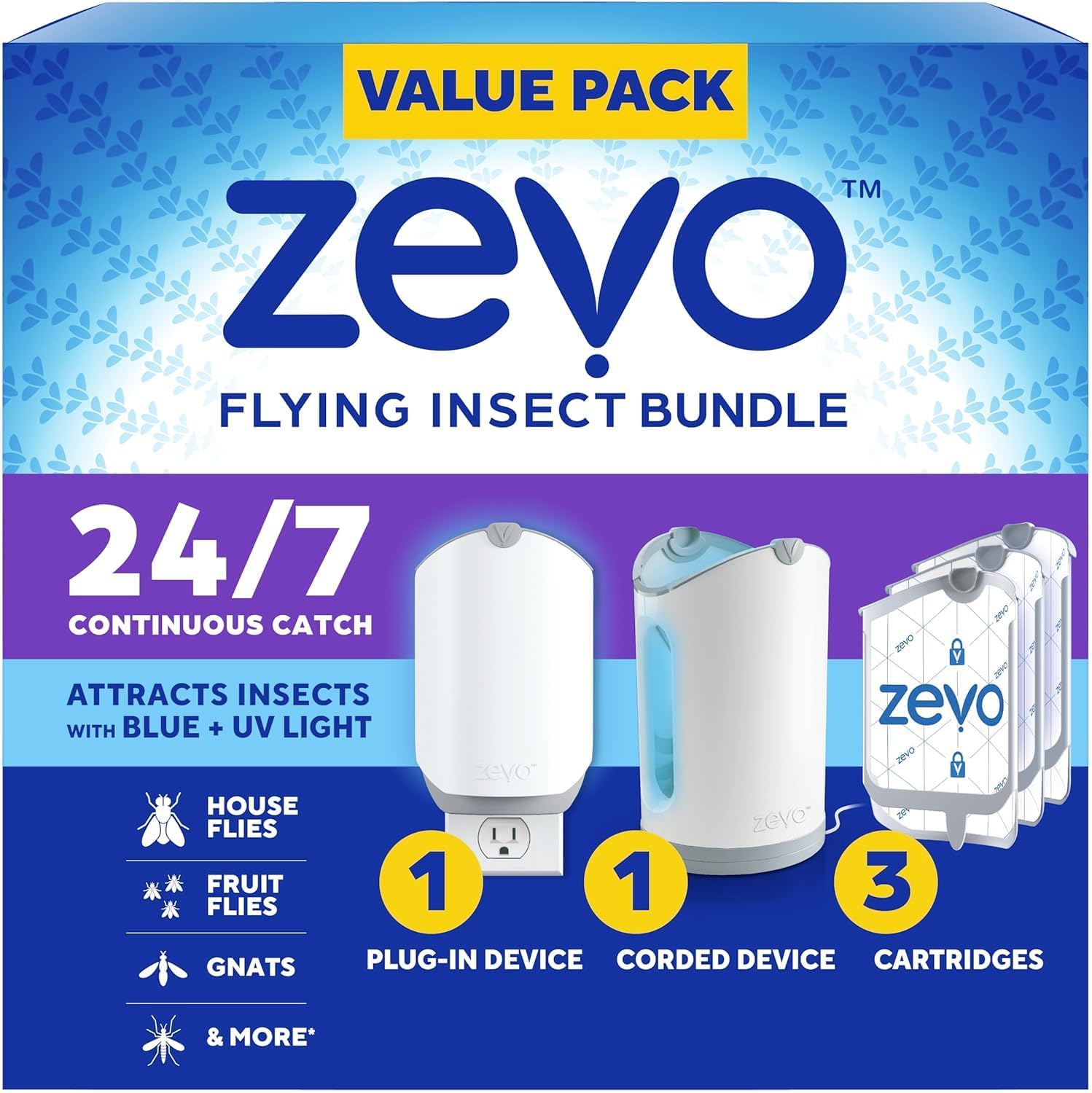
The ZEVO MAX kit is a corded indoor insect trap that uses blue and UV light to draw in flies, gnats and fruit flies and trap them on disposable adhesive cartridges. It includes two plug-in bases and three refill cartridges so you can run traps in multiple rooms or keep a spare refill on hand. Typical use is simple: plug the base into an outlet where insects congregate, attach a cartridge, and leave it running 24/7; the five-foot cord gives flexibility in outlet placement. Notable features are the dual-device kit for wider coverage, chemical-free operation, and mess-free disposable backing so you do not handle insects directly. Practical benefits include continuous passive control without sprays and easy refill replacement. Limitations are that effectiveness depends on placement and light attraction preferences of local species, cartridges need periodic replacement, and it is designed for indoor use only so it will not replace outdoor or heavy-duty pest control solutions.
Best for: Buyers who want a low-maintenance, chemical-free way to reduce flying insects indoors and prefer continuous passive control across multiple rooms.
Less Ideal for: People needing outdoor or heavy-duty commercial pest control or those who want a pesticide-based instant-kill solution.
- Includes two plug-in bases for broader indoor coverage
- Uses blue and UV light for continuous, passive attraction
- Disposable adhesive cartridges provide mess-free catches
- Chemical-free operation safe for use around food prep and living areas
- Cartridges require regular replacement to maintain capture performance
- Designed for indoor use only and not effective as an outdoor solution
Verdict: A convenient corded indoor trap kit that provides continuous, chemical-free fly control across multiple rooms with easy disposable refills.
Catchmaster Vector 30 Commercial UV Fly Light Trap (30W)

| Target Species | Fly |
|---|---|
| Power Source | Electric |
| Material Type | Aluminum |
| Coverage | ~1,500 sq. ft. |
The Catchmaster Vector 30 is a heavy-duty indoor UV fly trap designed for continuous use in spaces that need reliable, low-noise insect control. It uses two 15W actinic UV bulbs to lure flies and gnats into the housing where they become stuck on replaceable Catchmaster glue boards. The aluminum casing and shatterproof bulbs make it resilient for demanding environments and the unit ships with a glue board and bulbs installed so it is ready to operate. Typical placement is mounted about 6 feet off the ground and away from competing light sources; in a garage it will quietly reduce flying insect activity without zapping or chemical sprays. Maintenance is straightforward: monthly glue board changes under normal pressure and bulb replacement every 6 to 12 months. Limitations are that it requires mains power and periodic consumables, and its performance drops if placed near open doors or bright lights that compete with the UV attractant. For a garage where discreet, continuous, and non-toxic fly control is the priority, the Vector 30 is a robust choice.
Best for: Buyers who need a durable, low-noise fly control solution for a garage or workshop and prioritize continuous, chemical-free performance over one-off treatments. Ideal for someone who wants a professionally oriented device they will service regularly for consistent results.
Less Ideal for: People who need a completely portable or battery-powered trap or who want a one-time disposable solution rather than a permanently mounted, serviced unit.
- Commercial-grade aluminum housing and shatterproof bulbs for durability in heavy-use areas
- Dual 15W actinic UV bulbs provide a wide attractant range for up to about 1,500 sq ft
- Silent, non-zapping glue-board capture keeps trapped insects out of view
- Simple maintenance with replaceable glue boards and commonly available bulbs
- Designed for indoor, continuous operation in food-service and high-traffic spaces
- Requires mains power and cannot be used where outlets are unavailable
- Ongoing cost for replacement glue boards and periodic bulb changes
- Attractant effectiveness is reduced near competing light sources or open doors
Verdict: For garages that need continuous, professional-grade, non-zapping fly control, the Vector 30 delivers durable, quiet performance with replaceable glue boards.
Safer Home Indoor Plug-In Fly Trap, 2-Pack (with 2 Glue Cards)
| Target Species | Fly |
|---|---|
| Power Source | ac |
| Unit Count | 4 Count |
| Material Type | Glue, Plastic |
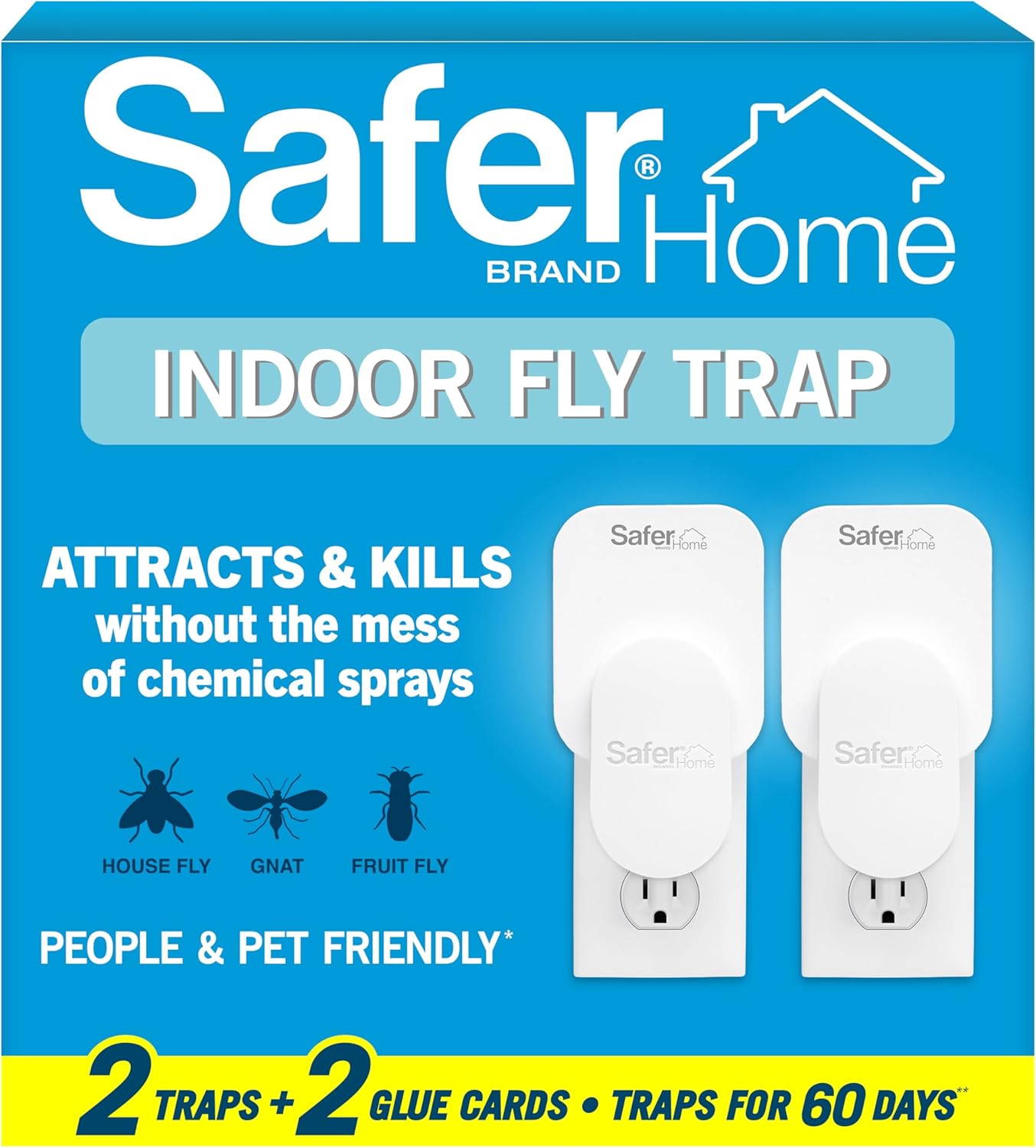
The Safer Home Indoor Plug-In Fly Trap is a simple, low-effort solution for reducing flying insects around the house. You plug each compact unit into a standard outlet, insert a StickyTech glue card, and the UV-LED light attracts flies, fruit flies, moths, and gnats onto the adhesive where they stay until you replace the card. The rotating plug and small profile make it easy to position near kitchens, houseplants, pet areas, or entryways without standing out. Each glue card is rated up to 30 days of use and the two-device pack covers about 800 sq ft, so it can protect multiple rooms or provide backup while cards are swapped. Because it does not use chemical insecticides, it is a practical choice for households with children or pets when used as directed. Limitations to expect are routine maintenance to replace full cards and reduced effectiveness in very large or heavily infested spaces where multiple units or additional pest measures may be necessary.
Best for: Homeowners who want a low-maintenance, non-chemical way to reduce flying insects around living spaces and prefer discreet, plug-and-play devices that blend with décor.
Less Ideal for: People needing immediate control for large-scale infestations or those who require cordless placement far from outlets should consider higher-capacity or alternative solutions.
- Chemical-free operation using UV-LED light and glue cards, safer around children and pets when used as directed
- Plug-in rotating design fits any standard outlet and is easy to position discreetly
- StickyTech glue cards last up to 30 days and are designed to catch more insects than generic cards
- Two devices in the pack provide coverage for up to 800 sq ft for multi-room protection
- Requires regular replacement of glue cards and disposal of trapped insects
- Effectiveness drops in very large rooms or extremely heavy infestations without additional units
- Needs power outlet access which limits placement options
Verdict: A practical, family-friendly plug-in trap that delivers chemical-free, around-the-clock control of common indoor flying pests for typical homeowner needs.
Safer Home SH502 Indoor Plug-In Fly Trap (1 Trap + 2 Glue Cards)

| Target Species | Fly |
|---|---|
| Power Source | ac |
| Unit Count | 3 Count |
| Material Type | Glue, Plastic |
The Safer Home SH502 is a simple plug-in device that provides continuous, chemical-free control of flying insects in indoor spaces. You insert a StickyTech glue card, rotate the plug to fit the outlet, and leave it running to attract bugs with a UV-LED light; trapped insects stick to the hidden glue card for easy disposal. It is intended for kitchens, near houseplants, entryways, pet areas, and other rooms where flies and gnats gather. Notable features include a rotating outlet plug for versatile placement, glue cards rated to last up to 30 days, and a design that hides captured insects from view. Practical benefits are low maintenance, no sprays or residues, and suitability for homes with children and pets when used as directed. Limitations are that it only works where bugs are drawn to light and glue surfaces, so it may be less effective against insects not attracted to UV or in large open areas; glue cards need periodic replacement and the trap requires a constant AC outlet to run.
Best for: Buyers who want a low-maintenance, chemical-free way to reduce indoor flies and gnats in kitchens, entryways, and plant or pet areas and prefer a discreet, always-on solution.
Less Ideal for: People needing coverage for large open rooms, outdoor spaces, or control of insects not attracted to light should consider other methods.
- Chemical-free operation makes it safer around children and pets when used as directed
- StickyTech glue cards capture insects discreetly and are rated up to 30 days per card
- Rotating plug lets you fit the unit into any standard wall outlet orientation
- Compact, minimalist design blends into home decor and is easy to set up
- Requires continuous access to an AC outlet and cannot be used outdoors
- Effectiveness depends on insects being attracted to UV light and sticky surfaces
Verdict: A fuss-free, chemical-free indoor plug-in trap that quietly captures flies and gnats with replaceable sticky cards for straightforward ongoing control.
Fretech QBZ-01 Electric Bug Zapper with 360° UV Light

| Material Type | Plastic |
|---|---|
| Target Species | Mosquitoes, Flying Insects, Moths, Gnats, Flies |
| Power Source | Electric (corded) |
| Unit Count | 1 Count |
The Fretech QBZ-01 is a plug-in bug zapper designed to reduce mosquitoes, gnats, moths, and other flying pests around patios, porches, and indoor rooms. It uses a 365nm UV lamp to lure insects toward a guarded 4000V electric grid; a removable catch tray and brush make cleanup straightforward. The unit can be hung or set on a flat surface and is intended to cover up to about half an acre in optimal conditions, with best performance at dusk and in shaded or low-light spots. Its ABS outer shell keeps the grid safely out of reach and the operation is mostly quiet, with only occasional pops when insects contact the grid. Important limitations are that UV attraction is weaker in daylight and placement matters—keep it away from seating and other lights to avoid drawing bugs toward people. Regular tray cleaning every few days during peak season is needed to maintain efficiency.
Best for: Buyers who prioritize a reliable, low-maintenance, chemical-free way to cut flying insect activity around patios or indoor living spaces and who plan to operate the unit regularly at dusk or night.
Less Ideal for: People who need daytime-only mosquito control in full sun or those who want a battery-powered or portable solution for remote locations.
- Effective 365nm UV light combined with a 4000V grid for physical, chemical-free insect control
- Removable rotating tray and brushable grid make cleaning and maintenance simple
- Whisper-quiet operation with minimal noise between zaps
- Can be hung or placed on a surface for flexible placement indoors or outdoors
- Reduced effectiveness in direct daylight so performance is best at dusk or in shaded areas
- Requires plug power and nearby outlet or outdoor-rated extension cord for outdoor use
Verdict: A dependable, low-noise plug-in zapper that delivers chemical-free insect control best suited for evening use around patios and indoor spaces.
ZEVO Flying Insect Trap Starter Kit (Plug-In Base + Refill)

| Target Species | Fly, Fruit Fly, Gnat |
|---|---|
| Power Source | Electric |
| Unit Count | 2 Count |
| Material Type | Plastic |
The ZEVO Flying Insect Trap is a compact plug-in unit designed for continuous indoor use to reduce small flying pests around kitchens, bathrooms, and indoor plants. It uses blue and UV light to lure flies and gnats into a disposable adhesive cartridge so insects are captured quietly and out of sight on the wall-facing glue pad. Setup is simple — plug the base in, slide in a cartridge, and position the device near likely insect sources such as fruit bowls, trash, or potted plants. Notable features include a no-mess removal tab, a blinking reminder to check the cartridge about every six weeks, and a chemical-free, odor-free design that is safe for occupied rooms when used as directed. Practical benefits are low ongoing noise, no zapping or sprays, and discreet continuous protection. Limitations are that it targets small flying insects rather than larger pests, requires regular cartridge replacement, and is intended for indoor coverage so multiple units may be needed for larger rooms.
Best for: Buyers who want a low-risk, everyday indoor solution to reduce fruit flies, gnats, and house flies without chemicals or loud zappers and who prefer a discreet, continuous trap in kitchens and living areas.
Less Ideal for: People needing fast knockdown of larger flies, mosquitoes, or broad multi-room coverage from a single device should consider more powerful or different-style solutions.
- Chemical-free, odor-free capture using blue and UV light
- No-mess disposable adhesive cartridge with removal tab
- Quiet continuous operation suitable for occupied rooms
- Easy plug-in setup and a blinking reminder for cartridge checks
- Designed for small flying insects only and not effective on larger pests
- Requires periodic purchase and replacement of adhesive cartridges
Verdict: A convenient, low-risk plug-in trap that provides quiet, chemical-free day-and-night control of small indoor flying pests.
ZEVO Compact Flying Insect Trap with 3 Refill Cartridges

| Target Species | Fly, Fruit Fly, Gnat |
|---|---|
| Power Source | Electric |
| Unit Count | 4 Count |
| Material Type | Plastic |
The ZEVO Compact Flying Insect Trap is a plug-in indoor unit that attracts fruit flies, gnats, and house flies with blue and UV light and holds them on disposable adhesive cartridges so you can remove and replace refills without touching the insects. Typical use is to place the unit near problem areas such as fruit bowls, trash cans, or houseplants and leave it powered continuously for around-the-clock catch. Notable features include a no-mess adhesive cartridge with a tab for easy disposal, a compact profile for tight spaces, and a quiet, spray-free operation that avoids chemical odors and zapping sounds. In practice it provides consistent passive control for small flying pests and is family-friendly when used as directed. Limitations are that it is designed for indoor spot control of small flies rather than large infestations, and effectiveness depends on correct placement and periodic cartridge replacement roughly every six weeks. The unit requires an outlet and ongoing refill purchases to maintain performance.
Best for: Buyers who want a discreet, low-maintenance indoor solution for everyday small flying pests and prefer nonchemical, quiet options with easy cleanup.
Less Ideal for: People needing fast knockdown for heavy infestations or outdoor/large-area pest control should consider more powerful or whole-home treatments.
- Chemical-free, quiet operation suitable for homes with children or pets
- No-mess disposable adhesive cartridges with tab for easy removal
- Compact plug-in design fits tight indoor spaces near problem sources
- Blue and UV light provides continuous attraction day and night
- Not intended for large infestations or outdoor use
- Requires regular purchase and replacement of proprietary refills
Verdict: Choose this compact plug-in trap if you want a discreet, chemical-free way to reduce fruit flies and gnats in indoor problem spots with minimal fuss.
Choosing the Right Corded Fly Trap: Key Factors to Consider
Capture Efficiency
How many flies the trap actually attracts and retains matters more than gimmicks. For corded traps this depends on attractant type, airflow or light placement, and trap entry geometry. Units with directed airflow or a focused light source tend to pull insects in more reliably than diffuse designs. A higher capture rate reduces the need for frequent emptying and makes the unit useful in spaces with moderate fly pressure.
Think about the kind of flies you encounter. House flies, fruit flies, and drain flies respond differently to light, scent, and airflow. A trap that offers multiple attractant modes or accepts standard baits gives flexibility for shifting nuisance species through the season.
Maintenance and Cleaning
Routine cleaning is the practical side of owning a corded fly trap. Look for models with removable collection trays or panels that allow hands-free disposal and surfaces that rinse clean without trapping residue. Filters or sticky pads add labor if they are small or hard to reach.
Consider how often you will need to empty the unit based on capture efficiency and placement. Units designed for easy disassembly reduce the time spent handling insect remains and lower the chance of unpleasant surprises when servicing the trap.
Noise and Indoor Comfort
A corded trap that runs continuously should not interrupt indoor life. Fans, motors, or vibrating elements can create hums or whines. Check specifications or descriptions for noise levels and favor quiet airflow designs for kitchens and living areas.
Placement also affects perceived noise. Mounting on a wall or hanging at head height can amplify sound. For patios where conversation is common, choose lower-noise units or place them further from seating areas to preserve comfort.
Electrical Safety and Cord Management
Because these traps draw continuous power, cord quality and safety features are essential. Look for grounded plugs, strain-relief at the cord entry, and low-voltage adapter compatibility if the unit will be used on a deck or in a semi-outdoor area. Weather-protected housings matter when a cord runs through doorways or under eaves.
Cord length and routing options influence placement flexibility. A longer cord or the option to use an extension designed for outdoor-rated plugs helps you position the trap in the most effective spot without creating tripping hazards.
Durability and Material Resistance
Materials that resist corrosion, UV degradation, and sticky residue extend service life in outdoor-adjacent locations. Look for plastic housings formulated for outdoor use or powder-coated metal in areas where humidity and heat cycles are common.
Robust latches and clips that resist breaking during repeated cleaning cycles reduce long-term headache. Replaceable parts and easy access to electrical components also matter when maintaining a unit over multiple seasons.
Best Placement Strategies for Corded Units
Positioning determines effectiveness. Place a corded fly trap near entry points where flies are entering, such as doors or windows, but out of direct food-preparation zones. For patios and covered outdoor kitchens, hang or mount the unit 4 to 6 feet above the ground so it intercepts natural flight paths without being in the way.
Avoid placing the trap directly over countertops or dining tables. Instead, create a deliberate diversion by situating the unit a short distance from human activity so flies are drawn away from people and food.
If you are targeting fruit flies, place the unit closer to fruit bowls, compost bins, or trash storage because these species fly at lower heights and respond strongly to nearby attractants.
- Mount at 4 to 6 feet for general flying insects
- Place near entrances to intercept incoming flies
- Position downwind of food prep when possible to lure pests away
Choosing Attractant Types
Corded traps use light, bait, or airflow to attract insects. Ultraviolet or visible-spectrum lights work well for many fly species at night, while scent-based baits can be more effective during the day. Some units combine both approaches, which increases versatility across different fly populations.
Consider whether you prefer a trap that accepts standard bait cartridges or one that uses household attractants. Cartridge-based systems are convenient but may add recurring maintenance, while open-bait designs allow you to experiment with homemade lures.
- Light-based attractants are effective in low-light conditions
- Scent baits can outperform lights in busy, well-lit kitchens
- Combination systems give seasonal flexibility
Installation Tips and Power Considerations
Plan a safe power route before installing a corded trap. Use properly rated extension cables when needed and avoid running cords across walkways. If you expect to use the trap outdoors seasonally, consider installing a weather-resistant outlet closer to the intended mount point to reduce cord exposure.
If your intended location has intermittent moisture, use units with low-voltage adapters or IP-rated housings. Confirm the cord and plug ratings match local electrical safety expectations for outdoor adjacency.
- Use outdoor-rated extensions when required
- Avoid tripping hazards by routing cords along edges
- Consider a weather-protected outlet for semi-permanent setups
Seasonal Use and Storage
Corded fly traps are most useful during warm months when fly activity peaks. During off-season storage, clean the unit thoroughly, remove any baits or residues, and store in a dry place to prevent mold and electrical corrosion.
If you keep a unit mounted year-round in a covered area, perform a quick inspection each month for debris buildup and ensure the cord and plug remain in good condition. Replace attractant media before peak season to maintain capture rates.
- Deep-clean and dry before long-term storage
- Inspect cords and housings monthly if left installed
- Replace bait or light sources prior to peak fly season
Managing Odor and Hygiene
Good hygiene around the trap reduces secondary problems. Empty collection trays frequently to prevent odor and bacterial growth. Rinse removable parts with a mild detergent and allow full drying before reassembly to limit mold.
For kitchens and enclosed patios, keep the trap away from food prep surfaces and regularly clean nearby bins or compost to reduce overall attraction pressure. A clean environment enhances the trap's apparent effectiveness by removing competing attractant sources.
- Empty trays before they become heavily packed
- Rinse removable parts and air-dry completely
- Keep surrounding areas clean to maximize capture rates
How We Chose the Best Corded Fly Trap
Our selection focused on performance and daily practicality for homeowners who need reliable, always-on fly control in kitchens, patios, and other sheltered outdoor areas. We prioritized capture efficiency using metrics such as airflow design and attractant compatibility, then checked durability features like cord strain relief, weather-sheltered housings, and corrosion-resistant components for use near outdoor kitchens. Maintenance demands were another core filter, so we favored units with removable trays, smooth interior surfaces, and clear cleaning access. Noise output was measured because units used near living spaces must be quiet during normal conversation levels. Safety and electrical compliance were required, including grounded cords or rated low-voltage adapters where applicable. We excluded battery-only traps, passive sticky panels without powered attractants, and units intended strictly for industrial or agricultural settings. Final picks balance steady, corded operation with manageable upkeep and safety features relevant to home and patio use.
FAQ
Are corded fly traps safe to use around pets and children?
Most corded units are designed with protective housings and recessed collection areas so pets and children cannot easily touch active components. Keep traps out of reach and follow manufacturer safety guidance on cord placement and low-voltage use. For extra safety, mount units higher or inside enclosures to prevent curious access.
Can corded fly traps be used outdoors?
They can be used in covered outdoor spaces and sheltered patios if the housing and cord ratings are suitable. Avoid exposing standard indoor-only units to direct rain or standing moisture. Use weather-protected outlets or low-voltage adapters when placing traps near the elements.
How often should I clean and empty a corded fly trap?
Cleaning frequency depends on capture rate but plan for at least weekly checks during peak season. High-traffic areas may need more frequent emptying. Regular maintenance prevents odor buildup and keeps attractants working effectively.
Do corded traps require special attractants?
Some models accept generic baits or household attractants, while others use proprietary cartridges. Both approaches work, but choose a system that fits your maintenance preference and the species you target. Scent baits are often more effective for fruit flies, while lights draw a broader range of flying insects.
How noisy are corded fly traps?
Noise varies by design. Units with small fans or motors can produce a low hum, while purely light-based models are silent. If noise is a concern, look for units with quiet airflow designs or check published decibel ratings when available.
Final Verdict
When choosing a corded fly trap, prioritize capture efficiency and ease of maintenance because these factors determine how well the unit performs in daily use. Balance noise and placement needs against electrical safety and weather resistance if the unit will be near outdoor areas. A well-placed, easy-to-clean corded unit will reduce fly encounters without adding extra chores. Focus on the criteria that match your space and insect pressures to pick the style that delivers steady, low-effort control.
