

Note: This article contains affiliate links. If you click on these links and make a purchase, I may earn a small commission at no extra cost to you. This helps support my research and content. Read my full affiliate disclosure here.
A conservatory concentrates light, warmth, and plants – and that combination often attracts flies. Choosing the right fly trap for conservatory spaces matters because you need something that removes pests without harming delicate houseplants or disrupting humidity and ventilation. This guide covers six shortlisted fly traps appropriate for conservatory use and explains how we judged them across plant safety, capture effectiveness, installation footprint, and maintenance needs. Read on to understand which features matter most for glassed-in garden rooms and how the shortlisted options perform against common conservatory challenges.
Top Picks at a Glance
| Best Overall The best all-around choice for most situations | Zevo Compact Flying Insect Trap — 1 Plug-In Base with 3 Refills |  |
| Best Quality Built to a higher standard if you want something more solid | Zevo MAX Bug Catcher — Indoor Plug‑In Trap with 2 Refills |  |
| Best Value The sweet spot between price and what you get | LFSYS Window Fly Traps — 50 Disposable Clear Sticky Strips |  |
| Best Budget The cheapest option that still gets the job done reliably | Landisun Yellow Sticky Fruit Fly and Gnat Traps (48 Pack) |  |
| Most Popular A crowd favorite that many people choose with confidence | TERRO Fruit Fly Trap 4-Pack (180-Day Lure Supply) |  |
| Best Seller A high-volume bestseller chosen again and again | ZEVO Flying Insect Trap Starter Kit (Plug-In Base + Refill) |  |
Zevo Compact Flying Insect Trap — 1 Plug-In Base with 3 Refills

| Target Species | Fly, Fruit Fly, Gnat |
|---|---|
| Power Source | Electric |
| Unit Count | 4 Count |
| Material Type | Plastic |
The Zevo Compact Flying Insect Trap is a small plug-in unit intended for indoor use around plants, kitchens and other tight spaces where fruit flies and gnats gather. It runs on electric power and uses blue and UV light plus disposable cartridges to lure insects into a mess-free capture chamber that locks trapped bugs out of sight. Typical use is simple: plug it in near the problem area, avoid placing it against competing light sources, and swap cartridges when they fill. The included three refills make it ready for several months of coverage and the design is chemical-free, so it is a practical alternative to sprays or sticky traps around houseplants, food prep areas and homes with pets or children. Limitations are that it must be placed indoors and effectiveness depends on placement and competing lights; very large infestations or outdoor flies may require additional controls. For homeowners wanting a neat, low-maintenance way to reduce small flying insects, this is an easy-to-use option.
Best for: Homeowners who want a low-maintenance, chemical-free way to reduce fruit flies, gnats and small indoor flies in kitchens and around houseplants and who prioritize a tidy, plug-in solution.
Less Ideal for: People dealing with large-scale infestations, outdoor pest problems, or those who need an all-in-one outdoor/indoor heavy-duty trap should consider more powerful control methods.
- Compact plug-in design fits tight spaces near plants and kitchen counters
- Chemical-free blue and UV light attraction suitable for use around children and pets when used as directed
- Mess-free Trap + Lock cartridge hides captured insects and allows sanitary disposal
- Includes one base and three refill cartridges to start using immediately
- Only intended for indoor use and less effective near competing light sources
- Not designed to handle very large infestations or outdoor flying insects
Verdict: A compact, chemical-free plug-in trap that provides tidy, low-effort indoor control of gnats and fruit flies for homeowners.
Zevo MAX Bug Catcher — Indoor Plug‑In Trap with 2 Refills

| Target Species | Fly, Fruit Fly, Gnat |
|---|---|
| Power Source | Electric |
| Unit Count | 3 Count |
| Material Type | Plastic |
The Zevo MAX is a plug‑in indoor bug catcher designed to run continuously and trap flying insects without chemicals. It uses a 360° blue and UV light array to attract house flies, fruit flies and gnats into disposable adhesive cartridges so you never handle the insects. Typical use is to place the unit where insects congregate — kitchens, near indoor plants, garages or living rooms — and keep it powered via the included five foot cord for flexible placement. Notable features include the wider capture area compared with compact models, two starter refill cartridges, and a mess‑free adhesive system. Practical benefits are continuous 24/7 operation, child‑ and pet‑friendly design when used as directed, and easy maintenance by replacing cartridges. Limitations are that it requires a wall outlet and replacement refills over time, and like any light trap its effectiveness depends on room layout and competing light sources. For performance‑minded buyers this is a straightforward, low‑maintenance solution for reducing flying insect activity in indoor spaces.
Best for: Buyers who prioritize consistent, measurable performance in reducing indoor flying insects and want a low‑maintenance, continuously operating solution for kitchens and larger rooms.
Less Ideal for: Those who need a cordless or purely battery‑powered option or who prefer non‑light‑based control methods such as bait stations or traps designed for outdoor use.
- 360° blue and UV lighting increases attraction area compared with compact plug‑ins
- Mess‑free adhesive cartridges eliminate direct contact with insects
- Includes two starter refill cartridges so you can begin using it immediately
- Five foot power cord gives flexible placement around the home
- Requires replacement adhesive cartridges to maintain effectiveness
- Needs a nearby electrical outlet so placement can be limited
Verdict: Choose the Zevo MAX if you want a high‑coverage, plug‑in indoor trap that continuously captures flies, gnats, and fruit flies with minimal upkeep.
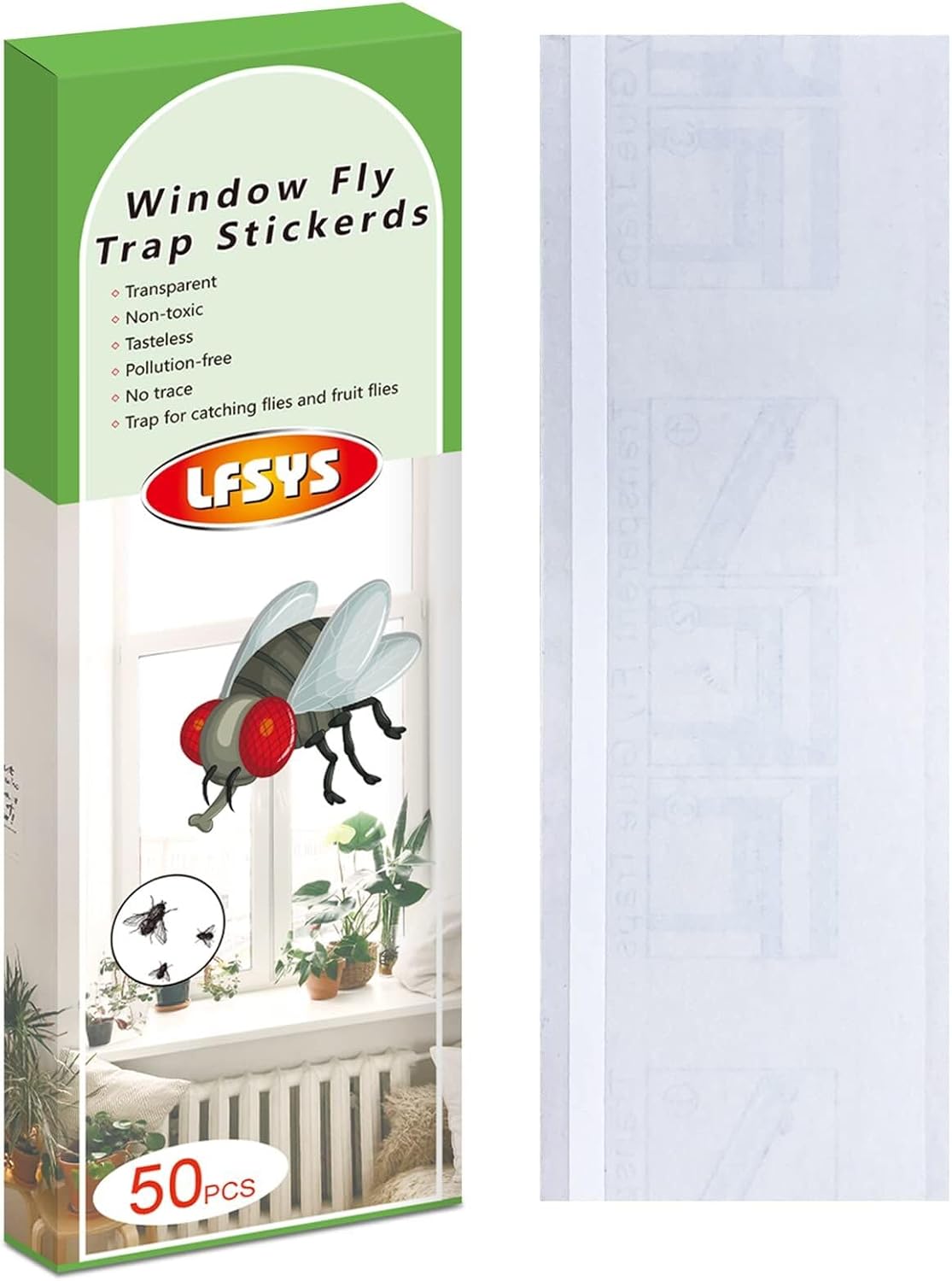
LFSYS Window Fly Traps — 50 Disposable Clear Sticky Strips
| Unit Count | 50 Count |
|---|---|
| Target Species | Fly |
| Power Source | manual |
| Material Type | Paper |
These LFSYS window fly traps are clear adhesive paper strips meant to stick to windows and other smooth surfaces to capture flies, gnats, and other small flying insects. You peel the backing and press the strip to a clean window or glass door where light and air movement attract flying pests; insects land on the transparent surface and become trapped in the glue. The kit includes 50 individual strips, which makes it easy to place traps in multiple rooms or replace them frequently during heavy infestations. The material is thin paper with a transparent finish so they are less visible on glass, and the manufacturer says the adhesive removes cleanly without leaving residue. There are no chemicals or power required, so the traps are safe around children and pets but rely entirely on contact to work. That means they are best for low to moderate indoor problems and require regular replacement when coated in insects or dust. For someone who wants a simple, low-maintenance, non-toxic option to reduce indoor flies, these deliver consistent, predictable results; for severe infestations a powered or baited trap will be faster and require less placement effort.
Best for: Buyers who prioritize a reliable, low-risk indoor solution that can be deployed widely and replaced often to keep fly activity down without chemicals.
Less Ideal for: People dealing with large, persistent infestations or who need an outdoor or powered trapping solution should consider alternatives.
- Large 50-count pack for coverage across multiple rooms or frequent replacement
- Transparent paper design is less noticeable on windows and preserves light
- Non-toxic, manual design is safe to use around children and pets
- Adhesive is formulated to trap small flying insects effectively and is reported to remove cleanly
- No attractant or bait included so effectiveness depends on insect traffic and placement
- Paper strips can become dirty or lose tack in humid or dusty environments
- Not suitable as a standalone solution for heavy infestations or outdoor use
Verdict: A simple, non-toxic pack of 50 clear sticky window strips that reliably reduces small indoor fly problems when placed where insects land.
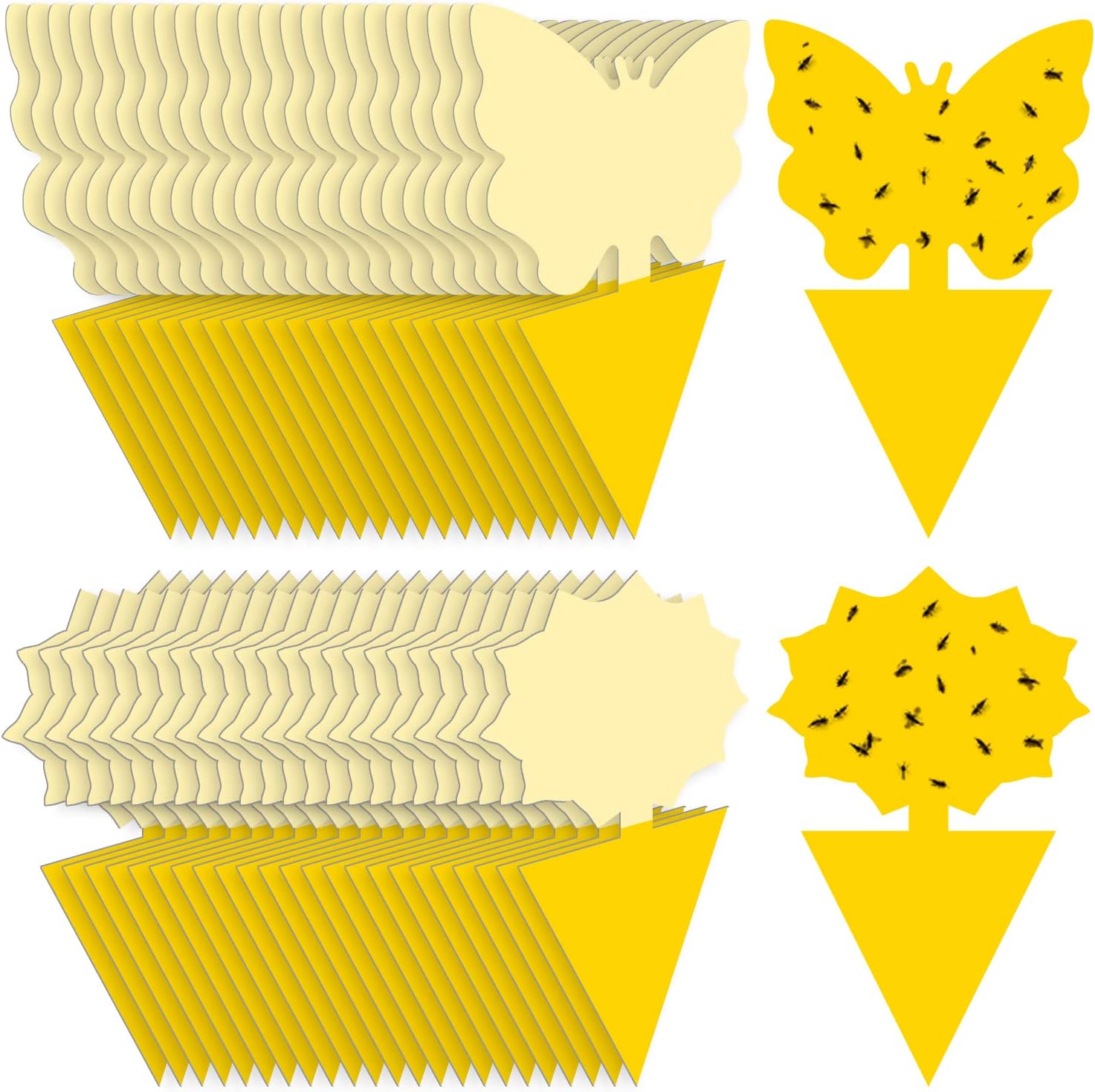
Landisun Yellow Sticky Fruit Fly and Gnat Traps (48 Pack)
| Unit Count | 48 Count |
|---|---|
| Target Species | Fly, Gnat, Mosquito, Thrip, White Fly |
| Recommended Uses For Product | Indoor,Outdoor |
| Number of Pieces | 48 |
These Landisun sticky traps are a simple, chemical-free way to reduce fruit flies and fungus gnats around potted plants, kitchens and outdoor seating areas. The bright yellow cards attract flying pests and the extra-strong adhesive holds insects on contact; the double-sided design increases catch area so a single card covers more space than a plain sticky strip. They come in decorative shapes (sunflower and butterfly) and are ready to use—peel and stick near plant pots, compost bins or fruit bowls. Because they rely on color and glue rather than pesticides they are safe to use around houseplants, herbs and areas where children or pets may be present, although the glue can be messy if touched. These traps are low maintenance and work for weeks, making them a good recurring solution for light to moderate infestations. They do not attract every pest type and large flies or larvae are not affected, so very heavy infestations may need additional control methods.
Best for: Buyers wanting an inexpensive, low-effort way to reduce flying pests around houseplants, kitchens and small outdoor areas who prioritize safety and recurring coverage over heavy-duty extermination.
Less Ideal for: People facing large or established infestations, users who need nonsticky or reusable traps, or those who cannot place adhesive products where children or pets might reach them.
- Chemical-free and odorless so safe to use around plants, children and pets when placed responsibly
- Double-sided, bright yellow design increases attraction and catch area
- Extra-strong adhesive holds insects without dripping or drying out
- Large pack of 48 provides long-term coverage or the ability to treat multiple locations
- Glue can be messy if touched and requires immediate washing with soap or oil-based products
- Not effective for nonflying stages or larger flies and will not eliminate severe infestations on its own
Verdict: A very affordable, chemical-free pack of double-sided sticky cards that gives broad, low-maintenance protection against fruit flies and gnats around plants and food prep areas.
TERRO Fruit Fly Trap 4-Pack (180-Day Lure Supply)

| Unit Count | 4 Count |
|---|---|
| Target Species | Fly |
| Power Source | manual |
| Material Type | Plastic |
The TERRO Fruit Fly Trap is a simple, low-effort solution for indoor fruit fly problems. Each apple-shaped trap comes prefilled with a non-staining liquid bait that draws adult fruit flies through funnel-shaped entry holes where they cannot escape. Typical use is to place traps near likely breeding spots such as fruit bowls, sinks, garbage areas, or countertops; visible results are often noticeable within days. Notable features include a discreet apple design that blends into a kitchen, a built-in window to monitor captures and lure level, and a long-lasting bait that the manufacturer states provides up to 45 days per unit for a 180-day supply across the four traps. Practical benefits are that they require no mixing or electricity, are mess-free, and can be positioned wherever flies congregate. Limitations are that these traps target adult flies rather than larvae in hidden breeding sites, so effective control depends on locating and removing sources of breeding, and heavy infestations may require multiple placements or repeated cycles to fully suppress populations.
Best for: Homeowners who want a low-effort, visible indoor solution to reduce fruit fly activity and prefer straightforward products with an established track record.
Less Ideal for: People dealing with severe multi-room infestations or commercial food-preparation settings that need professional-grade or large-scale pest control methods.
- Ready-to-use liquid lure attracts and traps adult fruit flies without mixing or setup
- Designed to blend into kitchens with apple-shaped appearance and a monitoring window
- Long-lasting bait advertised to provide up to 45 days of protection per trap
- Mess-free, manual operation with no chemicals to spray or power required
- Only captures adult flies and will not eliminate larvae hidden in drains or trash
- Effectiveness depends on placing traps near breeding sites so some trial placement may be needed
Verdict: An easy, no-fuss indoor trap kit that offers visible, long-lasting control of adult fruit flies for homeowners seeking a simple preventive solution.
ZEVO Flying Insect Trap Starter Kit (Plug-In Base + Refill)

| Target Species | Fly, Fruit Fly, Gnat |
|---|---|
| Power Source | Electric |
| Unit Count | 2 Count |
| Material Type | Plastic |
The ZEVO Flying Insect Trap is a compact plug-in unit designed for continuous indoor use to reduce small flying pests around kitchens, bathrooms, and indoor plants. It uses blue and UV light to lure flies and gnats into a disposable adhesive cartridge so insects are captured quietly and out of sight on the wall-facing glue pad. Setup is simple — plug the base in, slide in a cartridge, and position the device near likely insect sources such as fruit bowls, trash, or potted plants. Notable features include a no-mess removal tab, a blinking reminder to check the cartridge about every six weeks, and a chemical-free, odor-free design that is safe for occupied rooms when used as directed. Practical benefits are low ongoing noise, no zapping or sprays, and discreet continuous protection. Limitations are that it targets small flying insects rather than larger pests, requires regular cartridge replacement, and is intended for indoor coverage so multiple units may be needed for larger rooms.
Best for: Buyers who want a low-risk, everyday indoor solution to reduce fruit flies, gnats, and house flies without chemicals or loud zappers and who prefer a discreet, continuous trap in kitchens and living areas.
Less Ideal for: People needing fast knockdown of larger flies, mosquitoes, or broad multi-room coverage from a single device should consider more powerful or different-style solutions.
- Chemical-free, odor-free capture using blue and UV light
- No-mess disposable adhesive cartridge with removal tab
- Quiet continuous operation suitable for occupied rooms
- Easy plug-in setup and a blinking reminder for cartridge checks
- Designed for small flying insects only and not effective on larger pests
- Requires periodic purchase and replacement of adhesive cartridges
Verdict: A convenient, low-risk plug-in trap that provides quiet, chemical-free day-and-night control of small indoor flying pests.
Choosing the Right Fly Trap for Conservatory: Key Factors to Consider
Plant Safety and Non-Toxic Operation
Conservatories are full of living plants that can react to strong chemicals and concentrated vapors. Choose traps that use physical capture, sticky surfaces designed for indoor plants, or bait formulations labeled safe for enclosed spaces. Even water-based traps can stress sensitive species if they release strong scents. Prioritize methods that avoid airborne insecticides and check ingredient lists or manufacturer guidance for any warnings about indoor use.
Plant safety also means placement matters. Keep traps away from direct leaf surfaces to prevent accidental contact, and avoid solutions that could drip onto soil or foliage. If you have ferns, orchids, or young seedlings, err toward passive or contained traps that minimize exposure risk.
Effectiveness in Low-to-Moderate Airflow
Conservatories typically have less air exchange than outdoor gardens, so traps designed to work in still or gently moving air are essential. Electronic fan-based units that rely on airflow will underperform if airflow is low. Sticky traps, bait-and-dome traps, or light-attractant devices tuned for indoor wavelengths are often more reliable in glass rooms.
Consider the trap's active radius versus the conservatory's size. A single device may cover a small seating area, but multiple traps or a higher-capacity unit may be necessary for larger rooms. Also factor in where flies are most active – near doors, potted plants, or fruit bowls – and choose traps that can be positioned effectively in those microclimates.
Installation, Placement, and Footprint
Space in conservatories can be limited and sightlines important, so a trap's size and mounting options matter. Hanging traps, slim-profile wall-mounted units, and small tabletop devices allow flexible placement without obstructing plant displays. Consider whether the trap needs a power outlet, how visible it will be in the room, and whether it can be positioned near problem areas without becoming an eyesore.
Also evaluate mounting stability around glass and lightweight frames. Suction or adhesive mounts can damage paint or trim, so look for options that secure without harming surfaces, or place freestanding traps on stable pots or stands.
Maintenance Frequency and Ease of Cleaning
Conservatory owners often prefer low-maintenance solutions that do not require frequent replacement or messy cleaning near plants. Look for traps with easy-to-replace cartridges, simple emptying procedures, and parts that can be rinsed without leaving residues. Sticky cards that need swapping are straightforward but may require disposal more often in high-infestation periods.
Also consider whether the trap's bait needs refrigeration, whether refills are widely available, and how simple the instructions are for routine upkeep. Complex disassembly or traps that require draining liquids in the middle of a plant display can be inconvenient.
Moisture Resistance and Durability
Conservatories are humid environments, especially when plants are watered or during summer. Materials that resist corrosion and mold are important for longevity. Plastic housings, rust-resistant metals, and sealed electronics fare better in damp conditions.
Assess whether adhesives hold up in humidity, whether bait containers are sealed against spills, and whether electrical units have appropriate moisture protection. A durable trap reduces the chance of failures that could lead to messes among your plants.
Aesthetics and Noise Considerations
Conservatories are often designed as relaxing garden rooms, so the visual and audible impact of a trap matters. Choose units with unobtrusive styling or colors that blend with plantings to keep the room pleasant. Loud fans, blinking lights, or bright housings can interfere with the atmosphere.
If you use electronic traps, check manufacturer noise ratings or opt for passive traps if silence is important. A discreet unit that matches the conservatory's décor will be used more consistently and is less likely to be moved into suboptimal locations.
Placement Strategies for Conservatory Use
Where you put a fly trap in a conservatory affects performance as much as the trap type. Place traps near entry points like hinged glass doors and vents where flies first enter, and close to fruit bowls, compost containers, or potting benches where flies congregate.
Hanging traps placed slightly above plant canopy level can intercept flying insects without touching foliage. For seating areas, position devices behind seating or at room edges to draw flies away rather than into social spaces.
- Mount near doors and vents but out of direct sunlight to avoid bait degradation.
- Keep a small cluster of traps in larger conservatories rather than one oversized unit.
- Avoid placing traps directly over pots to prevent drips or sticky contact with leaves.
Integrating Traps With Plant Care Routines
Build trap maintenance into your plant care schedule to reduce interference. Empty or replace bait when you are already checking soil moisture or pruning so the task feels routine rather than extra work.
When repotting or moving plants, inspect nearby traps for accidental soil or sticky transfer and reposition them temporarily if needed. This prevents trap mess from transferring to fresh soil or sensitive new roots.
- Time trap cleaning for after watering sessions to catch any accidental spills early.
- Store refill baits in a cool, dry place away from humidity to preserve potency.
Natural and Nonchemical Alternatives
If you prefer nonchemical approaches, there are several effective options compatible with conservatories. Sticky cards, simple vinegar traps, and sealed bait-and-cup devices capture flies without dispersing chemicals into the air. These are low-tech, low-maintenance, and generally safe around most plants.
Biological control options such as releasing predatory insects are usually impractical for small enclosed conservatories, but encouraging natural predators like spiders and lacewings in larger greenhouse setups can reduce fly pressure.
- Vinegar or sugar-water traps work best when kept out of direct sunlight and changed regularly.
- Sticky cards are effective for monitoring small populations and can be tucked among pots.
Balancing Visibility and Effectiveness
Aesthetics are important in conservatories, so choose traps that blend with staging or can be concealed among plant stands. However, concealment can reduce effectiveness if traps are hidden from the insects' flight paths. Aim for discreet placements that still sit in common fly routes.
Transparent or low-profile units often provide the best compromise. If a trap is too small or too hidden, it will not intercept insects and will need repositioning.
- Test a trap's location for a few days and move it if capture rates are low.
- Combine a visible trap near entry points with hidden monitoring traps among plants.
Seasonal Adjustments and Long-Term Management
Fly pressure often varies seasonally; plan for higher maintenance in warm months when reproduction is fastest. Increase trap density or frequency of bait changes during these periods and scale back when activity drops.
Long-term management includes removing attractants such as overripe fruit and managing standing moisture in trays and saucers. Regular sanitation reduces the number of breeding sites and improves trap effectiveness.
- Inspect soil and drains for moisture that can attract flies and adjust watering practices.
- Store compostable waste in sealed containers or outside the conservatory when possible.
How We Chose the Best Fly Trap for Conservatory
We selected the six fly traps on this list using practical conservatory-focused criteria that reflect real indoor-garden conditions. First, plant safety and non-toxic operation were primary filters because enclosed, humid rooms concentrate vapors and make plant sensitivity an important concern. Second, capture effectiveness in low-to-medium airflow environments was evaluated to ensure traps work near plants and seating areas rather than only in open outdoor air. Third, physical footprint and mounting options matter in conservatories where space and sightlines are limited, so we prioritized compact or discreet designs. We also considered maintenance demands such as bait replacement frequency and ease of emptying, since conservatory owners often prefer low-effort solutions that do not disturb plants. Durability for indoor humidity and the ability to operate without strong odors or visible fluids were additional filters. Items with heavy outdoor-only designs, toxic airborne chemicals, or impractical installation needs for glass rooms were excluded. The criteria above guided our shortlist and align with the scoring metrics used in each product card.
FAQ
Are sticky traps safe to use near potted plants in a conservatory?
Sticky traps are generally safe if placed so they do not contact leaves or drip adhesive onto soil. Position them slightly above pot height or hang them from hooks to avoid accidental transfer. Replace cards regularly to avoid buildup that could attract pests or dust.
Will electronic fan traps work in a still conservatory?
Electronic fan traps can work, but they often need sufficient airflow to draw flies in. In rooms with low air movement, passive traps like bait cups or sticky panels may capture more insects. If you prefer a fan unit, position it where even gentle drafts occur.
How often should bait or sticky cards be replaced in a conservatory?
Replacement intervals depend on infestation levels and bait type but usually range from one week to one month. Check traps weekly during high season and change or clean them when capture rates drop or when baits begin to smell sour.
Can traps damage humidity-sensitive plants?
Traps themselves do not typically change humidity, but some bait liquids can evaporate and deposit residues. Avoid spilling liquids on plant foliage and choose sealed or contained traps if you grow humidity-sensitive species.
Are scented baits suitable for enclosed glass rooms?
Strongly scented baits can linger in enclosed spaces and may bother occupants or affect scent-sensitive plants. Opt for low-odor or contained baits designed for indoor use to reduce scent spread.
Final Verdict
Choose a conservatory fly trap that prioritizes plant safety and effectiveness in low-airflow environments. Focus on non-toxic or contained capture methods, a modest installation footprint that fits your room layout, and easy maintenance routines that you can combine with regular plant care. Accept tradeoffs between invisibility and placement effectiveness: a discreet unit that sits in a fly pathway is better than a hidden device that catches few insects. With the right combination of placement, maintenance, and trap type, you can keep a conservatory comfortable for both plants and people.
