

Note: This article contains affiliate links. If you click on these links and make a purchase, I may earn a small commission at no extra cost to you. This helps support my research and content. Read my full affiliate disclosure here.
Ground cover succulents are small, water-wise plants that reduce erosion, suppress weeds, and add texture to beds, slopes, rock gardens, and containers. Choosing the right ground cover matters because different species vary widely in spread habit, cold tolerance, and how they handle sun or shade. This guide shortlists seven top ground cover succulents suited to common garden situations and walks through the traits that matter most to gardeners. We evaluated options on drought resilience, spread and habit, and site adaptability so you can match a plant to slope, soil, or a mixed perennial border. The next sections summarize those picks and explain how to select the best ground cover for your garden needs.
Top Picks at a Glance
| Best Overall The best all-around choice for most situations | Outsidepride Sedum Acre Ground Cover Seeds (5000 Count) |  |
| Best Quality Built to a higher standard if you want something more solid | Plants for Pets 10" x 20" Sedum Groundcover Mat |  |
| Best Value The sweet spot between price and what you get | Outsidepride Summer Glory Sedum Seeds (1000 Count) |  |
| Best Budget The cheapest option that still gets the job done reliably | Seedville 150 Mixed Sedum Stonecrop Succulent Seeds |  |
| Highest Rated A top-rated pick with lots of positive feedback | CZ Grain Blue Spruce Sedum Live Starter Plugs (5 Plants) |  |
| Most Popular A crowd favorite that many people choose with confidence | Altman Plants 20-Pack Live Succulent Assortment (2" Pots) |  |
| Best Seller A high-volume bestseller chosen again and again | KVITER Mix Moss Rose (Portulaca grandiflora) Heirloom Flower Seeds — Double Moss Rose Mix |  |
Outsidepride Sedum Acre Ground Cover Seeds (5000 Count)

| Sunlight Exposure | Full Sun |
|---|---|
| USDA Hardiness Zone | 4 |
| Moisture Needs | Little To No Watering |
| Material Features | Heirloom |
| Unit Count | 5000 Count |
These Outsidepride Sedum Acre seeds are intended to establish a low-growing perennial ground cover that spreads into dense mats 2 to 3 inches tall and blooms in summer with yellow flowers. They are typically used for rock gardens, edging, containers, green roofs, and xeriscaping where low water use and erosion control matter. The seeds are heirloom and sold in a bulk 5,000 count, which is enough to seed a moderate area; the listing states a sowing rate of about 5,000 seeds per 100 sq ft. Key strengths are the species' drought tolerance and adaptability to poor, well-drained soils and USDA zones 4 to 8, so once established plants need little watering and provide season-long texture. Practical benefits include quick ground coverage that suppresses weeds and attracts pollinators when in bloom. Limitations are typical of seed-grown sedum: germination and initial establishment take attention to timing and moisture, and results are slower and less uniform than planting plugs or mats. Expect some variability in coverage and a season or two before a fully dense carpet forms.
Best for: Gardeners who want a hardy, water-wise ground cover for sunny rock gardens, borders, or low-maintenance landscapes and are willing to sow and establish plants from seed.
Less Ideal for: People who need instant, uniform coverage or prefer plug-planting or sod-style solutions for immediate effect.
- Drought-tolerant low-maintenance ground cover once established
- Suitable for USDA zones 4 to 8 and tolerates poor, well-drained soils
- Large 5,000-seed count covers a substantial area for overseeding or new beds
- Produces summer yellow blooms that attract pollinators
- Seed establishment is slower and less uniform than using plugs or pre-grown mats
Verdict: Buy this if you want an economical, drought-tolerant seed option to create a low-growing, pollinator-friendly sedum ground cover for sunny, well-drained sites.
Plants for Pets 10" x 20" Sedum Groundcover Mat

| Indoor Outdoor Usage | Indoor, Outdoor |
|---|---|
| Sunlight Exposure | Full Sun |
| USDA Hardiness Zone | 3, 4, 5, 6, 7 |
| Soil Type | Sandy Soil |
| Moisture Needs | Moderate Watering |
This pre-planted sedum mat arrives as a 10 by 20 live tile of mixed sedum varieties intended for fast groundcover and vertical accents in full-sun locations. You can lay the mat directly into a well-drained, sandy bed, separate it into sections for multiple small plantings, or attach it to a living wall frame; the drought- and heat-tolerant succulents need bright sun and infrequent watering once established. Notable features include a ready-to-plant live mat that blooms in late spring to early summer, biodegradable material, and plant mixes that tolerate neglect and resume growth after dry periods. Practical benefits are quick visual coverage without transplanting many small pots, low watering needs for waterwise landscapes, and suitability for hardiness zones listed by the maker. Important limitations are the small tray size that covers only a modest area per unit and the seasonal sensitivities of some sedum types which may go semi-dormant under 50°F, so multiple tiles or dividing the mat is necessary for larger projects.
Best for: Buyers who want a low-maintenance, fast-establishing groundcover for sunny beds or living walls and prioritize reliable drought performance and easy installation.
Less Ideal for: Not a great fit for large-scale monoculture lawns where bulk coverage and uniformity are needed or for gardeners who need shade-tolerant groundcovers.
- Ready-to-plant live mat simplifies installation and speeds groundcover establishment
- Drought and heat tolerant sedum mix reduces watering and maintenance needs
- Versatile use for beds, edging, green roofs and vertical gardens
- Biodegradable mat material integrates into soil over time
- Small 10×20 mat covers a limited area so larger projects require multiple tiles
- Some varieties may go dormant or thin in cooler temperatures below about 50°F
Verdict: An easy-to-install live sedum mat that delivers fast, drought-tolerant groundcover for sunny spots where low maintenance and quick coverage matter.
Outsidepride Summer Glory Sedum Seeds (1000 Count)

| USDA Hardiness Zone | 5-9 |
|---|---|
| Sunlight Exposure | Full Sun |
| Expected Blooming Period | Summer to Fall |
| Moisture Needs | Little To No Watering |
| Unit Count | 1000 Count |
These Outsidepride Summer Glory sedum seeds grow into a low, mat-forming succulent ground cover that needs very little care once established. Sow in spring or start indoors 6–8 weeks before the last frost and transplant after danger of frost passes, or direct-sow into well-drained, gritty soil; a 1,000-seed packet covers roughly 20 sq ft when spaced per directions. The plants thrive in full sun, tolerate poor soils and drought, and reach about 4–6 inches tall, making them useful for rock gardens, borders, containers, and erosion-prone slopes. Notable features are clear planting guidance, drought tolerance, and perennial flowering that attracts pollinators with dark-pink summer-to-fall blooms. Practical benefits include low ongoing water and maintenance needs, quick area coverage to suppress weeds, and versatility in sunny, water-wise landscapes. Limitations to consider are that germination and establishment benefit from good drainage and initial moisture, so heavy clay sites or persistently wet areas will reduce success, and results vary with local climate and seed sowing technique.
Best for: Gardeners who prioritize low-maintenance, water-wise ground cover for sunny spots and want a fast-spreading perennial to fill rock gardens, borders, or containers with minimal upkeep.
Less Ideal for: People planting in shade, waterlogged ground, or heavy-clay soils where drainage cannot be improved should consider other ground covers adapted to moist conditions.
- Drought-tolerant once established, suitable for xeriscaping and low-water gardens
- Low-growing, fast-spreading habit that forms dense mats to suppress weeds and reduce erosion
- Perennial blooms in summer to fall that attract pollinators
- Adaptable to poor, well-drained soils and useful in rock gardens, borders, and containers
- Requires well-drained soil and initial moisture for reliable germination and establishment
- Not suited to persistently wet or heavy clay sites where roots can rot
Verdict: A practical choice for gardeners seeking an easy, drought-tolerant perennial ground cover that quickly forms dense, pollinator-friendly mats in sunny, well-drained sites.
Seedville 150 Mixed Sedum Stonecrop Succulent Seeds

| Seed count | 150 seeds |
|---|---|
| Hardiness zones | 3-10 |
| Plant height | 2-6 inches |
| Spacing | 9-18 inches |
This seed mix contains 150 seeds from several sedum (stonecrop) varieties intended to establish a colorful, low-maintenance groundcover. You plant outdoors after the last frost or start indoors ahead of time; plants are described to reach about 2–6 inches tall and spread with 9–18 inch spacing, making them suitable for rock gardens, borders, or large patches where a drought-tolerant mat is desired. The mix lists species like Dragons Blood, Golden Carpet, and Purple Carpet, which promise a range of foliage tones and summer blooms in red, white, yellow, pink, and purple. Practical benefits include low water needs once established, cold hardiness to zones 3–10, and year-after-year persistence for many stonecrops. Limitations are typical of seed mixes: germination and variety distribution can be uneven, and establishing a full, uniform cover takes patience and proper site preparation. If you need instant coverage or guaranteed cultivar proportions, plugs or established plants will perform better than seed starting.
Best for: Gardeners on a tight budget who want to establish a drought-tolerant, colorful groundcover over a larger area and are willing to start from seed and wait for coverage.
Less Ideal for: Those who need immediate, uniform coverage or guaranteed single-cultivar performance should choose established plants or pre-grown mats instead.
- Large seed count (150) offers value for planting wide areas
- Includes multiple sedum varieties for season-long color variation
- Low-maintenance and drought-tolerant once established
- Cold hardy to zones 3–10, usable in many climates
- Seed mixes can produce uneven germination and inconsistent variety ratios
- Takes time to establish a dense groundcover compared with planted plugs or mats
Verdict: If you want an inexpensive way to seed a large, drought-tolerant succulent groundcover, this 150-seed mixed sedum packet delivers strong value.
CZ Grain Blue Spruce Sedum Live Starter Plugs (5 Plants)

| Sunlight Exposure | Full Sun |
|---|---|
| USDA Hardiness Zone | Zones 4,5,6,7 and 8 |
| Soil Type | Loam Soil |
| Moisture Needs | Moderate Watering |
| Expected Blooming Period | Summer to Winter |
These Blue Spruce sedum starter plugs are a reliable way to establish a drought-tolerant, spreading ground cover with distinctive blue-green, needle-like succulent foliage. They are planted as live starter plugs and are typically used to fill rock gardens, pathways, retaining walls, or sunny perennial beds where you want a low carpet of texture. Key features from the listing include full sun preference, moderate watering needs, and hardiness in USDA zones 4 through 8, which makes them robust across a wide range of climates. The plants tolerate dry periods once established because of their succulent leaves and perform best in well-draining loam soils. Expect them to spread outward over time rather than provide instant coverage, and remember these are starter plugs rather than mature mats. That means you will need to allow several weeks to a season for them to fill in and to provide routine watering until established. For gardeners seeking a low-maintenance, sun-loving succulent ground cover, these plugs offer predictable performance and attractive seasonal texture.
Best for: Gardeners who want a dependable, low-maintenance succulent ground cover for sunny, well-drained sites and value plants that establish and persist year after year.
Less Ideal for: People who need instant, complete ground coverage or who have heavily shaded, clay, or waterlogged planting areas should look for alternatives.
- Hardy in USDA zones 4–8, suitable for a wide range of climates
- Succulent foliage tolerates dry periods once established
- Distinctive blue-green needle-like leaves provide year-round texture
- Works well in rock gardens, slopes, containers, and along pathways
- Sold as starter plugs so coverage is gradual and not immediate
- Performs poorly in low-light or poorly drained soils
Verdict: Choose these Blue Spruce sedum plugs when you want a hardy, drought-tolerant succulent that reliably forms an attractive blue-green ground cover in sunny, well-drained gardens.
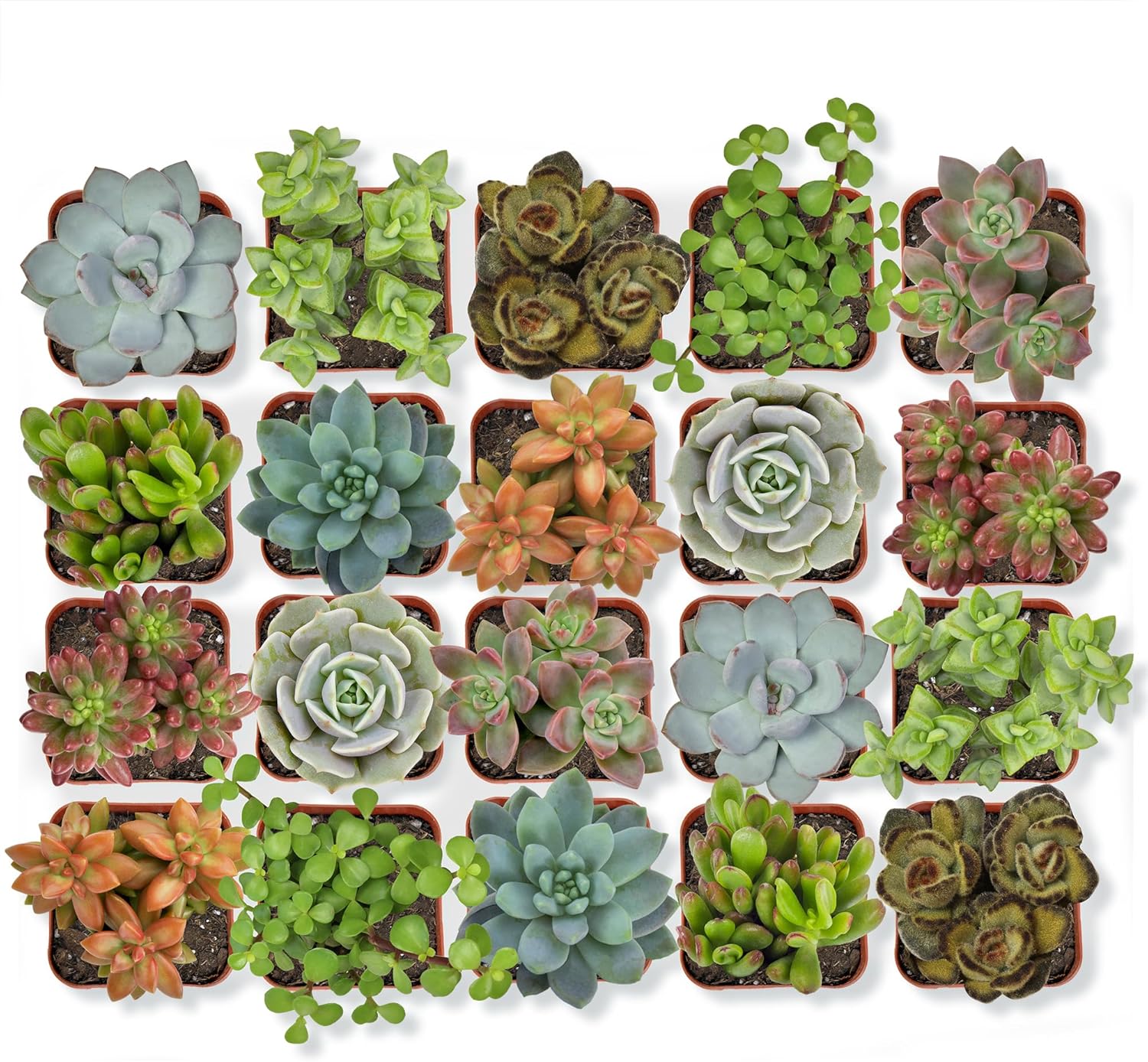
Altman Plants 20-Pack Live Succulent Assortment (2" Pots)
| Indoor Outdoor Usage | Indoor, Outdoor |
|---|---|
| Moisture Needs | Little To No Watering |
| Sunlight Exposure | Full Sun |
| USDA Hardiness Zone | 5 |
This 20-pack from Altman Plants delivers a varied selection of 2" succulents intended for starting container displays, terrariums, or gifting. Each pack contains ten paired varieties such as Echeveria, Crassula, Sedum and others, so you get color and texture variety without sourcing plants individually. The plants are grown to be drought tolerant and prefer bright light and sandy, well-draining media, which makes them easy to place in small pots or mixed container gardens. Practical benefits include low watering needs, year-round interest, and visibly healthy nursery-rooted stock suited to DIY arrangements. Limitations to note are the small nursery pot size, so plan to pot up into larger containers for long-term growth, and full sun preferences mean some indoor spots may require very bright light or supplemental light. For container projects these give a quick, coordinated start but expect to replant or group them for mature displays.
Best for: Buyers who want a reliable, low-maintenance way to start multiple container displays or DIY succulent projects and who value visible social proof that the mix performs well for other gardeners.
Less Ideal for: Gardeners seeking mature, display-size specimens or those who need plants for consistently low-light indoor spots should consider larger, sun-tolerant varieties or shade-adapted houseplants instead.
- Twenty individually potted succulents provide immediate variety for mixed container arrangements
- Pairs of ten different varieties make it easy to create balanced, symmetrical plantings
- Low watering needs and drought tolerance reduce maintenance for container growers
- Suitable for both indoor and outdoor container use when given bright light
- Plants come in 2" nursery pots and will need repotting for sustained growth
- Many varieties prefer full sun, which can limit bright indoor placement options
Verdict: A convenient, low-maintenance 20-pack that gets container succulent projects started quickly with a variety of ready-to-pot plants.
KVITER Mix Moss Rose (Portulaca grandiflora) Heirloom Flower Seeds — Double Moss Rose Mix

| Indoor Outdoor Usage | Outdoor |
|---|---|
| Other Special Features of the Product | Drought Tolerant, Growing Guide Included, High Germination Rate, Made in the USA |
| Expected Blooming Period | Late Spring to Fall |
| Sunlight Exposure | Full Sun |
| USDA Hardiness Zone | 2-12 |
KVITER Mix Moss Rose seeds provide a straightforward way to establish a low, flowering ground cover that blooms from late spring through fall. The packet contains heirloom, non-GMO seeds of Portulaca grandiflora selected for double, ruffled blooms in pinks, reds, yellows and oranges; the included growing guide and high germination rate make direct sowing into warm, well-drained soil simple. These plants thrive in full sun and minimal water, so they are ideal for hot, dry spots, rocky borders, edging and shallow containers where you want continuous pink and mixed-color flowers without much care. Expect compact succulent foliage that spreads to form a colorful mat and attracts pollinators. Limitations are that moss rose prefers sandy or loamy, very well-drained soils and will not do well in shade or waterlogged conditions, and the low height means it is decorative rather than structural. Seed mix variability means color distribution is not uniform, so the result is a blended, natural look rather than a single solid block of pink.
Best for: Gardeners who want an easy, low-maintenance flowering ground cover for sunny, dry areas and who prioritize continuous seasonal color with minimal watering.
Less Ideal for: People seeking tall or structural plants, dense single-color lawns of pink flowers, or gardeners with shady, poorly drained sites should look elsewhere.
- Heirloom non-GMO seeds with high stated germination for reliable sprouting
- Drought tolerant and thrives in full sun, suited to hot, dry sites
- Large unit count suitable for covering substantial ground or many containers
- Includes step-by-step growing guide to simplify direct sowing for beginners
- Performs poorly in shade or wet soils so site selection is important
- Seed mix produces a varied color blend rather than uniform pink-only coverage
Verdict: A simple, low-water choice to create a long-blooming, low pink-and-mix ground cover in hot sunny spots.
Choosing the Right Ground Cover Succulents: Key Factors to Consider
Sun Exposure and Microclimate
Different ground cover succulents have strong preferences for sun, part shade, or full shade. Sun-loving species develop compact rosettes and more intense leaf color in full sun, while shade-tolerant options may become lanky or lose color when shaded. Consider microclimates around buildings, patios, and under trees; reflected heat from walls or paving can increase light and dryness.
Matching a succulent to its light conditions reduces watering needs and limits disease problems. For slopes and rock gardens that get long sun hours, choose sun-hardy varieties. For north-facing beds or areas under tree canopy, select succulents known to tolerate filtered light while still maintaining a ground-hugging habit.
Soil Drainage and Bed Preparation
Succulents need well-draining soil to prevent root rot. In heavy clay or compacted beds, amend the planting area with grit, coarse sand, or compost to improve drainage, or plant on raised berms or mounds. For containers or shallow rock crevices, use a freely draining mix with larger particles to encourage air around roots.
Proper bed preparation speeds establishment and reduces maintenance. If you are stabilizing a slope, make sure the chosen species can root into the soil type present and that you prepare the site to shed excess water quickly. Mulch lightly with gravel or coarse material rather than organic mulch that holds moisture next to the crowns.
Spread Habit and Control
Ground cover succulents spread by runners, offsets, or dense clumping. Some form tight mats that suppress weeds well, while others send stolons or rhizomes that gradually colonize adjacent areas. Understand whether you want a contained patch, a living mulch, or a fast-spreading groundcover for erosion control.
If you need containment, pick clumping varieties or plan for edging to keep runners in check. For slopes or bare soil, look for species that establish quickly and knit together to hold substrate. Periodic trimming or lifting of offsets can also manage overly aggressive spread while providing material for propagation.
Cold Hardiness and Seasonal Survivability
Hardiness to winter cold varies among succulents. Some can take seasonal freezes and resume growth in spring, while tender types need protection or frost-free locations. Know your USDA or local hardiness zone and select varieties with proven survivability in that range.
Winter survivability affects maintenance planning because tender plants may need lift-and-store or seasonal coverings. Even cold-hardy succulents can suffer if exposed to wet, freezing conditions, so consider winter drainage and siting to minimize ice and waterlogging around crowns.
Flowering and Seasonal Interest
Many ground cover succulents produce small but showy flowers that add seasonal interest and attract pollinators. Flowering can be an important selection factor if you want nectar sources or color changes through the year. Consider bloom timing and whether flowering habit interferes with the desired ground-hugging look.
Some gardeners prefer sterile, short-flowering types that maintain a neat carpet, while others accept taller bloom stalks for a pollinator-friendly patch. Flowering also signals plant health, so regular blooms indicate adequate siting and care.
Propagation and Maintenance Requirements
Propagation by offsets, cuttings, or division is a common way to expand ground cover succulents. Ease of propagation affects how quickly you can fill a bed and recover from losses. Also consider maintenance tasks like removing spent flower stalks, dividing overcrowded patches, and controlling pests.
Low-maintenance species reduce seasonal chores, but almost all succulents will benefit from occasional thinning and cleaning to prevent buildup of trapped moisture. If you prefer to minimize work, choose varieties known for slow, manageable growth and low pest susceptibility.
Best Uses in the Garden
Ground cover succulents work well in rock gardens, between stepping stones, on dry slopes, and in the front of borders where their low form shows off texture. Their shallow roots make them ideal for planting on thin soils and raised rockeries where larger perennials struggle.
Use them as living mulch around larger drought-tolerant perennials or under low shrubs that do not cast deep shade. For container plantings, mix several low-growing succulents with contrasting leaf forms and gravel to keep a tidy, long-lasting display.
- Erosion control on dry slopes
- Filling gaps in rock or gravel gardens
- Edging pathways and stepping stones
- Low-maintenance container carpets
Planting and Establishment Tips
Plant ground cover succulents in spring or early fall when soils are warm but temperatures are moderate. Space plants according to expected mature spread so they fill in without overcrowding. Water sparingly after planting to encourage rooting, then reduce to a deep, infrequent schedule once established.
Protect young plantings from prolonged heavy rain by improving drainage or using temporary shading. For steeper sites, plant in staggered rows and use small terraces or coir logs to reduce wash while plants become established.
- Amend heavy soils with grit for better drainage
- Avoid overwatering during establishment
- Use temporary erosion controls on slopes
Managing Pests and Common Problems
Succulents can suffer from root rot if kept too wet and from scale, mealybugs, or vine weevils in some regions. Maintain good air circulation, keep crowns clean of debris, and inspect plants regularly for sap-sucking insects. Treat infestations early with mechanical removal or targeted organic controls.
Prevent fungal issues by avoiding overhead watering and ensuring quick drainage. If a patch becomes waterlogged in winter, consider cutting back surrounding soil or adding rock mulch to improve runoff.
- Inspect for mealybugs and scale under leaves
- Avoid mulch that traps moisture at the crown
- Improve drainage to prevent root rot
Design Ideas and Combinations
Combine ground cover succulents with coarse gravel, low ornamental grasses, and spring-blooming bulbs for seasonal contrast. Their low profiles pair well with taller drought-tolerant perennials so they provide a base layer of texture without competing for light.
Create patterns using different leaf colors and textures for visual impact in rock gardens or between paving joints. Repeat the same species in drifts for a cohesive look and plant contrasting forms in focal areas.
- Use gravel mulch to highlight leaf color
- Plant in drifts for naturalized appearance
- Mix textures for year-round interest
Seasonal Care and Winter Protection
Most ground cover succulents need minimal seasonal care beyond removing dead foliage and dividing overcrowded clumps. In wet, cold climates, lift tender individuals or improve winter site drainage to prevent crown rot. A light layer of grit around crowns can protect them from splash and ice damage without retaining moisture.
In regions with occasional frosts, expect some foliar damage on tender types but also reasonable regrowth in spring. Protect marginal plants with temporary covers only when prolonged freezing and wet conditions coincide.
- Remove dead growth in early spring
- Improve drainage before winter
- Use grit rather than organic mulch for winter protection
How We Chose the Best Ground Cover Succulents
We assembled the shortlist by focusing on traits that affect long-term garden performance rather than transient features. Key evaluation criteria included drought tolerance, spread control and habit, cold hardiness and zone suitability, growth rate and establishment speed, and maintenance needs such as pruning or division. We also considered flowering and seasonal interest for gardeners who want color and texture beyond foliage. To keep recommendations practical we excluded very large or invasive succulent species and any varieties that require greenhouse-level care. We prioritized plants that establish reliably in outdoor landscapes with typical garden soils and available sun exposures. Sources included cultivation notes and common horticultural practice to judge how each option performs in real garden conditions. Excluded items were highly tender tropical succulents that cannot survive outdoors in most climates and cultivars with known invasive tendencies. The result is a list focused on resilient, landscape-friendly ground cover succulents gardeners can use across beds, slopes, rock gardens, and containers.
FAQ
How quickly will ground cover succulents fill a bare patch?
It depends on species and conditions. Many spread steadily over one to three seasons when planted at correct spacing and given good drainage. Faster-spreading types can cover ground in a single growing season under ideal sun and soil conditions.
Can ground cover succulents handle foot traffic?
Some tolerate light foot traffic when planted between stepping stones, but most are not lawn substitutes. Choose low, mat-forming species for occasional stepping areas and avoid heavy trampling which damages crowns and slows recovery.
Do ground cover succulents need fertilizer?
Usually no more than a light feeding in spring. These plants are adapted to lean soils, and excess fertilizer encourages soft, floppy growth and more maintenance. A balanced, low-rate feed at establishment can help, then minimize inputs afterward.
How do I control overly aggressive spread?
Containment options include edging, planting in raised beds, or periodically lifting and dividing offsets. Regular trimming of runners or removal of unwanted shoots keeps aggressive species in check without resorting to chemical controls.
Are ground cover succulents good for erosion control?
Yes, many form dense mats or send out runners that stabilize soil on dry slopes and banks. For serious erosion, choose fast-establishing, spreading types and combine plantings with physical erosion controls until roots develop.
Final Verdict
Choose a ground cover succulent by matching sun exposure, soil drainage, and desired spread to the plant's natural habits. Prioritize drainage and correct siting to minimize winter rot and reduce maintenance. For erosion control pick faster-spreading types; for tidy borders choose clump-forming species. Balance tradeoffs between quick cover and ease of containment to find the best long-term fit. With attention to site and a little initial care, ground cover succulents provide low-maintenance color and soil stability across a range of garden settings.
