

Note: This article contains affiliate links. If you click on these links and make a purchase, I may earn a small commission at no extra cost to you. This helps support my research and content. Read my full affiliate disclosure here.
Trailing succulents add cascading texture to containers, hanging baskets, and mixed succulent arrangements while staying remarkably low-maintenance. Choosing the right trailing variety matters because growth habit, hardiness, and light tolerance dictate where plants will thrive and how often you must water or pinch back stems. This guide shortlists seven top trailing succulents suited to a range of indoor and outdoor situations and explains the characteristics that make each choice practical for real gardeners. We evaluate each plant for growth habit, hardiness, and ease of care to help you pick the right cascade for your space.
Top Picks at a Glance
| Best Overall The best all-around choice for most situations | SD Succulent Growers Trailing Succulent 4-Pack (Well Rooted, 2" Pots) |  |
| Best Quality Built to a higher standard if you want something more solid | Donkey Tail (Burro's Tail) Live Succulent, 4-inch Fully Rooted |  |
| Best Value The sweet spot between price and what you get | Sprout N Green Donkey's Tail (Sedum morganianum) Live Succulent in 4" Pot |  |
| Best Budget The cheapest option that still gets the job done reliably | THE NEXT GARDENER String of Pearls (2-inch potted succulent) |  |
| Highest Rated A top-rated pick with lots of positive feedback | Altman Plants String of Bananas (Senecio radicans) trailing succulent |  |
| Most Popular A crowd favorite that many people choose with confidence | Fat Plants San Diego 4" String of Pearls (Senecio rowleyanus), Live Succulent |  |
| Best Seller A high-volume bestseller chosen again and again | THE NEXT GARDENER String of Dolphins Succulent, 4-inch, Fully Rooted |  |
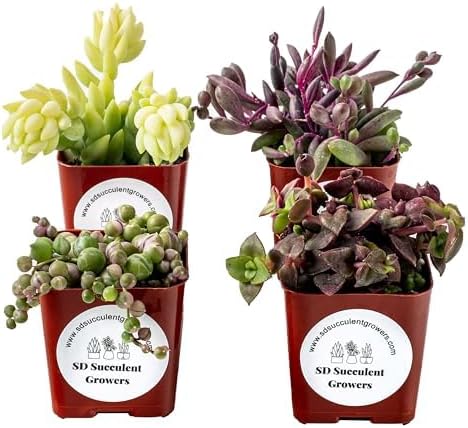
SD Succulent Growers Trailing Succulent 4-Pack (Well Rooted, 2" Pots)
| Indoor Outdoor Usage | Indoor |
|---|---|
| Other Special Features of the Product | Low Maintenance |
| Sunlight Exposure | Partial Sun |
| Moisture Needs | Moderate Watering |
| Plant or Animal Product Type | Succulent |
This 4-pack delivers small, well-rooted trailing succulents that are ready to display or repot. The plants are selected from a San Diego greenhouse and typically include varieties such as string of pearls, string of hearts, burro's tail, or ruby necklace, all shipped in 2-inch nursery pots. They are meant for bright, indirect light and low-frequency watering, which makes them suitable for hanging baskets, high shelves, or macramé planters where trailing stems can develop. Practical benefits include immediate visual impact, easy propagation from cuttings, and low maintenance care that fits a busy lifestyle. Expect some variation and occasional duplicates because this is a mystery assortment; plants may look a little stressed after transit and benefit from a few days of rest in indirect light. The main limitations are small pot size on arrival, which means repotting may be needed for faster growth, and sensitivity to overwatering common to trailing succulents. For buyers who want instant hanging displays with minimal fuss, these provide an accessible way to start.
Best for: Buyers who want an easy, attractive starter collection of trailing succulents to display in hanging baskets or on shelves and who value low-maintenance plants that can be propagated.
Less Ideal for: Gardeners seeking fully grown specimens or a guaranteed specific species should look elsewhere, as this pack is small and sold as an assorted mystery selection.
- Hand-selected trailing varieties suitable for hanging displays
- Plants arrive well rooted and ready to display or repot
- Low-maintenance care needs ideal for indoor settings
- Includes multiple species for varied textures and cascading growth
- Arrives in small 2-inch pots so repotting is often necessary for quicker growth
- Contents are a mystery pack and may include duplicates
Verdict: A convenient, low-care way to add trailing succulents to hanging baskets or shelves with ready-to-display starter plants.
Donkey Tail (Burro's Tail) Live Succulent, 4-inch Fully Rooted

| Indoor Outdoor Usage | Indoor |
|---|---|
| Other Special Features of the Product | Drought Tolerant |
| Sunlight Exposure | Partial Sun |
| USDA Hardiness Zone | 3 |
| Moisture Needs | Moderate Watering |
This Donkey Tail (Burro's Tail) arrives in a 4-inch grower pot with an established root system and well-draining soil, so it is ready to display or re-pot immediately. It is a trailing succulent with tear-drop shaped leaves that do well in bright, partially sunny spots such as a sunny shelf, hanging planter, or windowsill. Care is straightforward: follow a soak-and-dry watering routine and only water when the soil is dry; the plant is drought tolerant and described as low maintenance. Seasonal changes in fullness are normal and the plant may thin or firm up with light and watering adjustments. Practical benefits include an attractive trailing habit for vertical interest and the convenience of a fully rooted start that adapts faster than cuttings. Important limitations are that it needs bright light to stay compact and healthy and it is sensitive to overwatering and freezing temperatures, so indoor placement and careful moisture control are required for reliable performance.
Best for: Buyers who want a low-effort, visually striking trailing succulent they can display immediately and maintain with minimal time investment.
Less Ideal for: People who cannot provide bright indirect light or who want a frost-hardy outdoor plant for unprotected gardens.
- Ships fully rooted in a 4-inch grower pot for easy setup or re-potting
- Drought-tolerant and low-maintenance when watered with a soak-and-dry routine
- Distinctive trailing habit adds vertical interest in hanging pots or on shelves
- Suitable for indoor use in bright, partially sunny locations
- Requires consistently bright light to avoid leggy growth
- Vulnerable to overwatering and cold damage if placed outdoors in freezing conditions
Verdict: A ready-to-display, low-maintenance trailing succulent that gives fast visual impact for indoor spaces while requiring only bright light and infrequent watering.
Sprout N Green Donkey's Tail (Sedum morganianum) Live Succulent in 4" Pot

| Indoor Outdoor Usage | Indoor, Outdoor |
|---|---|
| Other Special Features of the Product | Drought Tolerant, Low Maintenance, Pet Friendly |
| Sunlight Exposure | Partial Shade |
| USDA Hardiness Zone | 9a-11b |
| Soil Type | Succulent & Cacti Soil Mix |
This Donkey's Tail succulent arrives rooted in a 4" starter pot filled with a succulent and cacti soil mix, making it ready to display or replant. It is a trailing sedum with fleshy, tear‑shaped blue‑green leaves that work well in a hanging basket, on a sunny windowsill, or as part of a mixed succulent arrangement. The listing notes drought tolerance and low maintenance: water only when the soil is dry, give bright indirect light or partial shade, and protect from frost. Practical touches include established roots from a California grower and care guidance for recovery if leaves are damaged in transit. Limitations are the fragile leaves that can drop during shipping and the plant may not bloom reliably, so buyers should not expect frequent flowers. For someone focused on efficient, low-effort plant care, this offers an easy starter specimen but expect some cosmetic variation in form and occasional leaf loss as it adjusts to a new environment.
Best for: Buyers who want a low‑effort, decorative trailing succulent to add quick greenery to a windowsill, hanging pot, or small patio and prefer plants that are already established and easy to care for.
Less Ideal for: If you need a frost‑hard ornamental for year‑round outdoor exposure in cold climates or expect a consistently flowering specimen, choose a different plant better suited to those needs.
- Ships in a rooted 4" starter pot with succulent and cacti soil mix ready for display or transplant
- Drought tolerant and low maintenance, only needs watering when soil is dry
- Suitable for indoor or protected outdoor use and works well in hanging containers or windowsills
- Hand‑grown stock with established roots increases resilience compared with less‑established plants
- Leaves are fragile and may drop during transit, requiring some cleanup and time for recovery
- Does not bloom reliably, so flowers should not be expected as a primary feature
Verdict: A ready‑to‑display, low‑maintenance trailing succulent that gives quick, attractive greenery with minimal care.
THE NEXT GARDENER String of Pearls (2-inch potted succulent)

| Plant or Animal Product Type | succulents |
|---|---|
| Sunlight Exposure | Partial Sun |
| Unit Count | 1 Count |
| Number of Items | 1 |
This String of Pearls arrives fully rooted in a 2-inch grower pot and is intended as a low-maintenance, decorative houseplant. Its bead-like leaves trail attractively from hanging pots, shelves, or sunny windowsills and it follows the standard succulent soak-and-dry watering rhythm, so you only water when the soil is completely dry. Notable features include its drought tolerance, compact nursery pot for easy placement, and established roots that make initial acclimation simpler than loose cuttings. For everyday use it adds vertical interest without demanding frequent care and works well for gifting or filling small spaces. Limitations are its small pot size at arrival, meaning you may want to repot within a few months for faster growth, and its sensitivity to overwatering and freezing temperatures during transit or outdoor placement. Expect seasonal changes in fullness and growth, and plan to provide bright, indirect light for best appearance.
Best for: A buyer who wants an affordable, low-maintenance houseplant to brighten small indoor spots or hanging planters without much ongoing care; good for first-time succulent owners or gift buyers on a budget.
Less Ideal for: Not a good fit for buyers seeking an instant, full display plant or for those who prefer large, mature specimens that do not require repotting or extra attention.
- Arrives fully rooted in a nursery pot for easier establishment
- Distinctive trailing habit adds vertical interest in small spaces
- Low watering needs due to drought-tolerant succulent nature
- Compact size makes it easy to place on windowsills, desks, or in hanging planters
- Comes in a very small 2-inch pot so repotting is often needed for faster growth
- Vulnerable to damage from freezing temperatures or rough transit
Verdict: An inexpensive, easy-care trailing succulent that gives beginners and budget buyers instant greenery with minimal upkeep.
Altman Plants String of Bananas (Senecio radicans) trailing succulent

| Indoor Outdoor Usage | Indoor |
|---|---|
| Other Special Features of the Product | Low Maintenance |
| Sunlight Exposure | Full Sun |
| Moisture Needs | Regular Watering |
| Material Features | Compostable |
The Altman Plants String of Bananas is a live trailing succulent grown to produce long, cascading vines of curved, banana-shaped leaves that look attractive in hanging baskets, shelves, or elevated planters. It is typically used as an indoor decorative houseplant in bright locations where it can receive plenty of indirect light; the plant is drought-tolerant and is watered only when the top 1–2 inches of soil dry. Notable features include rapid trailing growth that creates a waterfall effect, low maintenance care, and adaptability to modern planters. In practice this means you get a sculptural, easy-to-manage plant that fills vertical and hanging displays without frequent attention. Important limitations are that it prefers bright light and should be protected from harsh direct sun, and it needs occasional monitoring for overwatering since succulents are susceptible to root rot if kept too wet. For buyers wanting a dependable, low-effort trailing succulent that establishes quickly, this delivers strong visual impact with straightforward care requirements.
Best for: Buyers who want a reliable, low-effort trailing houseplant that quickly fills hanging baskets or elevated displays and prefer plants that do well with infrequent watering and simple light care.
Less Ideal for: People seeking a dense, upright houseplant or those who cannot provide bright interior light or who prefer plants requiring daily watering and high humidity.
- Fast-growing trailing habit produces a lush waterfall effect for hanging baskets and shelves.
- Low maintenance and drought-tolerant when watered only after topsoil dries.
- Distinctive banana-shaped leaves provide strong decorative impact in modern interiors.
- Requires bright light and should be protected from intense direct sun to avoid leaf damage.
- Sensitive to overwatering and prone to root rot if soil is kept consistently wet.
Verdict: A fast-growing, low-maintenance trailing succulent that reliably fills hanging displays with dramatic cascading foliage.
Fat Plants San Diego 4" String of Pearls (Senecio rowleyanus), Live Succulent

| Indoor Outdoor Usage | Indoor |
|---|---|
| Sunlight Exposure | Partial Shade |
| USDA Hardiness Zone | 3 |
| Moisture Needs | Little To No Watering |
This Fat Plants San Diego String of Pearls arrives as a fully rooted live succulent in a small pot ready for display or propagation. It is typically used as a hanging or trailing houseplant in bright indirect light where its bead-like leaves can cascade; the listing notes it prefers partial shade and very little watering. Packaging is emphasized, which helps the fragile strands survive transit, and the plant can be left in its pot or divided into new pots to increase hanging length or share plants. The main benefits are its distinctive decorative look, low moisture needs, and ease of propagation for creating multiple plants from one purchase. Limitations to expect are natural variation in appearance from the photos and possible temporary color fading after shipping that requires recovery under proper light. Because it is a live plant, size and exact presentation will vary and it needs basic succulent care rather than frequent watering or full sun exposure.
Best for: Buyers who want an easy-to-care-for, decorative hanging succulent with low watering needs and the option to propagate into multiple plants for rooms or small indoor displays.
Less Ideal for: People looking for an instant, full-length hanging specimen or those who prefer plants requiring frequent watering or full sun exposure.
- Arrives fully rooted and ready to display or propagate
- Low water requirements suited to busy owners or forgetful caregivers
- Distinctive trailing habit makes it attractive for hanging pots and shelves
- Carefully packaged to reduce transit damage and improve survival
- Appearance can differ from photos and may show temporary color fading after shipping
Verdict: Choose this live string of pearls if you want an easy, low-water trailing succulent that arrives ready to display or propagate.
THE NEXT GARDENER String of Dolphins Succulent, 4-inch, Fully Rooted

| Indoor Outdoor Usage | Indoor |
|---|---|
| Other Special Features of the Product | Drought Tolerant |
| Sunlight Exposure | Partial Sun |
| USDA Hardiness Zone | 3 |
| Moisture Needs | Moderate Watering |
This String of Dolphins arrives fully rooted in a 4-inch grower pot and is intended as an easy-care, trailing succulent for indoor display. Typical use is on a sunny windowsill, tabletop, or hanging planter where it receives 4 to 6 hours of bright indirect light. The listing highlights drought tolerance and a well-draining soil mix, so the recommended "soak and dry" watering method keeps the plant healthy and reduces risk of overwatering. Practical benefits include low maintenance, attractive trailing stems that add texture to small spaces, and clear care guidance for recovery from common shipping damage or drought. Limitations are that this is a small starter plant suited to indoor use rather than landscape planting, and like most succulents it needs protection from cold and prolonged wet soil; buyers in colder climates will need to keep it indoors or provide frost protection. Overall it is a straightforward choice for someone who wants a low-effort decorative succulent with basic care instructions included.
Best for: A buyer who wants an easy, low-effort indoor succulent to add trailing interest to a windowsill or small space and values clear care guidance and a plant that arrives ready to display.
Less Ideal for: Gardeners seeking large specimen plants or someone wanting hardy outdoor succulents for year-round landscaping should look elsewhere.
- Sold fully rooted in a 4-inch grower pot ready to display or repot
- Drought-tolerant and suited to the recommended soak-and-dry watering routine
- Low maintenance with clear care instructions for recovery from shipping stress
- Attractive trailing habit that works well on windowsills, desks, or hanging planters
- Small nursery size limits use to indoor containers rather than outdoor landscaping
- Requires bright light and protection from frost, so not ideal for unprotected outdoor exposure
Verdict: A low-maintenance, fully rooted 4-inch String of Dolphins ideal for risk-averse buyers who want an easy indoor succulent that arrives ready to display.
Choosing the Right Trailing Succulents: Key Factors to Consider
Growth Habit and Vigor
Trailing succulents vary from short, draping stems to long, vine-like cascades. Growth habit determines how the plant will look in a hanging basket versus spilling over a raised container. Vigor affects how often you will need to prune or pinch back to maintain shape and to prevent legginess.
Stronger growers are useful for quickly filling a planter or creating a curtain of foliage, but very vigorous types can overrun mixed arrangements and require regular maintenance. Choose a calmer habit for small containers and a vigorous type if you want a showy cascade.
Light Requirements
Light tolerance dictates placement and appearance. Some trailing succulents prefer bright, direct sun and develop compact, colorful foliage under high light. Others tolerate bright indirect light and do better indoors near a sunny window. Insufficient light typically leads to elongated stems and pale leaves, reducing the attractive trailing effect.
Match the plant to the light available in your space. If you plan to move plants seasonally between indoors and outdoors, pick varieties with flexible light tolerance to minimize stress during transitions.
Watering Frequency and Drought Tolerance
Many succulents are drought tolerant, but trailing varieties differ in how quickly they use water. Soil volume in hanging baskets and small containers is limited, which can force more frequent watering even for drought-tolerant species. Knowing a variety's water needs helps prevent root rot from overwatering or stress from drying out too fast.
Consider container size and potting mix when estimating watering intervals. Well-draining mixes extend the time between waterings and are essential for healthy trailing succulents.
Cold Hardiness and Seasonal Care
Cold hardiness determines whether a trailing succulent can remain outdoors year-round or needs winter protection. Some trailing succulents tolerate light frost and can be used in outdoor hanging displays in milder climates. Others are strictly tender and must be brought indoors or treated as annuals where freezes occur.
Plan for seasonal movement or protection if you live outside a plant's hardiness range. Even hardy types may need a sheltered microclimate to avoid wind and wet cold that can damage tissue.
Propagation and Rejuvenation
Propagation ease matters because trailing succulents are often used to create new plants, refresh tired containers, or replace stems after pruning. Varieties that root readily from cuttings or broken stems save time and expense and let you rejuvenate a worn container by inserting fresh lengths.
Frequent pruning to control length is common with trailing plants, so choose types that reroot easily to make maintenance and expansion straightforward.
Pest and Disease Susceptibility
Trailing habits can hide early signs of pests like mealybugs or scale, and dense foliage in hanging baskets can retain humidity that encourages fungal issues. Varieties with natural resistance or tougher foliage reduce the risk of hidden problems.
Regular inspection and good airflow around containers help prevent problems. Consider susceptibility when placing plants near other susceptible species or in humid sites.
Best Uses for Trailing Succulents
Trailing succulents shine in hanging baskets, window boxes, and as companions in mixed succulent displays. Their cascading stems soften hard edges and create visual movement, which is especially useful on balconies, porches, and indoor shelves.
Mix trailing types with upright rosettes to add contrast, or let a single trailing species create a focused drape. Consider the mature length and thickness of stems when planning a container so the plant has room to trail without tangling other plants.
- Hanging baskets for dramatic cascades
- Mixed containers to add texture and spillover
- High shelves and ledges where foliage can hang freely
Container and Soil Recommendations
Use well-draining potting mixes formulated for succulents or cacti-these blends balance moisture retention and drainage to keep roots healthy. In small hanging baskets, include extra coarse sand or pumice to improve drainage and reduce the frequency of saturated soil.
Choose containers with drainage holes. If you must use a decorative cachepot, place the plant in a drainage-ready inner pot and remove it from the outer container for watering. Lining baskets with coconut coir helps retain some moisture while still allowing airflow for trailing stems.
- Well-draining succulent mix with added pumice
- Containers with drainage holes or inner pots
- Lightweight hanging baskets to reduce strain on fixtures
Pruning, Training, and Propagation Tips
Regular light pruning keeps trailing succulents tidy and encourages fuller growth. Pinch back long stems to stimulate branching or snip selectively to control length. Use clean cutting tools and allow cut ends to callus briefly before replanting if you plan to propagate.
Many trailing succulents root easily from cuttings. Lay healthy stem cuttings on fresh mix or insert them shallowly and keep conditions bright but out of intense sun until roots form. This makes it practical to refresh containers or expand your collection without buying more plants.
- Pinch to encourage branching and fullness
- Allow cuttings to callus before planting
- Root cuttings in bright, protected spots
Seasonal Care and Moving Plants Indoors
If your climate has cold winters, plan to move tender trailing succulents indoors before the first frost. Acclimate plants slowly to lower light levels and lower temperatures to prevent shock. Reduce watering in winter when growth slows.
For outdoor displays, protect trailing succulents from heavy rain and prolonged wet conditions, which can cause root and stem rot. During hot summer spells, provide afternoon shade for varieties that scorch in intense sun.
- Bring tender types indoors before frost
- Reduce watering during winter dormancy
- Provide protection from heavy rain and extreme sun
Design Ideas Using Cascading Texture
Use trailing succulents to create layered compositions: place an upright rosette in the center with trailing stems around the rim to spill over the edge. Combine contrasting leaf shapes and colors to make the cascade stand out.
For a living wall or vertical display, train trailing succulents across a trellis or frame to create a textured carpet. Rotate containers occasionally so all sides receive light and maintain even growth.
- Center-periphery layouts with a tall center plant
- Mixed textures and colors for visual contrast
- Trellis or frame training for vertical cascades
How We Chose the Best Trailing Succulents
We focused on traits that matter to gardeners who want dependable cascading succulents for containers, hanging displays, and mixed planters. Selection criteria included growth habit and vigor to ensure the trailing form develops gracefully without becoming unruly; light tolerance so plants suit indoor windowsills or bright outdoor spots; drought tolerance and watering needs to match low-maintenance care routines; and cold hardiness to define which varieties survive seasonal temperatures in different regions. We also considered pest and disease resistance because trailing plants can hide infestations, and propagation ease since many gardeners expect to take cuttings for new containers. We excluded plants that do not reliably produce trailing stems or that are primarily upright rosettes. We avoided rare or specialist varieties that require greenhouse conditions or highly specific soils. The final shortlist emphasizes widely adaptable trailing succulents that balance attractive cascading form with straightforward cultural needs and reasonable garden resilience.
FAQ
How often should I water trailing succulents in hanging baskets?
Watering frequency depends on pot size, mix, and climate but typically ranges from weekly to every few weeks. Check the top inch of soil for dryness and increase frequency in hot, windy weather. Use a fast-draining mix to avoid waterlogged roots.
Can trailing succulents be grown indoors year-round?
Many trailing succulents do well indoors if they receive bright light, ideally near a south- or west-facing window. Some varieties tolerate lower light but will grow more slowly and may become leggy. Rotate and provide supplemental light if natural light is limited.
Will pruning make my trailing succulent fuller?
Yes. Pinching or cutting back long stems encourages branching and a denser appearance. Take clean cuttings and root them separately to maintain a continuous supply or to refresh older containers.
How do I prevent pests from hiding in dense trailing foliage?
Regularly inspect the undersides of leaves and the junctions where stems meet. Increase airflow around containers, avoid excess humidity, and treat any infestations promptly with appropriate nonpersistent controls or manual removal.
Are trailing succulents safe to place near other plants in mixed arrangements?
They are good companions in mixed containers as long as their light and water needs align with the other plants. Avoid pairing highly thirsty plants with drought-tolerant succulents and monitor space so vigorous trailers do not smother smaller neighbors.
Final Verdict
Choose trailing succulents based on the light available, container size, and how much maintenance you want to do. Prioritize growth habit and drought tolerance for low-maintenance cascades, and consider hardiness if you plan to leave plants outdoors seasonally. Propagation ease and pest resistance are practical pluses because they make maintenance and expansion simpler. The right trail will balance showy form with manageable vigor. Match the plant to your display location and maintenance rhythm to enjoy long-lasting, attractive cascades in containers and hanging displays.
