

Note: This article contains affiliate links. If you click on these links and make a purchase, I may earn a small commission at no extra cost to you. This helps support my research and content. Read my full affiliate disclosure here.
Growing strawberries in containers concentrates both the reward and the risk. The right compost for strawberries in pots gives you a balance of drainage, moisture retention, and steady nutrients so plants produce fruit without suffering root rot or nutrient burn. This guide covers our seven shortlisted composts that suit patio pots, hanging baskets, and grow bags, and explains the practical reasons one mix performs better for container strawberries than another. You'll get quick guidance on texture, feeding, and reusing compost between seasons before the product shortlist.
Top Picks at a Glance
| Best Overall The best all-around choice for most situations | Perfect Plants Organic Strawberry Potting Soil (4 qt) |  |
| Best Quality Built to a higher standard if you want something more solid | FoxFarm Strawberry Fields Fruiting & Flowering Potting Soil, 1.5 cu ft |  |
| Best Value The sweet spot between price and what you get | Back to the Roots Organic All-Purpose Compost Mix, 25.7 qt |  |
| Best Budget The cheapest option that still gets the job done reliably | Gantessa Stone Premium Organic Compost, 2 lb |  |
| Highest Rated A top-rated pick with lots of positive feedback | Earth Science Premium Earthworm Castings, 3 lb |  |
| Most Popular A crowd favorite that many people choose with confidence | Brut Organic Worm Castings, 5 lb |  |
| Best Seller A high-volume bestseller chosen again and again | Wiggle Worm Pure Worm Castings Organic Fertilizer, 30 lb |  |
Perfect Plants Organic Strawberry Potting Soil (4 qt)

| Item Form | Powder |
|---|---|
| Coverage | strawberries and other acid-loving plants |
| Specific Uses For Product | Plant Growth |
| Mixing Ratio | 18:6:8 |
Perfect Plants Organic Strawberry Potting Soil is a ready-to-use acidic mix formulated for berries, combining composted pine bark, granite sand, peat moss, and a slow-release 18-6-8 fertilizer. It is typically used by mixing into potting media or raised bed soil at planting time to improve drainage, root development, and nutrient availability for acid-loving fruit such as strawberries and pineberries. The mix feeds with each watering for up to 12 months, reducing the need for frequent feeding, and the coarse components help prevent compaction in containers and raised beds. Because it is sold in resealable 4 quart bags, it is convenient for small raised bed projects, container strawberries, or patch repairs. Limitations are that the product is a powdered potting mix rather than bulk garden soil, so larger beds will need many bags or blending with existing soil to reach planting depth, and users should handle it with gloves and ventilation as the label advises to avoid eye and skin contact when mixing.
Best for: Gardeners planting strawberries or other acid-loving fruit in small raised beds or containers who want a ready-made mix that improves drainage and supplies long‑lasting nutrients.
Less Ideal for: People building large raised bed systems who need bulk soil or those who prefer DIY soil mixes with fully peat-free or custom nutrient regimens.
- Formulated specifically for acid-loving berries to match pH needs and nutrient profile
- Includes slow-release 18-6-8 fertilizer that feeds up to 12 months with watering
- Coarse components (pine bark and granite sand) improve drainage and reduce compaction in containers and raised beds
- Resealable 4 quart bag is convenient for small projects and repeat use
- Small 4 quart unit is not practical as the sole source for large raised beds without blending or multiple bags
- Contains peat moss and a fertilizer blend so users seeking fully peat-free or uncertified organic mixes may prefer alternatives
Verdict: A convenient, berry-focused potting mix that improves drainage and supplies slow‑release fertilizer for up to a year, ideal for small raised beds and container strawberries.
FoxFarm Strawberry Fields Fruiting & Flowering Potting Soil, 1.5 cu ft

| Volume | 1.5 cubic feet |
|---|---|
| Ingredients | Coco fiber, sphagnum peat moss, aged forest products, perlite, fertilizer from earthworm castings, oyster shell, dolomite lime |
| Intended use | Fruiting and flowering plants, suitable for containers, raised beds, in-ground use |
| Coco fiber content | 35-45% coco fiber |
| Includes | Mycorrhizae |
FoxFarm Strawberry Fields is a specialty potting mix aimed at boosting blooms and fruit set. The blend pairs a high proportion of coco fiber with sphagnum peat, aged forest products and perlite to hold moisture while keeping the root zone airy, and includes fertilizers derived from earthworm castings plus mycorrhizae to improve root nutrient uptake. For container-grown blackberries this soil is used to fill pots or raised beds, lightly packed around crowns and watered in; it is intended to support the fruiting stage rather than act as an all-purpose long-term media. Practical benefits include improved moisture balance, helpful biological inoculants, and built-in nutrients that can reduce immediate need for frequent feeding. Important limitations are the modest bag volume for larger containers and that built-in nutrients will eventually be depleted so follow-up fertilization is needed for season-long production. The texture and added mycorrhizae make it a good choice for growers focused on maximizing berry yield in pots, but plan feeding and top-up soil for multi-season use.
Best for: Gardeners who prioritize fruit and bloom performance in container-grown blackberries and want a ready-made mix that improves water retention and root function without building their own recipe.
Less Ideal for: People looking for a large-volume all-season soil or those who prefer to control every nutrient input with a completely inert base should consider other media or bulk mixes.
- Formulated for fruiting and flowering to support berry production
- High coco fiber content improves water retention in containers
- Includes mycorrhizae to enhance root efficiency and nutrient uptake
- Contains organic-derived fertilizer components for immediate nutrient availability
- 1.5 cu ft bag is small for filling multiple or large blackberry pots
- Nutrients are not permanent so regular fertilization is required
Verdict: Choose this mix when you want a container soil that boosts root efficiency and moisture retention to maximize blackberry bloom and fruiting performance.
Back to the Roots Organic All-Purpose Compost Mix, 25.7 qt

| Item Highlight | Organic compost soil amendment for raised beds, gardens and plants; peat-free blend with yucca and gypsum; 25.7 quart bag |
|---|---|
| Unit Count | 822.4 Ounce |
| Item Type Name | garden soil |
| Brand Name | Back to the Roots |
| Style Name | Compost |
This Back to the Roots compost is a ready-to-use organic soil amendment designed to enrich raised beds and containers for vegetables, herbs, fruits, and flowers. It mixes easily into existing bed soil or can be used as part of a potting blend to boost nutrient content and improve moisture behavior. Notable features include a peat-free base made from upcycled plant matter and wood fines, dolomitic limestone for pH adjustment, gypsum to aid water absorption, and yucca extract for better moisture control. In practical use it helps promote healthier root growth and can reduce watering frequency thanks to improved moisture retention and absorption. The bag size covers small to medium raised beds when incorporated as an amendment but may require multiple bags for larger projects. This product is focused on organic, sustainable inputs rather than synthetic fertilizers, so gardeners seeking an all-in-one high-NPK concentrate may need to supplement with targeted fertilizers as plants mature.
Best for: Gardeners who prioritize sustainable, organic amendments and want an easy-to-use compost to blend into raised beds and containers to improve soil health and moisture behavior.
Less Ideal for: Gardeners who need a single high-NPK soil or who are filling large commercial-scale beds from scratch without willingness to buy multiple bags.
- 100% organic and peat-free base made from upcycled plant matter
- Includes dolomitic limestone and gypsum to help balance pH and improve water uptake
- Yucca extract helps with moisture control to reduce over- or under-watering
- Formulated for raised beds, containers, and in-ground use across edible and ornamental plants
- Bag volume is modest for larger raised beds so multiple bags may be needed
- Not formulated as a high-concentration fertilizer so additional feeding can be necessary for heavy-feeding crops
Verdict: A sustainably made, peat-free compost mix that quickly improves raised-bed and container soil health and moisture control.
Gantessa Stone Premium Organic Compost, 2 lb

| Item Form | Solid |
|---|---|
| Application Method | Soil Amendment, Top Dressing, Compost Tea |
| Coverage | Medium |
| Target Species | flowers, vegetables, herbs, and more |
| Unit Count | 32 Ounce |
This 2 lb bag of Gantessa Stone premium organic compost is a screened, manure-based amendment meant to boost soil structure and moisture retention in small vegetable garden beds or containers. Typical uses are mixing into potting mixes at the recommended 1:2 ratio, top-dressing established beds, or brewing compost tea. The product emphasizes improved porosity and water holding capacity and supplies a range of organic nutrients and beneficial microbes rather than concentrated NPK values. Because it is screened and sold in a compact unit, it is handy for hobby gardeners, balcony growers, and patch repairs where hauling large bags is impractical. Limitations are the small unit size and lack of guaranteed nutrient analysis, so it is best used to build organic matter rather than as a primary fertilizer for heavy-feeding crops. For larger beds you will need multiple bags or a bulk compost source, but for spot applications and seedling mixes this is a convenient, low-effort option.
Best for: Gardeners working on small vegetable beds, containers, or seedlings who want an easy-to-use organic amendment without hauling bulk compost.
Less Ideal for: Large-scale vegetable gardeners or those who need a measured fertilizer program for heavy-feeding crops should choose bulk compost or a product with a guaranteed nutrient analysis.
- Screened organic compost improves soil structure and water retention
- Suitable for multiple application methods: soil amendment, top dressing, or compost tea
- Compact 2 lb bag is convenient for container gardeners and small repairs
- Small 2 lb unit requires buying multiple bags for larger vegetable beds
- No detailed NPK or guaranteed nutrient analysis provided
Verdict: A handy screened organic compost for small vegetable gardens and containers when you want to quickly add organic matter without buying bulk.
Earth Science Premium Earthworm Castings, 3 lb
| Item Form | Granules |
|---|---|
| Specific Uses For Product | Organic,Plant Food,Plant Growth |
| Coverage | Medium |
| Target Species | gardens, flower beds, fruits, trees, shrubs |
| Mixing Ratio | 1:4 |
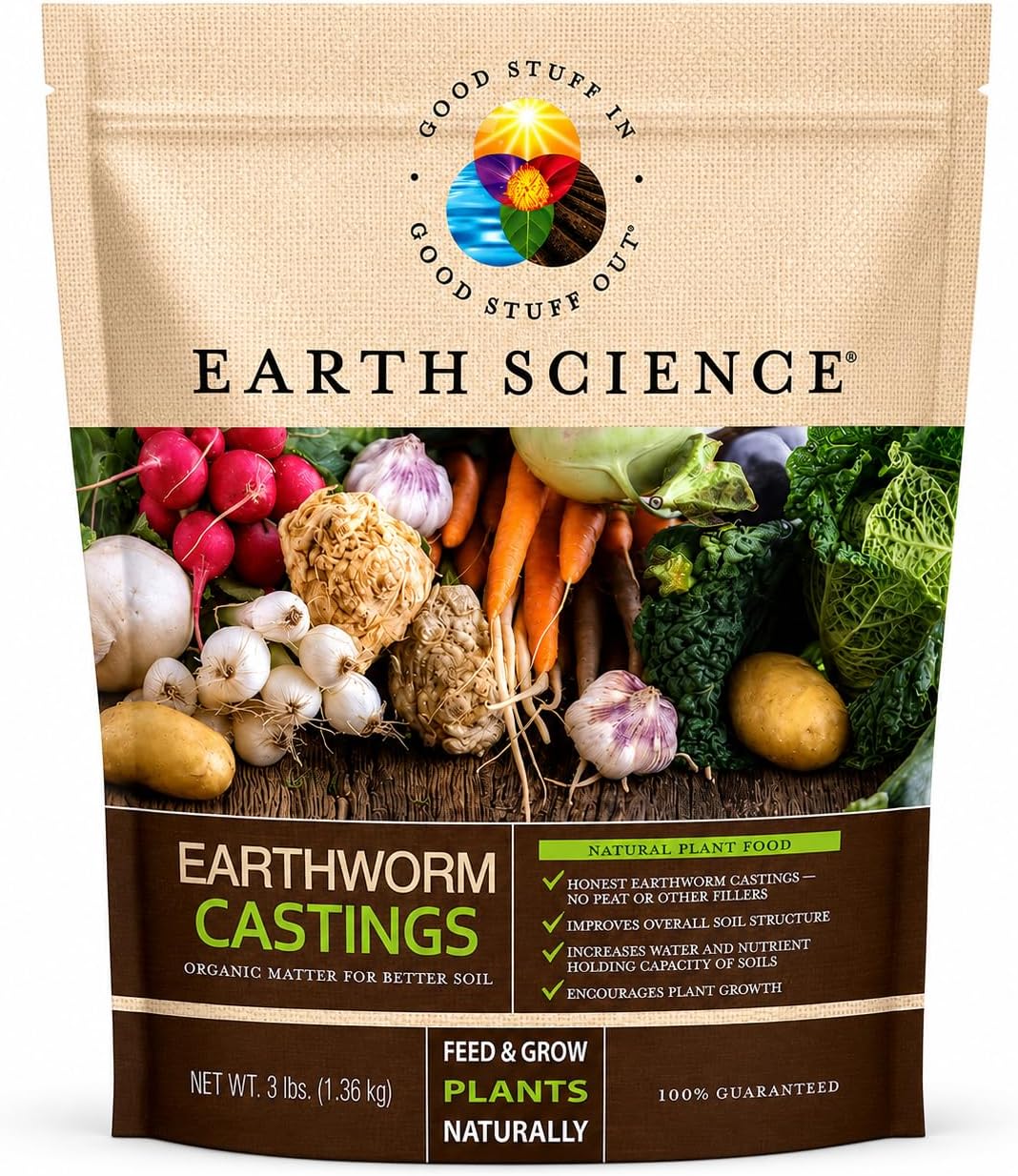
Earth Science Premium Earthworm Castings are a pure vermicompost product intended to enrich garden and potting soils. Gardeners typically use it as a top dressing, mixed into potting mixes at about 1:4 castings to soil, or incorporated into garden beds at 1/4 to 1/2 inch and watered in; it can also be brewed as compost tea. The castings add organic matter that helps soil retain moisture, supports beneficial microbes, and can reduce compaction by improving aggregation. Practical benefits include a straightforward application for vegetables, flower beds, trees, and shrubs and the flexibility to use in pots, compost piles, or on lawns. The product is free of fillers and presented as a slow-release, natural fertilizer rather than a quick synthetic boost, so expect gradual improvements over weeks to months rather than immediate greening. Because this is a small, concentrated pouch, frequent reapplication during the growing season is recommended for larger beds or heavy-feeding crops.
Best for: Gardeners who prioritize dependable, natural soil improvement for organic vegetable beds and potted edibles and prefer steady, biology-driven results over quick chemical fixes.
Less Ideal for: Growers who need rapid, high-N fertilizer responses for a single fast-growing crop or who require large-volume amendments for extensive beds without frequent reapplication.
- 100% vermicompost with no peat or fillers
- Versatile uses: top dressing, potting mix amendment, compost tea, and compost layering
- Improves soil structure and water retention while feeding beneficial microbes
- Slow-acting nutrient release not suited for immediate greening or fast corrective feeding
Verdict: Use this pure earthworm castings product when you want a reliable, natural soil conditioner that builds long-term fertility for an organic vegetable garden.
Brut Organic Worm Castings, 5 lb

| Item Form | Granules |
|---|---|
| Specific Uses For Product | Gardening,Organic |
| Target Species | All plants |
| Mixing Ratio | 1:5 |
Brut Organic Worm Castings function as a concentrated, natural soil amendment you mix into potting mixes or top-dress garden beds and raised beds. Typical use is mixing at the recommended 1:5 ratio for new indoor plants, sprinkling a cup around established houseplants, or working into outdoor planting holes and beds according to the brand directions. The product is OMRI/CDFA listed and produced in controlled conditions, which supports consistent nutrient content and beneficial microbial life that help roots establish, improve soil structure, and increase moisture retention without burning plants. Practical benefits for raised garden beds include improved aeration, slow-release nutrients, and a boost in microbial activity that supports long-term fertility. Limitations are that it is not a complete NPK fertilizer for immediate heavy feeding needs and larger beds require significant quantities to hit the suggested per-square-foot rates, so frequent applications or bulk purchases may be needed for big projects.
Best for: Gardeners who prioritize dependable, organic soil improvement for raised beds and container gardens and prefer predictable, low-risk amendments that support long-term soil health.
Less Ideal for: Those needing immediate, high-NPK feeding for heavy-feeding crops or gardeners who want to amend very large beds without buying supplemental bulk material.
- Certified organic and produced indoors for consistent purity
- Rich in beneficial microbes that improve soil structure and plant vigor
- Easy-to-use granular form suitable for mixing or top-dressing
- Not a standalone high-NPK fertilizer for rapid nutrient correction
- Five-pound bag may be small for large raised beds and repeated seasonal use
Verdict: Use this OMRI/CDFA-listed worm castings product to reliably build long-term fertility and microbial health in raised beds and containers.
Wiggle Worm Pure Worm Castings Organic Fertilizer, 30 lb

| Item Form | Granules |
|---|---|
| Specific Uses For Product | Soil Conditioning |
| Application Method | Apply to soil |
| Unit Count | 480 Ounce |
Wiggle Worm Pure Worm Castings are a ready-to-use organic soil amendment made from concentrated earthworm castings. Gardeners typically mix a portion into potting mixes, top-dress established plants, work it into transplant holes, or brew it as a nutrient tea; the product page includes specific dosing for vegetables, containers, lawns, and roses. The castings are odorless, non-burning, and OMRI listed for organic use, so they supply water-soluble nutrients plus microbes that improve aeration, water retention, and root development without synthetic chemicals. Practical benefits include easy application, safe use on seedlings and mature plants, and versatility across raised beds, container gardens, and lawns. The main limitation is that this is a concentrated soil builder rather than an all-in-one fertilizer with NPK labels, so users seeking precise, fast-acting nutrient ratios may need to supplement for specific deficiencies; also a 30 lb bag is bulky to handle for small-space gardeners. For gardeners focused on long-term soil health and organic production, it functions as a low-risk, effective amendment.
Best for: Gardeners who prioritize building long-term soil health and want a safe, organic amendment for vegetables, ornamentals, and containers; buyers who value proven, low-risk inputs backed by strong user feedback.
Less Ideal for: Gardeners who need targeted, rapid nutrient correction based on precise NPK values or those who only want a lightweight product for very small balconies or indoor micro-gardens.
- OMRI listed organic and made from 100% worm castings
- Provides beneficial microbes that improve soil structure and water retention
- Odorless and non-burning so safe for seedlings and established plants
- Versatile dosing for containers, raised beds, lawns, and making worm casting tea
- No standard NPK nutrient label so not a precise standalone fertilizer for targeted feeding
- Large 30 lb bag can be heavy and awkward for gardeners with limited storage or mobility
Verdict: Choose this product when you want a proven, OMRI-listed worm casting that builds soil biology and improves plant health across beds and containers.
Choosing the Right Compost for Strawberries in Pots: Key Factors to Consider
Drainage and Aeration
Strawberries need oxygen at the roots and they are very sensitive to waterlogged conditions in pots. Compost texture determines how quickly excess water moves away from roots and how much air remains between particles. A mix with coarse components such as composted bark or coir fibers helps create channels for air and prevents compaction over the growing season.
Poor drainage quickly leads to root rot and fungal problems in containers where water cannot move away like it does in a garden bed. When selecting compost for potted strawberries, prioritize materials and particle sizes that maintain structure while still allowing fine root contact with nutrient-rich fines.
Moisture Retention Capacity
Containers dry out faster than beds, so compost must hold enough moisture to sustain plants between waterings while not remaining saturated. Ingredients that absorb and slowly release water, such as well-aged compost and coconut coir, moderate moisture swings and reduce stress on strawberry plants.
Consider the pot size and sun exposure when evaluating retention. Small hanging pots in full sun need a mix with higher water-holding capacity than a large patio tub. A balanced compost blends materials that hold water with coarse particles to avoid trapping excess moisture.
Nutrient Content and Release
Strawberries are moderately heavy feeders at fruiting time and benefit from a steady, predictable nutrient supply. Compost for pots should offer baseline fertility but not release a sudden surge of soluble salts that can burn delicate roots. Slow-release organic matter and well-composted green waste provide a gradual feed that supports flowering and fruit set.
Also consider what additional fertilization you plan. A compost that supplies some baseline nutrients reduces the frequency of supplemental feeding, while very low-nutrient mixes will require a more aggressive fertilizer routine.
Cleanliness and Disease Risk
Potted strawberries are vulnerable to root pathogens and foliar diseases that can carryover in contaminated compost. Choose composts produced from well-managed, hot composting processes or commercially screened materials to lower the risk of soilborne pests and pathogens.
Avoid raw manures or incompletely composted green waste in container mixes. Clean, pasteurized, or clearly labeled garden compost reduces surprises and helps protect sensitive fruiting plants.
pH and Mineral Balance
Strawberries prefer slightly acidic to neutral conditions. Compost influences pot pH and availability of nutrients like iron and manganese. A compost with balanced mineral content helps maintain optimal pH and reduces the need for corrective additives.
If your water or supplemental fertilizers tend to be alkaline, selecting a compost with slight acidity provides a buffer. Regular testing of potting mix pH every season helps you adjust fertilizers or add organic amendments as needed.
Weight, Texture, and Handling for Containers
How heavy a compost is matters for hanging baskets, balcony planters, and rooftop containers where weight is a constraint. Lightweight components such as coir and perlite reduce load, while dense mineral soils increase it. Texture also affects how easy the mix is to fill and how well it stays in pots without excessive settling.
Consider how often you will refill pots or move containers. A light, free-draining compost simplifies handling and reduces strain when moving planted containers. Also evaluate dustiness and whether the mix requires pre-wetting to prevent clouds of fine particles when filling pots.
How Compost Texture Affects Berry Quality
Texture does more than control water flow. When roots can explore a mix that balances fines and coarse particles, plants establish quickly and can access both moisture and nutrients efficiently. That steady root activity supports consistent flowering and even ripening of berries.
Coarse textures favor air space and healthy roots but may require more frequent feeding and watering. Finer textures hold nutrients well but risk compaction in small pots. Think about the tradeoff between firmness for support and softness for root growth when selecting a compost.
- Coarse components boost oxygen and reduce root disease.
- Fine particles improve nutrient contact but can compact over time.
- A mix tailored to your pot size gives the best balance.
Adjusting Compost for Different Pot Sizes
Small pots under 6 inches need a lighter, more water-retentive mix because they warm and dry quickly. Adding a higher proportion of moisture-holding materials helps reduce daily watering needs for small containers.
Medium and large pots can use mixes with more coarse material because they hold water longer and allow more root spread. For very large tubs, a blend approaching garden-ready compost with extra drainage amendments works well.
- Tiny pots: prioritize water retention and lightweight texture.
- Medium pots: aim for balance between drainage and moisture holding.
- Large pots: include more organic matter and structural material for stability.
Seasonal Care and Recharging Container Compost
Compost in pots depletes over a growing season. Top-dressing with a thin layer of fresh compost and applying a balanced feed at key times-pre-flower and mid-fruit-helps maintain vigor without disturbing roots.
At season end, remove old surface debris, trim dead foliage, and refresh the top third of potting mix or repot if the compost has compacted. Saving some used compost for blend-back after rejuvenation can recycle nutrients while keeping structure healthy.
- Top-dress in spring and after heavy cropping.
- Replace or refresh mix every one to two seasons for best results.
- Sterilize containers if disease occurred the previous season.
Common Amendments to Improve Pot Compost
Simple amendments let you tune a compost for strawberry containers. Coarse perlite or poultry grit improves drainage and aeration. Coconut coir or well-rotted compost increases moisture retention without clogging pore space. A small addition of slow-release organic fertilizer provides steady nutrients across the season.
Avoid raw nitrogen sources late in the season because they can push leaf growth at the expense of fruiting. Use amendments sparingly and mix thoroughly to prevent pockets of concentrated salts or moisture.
- Perlite or grit for drainage.
- Coir for moisture retention.
- Slow-release organic feeds for steady nutrition.
How Water Quality Interacts with Compost Choice
Tap water with high alkalinity affects nutrient availability in potting compost. If your water is hard or alkaline, a slightly acidic compost buffer helps maintain micronutrient access important for strawberry flavor and leaf health.
If you irrigate with collected rainwater or soft water, you can choose a more neutral compost and add targeted nutrients when needed. Monitor plant symptomology and adjust fertilization rather than overcorrecting the compost itself.
- Test irrigation water if fruit color or leaf yellowing appears.
- Acidic composts help in alkaline-water areas.
- Adjust fertilization based on plant response rather than changing compost mid-season.
How We Chose the Best Compost for Strawberries in Pots
We prioritized traits that directly affect strawberry health in confined root spaces. Key evaluation criteria included particle texture and drainage, nutrient content and release profile, moisture retention without waterlogging, disease and pathogen screening, and suitability for container use including weight and pH. We checked ingredient transparency to prefer mixes with known components like well-rotted composted bark, leaf mold, and quality composted green waste. Exclusions removed bulky garden soils, raw manure-only products, and mixes formulated primarily for in-ground beds that retain too much moisture or are too heavy for pots. Practical handling factors such as ease of filling pots, dust levels, and the ability to amend with perlite or vermiculite were also considered. Finally, we favored mixes that allow predictable feeding schedules and that support runner development without encouraging excessive vegetative growth at the expense of fruiting.
FAQ
Can I use garden compost from my yard for potted strawberries?
Often you can, provided the compost is well-rotted and free from persistent weeds and pathogens. Garden compost should be screened for large particles and mixed with drainage amendments to prevent compaction in pots.
How often should I feed strawberries in pots when using compost?
This depends on the compost fertility. With a nutrient-rich compost, feed lightly every four to six weeks. If the compost is low in nutrients, apply a balanced liquid or slow-release organic fertilizer more frequently during the fruiting period.
Is coco coir a good component for strawberry potting mixes?
Coco coir is useful because it holds water and resists compaction while remaining lightweight. It usually needs supplemental nutrients, so combine it with compost or add slow-release feed to supply the minerals strawberries need.
How can I tell if my compost is holding too much water in a pot?
Signs include yellowing leaves, soft stems, and slow growth. A simple squeeze test of the root ball will show if the mix stays soggy for long periods. Improving drainage with coarse amendments or repotting into a lighter mix usually corrects the issue.
Should I sterilize used compost before reusing it in pots?
Sterilization is not usually necessary if the compost was disease-free and well-composted, but it is wise to refresh or replace the top layer and monitor for pests. If plants showed root disease previously, replace the mix and sanitize containers before replanting.
Final Verdict
Choose a compost that balances drainage, moisture retention, and steady nutrient release for the best results with strawberries in pots. Prioritize mixes that maintain structure in confined containers, have low disease risk, and match the water and weight limits of your specific pots. Small pots need more water-holding capacity while larger containers can tolerate coarser, heavier blends. Focus on predictable feeding and seasonal refreshes so you can keep plants fruiting reliably rather than chasing corrective fixes.
