

Note: This article contains affiliate links. If you click on these links and make a purchase, I may earn a small commission at no extra cost to you. This helps support my research and content. Read my full affiliate disclosure here.
Getting tomato seedlings off to a healthy start makes the difference between leggy plants and sturdy transplants that set fruit well later. The right liquid fertilizer for tomato seedlings supplies the mild, balanced nutrients young plants need without burning delicate roots. In this guide we shortlisted six top liquid fertilizing options gardeners commonly use for seedlings and evaluated them for nutrient balance, concentration, and ease of application. Use this roundup to pick a seedling feed that fits your seed-starting routine and growing setup.
Top Picks at a Glance
| Best Overall The best all-around choice for most situations | Miracle-Gro Quick Start Planting & Transplant Starting Solution, 48 fl. oz. |  |
| Best Quality Built to a higher standard if you want something more solid | Neptune's Harvest Tomato & Vegetable Organic Liquid Fertilizer (2-4-2), 36 oz |  |
| Best Value The sweet spot between price and what you get | Farmer's Secret Tomato Booster Liquid Fertilizer (8 oz) |  |
| Best Budget The cheapest option that still gets the job done reliably | Miracle-Gro Liquid All Purpose Plant Food Concentrate, 32 oz |  |
| Highest Rated A top-rated pick with lots of positive feedback | FoxFarm Grow Big Liquid Plant Food, 6-4-4 Quart Concentrate |  |
| Most Popular A crowd favorite that many people choose with confidence | Miracle-Gro Pour & Feed Liquid Plant Food, 32 fl. oz. | 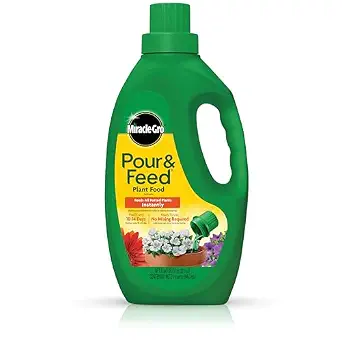 |
Miracle-Gro Quick Start Planting & Transplant Starting Solution, 48 fl. oz.

| Item Form | Liquid |
|---|---|
| Specific Uses For Product | Agriculture,Starting |
| Application Method | Mix with water and pour around new plantings |
| Target Species | For all flowers, vegetables, trees, shrubs, transplants and seedlings |
| Mixing Ratio | Fill cap to 1st line and mix with 1 gallon of water |
Miracle-Gro Quick Start is a liquid concentrate designed for use when planting or moving seedlings and transplants. You measure the concentrate with the bottle cap, mix with a gallon of water, and pour the diluted solution around the root zone to settle soil and feed young roots. The 4-12-4 NPK formula emphasizes phosphorus to encourage root development and faster blooms versus unfed plants. Typical use is at planting and again seven days later, after which you can switch to a regular feeding schedule. Practical benefits include an easy, measured application, compatibility with flowers, vegetables, trees, shrubs and seedlings, and clear instructions for gardeners who want a simple transplant routine. Limitations to note are that this is a starter solution only, so it is not intended as a long-term sole fertilizer, and frequent large-scale applications without following label guidance could overfeed delicate seedlings. Also it is a liquid concentrate, so you need a watering can and care when diluting to avoid spills or accidental over-concentration.
Best for: Gardeners who want a simple, reliable way to reduce transplant shock and give seedlings a nutrient-rich start when planting in beds or containers.
Less Ideal for: People seeking an all-in-one, long-term fertilizer solution for ongoing feedings or those who prefer granular or organic-only products.
- Focused 4-12-4 NPK formula to encourage root development at transplanting
- Liquid concentrate with a measured cap makes dosing straightforward
- Suitable for a wide range of plants including vegetables, flowers, shrubs and trees
- Simple application that settles soil and feeds roots right after planting
- Designed as a short-term starter solution rather than a complete feeding program
- Requires correct dilution and handling to avoid overfeeding seedlings
Verdict: Use this easy-to-dose liquid starter to give seedlings and transplants a nutrient boost that helps roots establish quickly.
Neptune's Harvest Tomato & Vegetable Organic Liquid Fertilizer (2-4-2), 36 oz

| Item Form | Liquid |
|---|---|
| Specific Uses For Product | Plant Growth, Vegetable Development, Houseplant Care |
| Application Method | Liquid |
| Coverage | Medium |
| Mixing Ratio | 2-4-2 |
Neptune's Harvest Tomato & Vegetable fertilizer is a fish and seaweed based liquid plant food designed for the vegetative stage of tomatoes and other vegetables. You mix the concentrate with water (manufacturer recommends about 1 oz per gallon for outdoor plants) and apply as a root drench or foliar feed every 1 to 2 weeks for garden plants or weekly for houseplants. The 2-4-2 NPK and added calcium, molasses, humates, yucca extract, and biological microbes support leafy growth, root development, and soil biology rather than just a short burst of nitrogen. In practice it helps produce fuller foliage and can improve fruit set and quality when used consistently through the season. Because it is organic and low in salt it is forgiving of slightly overenthusiastic feeding, but the nutrient concentrations are lower than synthetic bloom boosters so expect slower, steadier gains rather than immediate big pushes in flowering or fruiting. Best used by gardeners focused on steady yield improvement and soil health rather than rapid, high-N fertilization programs.
Best for: Potted-tomato growers who prioritize reliable plant health, steady yield increases, and improved soil biology over rapid chemical forcing. Ideal for gardeners who prefer organic inputs and regular, measured feedings.
Less Ideal for: Growers seeking very rapid, high-impact flowering or fruiting with synthetic-strength fertilizers or those who need an odor-free product for indoor use in tight spaces.
- Organic, fish-and-seaweed based formula that supports soil biology and root health
- Versatile application as both a root drench and foliar feed
- Includes secondary ingredients (calcium, molasses, humates, yucca extract) that aid overall plant vigor and stress resistance
- Concentrated 36 oz bottle provides many feedings for potted tomato plants when mixed to label rates
- Lower NPK intensity compared with synthetic bloom or fruit boosters, so results are steadier not immediate
- Strong natural odor from fish-based ingredients which some users may find unpleasant
Verdict: A dependable organic liquid fertilizer that builds healthier roots and steady yields for potted tomatoes while supporting long-term soil biology.
Farmer's Secret Tomato Booster Liquid Fertilizer (8 oz)

| Item Form | Liquid |
|---|---|
| Specific Uses For Product | Tomato Plant Care |
| Target Species | Tomato |
| Mixing Ratio | 1:48 |
This concentrated tomato booster is designed to feed tomato plants throughout their life cycle with a formula developed by agronomists. It is supplied as an 8 oz liquid concentrate that you dilute (manufacturer directions: two teaspoons per gallon or mixing ratio 1:48) and apply weekly as a foliar spray or soil drench. The 3-8-7 N-P-K balance emphasizes phosphorus and potassium to support flowering and fruit development, and the label notes added humic acid, iron and calcium to help nutrient uptake and reduce common blossom-end issues. Because it is highly concentrated one small bottle produces many gallons of feed, which makes it convenient for someone managing a few seedlings up through established plants. Important limits: the product lists only primary ingredients without specific micronutrient concentrations, and safety guidance means you must measure carefully to avoid overfeeding sensitive seedlings. It is best used as part of a regular, measured feeding schedule rather than a one-time corrective treatment.
Best for: Gardeners who want an efficient, repeatable feeding plan for tomato seedlings and progressing plants and who prioritize measured, agronomist-developed formulations over ad hoc feeding.
Less Ideal for: Growers needing a complete guaranteed micronutrient analysis or those who prefer granular slow-release fertilizers for hands-off feeding.
- Super-concentrated formula yields many gallons from one 8 oz bottle
- N-P-K ratio (3-8-7) targets flowering and fruit set for tomatoes
- Includes humic acid plus iron and calcium to aid nutrient uptake and reduce common deficiencies
- Works as foliar spray or soil drench for flexible application
- No full breakdown of micronutrient concentrations is provided on the label
- Small bottle can lead to measurement errors if you do not use accurate measuring tools
Verdict: A small, super-concentrated liquid made to deliver targeted phosphorus and potassium support for tomatoes on a weekly feeding schedule.
Miracle-Gro Liquid All Purpose Plant Food Concentrate, 32 oz

| Item Form | Liquid |
|---|---|
| Specific Uses For Product | Plant Growth, Root Development |
| Application Method | Mix with water in a watering can |
| Mixing Ratio | 1:10 (concentrate to water, estimate) |
Miracle-Gro Liquid All Purpose is a water-soluble concentrate you mix into a watering can and apply every 1 to 2 weeks to container and in-ground plants. It is formulated for general plant growth and root development and is marketed for flowers, vegetables, shrubs and houseplants, so it works as a straightforward feed for flowering bulbs like calla lilies. The bottle’s mixing guidance (cap measures for garden application and 1 teaspoon per gallon for containers) makes it easy to dose for pots or small beds. Practical benefits include fast uptake through the soil when applied as directed and compatibility with routine watering schedules. Limitations to note are that it is an all-purpose formula rather than a bloom-focused or calcium-rich fertilizer tailored specifically to calla lilies, so growers seeking targeted bloom enhancement or specialty nutrition may want a supplement. Also, frequent use at higher-than-recommended strength can risk fertilizer burn, so follow the mixing directions and schedule.
Best for: Buyers who want an affordable, easy-to-use liquid fertilizer to keep calla lilies and other flowering plants regularly fed without fuss.
Less Ideal for: Growers seeking a specialist bloom-boost or a fertilizer formulated for specific micronutrient needs should consider a targeted or bloom-specific product instead.
- Concentrated liquid mixes easily with water for quick application
- Clear dosing instructions for both garden beds and container plants
- Suitable for a wide range of plant types including flowering bulbs and houseplants
- General all-purpose formula not specifically formulated for enhancing blooms of calla lilies
Verdict: A budget-friendly, easy-to-use liquid concentrate that reliably feeds calla lilies and other common garden plants on a regular schedule.
FoxFarm Grow Big Liquid Plant Food, 6-4-4 Quart Concentrate

| N-P-K | 6-4-4 |
|---|---|
| Form | Liquid concentrate |
| Unit count | 32 Fluid Ounces |
| Mixing ratio | 2-3 teaspoons per gallon |
FoxFarm Grow Big is a water-soluble concentrate designed to boost vegetative growth and speed nutrient uptake in vegetable gardens and ornamentals. Mixed at 2 to 3 teaspoons per gallon, it can be applied through watering or foliar feeding to quickly deliver nitrogen-focused nutrition that supports larger plants and stronger stems. The low pH formula helps keep micronutrients stable so feedings remain effective, and the quart concentrate covers repeated applications for a small plot or a set of containers. Practical benefits include clear mixing instructions, versatility for both indoor and outdoor use, and a fast-acting effect when plants need a growth push. Limitations to note are the higher nitrogen emphasis, which favors leaf and stem growth over bloom or fruit set, and the presence of phosphorus in the formula that may be restricted in some local lawn rules. For gardeners who prioritize consistent, predictable feedings, this product is straightforward to measure and integrate into a regular watering schedule.
Best for: Gardeners who want a reliable, easy-to-dose liquid fertilizer to encourage rapid vegetative growth in vegetable beds, containers, and established plants and who value predictable results from each feeding.
Less Ideal for: Growers focused primarily on maximizing flowering or fruit set who need a bloom-boosting formula or those working under strict phosphorus-use restrictions in their area.
- Concentrated liquid formula for fast nutrient uptake and quick visible response
- Low pH formulation helps maintain micronutrient stability during storage and application
- Versatile application by watering or foliar feeding for indoor and outdoor use
- Clear mixing ratio (2–3 teaspoons per gallon) simplifies repeatable feedings
- Nutrient ratio (6-4-4) emphasizes vegetative growth rather than flowering or fruit production
- Contains phosphorus which may be restricted by local regulations for turf or non-agricultural use
Verdict: Choose this concentrate when you want a dependable, fast-acting liquid feed to promote vigorous leafy and structural growth in a vegetable garden.
Miracle-Gro Pour & Feed Liquid Plant Food, 32 fl. oz.

| Item Form | Liquid |
|---|---|
| Application Method | Directly to the soil |
| Target Species | potted plants |
| Unit Count | 32 Fluid Ounces |
Miracle-Gro Pour & Feed is a ready-to-use liquid fertilizer designed for container plants and houseplants. You apply it by measuring with the bottle cap and pouring the recommended amount directly onto the soil around each pot, so no mixing or watering-can prep is required. Its convenience makes it easy to maintain a regular 10–14 day feeding schedule for bedding plants like petunias in containers. The product is formulated for potted plants only, and the liquid form gives fairly quick nutrient availability compared with slow-release granules. Practical benefits include simple dosing with the cap, suitability for indoor and outdoor use, and a clearly stated application rhythm that helps keep flowering plants vigorous. Important limitations are that it is not intended for in-ground beds and that frequent applications mean you need to remember regular feedings; it is also a general all-purpose formula rather than a petunia-specific bloom booster.
Best for: A plant owner who prefers simple, low-effort care for container flowers and wants a dependable, easy-to-measure fertilizer to keep petunias and other potted ornamentals blooming.
Less Ideal for: Gardeners seeking a long-term, in-ground soil amendment or those who prefer an infrequent, slow-release feeding schedule should consider other products.
- Ready-to-use liquid requires no mixing so application is fast and low-effort
- Cap-measure dosing makes it easy to apply the correct amount for each container
- Suitable for both indoor and outdoor container plants so one product covers many uses
- Feeds on a 10–14 day schedule for consistent nutrient supply to flowering containers
- Not formulated for in-ground planting so unsuitable for garden beds
- Requires frequent application compared with slow-release fertilizers
Verdict: Use this if you want a no-mix, easy-to-measure liquid fertilizer to keep container petunias fed and blooming on a regular schedule.
Choosing the Right Liquid Fertilizer for Tomato Seedlings: Key Factors to Consider
Nutrient Ratio and Concentration
Tomato seedlings need a mild, balanced nutrient supply that promotes steady leaf and root development without forcing rapid, weak growth. A low-to-moderate nitrogen level with sufficient phosphorus and potassium supports root establishment and overall vigor.
Concentration matters because seedlings require much weaker solutions than mature plants. A concentrated product that lacks clear dilution guidance increases the risk of overfeeding. Look for liquid fertilizers with explicit seedling dilution rates or formulas described as "weak" or "starter" so you can avoid nutrient burn.
Dilution Accuracy and Application Control
Small containers and seed trays hold little media, so precise dosing is critical. Products that dissolve evenly and allow measurement by teaspoon, milliliter, or capful per quart make repeatable feeding simple. Bottles with graduated markings or clear mixing tables reduce errors.
Application control also includes compatibility with watering cans, spray bottles for foliar feeds, and small drippers. If you plan to use automated micro-irrigation, confirm the fertilizer dissolves fully and will not clog emitters.
Salt Content and Root Safety
High soluble salt levels can quickly desiccate tiny roots and damage seedling foliage. Fertilizers intended for seedlings should have a low salt index or be formulated as "seedling" or "starter" feeds. Frequent flushes and lower-strength mixes help, but starting with a low-salt product reduces the need for corrective watering.
Pay attention to directions about frequency and maximum concentrations. A product that emphasizes gradual feeding or indicates suitability for soilless mixes is often safer for early-stage plants.
Compatibility with Growing Media
Seedlings are raised in a range of media from peat-based mixes to coco coir and perlite blends. Some fertilizers are tailored to specific media types or to water quality variations. For example, high-calcium formulas can help in soft-water areas, while chelated microelements perform better in high pH situations.
Choosing a feed compatible with your media means fewer nutrient lockups and steadier uptake. If you mix your own media or reuse potting soil, select a fertilizer that addresses common deficiencies you observe in that medium.
Ease of Storage and Shelf Life
Seed-starting is seasonal for many gardeners, so a fertilizer that stores well between seasons is more practical. Look for stable liquid concentrates that remain usable after opening when stored in a cool, dark place. Clear labeling about shelf life and whether refrigeration is needed helps you plan purchases.
Smaller bottle sizes are often advantageous for hobby gardeners because they reduce the risk of stale or degraded solutions sitting unused for long periods.
Ingredient Transparency and Safety Notes
A clear ingredient list and straightforward safety guidance are important when you are frequently handling small volumes around young plants. Knowing the exact NPK numbers, presence of chelated micronutrients, and any additives such as wetting agents helps you anticipate effects on seedling growth.
Safety notes should include recommended dilution rates, warnings about foliar burn, and instructions for accidental over-concentration. Transparent labels make it easier to follow best practices and reduce the chance of damaging fragile seedlings.
Adjusting Feed Strength by Seedling Stage
Seedlings have different nutritional needs as they progress from cotyledon stage to their first true leaves and beyond. Start with very weak solutions while cotyledons are new, then increase concentration gradually as true leaves develop and root systems expand.
A practical approach is to begin at one-quarter of the recommended strength for mature plants, watch for signs of vigor or stress over a week, and step up to half strength once seedlings show steady new growth. Always allow the medium to dry slightly between feeds to avoid constant wetness that can cause damping off.
- Cotyledon stage: extremely dilute feed or plain water
- First true leaves: slowly increase to 25-50% of normal strength
- Before transplant: feed at a slightly stronger but still gentle concentration
Water Quality and Its Effect on Feeding
Tap water varies widely in pH and dissolved minerals, and those differences change how seedlings access nutrients. Hard water with high calcium and magnesium can raise soluble salt levels when combined with fertilizer, increasing burn risk.
If your tap water is very hard or has an elevated pH, consider using filtered or rainwater for seedlings or choose a fertilizer formulated to account for those conditions. Always mix fertilizer into the water you actually use to check solubility and clarity.
- Test or observe: look for white crust on soil as an indicator of salt buildup
- Use rainwater or low-salt sources when possible for the most predictable results
Feeding Frequency and Signs of Overfertilization
Less is often more with seedlings. Frequent light feeds are preferable to infrequent heavy meals. Many gardeners feed seedlings with a weak solution every 7 to 14 days rather than weekly full-strength applications.
Watch for telltale signs of overfertilization such as brown leaf edges, burned or stunted growth, and a white crust on the soil surface. If any of these appear, flush the medium with plain water at low flow until runoff clears and reduce feed strength and frequency.
- Typical schedule: very dilute feed every 1-2 weeks
- Corrective action: flush and reduce concentration if burn appears
Using Liquid Fertilizers with Seedling Heat Mats and Grow Lights
Warmer root zones and strong artificial light accelerate seedling growth and sometimes increase nutrient demands. When using heat mats or intense grow lights, monitor plants closely because they may require slightly more frequent feeding but still at gentle concentrations.
Avoid pushing concentration simply because plants look greener; rapid growth under controlled conditions can lead to weak stems if not balanced with proper light intensity and occasional hardening off.
- Increase monitoring frequency under supplemental heat and light
- Maintain weak mixes even with accelerated growth to support sturdy development
Transitioning Seedlings to Fertilizer Regimens After Potting Up
When you move seedlings into larger pots or into the garden, roots suddenly have more space and media to explore. Gradually increase feed strength over a couple of weeks rather than making a single jump to full-strength fertilizer for mature plants.
Continue to prioritize root safety and watch for nutrient imbalance signs as the plant adjusts. A staged increase helps seedlings adapt without shock and reduces transplant stress.
- Step up concentration in small increments after potting
- Keep monitoring soil moisture and salt accumulation after each increase
How We Chose the Best Liquid Fertilizer for Tomato Seedlings
We focused on characteristics that matter during the seedling stage when roots are small and plants are easily stressed. We evaluated nutrient profile and concentration to ensure a mild NPK balance appropriate for leafy growth without pushing excessive nitrogen. Application control and dilution flexibility were essential so gardeners can dose reliably by teaspoon or milliliter per quart. Safety for young roots and foliage was considered, looking for formulas that minimize salt buildup and foliar burn risk when used at recommended rates. We also assessed ease of use for typical home seed-starting setups, including clear mixing directions, compatibility with trays and small pots, and whether the product works in both soil and soilless mixes. Solubility and absence of settled solids matter for small nozzles and watering cans. Longevity and shelf stability were secondary factors but included to prefer stable liquid concentrates. Excluded from consideration were products formulated only for mature plants, high-strength foliar feeds intended for large gardens, and granular or slow-release fertilizers that cannot be accurately dosed for seedlings. The goal was to surface safe, controllable liquid feeds tailored to the delicate early growth stage.
FAQ
How often should I feed tomato seedlings with a liquid fertilizer?
Often a weak liquid feed every 7 to 14 days is sufficient. Frequency depends on media fertility and light conditions; use very dilute mixes and observe growth before increasing frequency.
Can I use the same fertilizer for seedlings and mature tomato plants?
You can use the same base fertilizer if you adjust dilution and frequency. Seedlings need much weaker solutions, so follow seedling-specific dilution rates rather than mature-plant recommendations.
Will liquid fertilizer burn tomato seedlings?
It can if concentrations are too high or salts build up in the medium. Using low-strength mixes, proper dilution, and occasional flushing prevents most burn issues.
Is foliar feeding safe for tomato seedlings?
Foliar feeding can deliver micronutrients quickly but carries higher risk of leaf burn on tiny foliage. If you use foliar sprays, apply very dilute solutions in the morning and avoid strong sunlight immediately after application.
What water should I use to mix seedling fertilizer?
Soft or rainwater is preferred because it lowers the chance of salt buildup. If you must use tap water, let it sit to reach room temperature and monitor for crusting; adjust fertilizer strength accordingly.
When should I start fertilizing tomato seedlings?
Begin feeding once seedlings have developed their first true leaves and roots are expanding. Before that stage, plain water is usually enough while cotyledons do their initial work.
Final Verdict
For tomato seedlings, prioritize gentle, low-salt liquid feeds that allow precise dilution and steady, monitored increases in strength. Focus on nutrient balance, dilution accuracy, and compatibility with your water and media to avoid burn and ensure steady root development. By choosing a controllable liquid fertilizer and following a conservative feeding schedule, you will reduce transplant shock and give young tomatoes the best chance to become vigorous plants.
