

Note: This article contains affiliate links. If you click on these links and make a purchase, I may earn a small commission at no extra cost to you. This helps support my research and content. Read my full affiliate disclosure here.
Choosing the right manure fertilizer matters because these products do more than feed plants; they rebuild soil structure, improve water retention, and supply slow-release nutrients that support long-term garden health. In small beds or larger plots, manure behaves differently depending on composting level, source animal, and how it is applied. This guide covers six shortlisted manure fertilizers suited to a variety of vegetable beds, flower gardens, and landscape plantings. We explain practical differences in nutrient profile, maturity, and handling, and we outline the evaluation criteria used to assemble the list so you can match a product to your planting schedule and soil goals.
Top Picks at a Glance
| Best Overall The best all-around choice for most situations | BRUT Worm Farms Cow Compost — 10 Quart Bag |  |
| Best Quality Built to a higher standard if you want something more solid | R&M Organics Cow Manure Compost Soil Amendment (10 lb) |  |
| Best Value The sweet spot between price and what you get | Black Kow Composted Cow Manure, 35 lb Bag |  |
| Best Budget The cheapest option that still gets the job done reliably | Home and Country USA Organic Composted Cow Manure (1 Quart) |  |
| Highest Rated A top-rated pick with lots of positive feedback | Lancaster Agriculture Chicken Manure Pellets, 4 lb |  |
| Best Seller A high-volume bestseller chosen again and again | Espoma Organic Chicken Manure Granules, 3.75 lb |  |
BRUT Worm Farms Cow Compost — 10 Quart Bag

| Unit Count | 192 Ounce |
|---|---|
| Volume | 10 quarts |
| Brand Name | BRUT WORM FARMS |
| UPC | 860000284295 |
Brut Cow Compost is a ready‑to‑use bagged cow manure compost aimed at improving soil fertility and structure. It is made from 100% composted cow manure that has been finely sifted, which makes it easy to mix into potting mixes, top‑dress containers, or incorporate into garden beds. Notable features include an OMRI listing for organic use, a nutrient profile with nitrogen, calcium and iron, and a low‑odor, non‑burning formula that is safe around seedlings and houseplants. In practice the compost increases microbial activity and helps retain moisture, so plants show healthier foliage and better growth when used regularly. The 10 quart bag is convenient for small gardens, potted plants, or spot treatments without handling bulk loads. Limitations are the modest volume per bag for larger beds and the product is a general amendment rather than a complete, balanced fertilizer, so heavier feeding or specific NPK management may still be needed for high‑demand crops.
Best for: Gardeners who want an easy, certified organic soil amendment to boost soil life and moisture retention in containers, small beds, or targeted spots without handling raw manure.
Less Ideal for: People establishing large garden plots or those seeking a complete NPK fertilizer for heavy feeding crops should consider bulk compost or supplemental fertilizers instead.
- OMRI‑listed organic compost safe for edible and ornamental plants
- Finely sifted, low‑odor formula suitable for indoor use and seedlings
- Adds organic matter and beneficial microbes to improve moisture retention and soil structure
- Versatile application as top dressing, mix‑in amendment, or container soil enhancer
- Small 10 quart volume requires multiple bags for larger garden projects
- Not formulated as a balanced complete fertilizer for high‑demand crops
Verdict: A compact, OMRI‑listed bag of finely composted cow manure that reliably adds organic matter and microbial life to containers and small garden beds.
R&M Organics Cow Manure Compost Soil Amendment (10 lb)

| Item Form | Solid |
|---|---|
| Specific Uses For Product | Organic |
| Application Method | Apply a thin layer around plants or mix into soil |
| Coverage | All-purpose |
| Target Species | fruits, vegetables, flowers, lawns, trees |
This 10 lb bag of R&M Organics compost is a straightforward, all-purpose soil amendment aimed at improving soil health in garden beds, containers, and raised beds. Made from cured cow manure and fully composted, it is low-odor and easy to work with — apply a thin quarter-inch layer around established plants or mix into planting soil at the recommended 5:1 ratio for new beds. The compost enhances moisture retention, aeration, and organic matter, which helps roots establish and reduces watering frequency. Its small bag size and modest weight make it convenient for small to medium projects and for gardeners who prefer incremental soil improvements. Because the product is pure compost rather than a balanced fertilizer, it is best used as a long-term soil builder rather than a quick nutrient fix; you may still need targeted fertilizers for heavy-feeding vegetables or to correct specific nutrient deficiencies. The simplicity and low odor make it a practical choice for backyard growers who want a reliable organic amendment without handling fresh manure or bulk deliveries.
Best for: Gardeners who prefer incremental, low-effort soil improvement for beds and containers and who prioritize organic, low-odor amendments for everyday maintenance.
Less Ideal for: Large-scale gardeners or landscapers who need bulk amendments or immediate corrective fertilizers for specific nutrient deficiencies should look for bulk compost or formulated plant foods.
- Fully composted cow manure reduces pathogens and minimizes odor compared with raw manure
- Improves soil structure and moisture retention for beds, containers, and raised beds
- Small 10 lb bag is easy to carry, store, and apply for small to medium gardens
- Versatile all-purpose amendment suitable for fruits, vegetables, flowers, lawns, and trees
- Not a formulated fertilizer so it may not supply immediately available nutrients for heavy feeders
- Bag size is small for larger beds or bulk soil rebuilding projects
Verdict: A convenient, low-odor organic compost that steadily improves soil structure and moisture retention for small to medium garden beds.
Black Kow Composted Cow Manure, 35 lb Bag

| Item Form | Bagged |
|---|---|
| Specific Uses For Product | Flower Gardens |
| Target Species | houseplants, tomatoes |
| Mixing Ratio | 0.5-0.5-0.5 |
Black Kow Composted Cow Manure is a ready‑to‑use, bagged compost that supplies slow‑release nutrients and organic matter to garden soils and containers. It is typically used by mixing into garden beds, topping containers, or even as a planting medium for heavy feeders like tomatoes by cutting the bag and planting directly. The product lists a mild nutrient ratio (0.5-0.5-0.5), so it won’t burn roots and is safe for houseplants and sensitive crops. Practical benefits include improved soil structure, moisture retention, and a steady nutrient supply without the need for frequent feeding. The bagged form keeps handling tidy and makes it straightforward for small to medium gardens. Limitations are that nutrient levels are low compared with formulated fertilizers, so heavy feeders may need supplemental fertilizer for peak production, and the bag size means repeated purchases for larger landscapes. Expect a gradual improvement rather than immediate, high‑N growth spurts.
Best for: Buyers who want a low‑risk, easy way to add organic matter and gentle nutrition to flower beds, containers, and vegetable starts without the worry of burning plants.
Less Ideal for: Gardeners needing a high‑concentration fertilizer for rapid, high‑yield production or those managing very large landscapes where bulk amendments are more economical.
- Composted manure provides slow‑release nutrients that reduce burn risk
- Improves soil structure and moisture retention as organic matter
- Bagged format is clean and easy to handle for small gardens and containers
- Listed safe for houseplants and suitable for direct planting of tomatoes
- Low N‑P‑K analysis means additional fertilizer may be needed for heavy‑feeding crops
- 35 lb bag may be insufficient for large yards requiring repeated purchases
Verdict: A safe, easy organic amendment for gardeners who want steady soil improvement and low‑risk feeding for beds and containers.
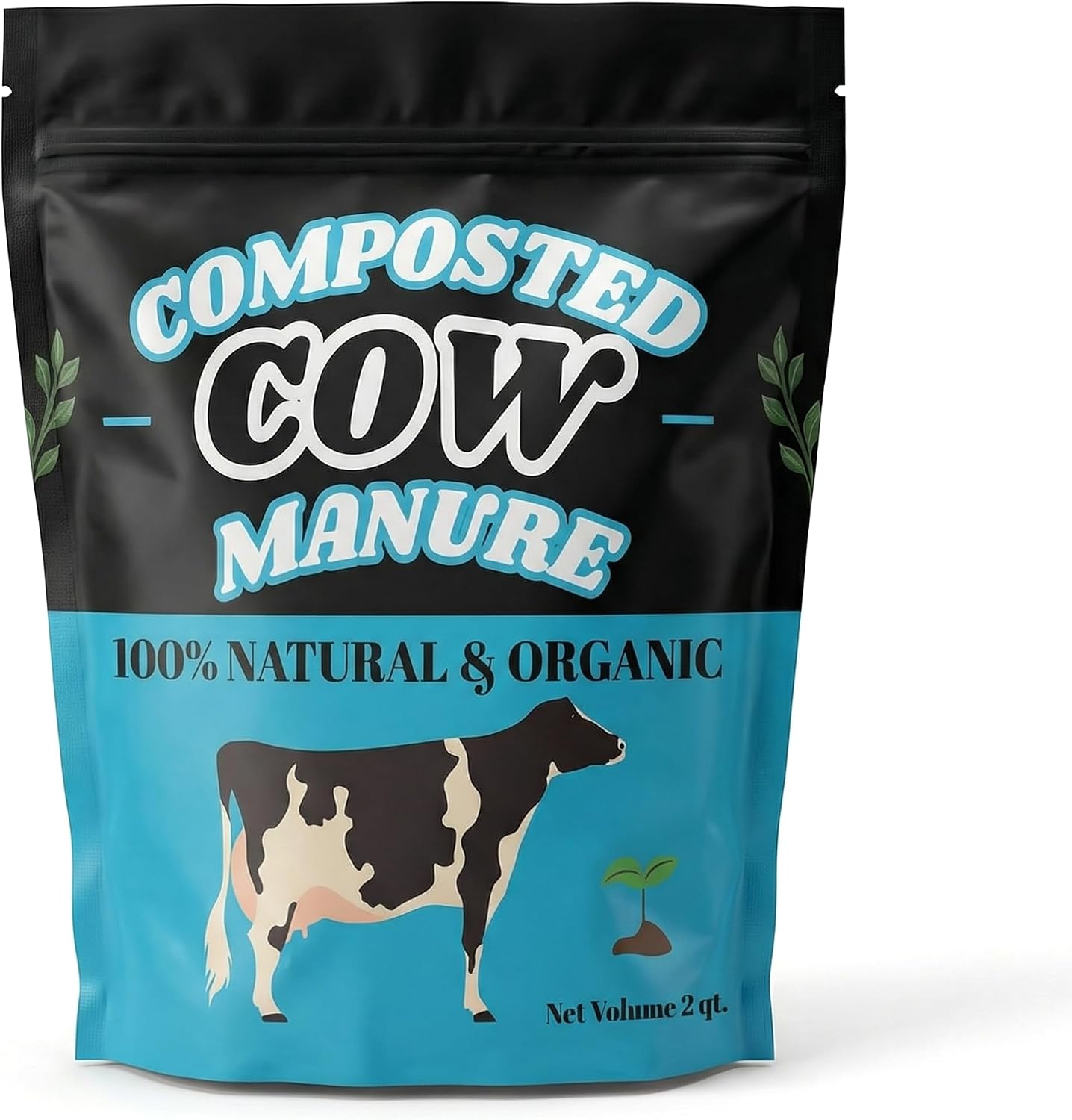
Home and Country USA Organic Composted Cow Manure (1 Quart)
| Item Form | Liquid |
|---|---|
| Application Method | Incorporate into soil |
| Target Species | vegetables, flowers, shrubs |
| Liquid Volume | 1 quarts |
| Mixing Ratio | 1:10 |
This 1-quart organic composted cow manure is a concentrated liquid fertilizer designed to be mixed and incorporated into garden soil. Typical use is blending the product at the recommended 1:10 ratio and applying it to raised beds, vegetable plots, potted plants or around shrubs to boost soil fertility and water retention. Notable features include an organic formulation from U.S. farms, a liquid form that makes even application and quick integration into soil, and guidance for full garden coverage. Practical benefits are faster distribution than bulky bagged manure, suitability for small-plot gardeners who want organic inputs, and an easy mixing ratio for dilute feeding. Limitations are the small container size, which means you will need multiple bottles for larger beds, and the liquid form may require more frequent applications than slow-release amendments. It is most useful as part of a regular feeding routine or to quickly refresh potted soils rather than as a sole long-term soil builder.
Best for: Gardeners working with small beds, containers or raised planters who want an easy-to-apply organic feed on a budget and prefer quick soil refreshes.
Less Ideal for: Large-scale vegetable growers or those seeking a single-product soil-building amendment for extensive beds should consider bulk compost or bagged manure instead.
- Certified organic composted manure sourced from U.S. farms
- Liquid form mixes easily with water for even application
- Targets vegetables, flowers and shrubs so it is versatile for garden beds and containers
- Small 1-quart volume requires multiple purchases for medium to large gardens
- Liquid feed works faster but does not provide long-term bulk organic matter
Verdict: A convenient, wallet-friendly organic liquid manure for quickly boosting soil fertility in small beds and containers.
Lancaster Agriculture Chicken Manure Pellets, 4 lb

| Item Form | Pellets |
|---|---|
| Target Species | Flowers |
| Unit Count | 64 Ounce |
| Mixing Ratio | 4:2:2 |
These chicken manure pellets are a ready-to-use organic fertilizer intended to boost soil fertility in vegetable and flower beds. The product comes as heat-treated, dehydrated pellets that you sprinkle around the drip line and water in, so there is no mixing or composting required before application. With a 4-2-2 NPK ratio and about 8% calcium, the pellets supply steady, slow-release nitrogen and useful phosphorus and potassium for leafy and fruiting vegetables. Practical benefits include convenience of pellets for targeted side-dressing, suitability for monthly feeding of vegetables during the growing season, and a clear mixing ratio listed for custom blends. Because the material is heat-treated, it is safer to handle than raw manure, but the nutrient release is not instant so expect gradual soil improvement rather than rapid greening. The bag size is small for larger plots, so frequent purchases or larger-volume sourcing may be necessary for sizeable vegetable gardens. This product suits gardeners who prioritize an organic, consistent fertilizer that is simple to apply and integrates well into regular feeding schedules.
Best for: Home vegetable gardeners who want an organic, low-hassle fertilizer they can apply regularly to maintain soil fertility and support steady crop growth.
Less Ideal for: Gardeners needing a high-volume solution for large-scale plots or those who require fast-acting, high‑nitrogen feed for immediate greening should consider bulk amendments or concentrated fertilizers instead.
- Heat-treated, pelleted form for easy, mess-free application
- Balanced 4-2-2 NPK analysis with added calcium for general vegetable needs
- Suitable for monthly side-dressing of vegetables and regular use on flowers and shrubs
- Small 4 lb unit may be insufficient for larger vegetable plots
- Slow-release action means nutrients are gradual rather than immediate
Verdict: A convenient, organic pelleted chicken manure that provides steady, slow-release nutrition ideal for regular feeding of home vegetable gardens.
Espoma Organic Chicken Manure Granules, 3.75 lb

| Item Form | Granules |
|---|---|
| Application Method | Scatter around plants |
| Target Species | Flowers, Vegetables, Trees, Shrubs |
| Specific Uses For Product | Gardening, Organic, Plant Food |
Espoma Organic Chicken Manure is a ready-to-use, granulated poultry manure fertilizer aimed at home gardeners who want an organic nitrogen-rich soil amendment. With a 5-3-2 NPK analysis and added calcium, it is scattered around the plant drip line and watered in to release nutrients; the granulated, heat-treated form makes application tidy and eliminates the need for mixing. It is labeled for monthly use on vegetables and for seasonal use on trees and shrubs, which makes it practical for routine feeding of tomatoes, peppers and other vegetable beds. The product is registered for organic production and contains no fillers, so you get mostly poultry manure rather than blended proprietary mixes. Because it is dehydrated and granulated there is minimal odor and easier storage than fresh manure, but nutrient levels are moderate so heavy-feeding crops may need larger or repeated applications. Also it does not supply specific micronutrient balances or slow-release polymers, so pairing it with a balanced organic program will give best results.
Best for: Gardeners who prioritize certified organic inputs and want a simple, easy-to-apply manure fertilizer for regular feeding of vegetable beds and common garden plants.
Less Ideal for: Growers seeking a single-product, high-analysis or slow-release fertilizer for intensive commercial production should consider concentrated or formulated alternatives.
- Certified for organic gardening and made from dehydrated poultry manure
- Granulated, heat-treated form is easy to apply and has lower odor than fresh manure
- Straightforward 5-3-2 NPK plus calcium provides usable nitrogen for vegetables
- Ready-to-use with no mixing required and simple scatter-and-water application
- Moderate nutrient analysis may require more frequent applications for heavy feeders
- Does not list a full micronutrient profile or slow-release formulation
Verdict: A simple, certified organic chicken manure in granule form that makes monthly feeding of vegetable beds easy and low-odor.
Choosing the Right Manure Fertilizer: Key Factors to Consider
Nutrient Balance and Nitrogen Release
Manure is not a uniform fertilizer; different animal manures vary widely in nitrogen, phosphorus, and potassium content. A balanced nutrient profile matters because it determines whether a manure will act more like a slow soil builder or deliver a stronger short-term feed.
Equally important is how quickly nitrogen becomes available. Fresh or lightly composted manure can release a flush of nitrogen that risks burning seedlings, while well-aged or composted manure releases nutrients more gradually. For transplanting or planting seeds, choose materials with slower nitrogen release or apply earlier in the season so decomposition has started.
Compost Maturity and Pathogen Risk
Maturity indicates how long the manure has decomposed and whether pathogens and weed seeds have been reliably reduced. Fully composted manure reaches higher temperatures that kill many disease organisms and weed seeds, making it safer to use around vegetables and ornamentals.
Uncomposted or raw manure can contain human pathogens and viable weed seeds, so it requires longer wait times before harvestable crops are planted. Understanding maturity helps you plan timing: topdress with finished composted manure any time, but incorporate fresh manure only well before planting to allow microbial processing.
Organic Matter and Soil Structure Benefits
One of the main values of manure fertilizer is organic matter addition. Organic matter improves crumb structure, increases water-holding capacity in sandy soils, and enhances drainage and aeration in heavy soils.
High organic matter manures also feed soil life, which supports nutrient cycling and long-term fertility. When assessing options, look for specifications or seller information about percent organic matter or visible texture cues such as crumbly, dark material versus strawy, undecomposed bedding.
Salt Content and Plant Sensitivity
Some manures concentrate salts during storage or through bedding materials, and high soluble salt levels can stress salt-sensitive plants. Salt is especially problematic in container gardens and raised beds where leaching is limited.
If you grow herbs, seedlings, or salt-intolerant vegetables, prefer materials tested for low soluble salts or dilute with compost and allow extra time for rainfall or irrigation to flush salts before planting.
Weed Seed Presence and Prior Crop Residues
Manures sourced from animals fed on weedy pastures or bedding with seed-bearing material can introduce viable weed seeds to your garden. Composting to sufficiently high temperatures destroys most seeds, but lightly cured manures may carry a weed burden that increases weeding work later.
Consider the origin and processing of the manure when weed pressure is a concern, and use well-composted material if you want to avoid adding new seed banks to beds.
Application Method and Garden Size Practicalities
How you plan to apply manure affects what you should buy. Bulk or bagged options differ in handling: bagged, screened, composted manures are easier for small urban plots and containers, while bulk loads may be economical for large beds but require tools and space to spread and incorporate.
Also factor in odor and neighborhood rules; some manures are treated or composted to reduce smell, which matters for backyard use. Match packaging and particle size to your tools and the degree of incorporation you intend to do.
Timing and Application Strategies
When to apply manure depends on its maturity and your planting schedule. Fully composted manure can be worked into beds in fall or early spring. For raw or only partially cured material, apply several months before planting and allow rainfall or irrigation and microbial activity to reduce soluble nitrogen and any pathogens. Topdressing with aged manure in late fall supports winter soil biology and releases nutrients gradually in spring.
- Topdress with finished manure any time outside of active crop growth.
- Incorporate well-aged manure in fall to allow winter decomposition.
- Avoid applying raw manure directly before seeding or transplanting to prevent nitrogen burn.
Matching Manure to Soil Type
Manure can correct different soil problems when matched correctly. In sandy soils pick manures high in organic matter to increase water retention and nutrient-holding capacity. In clay soils a coarse, well-decomposed manure improves structure and aeration without adding excess compaction. For containers and raised beds choose screened, low-salt options to avoid root stress.
- Sandy soil: prioritize organic matter content.
- Clay soil: seek crumbly, well-decomposed textures.
- Containers: use screened, low-salt materials.
Composting Manure at Home
If you source fresh manure or want to recycle stable bedding, composting at home is a practical route to reduce pathogens and weed seeds while producing a stable soil amendment. Build a hot compost pile with a balance of carbon materials, monitor moisture and temperature, and turn the pile to maintain aerobic conditions. Finished composted manure should be dark, crumbly, and have an earthy smell rather than ammonia.
- Aim for sustained temperatures above 131 F for several days to kill many pathogens and seeds.
- Mix fresh manure with high-carbon materials like straw or wood shavings to balance the pile.
- Allow several months of curing after the active composting phase before use in vegetable beds.
Using Manure in Vegetables, Flowers, and Lawns
For vegetable gardens, prefer composted manure applied in fall or as a winter soil builder to avoid contaminating produce. Flower beds benefit from regular topdressings of aged manure to maintain continuous organic matter input. On lawns, light applications of well-aged manure can improve turf vigor and soil life, but avoid heavy applications that create runoff or burn grass.
- Vegetables: use only well-composted manure within a safe timeframe before harvest.
- Flowers: topdress with aged material during the growing season.
- Lawns: apply lightly and rake in to prevent clumping.
Storage, Handling, and Neighborhood Considerations
Store manure in a dry, covered location to prevent nutrient loss and odor spread. For backyard gardeners, compact packaging or sealed bags reduce smell and make handling easier. If you are in a neighborhood with close neighbors, choose materials advertised as aged or odor-reduced and limit spring applications that coincide with warm weather and stronger smells.
- Keep bulk manure covered to limit nutrient runoff.
- Use gloves and a mask when handling fresh material.
- Consider local ordinances or homeowner rules about spreading organic amendments.
How We Chose the Best Manure Fertilizer
We evaluated manure fertilizers on the attributes that matter most to gardeners trying to build healthy soils and dependable fertility. Key evaluation criteria included nutrient profile and nitrogen stability to judge immediate and long-term feeding; level of composting and pathogen risk to assess when material is safe to apply; organic matter content and resulting soil structure benefits; ease of application and odor profiles for backyard use; salt levels and weed seed presence to avoid plant stress; and packaging or bulk handling options for different garden scales. Products were included only if they met minimum standards for safe, garden-appropriate manure (mature or clearly labeled for topdressing) and if the supplier disclosed basic nutrient or organic matter data. We excluded fresh, uncomposted manures intended only for farm-scale spreading and any material without traceable sourcing or safety information. The listed picks prioritize materials that reliably improve soil while minimizing risks to plants and people.
FAQ
Is composted manure safe to use around edible crops?
Composted manure that has reached sufficient temperatures during processing is generally safe to use around edible crops. Allow additional curing time if the composting process was short, and avoid using fresh manure close to harvest time to reduce pathogen risk.
How long should I wait after applying manure before planting seeds?
It depends on maturity. With fully composted manure you can usually plant within weeks, but with raw or lightly cured manure wait several months to avoid nitrogen burn and pathogen concerns. Planning applications in fall gives the safest timing for spring planting.
Can manure raise soil pH or change nutrient balance significantly?
Manure can slightly affect pH depending on the source and bedding, but its main effect is adding organic matter and nutrients. Test soil periodically to monitor pH and nutrient levels and adjust with lime or sulfur if needed for long-term balance.
Will manure introduce weeds into my garden?
Uncomposted manure may contain viable weed seeds if it comes from animals fed on weedy forage or bedding with seeds. Proper composting reduces or eliminates that risk, so choose finished, heat-treated material if weed introduction is a concern.
How much manure should I apply to my vegetable beds?
Application rates vary with organic matter goals and soil tests, but a common approach is a thin layer of composted manure incorporated into the top few inches of soil in fall. Avoid heavy, fresh applications near planting time to reduce nutrient imbalances and seedling stress.
Final Verdict
Manure fertilizer is a powerful soil-building tool when you match source, maturity, and handling to your garden needs. Prioritize composted, well-described materials for vegetable and close-to-home use, and consider salt content, weed seed risk, and application logistics when selecting an option. By weighing nutrient release timing against soil improvement goals you can choose the manure approach that supports long-term fertility without creating short-term plant stress.
