

Note: This article contains affiliate links. If you click on these links and make a purchase, I may earn a small commission at no extra cost to you. This helps support my research and content. Read my full affiliate disclosure here.
If you want quicker feeding and more precise control over plant nutrition, liquid garden fertilizer is one of the most flexible options for home gardens, containers, and raised beds. These concentrated solutions deliver nutrients immediately to roots or foliage, letting you correct deficiencies, support flowering, or give a growth boost at specific stages. This guide shortlists six top options chosen for real-world garden use and evaluates them across application ease, nutrient profile, and environmental considerations. Read on to see how each option performs across the practical criteria gardeners care about.
Top Picks at a Glance
| Best Overall The best all-around choice for most situations | FoxFarm Soil Liquid Trio Pack (Big Bloom, Grow Big, Tiger Bloom) |  |
| Best Quality Built to a higher standard if you want something more solid | FoxFarm Big Bloom Liquid Plant Food, 32 fl oz |  |
| Best Value The sweet spot between price and what you get | Miracle-Gro Pour & Feed Liquid Plant Food, 32 fl. oz. | 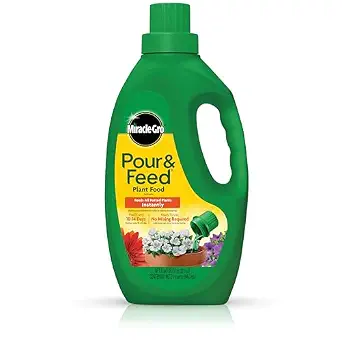 |
| Best Budget The cheapest option that still gets the job done reliably | Miracle-Gro Liquid All Purpose Plant Food Concentrate, 32 oz |  |
| Highest Rated A top-rated pick with lots of positive feedback | Miracle-Gro LiquaFeed All Purpose Fertilizer Refill, 4-Pack |  |
| Best Seller A high-volume bestseller chosen again and again | TPS NUTRIENTS Indoor Plant Food Liquid Fertilizer, 8 fl oz |  |
FoxFarm Soil Liquid Trio Pack (Big Bloom, Grow Big, Tiger Bloom)

| Brand | FoxFarm |
|---|---|
| Item Form | Liquid |
| Unit Count | 48 Fluid Ounces |
| Specific Uses For Product | Plant Food |
| Coverage | Organic |
The FoxFarm Soil Liquid Trio Pack combines Big Bloom, Grow Big, and Tiger Bloom into a simple program for indoor gardeners who want strong vegetative growth followed by bigger blooms and fruit. Typical use is stage-based: Grow Big during vegetative growth to push leafy development, Big Bloom as an all-purpose supplement across cycles, and Tiger Bloom once buds form to encourage multiple bud sites and fuller flowers. The liquids are concentrated and greenhouse-tested for consistency, so measured feedings integrate easily with regular watering schedules. Practical benefits include a complete, complementary nutrient progression and formulations designed to keep micronutrients available in storage. Important limitations are that these are general-purpose concentrates rather than precision NPK formulations for specialty crops, and users who want exact nutrient ratios or automated dosing systems will need extra equipment and testing. Safety precautions such as keeping away from children and pets and wearing protective clothing are required when handling concentrated liquids.
Best for: Indoor growers who prioritize measurable performance and want a simple, stage-based feeding plan to push vigorous growth and larger blooms without building their own nutrient lineup.
Less Ideal for: Growers seeking exact NPK control, automated dosing integration, or a fertilizer tailored to a single specialist crop should consider lab-formulated or hydroponic-specific options instead.
- Three complementary formulas cover vegetative growth, bloom support, and fruiting in one kit
- Concentrated liquid form mixes readily for regular indoor feedings
- Greenhouse-tested formulations deliver consistent performance across batches
- Suitable for a wide range of indoor plants including houseplants, herbs, and vegetables
- Not a precision nutrient program for specialty or hydroponic crops
- Concentrated liquids require careful measuring and handling to avoid overfeeding
Verdict: For indoor gardeners who want a proven, stage-based liquid feeding program to boost vegetative growth and maximize blooms, this trio delivers a ready-made performance pathway.
FoxFarm Big Bloom Liquid Plant Food, 32 fl oz

| Item Form | Liquid |
|---|---|
| Specific Uses For Product | Plant Food |
| Coverage | Medium |
| Liquid Volume | 32 fluid ounces |
| Mixing Ratio | 4 tbsp per gallon of water |
FoxFarm Big Bloom is a concentrated liquid plant food designed to boost flowering and fruit development. It is typically mixed at 4 tablespoons per gallon of water and applied every other watering, or delivered via hose-end sprayer or drip systems for regular feeding. The formula relies on organic inputs such as earthworm castings and bat guano, which promote quick nutrient uptake and encourage bigger blooms, stronger seed set, and improved flavor in fruits and vegetables. Practical benefits include easy mixing, compatibility with common irrigation setups, and a medium coverage suitable for garden beds, containers, and small orchards. Because it is low in NPK numbers, Big Bloom performs best as a bloom/fruit booster rather than a complete base fertilizer, so gardeners should pair it with a higher-nitrogen feed during vigorous vegetative growth. Users should also observe local regulations about phosphorus use and take care to avoid runoff. For growers focused on enhancing flower size and fruit quality, this product provides a reliable, easy-to-use organic bloom feed.
Best for: Gardeners aiming to maximize flower size and fruit quality who want an easy-to-apply organic bloom booster for regular feeding.
Less Ideal for: Those seeking an all-in-one primary fertilizer for rapid vegetative growth or users in areas where phosphorus-containing fertilizers are restricted.
- Concentrated liquid that's easy to mix and apply with watering systems
- Contains organic inputs like earthworm castings and bat guano for nutrient-rich feeding
- Formulated specifically to support flowering and fruit development
- Suitable for use across beds, containers, and irrigation systems
- Low NPK numbers mean it is not a complete feed for heavy vegetative growth
- Contains phosphorus which may be restricted by some local regulations
Verdict: Choose Big Bloom when your priority is bigger, more abundant flowers and better-tasting fruit delivered in an easy-to-use organic liquid feed.
Miracle-Gro Pour & Feed Liquid Plant Food, 32 fl. oz.

| Item Form | Liquid |
|---|---|
| Application Method | Directly to the soil |
| Target Species | potted plants |
| Unit Count | 32 Fluid Ounces |
Miracle-Gro Pour & Feed is a ready-to-use liquid fertilizer designed for container plants and houseplants. You apply it by measuring with the bottle cap and pouring the recommended amount directly onto the soil around each pot, so no mixing or watering-can prep is required. Its convenience makes it easy to maintain a regular 10–14 day feeding schedule for bedding plants like petunias in containers. The product is formulated for potted plants only, and the liquid form gives fairly quick nutrient availability compared with slow-release granules. Practical benefits include simple dosing with the cap, suitability for indoor and outdoor use, and a clearly stated application rhythm that helps keep flowering plants vigorous. Important limitations are that it is not intended for in-ground beds and that frequent applications mean you need to remember regular feedings; it is also a general all-purpose formula rather than a petunia-specific bloom booster.
Best for: A plant owner who prefers simple, low-effort care for container flowers and wants a dependable, easy-to-measure fertilizer to keep petunias and other potted ornamentals blooming.
Less Ideal for: Gardeners seeking a long-term, in-ground soil amendment or those who prefer an infrequent, slow-release feeding schedule should consider other products.
- Ready-to-use liquid requires no mixing so application is fast and low-effort
- Cap-measure dosing makes it easy to apply the correct amount for each container
- Suitable for both indoor and outdoor container plants so one product covers many uses
- Feeds on a 10–14 day schedule for consistent nutrient supply to flowering containers
- Not formulated for in-ground planting so unsuitable for garden beds
- Requires frequent application compared with slow-release fertilizers
Verdict: Use this if you want a no-mix, easy-to-measure liquid fertilizer to keep container petunias fed and blooming on a regular schedule.
Miracle-Gro Liquid All Purpose Plant Food Concentrate, 32 oz

| Item Form | Liquid |
|---|---|
| Specific Uses For Product | Plant Growth, Root Development |
| Application Method | Mix with water in a watering can |
| Mixing Ratio | 1:10 (concentrate to water, estimate) |
Miracle-Gro Liquid All Purpose is a water-soluble concentrate you mix into a watering can and apply every 1 to 2 weeks to container and in-ground plants. It is formulated for general plant growth and root development and is marketed for flowers, vegetables, shrubs and houseplants, so it works as a straightforward feed for flowering bulbs like calla lilies. The bottle’s mixing guidance (cap measures for garden application and 1 teaspoon per gallon for containers) makes it easy to dose for pots or small beds. Practical benefits include fast uptake through the soil when applied as directed and compatibility with routine watering schedules. Limitations to note are that it is an all-purpose formula rather than a bloom-focused or calcium-rich fertilizer tailored specifically to calla lilies, so growers seeking targeted bloom enhancement or specialty nutrition may want a supplement. Also, frequent use at higher-than-recommended strength can risk fertilizer burn, so follow the mixing directions and schedule.
Best for: Buyers who want an affordable, easy-to-use liquid fertilizer to keep calla lilies and other flowering plants regularly fed without fuss.
Less Ideal for: Growers seeking a specialist bloom-boost or a fertilizer formulated for specific micronutrient needs should consider a targeted or bloom-specific product instead.
- Concentrated liquid mixes easily with water for quick application
- Clear dosing instructions for both garden beds and container plants
- Suitable for a wide range of plant types including flowering bulbs and houseplants
- General all-purpose formula not specifically formulated for enhancing blooms of calla lilies
Verdict: A budget-friendly, easy-to-use liquid concentrate that reliably feeds calla lilies and other common garden plants on a regular schedule.
Miracle-Gro LiquaFeed All Purpose Fertilizer Refill, 4-Pack

| Item Form | Liquid |
|---|---|
| Application Method | hose |
| Specific Uses For Product | Plant Food |
| Target Species | outdoor flowers, vegetables, trees, shrubs and lawns |
| Mixing Ratio | 1:533 |
Miracle-Gro LiquaFeed refills are liquid concentrate bottles made to attach to the LiquaFeed garden feeder so plant food is mixed automatically through a hose while you water. In typical use you connect a refill to the feeder, turn on the water, and the product meters the concentrate at the preset 1:533 mixing ratio so there is no measuring or manual mixing. The package contains four refill bottles and is intended for broad outdoor use across flowers, vegetables, shrubs, trees and lawns. The main practical benefits are convenience and consistency: automatic mixing reduces user error and speeds repeat feedings during the growing season. Because it requires the LiquaFeed feeder, it is not a standalone solution, and those who prefer hand-mixed or foliar applications will need a different format. Safety guidance and basic directions are provided, and the concentrate format reduces storage bulk compared with multiple ready-to-use bottles.
Best for: Buyers who prioritize consistent, low-effort feeding for outdoor gardens and want a refill system that eliminates measuring and guesswork during routine watering.
Less Ideal for: Gardeners who need a standalone fertilizer, want foliar or soil-drench methods without a hose feeder, or who prefer to finely tune nutrient strength for specific plants.
- Automatic mixing with the LiquaFeed garden feeder eliminates measuring and reduces mixing errors
- Suitable for a wide range of outdoor plants including flowers, vegetables, shrubs, trees and lawns
- Four bottles per pack provide multiple refill cycles for ongoing seasonal feeding
- Concentrate form reduces storage volume compared with ready-to-use solutions
- Requires the separate LiquaFeed garden feeder to function
- Fixed mixing ratio limits adjustment for custom nutrient strengths
Verdict: If you want reliable, no-mess feeding across an outdoor garden and already use the LiquaFeed system, these refills make routine fertilizing fast and consistent.
TPS NUTRIENTS Indoor Plant Food Liquid Fertilizer, 8 fl oz

| Item Form | Liquid |
|---|---|
| Specific Uses For Product | Plant Food |
| Application Method | Watering can |
| Mixing Ratio | 2:1 (oz/gallon) or 1:64 (tbsp/gallon) |
TPS NUTRIENTS Indoor Plant Food is a concentrated liquid fertilizer made for regular use with houseplants. You mix the measured dose into water and apply it with your usual watering can; the label gives an easy mixing ratio for household use. Its kelp-enriched formula is pitched at improving leaf color, encouraging steady new growth, and supporting root health, so expect glossier foliage and more frequent leaf production when plants are fed consistently. The 8 fl oz bottle is portable and fits on a plant shelf or utility area, and the liquid form dissolves readily for even application. It is intended for medium coverage and labeled as gentle for weekly feeding, which simplifies care for busy owners. Important limitations are that this is a small bottle meant for regular top-up feedings rather than long-term bulk use, and it assumes you will follow dilution directions to avoid overfeeding. Keep it away from children and pets and avoid skin or eye contact when handling.
Best for: Plant owners who want a simple, low-effort weekly fertilizer to keep indoor foliage vibrant and encourage steady new leaf growth. Good for people who prefer an easy liquid mix applied during regular watering routines.
Less Ideal for: Gardeners needing a bulk or multi-season fertilizer for outdoor beds or large collections should consider larger-capacity or specialized products instead.
- Liquid concentrate mixes easily for even application with a watering can
- Kelp-enriched formula aimed at improving foliage color and encouraging new growth
- Gentle enough for weekly feedings according to product guidance
- Clear mixing instructions for home use
- Small 8 fl oz volume limits how many plants you can feed before repurchasing
- Not formulated or labeled for outdoor or large-scale garden use
Verdict: A convenient kelp-enriched liquid concentrate that makes weekly feeding easy for anyone who wants healthier, more vibrant indoor foliage.
Choosing the Right Liquid Garden Fertilizer: Key Factors to Consider
Nutrient Ratio and Label Transparency
A clear N-P-K ratio and explicit listing of micronutrients matter because they tell you exactly what you are supplying to plants. Vegetables, flowering ornamentals, and leafy greens have different needs; a product that states its primary and secondary nutrient concentrations helps you match feed to plant stage.
Label transparency also helps you avoid accidental overfeeding. When manufacturers provide recommended dilution rates and feeding frequency for various plant types and application methods, you can plan tank mixtures and reduce the risk of salt buildup or foliar burn.
Application Method and Flexibility
Liquid fertilizers differ in how you apply them: some are formulated mainly for soil drench while others are safe for foliar sprays. Foliar feeding provides rapid correction of deficiencies, but not all formulas are appropriate for foliage. Check whether a product is labeled for both spray and root applications and whether it mixes cleanly without clogging sprayer nozzles.
Flexibility matters if you rotate between containers, raised beds, and in-ground borders. A concentrate that dilutes for both weekly soil feeds and occasional foliar boosts simplifies inventory and reduces the number of products you need to store.
Concentration, Dosing Accuracy, and Packaging
Concentrated liquids save storage space and shipping weight, but they require accurate measuring. Packaging with clear measuring marks, a dosing cap, or a pour spout reduces spills and mixing errors. If you frequently feed containers or use a handheld sprayer, predictable dilution ratios (for example, one teaspoon per gallon) make routine maintenance faster.
Also consider whether small adjustments to concentration are easy to achieve when feeding sensitive seedlings or young transplants. Overconcentration is a common cause of seedling stress and leaf scorch, so dosing accuracy protects delicate plants.
Plant Compatibility and Feeding Schedule
Different plants respond to feeding schedules in different ways. Fast-growing annuals and vegetables often benefit from more frequent, balanced liquid feeds, while established shrubs and trees usually need less frequent application. Look for guidance on feeding intervals and whether the formula is safe for edible crops if you grow vegetables or herbs.
Compatibility notes for acid-loving plants, succulents, or seedlings are useful. Some formulations are tailored toward blooms and fruiting, offering higher phosphorus or potassium, while others are aimed at leafy growth with higher nitrogen. Matching the product to your crop cycle reduces waste and improves results.
Salt Load and Soil Health Considerations
Repeated use of high-salt fertilizers can increase soluble salts in potting mixes and light soils, causing root stress. Liquid feeds that recommend leaching or periodic freshwater flushes, and those with lower salt index, are easier on container-grown plants. Monitor soil EC or watch for signs of salt buildup such as browning leaf edges.
Choosing a product with guidance on frequency and occasional dilution cycles helps maintain long-term soil structure and microbiome health, especially in containers and compacted beds where salts accumulate faster.
Environmental Impact and Runoff Risk
Because liquids move readily with water, the timing and concentration of application influence runoff risk. Fertilizers intended for in-ground use should include guidance on avoiding applications before heavy rain and on recommended buffer distances from water features. Slow, targeted applications and using lower concentrations for foliar sprays reduce the chance of nutrient loss to surrounding areas.
For gardeners near waterways or with sandy soil, choose formulas and application schedules that minimize leaching. Responsible use protects water quality and keeps nutrients where plants can use them.
When Liquid Feeding Makes Sense
Liquid fertilizer is most useful when you need rapid correction or precise control. Use it to fix a detected deficiency, give a flowering boost, or feed container and hanging plants that dry out and deplete nutrients faster than in-ground beds.
It also serves well during short growing cycles where quick response matters, such as with annual vegetables or during peak bloom. For established perennial beds and trees, liquids are best as supplemental feeds rather than the sole nutrition strategy.
- Quick corrective feeding for nutrient deficiencies
- Supplemental boosts during flowering and fruit set
- Regular maintenance for containers and raised beds
How to Apply Liquids Safely
Always follow label dilution rates and test a small area before wide application. For foliar sprays, apply during cooler parts of the day to reduce evaporation and avoid leaf scorch.
When applying to soil, water the area first to reduce concentration spikes at roots. Rinse sprayers and measuring tools after use to prevent residue buildup and cross-contamination between products.
- Apply foliar sprays in early morning or late afternoon
- Pre-wet soil for root feeds to buffer concentration
- Clean equipment after each use
Mixing and Compatibility Tips
Not all liquid fertilizers are compatible with each other or with common pest control products. If you need to tank-mix, do a jar test first: combine small quantities at the intended ratios and watch for precipitates or separation.
Avoid mixing concentrated fertilizers with strong alkaline solutions, and always follow manufacturer recommendations about mixing order. When in doubt, apply separately with a gap of a few days between treatments.
- Perform a jar test before tank-mixing
- Follow recommended mixing order and dilution
- Space applications if combining with pesticides or amendments
Adjusting Feed Schedules by Season
Feed more frequently during active growth and reduce or stop regular feeding during plant dormancy. In cool seasons or for cool-loving crops, lower concentration or frequency to avoid overfeeding when growth slows.
Monitor plant response and adjust when you see signs of nutrient excess or deficiency. A modest, consistent feeding schedule is often better than large infrequent doses that can stress roots.
- Increase frequency during peak growth and bloom
- Reduce feeding in dormancy or slow growth periods
- Watch plant response and tweak concentration
Storage, Shelf Life, and Handling
Store concentrated liquids in a cool, dark place and keep containers tightly sealed. Many formulas separate or degrade with prolonged exposure to heat or sunlight, so protect them from extremes.
Label expiration guidance is useful because older solutions can lose nutrient potency or change chemistry. Dispose of expired or contaminated liquids according to local regulations and avoid pouring concentrates into storm drains.
- Keep containers sealed and stored cool
- Check and follow any expiration or storage notes
- Dispose of unused concentrates responsibly
How We Chose the Best Liquid Garden Fertilizer
We selected the six products on this list by applying practical garden-focused filters and measurable criteria relevant to everyday use. First, nutrient profile clarity mattered: formulations with clear N-P-K ratios and listed micronutrients were prioritized so gardeners understand what they are applying. Application flexibility was next, favoring concentrates that work for soil drench and foliar feeding with straightforward dilution instructions. Ease of dosing and packaging was assessed to reflect how simple it is to mix and apply accurately in buckets, sprayers, or watering cans. Plant suitability was considered, with preference for formulas that indicate safe use across common garden plants, vegetables, ornamentals, and container cultures. Environmental impact and runoff risk were evaluated based on concentration, recommended rates, and any guidance on salt buildup or frequency of use. Stability and storage were checked for shelf life and resistance to separation. We excluded specialty or industrial formulations not intended for home gardens, unclear or incomplete labels, and products lacking basic safety or usage directions. These filters ensured the list focuses on practical, gardener-friendly liquid garden fertilizers that meet measurable performance and safety standards.
FAQ
How often should I apply liquid fertilizer to container vegetables?
Containers usually need feeding more often than in-ground plants because nutrients leach with frequent watering. A common regimen is a light feed every one to two weeks at a lower concentration, but frequency depends on the plant and the product's recommended rate.
Can I use liquid fertilizer as a foliar spray on seedlings?
Seedlings can receive foliar feeds, but use a very dilute solution and apply sparingly. Young tissue is sensitive, so start with weaker concentrations and observe for any signs of leaf burn before increasing strength.
Will liquid fertilizer cause salt buildup in potting mix?
Repeated use of concentrated feeds can increase soluble salts over time. To reduce buildup, use recommended dilutions, leach pots periodically with plain water, and follow a feeding schedule that includes occasional freshwater flushes.
Is liquid fertilizer suitable for established shrubs and trees?
Liquids can supplement established shrubs and trees but are typically used for targeted corrections or seasonal boosts rather than as the main nutrition source. For large root zones, soil-applied granular or slow-release options often provide steadier long-term supply.
Can I mix liquid fertilizer with other garden sprays?
Mixing is sometimes possible, but compatibility varies. Always perform a small jar test to check for reactions and consult label guidance. When unsure, apply products separately with a few days between applications.
What time of day is best to apply liquid feeds?
Early morning or late afternoon is best to reduce evaporation and lower the chance of leaf scorch for foliar sprays. Soil drenches can be applied anytime when the soil is moist to help buffer concentration at the roots.
Final Verdict
Liquid garden fertilizers are a practical tool for gardeners who need fast nutrient delivery, precise control, and flexible application across containers, beds, and ornamentals. Prioritize clear nutrient labels, appropriate dilution guidance, and packaging that supports accurate dosing. Balance short-term gains against long-term soil health by monitoring salt buildup and adjusting frequency. With those tradeoffs in mind, choose a formula that matches your crops and feeding schedule so you get predictable results without unnecessary risk.
