

Note: This article contains affiliate links. If you click on these links and make a purchase, I may earn a small commission at no extra cost to you. This helps support my research and content. Read my full affiliate disclosure here.
Choosing the right mulch for chickens affects coop hygiene, flock health, and daily maintenance. The wrong material can trap moisture, encourage ammonia buildup, or create dusty conditions that stress birds. This guide covers six curated mulch options chosen for their real-world performance in coops and chicken runs, from absorbency to ease of handling. We evaluated each option for moisture control, odor management, dust levels, and how it behaves during routine cleaning and composting. Read on for practical guidance that helps you pick mulch suited to your flock size, climate, and maintenance routine.
Top Picks at a Glance
| Best Overall The best all-around choice for most situations | HealthiStraw GardenStraw Premium Garden Mulch, 3 cu ft |  |
| Best Quality Built to a higher standard if you want something more solid | Small Pet Select Hemp Hurd Chicken Coop Bedding, 18 lb |  |
| Best Value The sweet spot between price and what you get | HealthiStraw FarmStraw Coarse-Cut 3 cu ft Compressed Wheat Straw Bedding |  |
| Best Budget The cheapest option that still gets the job done reliably | Sukh Aspen Shavings Chicken Coop Bedding, 31 oz |  |
| Most Popular A crowd favorite that many people choose with confidence | DOMINION HEMP Premium Hemp Bedding for Chicken Coops, 10+ cu ft (285L) – 30 lb |  |
| Best Seller A high-volume bestseller chosen again and again | Kaytee Natural Pine Small Animal Bedding, 52.4 L |  |
HealthiStraw GardenStraw Premium Garden Mulch, 3 cu ft

| Net volume | 3 cu ft |
|---|---|
| Intended use | Garden mulch, lawn seeding, compost-friendly |
| Material | 100% wheat straw |
| Source | Sustainably sourced, non-GMO |
HealthiStraw GardenStraw is a 3 cubic foot compressed bale of cleaned wheat straw formulated for use as garden mulch and seed protection. It is designed for vegetable, herb, flower and shrub beds where you want a lightweight, compostable mulch that retains soil moisture and suppresses weeds. The straw is processed to reduce dust and stray seeds and the short, specially cut fibers interlock when watered so the mulch stays in place without chemical tackifiers. For bushes you can apply a 2 to 3 inch layer around the drip line to cut evaporation, reduce compaction and gradually add organic matter as it breaks down. Practical benefits include easy spreading from a compressed bale, fast composting into the soil, and reduced watering needs. Limitations are that straw is less decorative than bark or wood chips and will decompose faster, so it requires periodic replenishing; it also provides less long-term weed barrier than heavier mulches. For gardeners focused on soil health and moisture conservation, it is a straightforward, low-risk choice.
Best for: Gardeners who prioritize soil health and want an easy-to-apply, compostable mulch for shrubs and mixed beds that reduces watering and improves organic matter over time.
Less Ideal for: People seeking a long-lasting, decorative mulch or a heavy-duty weed barrier for high-traffic beds should consider wood chips or stone instead.
- Cleaned, non-GMO wheat straw with reduced dust and seeds
- Fibers interlock when wetted so the mulch stays in place without binders
- Helps retain soil moisture and can reduce watering needs substantially
- Composts quickly and adds organic carbon to improve soil structure
- Decomposes faster than wood mulches so it needs topping up more often
- Less decorative and provides a lighter-duty weed barrier compared with heavier bark or rock mulches
Verdict: A clean, fast-composting straw mulch that conserves moisture and improves soil health, making it a safe, practical choice for mulching bushes.
Small Pet Select Hemp Hurd Chicken Coop Bedding, 18 lb

| Unit Count | 18 Pounds |
|---|---|
| Material Type | Hemp Hurd |
| Recommended Uses For Product | Indoor, Outdoor |
| Pet Type | Bird |
This hemp hurd bedding is made from the inner core of the hemp stalk and is intended as a coop-safe, eco-friendly alternative to straw or wood shavings. In everyday use you spread it across the coop floor or nest boxes to absorb droppings and moisture; the manufacturer states it will absorb up to 400% of its weight, which helps reduce odor and the frequency of full cleanouts. The material is low-dust and described as soft and warm, which is easier on birds with respiratory sensitivities and provides a comfortable resting surface. It is biodegradable and compostable, so spent bedding can be added to a compost pile rather than discarded. Practical limits are the single 18 lb bag size, which may be modest for larger flocks or deep-litter systems, and the product is a loose chip form that will require occasional topping up and raking to maintain even coverage. If you want a sustainable, highly absorbent bedding that cuts odor and dust, hemp hurd performs well compared with many traditional materials.
Best for: Buyers who want an eco-conscious, low-dust bedding that controls odor and keeps coop maintenance easier for small to medium flocks.
Less Ideal for: Large-scale keepers running deep-litter systems who prefer bulk bedding options or those who need a pre-compacted or pelletized product.
- Very high absorbency (manufacturer claims up to 400% of its weight) to reduce moisture and odor
- Low-dust composition suitable for animals with respiratory sensitivities
- Made from 100% natural hemp hurd and fully biodegradable for composting
- Soft, warm texture that provides comfortable bedding for chickens and small pets
- Sold in a single 18 lb bag which may require frequent replacement for larger coops
- Loose chip form needs routine raking and topping up to keep even coverage
Verdict: A sustainable, low-dust bedding that soaks up moisture and reduces odor, making it a solid choice for balanced coop care.
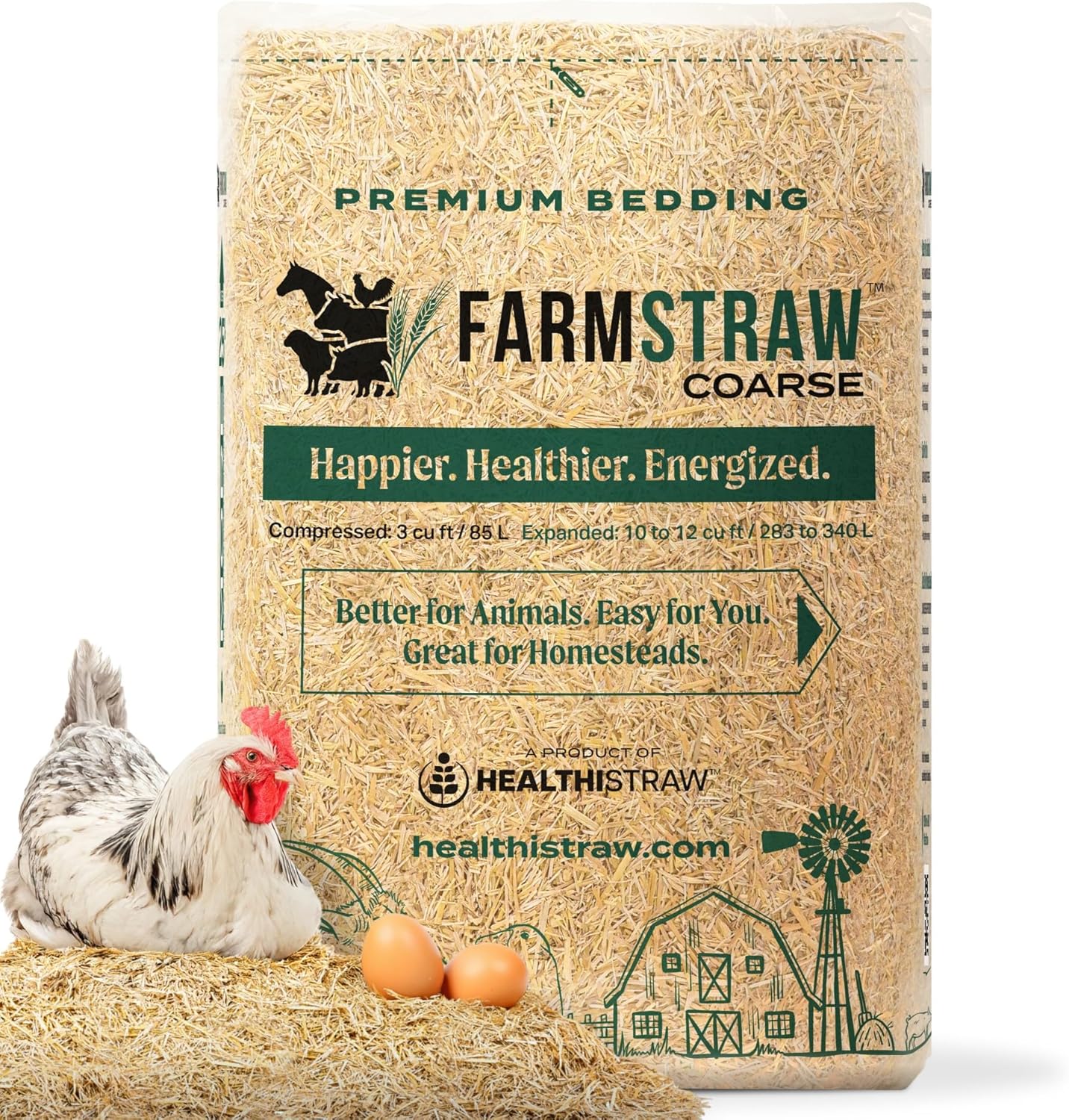
HealthiStraw FarmStraw Coarse-Cut 3 cu ft Compressed Wheat Straw Bedding
| Material Type | 100% Non-GMO Wheat Straw |
|---|---|
| Included Components | FarmStraw Fine Cut Chicken Bedding, 3 cu ft (25lb) |
| Specific Uses For Product | Chicken coops, nesting boxes, chick brooders, chicken runs and hen houses |
| Additional Features | Biodegradable, Eco-Friendly, Lightweight |
HealthiStraw FarmStraw is a compressed 3 cu ft bale of coarse 2–3 inch non-GMO wheat straw that expands to more than 10 cu ft for use as bedding and mulch in chicken coops, runs, and nesting boxes. The coarse cut produces a fluffy, insulative layer that cushions birds and helps protect eggs while wicking moisture and controlling odors by pulling dampness down into the straw. The product is cleaned to be low-dust, making it easier on flock respiratory health compared with dusty alternatives. It is lightweight to move when compressed and decomposes faster than wood-based bedding, so spent material can be composted to enrich garden soil. Important limitations are that a single 3 cu ft bale is modest coverage for larger runs and straw can mat in very wet climates, so occasional turning or replacement will be required to keep the run dry and clean. For run mulching, expect to top up periodically and monitor for compaction in high-traffic zones.
Best for: Buyers who want a practical, easy-to-store bedding and mulch that improves coop dryness and compostability while minimizing dust exposure for their flock. Good fit for owners who rotate and manage bedding regularly to optimize coop hygiene.
Less Ideal for: Not the best choice for owners who need a one-time, long-term ground cover for very large outdoor runs without regular maintenance or for extremely wet climates where straw will stay soggy.
- Expands from a compressed 3 cu ft bale to cover 10+ cu ft for easy storage and deployment
- Coarse 2–3 inch cut offers insulation and cushioning for birds and eggs
- Low-dust, all-natural cleaning process supports better respiratory conditions
- Wicks moisture and helps control odors by absorbing from the bottom up
- Biodegradable and decomposes faster than wood alternatives for composting use
- Single bale provides limited coverage for large runs so frequent top-ups may be needed
- Can compact or mat in persistently wet conditions requiring more maintenance
Verdict: A compact, low-dust wheat straw bale that expands into a fluffy, insulative bedding and mulch ideal for practical coop owners who prioritize dryness and easy composting.
Sukh Aspen Shavings Chicken Coop Bedding, 31 oz

| Material Type | Aspen |
|---|---|
| Included Components | Natural Aspen |
| Specific Uses For Product | Indoor |
| Unit Count | 31 Ounce |
| Additional Features | Non_Toxic |
This 31 oz bag of Sukh aspen shavings is a straightforward, no-frills bedding option for chicken coops and small pet enclosures. The compressed pack fluffs up when separated by hand and provides a soft, absorbent layer that helps control moisture and mild odors without added fragrances. It is best used as loose litter or nesting material across the coop floor, nesting boxes, or small pet cages where you want an easy-to-change substrate. The product is lightweight to handle, fully biodegradable for simple disposal, and free of reported chemical additives which makes it suitable for indoor use around birds and small mammals. Important limitations are the modest 31 oz unit size and compressed packaging, which means you will need to buy multiple bags for larger coops or frequent cleanings and allow time to fully expand the shavings for best coverage. Dust reduction is claimed but heavy-duty odor control or long-term ammonia management in large flocks will still require regular cleaning or deeper bedding layers.
Best for: Buyers looking for a simple, natural bedding option on a budget who need small, easy-to-store bags for occasional coop refreshes or for use in small pet cages.
Less Ideal for: People maintaining large flocks, commercial setups, or who want a long-lasting deep-litter solution should consider larger bulk bedding or products with stronger ammonia control.
- Made from natural aspen with no added fragrances or chemicals
- High absorbency and natural odor-neutralizing properties
- Compressed packaging is easy to store and expands when fluffed
- Biodegradable for simple, eco-friendly disposal
- 31 oz unit is small for medium to large coops so requires frequent repurchasing
- Compressed pack needs time and effort to fully separate for maximum volume
Verdict: A compact, natural aspen bedding that gives budget-minded coop owners an easy-to-store, biodegradable option for light-duty bedding and nesting.
DOMINION HEMP Premium Hemp Bedding for Chicken Coops, 10+ cu ft (285L) – 30 lb

| Unit Count | 10 Square Feet |
|---|---|
| Weight | 30 pounds |
| Material | USA-grown hemp |
| Absorbency | Absorbs up to 4X its weight |
This 10+ cubic foot bag of Dominion Hemp bedding is made from USA-grown hemp hurd and is intended as a bedding or mulch-style base for chicken coops, runs, and small animal cages. In use it absorbs moisture well—the brand claims up to four times its weight—so it helps keep coop floors drier and controls ammonia odors longer than many wood shavings. The material is low dust, which reduces airborne particulates around birds and small pets and is gentler for respiratory health. It is also biodegradable and compostable, so used bedding can be incorporated into garden compost or spread on flower beds after processing. Practical limitations are that this is a loose, bulk material that requires periodic turning and replenishing (the brand suggests one bag for an 8×6 coop with top-ups about every 60 days), and handling a 30 pound bag can be cumbersome. For fenced outdoor runs you may need a thicker layer or containment method to keep the hemp in place and prevent scattering.
Best for: Buyers who prioritize a cleaner, low-dust bedding that controls moisture and can be composted, and who prefer a premium, sustainable option for coop floors and nesting boxes.
Less Ideal for: People who need a ready-made mat or interlocking flooring solution or who cannot handle moving and managing large, loose bulk bags frequently.
- High absorbency claimed to soak up to 4× its weight, helping reduce wet spots and odor
- Low dust formulation reduces airborne particulates for better coop air quality
- Biodegradable and compostable so spent bedding can be reused in compost or garden
- Long-lasting fiber structure means fewer full bedding changes compared with some wood shavings
- Comes as a heavy 30 lb bulk bag that can be awkward to lift and distribute
- Loose material can scatter in open runs without an edge or containment
Verdict: A sustainable, low-dust, highly absorbent hemp bedding that keeps chicken coops drier and composts back into the garden.
Kaytee Natural Pine Small Animal Bedding, 52.4 L

| Capacity | 52.4 liters |
|---|---|
| Item Form | Other |
| Material Type | Wood |
| Scent Name | Pine |
Kaytee Natural Pine Bedding is a bagged pine shaving substrate made to provide a soft, absorbent layer for small animal cages or floor areas. It is typically used by filling an enclosure to a depth of 1 to 3 inches to absorb moisture and help control odor. The product is processed to reduce dust and wood debris, which makes it easier to keep respiratory-irritant particles to a minimum and helps maintain a cleaner habitat. As a natural material it is biodegradable and compostable in moderate amounts, and the pine scent can help mask typical small-animal odors. Practical benefits include good absorbency, straightforward cleanup when soiled spots are removed, and compatibility with open, well-ventilated housing. Important limitations are that pine bedding can still generate some scent and oils that are not ideal for every species and that it is recommended for ventilated environments rather than sealed or poorly ventilated spaces. For chicken coop use consider that bedding needs and ventilation differ from small-animal cages, and regular maintenance is required to prevent ammonia buildup.
Best for: Buyers who prioritize a low-dust, easy-to-manage natural bedding for small pets or for well-ventilated coop areas and who prefer a ready-to-use packaged substrate that simplifies routine cleaning.
Less Ideal for: Owners with birds, very young or respiratory-sensitive animals, or people planning to use it in unventilated indoor spaces should consider alternative low-odor, paper-based beddings.
- Processed to reduce dust and visible wood debris for cleaner air
- Absorbent natural pine shavings that help control moisture and odors
- Biodegradable material that can be composted in moderation
- Packaged quantity (52.4 liters) suitable for multiple refresh cycles
- Pine scent and natural oils may irritate sensitive species or individuals
- Not recommended for poorly ventilated or sealed enclosures
Verdict: A large, low-dust pine shaving bedding that provides absorbency and easy cleanup for owners who want a natural, ready-to-use substrate for well-ventilated small animal housing or coop areas.
Choosing the Right Mulch for Chickens: Key Factors to Consider
Absorbency and Moisture Management
How well a mulch soaks up urine and droppings determines how long it stays usable and how often you need to refresh or replace it. Highly absorbent materials reduce pooling and help keep bedding drier at the surface where birds walk and roost. In wetter climates or during winter, a mulch with good drainage that still wicks moisture away from the surface will slow ammonia production and lower pathogen risk.
Think about how the material behaves when wet: some mulches clump and compact, creating anaerobic pockets that trap ammonia, while others stay loose and continue to drain. Choose a mulch that balances absorption with breathability to keep the coop environment healthier for birds.
Dust Levels and Respiratory Impact
Fine, dusty mulches can aggravate chicken respiratory systems and make daily maintenance messier. Dust also spreads airborne microbes during sweeping or raking. Low-dust options reduce health risks for both birds and keepers, and they make wetting bedding for compaction or composting safer.
If you or your flock have respiratory sensitivities, prioritize coarser or moistened materials and avoid overly fine sawdust or dusty composted products. Consider how the mulch will be stored and handled because even normally low-dust materials can generate particulate if allowed to dry out and break down.
Odor Suppression and Ammonia Control
Mulch that traps or neutralizes odors can significantly improve living conditions in the coop and reduce fly pressure. Materials with natural carbon content or those that promote aerobic breakdown will help immobilize ammonia and reduce the sharp smells associated with poultry waste. Regular turning, spot-cleaning, and a material that supports composting will all influence odor over time.
Evaluate how quickly a mulch begins to smell under typical use. Some materials mask odors initially but compact into smelly layers, while others perform steadily longer and transition cleanly into compostable waste.
Durability Under Scratching and Foraging
Chickens scratch and peck constantly, so mulch must withstand mechanical breakdown. Materials that shred too quickly or become dusty will require more frequent topping up. Durable mulches last longer under heavy use and maintain a stable surface for birds to walk on, reducing the chance of mud forming in high-traffic spots.
Assess how a mulch interacts with bird behavior: does it permit natural scratching without turning into slurry, or does it collapse into compacted matter within days? Longevity reduces labor and material costs over the season.
Ease of Cleaning, Replacement, and Composting
A practical mulch should simplify routine cleaning and end-of-season disposal. Loose, nonstaining materials are quicker to rake and remove, while some mulches can be composted with chicken manure to return nutrients to the garden. Consider whether the material mixes easily with droppings for hot composting or whether it needs separate processing.
Also factor in how the mulch is removed: can you scoop and replace small areas for spot-cleaning, or must you strip the entire coop? Ease of handling affects how often you will perform maintenance and how manageable chores feel over time.
Availability, Cost, and Sustainable Sourcing
Local availability affects both cost and sustainability. Materials that are easy to source nearby reduce transport impacts and make seasonal topping up simpler. Sustainable sourcing also matters: look for byproducts of other industries or certified products when possible to avoid contributing to deforestation or habitat loss.
Think about long-term supply consistency if you plan to keep poultry for years. A mulch that is inexpensive but hard to find seasonally may cause interruptions in your maintenance routine.
Coop Preparation and Layering Techniques
Preparing the coop floor before adding mulch extends the life of bedding and improves drainage. Lay a breathable base such as hardware cloth covered with a coarse layer to prevent direct contact between soil and bedding. In cold climates, add an insulating underlayer that still allows moisture to pass down to a drainage layer so the surface remains drier.
Layering helps you manage soiled patches without a total replacement. Start with a thicker base layer and top with a fresher layer that you can rake and refresh. Spot-cleaning concentrated droppings and rotating areas used for roosting will keep the whole system functioning longer.
- Use a loose bottom layer for drainage, topped with finer bedding for comfort.
- Keep nesting boxes on separate bedding to reduce egg contamination.
- Designate high-traffic paths for easier maintenance and consider adding extra mulch there.
Managing Mud and Run Areas
Mulch in runs faces different demands than coop flooring: runs see heavy foot traffic, weather exposure, and concentrated scratching. To manage mud, pair mulch with proper grading and drainage. Add stones or pavers in persistently wet spots, and replenish mulch regularly to maintain a firm walking surface.
In winter or rainy seasons, you may need to rotate in more absorbent or coarse materials that shed water and resist turning into a slurry. Using mulch strategically in high-traffic zones preserves deeper bedding in sheltered or nesting areas.
- Establish raised perches to keep birds off the wettest ground.
- Use durable mulch where hens walk most to reduce rework.
- Install a simple covered area to protect key bedding from direct rain.
Composting Chicken-Soaked Mulch
Used mulch with droppings makes excellent compost when managed correctly. Hot composting kills most chicken pathogens and transforms soiled bedding into rich amendment. Balance high-carbon mulch with nitrogen from manure and kitchen scraps, and maintain moisture and aeration for active decomposition.
If you cannot maintain a hot compost pile, consider cold composting with longer curing or precomposting layers to reduce pathogen risk. Store soiled material in a dedicated bin or pile away from vegetable beds until it has fully broken down.
- Aim for a carbon to nitrogen ratio that supports thermophilic composting.
- Turn the pile regularly to maintain oxygen and heat.
- Allow extended curing time before using compost on edible garden areas.
Seasonal Care and Rotation Strategies
Different seasons demand different mulch strategies. Summer heat can accelerate breakdown and odor, so increase turning, add fresh top layers, and prioritize absorbent options. In winter, favor insulating materials and manage frozen droppings by removing hardened patches promptly to avoid ammonia concentration near roosts.
Rotate materials and locations to prevent pathogen buildup and give used areas time to rest. A simple rotation plan reduces labor and keeps birds healthier across the year.
- Top up bedding more often during warm months.
- Replace or compost heavily soiled areas before the start of spring.
- Store extra mulch dry and covered to avoid summertime pest issues.
Safe Handling and Storage of Mulch
Store mulch in a dry, ventilated spot to limit mold growth and dust generation. Keep raw materials off the ground if possible to prevent moisture pickup. When handling soiled bedding, wear a dust mask if materials are dry and dusty and use gloves to minimize direct contact with droppings.
Avoid storing mulch where runoff could carry nutrients into sensitive waterways. Label storage containers and rotate stock so older material is used first and does not deteriorate into a dust source.
- Keep storage covered and elevated to maintain quality.
- Dampen dusty materials lightly before moving to reduce airborne particles.
- Separate clean and used mulch storage to avoid cross-contamination.
How We Chose the Best Mulch for Chickens
We prioritized criteria that matter in everyday coop care and outdoor chicken areas. Absorbency and moisture management were weighted heavily because wet bedding accelerates ammonia buildup and increases pathogen risk. Dust and respiratory safety were assessed to protect chickens and keep airborne particulates low during cleaning. Odor control and ammonia suppression were included since they affect both bird health and neighbor relations. Ease of cleaning and compostability were evaluated to measure labor and long-term waste management. We also considered how durable the material is under scratching and foraging so it does not break down into a muddy mess too quickly. To build the shortlist we filtered for materials commonly available to backyard keepers and that have documented use in poultry settings. We excluded any mulch with known toxic additives, high mold risk, or materials that consistently pack into an impermeable layer. Final selections balanced practical performance, safety, and straightforward disposal or composting options.
FAQ
How often should I replace mulch in a chicken coop?
Replacement frequency depends on absorbency, flock size, and climate. Highly absorbent materials may last several weeks with spot-cleaning, while low-absorbency mulches need more frequent topping. Monitor smell and surface moisture and replace or compost when the material compacts or becomes persistently wet.
Can I use wood-based mulch safely around chickens?
Many wood-based mulches are safe if they are free of chemical treatments and large amounts of fine sawdust. Coarser chips help reduce dust, but very fine sawdust can create respiratory issues. Always source untreated material and monitor for mold or excessive dust.
Is it okay to compost used chicken mulch in the garden compost?
Yes, but composting must reach adequate temperatures to kill pathogens. Hot composting with frequent turning is the safest method. If you cannot maintain a hot pile, allow extended curing and avoid applying unfinished compost to root crops or areas where edible produce is grown until fully decomposed.
How do I control flies and pests in mulched run areas?
Good moisture management and regular removal of concentrated droppings reduce fly attraction. Incorporate materials that dry quickly and promote aerobic breakdown. Physical measures like fly traps, screened storage of feed, and reducing standing water also help control pests.
What mulch is best for winter coop comfort?
Insulating, loosely packed materials that still allow drainage perform best in winter. They trap some warmth around feet and roosting areas while preventing prolonged wetness. Increase bedding depth in cold months and remove compacted, wet sections to prevent ammonia buildup under roosts.
Final Verdict
Choose mulch for chickens by prioritizing moisture control, low dust, and materials that withstand scratching. Consider how easy it is to spot-clean and compost soiled bedding, and select a product that fits your climate and maintenance rhythm. Balancing absorbency with breathability and sourcing sustainably will keep both birds and chores manageable, letting you focus on healthy, comfortable flock care.
