

Note: This article contains affiliate links. If you click on these links and make a purchase, I may earn a small commission at no extra cost to you. This helps support my research and content. Read my full affiliate disclosure here.
If you grow gardenias, feeding is one of the quickest ways to influence bloom count, foliage health, and scent intensity. Gardenias need a consistent supply of the right nutrients plus soil conditions that favor acidity, so picking the proper plant food matters more here than for many other shrubs. This guide shortlists seven top-rated plant foods for gardenias chosen for their nutrient profiles, soil pH effects, and ease of use. We'll explain the practical differences between formulations and feeding methods so you can match a product to your planting situation and maintenance style.
Top Picks at a Glance
| Best Overall The best all-around choice for most situations | Espoma Organic Azalea-Tone 4-3-4 Granular Fertilizer (2-pack, 4 lb each) |  |
| Best Quality Built to a higher standard if you want something more solid | SouthernGRO Azalea, Camellia & Gardenia Fertilizer 04-08-08, 4 lb |  |
| Best Value The sweet spot between price and what you get | HiThrive Gardenia Liquid Fertilizer, 16 oz (Makes 96 gal) |  |
| Best Budget The cheapest option that still gets the job done reliably | ASTEVORA 8-4-8 Granular Fertilizer for Acid-Loving Plants (12 oz) |  |
| Highest Rated A top-rated pick with lots of positive feedback | Dr. Earth Acid Lovers Organic Granules Plant Food, 3 × 4 lb |  |
| Most Popular A crowd favorite that many people choose with confidence | Perfect Plants Gardenia Liquid Fertilizer (8 fl oz) |  |
| Best Seller A high-volume bestseller chosen again and again | Miracle-Gro Water Soluble Azalea, Camellia & Rhododendron Plant Food, 5 lb |  |
Espoma Organic Azalea-Tone 4-3-4 Granular Fertilizer (2-pack, 4 lb each)

| Item Form | Granules |
|---|---|
| Specific Uses For Product | Gardening, Organic, Plant Food |
| Application Method | No Mixing Required |
| Target Species | Azaleas, Rhododendrons, Camellias, Gardenias |
Espoma Organic Azalea-Tone is a ready-to-use granular fertilizer designed specifically for acid-loving, flowering evergreens like camellias. It supplies a 4-3-4 N-P-K analysis with added sulfur and Espoma’s Bio-tone organic amendment, so gardeners can spread it around the root zone in spring and fall without mixing. Typical use is simple: apply the granules to the soil surface around established plants and water in; the formulation feeds steadily and supports bloom production and healthy foliage in plants that prefer slightly acidic conditions. Notable features include organic certification for use in organic gardens and a formula tailored to the nutrient needs of camellias and related shrubs. Practical benefits are ease of application, a gentle nutrient release that reduces burn risk, and ingredients that support soil biology. Limitations are that it is intended for feeding established plants rather than quick correction of severe nutrient deficiencies, and the medium coverage means larger beds will need multiple bags.
Best for: Gardeners growing camellias or other acid-loving flowering evergreens who want an easy-to-apply organic fertilizer to maintain blooms and plant health.
Less Ideal for: Those needing a fast-acting corrective treatment for obvious nutrient deficiencies or gardeners managing large commercial beds who require high-coverage bulk fertilizers.
- Balanced 4-3-4 N-P-K formula suited to flowering evergreens
- Ready-to-use granules that require no mixing for quick application
- Organic formulation with Bio-tone that supports soil biology
- Contains added sulfur which benefits acid-loving plants like camellias
- Not formulated for rapid correction of severe nutrient deficiencies
- Medium coverage per bag so larger plantings may need additional product
Verdict: A simple, organic granular fertilizer tailored to camellias and other flowering evergreens for steady feeding and improved blooms.
SouthernGRO Azalea, Camellia & Gardenia Fertilizer 04-08-08, 4 lb

| Item Form | Granules |
|---|---|
| Specific Uses For Product | Lawn |
| Application Method | Apply to the plants' root systems |
| Target Species | Azaleas, Camellias, Gardenias |
| Mixing Ratio | 04-08-08 |
This granular SouthernGRO formula is designed specifically for acid-loving shrubs such as azaleas, camellias, and gardenias and is applied directly to the root zone. With a 04-08-08 N-P-K ratio it emphasizes phosphorus and potassium to support blooms and root development while providing modest nitrogen for foliage. The 4 lb bag is easy to handle for backyard beds and the granules let you scatter or spot-apply around individual shrubs. Practical benefits include a targeted nutrient balance for flowering shrubs and simple application instructions that suit seasonal feedings. Important limitations are that it is not intended for container use and the bag size is best for small to medium plantings rather than large landscapes. Also the product lists a medium coverage rather than a precise application rate by shrub size, so careful measuring is needed to avoid overapplication. Overall this is a straightforward, shrub-focused fertilizer for gardeners who want a purpose-made feed to boost blooms and root strength.
Best for: Gardeners who maintain small to medium beds of azaleas, camellias, or gardenias and prefer a ready-made, shrub-specific fertilizer to simplify seasonal feeding.
Less Ideal for: Those tending large landscapes, commercial plantings, or container-grown acid-loving shrubs should consider larger bulk products or formulas labeled for container use.
- 04-08-08 N-P-K ratio tailored to promote blooms and strong root development in acid-loving shrubs
- Granular form allows easy broadcast or spot application to the root zone
- 4 lb bag is convenient and manageable for small to medium shrub beds
- Formulated specifically for azaleas, camellias, and gardenias which simplifies product choice
- Not intended for container use which limits versatility
- No detailed per-shrub application rates listed on the product details may require extra measuring care
Verdict: A small, easy-to-use granular fertilizer formulated to boost blooms and root strength in azaleas, camellias, and gardenias.
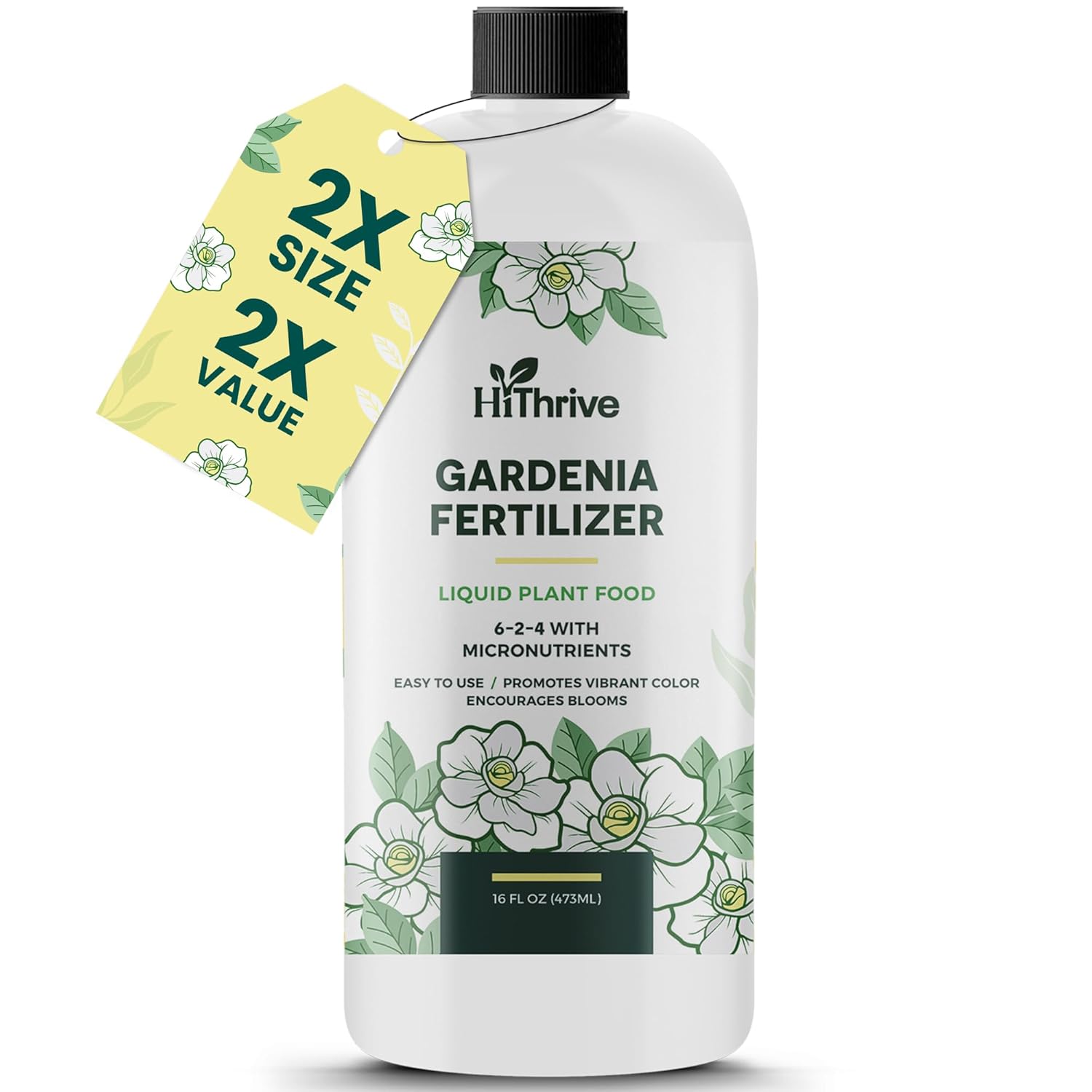
HiThrive Gardenia Liquid Fertilizer, 16 oz (Makes 96 gal)
| Item Form | Liquid |
|---|---|
| Coverage | Flowering Bushes and Indoor Plants |
| Liquid Volume | 16 fluid ounces |
| Mixing Ratio | 1 teaspoon per gallon of water |
HiThrive Gardenia Liquid Fertilizer is a water-soluble 6-2-4 formula designed for regular feeding of gardenias and similar flowering bushes. You mix the concentrate at the recommended rate (1 teaspoon per gallon for standard feeding or 2 teaspoons per gallon for deficiency correction) and apply with each watering either to the soil or by bottom-watering. The formula includes macro- and micronutrients such as calcium, magnesium, iron, copper, manganese and zinc, which helps address common yellowing and nutrient-deficiency symptoms while supporting leaf growth and flowering. The 16 oz bottle stretches to 96 gallons of feed, making it convenient for repeat applications across seasons. Because it is liquid and water-soluble, it dissolves quickly and is easy to measure for repeatable doses. Limitations are that it is a general-purpose acid-loving plant feed rather than a tailored slow-release product, so regular application is required to maintain results and users must follow dilution guidance to avoid overfeeding sensitive plants.
Best for: Gardeners who want a straightforward, measurable liquid feed to boost growth and flowering in gardenias and other acid-loving shrubs and who prioritize consistent, repeatable feeding over one-time products.
Less Ideal for: People who prefer a low-maintenance slow-release fertilizer or who only want an occasional feed; those seeking a product with built-in soil pH modification should look elsewhere.
- Balanced 6-2-4 NPK geared toward vigorous leaf growth and flowering
- Includes micronutrients (Ca, Mg, Fe, Cu, Mn, Zn) to correct common deficiencies
- Water-soluble concentrate mixes easily and allows precise dosing
- Yielding 96 gallons from a 16 oz bottle provides good coverage for multiple feedings
- Requires frequent application since it is a soluble feed rather than slow-release
- No pH adjustment information provided for particularly acid-sensitive soils
Verdict: A concentrated, easy-to-measure liquid feed that reliably promotes greener leaves and bigger blooms in gardenias when used as a regular part of feeding.
ASTEVORA 8-4-8 Granular Fertilizer for Acid-Loving Plants (12 oz)

| Item Form | Granules |
|---|---|
| Specific Uses For Product | For acid-loving plants; enhances bloom vibrancy and acidifies soil |
| Application Method | Spread evenly to soil and water thoroughly |
| Target Species | azaleas, camellias, hydrangeas, magnolia trees, evergreens, blueberries, gardenias, rhododendrons |
ASTEVORA 8-4-8 is a small-format granular fertilizer designed for acid-loving plants such as gardenias, azaleas, hydrangeas, camellias, rhododendrons and blueberries. You apply it by sprinkling the granules around the plant canopy, lightly mixing into the topsoil and watering; the manufacturer recommends three feedings a year for steady results. The formula delivers primary nutrients (8% N, 4% P, 8% K) plus added magnesium, iron and manganese to help prevent yellowing in plants that prefer acidic soil. It is described as a slow-release, bio-solid product with beneficial microbes intended to support soil life and reduce the need for frequent applications. Practical benefits for gardenias include improved foliage color and more consistent blooms without complex dosing, and the 12 oz size is convenient for smaller beds or container-grown plants. Limitations are the small unit size for larger gardens and the need to follow safety precautions during handling because it is a concentrated granular fertilizer. For cautious gardeners, the clear directions and slow-release behavior make it straightforward to use safely.
Best for: Gardeners who want an easy, low-maintenance fertilizer specifically for gardenias and other acid-loving plants and prefer straightforward instructions and predictable, slow-release feeding.
Less Ideal for: Large-scale gardeners or those with many plants who need bulk coverage should choose a larger package or professional-grade supply.
- Balanced 8-4-8 NPK with added magnesium, iron and manganese to help prevent chlorosis in acid-loving plants
- Slow-release granules meant for three applications per year, reducing application frequency
- Formulated to acidify soil and support plants that prefer lower pH, like gardenias and hydrangeas
- Simple application method suitable for beginners: sprinkle, mix lightly, and water
- Only a 12 oz package which may be insufficient for larger gardens
- Contains concentrated fertilizer granules that require protective handling and care around pets and children
Verdict: A simple, slow-release granular fertilizer tailored to gardenias and other acid-loving plants for reliable color and bloom improvement with minimal fuss.
Dr. Earth Acid Lovers Organic Granules Plant Food, 3 × 4 lb

| Item Form | Granules |
|---|---|
| Application Method | Granular |
| Target Species | Azalea, Hydrangea, Gardenia, Japanese Maple |
| Number of Packs | 3 |
This granular organic plant food is designed specifically for acid-loving ornamentals and comes as three 4 lb bags to cover seasonal feedings. You apply it by sprinkling the granules around the root zone, working them lightly into the soil surface, then watering to activate nutrients. Its targeted formulation makes it easy to maintain soil conditions that gardenias favor, and the granular form spreads evenly for beds and containers. Because it is organic, it supports steady, slow nutrient release rather than a fast synthetic spike, which helps reduce leaf burn risk on sensitive shrubs. The multipack provides enough product for routine feeding of several shrubs or repeated applications across a season. Limitations are that specific N-P-K numbers and exact ingredient breakdown are not listed here and application rates must be followed from package instructions to avoid under- or over-feeding. Also, granules require manual spreading so it is less convenient than some liquid fertilizers for quick foliar feeding.
Best for: Gardeners who prioritize reliable, organic feeding for acid-loving shrubs and want a product that supports steady seasonal growth without synthetic spikes.
Less Ideal for: Gardeners who need precise, fast-acting liquid feeds or who prefer ready-made N-P-K specifications for strict nutrient management.
- Formulated for acid-loving plants like gardenias and hydrangeas
- Organic granular formula provides slow, steady nutrient release
- Multipack of three 4 lb bags supplies multiple seasonal feedings
- Granules spread evenly and can be used in beds or containers
- Product listing does not show a clear N-P-K analysis or full ingredient breakdown
- Requires manual application and watering in rather than instant foliar feeding
Verdict: A dependable organic granular fertilizer made for routine feeding of gardenias and other acid-loving shrubs across the season.
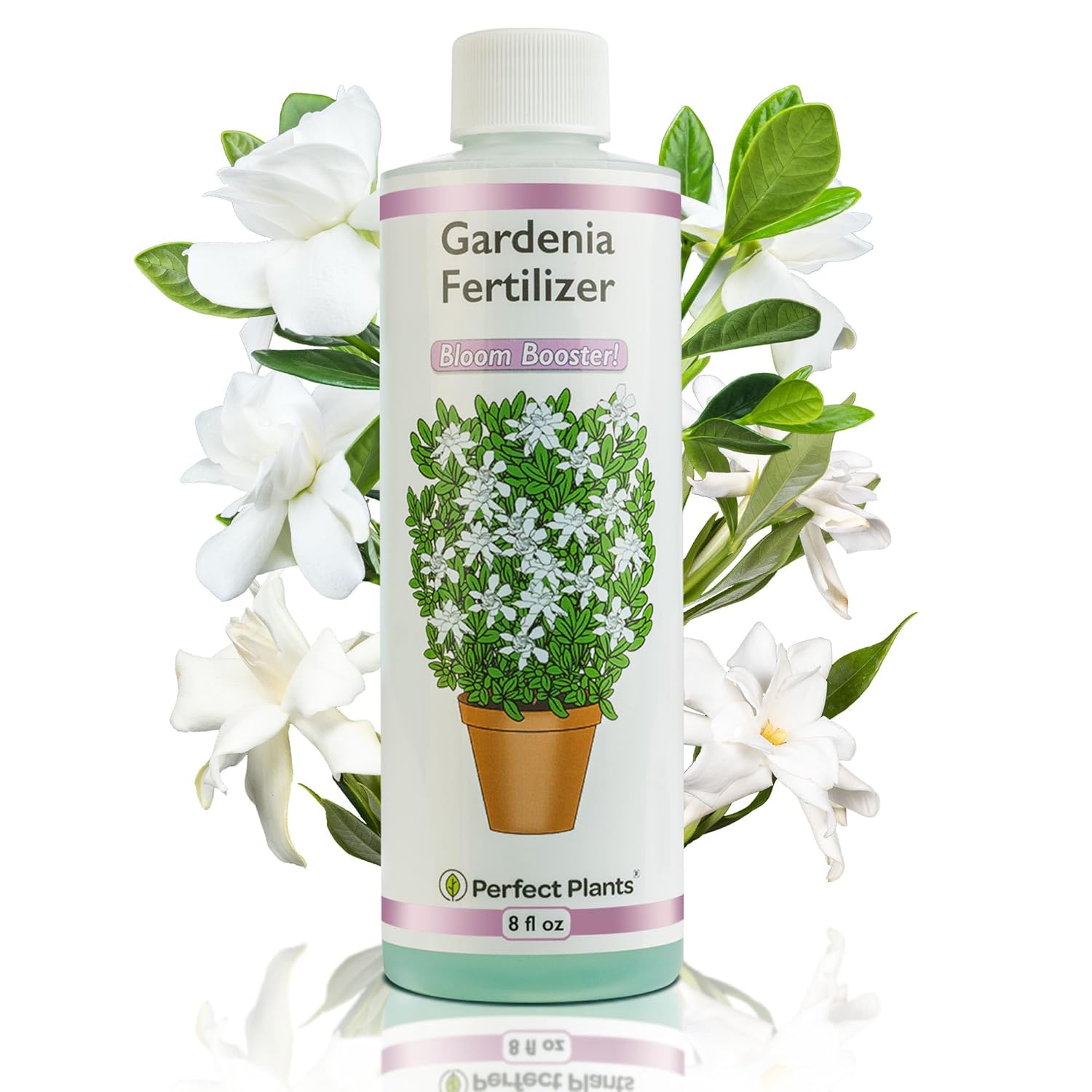
Perfect Plants Gardenia Liquid Fertilizer (8 fl oz)
| Item Form | Liquid |
|---|---|
| Application Method | Water |
| Target Species | Gardenia |
| Unit Count | 8 Fluid Ounces |
Perfect Plants Gardenia Liquid Fertilizer is a concentrated liquid plant food intended to boost blooms and deepen foliage color on gardenias and similar flowering shrubs. It is mixed with water and applied at each watering, delivering immediately available NPK nutrients plus trace elements like calcium, iron, and zinc. Typical use is regular feeding during the growing season at the package dilution of one teaspoon per gallon, which gardeners can adjust slightly for plant response. The resealable 8 ounce bottle is handy for indoor potted gardenias or small landscape specimens and keeps the concentrate usable between feedings. Practical benefits include quick uptake compared with granular feeds and a formula tailored to flowering plants to encourage more consistent blooms. Important limitations are the small bottle size for larger gardens and the need to follow dilution directions carefully to avoid overfeeding; it is not a slow-release product so you must maintain a feeding schedule. For balanced gardeners wanting a targeted liquid bloom booster, this is an easy-to-use option.
Best for: Gardeners who want an easy, targeted liquid feed to improve bloom frequency and foliage color on potted or small landscape gardenias and prefer a straightforward mix-and-water routine.
Less Ideal for: People managing large gardenia hedges or extensive beds who need long-lasting, low-maintenance feeding solutions or larger-volume fertilizers.
- Formulated specifically for flowering plants to encourage more consistent blooms
- Liquid concentrate provides nutrients that are quickly available to roots
- Includes trace elements (calcium, iron, zinc) in addition to NPK
- Resealable bottle preserves concentrate between uses
- Small 8 fl oz bottle may require frequent repurchasing for larger plantings
- Not a slow-release fertilizer so it requires regular applications to maintain effects
Verdict: A simple, targeted liquid bloom booster ideal for potted gardenias and small plantings that need quick nutrient uptake to improve flowering.
Miracle-Gro Water Soluble Azalea, Camellia & Rhododendron Plant Food, 5 lb

| Item Form | Powder |
|---|---|
| Application Method | watering can or Miracle-Gro Garden Feeder |
| Target Species | Azaleas, Camellias, Rhododendrons, Gardenias, Hibiscus, Hollies, Hydrangeas, Orchids |
| Mixing Ratio | 1:144 (indoor), 1:18 (outdoor) |
| Coverage | Medium |
This water-soluble Miracle-Gro formula is designed specifically for acid-loving shrubs and flowering plants and is straightforward to use: mix into a watering can or fill a Miracle-Gro Garden Feeder and apply every 7 to 14 days while plants are actively growing. It lists a broad target range that includes azaleas, camellias, rhododendrons, gardenias, hydrangeas and even orchids and hibiscus, so you can use one product across much of an acid-loving border or collection. The powder form dissolves for quick uptake and the package provides mixing ratios for indoor and outdoor use, making dose control easy. Practical benefits are fast nutrient delivery and convenience for regular feeding of shrubs and container plantings. Limits to note are that this is a soluble feed meant for routine use rather than long-term slow release so it requires repeat applications, and it assumes you will follow the specified dilution to avoid overfeeding.
Best for: Gardeners who want a reliable, easy-to-apply feed for acid-loving shrubs and mixed container plantings and who are willing to commit to regular watering-can or feeder applications.
Less Ideal for: Those seeking a one-time, slow-release fertilizer or a product they can apply infrequently over months instead of every few weeks.
- Formulated specifically for acid-loving plants like azaleas and rhododendrons
- Water-soluble powder gives fast nutrient availability when mixed and applied
- Clear mixing instructions for indoor and outdoor use simplify dosing
- Works with a watering can or compatible Miracle-Gro Garden Feeder for convenience
- Requires repeated applications every 7–14 days during active growth
- Not a slow-release soil amendment for long-term feeding
Verdict: A straightforward, water-soluble fertilizer that delivers fast, targeted nutrition for acid-loving plants when used regularly.
Choosing the Right Plant Food for Gardenias: Key Factors to Consider
Nutrient Ratio and Timing
Gardenias respond to fertilizers that deliver steady nitrogen for foliage and a boost of phosphorus to encourage bud set. Look for products that specify an N-P-K ratio appropriate for flowering shrubs and indicate whether the formula is slow-release, liquid feed, or water-soluble. Slow-release granules reduce the risk of overfeeding and are convenient for less frequent maintenance, while liquid feeds give a quicker nutrient lift when you need to correct a deficiency.
Timing matters too. Feed lightly in early spring as new growth begins, again before the main bloom flush, and avoid heavy applications late in the season when new tender growth could be damaged by frost.
Soil Acidity and pH Effects
Gardenias prefer a mildly acidic root zone. Some fertilizers contain acidic elements or sulfur that help lower soil pH over time, while others are neutral or alkaline and can push pH upward with repeated use. Consider whether the product advertises acidifying action or is formulated for acid-loving plants. If your soil test shows near-neutral or alkaline pH, choose a product that will not exacerbate alkalinity and pair feeding with regular pH monitoring.
For container-grown plants, pH fluctuations happen faster, so select feeds that are compatible with frequent checks and adjustments, and avoid products that quickly raise pH.
Application Method and Convenience
Fertilizer forms include granules, spikes, slow-release capsules, and liquids. Granules and slow-release types are easy to apply around established shrubs and are forgiving for gardeners who feed infrequently. Liquid or water-soluble feeds require more frequent applications but allow finer control and faster correction of deficiencies. Spikes can be tidy but may not distribute nutrients evenly through the root zone.
Choose a method that matches how often you tend your garden and whether you can apply feed consistently during the growing season.
Compatibility With Containers Versus In-Ground Beds
Container-grown gardenias have smaller root volumes and different watering patterns than in-ground plants. That makes them more sensitive to salt buildup from frequent feeding and to rapid changes in soil pH. Select feeds labeled safe for container use or use reduced-strength applications. For in-ground shrubs, longer-lasting formulations and soil-amending products that improve acidity and organic matter are often preferable.
Consider whether you can flush containers periodically to prevent salt accumulation and whether you need a product designed to release nutrients slowly in garden beds.
Impact On Bloom Quality And Fragrance
The goal for many gardenia growers is abundant, fragrant blooms rather than sheer vegetative growth. Some fertilization programs emphasize bloom promotion through slightly higher phosphorus and balanced micronutrients like magnesium and iron, which support bud development and leaf color. Overapplication of nitrogen-rich feeds can produce lush foliage at the expense of flowers.
Choose a product and feeding schedule aligned with bloom goals, and be prepared to adjust after observing how your plants respond through a season.
Potential For Salt Buildup And Root Health
Repeated feeding, especially with high-soluble-salt formulas, can lead to salt accumulation that burns roots and reduces water uptake. Products that release nutrients slowly or those accompanied by clear leaching instructions lower that risk. Watch for recommended application rates and avoid doubling doses; flushing container soil occasionally mitigates buildup.
Root health also depends on good drainage and appropriate irrigation. A fertilizer that increases soluble salts should be paired with practices that avoid keeping roots in overly wet or highly saline conditions.
When To Start Feeding Gardenias
Begin feeding in early spring when new shoots or buds appear and avoid heavy applications after late summer. Early season feeds support leaf expansion and set the stage for the main flowering period.
For container plants start with a light, balanced feed as soon as active growth begins, then follow a regular schedule rather than one large application. Adjust timing based on local climate and the plant's growth habit.
- Feed at the first sign of new growth in spring
- Avoid late-season high-nitrogen applications
- Short, frequent feeds for containers; longer intervals for beds
Adjusting pH Without Overfeeding
If soil tests show the pH is too high, pair fertilization with cultural steps to acidify the root zone. Organic mulches, coffee grounds in moderation, and elemental sulfur are common tactics that change pH slowly and safely when used correctly.
Avoid relying solely on fertilizer to correct pH. Choose a product that does not worsen alkalinity and monitor changes with periodic soil testing, especially in containers where conditions change faster.
- Use pH-specific amendments for lasting change
- Monitor pH after amendments before altering feeding program
- Combine cultural adjustments with appropriate feed selection
Feeding Routine For Containers Versus Beds
Containers dry and cycle salts faster, so use lower-strength feeds or reduced frequency and flush pots seasonally. In beds, you can rely more on slow-release granules and incorporated organic matter to provide steady nutrition.
Watch plant response: pale leaves or reduced blooms often indicate nutrient imbalance or pH issues rather than a need to simply increase fertilizer amounts.
- Dilute liquid feeds for containers
- Use slow-release options in beds
- Flush containers yearly to prevent salt buildup
Micronutrients That Matter
Gardenias benefit from micronutrients such as iron, magnesium, and manganese which help maintain leaf color and support bud formation. Deficiencies in these elements can mimic other problems like overwatering or root stress, so symptoms should be checked before changing macronutrient rates.
Some plant foods include chelated forms of micronutrients for better uptake in high pH soils. If your soil is prone to being alkaline, look for feeds that supply these elements in plant-available forms.
- Iron helps prevent chlorosis on new leaves
- Magnesium supports photosynthesis and overall vigor
- Chelated micronutrients are useful in marginal pH conditions
Seasonal Care And Feeding Adjustments
Reduce feed strength as the season winds down and stop major applications before the plant enters dormancy in colder climates. In mild or frost-free areas, maintain a lighter feeding schedule through the year based on growth rhythm.
During stress periods such as heat waves or drought, prioritize irrigation and root care over increasing fertilizer, since stressed plants have limited ability to use additional nutrients effectively.
- Taper feeding in late summer
- Prioritize water management during heat or drought
- Match feeding intensity to plant growth rate
How We Chose the Best Plant Food for Gardenias
We prioritized products that supply the specific nutrient profile gardenias commonly need: a higher proportion of nitrogen for evergreen foliage balanced with phosphorus for buds and potassium for overall stress tolerance. We looked for formulations that either help maintain or do not raise soil pH, since gardenias perform best in mildly acidic soils. Ease of application was another key filter, because gardeners often skip feedings if a product is time-consuming or messy. Longevity of feed, suitability for container and in-ground use, and compatibility with common gardening practices such as mulching and irrigation were also evaluated. We excluded formulations that rely on unverified claims about bloom guarantees or that are inappropriate for acid-loving shrubs. Products designed only for lawns or general-use fertilizers without acidity considerations were not considered. The final shortlist reflects balanced nutrient ratios, clear application instructions, and practical suitability for typical gardenia settings including containers, foundation plantings, and mixed shrub borders.
FAQ
How often should I feed gardenias during the growing season?
It depends on the feed type. Slow-release granules often need feeding once in early spring and possibly midseason. Liquid or water-soluble feeds are usually applied every 2 to 4 weeks at reduced strength, especially for containers.
Can I use a general-purpose fertilizer for gardenias?
You can, but general-purpose fertilizers may not address gardenias' preference for acidic conditions. If you use a general fertilizer, monitor soil pH and leaf response and adjust with acidifying amendments if needed.
What signs show my gardenia needs a different plant food?
Fewer blooms, yellowing between leaf veins, or stunted bud development can indicate nutrient imbalance or pH issues. Before changing products, test soil pH and check watering and root health to isolate the cause.
Are acidifying fertilizers safe for container-grown gardenias?
Yes, but containers are more sensitive to rapid changes and salt buildup. Use acidifying feeds designed for potted plants, apply at lower strength, and flush pots occasionally to prevent accumulation.
Do I need to supplement micronutrients for gardenias?
Often micronutrients like iron and magnesium are helpful, especially if soil tests indicate deficiency or if chlorosis appears. Chelated forms are more available in borderline pH conditions and can be used as spot treatments if needed.
Will increasing nitrogen increase gardenia blooms?
Not necessarily. Excess nitrogen can promote leaf growth at the expense of flowers. A balanced approach with attention to phosphorus and overall nutrient balance is better for encouraging blooms.
Final Verdict
Focus on matching nutrient balance, pH compatibility, and application method to how you grow gardenias. Prioritize products that support acidity and include the micronutrients that prevent chlorosis, and choose a feed form that fits your maintenance routine. Remember that overfeeding or the wrong pH will harm blooms more than help them. Pick a feeding approach based on container versus in-ground use, monitor plant response, and be prepared to adjust strength or timing. With the right combination of soil care and appropriately formulated plant food for gardenias, you can reliably encourage healthy foliage and more abundant blossoms.
