

Note: This article contains affiliate links. If you click on these links and make a purchase, I may earn a small commission at no extra cost to you. This helps support my research and content. Read my full affiliate disclosure here.
When you need crisp, tear-free cuts on baseboards, casings, and other finish work, the right hand saw makes the difference between a professional-looking trim and a job that needs rework. A hand saw for cutting trim is designed to slice cleanly through softwoods, hardwoods, and composite mouldings without splintering the face. This guide covers six shortlisted hand saws that are well suited to trim work and evaluates them on the attributes that matter to finish carpentry. You will find concise evaluations focused on blade geometry, tooth pattern, control, and ease of setup. Read on to understand the tradeoffs so you can pick a saw that matches the scale of your trim projects and your preferred working style.
Top Picks at a Glance
| Best Overall The best all-around choice for most situations | SUIZAN 6" Flush Cut Japanese Pull Saw |  |
| Best Quality Built to a higher standard if you want something more solid | Temple Tool Co. Japanese Flush Cut Saw, 6" Double-Edge Pull Saw |  |
| Best Value The sweet spot between price and what you get | EXTYQWC 2-Pack 6-inch Japanese Pull Saw (Double-Edge) |  |
| Best Budget The cheapest option that still gets the job done reliably | EXTYQWC 6-inch Ryoba Japanese Pull Saw, SK5 Double-Edge Blade |  |
| Highest Rated A top-rated pick with lots of positive feedback | SUIZAN Ryoba 7" Double-Edge Japanese Pull Saw |  |
| Most Popular A crowd favorite that many people choose with confidence | SUIZAN Flush Cut Pull Saw, 5" Japanese Flush-Cut Hand Saw |  |
SUIZAN 6" Flush Cut Japanese Pull Saw

| Blade Material | Japanese Steel |
|---|---|
| Blade Length | 5.91 inches |
| Blade Thickness | 0.016" (0.4mm) |
| TPI | 17 & 20 |
| Handle Material | Wood |
The SUIZAN 6" flush cut pull saw is a thin, razor-sharp Japanese hand saw made for precision trimming and finishing tasks. It cuts on the pull stroke and uses a 0.016 in blade that flexes to lie flat, which makes it ideal for trimming dowels, plugs, tenon ends, and other work that must be flush without marring the surrounding surface. The blade is double-edged with 17 TPI for hardwoods and rip cuts and 20 TPI for softwoods and crosscuts, so you can pick the edge that matches the timber and cut type. A beech wood handle offers a comfortable grip that settles in with use and the blade is held by two screws for straightforward replacement when it dulls. Practical benefits include very fine, low-resistance cuts and easy control when working close to finished surfaces. Limitations are its narrow scope: this saw is optimized for trim and small woodworking tasks rather than heavy ripping or larger demolition work, and the thin blade requires a gentle pulling technique to avoid bending or damage.
Best for: Woodworkers and DIYers who need a precise, low-damage tool for trimming dowels, plugs, and fine trim around finished work and who value control and a clean finish.
Less Ideal for: People who primarily need a general-purpose handsaw for heavy ripping, framing, or fast bulk cuts should choose a larger, stiffer saw instead.
- Very thin 0.016 in blade flexes to lie flat for true flush cuts without scratching the surface
- Dual-edge blade (17 TPI and 20 TPI) covers both hardwood rip cuts and softwood crosscuts
- Replaceable blade secured by two screws extends tool life
- Lightweight beech handle provides comfortable control for detailed trimming
- Blade is fragile relative to thicker saws and can bend if used with heavy force
- Not suited for large ripping jobs or demolition where a sturdier saw is required
Verdict: Choose this saw when you want a delicate, professional-quality flush cutter that leaves plugs and dowels perfectly level with no surface damage.
Temple Tool Co. Japanese Flush Cut Saw, 6" Double-Edge Pull Saw

| Blade Material | High Carbon Steel |
|---|---|
| Handle Material | Beechwood |
| Power Source | hand power |
| Other Special Features of the Product | japanese flush cut saw flush trim saw |
This Temple Tool Co. 6-inch Japanese flush cut saw is built for precision trim work where you need a component cut level with an adjacent surface. It is a pull saw with a thin, low-kerf double-edge blade of high carbon steel that slices cleanly on the pull stroke, producing minimal tearout on hardwoods and softwoods. The short 6-inch blade and razor-sharp teeth make it easy to reach tight spots and work close to finished surfaces, while the beechwood handle and brass fittings give a solid, ergonomic grip for controlled, repeatable cuts. It ships with a case for safe storage and is suitable for trimming dowels, wedges, tenons, and small trim pieces without backing out routers or sanding extensively. The main limitation is its small blade length, which makes long crosscuts slow and unsuitable for larger rough carpentry tasks, and the specialized flush-cut profile means it is not a do-it-all saw for bulk ripping or framing work.
Best for: A buyer focused on performance and clean finish work who needs a small, accurate saw for trim, joinery, and flush-cutting tasks in finished carpentry.
Less Ideal for: Not a good choice for users who primarily need a general-purpose handsaw for ripping, framing, or making long crosscuts on large boards.
- Thin, low-kerf high-carbon blade for clean, precise cuts with minimal tearout
- Short 6-inch blade reaches tight spots and lets you cut flush to surfaces
- Pull-stroke design requires less force and gives better control for fine trim work
- Beechwood handle with brass fittings offers a comfortable, stable grip
- Comes with a protective case for safe storage between uses
- Blade length is short so it is inefficient for long crosscuts or larger stock
- Specialized flush-cut design limits usefulness for general-purpose sawing tasks
Verdict: For performance-focused trim work, this compact Japanese flush-cut pull saw delivers precise, low-tearout cuts that make finishing dowels and tenons fast and clean.
EXTYQWC 2-Pack 6-inch Japanese Pull Saw (Double-Edge)

| Blade Material | Alloy Steel |
|---|---|
| Handle Material | Wood |
| Number of Teeth | 96 |
| Power Source | manual |
These two 6-inch Japanese pull saws are compact detail saws aimed at controlled trim and small woodworking tasks. Each blade offers a 17 TPI edge for fine, precise cuts and an 11 TPI edge for quicker trimming, so you can switch between accuracy and speed without changing tools. The SK5 high-carbon steel blades are hardened and triple-ground to maintain sharpness and slice cleanly on the pull stroke, which helps reduce tear-out on delicate trim. The short, flexible 6-inch blade makes it easy to work in tight corners, on door casings, and for coping or minor plunge cuts. A simple wooden handle keeps the tool lightweight and easy to manipulate for steady hand work. Limitations include the short blade length, which is not suited for long rip cuts or large framing tasks, and the lack of a protective sheath or replaceable blades that some higher-end saws offer. For routine trim, finish carpentry, and on-the-go touchups these saws deliver a lot of capability in a low-cost package.
Best for: A practical homeowner or hobbyist who wants an inexpensive, easy-to-control saw for door and window trim, coping joints, and small finish carpentry jobs.
Less Ideal for: Professional carpenters who need longer blades for full-length rip cuts or a modular saw system with replaceable blades and protective storage.
- Double-edged blades (17 TPI and 11 TPI) cover both fine detail cuts and faster trimming
- SK5 high-carbon steel with triple-ground teeth for sharp, consistent cutting
- Compact 6-inch blade is easy to control in tight spaces and on trim work
- Two‑pack provides a backup or a dedicated saw for workshop and portable use
- Short blade length limits usefulness for long or straight rip cuts
- No included blade cover or replacement blade system
Verdict: A compact, versatile two-pack of hardened SK5 pull saws that give precise and faster trimming options for finish and trim work.
EXTYQWC 6-inch Ryoba Japanese Pull Saw, SK5 Double-Edge Blade

| Blade Material | SK5 high-carbon steel |
|---|---|
| Number of Teeth | 168 |
| Power Source | manual |
| Blade Shape | Rectangular |
This 6-inch ryoba Japanese pull saw is a compact hand saw built for trimming, joinery and detailed woodworking where control matters. It cuts on the pull stroke with a thin, flexible SK5 high-carbon blade that lets you make flush cuts on dowels, plugs and protruding pieces close to the work surface. One edge has 17 TPI for finer cuts in hardwood and the other 11 TPI for faster removal in softwood, so you can switch edges depending on the trim material. Triple-ground, hardened teeth help the blade slice cleanly and the short length makes it easy to maneuver in tight trim and molding spaces. Because the handle and blade are simple alloy-steel construction and the blade is designed for pull cutting, it is best for small-scale finish work rather than heavy ripping. Expect very good performance for household trim repairs and hobby joinery at a budget-friendly level, but professionals needing a long blade or heavy-duty ripping will find its reach limited.
Best for: Homeowners and hobby woodworkers who need an inexpensive, controllable saw for trim, molding and small joinery tasks and prioritize accurate flush cuts over long cuts.
Less Ideal for: Users who regularly cut long boards, rip large stock, or who require an ergonomic handle for extended professional use should choose a longer or heavier-duty saw instead.
- Double-edge ryoba blade (17 and 11 TPI) covers fine hardwood cuts and faster softwood cuts in one tool
- Flexible SK5 high-carbon steel blade allows flush trimming close to surfaces
- Pull-stroke design improves control and reduces binding when trimming moldings and dowels
- Short 6-inch blade is easy to maneuver in tight trim and joinery spaces
- Short blade limits reach and speed on long or large rip cuts
- Alloy steel handle offers less ergonomic comfort than dedicated cushioned handles
Verdict: A budget-friendly Japanese pull saw that delivers precise flush and trim cuts for homeowners and hobbyists working on molding and small joinery projects.
SUIZAN Ryoba 7" Double-Edge Japanese Pull Saw
| Blade Length | 7 inches |
|---|---|
| Blade Material | Japanese Steel |
| Blade Thickness | 0.02" (0.5mm) |
| Kerf Width | 0.03" (0.8mm) |
| Number of Teeth | 19 |
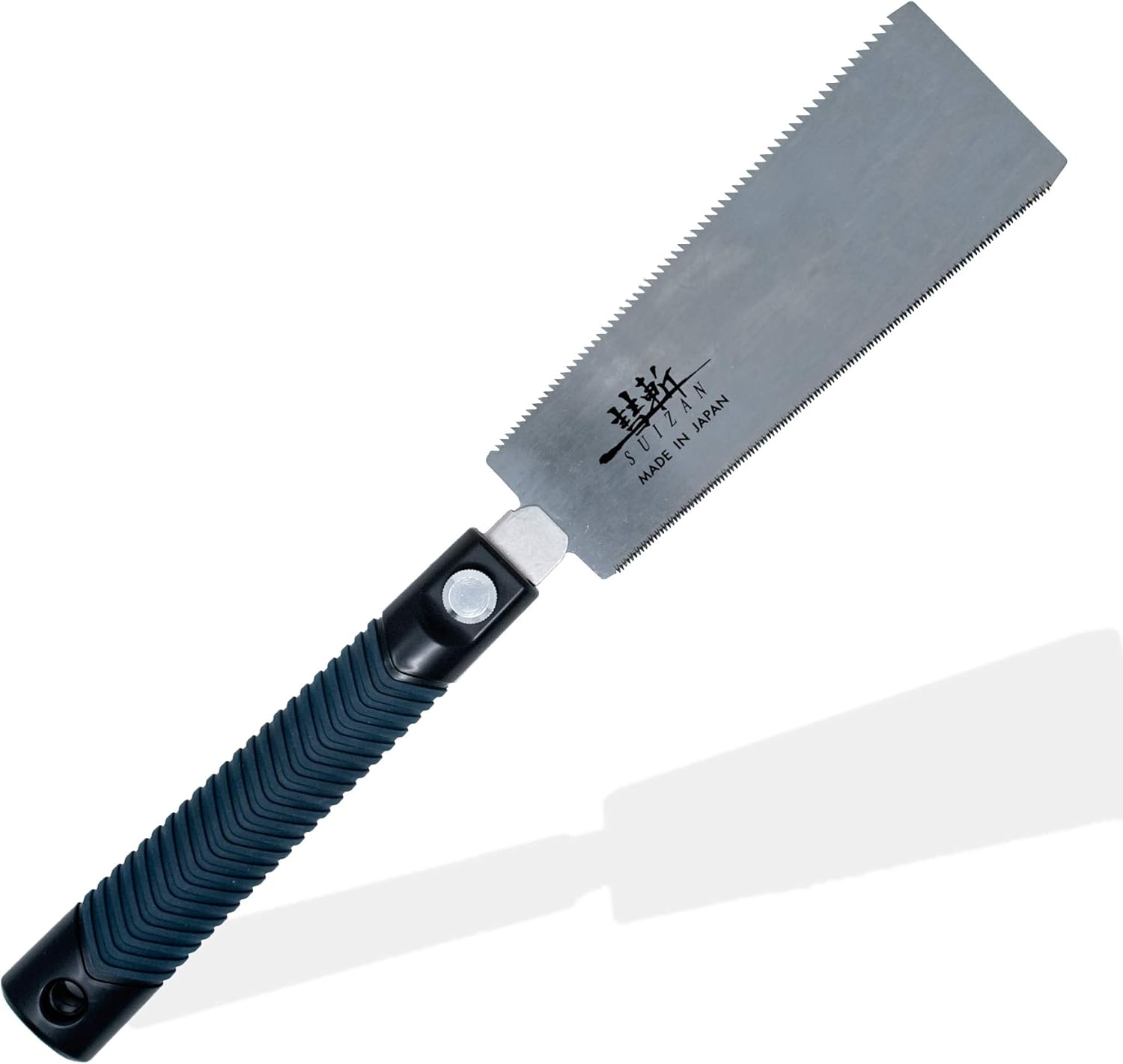
The SUIZAN 7" Ryoba is a small double-edge Japanese pull saw designed for precise trim and joinery work. It has a very thin 0.02" blade that produces a narrow 0.03" kerf, so it leaves clean edges suitable for molding, trim, and tight-fitting joints. One side of the blade has rip teeth and the other side fine crosscut teeth, so you can switch between cutting along and across the grain without changing tools. The elastomer handle gives a secure, non-slip grip and the blade is replaceable with a simple unscrew and slide procedure. Because it cuts on the pull stroke, the saw tracks accurately and requires less pushing force, which reduces user fatigue and improves control on small, detailed cuts. The saw is made from Japanese steel and built with traditional tooth geometry for a sharp, durable edge. Limitations are its short blade length and thin profile, which make it unsuitable for large rip cuts or heavy framing tasks, and replacement blades must be purchased separately when worn.
Best for: Buyers who prioritize reliable, accurate trimming and finish carpentry tools and want a durable, easy-to-control saw for precise small cuts.
Less Ideal for: Those who need a general-purpose saw for long rip cuts, heavy framing, or frequent cutting of large timbers should choose a larger handsaw or power saw instead.
- Very thin 0.02" blade and 0.03" kerf for clean, precise trim and joinery cuts
- Double-edge Ryoba design provides both rip and fine crosscut teeth in one tool
- Replaceable blade with a simple, tool-free handle screw for quick maintenance
- Non-slip elastomer handle improves control during detailed pull-stroke cutting
- Short 7" blade limits reach for long boards and larger stock
- Blade replacements are sold separately
Verdict: A precision-focused Ryoba pull saw that delivers clean narrow kerf cuts ideal for trim and finish carpentry.
SUIZAN Flush Cut Pull Saw, 5" Japanese Flush-Cut Hand Saw

| Blade Length | 5 inches |
|---|---|
| Blade Material | Japanese Steel |
| Blade Thickness | 0.012" (0.3mm) |
| TPI | 17 & 25 |
| Handle Material | Wood |
The SUIZAN 5" flush cut pull saw is a small, purpose-built Japanese hand saw for finishing work around trim and small joinery. It uses a thin, highly flexible blade and zero-set teeth so you can trim dowels, plugs, and molding flush to a surface without scratching the surrounding wood. One edge (17 TPI) is tuned for hardwood while the finer edge (25 TPI) suits softwood, so a single tool handles both materials for fine crosscuts in tight spots. The slim 0.012" blade produces a very narrow kerf and sits flat enough to reach recessed areas that larger saws cannot. Because the blade is fixed to a wooden handle and not replaceable, the saw is best treated as a long-lasting consumable that you keep sharp and avoid bending beyond its flexible range. It is not intended for heavy ripping or large stock removal but excels at delicate trim work where control and a clean finish matter most. For anyone trimming dowels or doing finish carpentry, it converts a fiddly flush-cut task into a quick, neat cut.
Best for: Buyers who prioritize clean, professional finish work on trim and joinery and who value tools that make precise flush cuts in confined spaces.
Less Ideal for: Those who need a general-purpose or heavy-duty saw for ripping large stock or long crosscuts should choose a larger replaceable-blade saw instead.
- Zero-set, thin blade leaves clean flush cuts without marring adjacent surfaces
- Double-edged blade with 17 TPI and 25 TPI handles both hardwood and softwood
- Very thin 0.012" blade and narrow kerf for precise cuts in tight spaces
- Compact, comfortable beech handle for controlled pull-stroke cutting
- Blade is fixed to the handle and not replaceable, limiting long-term serviceability
Verdict: If you want a compact saw that delivers clean, scratch-free flush cuts for trim and dowel work, this SUIZAN 5" flush cut pull saw is the go-to choice.
Choosing the Right Hand Saw for Cutting Trim: Key Factors to Consider
Tooth Pattern and Pitch
Tooth pattern and pitch determine how cleanly the saw slices through material and whether it tears the face of the trim. Finer pitches with more teeth per inch typically produce smoother cuts on finish face grain, which reduces sanding time. Very fine teeth can be slower and clog when cutting painted or composite trim, so matching tooth pitch to the material matters.
Understanding whether a saw uses a rip, crosscut, or hybrid tooth pattern helps predict its behavior. Crosscut-style teeth sever wood fibers for a cleaner face cut, while rip teeth remove material along the grain. Some finish saws use an intermediate pattern to balance speed and smoothness.
Blade Geometry and Set
Blade thickness, taper, and the amount of set in the teeth control kerf width, friction, and how straight the saw runs. A thin, tapered blade reduces binding and lets you make tight, accurate cuts for miters and scribing. However, too thin a blade can wobble on long cuts, so you want a balance that keeps the kerf small without sacrificing straightness.
The set of the teeth affects how freely the blade moves and how much material is removed. For trim, minimal but consistent set helps keep the cut precise while preventing the saw from grabbing and splintering the finish face.
Handle Fit and Control
Handle shape, grip material, and the positioning of the tang relative to the palm affect how well you can guide the blade along a pencil line. A comfortable, well-contoured handle reduces hand fatigue during repetitive cuts and improves control for short, delicate strokes used in finish work. Open handles that let you choke up near the blade are useful for tight miters and scribed cuts.
Consider whether the handle allows a progressive grip for both pushing and pulling strokes. Some handles also have a slight offset to keep knuckles clear of the work surface, which helps when sawing close to a wall or jamb.
Blade Stiffness and Length
Blade length determines the reach of your cut and influences stiffness. Shorter saws are easier to control for trim and interior work where long swings are unnecessary. Longer blades let you cut across wider stock in one pass but need greater stiffness to avoid flexing that can produce uneven cuts.
Material and heat treatment affect stiffness. A well-tempered blade resists bending and keeps its geometry over time, which matters when making repeatable, accurate cuts on long moldings.
Sharpening and Serviceability
Trim saws that can be resharpened or have available replacement blades extend usable life and keep cutting performance consistent. Consider whether the tooth profile is simple enough to resharpen at home or whether professional service is recommended. Replaceable blades simplify maintenance for users who prefer swapping to a fresh blade rather than sharpening.
Also evaluate how easy it is to access and secure the blade if replacements are used. A saw that requires complex disassembly will slow workflow on job sites and DIY projects.
Matching Tooth Pitch to Trim Material
Different trim materials respond differently to tooth pitch. Softwoods and clear pine cut well with mid-range tooth counts that balance speed and finish quality. Hardwoods and veneered pieces often need finer teeth to avoid tearout on the face grain.
Painted or primed trim can clog finer teeth, so a slightly coarser pitch helps clear chips and maintain a steady cutting action. When working with mixed materials, choose a saw with a tooth pattern that tolerates both clean cutting and chip clearance.
- Fine pitch for hardwoods and smooth face cuts
- Mid pitch for general-purpose trim in softwoods
- Coarser pitch for painted or composite mouldings that clog teeth
Techniques for Tear-Free Finish Cuts
To avoid splintering the face of moulding, score the cut line with a utility knife before sawing. This severs fibers at the surface and lets the saw teeth finish the cut cleanly.
Support the workpiece close to the cut, and use a pair of light strokes to establish a kerf before committing to full-length passes. For miters, cut a hairline from the outside face in so any minor tearout falls on the waste side.
- Score along the saw line for clean edges
- Clamp or support trim near the cut
- Use short, controlled strokes for the final face pass
Choking Up and Grip Adjustment
Choking up on the handle-placing your hand closer to the blade-shortens the effective blade length and increases control for delicate cuts. Many trim tasks benefit from this grip when making precise scribe cuts or trimming tight miters.
Practice moving your hand smoothly between a full grip for rough cuts and a choked position for finish work. A handle that allows both positions without discomfort is advantageous on longer projects.
- Use a choked grip for precision
- Switch to full grip for longer crosscuts
- Ensure handle clearance for working near walls and jambs
Storing and Caring for Trim Saws
Keep blades dry and lightly oiled to prevent rust, which quickly degrades tooth sharpness and can affect cut quality. Store saws in a protective sleeve or rack to avoid nicks from other tools.
Regularly inspect teeth for damage and remove burrs after heavy use. If you notice the saw wandering, check blade straightness and handle tightness before attempting to sharpen.
- Light oil to prevent corrosion
- Protective sleeve or rack to prevent nicks
- Inspect teeth and blade straightness periodically
When to Use Replaceable Blades
Replaceable blades are convenient when you need consistent tooth geometry without frequent sharpening. They are useful on job sites where downtime for sharpening is costly and for users who prefer swapping blades for different materials.
If you do a lot of small, precise trim cuts and have varied material, consider blades with easy-release systems so you can change tooth pitch or pattern on the fly.
- Swap blades to match material and tooth pitch
- Avoid sharpening downtime on active jobs
- Choose secure blade mounts to prevent wobble
How We Chose the Best Hand Saw for Cutting Trim
We selected hand saws based on attributes that directly affect the quality and consistency of finish trim cuts. Our filters prioritized blade geometry and tooth count because these determine cut smoothness and face splintering. We also assessed handle ergonomics and balance to judge how naturally a saw tracks along a mark during delicate work. Blade stiffness and material were used to rate durability and resistance to wobble when cutting long trim pieces. Finally, we considered ease of setup for sharpening or replacing blades and the availability of replaceable blades when applicable. Excluded from consideration were heavy-duty crosscut or rip saws intended for rough framing, powered saws, and specialty veneer or fret saws that are impractical for standard trim tasks. We focused on saws that a homeowner or trim installer would reasonably use for cutting baseboard, casings, chair rail, and door stops. The scoring emphasized measurable factors: tooth geometry, cut control, blade stability, handle fit, and maintenance options.
FAQ
What tooth count is best for cutting baseboard trim?
For most baseboard in softwoods, a mid-range tooth count gives a balance of speed and smoothness. If the baseboard is hardwood or has a delicate face veneer, choose a finer tooth count to reduce tearout.
Can I sharpen a trim hand saw at home?
Often you can resharpen a simple crosscut or rip pattern by filing with the correct file and setting, though it takes practice. For complex tooth profiles or very fine teeth, professional sharpening or blade replacement may be more practical.
Should I use a pull-stroke or push-stroke saw for trim work?
It depends on your saw design and comfort. Pull-stroke saws can offer finer blades with less wobble, while push-stroke saws are traditional and familiar to many users. Either can produce clean trim cuts when paired with the right tooth pattern and technique.
How can I avoid chipping paint when cutting painted moulding?
Score the painted surface along the cut line with a sharp knife before sawing to sever paint fibers. Support the workpiece so the paint edge is held firmly and use a fine-toothed saw to make the finish pass gently.
Is a thin-kerf blade better for miters?
A thin-kerf blade reduces material removal and can give very tight-fitting miters, but it must be stiff enough to stay straight. For long miters, prioritize a blade that balances thinness with adequate stiffness to avoid wandering.
Final Verdict
For trim work, prioritize tooth geometry and the ability to control the blade. Fine and consistent tooth patterns reduce face tearout, while a balanced blade and comfortable handle help you track accurate lines. Consider whether you prefer a resharpenable blade or the convenience of replaceable blades depending on how often you work on finish projects. Weigh tradeoffs between thin kerf for tight fits and blade stiffness for straight cuts. Focus on the metrics that matter most for your typical materials and working conditions, and choose the hand saw that makes clean, repeatable finish cuts with the least setup and fuss.
