

Note: This article contains affiliate links. If you click on these links and make a purchase, I may earn a small commission at no extra cost to you. This helps support my research and content. Read my full affiliate disclosure here.
Wet leaves behave very differently from dry ones. They clump, cling to pavement and grass, and quickly bog down tools that are designed only for light, dry debris. Choosing a leaf vacuum that handles wet leaves well saves time, reduces frustration, and prevents frequent clogging or motor strain. This guide covers our top six picks for wet-leaf situations and explains the performance and durability traits that matter in rainy seasons and damp yards. We evaluated suction capability, clog resistance, build quality, intake design, and how easy each unit is to maintain so you can pick a model suited to your yard and cleanup routine.
Top Picks at a Glance
| Best Overall The best all-around choice for most situations | Greenworks 48V Brushless 3-in-1 Leaf Blower, Vacuum & Mulcher with Two 4.0Ah Batteries |  |
| Best Quality Built to a higher standard if you want something more solid | Greenworks 40V Brushless Leaf Blower/Vacuum with 5.0Ah Battery and Charger |  |
| Best Value The sweet spot between price and what you get | BLACK+DECKER BV6000 3-in-1 Electric Leaf Blower, Vacuum & Mulcher |  |
| Best Budget The cheapest option that still gets the job done reliably | PULITUO 3-in-1 Corded Leaf Blower, Vacuum and Mulcher (ACBV900) |  |
| Highest Rated A top-rated pick with lots of positive feedback | MZK 2-in-1 Corded Electric Leaf Blower Vacuum Mulcher |  |
| Most Popular A crowd favorite that many people choose with confidence | WORX Trivac WG509 3‑in‑1 Corded Leaf Blower/Vacuum/Mulcher |  |
Greenworks 48V Brushless 3-in-1 Leaf Blower, Vacuum & Mulcher with Two 4.0Ah Batteries

| Power Source | Battery Powered |
|---|---|
| Voltage | 48 volts |
| Air Flow Capacity | 520 cfm |
| Maximum Speed | 240 miles_per_hour |
| Additional Features | Adjustable Speed, Leaf Vacuum, Turbo |
This Greenworks kit is a versatile cordless solution for homeowners who want blower, vacuum, and mulching functions in one tool. It runs on a dual-battery 48V system (two 4.0Ah batteries) and the brushless motor produces the advertised 520 CFM and 240 MPH, which handles dry and wet leaves, matted grass, and small debris quickly. Switching between blower and vacuum/mulch modes is tool-free and fast, and the 12:1 mulching ratio noticeably reduces bag volume for easier disposal. Dual batteries and a dual-port charger let you swap cells and keep working while the other battery charges, with a typical runtime around 25 minutes per 4.0Ah battery at medium speed. Variable speed, cruise control, and an ergonomic handheld form make it comfortable for routine yard work, but the unit is best for homeowners with medium to large yards rather than commercial use. Noise is around 71 dB which is typical for this class. Expect moderate runtime limits at top speed and the usual need to recharge spare batteries for extended sessions, but for balanced performance and convenient cordless operation this package covers most seasonal cleanup needs.
Best for: Homeowners who want a single, cordless tool to handle regular seasonal leaf cleanup across medium to large yards and value convenience, versatility, and easier storage over commercial power.
Less Ideal for: Contractors or users who need all-day continuous operation without battery swaps should consider gas or professional electric options instead.
- High airflow and speed (520 CFM / 240 MPH) effective on wet and packed debris
- Includes two 4.0Ah batteries and dual-port charger for extended runtime and quick recharges
- Tool-free conversion between blower, vacuum, and mulcher with a 12:1 mulch reduction
- Brushless motor for better efficiency, lower vibration, and longer motor life
- Variable speed and cruise control improve control and reduce hand fatigue
- Single-battery runtime is limited at high power so continuous heavy use requires spare batteries
- At about 71 dB it is not significantly quieter than many gas or cordless competitors
Verdict: A well-rounded cordless 3-in-1 blower/vacuum/mulcher kit that balances strong airflow, dual-battery runtime, and tool-free versatility for homeowners handling seasonal yard cleanup.
Greenworks 40V Brushless Leaf Blower/Vacuum with 5.0Ah Battery and Charger

| Power Source | Battery Powered |
|---|---|
| Voltage | 40 volts |
| Form Factor | Handheld |
| Air Flow Capacity | 340 cfm |
| Additional Features | Turbo |
This Greenworks 40V blower/vacuum is designed to handle typical yard cleanup with the convenience of cordless power. It functions as a blower for pushing debris, converts to a vacuum with a cloth collection bag and suction tube, and shreds leaves with an internal impeller for a claimed 12:1 mulch reduction. The brushless motor and turbo boost deliver high airspeed and strong CFM for moving wet or compacted leaves, and the tool ships with a 5.0Ah battery and charger for immediate use. Practical benefits include tool-less mode changes, a cushioned grip for longer use, and a mulching feature that reduces disposal volume. Limitations to note are short runtime on a single 5.0Ah charge under heavy loads, the plastic impeller that can be damaged by rocks or sticks, and a modest noise level and weight when used as a vacuum with a full bag. For buyers who prioritize proven performance, check user feedback about runtime and durability before assuming commercial-level endurance.
Best for: Buyers who want a single cordless unit to blow, vacuum, and mulch leaves around a typical home and who prefer a ready-to-go kit with a battery included while valuing documented performance and user feedback.
Less Ideal for: Landscapers or users needing very long continuous runtimes or heavy commercial duty should consider higher-voltage platforms or dedicated gas models instead.
- 3-in-1 design: blower, vacuum, and mulcher reduces yard waste volume for easier disposal
- Brushless 40V motor with turbo boost provides strong airflow for moving wet and stubborn debris
- Tool-less transition and cushioned grip make mode changes and extended use more user-friendly
- Includes a 5.0Ah battery and charger so the tool is ready to use out of the box
- Runtime is limited to short sessions on the included 5.0Ah battery under heavy use
- Impeller is plastic and can be damaged by rocks, sticks, or hard debris
- Unit becomes noticeably heavier and more cumbersome when used as a vacuum with a full collection bag
Verdict: A versatile cordless 3-in-1 blower and vacuum that is convenient for home leaf cleanup and ready to use with its included 5.0Ah battery.
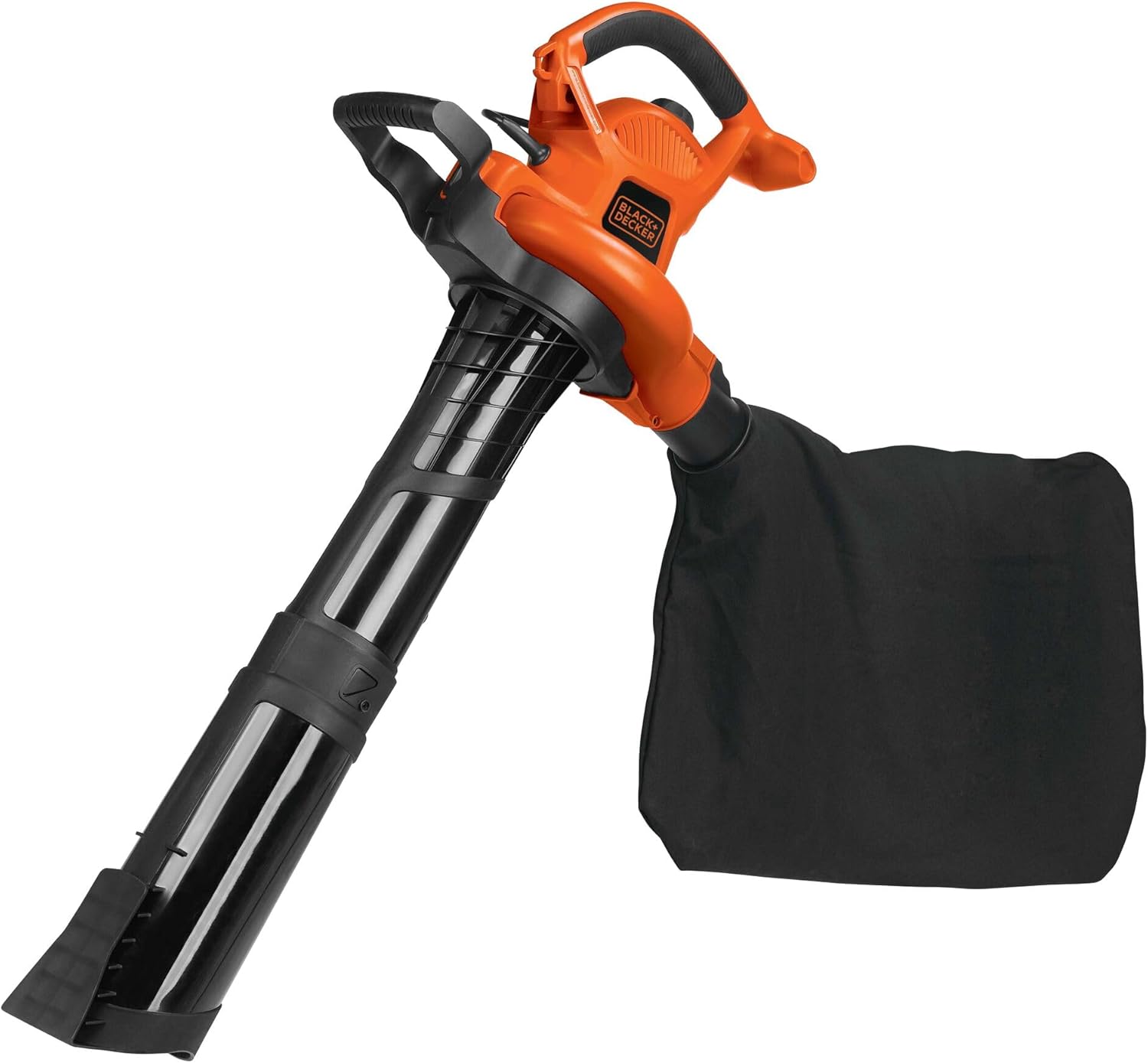
BLACK+DECKER BV6000 3-in-1 Electric Leaf Blower, Vacuum & Mulcher
| Power Source | Corded Electric |
|---|---|
| Voltage | 120 volts |
| Motor | 12 Amps |
| Air Flow Capacity | 400 cfm |
| Maximum Speed | 250 miles_per_hour |
The BLACK+DECKER BV6000 is a corded electric 3-in-1 tool that blows, vacuums, and mulches leaves for straightforward yard cleanup. You use it like a standard handheld blower to clear leaves with the high-speed 250 mph setting or switch to vacuum mode to pick up debris into the disposable or reusable bag. The 12 amp motor and high-impact metal fan help prevent clogs while mulching, and the manufacturer claims the mulcher reduces roughly 16 bags of leaves down to one. Two-speed control lets you dial back power around flower beds or ramp up for heavy, matted leaves. The unit runs noticeably quieter than some older models, and the corded design provides continuous power for long sessions without battery swaps. Important limits for large yards include the corded range and the disposable-bag system that may require frequent bag changes on extensive, leaf-heavy properties. For homeowners on a budget who want an all-in-one electric option, the BV6000 is a practical, lower-maintenance choice that balances power and convenience.
Best for: Homeowners who need a budget-friendly, multipurpose electric tool to handle routine leaf cleanup and occasional mulching without the expense or maintenance of gas or battery systems.
Less Ideal for: Large properties where cord length and frequent disposable-bag changes would interrupt work; those who prefer cordless mobility or commercial-level throughput should consider higher-capacity alternatives.
- Three functions in one unit: blower, vacuum, and mulcher for versatile yard tasks.
- Powerful 12 amp motor with up to 250 mph airspeed for moving matted leaves and debris.
- High-impact metal fan reduces clogging when mulching.
- Two-speed control for precision around plants or extra power on heavy piles.
- Quieter operation than earlier models for more comfortable use.
- Corded design limits reach on very large yards without long extension cords.
- Disposable bag system can require frequent replacement during heavy leaf seasons.
Verdict: A cost-conscious, no-fuss 3-in-1 electric blower/vac/mulcher that delivers strong clearing power for typical home yards.
PULITUO 3-in-1 Corded Leaf Blower, Vacuum and Mulcher (ACBV900)

| Power Source | ac |
|---|---|
| Air Flow Capacity | 530 cfm |
| Maximum Speed | 14000 rpm |
| Wattage | 900 watts |
| Included Components | Collection Bag, Vacuum Tube, User Manual |
The PULITUO ACBV900 combines a blower, vacuum, and mulcher into one corded handheld unit aimed at basic yard cleanup. It delivers up to 530 CFM and roughly 170 MPH airspeed with two-speed control, so you can sweep light debris on low or tackle heavier leaf piles on high. The vacuum mode shreds leaves at an advertised 15:1 mulch ratio into a 45 L reusable bag, reducing trips to the compost or curb. The unit is powered by a 900 W motor rated to 14,000 rpm and includes a shoulder strap, goggles, and earplugs to make longer sessions easier. Practical benefits are simple operation, fewer bags to manage after mulching, and consistent corded power without battery cost or downtime. Expect the usual corded limitations though: mobility is restricted by cord length and there is no battery portability. The blower is compact and lightweight for short jobs, but users with very large properties or who need cordless convenience may prefer a backpack or battery model instead.
Best for: A practical buyer who wants an affordable, all-in-one electric tool for routine leaf and light debris cleanup on small to medium yards and prefers low operating cost over cordless convenience.
Less Ideal for: Not the best choice for large properties where long extension cords are impractical or for users who need cordless portability and longer run times.
- Three functions in one unit: blower, vacuum, and mulcher for versatile yard use
- High airflow (530 CFM) and two-speed control for light and heavier debris
- Large 45 L reusable collection bag reduces emptying frequency
- Includes shoulder strap and basic protective accessories for more comfortable use
- Corded 900 W motor provides continuous power without batteries
- Corded design limits mobility compared with battery models
- Mulching ratio and performance can vary with wet or large, woody debris
Verdict: A budget-friendly corded 3‑in‑1 blower that trims cleanup time by combining blowing, vacuuming, and mulching into one continuous‑power tool.
MZK 2-in-1 Corded Electric Leaf Blower Vacuum Mulcher

| Power Source | ac |
|---|---|
| Air Flow Capacity | 460 cfm |
| Maximum Speed | 167 miles_per_hour |
| Wattage | 600 watts |
| Noise Level | 65 db |
The MZK 2-in-1 corded leaf blower vacuum mulcher combines blower and vacuum functions in a single handheld unit so you can switch quickly between blowing leaves and vacuuming them into the included collection bag. It produces up to 460 CFM and 167 MPH wind speed, which makes short work of light-to-moderate leaf piles on driveways, lawns and walkways. The unit mulches at an advertised 15:1 ratio and sends debris into a 40L bag, reducing trips to the compost or curb. Practical touches include an ergonomic handle, an anti-jam suction/tube design and a snap-lock connector for easier assembly. Because it is corded, you get consistent power for longer jobs without runtime anxiety, though you are limited by cord reach and need an outdoor outlet or extension. The blower is relatively lightweight for one-handed use but still produces noticeable noise around the specified 65 dB. For buyers seeking a reliable, no-frills electric solution for routine leaf cleanup, this model is straightforward and efficient; homeowners who need cordless mobility or very heavy commercial clearing should look elsewhere.
Best for: Homeowners who prioritize a dependable, consistently powered machine for routine yard cleanup and want a single tool that blows, vacuums and mulches leaves efficiently.
Less Ideal for: People who need cordless portability for large or remote properties or professionals who require heavy-duty commercial equipment.
- Two-in-one blower and vacuum reduces the need for separate tools
- High airflow (460 CFM) and 167 MPH speed clears leaves quickly
- 40L collection bag and 15:1 mulch ratio cut down on waste volume and emptying
- Anti-jam tube and snap-lock connector simplify assembly and reduce clogs
- Corded design limits mobility compared with battery models
- Noise level around 65 dB may be noticeable during extended use
Verdict: A straightforward, reliably powered 2-in-1 blower and vacuum that efficiently mulches and collects leaves for budget-conscious homeowners.
WORX Trivac WG509 3‑in‑1 Corded Leaf Blower/Vacuum/Mulcher

| Power Source | Corded Electric |
|---|---|
| Air Flow Capacity | 350 cfm |
| Maximum Speed | 210 miles_per_hour |
| Mulch Ratio | 18:1 |
The WORX WG509 Trivac combines a blower, vacuum, and mulcher in a single corded unit to simplify seasonal yard cleanup around homes. You use it in blow mode to move leaves from driveways, patios, and lawn edges, switch to vacuum to collect debris into the included bag, and engage the metal‑impeller mulcher to reduce leaf volume roughly 18:1 for easier disposal or composting. Variable speed control helps dial back airflow for delicate spots or ramp up for bigger piles, and corded power means uninterrupted runtime for medium‑sized yards. The quick mode switch and removable collection bag make transitions and emptying straightforward. Important limitations are that it is corded so you need an outlet or extension cord and the unit is best suited to hard surfaces and moderate leaf volumes rather than very large properties; heavier professional jobs may benefit from backpack or gas models. For homeowners who want a reliable, no‑battery‑worry electric tool, the WG509 offers efficient cleanup with minimal fuss.
Best for: Homeowners who prioritize reliable, continuous electric power and a single tool to handle regular leaf cleanup on driveways, patios, decks, and small to medium yards.
Less Ideal for: People with large acreage, frequent heavy debris or professional landscaping needs should consider petrol or backpack blowers built for extended heavy use.
- 3‑in‑1 design replaces separate blower, vacuum, and mulcher for simpler storage and use
- Strong airflow (350 CFM, 210 MPH) handles wet leaves and stubborn debris on hard surfaces
- Metal impeller mulches leaves to an 18:1 ratio, reducing bag changes and making composting easier
- Variable speed and a quick switch between modes let you adjust power for different tasks
- Corded power requires an outlet or extension cord which limits mobility
- Not intended for very large properties where commercial or backpack units perform better
Verdict: Buy this if you want a dependable corded 3‑in‑1 blower/vacuum/mulcher that delivers strong airflow and efficient mulching for routine home yard cleanup.
Choosing the Right Leaf Vacuum for Wet Leaves: Key Factors to Consider
Suction Power and Airflow
Suction power determines whether a unit can lift heavy, water-sodden leaves instead of just moving them along the surface. Look beyond peak wattage and consider sustained airflow ratings or turbine design because wet leaves demand continuous suction to avoid frequent rework.
Airflow path geometry matters. Wide, consistent airflow with minimal sharp bends reduces the chance that leaves will stall in the tube. For larger yards, higher sustained CFM or equivalent measures help move clumps without multiple passes.
Clog Resistance and Intake Design
Wet leaves tend to mat and stick, so intake shape, tube diameter, and any integrated shredding mechanism influence how often you will stop to clear jams. Smooth internal surfaces, straight intake passages, and larger-diameter tubes reduce pinch points where soggy debris can bunch up.
A shredding or mulching element that slices rather than compresses material helps turn bulky wet leaves into smaller pieces, lowering the load downstream. However, aggressive shredding can also increase motor strain if the unit lacks sufficient power, so match shredding capability to suction.
Collection System and Moisture Management
Wet leaves add weight and moisture to collection bags and bins. Look for robust, water-resistant collection containers, easy-release couplings, and systems that keep wet debris from pooling at the motor intake. Rigid bins or reinforced bags resist sagging and reduce the chance of material squeezing into airflow passages.
Consider whether the machine separates moisture from debris or allows drainage to prevent standing water. Quick-release collection makes emptying sticky, wet material less fiddly and minimizes contact time handling soggy waste.
Durability and Corrosion Resistance
Tools used on wet matter face higher corrosion and wear risk. Materials and coatings for housings, fasteners, and impeller components determine long-term reliability. Look for rust-resistant metals, reinforced plastics, and sealed bearings where possible.
Water intrusion into electrical components is a primary failure mode. Units built with splash protection, sealed switches, and adequate ventilation placement tend to outlast pride-of-place models that were only intended for dry use.
Ease of Maintenance and Clearing Jams
Expect to clear wet clogs more often than with dry debris. Features that speed maintenance save time: tool-free access panels, removable tubes, simple impeller covers, and clear paths to the intake. Quick disassembly reduces the time you spend wrestling with compacted leaf masses.
Also consider replacement parts availability and how easy it is to inspect wear items such as impeller blades or seals. A design that allows routine cleaning with a garden hose or brush without risking motor damage is particularly useful.
Size, Weight, and Manoeuvrability
A unit that is too heavy or bulky will be tiring when moving across wet lawns or stepping over beds. Weight distribution, wheel size, and handle ergonomics influence how easily you can move the vacuum where wet leaves collect.
Compact designs can reach tighter spots but may sacrifice sustained airflow. Balance the need for maneuverability with a powertrain that can handle wet debris loads for the areas you clean most frequently.
When Wet Leaves Change the Cleanup Game
Wet leaves clump, hold water, and adhere to surfaces in ways dry leaves do not. That changes the demands on a leaf vacuum: suction must be strong enough to separate leaves from the surface while the intake and collection system must cope with heavier, stickier material.
For patios, gutters, and lawns after rain, think about how often you can realistically stop to clear jams and how the machine handles repeated heavy loads. A tool that excels on dry piles can become a headache in wet conditions.
- Expect more frequent maintenance intervals with wet leaves.
- Choose units with easy access to impeller and intake for faster clearing.
- Consider rigid collection bins for heavy, wet material.
Electric, Battery, or Corded: Power Options for Damp Conditions
Electric and battery units are quieter and lower maintenance, but battery runtime and waterproofing are critical if you work in damp weather. Corded electric options offer continuous power but need safe use practices around moisture and extension cords rated for outdoor use.
Gas-powered units deliver strong, sustained torque for heavy wet loads but come with added weight, vibration, and more complex maintenance. For many home gardeners, high-capacity battery systems or well-sealed corded electric models strike the best balance between power and ease of use.
- Verify waterproofing and switch placement on electric models.
- Match battery capacity to the expected cleanup time in wet conditions.
- Gas units handle thick, waterlogged piles but are heavier to move.
Maintenance Routines That Keep Wet-Leaf Performance High
A short maintenance routine after each wet cleanup session extends machine life. Remove collection material promptly to prevent mold and rot, rinse plastic housings, and inspect the intake and impeller for packed debris. Grease or relubricate moving parts if the manufacturer recommends it.
Store the unit in a dry place and allow any wet parts to fully air dry before long-term storage. Inspect seals and fasteners periodically to catch corrosion early.
- Empty and rinse collection containers after each use.
- Check impeller and intake for packed material before starting the next job.
- Dry electrical connections and keep the unit covered in storage.
Safety Tips for Using Leaf Vacuums on Wet Material
Wet debris can hide hard objects like stones or twigs that may damage impellers. Walk the area before vacuuming and clear large debris to minimize risks. Keep bystanders and pets away while machine is running because wet clumps can eject unpredictably.
Avoid using extension cords that are not rated for outdoor, wet conditions and never operate electric units while standing in puddles. Follow general safety guidance for fuel handling with gas units and allow components to cool before performing maintenance.
- Inspect the area for hidden hard objects before vacuuming.
- Use outdoor-rated cords and keep electrical connections dry.
- Wear eye protection and gloves when clearing jams.
How to Manage Wet Leaves Without a Vacuum
If you do not have a wet-capable vacuum on hand, rake or use a stiff broom to loosen wet mats and pile them where they can dry out. Once dried, conventional leaf vacuums or mulchers will handle them more easily. For patios, a leaf blower on a low setting can help dislodge stuck leaves when combined with a broom.
Composting wet leaves can be productive but requires mixing with dry carbon-rich material and turning to avoid compacting. Avoid sealing wet leaves in plastic bags where they will rot anaerobically and create odors.
- Spread wet piles to dry before vacuuming if time allows.
- Mix wet leaves with dry yard waste for faster composting.
- Use a broom or stiff rake for stuck patches on hard surfaces.
How We Chose the Best Leaf Vacuum for Wet Leaves
We shortlisted models that demonstrate reliable wet-debris performance across real garden tasks. Key evaluation criteria included sustained suction power so units maintain airflow when pulling heavy, water-laden leaves; clog resistance in the intake, tube, and impeller to reduce downtime; and durable construction that tolerates wet, abrasive debris without rapid wear. We also prioritized ease of clearing blockages and simple maintenance because wet leaves demand more frequent cleaning. Noise and vibration were considered for user comfort during longer jobs. Portability and collection options mattered for gardeners who must move around lawns, driveways, and tight beds. Excluded from consideration were machines designed solely for dry leaves or light lawn clipping, handheld blowers with no proven wet-leaf capability, and consumer products lacking accessible maintenance points. The result is a selection focused on tools that balance power, serviceability, and longevity in damp conditions.
FAQ
Can a leaf vacuum really handle water-logged leaves?
Often yes, if the unit has sufficient sustained suction, a wide intake, and good clog resistance. Wet leaves increase load on the motor and intake, so units designed for wet debris or with shredding mechanisms that reduce bulk usually perform better.
Will wet leaves damage the impeller or motor?
It depends. Persistent jamming from compacted wet material can stress the impeller and motor. Regular cleaning, avoiding hidden hard debris, and choosing models with accessible impeller covers reduce the risk of damage.
Is shredding useful for wet leaves or does it cause more clogs?
Shredding that slices leaves into smaller pieces generally helps reduce collection volume, but aggressive shredding without matching power can increase motor strain. A moderate shredding action combined with good airflow is most effective.
How should I empty collection bags with soggy material?
Wet material is heavier and stickier. Use rigid bins where possible or line fabric bags with a tarp for easier dumping. Empty over a wheelbarrow or compost area and break up compacted clumps manually if needed.
Are battery-powered leaf vacuums practical for wet leaves?
Sometimes. High-capacity batteries can deliver enough runtime for smaller wet cleanups, but battery life and waterproofing are key. For larger, prolonged jobs, corded or gas options may be more consistent.
Final Verdict
For wet-leaf cleanup prioritize sustained suction, clog-resistant intakes, and easy access for maintenance. Durable materials and water-resistant features reduce downtime and extend service life when you work in damp conditions. Balance power with ease of handling: heavier, more powerful units clear large wet piles but require more effort to move, while lighter units are easier to manoeuvre but may struggle with big, waterlogged masses. Choose the configuration that matches your yard size and how often you deal with soggy debris.
