

Note: This article contains affiliate links. If you click on these links and make a purchase, I may earn a small commission at no extra cost to you. This helps support my research and content. Read my full affiliate disclosure here.
If you process large rounds or dense hardwood, the right 40 Ton log splitter saves time and reduces strain. These machines are built to deliver high splitting force for big, tough logs so you can move through a cord quickly without repeated re-positioning. This guide covers five top picks for the Best 40 Ton Log Splitter, shortlisted for reliability and real-world performance in home and small-acreage settings. We evaluate each unit on power delivery, construction quality, and onsite usability to help you decide which model fits your workload and storage setup.
Top Picks at a Glance
| Best Overall The best all-around choice for most situations | FORESTWEST 40-Ton Petrol Kinetic Log Splitter (7 HP) |  |
| Best Quality Built to a higher standard if you want something more solid | YARDMAX 40-Ton Gas Log Splitter with Briggs & Stratton Engine (Full Beam) |  |
| Best Budget The cheapest option that still gets the job done reliably | YARDMAX 40-Ton Gas Log Splitter with Briggs & Stratton XR1450 Engine |  |
| Highest Rated A top-rated pick with lots of positive feedback | Champion Power Equipment 40-Ton PRO Horizontal/Vertical Full-Beam Gas Log Splitter |  |
| Most Popular A crowd favorite that many people choose with confidence | BILT HARD 40-Ton Gas Log Splitter with 389cc 13 HP Engine (Horizontal/Vertical) |  |
FORESTWEST 40-Ton Petrol Kinetic Log Splitter (7 HP)

| Motor | 7HP Petrol Engine |
|---|---|
| Work force | 40Ton |
| Max. Log length | 26" |
| Max. Log diameter | 24" |
| Average cycle time | 3 Seconds |
This FORESTWEST BM11039 kinetic log splitter uses a 7 HP petrol engine and a heavy flywheel to deliver up to 40 tons of splitting force with an average cycle time of 2 to 3 seconds. It is typically used on farms, large properties, or by small firewood businesses to process rounds up to about 26" long and 24" in diameter. Notable features include rapid cycle speed, a 60 lb flywheel for kinetic energy, automatic return of the wedge for continuous splitting, 16" wheels and a towing coupler for moving the unit where needed, and a raised 25" bed height for easier handling of logs. Practical benefits are high throughput for seasonal or commercial wood processing and easy relocation around a property without disassembly. Important limitations are its large footprint and heavy weight which require a vehicle or heavy equipment to transport long distances, and the need for petrol and routine engine maintenance compared with electric or smaller hydraulic alternatives. This model is best when speed and capacity matter more than compactness or light weight.
Best for: Buyers who need a high-capacity, fast splitter for seasonal or small commercial firewood production and who value throughput and on-site mobility over compactness.
Less Ideal for: People with very small yards, occasional light splitting needs, or those who prefer quieter electric models and minimal maintenance should consider smaller or electric alternatives.
- High splitting force up to 40 tons for tackling large, tough logs
- Very fast cycle time (about 2–3 seconds) for high throughput
- Towable design with 16" wheels and coupler makes it movable across a property
- Automatic return and sizable bed height improve continuous workflow and ergonomics
- Heavy and bulky, requires a vehicle or forklift for long-distance transport or loading
- Runs on petrol so it requires regular engine maintenance and fuel handling
Verdict: Choose this splitter if you want high-speed, high-capacity splitting on-site with towable petrol power for heavy seasonal or small commercial workloads.
YARDMAX 40-Ton Gas Log Splitter with Briggs & Stratton Engine (Full Beam)

| Tonnage | 40 Ton |
|---|---|
| Engine | Briggs & Stratton |
| Max log length | 26.5 inches |
| Beam design | Patent-pending U-beam |
The YARDMAX 40-ton log splitter is built for heavy, repeated use and trades portability for raw splitting power and durability. Its patent-pending U-beam full-beam design and oversized hydraulic components shorten cycle time and stand up to large logs, while the Briggs & Stratton engine provides consistent power for long shifts. The machine converts between horizontal and vertical operation via a beam handle and includes dual log cradles, a longer table that accepts logs up to 26.5 inches, dual end cylinder support for even wear, and a log stripper to clear jams. Practical benefits include faster throughput on large rounds, reduced wear on the hydraulic system thanks to internal oil filtration, and easier towing for moving between sites. Limitations are its considerable weight and footprint that demand a trailer or strong tow vehicle and storage space, and its emphasis on power means less convenience for occasional users who need a lighter, more compact splitter.
Best for: A buyer who needs a production-capable splitter for frequent, performance-driven firewood processing and values durability and fast cycle times over compact size. Ideal for small contractors, heavy-use homesteads, or owners processing large hardwood logs regularly.
Less Ideal for: Not a good fit for casual users who only split a few logs per season or for those who need a lightweight, easily stored machine for occasional yard work.
- 40 tons of splitting force suitable for large, seasoned hardwood and frequent heavy-duty jobs
- U-beam full-beam design and oversized hydraulic components for increased durability and faster cycle times
- Dual log cradles and a longer table accommodate up to 26.5" logs and help stabilize rounds during splitting
- Horizontal-to-vertical beam handle and log stripper improve versatility and jam clearing during tough splits
- Very heavy and large, requiring a trailer or capable tow vehicle and significant storage space
- Designed for high throughput which may be overkill for occasional or light-duty backyard use
Verdict: Choose this splitter if you need a rugged, high-throughput 40-ton machine that handles large logs and long runs with reliable power and faster cycle times.
YARDMAX 40-Ton Gas Log Splitter with Briggs & Stratton XR1450 Engine
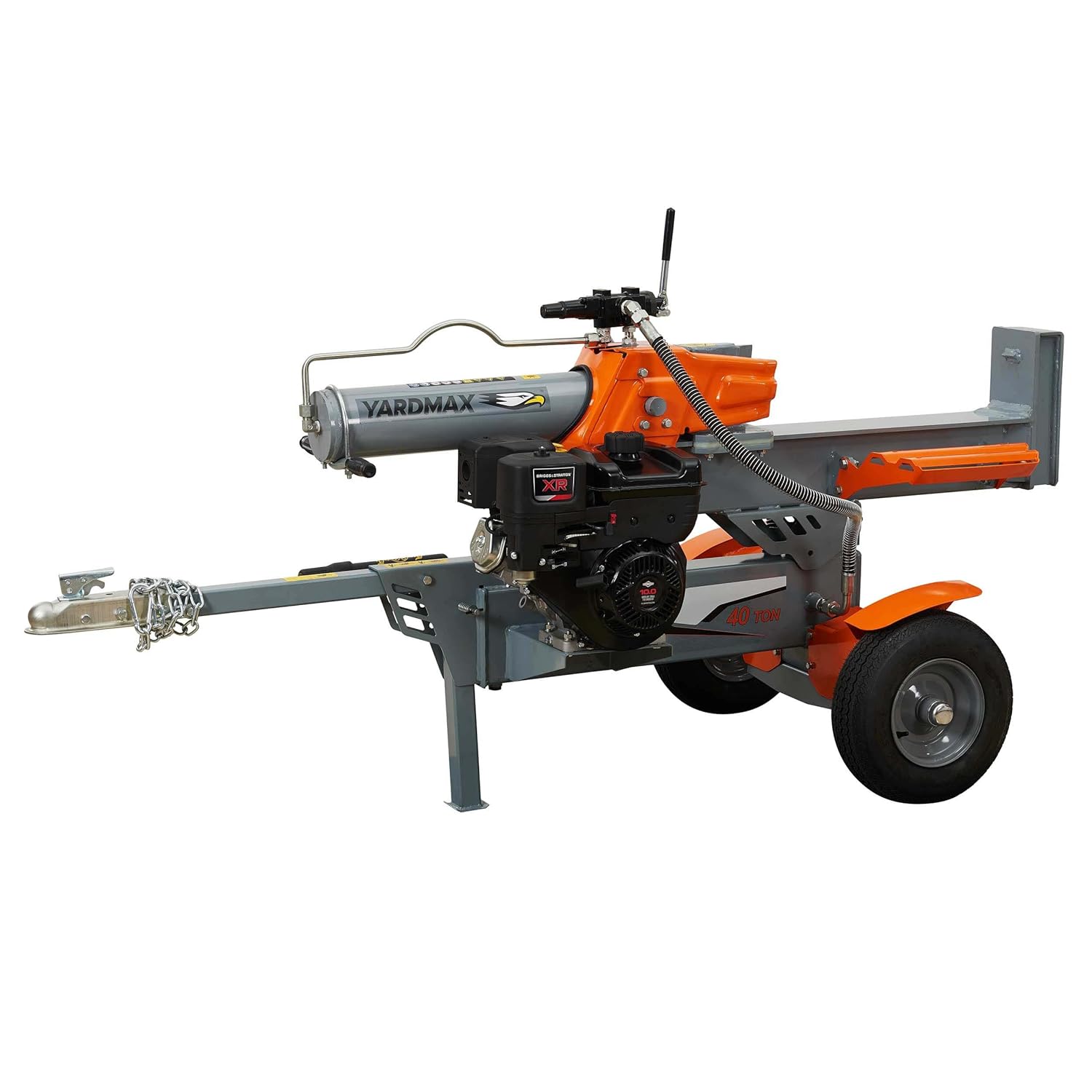
| Capacity | 40 tons |
|---|---|
| Engine | Briggs & Stratton XR1450 |
The YARDMAX 40-ton gas log splitter is a workhorse designed for splitting large, tough logs at a homeowner or small-ranch scale. It uses a Briggs & Stratton XR1450 gas engine and an oversized hydraulic system to deliver fast cycle times and strong splitting force from either side of the half-beam layout. Practical features include adjustable log cradles, a longer table to handle up to 26-inch logs, a mountable log table option, and a beam handle that flips for vertical storage or transport. The internal hydraulic oil filter and cylinder-mounted log stripper reduce downtime from jams and debris. Assembly and movement are manageable for two people, and the half-beam design keeps the unit more compact for hauling to a camp or outbuilding. Downsides are its substantial weight and the fact that this is a gas-powered unit so it requires fuel, regular maintenance, and storage space; the product also has limited customer feedback to confirm long-term reliability. For buyers prioritizing raw splitting power on a budget, this model delivers core capability without pro-level extras.
Best for: Buyers who need strong, portable gas-powered splitting for seasonal firewood or farm use and who prioritize upfront capability over lightweight convenience.
Less Ideal for: People who want a lightweight, low-maintenance electric splitter for small yards or users who cannot handle routine gas-engine upkeep and storage needs.
- 40-ton capacity delivers strong force for large, seasoned logs
- Briggs & Stratton XR1450 engine provides proven gas power for remote use
- Dual-side loading and long table accept logs up to 26 inches
- Oversized hydraulics and short cycle times speed splitting work
- Built-in log stripper and internal hydraulic filter reduce common maintenance issues
- Very heavy and bulky to move or store compared with electric alternatives
- Requires gas, routine engine and hydraulic maintenance
- Limited public reviews available to verify long-term durability
Verdict: If you need a budget-minded 40-ton gas splitter that handles large logs and can be transported to remote work sites, this YARDMAX model delivers the core power and features to get the job done.
Champion Power Equipment 40-Ton PRO Horizontal/Vertical Full-Beam Gas Log Splitter

| Splitting capacity | 40 tons |
|---|---|
| Engine | 338cc Champion OHV |
| Cycle time | 11.3 seconds |
| Hydraulic flow | 24.7 gpm |
| Hydraulic oil capacity | 12 gallons |
The Champion 40-Ton PRO is a jobsite-oriented full-beam log splitter designed to handle large, frequent splitting work. Powered by a 338cc Champion OHV engine and a 2-stage hydraulic pump, it delivers 40 tons of force and a fast 11.3-second cycle time so you can process many logs quickly. It converts from horizontal to vertical operation in seconds, which makes placing heavy rounds easier and reduces lifting strain. The unit includes practical features for high-use settings such as a dependable auto-return valve capable of 300+ cycles per hour, a 12-gallon hydraulic reservoir, a 9-inch wedge for large diameters, log catchers to keep split wood accessible, and a steel engine guard for durability. It is built on a towable chassis with DOT-approved wheels and an extended tongue for moving between sites. The main compromises are its size and weight, which require a truck or trailer to transport and a bit of space for storage and operation, and the recoil start rather than electric start may be less convenient in cold conditions. For hard-working users this splitter emphasizes consistent, heavy-duty performance.
Best for: Buyers who need a dependable, high-capacity splitter for frequent heavy use on a farm, property, or jobsite and prioritize consistent performance and durability over compactness.
Less Ideal for: Casual users with light splitting needs, limited storage space, or no easy way to tow and maneuver a heavy trailer-mounted machine should consider smaller, more portable options.
- 40 tons of splitting force handles large, stubborn hardwoods
- Fast 11.3-second cycle time and auto-return valve for high throughput
- Converts quickly between horizontal and vertical for easier loading
- Towable design with DOT-approved wheels and extended tongue for transport
- 12-gallon hydraulic system with 2-stage pump improves cutting efficiency
- Large size and 767 pound weight make transport and storage more demanding
- Recoil start may be less convenient than electric start in some conditions
Verdict: A heavy-duty, towable 40-ton splitter built for reliable, high-volume log processing on farms and jobsites.
BILT HARD 40-Ton Gas Log Splitter with 389cc 13 HP Engine (Horizontal/Vertical)

| Splitting force | 40T |
|---|---|
| Engine | 389cc 13 HP OHV |
| Cycle time | 16 Second |
| Hydraulic reservoir capacity | 6 Gallons |
This BILT HARD 40-ton gas log splitter is built for fast, demanding work: a 389cc 13 HP OHV engine powers a hydraulic system that produces 40 tons of splitting force and completes a full cycle in about 16 seconds. It runs in both horizontal and vertical positions, so you can process large, heavy logs without constant lifting, and the hardened 8-inch steel wedge handles tough hardwoods up to roughly 24 inches long. Designed to be towable, it includes a 2-inch ball coupler, DOT-approved tires, and a sturdy frame for moving between sites. The large hydraulic reservoir and 14 GPM operating speed support continuous splitting with less heat and contamination risk. Expect a substantial machine that boosts throughput for homeowners or small contractors who need high-speed, heavy-duty splitting; assembly and initial setup require space and mechanical familiarity and the unit is heavy to maneuver when unhitched. Regular maintenance of the engine and hydraulic system is important to sustain cycle speed and longevity.
Best for: Buyers who prioritize throughput and power for frequent heavy-duty splitting, such as homeowners with large woodlots or small operators who need a fast, towable splitter that handles dense hardwoods.
Less Ideal for: Casual users who split only occasionally or those without space and means to handle a very large, heavy machine should consider smaller electric or lower-tonnage models.
- Very high splitting force suitable for dense hardwoods (40 tons)
- Fast cycle time (approximately 16 seconds) for high-volume firewood processing
- Dual-position horizontal and vertical operation reduces lifting and speeds large-log handling
- Towable design with DOT-approved tires and 2" ball coupler for easy transport to job sites
- Heavy and bulky which makes solo moving and setup difficult
- Requires routine engine and hydraulic maintenance to preserve performance
Verdict: Choose this splitter when you need maximum power and high-speed cycles for heavy, high-volume firewood production.
Choosing the Right 40 Ton Log Splitter: Key Factors to Consider
Hydraulic Force and Cycle Speed
Hydraulic force determines whether a single pass will split large, knotty hardwoods or whether you will need multiple attempts. For a 40-ton machine, look at both peak force and how consistently that force is maintained through a full stroke. Cycle speed matters too. Faster return and ram advance reduce the time per log and add up across long sessions.
Slower but steady systems can still be effective, but if you regularly process many large logs you want a unit with a balance of high force and reasonable cycles per minute so the job does not become an endurance task.
Engine or Motor Power and Duty
The prime mover needs enough torque to drive the hydraulic pump without overworking. Gas engines should offer smooth throttle response and adequate displacement to avoid bogging under load. Electric motors must provide continuous duty ratings and proper cooling for extended runs. Consider whether you need a machine for short occasional use or extended splitting sessions, and choose a powerplant that matches that duty cycle.
Fuel access and electrical supply affect practicality. Gas units give field mobility but require fuel and oil maintenance. Electric units are quieter and cleaner but need a reliable power source and may limit where you can work.
Beam, Wedge, and Frame Construction
A strong, well-welded beam resists bending and keeps the wedge aligned through repeated impacts. Steel section thickness, weld quality, and how the wedge mounts to the ram all influence longevity. A poorly built beam will flex, causing slow or stubborn splits and accelerating wear on hydraulic components.
Also inspect how replaceable wear parts are designed. A bolt-on wedge or replaceable skids reduce long-term repair time and cost. Robust frame design also improves stability during splitting and reduces vibration that can loosen fittings.
Operator Controls and Safety Features
Controls should be intuitive and positioned so you can operate the splitter without awkward reaching or exposing yourself to the beam path. Two-handed controls, clear stop positions, and accessible emergency stops reduce the chance of accidents. Look for stable log cradles or adjustable supports that keep rounds steady while you split.
Good safety design also considers visibility. You want to see the log, wedge, and ram alignment clearly so you can make safe, accurate splits.
Transport, Storage, and Onsite Handling
A heavy-duty splitter must still be movable. Look at tongue design, wheel size, and overall weight when you expect to tow or reposition the unit across uneven ground. Compact transport profiles and foldable handles or removable components simplify storage in a garage or shed.
Consider how easily you can load, unload, and position logs at your typical work height. Units that minimize bending and lifting reduce operator fatigue and speed up a splitting session.
When a 40 Ton Splitter Is the Right Choice
A 40-ton splitter fits gardeners and landowners who regularly deal with large-diameter rounds or dense hardwood species. If your chores include processing mature ash, oak, or maple for winter fuel, this class of splitter gives the force needed to crack big sections in fewer passes. It reduces time per log compared with lower-tonnage machines and is less likely to stall on knotty wood.
If you only split small logs or occasional kindling, a lighter machine may be more economical. But for continuous weekend work or prepping multiple cords, a 40-ton unit strikes a pragmatic balance between power and manageable size.
- Best for logs roughly 12 inches diameter and above, depending on species
- Saves time on dense hardwoods compared with lower-tonnage splitters
- Requires appropriate handling equipment and stable ground for safe operation
Preparing Your Yard and Workstation
Set up on level, firm ground to keep the splitter stable under load. Place the machine near an accessible fuel or power source and ensure you have clear space around the beam for feeding and removing logs. Use wheel chocks or stabilizers if the surface is uneven.
Arrange log stacks and a chopping block at a comfortable height. Bring gloves, eye protection, and hearing protection. Clearing debris around the work zone and planning how you will move split wood to storage will speed the workflow and reduce trips back and forth.
- Ensure a flat, stable work area and good footing
- Keep fuel or power within reach but away from hot surfaces
- Organize split wood stacking to minimize handling
Maintenance Tasks That Keep Performance Consistent
Routine checks preserve hydraulic pressure and extend machine life. Inspect hoses and fittings for leaks, check hydraulic fluid levels and condition, and follow the manufacturer's schedule for pump and motor maintenance. Clean debris from around the beam and keep moving parts lightly lubricated where recommended.
Replace or re-sharpen wedges when they show rounded edges. Tighten loose bolts and monitor tire pressure if the unit is towable. Address unusual noises or oil discoloration promptly to prevent more extensive damage.
- Check hydraulic fluid and hoses before long sessions
- Inspect welds and beam alignment periodically
- Keep the wedge sharp and replace worn mounting hardware
Electric Vs Gas Drive Considerations
Electric-driven splitters offer quieter operation and require less routine maintenance related to fuel and carburetion. They are ideal for garages, workshops, and locations with dependable power. Limitations include cord management and the need for an appropriate electrical supply for continuous duty loads.
Gas-driven units provide mobility and independence from a fixed power source. They handle remote work sites and extended sessions where power is not available. Expect more noise, vibration, and routine engine maintenance with gas models.
- Choose electric for quieter, low-maintenance yard use with power access
- Choose gas for remote jobs and heavy-duty continuous splitting where mobility matters
Common Upgrades and Accessories
Consider bolt-on cradles, log tables, or roller supports that improve feed speed and reduce manual handling. Larger wheels or off-road tires make moving the splitter across uneven terrain simpler. Quick-change wedges and spare seals on hand reduce downtime when wear parts need replacement.
Accessories that improve ergonomics, such as adjustable stands or work-height platforms, cut down on bending and fatigue. Fuel cans, extra hydraulic fluid, and a basic tool kit tailored to the splitter model are practical additions for longer projects.
- Roller tables and cradles reduce lifting and speed processing
- Off-road wheels improve transport on rough yards
- Keep spare seals and a tool kit for field repairs
How We Chose the Best 40 Ton Log Splitter
Our selection focused on machines suited to homeowners and small-acreage operators who regularly process large-diameter logs. We prioritized units with consistent hydraulic force, a robust engine or motor capable of sustained duty, and a heavy-duty frame and beam that resist bending or fatigue under repeated loads. Ease of use in the yard was another filter: accessible controls, safe splitting positions, and manageable transport features matter when you are moving between work sites. We excluded lightweight or low-tonnage splitters that are underpowered for large hardwood rounds, and we did not include purely commercial tow-behind units intended for continuous industrial use. The final shortlist reflects machines that balance splitting capacity with practical yard-ready features: consistent hydraulic pressure, solid construction materials and welds, user-centered safety features, and serviceability for routine maintenance. These dimensions align with our scoring metrics and reflect what matters most when you need dependable 40-ton splitting performance.
FAQ
Can a 40 ton log splitter handle oak and maple without multiple passes?
Often it can, depending on log diameter and internal knots. A 40-ton splitter delivers substantial force that frequently splits mature oak and maple in one pass for moderate diameters. Very large, knotty rounds may still need repositioning or a second pass.
Is a 40 ton splitter overkill for small logs and kindling?
Usually a lower-tonnage splitter will suffice for small logs and kindling and will be lighter and easier to store. A 40-ton unit will work but may be more machine than necessary if you rarely handle large rounds.
How important is wedge design on splitting performance?
Wedge geometry affects how force is concentrated and how smoothly the log opens. A well-shaped, sharp wedge reduces stuck splits and lowers the number of passes. Replace or recondition wedges when they get rounded to maintain consistent performance.
What maintenance keeps hydraulic performance steady?
Regularly check fluid level and cleanliness, inspect hoses and fittings for leaks, and monitor pump noise for signs of wear. Keeping the system clean and changing hydraulic fluid at recommended intervals preserves pressure and prevents overheating.
Can I move a heavy 40 ton splitter by myself?
It depends on unit design. Many are towable and need a vehicle to move between sites, while smaller transport-friendly designs have wheels and a handle for short-distance repositioning. Always use proper lifting techniques and assistance for heavy moves to avoid injury.
Final Verdict
A 40-ton log splitter is appropriate when you need reliable force to process large-diameter or dense hardwoods efficiently. Prioritize consistent hydraulic force, a drivetrain rated for your expected duty cycle, and a rugged beam and frame that will stand up to repeated use. Operator controls, safety features, and transport options determine how practical the unit will be in your yard. Weigh the tradeoffs between electric simplicity and gas mobility, and plan for routine maintenance to keep pressure and parts in good condition. With the right balance of power, durability, and usability you will minimize stuck splits and get dependable performance for years.
