

Note: This article contains affiliate links. If you click on these links and make a purchase, I may earn a small commission at no extra cost to you. This helps support my research and content. Read my full affiliate disclosure here.
Choosing the right dry fertilizer matters for healthy beds, containers, lawns, or vegetable rows. The wrong product can mean wasted nutrients, extra work, or burned plants. This guide looks at six shortlisted dry fertilizers suited to general garden use and explains how they behave in soil, how long they feed, and how easy they are to store and apply. We evaluated each option across practical, garden-focused criteria so you can pick a dry fertilizer that matches your soil, plants, and maintenance routine. Read on for clear guidance that leads into our top picks.
Top Picks at a Glance
| Best Overall The best all-around choice for most situations | FoxFarm Happy Frog Tomato & Vegetable Fertilizer, 5-7-3 Blend, 4 lb |  |
| Best Quality Built to a higher standard if you want something more solid | FoxFarm Happy Frog All Purpose Fertilizer (4 lb) – Granules with Active Soil Microbes |  |
| Best Budget The cheapest option that still gets the job done reliably | Miracle-Gro Shake 'N Feed All Purpose Plant Food, 1 lb |  |
| Highest Rated A top-rated pick with lots of positive feedback | Osmocote Smart-Release Plant Food Plus Outdoor & Indoor, 1 lb |  |
| Most Popular A crowd favorite that many people choose with confidence | Miracle-Gro Water Soluble All Purpose Plant Food, 3 lb |  |
| Best Seller A high-volume bestseller chosen again and again | Miracle-Gro Shake 'N Feed All Purpose Plant Food, 4.5 lb |  |
FoxFarm Happy Frog Tomato & Vegetable Fertilizer, 5-7-3 Blend, 4 lb

| Item Form | Granules |
|---|---|
| Specific Uses For Product | Vegetables, Tomatoes, Soft Fruits, and Berries |
| Unit Count | 64 Ounce |
| Mixing Ratio | 5:7:3 |
| Target Species | Vegetables |
This granular FoxFarm Happy Frog fertilizer supplies a balanced 5-7-3 N-P-K blend designed to support leafy growth and plentiful fruit set, plus added calcium and mycorrhizal fungi to improve root uptake and reduce blossom end rot. It is applied to in-ground beds and containers following the package directions and is suitable across vegetable plantings. The OMRI listing means it fits organic-minded plots, and the inclusion of mycorrhizae can help young roots access nutrients and moisture more efficiently. For root crops such as turnips the moderate nitrogen level encourages healthy foliage without overly stimulating excessive top growth that can reduce root development when used at recommended rates. Practical limits are that it is a general vegetable formula rather than a turnip-specific mix, so tight control of nitrogen and timing is still needed for optimal root size, and application rates must be followed to avoid uneven root formation. The dry granules are easy to store and apply but require incorporation or watering in to activate nutrients.
Best for: Gardeners focused on reliable, performance-oriented nutrition for a variety of vegetable crops who want an organic-certified, all-purpose fertilizer that supports both roots and fruiting.
Less Ideal for: Growers seeking a specialized low-nitrogen or root-maximizing formula specifically for large-scale root vegetable production should consider a product formulated expressly for root crops.
- Balanced 5-7-3 N-P-K suited to vegetables that need both foliage and root development
- Contains calcium to help prevent blossom end rot and related fruiting issues
- Includes mycorrhizal fungi to improve root nutrient and water uptake
- OMRI listed, making it acceptable for organic gardens
- Granular form is simple to store, measure, and apply to containers or beds
- Not tailored specifically to root crops so growers may need to adjust application timing or rates for turnips
- Sold in a single size that may require multiple purchases for larger plots
Verdict: Choose this OMRI-listed 5-7-3 granular if you want a performance-oriented, organic-friendly fertilizer that supports healthy roots and reliable vegetable yields.
FoxFarm Happy Frog All Purpose Fertilizer (4 lb) – Granules with Active Soil Microbes

| Item Form | Granules |
|---|---|
| Specific Uses For Product | Organic |
| Mixing Ratio | 6-4-5 |
| Unit Count | 64 Ounce |
FoxFarm Happy Frog All Purpose is a granular, slow-release organic fertilizer designed to feed a wide range of garden plants including vegetables such as squash and cucumbers. You apply it to soil according to the package directions and it releases nutrients over time while introducing soil microbes and mycorrhizal fungi that can help roots access nutrients and moisture. The 6-4-5 NPK balance favors steady nitrogen for leafy growth and enough phosphorus and potassium to support flowering and fruit set, which fits well for vining cucurbits during establishment and production. Its OMRI listing makes it suitable for organic gardens and the granule form is easy to broadcast or work into topsoil. Expect gentler feeding than a synthetic spike, so results accumulate over weeks rather than days; heavy feeders may need more frequent applications or a complementary high-nitrogen feed at peak growth. Packaging is convenient for home gardeners but larger-scale growers will need bigger bags for continuous use.
Best for: Gardeners who prioritize steady, organic fertility for productive vegetables and want to support root health with microbial amendments for better long-term yields.
Less Ideal for: Growers who need rapid, short-term nutrient corrections or who manage large-scale vegetable beds where bulk fertilizer purchases are more economical.
- Contains beneficial soil microbes and mycorrhizal fungi to support root nutrient uptake
- OMRI listed for use in organic gardening
- Balanced 6-4-5 NPK tailored for steady vegetative growth and fruiting
- Granular slow-release form that is easy to apply and blends into soil
- Releases nutrients more slowly than soluble synthetic fertilizers, so not ideal for rapid correction
- 4 lb bag may be small for larger squash or cucumber plots
Verdict: A practical organic granular fertilizer that supports root health and steady production for squash and cucumbers through its microbial boost and balanced 6-4-5 nutrients.
Miracle-Gro Shake 'N Feed All Purpose Plant Food, 1 lb

| Item Form | Granules |
|---|---|
| Application Method | Shake and work into soil |
| Target Species | Flowers, Vegetables, Herbs |
| Unit Count | 16 Ounce |
| Mixing Ratio | 10-10-10 |
Miracle-Gro Shake 'N Feed is a 1 lb granular fertilizer designed to be shaken onto soil and lightly worked in to provide slow-release nutrition for flowers, vegetables and herbs. It is typically used at planting or as a seasonal top-dress: apply around the root zone, water to activate, and reapply every three months. The formula includes macronutrients and micronutrients that support root strength and above-ground growth and is intended to feed soil microbes for better nutrient availability. For herb growers this product is convenient because it is easy to apply, does not require mixing, and covers small beds or several container herbs from a single container. Important limitations are that the mix is a generic 10-10-10 style feed so it is not tailored to specific herb needs or high-phosphorus bloom boosting, and a single 1 lb jar covers roughly 30 sq ft so larger beds will need more product or larger sizes. Also avoid applying to wet foliage and follow label rates to prevent overfeeding.
Best for: Herb gardeners who want an inexpensive, no-mix, easy-to-apply fertilizer for small beds and container herbs and prefer low-effort seasonal feeding.
Less Ideal for: Growers who need specialty nutrient balances for particular herbs or who manage larger vegetable/herb plots needing bulk fertilizer options.
- Slow-release granules feed plants for up to three months reducing application frequency
- Works for both in-ground beds and container herbs without mixing
- Contains micronutrients and ingredients that support soil microbes and root development
- All-purpose 10-10-10 formula is not specialized for herbs with specific nutrient preferences
- Small 1 lb container covers about 30 sq ft so frequent repurchase for larger gardens
Verdict: A simple, budget-friendly slow-release granular feed that makes quarterly feeding of small herb beds and containers quick and easy.
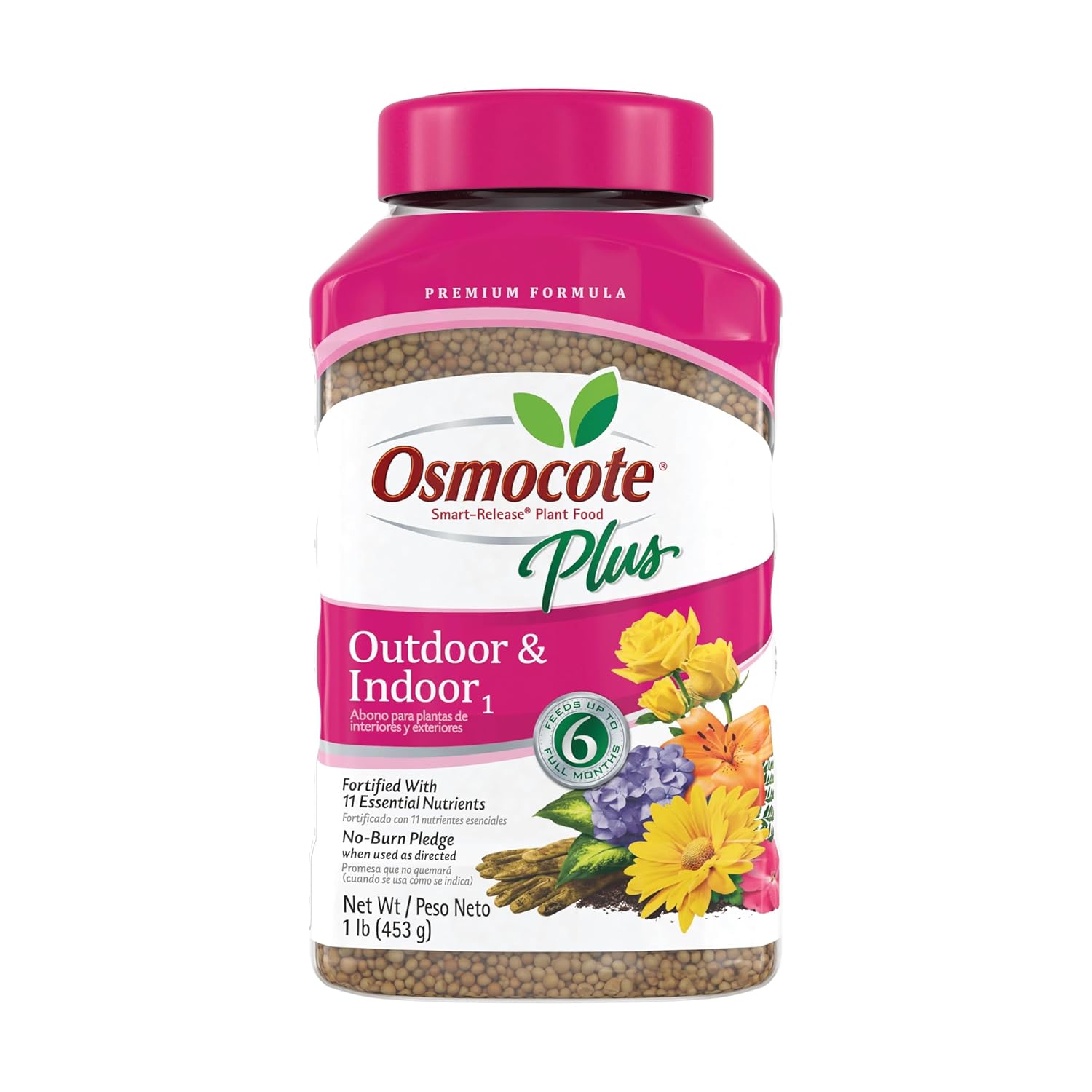
Osmocote Smart-Release Plant Food Plus Outdoor & Indoor, 1 lb
| Item Form | Granules |
|---|---|
| Specific Uses For Product | Plant Food |
| Application Method | sprinkle around the base and work into the soil |
| Unit Count | 16 Ounce |
Osmocote Smart-Release Plant Food Plus is a resin-coated granular fertilizer designed to deliver steady nutrition to a wide range of plants for up to six months from a single application. You apply it by sprinkling the recommended scoop into the top inch or so of potting mix for containers or around plants in garden beds, then watering to activate the coating. The product contains 11 essential nutrients and is formulated to release based on soil temperature, which helps reduce overfeeding and supports consistent bloom and foliage performance in hanging baskets. Its no-burn pledge makes it easy to use at the recommended rates for mixed annuals, trailing plants, and container veggies. Limitations are that coverage is modest from a 1 lb. container so frequent use on many large baskets will require buying more, and release timing still depends on temperature so plants in cool, shaded spots may receive nutrients more slowly than those in warm sun.
Best for: Gardeners who prioritize steady, low-maintenance feeding for hanging baskets and containers and want consistent bloom and foliage without frequent fertilizing.
Less Ideal for: Those who need immediate, short-term nutrient boosts or precise liquid feeding schedules for plants that demand fast correction.
- Resin-coated granules provide controlled release of nutrients for up to six months
- Formulated with 11 essential nutrients suitable for a wide variety of plants
- No-burn pledge when used as directed reduces risk of damaging roots in containers
- Simple sprinkle-and-water application works well for hanging baskets and pots
- 1 lb container covers a limited area so multiple baskets will need additional product
- Release rate depends on temperature so nutrient delivery can be slower in cool conditions
Verdict: An easy, low-maintenance slow-release fertilizer that keeps hanging baskets fed for months with minimal effort.
Miracle-Gro Water Soluble All Purpose Plant Food, 3 lb

| Item Form | Powder |
|---|---|
| Application Method | Mix with water in a watering can |
| Fertilizer Analysis (N‑P‑K) | 24-8-16 |
| Unit Count | 48 Ounce |
| Coverage | Feeds approximately 1,200 sq. ft. |
Miracle‑Gro Water Soluble All Purpose Plant Food is a powdered NPK 24‑8‑16 formula that dissolves in water to give plants a quick nutrient boost. You mix measured scoops into a watering can and apply to the soil at the base of plants every 7–14 days for outdoor use or every 14 days for houseplants. Notable features include a high nitrogen content for leafy growth, compatibility with containers and in‑ground beds, and guidance for use with a Miracle‑Gro Garden Feeder for larger areas. In practical terms this is a fast‑acting feed that encourages bigger, greener foliage and works well in regular maintenance of perennials like hostas. Limitations are that it is a fast‑release fertilizer rather than a slow‑release option, so it requires regular reapplication and careful measuring to avoid overfeeding. Also, the 24‑8‑16 balance is geared toward vegetative growth, so it is not optimized if you want to prioritize flowering or bloom boosting.
Best for: Buyers who want a reliable, fast‑acting feed to maintain lush, leafy perennials and container plants and who value proven products with broad user endorsement.
Less Ideal for: Gardeners seeking a single, long‑lasting granular fertilizer or a bloom‑focused formula should consider alternative slow‑release or high‑phosphorus products.
- Water‑soluble powder mixes easily for quick uptake by roots
- High nitrogen formula promotes robust leafy growth ideal for shade plants
- Clear mixing and application instructions for both indoor and outdoor use
- Suitable for containers and in‑ground gardens and compatible with garden feeders
- Requires frequent applications so it is not a low‑maintenance, slow‑release option
- High nitrogen ratio is less suitable when the primary goal is more flowers than foliage
Verdict: A fast‑acting, water‑soluble fertilizer that reliably produces bigger, greener hosta leaves when used as directed.
Miracle-Gro Shake 'N Feed All Purpose Plant Food, 4.5 lb

| Item Form | Granules |
|---|---|
| Application Method | Shake onto soil and work into top 1-3 inches |
| Target Species | flowers, vegetables, herbs |
| Unit Count | 72 Ounce |
| Feeds For | up to 3 Months |
Miracle-Gro Shake 'N Feed All Purpose is a granular, continuous-release fertilizer you sprinkle onto soil and lightly work into the top inch or three before watering. It is typically used on in-ground garden beds, raised beds and established container plants to provide slow feeding across the season; the label recommends reapplying every three months. Notable features include natural ingredients that feed soil microbes, added micronutrients, and an easy shake-on application that requires no mixing. In practice this product is convenient for routine garden maintenance because one application supports steady nutrient availability without frequent dosing. For garden beds it helps promote root strength and consistent growth while reducing the need to remember weekly feedings. The main limitations are that it is a general-purpose formula rather than a crop-specific blend and that application rates must be followed to avoid overfeeding; it also provides broad coverage but not the fast boost of a water-soluble feed if plants need immediate recovery.
Best for: Gardeners who want a low-maintenance, reliable feeding method for flower and vegetable beds and containers and prefer scheduled, less frequent fertilizing over weekly applications.
Less Ideal for: Growers seeking fast corrective feeding, precise NPK ratios for fruiting crops, or specialty blends for roses or acid-loving plants should consider targeted fertilizers instead.
- Continuous-release formula feeds plants for up to three months per application
- Granular shake-on application is simple and requires no mixing
- Contains micronutrients and ingredients that support soil microbes and root health
- Suitable for both in-ground garden beds and container plants
- All-purpose formula may not match nutrient ratios for specific crops or problems
- Slower acting than water-soluble fertilizers when immediate nutrient correction is needed
Verdict: Use this granular, three-month continuous-release fertilizer when you want a simple, low-maintenance feed that keeps garden beds and containers nourished through the season.
Choosing the Right Dry Fertilizer: Key Factors to Consider
Nutrient Ratio and Plant Needs
The N-P-K ratio on a dry fertilizer bag tells you the relative amounts of nitrogen, phosphorus, and potassium. Matching that ratio to your garden goals matters because leafy crops need higher nitrogen, while root and fruiting plants benefit from more phosphorus and potassium. A balanced all-purpose blend is fine for general beds and lawns, but targeted mixes let you correct specific deficiencies.
Pay attention to secondary nutrients listed on the label, such as calcium, magnesium, and sulfur. These can influence soil pH reactions and plant vigor. For many gardeners, choosing a fertilizer whose ratio aligns with soil test results gives the most reliable outcomes.
Release Profile and Timing
Dry fertilizers deliver nutrients either immediately, gradually, or a mix of both. Water-soluble single-shot granules feed quickly and are good for fast green-up or corrective feeding, but they may need more frequent reapplication. Controlled-release granules use coatings or slow-release chemistry to provide a steadier supply over weeks to months, reducing the frequency of application and lowering burn risk.
Consider your maintenance window and the crop calendar. If you want one application to last through a season, a slow-release product is often better. If you need quick corrective action after planting or during peak growth, a soluble option can be helpful.
Ease of Application and Spread
How a dry fertilizer spreads and how easy it is to apply will affect coverage accuracy and waste. Coarse, uniformly sized granules broadcast more evenly with hand spreaders or mechanical broadcasters, while fine powders can clump and create hotspots. Some dry fertilizers are formulated for broadcast across lawns, others for banding at planting, and some are designed for spot treatments.
Look for products with clear application rates and recommended spreader settings. Ease of measuring, pouring, and cleanup also matters in a working garden, especially when treating multiple areas with different rates.
Soil Interaction and Leaching Risk
A fertilizer's solubility and how it interacts with soil texture affect nutrient retention and environmental impact. High-solubility formulas can move quickly through sandy soils and into drains, increasing leaching risk. Heavier soils hold nutrients longer but may tie up certain elements if pH is off.
Assess your soil type and local rainfall patterns when choosing a dry fertilizer. In high-rainfall areas or sandy sites, controlled-release or less soluble options help keep nutrients in the root zone where plants can use them.
Storage Longevity and Moisture Resistance
Dry fertilizers must stay dry to remain usable. Granular products that resist caking and do not absorb moisture are easier to store in sheds or garages. Some formulations include anti-caking agents or come in resealable packaging to protect against humidity.
Consider how much you will store between seasons and whether you have a dry storage spot. Poor storage leads to clumping, uneven application, and potential loss of effectiveness.
Safety, Handling, and Plant Burn Potential
Dry fertilizers can be dusty and corrosive to skin or foliage if applied incorrectly. Products with clear handling instructions, recommended dilution or incorporation, and low-dust formulations reduce risk during use. Overapplication of high-nitrogen or highly soluble fertilizers can scorch roots and foliage, especially in hot weather.
Follow label guidance on personal protective equipment, keep granular material away from direct contact with young seedlings, and water in applications when instructed to reduce burn risk.
When to Use Slow-Release Versus Fast-Acting Dry Fertilizers
Slow-release granules are best when you want consistent feeding over weeks or months without frequent reapplication. They are useful for perennial beds, container mixes, and lawns where steady, low-maintenance nutrition supports long-term health.
Fast-acting, water-soluble dry fertilizers are appropriate for rapid correction of deficiencies, quick green-up after seeding, or when a short burst of nutrient is needed during flowering or fruit set. They require more careful timing and may need follow-up applications during the season.
- Use slow-release for low-maintenance beds and mixed perennial plantings.
- Choose fast-acting for rescue feeding or timed boosts during critical growth phases.
- Combine approaches if you need a base slow feed plus occasional quick corrections.
Applying Dry Fertilizer to Containers and Raised Beds
Containers and raised beds have limited soil volume, so avoid heavy broadcast rates that would concentrate salts and risk root burn. Mix a measured amount into the potting mix at planting or use light top-dressing followed by watering.
For ongoing feeding, choose a controlled-release granule sized for potting mixes or apply a diluted soluble dry fertilizer as a liquid feed. Always observe plants for signs of overfertilization and flush with water if salts build up.
- Incorporate at planting for steady start-up nutrition.
- Top-dress lightly and water in for maintenance.
- Monitor plant response and adjust frequency instead of increasing dose.
Managing Fertilizer Around New Seedlings and Transplants
Young roots are sensitive to concentrated nutrients. When establishing seedlings or transplants, avoid placing undiluted dry granules directly against roots or stems. Use gentler, lower-rate formulations or wait until seedlings are established before applying stronger feeds.
If immediate nutrition is needed, consider a very light application or use a water-soluble portion diluted well below standard rates until plants develop a robust root system.
- Apply low rates near new plants or incorporate into soil away from stems.
- Delay higher-strength applications until roots are established.
- Water after application to move nutrients into the root zone and reduce surface salt.
Using Dry Fertilizer on Lawns
Lawns respond best to even coverage and correct timing. Choose a product formulated for turf or an all-purpose mix with a nitrogen profile suited to the season. Fall applications often favor higher potassium for root development, while spring feeding emphasizes nitrogen for top growth.
Calibrate spreaders and follow label rates closely. Overapplication creates brown patches and uneven growth, while underapplication means more frequent treatments.
- Calibrate broadcast or drop spreaders before treating the lawn.
- Avoid mowing immediately after heavy granular application to reduce clumping.
- Water lightly after application when directed to activate granules and reduce burn risk.
Storing and Handling Bulk Bags of Dry Fertilizer
Store dry fertilizer in a cool, dry place away from direct sunlight and moisture. Keep original packaging sealed or transfer to airtight containers to prevent caking. Elevated pallets or shelving help avoid ground moisture ingress.
Label containers clearly and separate different fertilizer types to avoid accidental mixing. For safety, keep fertilizers away from children, pets, and combustible materials.
- Use airtight bins or resealable bags to protect against humidity.
- Store off the floor and away from heat sources.
- Rotate stock so older bags are used first.
How We Chose the Best Dry Fertilizer
We concentrated on attributes that matter when gardeners use dry fertilizers in beds, containers, lawns, and small-scale vegetable plots. Selection focused on nutrient formulation and release type, because correct N-P-K ratios and release profiles determine plant response and timing. Application and spreadability were another core filter, since ease of broadcasting, side-dressing, or spot-application affects accuracy and waste. Solubility and leaching potential were reviewed to prioritize products that feed plants without excessive runoff. Storage stability and humidity resistance were assessed to ensure granular blends hold up in sheds and garages. Finally, safety and handling considerations were weighed, including dust control and clarity of instructions. We excluded liquid concentrates, single-use starter tablets, and specialty greenhouse feeds that are not typical bagged dry fertilizers for general garden use. The resulting list highlights broadly useful dry fertilizers that meet the practical demands of home gardeners, with attention to predictable nutrient delivery, ease of use, and storage.
FAQ
How often should I apply dry fertilizer to vegetable beds?
It depends on the product's release profile. Fast-acting dry feeds may be repeated every 4 to 6 weeks during the growing season, while controlled-release formulas can last several months. Follow label rates and adjust based on plant growth and soil test results.
Can I mix different dry fertilizers together before applying?
Mixing is possible but only when labels indicate compatibility. Combining products with different release mechanisms or chemical compositions can change performance and increase burn risk. When in doubt, apply separately or test a small area first.
Will dry fertilizer raise or lower soil pH?
Most dry fertilizers have a neutral to slightly acidifying effect depending on their ammonium or nitrate content. Large, repeated applications can influence soil pH over time. Monitor pH with periodic tests and amend with lime or sulfur if adjustments are needed.
How do I avoid fertilizer burn on young plants?
Use lower rates, dilute soluble products when applying near seedlings, and avoid placing granules directly against roots or stems. Watering in after application helps move nutrients away from the surface and reduces salt concentration around roots.
Is controlled-release dry fertilizer safe for containers?
Yes, controlled-release granules are commonly used in containers because they provide steady nutrition and lower the chance of salt buildup. Choose a product with an appropriate release duration for your container plants and avoid excessive initial rates.
Final Verdict
Pick a dry fertilizer that matches your soil test results, planting type, and maintenance rhythm. Prioritize the nutrient ratio and release profile first, then consider application method, leaching risk, and storage needs. For low-maintenance situations, choose slower-release blends; for quick corrections, use soluble options at conservative rates. Balancing these tradeoffs will help you feed plants effectively while avoiding common problems like burn, leaching, and wasted product.
