

Note: This article contains affiliate links. If you click on these links and make a purchase, I may earn a small commission at no extra cost to you. This helps support my research and content. Read my full affiliate disclosure here.
A well-chosen tumbler compost bin makes backyard composting noticeably easier and less messy. With the right design you can speed decomposition by improving aeration, keep smells under control, and avoid constant maintenance in a small yard or on a patio. This guide covers the six top-rated tumblers shortlisted for common garden situations and explains the practical differences that matter. We evaluate each option on airflow, ease of turning, durability in outdoor conditions, and how simple it is to harvest finished compost. Read on to find the style and features that match your available space and composting goals.
Top Picks at a Glance
| Best Overall The best all-around choice for most situations | Miracle-Gro Dual Chamber Compost Tumbler (2 × 18.5 gal) |  |
| Best Quality Built to a higher standard if you want something more solid | Jora Composter JK 400 Rotating Insulated Compost Tumbler |  |
| Best Value The sweet spot between price and what you get | F2C 43‑Gallon Dual‑Chamber Rotating Compost Bin with Steel Frame |  |
| Best Budget The cheapest option that still gets the job done reliably | SUPER DEAL Outdoor 43 Gallon Dual-Chamber Tumbling Composter |  |
| Highest Rated A top-rated pick with lots of positive feedback | Cozurra 45‑Gallon Dual‑Chamber Compost Tumbler |  |
| Most Popular A crowd favorite that many people choose with confidence | VIVOSUN Outdoor Tumbling Composter, Dual-Chamber 43 Gallon |  |
Miracle-Gro Dual Chamber Compost Tumbler (2 × 18.5 gal)

| Capacity | 37 gallons |
|---|---|
| Material Type | Alloy Steel (frame) and UV-protected plastic (barrel) |
This dual-chamber Miracle-Gro tumbler is a user-friendly solution for gardeners who want a steady supply of finished compost without manual turning. Each chamber holds 18.5 gallons, so you can load one side while the other finishes curing; the barrel rotates on a galvanized steel frame for easy turning and faster aeration. The molded, UV-protected plastic and side-locking seals are designed to resist weather and help keep pests out, and the maker claims finished compost in roughly 4 to 6 weeks under good conditions. Typical use is adding balanced green and brown materials, rotating the tumbler every few days, then unlocking the sliding door to remove cured compost. Practical benefits include reduced physical labor compared with pile turning and a continuous workflow from dual chambers. Limitations to note are modest total capacity for very large gardens and reliance on correct moisture and feedstock balance to hit the faster decomposition times; very cold winters will slow processing. Assembly and placement on a level spot are important for smooth rotation.
Best for: Gardeners who value steady, low-effort compost production backed by a well-known brand and want the assurance of a proven dual-chamber system for regular use.
Less Ideal for: People needing very large-volume commercial composting or those who prefer an open windrow or in-ground hot compost system for maximum throughput.
- Dual-chamber design lets you add fresh material while another batch cures for continuous compost supply
- Rotating barrel on a galvanized steel frame makes aeration easy with minimal physical effort
- UV-protected plastic and tight side locks help resist weather and reduce pest access
- Produces finished compost relatively quickly when fed and moistened correctly
- 37-gallon combined capacity may be small for very large or heavy-production gardens
- Performance depends on proper moisture, material mix, and ambient temperature to reach claimed speed
Verdict: Choose this dual-chamber tumbler if you want a simple, low-labor way to produce a steady stream of finished garden compost with reliable pest protection.
Jora Composter JK 400 Rotating Insulated Compost Tumbler

| Capacity | 106 gallons |
|---|---|
| Material Type | Metal |
The Jora Composter JK 400 is a heavy-duty, dual-chamber compost tumbler built for faster, higher-temperature backyard composting. You load one chamber while the other cures, then rotate the octagonal drum by hand to mix contents and aerate the pile. Its insulated, food-grade interior and side vents are designed to trap heat and oxygen so microbial activity reaches higher temperatures for quicker breakdown. With a large 106 gallon volume the unit handles substantial weekly volumes, making it suitable for serious gardeners or small-scale producers. The metal construction and sturdy shape give the tumbler good durability and stability outdoors. Important limitations to note are the product condition notice that this listing is refurbished and sold for parts only and the overall weight and footprint, which require a solid, accessible spot in the yard and at least two people for assembly or relocation. Expect lower convenience for small-space gardeners but strong performance where regular high-temperature, large-volume composting is the priority.
Best for: Buyers who prioritize fast, high-temperature composting and need a durable, high-capacity tumbler for regular, large-volume backyard composting.
Less Ideal for: People with very small yards, limited ability to move heavy equipment, or casual gardeners who only produce small amounts of kitchen waste.
- Dual-chamber design lets you fill one side while the other decomposes
- Insulated, food-grade interior helps reach higher composting temperatures
- Large 106 gallon capacity handles substantial weekly volumes
- Side vents provide airflow for aerobic decomposition
- Galvanized metal construction offers durability for outdoor use
- Listing indicates a refurbished parts-only condition which may affect functionality
- Heavy and bulky which makes assembly and relocation more difficult
Verdict: Choose the JK 400 if you want a rugged, insulated dual-chamber tumbler built to produce hot, fast compost at large volumes.
F2C 43‑Gallon Dual‑Chamber Rotating Compost Bin with Steel Frame

| Capacity | 43 gallons |
|---|---|
| Material Type | PP and powder-coated steel |
This F2C 43‑gallon dual‑chamber tumbler is built to make backyard composting more efficient and less fussy. The two separate chambers let you keep finished compost on one side while adding fresh scraps to the other, so you do not need to wait to harvest usable material. The barrel has aeration holes and internal fins to break up clumps and introduce oxygen while the black exterior helps absorb heat to speed decomposition. Assembly is straightforward with included hardware and basic tools, and the powder‑coated steel frame plus interlocking PP panels provide decent stability when spinning. The sliding access doors make it simple to add or remove material without disassembling the barrel. Expect faster results than a stationary bin, but plan to turn the tumbler and monitor moisture for best performance. It is compact enough for typical yards but not suited for large-scale or heavy wet loads, and moving a full chamber requires effort despite the rotating design.
Best for: Home gardeners who want a compact, efficient system to speed backyard composting and prefer a practical setup that reduces downtime between batches.
Less Ideal for: People managing large quantities of yard waste or those who need a low‑effort, stationary hot compost system for commercial or very large‑scale beds.
- Dual chambers let you harvest finished compost while continuing to add new material
- Aeration holes and internal fins improve oxygen mixing and reduce clumping
- Powder‑coated steel frame with interlocking PP panels gives stable construction
- Sliding doors provide easy access for adding scraps and removing finished compost
- Rotating a full chamber can be physically demanding for some users
- Capacity (43 gallons) may be small for very large gardens or heavy organic waste streams
Verdict: Choose this dual‑chamber rotating tumbler if you want a space‑saving, faster backyard composter that lets you produce usable compost more continuously.
SUPER DEAL Outdoor 43 Gallon Dual-Chamber Tumbling Composter

| Capacity | 43 gallons |
|---|---|
| Material Type | BPA Free Plastic, Metal Frame |
This dual-chamber tumbling composter is built for backyard gardeners who want a low-cost, continuous composting solution. The two rotating chambers let you load fresh scraps in one side while the other side finishes, so you can harvest finished compost without starting over. The 360 degree rotation and internal aeration ribs make turning and mixing easy, and the removable sliding doors give convenient access for adding material or scooping finished compost into a cart. Constructed from BPA-free plastic panels on a powder-coated metal frame, it feels sturdy once assembled, though assembly uses many nuts and screws. It reaches its intended throughput faster than a static bin when turned frequently, with the manufacturer noting practical compost in a few weeks under active management. Limitations are typical of plastic tumblers: capacity is modest for large households or heavy garden waste and long wet spells can slow breakdown if aerobic conditions are not maintained.
Best for: A frugal home gardener who wants a continuous, space-efficient composting system that speeds breakdown with regular turning.
Less Ideal for: People who need very large capacity or want a near-maintenance, slow-composting system that requires little turning.
- Dual chambers allow continuous composting so you can add fresh scraps while the other side finishes
- 360 degree tumbling action and internal aeration ribs make mixing and aeration easier than static bins
- BPA-free plastic panels on a powder-coated metal frame resist rust and are shatter-resistant
- Removable sliding doors provide straightforward access for adding material and removing finished compost
- 43 gallon capacity may be small for large gardens or heavy weekly kitchen waste
- Assembly requires many nuts and screws which takes time and some effort
Verdict: If you want an affordable tumbling composter that lets you compost continuously and speeds breakdown with regular turning, this dual-chamber 43 gallon unit delivers strong value.
Cozurra 45‑Gallon Dual‑Chamber Compost Tumbler

| Capacity | 45 gallons |
|---|---|
| Material Type | Polypropylene (PP) |
This Cozurra compost tumbler is a dual‑chamber, 45‑gallon spinner built to make backyard composting straightforward. You use one chamber for fresh scraps while the other side breaks down, so you can produce compost continuously without waiting to empty a single bin. Rotation is easy thanks to the 360° tumbling system and interior mixing ribs that break up clumps and improve aeration; adjustable vents further help control moisture and odors. The unit snaps together for tool‑free assembly and sits on a reinforced steel frame for stability when turning. Constructed from BPA‑free polypropylene, it resists weathering and is sized to handle kitchen waste, grass clippings, and leaves for an average household. Limitations to note are that plastic construction can feel less heavy‑duty than metal alternatives and the two smaller 22.5‑gallon chambers may require frequent turning in very large gardens to keep decomposition active. The tumbler works best when you follow recommended turning and moisture guidelines to speed composting and avoid smells.
Best for: A gardener who wants an easy, low‑effort system to convert kitchen and yard waste into usable compost on a regular schedule and values continuous output over maximum single‑load capacity.
Less Ideal for: Large properties or commercial users who need very high single‑batch capacity or a metal industrial tumbler should consider heavier duty alternatives.
- Dual 22.5‑gallon chambers allow continuous composting without downtime
- 360° tumbling with internal mixing ribs makes turning simple and improves breakdown
- Adjustable vents and airflow control reduce odors and help regulate moisture
- Snap‑together assembly and ergonomic openings simplify setup and loading
- Weather‑resistant BPA‑free polypropylene on a reinforced steel frame for year‑round outdoor use
- Plastic body is less robust than heavy gauge metal and may be more prone to UV wear over many years
- Total capacity split across two chambers means each chamber fills faster than a single large drum
Verdict: Choose this dual‑chamber Cozurra tumbler if you want a simple, weather‑resistant spinner that makes continuous home composting easy and low maintenance.
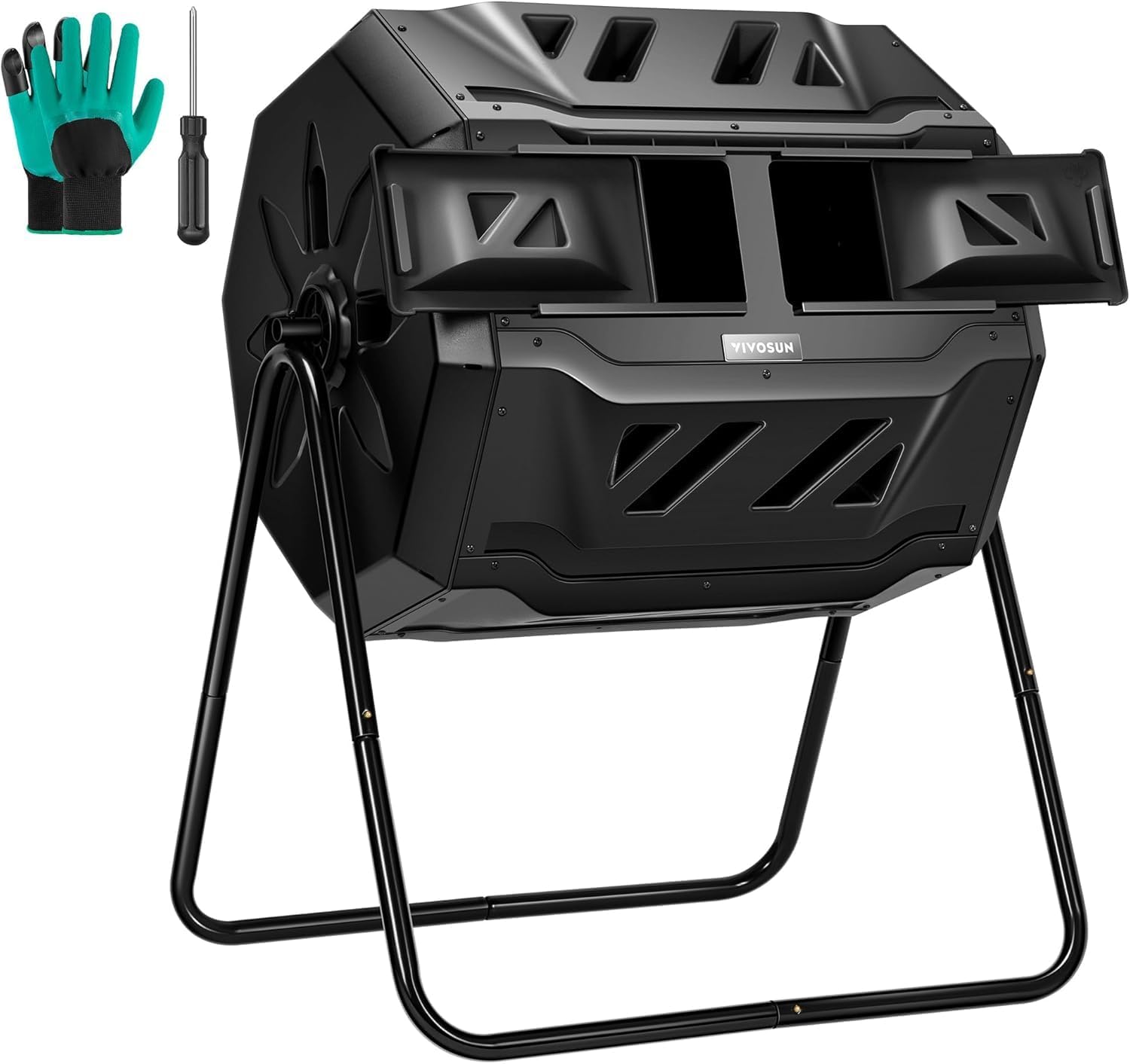
VIVOSUN Outdoor Tumbling Composter, Dual-Chamber 43 Gallon
| Material Type | galvanized steel |
|---|---|
| Capacity | 43 gallons |
This VIVOSUN tumbling composter is a practical backyard unit built around two rotating chambers so you can add fresh waste to one side while the other finishes breaking down. The 360 degree tumbling design with deep internal fins makes turning the pile simple and helps break up clumps without digging. Ventilation slots around the drum promote airflow for aerobic decomposition, and the metal frame with a PP plastic barrel is designed to resist corrosion and outdoor weathering. It comes with waterproof garden gloves and small digging claws to make loading and aerating easier. At 43 gallons it is sized for a family garden or vegetable patch but is compact enough for a patio or small yard. Limitations to note are that it requires occasional manual turning to maintain activity and that the plastic drum means it will warm less in cold climates than insulated models, so composting speed will vary by season. Assembly and placement on a level spot are also important for smooth rotation.
Best for: Gardeners who want a hands-on, efficient system to produce regular batches of compost without digging a pile and who prioritize continuous output and easy turning.
Less Ideal for: People who need a completely hands-off hot composter or who compost only very large volumes; those in very cold climates seeking year-round rapid breakdown should consider insulated or electric options.
- Dual chambers let you load new material while another batch finishes, ensuring continuous compost production
- 360 degree tumbling with deep fins makes mixing and aeration easy without manual digging
- Galvanized steel frame and PP plastic barrel designed for outdoor durability and corrosion resistance
- Ventilation slots support aerobic breakdown for faster, less smelly composting
- Plastic drum offers less insulation than insulated or fully metal units, slowing composting in cold weather
- Requires manual turning and regular management to maintain heat and moisture for fast results
Verdict: If you want steady, manageable batches of compost with easy tumbling and continuous use, this dual-chamber VIVOSUN tumbler delivers practical, durable performance.
Choosing the Right Tumbler Compost Bin: Key Factors to Consider
Aeration and Ventilation
Proper aeration controls odor and speeds decomposition by supplying oxygen to the microbes that break down organic matter. Tumblers rely on vents, internal baffling, and the physical tumbling action to introduce air. Look for designs with well-placed vents and internal features that mix material rather than simply sloshing it around.
In practice, insufficient airflow leaves a pile anaerobic and smelly. If your yard is small or near neighbors, prioritize a tumbler that promotes steady oxygen movement and allows frequent turning to prevent wet, compacted pockets.
Ease of Turning and Ergonomics
Turning frequency affects composting speed, so a tumbler that is comfortable to rotate encourages more consistent use. Consider wheel- or axle-based rotation with reasonable resistance, clear grip points, and a height that avoids excessive bending. Some tumblers have leverage aids or balanced drums that reduce the force required.
For gardeners with limited mobility or those who will turn the bin weekly, ergonomics are a practical concern. A heavy, awkward drum will discourage use and slow composting progress, while a smoother-turning design keeps the process manageable.
Build Materials and Weather Resistance
Tumblers are exposed to sun, rain, and temperature swings. UV-stable plastics, powder-coated steel, or galvanized components extend service life. Joints, fasteners, and seals are common failure points; sturdier hardware and corrosion-resistant coatings prevent premature breakdown.
Think about seasonal exposure where you live. If winters are wet or summers intense, prioritize materials and finishes that tolerate those extremes so the tumbler stays functional for years.
Capacity Relative to Your Household
Volume determines how much kitchen and yard waste the tumbler can handle between harvests. Small households or balcony gardeners may prefer compact drums that compost quickly in small batches. Larger families or heavy garden prune cycles need bigger capacity or multiple drums.
Also weigh throughput against turnover time. Bigger capacity can mean slower heating and longer finish times unless you turn more often. Choose a size that balances how much waste you produce with how often you will manage the bin.
Access for Harvesting and Maintenance
Getting finished compost out should be straightforward. Look for access doors or removable drums that allow clean emptying without scraping or tipping the entire unit. Secure latches that still open easily are ideal.
Maintenance includes cleaning vents and checking seals. Designs that allow easy inspection and access to fasteners reduce long-term hassle and keep the tumbler working well.
Stability and Placement
A stable base prevents tipping during rotation and when the drum is partially full. Some tumblers mount on stands, others sit on legs or frames. Consider ground conditions where you will place the bin; soft or uneven soil needs a more robust base.
Also think about sun exposure and access to water for occasional dampening. A stable, well-placed tumbler is easier to use and less likely to sustain damage from storms or accidental bumps.
Which Tumbler Size Fits Your Garden
Match tumbler volume to how much organic waste you produce and how often you want to harvest. Smaller drums heat and finish faster but require more frequent topping up. Larger drums reduce how often you add material but usually need more effort to turn and may take longer to fully compost a single batch.
If you generate mainly kitchen scraps and have a small yard or balcony, a compact tumbler that processes 30 to 60 liters per batch can be sufficient. For households producing yard trimmings and lawn clippings, consider larger volumes or multiple drums to avoid overfilling and slowing the process.
- Small drums: faster heating, easier to turn, best for kitchens and balconies.
- Medium drums: balance between capacity and manageability for average yards.
- Large drums: suitable for heavy garden waste but need more effort and space.
Placement and Site Prep
Choose a spot with some sun to help the pile warm up, but avoid prolonged direct afternoon sun that could overdry plastic components. Firm, level ground improves stability and makes turning safer. If your yard is damp, place the tumbler on pavers or a gravel patch to prevent shifting or rust on support legs.
Allow a clear area around the bin for loading scraps and removing finished compost. Near a water source is useful for occasional moistening, and proximity to garden beds reduces the labor of carrying finished material.
- Level base prevents wobble during rotation.
- Partial sun helps microbial activity without overheating.
- Access to water simplifies moisture management.
Managing Moisture, Heat, and Turning Schedule
Moisture balance is critical. The compost should feel like a wrung-out sponge. Too dry and decomposition stalls; too wet and the pile goes anaerobic and smells. Tumblers dry more quickly in sun-exposed locations, so check moisture and add water or dry browns accordingly.
Turning frequency depends on design and feedstock. Many tumblers benefit from turning every few days to once a week. Frequent turning maintains oxygen levels and mixes in new material. If you want faster results, adopt a more regular turning schedule and monitor temperature to avoid overcooling freshly turned material.
- Target moisture of damp sponge.
- Turn every few days to weekly depending on design.
- Balance green and brown materials to help moisture control.
Common Installation and Safety Tips
Securely anchor models with taller stands to prevent tipping in high winds or if pets and children are present. Follow manufacturer guidance for assembly torque on fasteners to avoid stripped threads. Regularly inspect vents and seals to ensure they remain clear and functional.
Avoid adding meat, dairy, or oily food scraps that attract pests and prolong odors. Use garden gloves when handling finished compost and watch for sharp edges around metal hardware during maintenance.
- Anchor tall stands and check fasteners periodically.
- Keep meat and dairy out of the tumbler to reduce pests.
- Inspect vents and seals during routine maintenance.
Tips for Faster, Odor-Free Results
Start with a balanced mix of greens and browns, chop larger materials, and avoid overloading the drum. Regular turning and correct moisture are the fastest path to usable compost. Adding small amounts of finished compost can seed the pile with beneficial microbes.
If odors develop, pause adding wet greens and increase aeration by more frequent turns and adding dry carbon-rich material. Inspect for compacted pockets and break them up during rotation so air reaches all material.
- Chop large materials to speed decomposition.
- Use finished compost as a microbial starter.
- Address odors by adding browns and increasing turning.
How We Chose the Best Tumbler Compost Bin
We focused on features that affect how easily a gardener will get usable compost without constant fuss. Key criteria included aeration and mixing performance, since tumblers must move air through the pile to speed breakdown and reduce odors. Build durability and weather resistance were essential because tumblers sit outdoors and should resist UV, rust, and cracking. Ease of turning and ergonomic access matter for regular use, so we prioritized designs that let gardeners rotate without bending awkwardly or using excessive force. Capacity and footprint were considered to match common backyard and balcony scenarios. Finally, ease of emptying and residue-free access to finished compost was included so harvesting does not become a chore. We excluded stationary bins, worm composting systems, and industrial-style in-vessel units because they function differently from tumblers and address different gardener needs. We also filtered out designs with poor user feedback on durability or those lacking clear ventilation. The result is a shortlist of tumblers that balance airflow, user handling, and outdoor longevity.
FAQ
How often should I turn a tumbler compost bin?
It often depends on the tumbler design and materials, but turning every few days to once a week is common. More frequent turning speeds decomposition by keeping oxygen levels high, while less frequent turning can still work but usually lengthens the finish time.
Can I compost yard waste like grass clippings and leaves in a tumbler?
Yes. Grass clippings are high in nitrogen and should be mixed with carbon-rich browns like leaves or shredded paper. Large woody prunings should be chipped or cut into smaller pieces so they break down in a reasonable timeframe.
What causes bad smells in a tumbler and how do I fix them?
Smells are usually caused by anaerobic conditions from excess moisture or compacted material. Fix this by adding dry browns, turning more often to reintroduce air, and reducing wet kitchen scraps until balance is restored.
Will a tumbler work in winter?
Tumblers can still process material in winter, but decomposition slows as temperatures drop. Insulating the bin with a cover or moving it to a slightly warmer spot can help. Expect longer turnaround times until spring warming resumes active microbial breakdown.
How much space do I need for a tumbler compost bin?
Space needs vary by capacity and stand design, but allow enough clearance to load scraps and rotate the drum comfortably. Also plan for access when removing finished compost and for occasional maintenance around the bin.
Final Verdict
Choosing the right tumbler compost bin comes down to balancing capacity, airflow, and ease of use. Prioritize a design that provides steady aeration and is easy for you to rotate regularly. Consider materials and weather resistance for long-term durability and a footprint that fits your garden routine. Focus on effort you are willing to invest: smaller, more manageable drums finish faster with regular turns, while larger capacity reduces topping-up but needs more attention to keep material active. Pick the combination of size, access, and build quality that matches how you garden and you will get reliable, usable compost with minimal fuss.
