

Note: This article contains affiliate links. If you click on these links and make a purchase, I may earn a small commission at no extra cost to you. This helps support my research and content. Read my full affiliate disclosure here.
If you are starting a compost pile for the first time, the right compost bin makes the process less messy and more likely to succeed. A beginner-focused compost bin should help you manage smells, hold an appropriate volume of scraps and yard waste, and make turning or harvesting compost straightforward so you keep going. This guide covers seven shortlisted compost bins for beginners. We evaluate practical traits like capacity, airflow and aeration, simplicity of use, and how much maintenance each style needs so you can choose the system that fits your garden, patio, or apartment setup.
Top Picks at a Glance
| Best Overall The best all-around choice for most situations | VIVOSUN Outdoor Tumbling Composter, Dual-Chamber 43 Gallon |  |
| Best Quality Built to a higher standard if you want something more solid | Miracle-Gro Dual Chamber Compost Tumbler (2 × 18.5 gal) |  |
| Best Value The sweet spot between price and what you get | F2C 43‑Gallon Dual‑Chamber Rotating Compost Bin with Steel Frame |  |
| Best Budget The cheapest option that still gets the job done reliably | JupiterForce 80 Gallon Garden Compost Bin (Polypropylene) |  |
| Highest Rated A top-rated pick with lots of positive feedback | DIAMONDFORGE 37‑Gal Dual‑Chamber Tumbling Compost Bin |  |
| Most Popular A crowd favorite that many people choose with confidence | Utopia Kitchen Countertop Compost Bin, 1.3 Gallon Stainless Steel |  |
| Best Seller A high-volume bestseller chosen again and again | GEOBIN Backyard Compost Bin, Expandable Plastic Composter |  |
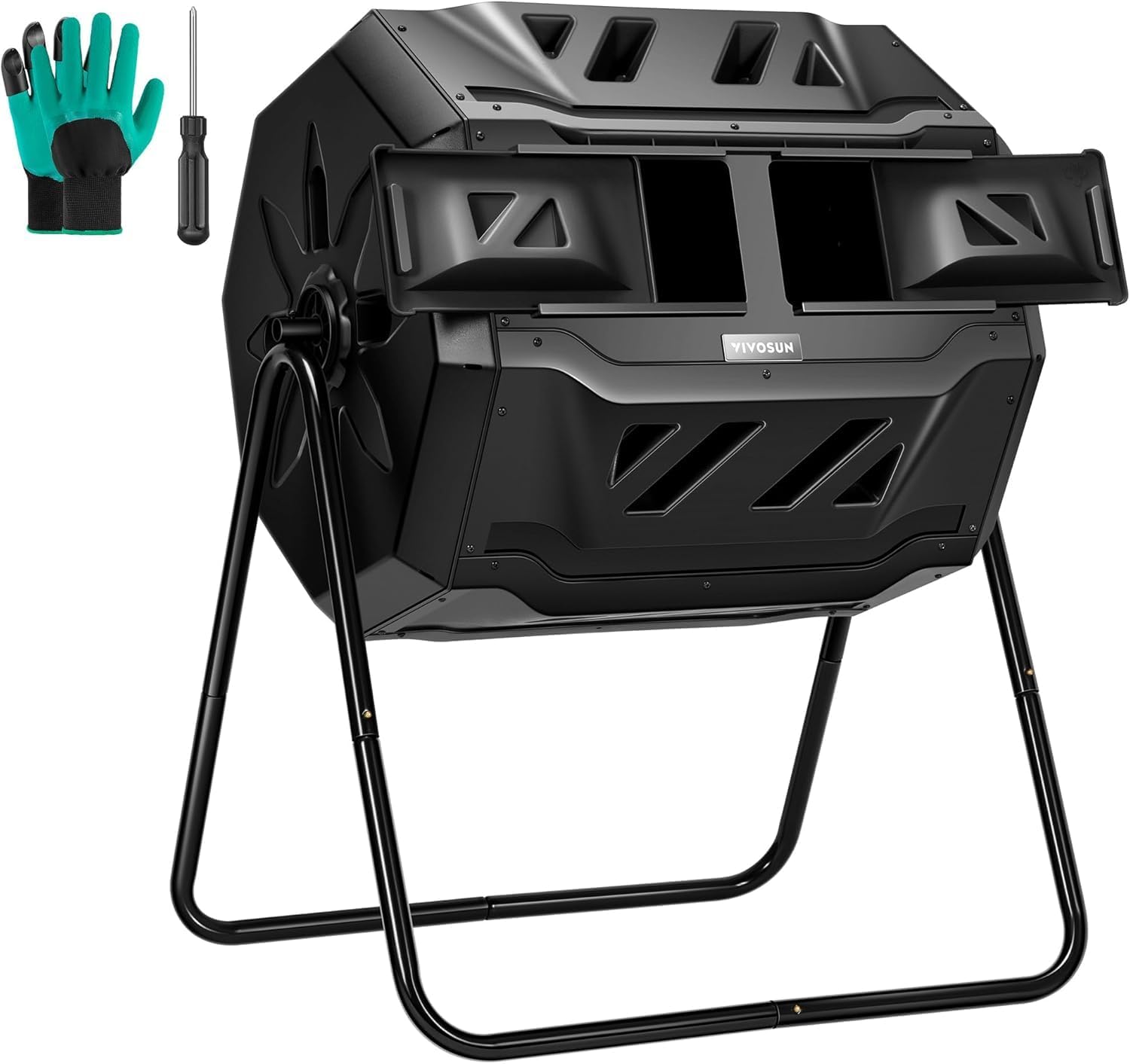
VIVOSUN Outdoor Tumbling Composter, Dual-Chamber 43 Gallon
| Material Type | galvanized steel |
|---|---|
| Capacity | 43 gallons |
This VIVOSUN tumbling composter is a practical backyard unit built around two rotating chambers so you can add fresh waste to one side while the other finishes breaking down. The 360 degree tumbling design with deep internal fins makes turning the pile simple and helps break up clumps without digging. Ventilation slots around the drum promote airflow for aerobic decomposition, and the metal frame with a PP plastic barrel is designed to resist corrosion and outdoor weathering. It comes with waterproof garden gloves and small digging claws to make loading and aerating easier. At 43 gallons it is sized for a family garden or vegetable patch but is compact enough for a patio or small yard. Limitations to note are that it requires occasional manual turning to maintain activity and that the plastic drum means it will warm less in cold climates than insulated models, so composting speed will vary by season. Assembly and placement on a level spot are also important for smooth rotation.
Best for: Gardeners who want a hands-on, efficient system to produce regular batches of compost without digging a pile and who prioritize continuous output and easy turning.
Less Ideal for: People who need a completely hands-off hot composter or who compost only very large volumes; those in very cold climates seeking year-round rapid breakdown should consider insulated or electric options.
- Dual chambers let you load new material while another batch finishes, ensuring continuous compost production
- 360 degree tumbling with deep fins makes mixing and aeration easy without manual digging
- Galvanized steel frame and PP plastic barrel designed for outdoor durability and corrosion resistance
- Ventilation slots support aerobic breakdown for faster, less smelly composting
- Plastic drum offers less insulation than insulated or fully metal units, slowing composting in cold weather
- Requires manual turning and regular management to maintain heat and moisture for fast results
Verdict: If you want steady, manageable batches of compost with easy tumbling and continuous use, this dual-chamber VIVOSUN tumbler delivers practical, durable performance.
Miracle-Gro Dual Chamber Compost Tumbler (2 × 18.5 gal)

| Capacity | 37 gallons |
|---|---|
| Material Type | Alloy Steel (frame) and UV-protected plastic (barrel) |
This dual-chamber Miracle-Gro tumbler is a user-friendly solution for gardeners who want a steady supply of finished compost without manual turning. Each chamber holds 18.5 gallons, so you can load one side while the other finishes curing; the barrel rotates on a galvanized steel frame for easy turning and faster aeration. The molded, UV-protected plastic and side-locking seals are designed to resist weather and help keep pests out, and the maker claims finished compost in roughly 4 to 6 weeks under good conditions. Typical use is adding balanced green and brown materials, rotating the tumbler every few days, then unlocking the sliding door to remove cured compost. Practical benefits include reduced physical labor compared with pile turning and a continuous workflow from dual chambers. Limitations to note are modest total capacity for very large gardens and reliance on correct moisture and feedstock balance to hit the faster decomposition times; very cold winters will slow processing. Assembly and placement on a level spot are important for smooth rotation.
Best for: Gardeners who value steady, low-effort compost production backed by a well-known brand and want the assurance of a proven dual-chamber system for regular use.
Less Ideal for: People needing very large-volume commercial composting or those who prefer an open windrow or in-ground hot compost system for maximum throughput.
- Dual-chamber design lets you add fresh material while another batch cures for continuous compost supply
- Rotating barrel on a galvanized steel frame makes aeration easy with minimal physical effort
- UV-protected plastic and tight side locks help resist weather and reduce pest access
- Produces finished compost relatively quickly when fed and moistened correctly
- 37-gallon combined capacity may be small for very large or heavy-production gardens
- Performance depends on proper moisture, material mix, and ambient temperature to reach claimed speed
Verdict: Choose this dual-chamber tumbler if you want a simple, low-labor way to produce a steady stream of finished garden compost with reliable pest protection.
F2C 43‑Gallon Dual‑Chamber Rotating Compost Bin with Steel Frame

| Capacity | 43 gallons |
|---|---|
| Material Type | PP and powder-coated steel |
This F2C 43‑gallon dual‑chamber tumbler is built to make backyard composting more efficient and less fussy. The two separate chambers let you keep finished compost on one side while adding fresh scraps to the other, so you do not need to wait to harvest usable material. The barrel has aeration holes and internal fins to break up clumps and introduce oxygen while the black exterior helps absorb heat to speed decomposition. Assembly is straightforward with included hardware and basic tools, and the powder‑coated steel frame plus interlocking PP panels provide decent stability when spinning. The sliding access doors make it simple to add or remove material without disassembling the barrel. Expect faster results than a stationary bin, but plan to turn the tumbler and monitor moisture for best performance. It is compact enough for typical yards but not suited for large-scale or heavy wet loads, and moving a full chamber requires effort despite the rotating design.
Best for: Home gardeners who want a compact, efficient system to speed backyard composting and prefer a practical setup that reduces downtime between batches.
Less Ideal for: People managing large quantities of yard waste or those who need a low‑effort, stationary hot compost system for commercial or very large‑scale beds.
- Dual chambers let you harvest finished compost while continuing to add new material
- Aeration holes and internal fins improve oxygen mixing and reduce clumping
- Powder‑coated steel frame with interlocking PP panels gives stable construction
- Sliding doors provide easy access for adding scraps and removing finished compost
- Rotating a full chamber can be physically demanding for some users
- Capacity (43 gallons) may be small for very large gardens or heavy organic waste streams
Verdict: Choose this dual‑chamber rotating tumbler if you want a space‑saving, faster backyard composter that lets you produce usable compost more continuously.
JupiterForce 80 Gallon Garden Compost Bin (Polypropylene)

| Capacity | 80 gallons |
|---|---|
| Material Type | Polypropylene (PP) |
| Compost Completion Time | 4 to 5 weeks |
This JupiterForce compost bin is a basic, budget-friendly outdoor composter designed to turn kitchen scraps and yard waste into usable soil over several weeks. It assembles without tools and sits directly on the ground so you load materials through the top lid, rely on molded ventilation panels for airflow, and retrieve finished compost via a sliding bottom door. The molded polypropylene construction makes the unit lightweight and weather resistant while the included gloves are a helpful touch for handling material. Because it lacks a base, the bin depends on contact with soil and moisture for decomposition and will be easiest to use on bare ground rather than a hard patio. The relatively large 80 gallon capacity means less frequent emptying for small to medium gardens, but the plastic construction is basic compared with heavier-duty metal or insulated tumblers, so it will not retain heat as well in cold climates. For gardeners who want an inexpensive, simple way to compost and collect finished material, this does the job with minimal fuss.
Best for: Gardeners on a tight budget who need an easy, low-maintenance way to compost kitchen scraps and yard waste and who will place the bin on soil or garden beds.
Less Ideal for: People who need a compost system for a paved patio, require rapid high-heat composting year-round, or prefer heavy-duty insulated tumblers for faster results.
- Generous 80 gallon capacity reduces how often you need to empty it
- Tool-free assembly makes setup quick and straightforward
- Top lid plus sliding bottom door simplifies loading and removing finished compost
- Molded ventilation on each side improves airflow to speed decomposition
- Lightweight, weather-resistant polypropylene construction resists rot and rust
- No integrated base so it must sit on soil to compost efficiently
- Plastic construction offers limited insulation so composting slows in cold weather
Verdict: A simple, inexpensive 80‑gallon polypropylene composter that lets budget-minded gardeners turn yard and kitchen waste into usable compost with minimal setup.
DIAMONDFORGE 37‑Gal Dual‑Chamber Tumbling Compost Bin

| Capacity | 37 gallons |
|---|---|
| Material Type | Metal, Polypropylene (PP) |
| Item Highlight | Steel frame with 2 sliding doors and aeration system |
This DIAMONDFORGE tumbling composter is built for steady, low‑effort backyard composting. The unit has two 18.5‑gallon chambers that let you load fresh scraps on one side while the other side finishes decomposing, which supports continuous use without manual mixing. Its polypropylene drum and powder‑coated steel frame are designed to resist UV and corrosion, and the 360° rotation mechanism makes turning material simple and fast. Aeration holes and internal fins help keep airflow and break up material so decomposition runs hotter and cleaner, and the black exterior helps retain heat to speed breakdown. Assembly is straightforward and the sliding access doors let you remove finished compost without dumping the whole bin. Limitations are typical for small tumblers: capacity is modest for very large households or heavy yard debris and fine shredding of coarse material improves results. For beginners who want a reliable, low‑maintenance system, this compost bin delivers predictable performance season after season.
Best for: Home gardeners who want a dependable, low‑maintenance compost system that produces finished compost on a regular schedule with minimal hands‑on mixing.
Less Ideal for: People who need to process large volumes of yard waste, bulky branches, or whole logs should consider a larger stationary bin or pile system instead.
- Dual‑chamber design supports continuous composting without manual mixing
- 360° tumbling mechanism makes turning compost quick and low effort
- UV‑resistant polypropylene and powder‑coated steel frame for outdoor durability
- Aeration holes and internal fins promote faster, less odorous decomposition
- 37‑gallon total capacity may be small for large households or heavy yard waste
- Best results require reasonably sized or shredded material rather than whole branches
Verdict: A reliable, easy‑to‑use dual‑chamber tumbler that lets beginners produce compost continuously with minimal effort.
Utopia Kitchen Countertop Compost Bin, 1.3 Gallon Stainless Steel

| Capacity | 4.92 liters |
|---|---|
| Material Type | Stainless Steel |
| Item Highlight | Odorless countertop compost bin with charcoal filter |
| Item Type Name | Kitchen Compost Bin for Kitchen Countertop – 1.3 |
This stainless steel countertop compost bin is designed for everyday kitchen use as a small, tidy container for food scraps until they move to an outdoor pile or municipal collection. It holds roughly 1.3 gallons, enough to collect a week of typical household fruit and vegetable peelings or coffee grounds for one to two people. The cylindrical stainless steel body looks neat on a counter and resists chips or cracks that plastic bins can show. A tight-fitting lid and replaceable charcoal filter reduce odors so you can keep the bin in the kitchen without noticeable smells for several days. Cleaning is straightforward: line with paper or rinse with mild soap as needed. The main limitations are capacity and active composting functions; this is a holding bin not a hot composter, so you still need to empty it regularly and manage moisture by draining liquids or using absorbent liners. If you need a larger or processing-capable unit this will not replace that role, but as a clean, low-maintenance countertop catcher it performs well.
Best for: Buyers who want a low-maintenance, odor-controlled way to collect daily kitchen scraps on the counter and prefer a durable, attractive container over hidden plastic buckets.
Less Ideal for: Households that generate large volumes of food waste or want a single device that actively processes compost rather than temporarily storing scraps.
- Stainless steel construction resists scratching and looks tidy on a countertop
- Charcoal filter and tight lid help control odors for several days
- Compact 1.3 gallon capacity fits small kitchens and does not take much prep-space
- Easy to clean by rinsing or lining with paper to absorb liquids
- Small capacity requires frequent emptying for larger households
- Does not accelerate decomposition or perform active composting
Verdict: A compact, durable countertop catcher with a charcoal filter that keeps kitchen scraps contained and largely odor-free for users who want simple, low-effort indoor compost storage.
GEOBIN Backyard Compost Bin, Expandable Plastic Composter

| Capacity | 216 gallons |
|---|---|
| Material Type | Plastic |
| Shape | Cylindrical |
The GEOBIN Backyard Compost Bin is a lightweight, cylindrical plastic composter designed for straightforward backyard use. It assembles quickly with a few closure keys and expands to increase capacity, so you can start with a small footprint and add volume as your kitchen scraps and yard waste grow. The open-structure design gives excellent ventilation, which helps speed up decomposition when you layer greens and browns and turn the pile occasionally. Because it is low-tech and portable, it is easy to move, empty, or reassemble if you relocate it in the yard. The practical benefits are its affordability, ease of setup, and versatility for beginners and experienced gardeners who want a no-fuss system. Limitations are that it is a basic ring-style bin with no insulated walls or built-in access door, so it will not retain heat as well as tumblers or insulated bins and requires manual turning and occasional maintenance to keep the process active.
Best for: Budget-conscious gardeners who want a low-cost, low-effort way to compost yard trimmings and kitchen scraps without complicated setup.
Less Ideal for: People who need fast, high-temperature composting or a bin with a convenient bottom access door for frequent harvests should consider other designs.
- Expandable capacity up to 216 gallons (listed) to handle increasing compost volume
- Very easy assembly with simple closure keys
- Lightweight and portable for repositioning or storage
- Good ventilation that helps organic material break down faster
- No insulated walls or built-in access door for easy compost removal
- Basic plastic construction offers less heat retention than enclosed designs
Verdict: A very affordable, easy-to-assemble composter that gives budget gardeners a simple, expandable solution for backyard composting.
Choosing the Right Compost Bin for Beginners: Key Factors to Consider
Capacity and Footprint
Choose a bin size that matches how much kitchen scraps and yard waste you produce. A bin that is too small will require frequent emptying and make it hard to maintain the heat needed for active decomposition. A bin that is too large can be heavy to turn and may be wasted space on a small patio or balcony.
Also think about the bin's footprint and how it fits into your outdoor area. Narrow, tall designs save ground space but can be harder to mix, while wide, low bins make turning easier but need more room.
Aeration and Drainage
Good airflow and drainage are essential to prevent anaerobic pockets that cause odors. Look for designs with passive vents, perforated walls, or the ability to add internal aeration aids like a turning rod.
Drainage matters in rainy climates and for wet kitchen waste. Bins with elevated bases, drainage holes, or removable bottoms make it easier to avoid soggy, slow-to-compost material and to harvest finished compost.
Access and Harvesting
How you get finished compost out affects whether you will use the system long term. Front-access doors, removable panels, or bottom-trap designs let you retrieve dark, crumbly compost without digging through fresh material.
If you expect to harvest frequently for potting or topdressing, prioritize bins with easy access that keep the process tidy and reduce the physical effort required.
Material and Durability
Bin material influences heat retention, longevity, and maintenance. Plastic bins are lightweight and resist rot, while metal or wooden designs may offer better insulation or aesthetic fit with a garden. Consider UV-stabilized plastics or rust-resistant finishes for outdoor exposure.
Think about seasonal conditions where you live. Insulated or thicker-walled bins retain heat in cooler months but may cost more in weight or bulk. Durable fasteners and hinges reduce long-term upkeep.
Ease of Use and Maintenance
Beginners benefit from intuitive designs that reduce frequent troubleshooting. Features like a well-fitting lid to keep pests out, clear access points, simple assembly, and minimal moving parts lower the learning curve.
Also consider how easy it is to turn or mix the pile. Some systems require manual turning with a pitchfork, while others use a tumbler mechanism. Each has tradeoffs in effort, reliability, and potential maintenance.
Pest and Odor Management
Keeping animals and flies away is mainly about design and discipline. Tight lids, elevated openings, and internal baffles help keep critters out, while balanced green-to-brown ratios and routine aeration reduce smell.
If you live near wildlife or in a dense neighborhood, prioritize bins that seal well and make it simple to bury food scraps or add carbon-rich layers to control odors.
Types of Beginner Compost Bins
Different bin types behave differently in a garden setting. Tumblers speed up mixing and are convenient for small to medium volumes, though they may have limited capacity. Stationary bins, including enclosed plastic or wooden boxes, are low-cost and can hold larger volumes but often need a tool to turn the pile.
Worm bins offer a different approach using vermicomposting and are well suited to apartments or countertop collection, but they follow different maintenance rules and harvesting patterns.
- Tumbler: easy mixing, modest capacity, good for small yards
- Stationary enclosed bin: larger capacity, simple construction, requires turning tool
- Open pile with mesh or bin: cheap and flexible, needs more attention
- Vermicompost bin: compact, great for kitchen scraps, requires worm care
Setting Up Your Bin for Best Results
Placement and base matter. Put the bin on soil or a well-draining surface to allow beneficial organisms to access the pile and to help with drainage. Avoid placing bins directly under overhanging trees that shed large amounts of wet leaves or right against a house wall where moisture could be a problem.
Layer materials from the start. A base layer of coarse browns helps airflow while alternating greens and browns keeps decomposition steady. If your bin design makes turning difficult, build thinner layers so decomposition remains active without heavy mixing.
- Choose a semi-shaded location with good drainage
- Start with a coarse, dry brown layer to improve aeration
- Keep kitchen scraps covered with browns to reduce pests
Troubleshooting Common Beginner Problems
If the pile smells sour, it is usually too wet or compacted. Add dry carbon-rich materials such as shredded paper or dry leaves and increase aeration. If moisture is the issue, leave the lid off during dry spells to let excess water evaporate.
If decomposition is very slow, check the particle size and balance of materials. Smaller pieces decompose faster. Also confirm the bin is sized correctly for your output; very small piles lose heat and stall, while oversized piles can be hard to manage.
- Sour odor: add dry browns and aerate
- Slow breakdown: chop materials and maintain a good green-to-brown mix
- Pests: seal openings and bury food scraps under carbon layers
Compost Use and Curing
Finished compost should be dark, crumbly, and earthy smelling. After material is mostly decomposed, allow a short curing period in a separate container or a corner of the bin to stabilise nutrients before applying to potting mixes or garden beds.
Screening finished compost through a simple sieve improves texture for seed starting or potting. Coarser leftovers can be returned to the bin for continued decomposition.
- Cure compost for several weeks before use
- Sieve to produce fine potting-grade compost
- Use coarse material as mulch or return to the bin
How We Chose the Best Compost Bin for Beginners
We shortlisted compost bins that suit gardeners who are new to composting and want straightforward, repeatable results. Selection focused on five concrete, product-specific criteria: bin capacity and footprint to match different household outputs and space limits; ventilation and drainage design to control odor and moisture; access and harvesting features that affect how easy it is to turn or remove finished compost; construction and durability for season-to-season outdoor use; and user ergonomics, including lid access, signage, or simple assembly for low-barrier setup. Products were excluded if they required advanced knowledge, regular mechanical parts replacement, or complex installation not suited to beginner care routines. We also filtered out bins that rely on proprietary consumables or need specialized tools to operate. The goal was to keep choices practical and accessible so a new composter can set up, maintain, and harvest without steep learning curves.
FAQ
What size compost bin should a beginner choose?
It depends on how much organic waste you generate. For a solo gardener or small household, a compact tumbler or worm bin is often sufficient. Families or gardeners with yard trimmings should pick a bin with larger volume so the pile can retain heat and decompose efficiently.
How often do I need to turn a compost bin?
Turning frequency depends on the system and materials. Tumblers can be turned every few days for faster results, while stationary bins usually benefit from a weekly or biweekly turn. If the pile looks compacted or smelly, increase aeration regardless of schedule.
Can I compost in winter with a basic bin?
Yes, but decomposition slows in cold weather. Larger, better-insulated masses retain heat longer, and adding more browns and moderate greens helps maintain activity. You can also collect scraps in a secondary container indoors until temperatures rise.
Are tumblers better for beginners than stationary bins?
Tumblers offer easy mixing and cleaner handling of kitchen scraps, which many beginners appreciate. However, they often hold less material than stationary bins and may not reach as high internal temperatures. The best choice depends on your volume needs and how much physical turning you want to do.
How do I prevent pests and rodents from getting into my compost bin?
Use a bin with a tight-fitting lid and small or protected openings. Bury food scraps beneath a layer of browns, avoid adding meat or oily foods, and choose raised or sealed access points if wildlife is common in your area.
What should I do if my compost is too wet?
Add dry carbon materials like shredded paper, straw, or dry leaves and increase aeration by turning or loosening the pile. If the bin has a drainage issue, set it on a slope or add drainage holes to prevent water accumulation.
Final Verdict
Beginners should prioritize a compost bin that matches their available space and the amount of organic waste they produce. Focus on capacity and access, plus features that simplify aeration and pest control, rather than chasing high-tech options. Accept the tradeoffs: tumblers reduce manual turning but may limit volume, while stationary bins hold more but need a turning tool. Choose the design that fits your routine and garden conditions so you will maintain it consistently and get useful compost on a repeatable schedule.
