

Note: This article contains affiliate links. If you click on these links and make a purchase, I may earn a small commission at no extra cost to you. This helps support my research and content. Read my full affiliate disclosure here.
If mealybugs have found their way into your pots, planters, or garden beds, choosing the right systemic insecticide matters. Systemic products move through a plant's vascular system so pests feeding on sap ingest the active ingredient, which can give more consistent knockdown and longer protection than contact sprays for hidden or clustered mealybugs. This guide covers seven top-rated systemic insecticides shortlisted for use against mealybugs in a range of planting situations. We explain the practical differences you need to consider, including how long treatments last, how safe they are for different plant types, and what application methods work best. Read on for the criteria we used and clear guidance to help you pick the right systemic approach for your plants.
Top Picks at a Glance
| Best Overall The best all-around choice for most situations | Bonide Systemic Insect Control Granules, Ready-to-Use |  |
| Best Quality Built to a higher standard if you want something more solid | Bonide Systemic Insect Control Concentrate, 16 oz |  |
| Best Value The sweet spot between price and what you get | Bonide Systemic Granules Insect Killer, 1 lb |  |
| Best Budget The cheapest option that still gets the job done reliably | Hi-Yield Systemic Insect Granules (1 lb) | 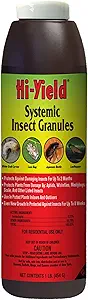 |
| Highest Rated A top-rated pick with lots of positive feedback | Bonide Systemic Houseplant Insect Control Granules, 3 Pack |  |
| Most Popular A crowd favorite that many people choose with confidence | Bonide Systemic Houseplant Insect Control Granules, 8 oz |  |
| Best Seller A high-volume bestseller chosen again and again | Bonide Systemic Insect Control Granules, 4 lb |  |
Bonide Systemic Insect Control Granules, Ready-to-Use

| Form | Ready-to-use granules |
|---|---|
| Coverage duration | Up to 8 weeks |
| Use location | Outdoor ornamental plants |
Bonide Systemic Insect Control Granules are a low-odor, ready-to-use product designed to protect outdoor ornamental plants from sap-feeding pests. You apply the granules to the top of the soil, mix them in, and water them so the active ingredient is taken up through the roots and distributed through the plant. The systemic action means pests that ingest plant sap, such as scale, aphids, mealybugs and similar insects, are controlled rather than simply being repelled. Protection is claimed to last up to eight weeks and is not removed by watering once absorbed. Practical benefits include simple application without measuring or dilution and multi-week residual control, which cuts down on repeat treatments. Important limitations are that it is not labeled for edible plants, so it should not be used on herbs, vegetables or fruiting plants, and it only affects insects that feed on plant tissue so nonfeeding pests will be unaffected.
Best for: Gardeners who want a low-effort, long-lasting solution to control scale and other sap-feeding pests on ornamental shrubs and potted plants and who prioritize ease of application and fewer repeat treatments.
Less Ideal for: Home growers who need to treat edible gardens or who require an insecticide that targets nonfeeding pests or provides immediate contact knockdown.
- Systemic action controls sap-feeding insects through ingestion rather than contact
- Ready-to-use granules require no measuring or mixing
- Low odor formulation suitable for use around ornamentals
- Residual protection up to eight weeks per application
- Not labeled for use on edible plants such as vegetables, herbs, or fruit
- Does not affect insects that do not feed on plant tissue
Verdict: A convenient, low-odor systemic granule for busy gardeners who want multi-week control of scale and other sap-feeding insects on ornamentals.
Bonide Systemic Insect Control Concentrate, 16 oz

| Unit Count | 1 Count |
|---|---|
| Included Components | 16 oz Concentrate |
| Item Form | Spray |
| Target Species | Spider |
| Specification Met | EPA |
Bonide Systemic Insect Control is a 16 oz concentrate that mixes with water for spray applications on outdoor ornamental plants. It combines contact activity with systemic uptake so treated plants both receive immediate knockdown and prolonged protection as the active ingredient moves through plant tissues. Typical use is on roses, shrubs, flowers and trees for pests such as scale, spider mites, whiteflies, thrips, mealybugs and other listed insects; the label warns against use on edible fruit or vegetable crops. It can be combined with some fungicides or fertilizers to streamline applications and is intended for repeat sprays every 7 to 10 days while infestations persist. Practical benefits include broad pest coverage for ornamentals and the convenience of systemic control that helps reach concealed feeders. Limitations are that it is not for use on edibles, requires careful mixing and adherence to label directions for safety, and repeat applications may be needed for heavy or persistent scale infestations.
Best for: Gardeners who prioritize fast, reliable control of ornamental pests and want a product that delivers systemic protection for trees, shrubs and flowering plants.
Less Ideal for: Homeowners growing edible vegetables or fruit or those seeking an organic-certified option should choose a product labeled for food crops or organic use.
- Systemic action plus contact kill reaches concealed feeding insects
- Labeled for use on a wide range of ornamental plants including roses and shrubs
- Compatible for tank-mixing with certain fungicides or fertilizers to reduce application steps
- Not labeled for use on vegetables or fruit plants
- Requires careful dilution and adherence to label safety instructions
Verdict: Choose this concentrate when you need a performance-oriented systemic spray that provides both immediate knockdown and ongoing control of scale and other ornamentals pests.
Bonide Systemic Granules Insect Killer, 1 lb

| Brand Name | Bonide |
|---|---|
| Included Components | Bonide Systemic Granules Insect Killer 1 lb. |
| Target Species | Insects |
Bonide Systemic Granules release a systemic insecticide through ready-to-use granules that are worked into soil or potting mix to protect plants from sap-feeding insects. Apply the granules around the root zone of trees, shrubs, hanging baskets, or potted plants and water in to allow uptake into the plant vascular system. The main benefit is inside-out control of pests such as aphids, whiteflies, leaf miners and scales that feed on plant sap, which helps reach pests that are hard to hit with sprays and protects new growth for an extended period. The product is convenient for small-scale use because it comes pre-measured and does not require mixing, and it is suitable for containers and landscape beds. Limitations are that it targets sap-feeders rather than chewing pests and must be placed in the soil for root uptake so it will not control insects on contact; timing and proper placement are important for effectiveness. This makes it best used as a preventive or early-intervention option against mealybugs and similar pests rather than a fast curative for heavy infestations.
Best for: Practical gardeners who prefer a low-fuss, preventive approach to manage mealybugs and other sap-feeding pests on potted plants, shrubs, and ornamentals.
Less Ideal for: People needing a rapid knockdown for large active infestations or those looking to control chewing pests should choose a different product or a complementary contact spray.
- Systemic action treats pests from inside the plant, protecting new growth
- Ready-to-use granules require no mixing and are easy to apply around roots
- Suitable for containers, hanging baskets and landscape beds
- Targets sap-feeding insects commonly responsible for mealybug damage
- Not effective as a contact insecticide for immediate knockdown
- Only controls sap-feeding pests and will not affect chewing insects
Verdict: Use these ready-to-use systemic granules when you want an easy, preventive soil-applied solution to protect container plants and ornamentals from mealybugs and other sap-feeding insects.
Hi-Yield Systemic Insect Granules (1 lb)

| Unit Count | 16 Ounce |
|---|---|
| Item Form | Granules |
| Target Species | Insects |
| Special Features | Long-Lasting |
| Active Ingredients | Imidacloprid |
Hi-Yield Systemic Insect Granules are a root-absorbed granular treatment that delivers imidacloprid throughout treated plants to control sap-feeding pests such as aphids, whiteflies, leafminers and mealybugs. You apply the measured granules to the soil surface around roses, shrubs, flowers or containerized plants and work them in lightly so roots can take up the active ingredient. The formula is marketed as long-lasting and provides residual protection for up to about eight weeks, so it reduces the need for frequent spot-spraying. Practical benefits include easy application without mixing liquids and coverage that protects new growth because the chemical moves through the plant. Important limitations are that it is a systemic insecticide containing imidacloprid, which is toxic to pollinators if not used according to label directions, and it is not a one-time cure for heavy infestations where additional localized control may be needed. Follow label safety and timing guidance when treating flowering plants.
Best for: Gardeners looking for a low-effort, cost-conscious way to reduce mealybug and other sap-feeder pressure on roses, shrubs and container plants without frequent reapplication.
Less Ideal for: People who prioritize organic or pollinator-safe products or who need immediate knockdown of very large, established infestations should consider alternative or supplementary treatments.
- Systemic action moves through the plant to protect new growth
- Granules are simple to apply around container and landscape plants
- Long residual control for up to about two months reduces repeat treatments
- Targets a broad range of sap-feeding pests including mealybugs
- Contains imidacloprid, which requires careful use to avoid harm to pollinators and beneficial insects
- May not be sufficient alone for heavy or established infestations that need direct contact treatments
Verdict: A budget-friendly, easy-to-apply systemic granule that delivers weeks of protection against mealybugs and other sap-feeding insects.
Bonide Systemic Houseplant Insect Control Granules, 3 Pack

| Item Form | Granules |
|---|---|
| Target Species | Insects |
| Active Ingredients | Imidacloprid |
| Unit Count | 3 Count |
This Bonide product is a systemic granular insecticide designed for containerized indoor plants and is supplied as three ready-to-use packs. You work it into the potting mix and water it in so the active ingredient, imidacloprid, is taken up by the roots and distributed through the plant; insects that feed on the plant ingest the chemical and are controlled. It targets common pests such as mealybugs, aphids, and scale and advertises up to eight weeks of protection, which reduces the need for frequent spot treatments. The low-odor granules mean no spraying and minimal mess, making it convenient for use around houseplants. Important limitations are that it is for non-edible plants only and it will not affect pests that do not feed on plant tissue, so identification of the pest is important before use. Also systemic insecticides can have broader environmental effects, so use only on the labeled indoor plants and follow all safety directions.
Best for: Buyers seeking a dependable, low-maintenance solution for persistent sap-feeding houseplant pests who prioritize long-lasting protection and minimal application fuss.
Less Ideal for: People who grow edible container crops, organic-only gardeners, or anyone needing contact control for non-feeding pests should choose a different product.
- Systemic mode of action controls sap-feeding pests through ingestion rather than surface contact
- Ready-to-use granules are low odor and avoid spraying or messy mixes
- Advertised protection lasts up to eight weeks after application
- Pack of three provides multiple treatments or coverage for several plants
- Not labeled for use on edible plants such as herbs, vegetables, or fruiting species
- Will not control pests that do not feed on plant tissue
Verdict: A convenient, low-odor systemic granule treatment that reliably controls mealybugs and other sap-feeding houseplant insects with up to eight weeks of protection.
Bonide Systemic Houseplant Insect Control Granules, 8 oz

| Unit Count | 8 Ounce |
|---|---|
| Item Form | Granules |
| Target Species | Insects |
| Liquid Volume | 227.3 ml |
Bonide Systemic Houseplant Insect Control is a granular, ready-to-use systemic treatment designed for potted and container houseplants. You apply the granules to the soil surface, mix them into the potting mix, then water to activate the systemic uptake so the active ingredient moves through the plant and controls pests that feed on plant tissue. It is labeled to control mealybugs, aphids, scale and whiteflies and provides protection that persists for up to eight weeks between applications. Because it works systemically, it can reach insects that hide on stems and undersides of leaves where contact sprays miss. The product is low-odor and intended for ornamental, non-edible plants only. Important limitations are that it only affects insects that ingest plant sap and will not control nonfeeding pests, and it must be used according to label safety precautions to keep children and pets away; it is not for edible plants. For indoor growers dealing with recurring mealybug outbreaks this granule formula offers a hands-off, multi-week control option when used as directed.
Best for: Buyers who want a low-effort, multi-week control for mealybugs and similar sap-feeding pests on indoor ornamental and container plants and who prioritize proven product performance.
Less Ideal for: Gardeners seeking treatments for edible plants or for pests that do not ingest plant sap should choose a different product or control method.
- Systemic action controls sap-feeding pests that hide on stems and leaf undersides.
- Ready-to-use granules are simple to apply to potting soil without measuring concentrates.
- Provides up to eight weeks of protection per application.
- Low odor formulation suited to indoor use on ornamental plants.
- Not labeled for edible plants such as herbs or vegetables.
- Only effective against insects that feed on plant tissue and will not control nonfeeding pests.
Verdict: If you need a simple, low-odor, systemic option to reduce mealybug infestations on potted ornamentals, this ready-to-use granular treatment delivers multi-week protection.
Bonide Systemic Insect Control Granules, 4 lb

| Unit Count | 64 Ounce |
|---|---|
| Item Form | Granules |
| Target Species | Insects |
| Special Features | Ready-to-Use |
| Active Ingredients | Imidacloprid |
Bonide Systemic Insect Control Granules are a low-odor, ready-to-use granular treatment that you apply to the soil around outdoor ornamental plants to protect them from sap-feeding pests such as scale, aphids, mealybugs, and whiteflies. The granules are absorbed by roots and move through the plant, so insects are controlled when they feed rather than by contact. It is simple to use: sprinkle the product on the soil, mix in lightly, water to activate, and reapply about every eight weeks if needed. The systemic action means protection is not removed by watering and gives multi-week control without frequent spraying. Important limitations are that it contains imidacloprid and is not labeled for edible plants, and it can affect insects that feed on treated plants so care is needed around pollinator-friendly plantings. For gardeners managing recurring scale infestations on ornamentals, this product offers straightforward, long-lasting control, but it should be used according to label directions to minimize non-target impacts.
Best for: Gardeners who want an easy, low-maintenance way to protect ornamental shrubs and potted plants from recurring sap-feeding insects and prioritize multi-week control with minimal repeat applications.
Less Ideal for: People who need insect control for vegetables, herbs, or fruit-bearing plants or who must avoid neonicotinoid insecticides for pollinator-sensitive plantings.
- Systemic action provides plant-wide protection for up to eight weeks after application
- Ready-to-use granules are low odor and simple to apply to soil around ornamentals
- Effective against common sap-feeding pests including scale, aphids, mealybugs, and whiteflies
- Contains imidacloprid and is not for use on edible plants
- Will not control pests that do not feed on plant sap or pests on non-treated surfaces
Verdict: A convenient, long-lasting granular systemic treatment for controlling scale and other sap-feeding insects on ornamental plants.
Choosing the Right Systemic Insecticide for Mealybugs: Key Factors to Consider
How Systemic Action Works
Understanding systemic movement explains why these products can outperform contact sprays on mealybugs. Systemic insecticides are absorbed by roots or stem tissue and transported in xylem and/or phloem. Mealybugs feed on sap, so when a plant has taken up an active ingredient systemically, the pest ingests a lethal dose while feeding.
This matters in practice because mealybugs hide in crevices, leaf axils, or under fuzzy cotton-like secretions that shield them from sprays. A fast-moving systemic can begin affecting pests within days, while slow uptake might require additional cultural controls until distribution is complete. Also be aware that systemic presence is influenced by plant size, root health, and soil moisture at the time of application.
Residual Activity and Reapplication Interval
Residual activity governs how long a single application protects plants from reinfestation. Longer residuals reduce labor and chemical use, but can extend the window for non-target exposure. For mealybug control, residual duration determines whether you need monthly maintenance treatments or a single seasonal application.
Gardeners must match residual expectations to their situation. High-value ornamentals or large collections may justify longer-acting options, while potted houseplants that get frequent repotting and root disturbance might need a different approach. Check label guidance for maximum reapplication frequency and timing relative to flowering or harvest to avoid unintended residues.
Plant Safety and Species Restrictions
Plant tolerance varies. Some systemic actives can stress certain ornamentals, succulents, or recently repotted specimens. Labels typically list species or plant groups with special restrictions, and they note whether applications are permitted during bloom or on edible crops.
Assess plant safety by considering your plant types: indoor houseplants, woody landscape specimens, succulents, or fruiting edibles. If you manage mixed collections, choose products with broad label coverage or plan to isolate treated plants. When in doubt, test on a single specimen and allow several days to monitor for phytotoxicity before treating prized plants.
Application Method and Setup
Systemic insecticides come in forms designed for different application methods: root drenches, soil incorporation, trunk injections, or granular formulations. The method affects uptake speed, labor, and suitability for containers versus established trees and shrubs.
Root drenches are common for potted plants and young shrubs; they are easy to mix and apply but require active roots and proper soil moisture. Trunk injections or basal bark applications target larger woody plants but need more skill and tools. Choose a method that fits the scale of your garden and your comfort level with equipment. Also account for safety precautions during mixing and application.
Environmental and Beneficial Insect Considerations
Systemic insecticides can reduce non-target exposure when confined within plant tissue, but they can still affect pollinators and beneficial insects through nectar, pollen, or honeydew from treated plants. Runoff and leaching risks matter for garden beds near water bodies.
Minimize impacts by avoiding applications to flowering plants if the label warns against it, following buffer recommendations near aquatic zones, and timing treatments to reduce pollinator activity. Consider integrating cultural controls like pruning and sanitation to lower reliance on chemical controls and protect beneficials.
Speed of Knockdown Versus Long-Term Control
Some systemic options act quickly enough to reduce visible populations within days, while others build up more slowly and provide longer protection. Fast knockdown is helpful when an active infestation is causing visible damage; long-term control prevents re-emergence during vulnerable periods.
Decide which outcome you need: immediate reduction of heavy infestations may require combining systemic use with spot contact treatments or physical removal, while long-term preventive treatments are suited for high-risk environments where mealybugs recur seasonally.
Using Systemics Safely on Indoor Houseplants
Indoor plants pose unique challenges because soil volume is limited and active ingredients can concentrate in a small root zone. Choose application methods and dosages appropriate for container sizes and avoid overconcentration by following label dilution rates closely.
Also consider quarantine procedures. Treat and isolate infested houseplants until systemic uptake and initial control are achieved. Wipe away visible cottony mealybug masses before treatment to reduce honeydew and to let the systemic reach feeding insects more effectively.
- Apply at manufacturer-recommended dilution for the pot size
- Avoid re-potting immediately after a drench to prevent root disturbance
- Monitor plants for signs of phytotoxicity for several days after application
Managing Mealybugs on Outdoor Ornamentals and Shrubs
For landscape trees and shrubs, choose systemic options formulated for larger root systems or trunk application. Timing matters: apply when roots are actively taking up water, typically in spring or early summer, to maximize systemic movement.
In established beds, integrate pruning of heavily infested branches and removal of honeydew-soaked foliage to improve outcomes. Where flowering is imminent, check label restrictions to avoid harming pollinators.
- Apply when soil is moist but not waterlogged to aid uptake
- Use trunk or basal applications for large woody plants when labeled
- Avoid treating flowering ornamentals unless product specifically allows it
Considerations for Edibles and Fruit-Bearing Plants
Many systemic actives have strict harvest or pre-harvest intervals. If you plan to treat fruiting plants, verify that the product is labeled for edible crops and follow the required wait times before harvesting.
When treating edible plants, prefer methods that limit foliar residues and avoid applications during bloom to reduce pollinator exposure. For small-scale edible gardens, cultural controls combined with targeted systemic use can lower residue concerns.
- Check pre-harvest interval and labeled edible crop uses
- Avoid applications during bloom unless explicitly permitted
- Rely on spot treatment and sanitation for minor infestations
Integrating Systemic Use With Cultural Controls
Systemics work best as part of an integrated approach. Combine use with sanitation measures such as removing infested parts, increasing plant spacing, and improving air circulation to reduce mealybug habitat.
Introduce regular inspections of vulnerable plants and use physical removal or contact sprays for heavy localized infestations while systemic uptake completes. This reduces population pressure and preserves beneficial predator populations.
- Inspect new plants before introducing them to collections
- Prune out heavily infested growth before or after systemic application
- Use sticky traps or manual removal to monitor and reduce numbers
Application Timing and Seasonal Planning
Plan systemic treatments around plant growth cycles. Applications during active growth maximize uptake and distribution, while dormant-season treatments may be less effective. Consider local climate and watering patterns when scheduling applications.
For recurring mealybug problems, map out a seasonal plan that balances preventive treatments with monitoring. Note any flowering periods or harvest windows to avoid restricted application times.
- Apply during active growth for best uptake
- Avoid treatment during peak bloom unless allowed
- Record treatment dates to manage reapplication intervals
How We Chose the Best Systemic Insecticide for Mealybugs
We evaluated systemic insecticides for mealybugs using criteria that reflect how these products behave in real gardens, greenhouses, and indoor collections. Key filters included the length of residual activity and systemic uptake speed, since products that move quickly through a plant and persist longer reduce the need for repeat applications. Plant safety across common ornamental, houseplant, and edible species was a core consideration, focusing on label guidance for bloom-time and edible-harvest restrictions. Application flexibility mattered too; we prioritized products that offer multiple application routes such as drench, trunk injection, or soil incorporation for different planting types. We also assessed environmental exposure and non-target risk, looking for formulations and usage patterns that limit harm to beneficial insects and aquatic systems when used according to label directions. Ease of measurement and application was included so gardeners can apply treatments accurately without specialized equipment. We excluded contact-only insecticides and products lacking clear systemic claims or label instructions for mealybug control. The resulting shortlist balances residual control, plant compatibility, application practicality, environmental considerations, and label clarity.
FAQ
How long after application will a systemic start affecting mealybugs?
It often depends on uptake speed and plant size. Many systemics begin to impact feeding insects within several days, but full distribution through larger plants can take one to several weeks. Monitor pest levels and combine with physical controls if you need faster reduction.
Are systemic insecticides safe for all houseplants and succulents?
Not always. Plant tolerance varies, and succulents or recently repotted plants can be more sensitive. Check label warnings and, when unsure, test on a single specimen and wait a few days to watch for signs of stress before wider use.
Will systemic treatments harm pollinators in my garden?
Systemic residues can appear in nectar or pollen on some plants, so risk depends on the active ingredient and whether a plant is flowering. Avoid applying systemics to plants in bloom unless the label permits it and follow buffer and timing guidance to reduce risk to pollinators.
Can I use a systemic on edible plants and still harvest safely?
That depends on label authorization and the stated pre-harvest interval. Some systemic products are labeled for certain edible crops with specific wait periods. Always follow label directions to ensure harvested produce meets safety guidelines.
Should I combine a systemic with a contact spray for heavy infestations?
Often combining strategies is practical. A contact spray or spot treatment can reduce visible populations quickly while the systemic builds internal protection. Make sure the two products are compatible and follow label instructions for tank mixes or sequential use.
How often can I reapply a systemic treatment?
Reapplication intervals vary by active ingredient and formulation. Labels specify maximum frequency and seasonal limits. Follow those intervals and avoid exceeding recommended application rates to prevent plant stress and environmental risks.
Final Verdict
When choosing a systemic insecticide for mealybugs, prioritize a balance of rapid uptake, sufficient residual activity, and clear plant-safety instructions for the species you grow. Match the application method to the plant type and scale of your garden, and plan timing to avoid blooms or harvest windows when necessary. Integrate systemic use with sanitation, pruning, and monitoring to reduce chemical reliance and improve long-term control. By focusing on uptake speed, residual duration, plant compatibility, and environmental precautions, you can select an approach that protects plants and minimizes unintended impacts.
