

Note: This article contains affiliate links. If you click on these links and make a purchase, I may earn a small commission at no extra cost to you. This helps support my research and content. Read my full affiliate disclosure here.
If you are battling dense patches of woody brush, vines, or persistent regrowth, the right heavy duty brush killer makes a big difference in how fast you regain usable space. In a yard, field, or neglected corner, effectiveness, residual activity, and application method determine how often you need to retreat and how much labor the job requires. This guide covers our shortlisted top choices of heavy duty brush killers and explains the practical criteria used to evaluate them. Expect clear notes on speed of kill, how long results persist, application options, and safety considerations so you can pick the best product for the scale of the infestation. Below are the editorial factors that guided selection and the supporting advice to help you apply products safely and effectively.
Top Picks at a Glance
| Best Overall The best all-around choice for most situations | Remedy Ultra Concentrated Herbicide for Pasture and Brush Control, 1 Gallon |  |
| Best Quality Built to a higher standard if you want something more solid | ALLIGARE Triclopyr 4 EC Selective Herbicide (1 Quart) |  |
| Best Value The sweet spot between price and what you get | Roundup Poison Ivy Plus Tough Brush Killer Concentrate, 32 fl. oz. |  |
| Best Budget The cheapest option that still gets the job done reliably | Ortho MAX Poison Ivy & Tough Brush Killer Ready-to-Use, 24 oz | 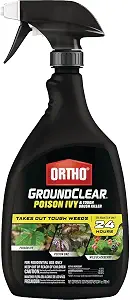 |
| Highest Rated A top-rated pick with lots of positive feedback | Honcho K6 Glyphosate Herbicide, 2.5 Gallon |  |
| Most Popular A crowd favorite that many people choose with confidence | Hi-Yield Super Concentrate Killzall Weed & Grass Killer, 1 gal |  |
| Best Seller A high-volume bestseller chosen again and again | BioAdvanced Brush Killer Plus Concentrate (32 fl oz) |  |
Remedy Ultra Concentrated Herbicide for Pasture and Brush Control, 1 Gallon

| Unit Count | 128 Fluid Ounces |
|---|---|
| Item Form | Liquid |
| Coverage | Selective coverage for brush and mid-size trees |
| Liquid Volume | 1 gallons |
Remedy Ultra is a concentrated triclopyr-based herbicide intended to kill brush and mid-size trees while helping restore pasture and maintain fence rows. It is used as a broadcast or spot treatment following label directions, and can be applied alone or tank-mixed with other professional pasture herbicides. The formula targets both top growth and roots, which improves long-term control compared with contact-only products, and the product description emphasizes low odor and low residual impact. For practical use it covers larger areas economically thanks to the 1 gallon size and is designed for pasture regeneration rather than ornamental garden use. Important limitations are that it is a specialized agricultural herbicide requiring careful adherence to safety and label instructions and is not appropriate for broad-spectrum residential weed control or use on desirable trees and plants. Users should plan for proper protective equipment and follow timing and mixing guidelines to get reliable results.
Best for: Buyers who need a dependable pasture and rangeland herbicide for reclaiming brush and maintaining fence lines and who prioritize consistent, long-term control over quick-contact solutions.
Less Ideal for: Home gardeners seeking a general-purpose lawn weed killer or anyone who needs a nonselective orchard or ornamental tree treatment.
- Targets both foliage and roots for longer-lasting control of brush and mid-size trees
- Concentrated 1 gallon formulation gives economical coverage for pasture and fence-line work
- Designed for pasture regeneration and selective brush control rather than nonselective blanket kill
- Requires strict adherence to label directions and safety precautions for safe use
- Not suitable for general residential weed control or for use near desirable trees and ornamentals
Verdict: Choose Remedy Ultra when you need a reliable, concentrated herbicide that kills brush and mid-size trees for pasture restoration and fence-line maintenance.
ALLIGARE Triclopyr 4 EC Selective Herbicide (1 Quart)

| Unit Count | 32 Fluid Ounces |
|---|---|
| Item Form | Liquid |
| Coverage | Pastures, rangelands, rights-of-way, lawns, golf courses, sod farms, industrial properties, ditches |
| Active Ingredients | Triclopyr |
ALLIGARE Triclopyr 4 EC is a concentrated liquid herbicide used to target woody plants, broadleaf weeds, and brush in large outdoor areas. It is typically mixed into a spray tank at recommended rates (about 3.2 to 6.4 oz per gallon) with a penetrant and applied to foliage or cut stems to achieve systemic control. Notable features include an ester formulation that improves leaf and bark absorption and compatibility with many tank-mix partners, which lets you customize treatments for stubborn species. In practice it is effective for restoring pastures, clearing rights-of-way, and reducing invasive broadleaf growth while leaving grasses largely unharmed when used as directed. Important limitations are that it is a professional-strength chemical requiring careful PPE and adherence to safety and application instructions, it can harm non-target broadleaf plants if drift or overspray occurs, and restrictions apply in some states and situations. For spot treatments or large-area brush control it is a dependable option when handled responsibly.
Best for: Gardeners or land managers who need a reliable, selective herbicide to control woody and broadleaf invasives across pastures, rangelands, or larger outdoor areas and who follow safety procedures for concentrated chemicals.
Less Ideal for: Casual home gardeners with small ornamental beds or indoor herb gardens seeking a gentle, non-chemical solution should consider mechanical removal or lower-strength spot treatments instead.
- Targets woody plants, broadleaf weeds, and brush for effective control of invasive species
- Ester formulation promotes absorption through leaves and bark for systemic action
- Tank-mix compatible so you can combine with other herbicides or adjuvants
- Suitable for a wide range of large outdoor sites including pastures, rangelands, and rights-of-way
- Professional-strength concentrate that requires protective clothing and careful mixing
- Can damage non-target broadleaf plants if it contacts desirable species
- Not suitable for use where restrictions or local regulations prohibit triclopyr products
Verdict: Choose ALLIGARE Triclopyr 4 EC when you need a professional-strength, tank-mix compatible herbicide to reliably remove woody and broadleaf invasives across large outdoor areas.
Roundup Poison Ivy Plus Tough Brush Killer Concentrate, 32 fl. oz.

| Unit Count | 32 Fluid Ounces |
|---|---|
| Coverage | 1500 square feet |
| Item Form | Liquid |
| Active Ingredients | Triclopyr; Fluazifop-P-Butyl; Diquat Dibromide |
This Roundup concentrate is designed for targeted control of poison ivy, poison oak, poison sumac, wild blackberry, kudzu, and other tough woody weeds. You mix the concentrate per label and apply with a tank or hose-end sprayer; one 32 fl. oz. bottle makes about 5 gallons of spray and covers up to 1,500 sq. ft. The formula contains triclopyr, fluazifop-p-butyl, and diquat dibromide, which attack foliage and roots to produce visible wilting in hours and make treated plants rainproof in as little as 30 minutes. Typical uses are spot treatments along fence lines, around foundations, trails, tree rings, and on vines or freshly cut stumps where persistent brush is established. Practical benefits include a concentrated dose for larger areas, multi-mode active ingredients for broad tough-weed control, and relatively quick results so follow-up work can proceed sooner. Important limitations are that it is a nonselective chemical that can damage desirable plants if oversprayed and it requires careful handling and personal protective equipment; follow label restrictions for replanting intervals and local regulations.
Best for: Buyers who need a reliable, fast-acting solution for established poison ivy and tough brush across fence lines, trails, or larger infestation patches and who prioritize performance over convenience.
Less Ideal for: People who need a selective product for use in mixed plantings, small container gardens, or sensitive areas where collateral damage to desirable plants is unacceptable.
- Concentrated formula covers up to 1,500 sq. ft. per bottle when mixed as directed
- Multiple active ingredients target both broadleaf woody weeds and grasses for more complete control
- Rainproof in about 30 minutes so treatments are less affected by short-term rain
- Produces visible results within hours, helping you confirm effectiveness quickly
- Nonselective formula can harm desirable plants if drift or overspray occurs
- Contains strong active ingredients that require gloves and careful handling during mixing and application
Verdict: Choose this concentrate when you need a powerful, fast, rainproof herbicide to eliminate established poison ivy and other tough woody weeds across larger areas.
Ortho MAX Poison Ivy & Tough Brush Killer Ready-to-Use, 24 oz
| Unit Count | 24 Fluid Ounces |
|---|---|
| Item Form | Spray |
| Coverage | non-selective broad spectrum coverage |
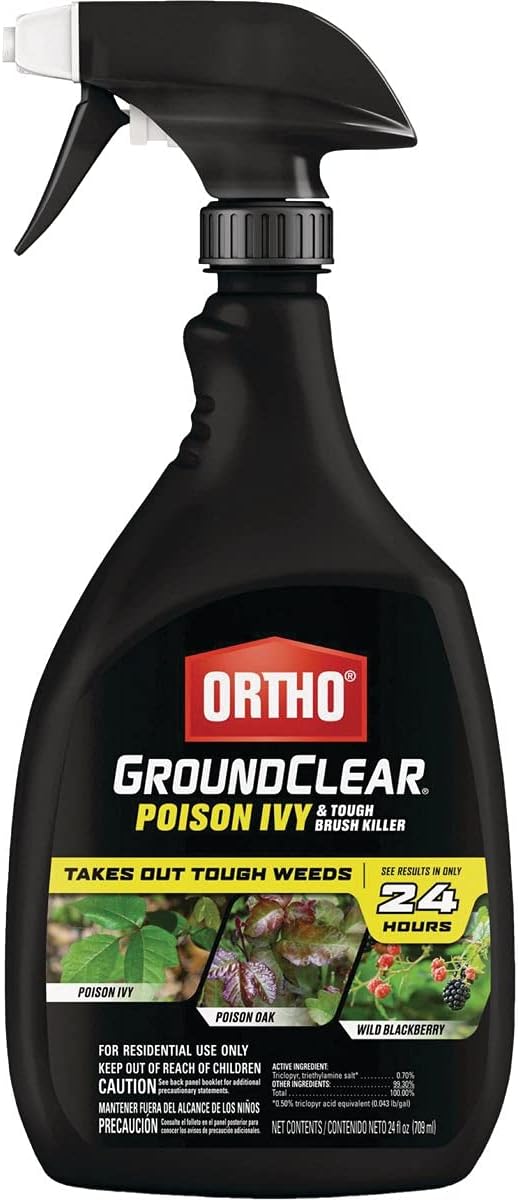
This ready-to-use Ortho MAX spray is designed for homeowners who need a straightforward way to tackle persistent brushy weeds like kudzu and poison ivy without mixing concentrates. It kills more than 60 types of tough brush and woody plants and is formulated to be rainproof two hours after application, which makes timing treatments easier. Typical use is spot-spraying mature, actively growing leaves in non-garden areas such as fence lines, trails, and around outbuildings; directions warn not to spray desirable plants because the formula is non-selective. The convenience of a pre-mixed bottle removes the guesswork on dilution and reduces preparation time, and the product specifically lists woody plants and stumps among targets, so it is useful for clearing vines and brush. The main limitation is that as a non-selective ready-to-use spray it offers less coverage per dollar than concentrates and is best for spot treatments rather than large-scale applications.
Best for: Homeowners needing a simple, no-mix solution to spot-treat kudzu and other brushy weeds around property edges and non-garden areas who prioritize ease of use over bulk coverage.
Less Ideal for: People managing very large kudzu infestations or commercial applicators who need cost-effective high-coverage treatments should consider concentrated herbicides or professional services.
- Ready-to-use spray removes need to mix or measure
- Effective on over 60 tough brush and woody weeds including kudzu
- Becomes rainproof in two hours for flexible application timing
- Targets woody plants, vines, and stumps as well as broadleaf weeds
- Non-selective formula will damage desirable plants if drift occurs
- Ready-to-use format is less economical for treating large infestations compared with concentrates
Verdict: A convenient ready-to-use spray that reliably kills kudzu and other tough brush for budget-minded homeowners who need targeted spot treatments.
Honcho K6 Glyphosate Herbicide, 2.5 Gallon

| Unit Count | 320 Fluid Ounces |
|---|---|
| Item Form | Liquid |
| Liquid Volume | 2.5 gallons |
| Active Ingredients | Glyphosate potassium salt 48.7% |
Honcho K6 is a high-load potassium glyphosate formulation intended for foliar application to actively growing weeds and woody plants. It is absorbed through leaves and translocated to roots, making it suitable for systemic control of persistent species when applied according to the label. Typical use is dilution and spraying with a field or backpack sprayer for spot treatments, fence rows, shrub bed renovation, and farmstead weed control. Notable features include a built-in surfactant to improve leaf coverage and uptake, compatibility with Roundup Ready cropping systems, and no soil residual activity so repeat applications or follow-up management are possible. Practical benefits are reliable knockdown of top growth and root systems across a wide range of species and a large 2.5 gallon volume that covers multiple jobs. Important limitations are that it is nonselective and will damage desirable plants if contacted, it is restricted or not permitted in some states, and proper protective equipment and strict adherence to label directions are required for safe use.
Best for: Buyers who prioritize dependable, systemic control of persistent weeds and woody regrowth and who are prepared to follow label safety requirements and use proper application equipment.
Less Ideal for: Small-scale gardeners who need selective spot treatments near desirable plants or anyone seeking an organic or non-glyphosate solution should consider alternatives.
- High glyphosate concentration for strong systemic control
- Built-in surfactant improves leaf coverage and uptake
- Large 2.5 gallon volume suitable for multiple applications
- Formulation has no soil residual activity, allowing flexible follow-up management
- Nonselective and will kill or injure desirable plants on contact
- Restricted or not allowed for use in certain states and requires careful adherence to label directions
Verdict: Choose Honcho K6 when you need a high-strength, systemic glyphosate solution for reliable control of tough, regrowing weeds and brush.
Hi-Yield Super Concentrate Killzall Weed & Grass Killer, 1 gal

| Active Ingredients | Glyphosate |
|---|---|
| Liquid Volume | 128 fluid ounces |
| Coverage | 25600 square feet |
| Item Form | Liquid |
This Hi-Yield super concentrate is a glyphosate-based liquid concentrate designed to kill grasses, broadleaf weeds, and woody brush down to the root. It mixes with water and is applied with a sprayer, and the double-surfactant formula helps the solution stick and dry on foliage for faster uptake. The 1 gallon concentrate covers up to 25,600 square feet, making it a practical choice for treating large lawns, fence lines, driveways, or commercial sites when you need broad control rather than spot treatments. Notable features are the high glyphosate concentration and the surfactant system that improve performance on tougher weeds. Important limitations are that it is not for use on lawns and requires a separate spraying accessory and careful handling because it is a nonselective herbicide. For users focused on reliably clearing large areas of unwanted vegetation, this bottle gives concentrated, professional-strength coverage but demands careful mixing, application timing, and protective equipment.
Best for: Buyers who need a powerful, professional-strength herbicide to clear large areas of weeds and brush and who prioritize reliable, fast-acting performance over selective application.
Less Ideal for: Home gardeners seeking a lawn-safe or selective spot treatment or users uncomfortable handling concentrated chemical herbicides should consider gentler or targeted alternatives.
- High-concentration glyphosate formula for strong, systemic weed control
- Double-surfactant mix improves coverage and uptake on foliage
- Large coverage per bottle (up to 25,600 sq ft) suitable for big areas
- Liquid concentrate mixes to desired volume so you carry less product
- Nonselective herbicide so it will damage desirable plants if contacted
- Requires separate sprayer and careful mixing and protective gear
- Not labeled for use on lawns, limiting some residential uses
Verdict: Choose this concentrated glyphosate formula when you need powerful, large-area weed and grass control delivered in a single 1-gallon bottle.
BioAdvanced Brush Killer Plus Concentrate (32 fl oz)

| Unit Count | 32 Fluid Ounces |
|---|---|
| Coverage | 4000 square_feet |
| Item Form | Spray |
| Active Ingredients | triclopyr |
BioAdvanced Brush Killer Plus is a concentrated spray-on herbicide designed to control tough vines and woody brush such as poison ivy, poison oak, kudzu, blackberry and many listed weeds. You mix the concentrate with water using the bottle’s measuring marks, apply it to actively growing, leafed-out plants, and the triclopyr-based formula moves systemically through foliage and roots so treated plants die back over 1 to 6 weeks. It becomes rainproof in about four hours, which helps avoid reapplication after light rain. The product covers up to 4,000 square feet per bottle when diluted to the recommended rate, so it is suited to larger patches rather than single small weeds. Because results take time to appear and the herbicide is selective for brush and broadleaf plants, you may need follow-up treatments for re-sprouts or for species not on the label. Handle with care and follow label directions to avoid contact with desirable plants and to meet local safety and disposal rules.
Best for: Buyers who want an efficient, science-based solution to remove patches of vines and woody brush without repeated spot-spraying and who plan treatments when plants are actively growing.
Less Ideal for: Gardeners who need instant knockdown, require a non-chemical mechanical approach, or who only need to remove small single weeds by hand should consider alternatives.
- Systemic triclopyr formula kills brush down to the root for longer control
- Concentrate mixes for economical coverage up to 4,000 sq ft per bottle
- Rainproof in about 4 hours so light rain is less likely to wash it away
- Label lists many targeted tough species including poison ivy, poison oak, kudzu and blackberry
- Works slowly with visible decline over 1–6 weeks so immediate removal is not achieved
- Selective to brush and broadleaf weeds so not effective on all plant types
Verdict: Choose this concentrated systemic brush killer when you need a practical, economical product to eliminate established vines and woody brush down to the roots.
Choosing the Right Heavy Duty Brush Killer: Key Factors to Consider
Active Ingredient and Mode of Action
The active ingredient determines what species the product will control and how quickly treated stems die back. Systemic chemistries move into root systems and are better for eliminating resprouts from woody plants, while contact actives provide fast top-kill but may not prevent regrowth.
Knowing the mode of action also helps you plan re-treatment intervals and rotate products if you manage large areas to reduce the chance of target species developing tolerance. Check label lists of target species to confirm suitability for the brush types in your site.
Residual Control and Re-treatment Interval
Residual control indicates how long the product suppresses new shoots and seedling establishment after application. Greater persistence can reduce labor and follow-up costs, especially for dense infestations that are difficult to revisit frequently.
However, longer residual activity can affect desirable plants and desirable groundcover, so balance persistence with the proximity of vegetation you want to keep. Follow label guidance on when it is safe to reseed, plant desirable species, or allow livestock or pets into treated areas.
Application Method and Equipment Needs
Heavy duty brush killers are used with different techniques: foliar spot-spray, basal bark application, cut-stump treatment, or broadcast spraying for large stands. The product you choose should match the equipment you own or are willing to use, whether that is a handheld pump sprayer, backpack sprayer, aerosol applicator, or a tractor-mounted boom.
Some formulations require oil carriers or penetrating surfactants for basal or bark treatments. Read label instructions on compatible carriers and recommended nozzle types since proper delivery affects uptake and effectiveness.
Timing and Plant Phenology
Effectiveness against woody plants often depends on timing. Many systemic products work best when plants are actively translocating carbohydrates to roots, typically in late summer through fall for deciduous species. Others are labeled for spring applications when resprouts are tender and more susceptible.
Applying at the right growth stage shortens time to kill and improves root-level control. Consider local climate and the life cycle of target species when scheduling applications to maximize control and minimize retreatment.
Safety, Buffer Zones, and Non-target Plant Protection
Because heavy duty brush killers can be persistent and systemic, protecting non-target plants is essential. Labels specify buffer distances from water, sensitive crops, and desirable ornamentals. They also list required personal protective equipment and mixing precautions to reduce drift and accidental exposure.
Plan application routes and cleanup procedures before mixing product. For treatments near desirable vegetation, use directed techniques like cut-stump or basal applications to limit contact and follow label restrictions for setbacks and runoff control.
Environmental Persistence and Site Considerations
Some herbicides bind tightly to soil and remain active for weeks to months, affecting replanting plans and soil biology. Soil type, organic matter, and rainfall influence how long residues persist and whether offsite movement via runoff is a risk.
Evaluate slope, proximity to water bodies, and local regulations before choosing a product. If you plan to restore or replant treated areas, select a formulation and timing that aligns with your restoration schedule and follow label-specified waiting periods.
When to Use Basal Bark and Cut-Stump Methods
Basal bark and cut-stump treatments concentrate product on the cambial tissues where uptake is fastest, which reduces non-target exposure and can be highly effective on multi-stemmed shrubs and small trees. Basal bark is best for stems with bark thin enough for translocation, while cut-stump is preferred for larger-diameter trunks and when immediate mechanical removal is already planned.
- Basal bark works well on stems up to about 4 inches in diameter depending on species
- Cut-stump allows precision placement and limits soil exposure
- Both methods reduce spray drift compared with broad foliar sprays
Spot-Spraying Dense Patches Without Harming Nearby Plants
Spot-spraying focuses herbicide on individual plants or clumps and is the least disruptive option in mixed vegetation. Use a shielded nozzle or hand-held wand to keep spray off desirable plants. Apply at the label-recommended coverage level; too light a coating reduces efficacy, while over-application increases non-target risk.
- Work from downwind positions to minimize drift
- Avoid spraying during high temperature or wind events
- Use markers to identify treated stems for future follow-up
Safe Mixing, Transport, and On-site Preparation
Prepare mixes in a well-ventilated area using containers and measuring devices dedicated to herbicide work. Wear the PPE specified on the label, including chemical-resistant gloves and eyewear. Transport premixed solutions only if the label permits; otherwise, mix on-site to avoid spills during transit.
Follow label instructions for rinsing sprayers and disposing of rinse water and empty containers to reduce contamination risks.
- Use funnels and measuring cups to reduce spills
- Rinse equipment immediately after use with triple-rinse method when required
- Keep spill kits and absorbent material on hand for accidental releases
Managing Regrowth and Follow-up Treatments
Even with systemic products, some species resprout vigorously or send up new seedlings. Monitor treated areas at intervals recommended on the label and plan selective follow-up treatments rather than re-spraying an entire zone. Hand-pulling or targeted cutting can reduce the chemical load needed for long-term control.
Record dates, weather conditions, and treated species to refine timing for future treatments and to justify different methods if repeated control fails.
- Inspect treatments 4 to 12 weeks after application depending on species and product
- Use a mix of mechanical and chemical control for persistent species
- Mark treated areas to avoid double-treatment and to plan monitoring visits
Considerations for Sensitive Sites and Water Proximity
On slopes, near streams, or in wetlands, choose products with lower potential for runoff and follow aquatic buffer guidance on the label. When treating near water, use application methods that reduce overland flow, such as cut-stump or basal bark, and avoid broadcast spraying before heavy rain.
Consult local extension guidance or regulatory resources for site-specific restrictions and required permits on herbicide use in sensitive areas.
- Respect labeled buffer distances for surface water
- Avoid broadcast applications before heavy rainfall forecasts
- Use non-chemical controls where restrictions prevent herbicide use
How We Chose the Best Heavy Duty Brush Killer
We focused on products formulated for woody stems, woody-sedge complexes, and dense perennial brush rather than general-purpose herbicides intended for lawns or annual weeds. Selection criteria prioritized demonstrated knockdown on woody growth, measurable residual control to reduce repeat treatments, and flexible application methods for spot-spraying, cut-stump work, and larger area coverage. We also considered carrier and surfactant compatibility because uptake on woody stems is often the limiting factor for effectiveness. Practical use factors included label guidance for timing and re-treatment intervals, compatibility with common application equipment, and instructions for protecting desirable plants. We excluded products labeled only for light weeds, ornamental-only use, or those lacking clear directions for woody brush. Safety and environmental instructions were part of the filter: products without clear PPE recommendations or with restricted use patterns for common residential settings were not prioritized. The result is a set of heavy duty brush killers chosen for reliable woody plant control, persistence of effect, ease of field application, and clear label directions for safe use.
FAQ
Can I use a heavy duty brush killer around ornamental trees and shrubs?
It depends. Directed methods such as cut-stump or basal bark limit exposure to nearby ornamentals. Foliar sprays risk drift and root uptake, so use shields and follow label buffer recommendations when treating near desirable plants.
How soon after treatment will I see brush dieback?
Many contact formulas show visible wilting within days, while systemic products may take several weeks to fully kill roots and prevent resprouting. Timing depends on species, season, and how well the product was applied.
Is it safe to mow or burn treated brush after application?
Mowing or burning immediately after application can reduce uptake for systemic products. For cut-stump work, allow treated stumps to sit as recommended on the label. Follow label instructions about mechanical disturbance and re-entry intervals.
Will heavy duty brush killers harm soil life or future plantings?
Some active ingredients persist in soil and can affect sensitive seedlings or soil organisms. Labels specify waiting periods before replanting and provide guidance on minimizing risk. Choose products with shorter soil persistence if you plan rapid restoration.
What PPE do I need when applying brush killers?
Required PPE varies by product but commonly includes chemical-resistant gloves, long sleeves, long pants, eye protection, and sometimes respiratory protection for concentrated mixes. Always follow the label for exact PPE requirements.
Can I use the same herbicide for all woody species?
No. Efficacy varies by species. Some products are better for broad-leaved woody shrubs, others for brushy vines or certain tree seedlings. Check target species lists on labels and use the appropriate technique for each species.
Final Verdict
Choose a heavy duty brush killer that matches your target species, application method, and site constraints. Prioritize active ingredients and formulations that provide systemic uptake for long-term control when you need to stop resprouts, and select application methods that limit non-target exposure when desirable plants are nearby. Plan follow-up monitoring and be prepared to combine mechanical and chemical tactics for stubborn infestations. With the right product and timing, you can reduce retreatments and restore the area efficiently.
