

Note: This article contains affiliate links. If you click on these links and make a purchase, I may earn a small commission at no extra cost to you. This helps support my research and content. Read my full affiliate disclosure here.
Picking the right grow light for Bonsai changes how your miniature trees develop, recover from pruning, and hold compact branch structure through low-light months. You need lights that match bonsai growth habits: steady spectrum for foliage color and ramification, adjustable intensity for training and seasonal cycles, and compact footprints that fit shelves or small stands. This guide covers seven shortlisted options chosen for their suitability to bonsai care and practical use in real homes and studios. We'll explain the evaluation criteria used and highlight features that matter when you are growing and styling bonsai indoors.
Top Picks at a Glance
| Best Overall The best all-around choice for most situations | FECiDA 2-Head Adjustable Floor Grow Light with Stable Base |  |
| Best Quality Built to a higher standard if you want something more solid | VIPARSPECTRA P700 70W Dimmable Full Spectrum LED Grow Light |  |
| Best Value The sweet spot between price and what you get | FECiDA Bonsai Tabletop LED Grow Light (Adjustable, Remote, 25W) |  |
| Best Budget The cheapest option that still gets the job done reliably | CFGROW SPL-01 Full-Spectrum LED Grow Light with Adjustable Height and Timer |  |
| Highest Rated A top-rated pick with lots of positive feedback | Bstrip D11 18W Dimmable Full-Spectrum Desk Grow Light |  |
| Most Popular A crowd favorite that many people choose with confidence | GooingTop HY-021 6000K Full-Spectrum Clip Grow Light |  |
| Best Seller A high-volume bestseller chosen again and again | Aokrean Halo Full-Spectrum LED Grow Light with Base (2-Pack) |  |
FECiDA 2-Head Adjustable Floor Grow Light with Stable Base

| Light Source Type | LED |
|---|---|
| Number of Light Sources | 204 |
| Additional Features | 4,8,12,16,20 Hr Timer |
| Mounting Type | Free Standing On Floor |
| Power Source | Corded Electric |
This FECiDA floor grow light is built for tall houseplants like a Monstera, offering a two-head lamp on a stable round base with a height range that suits large foliage. It uses LED light sources and a full spectrum that includes warm 3000K, cool 5000K, and 660nm plus UV-IR elements to encourage vegetative growth and fuller leaves. The touch control and 5-mode timer (4/8/12/16/20 hours) make it easy to set daily on/off cycles so you can maintain consistent light without monitoring. The unit is corded and plugs into a standard outlet and supports daisy-chaining up to three units from one socket for larger setups. Practical benefits include an elegant living-room friendly design that doubles as décor, a sturdy base that resists tipping, and adjustable height for different plant sizes. Important limitations are the modest 25 watt rating listed in specs despite marketing claims of high lumen output and that the lamp is meant for indoor use only, so it is not suited to outdoor or weather-exposed placements.
Best for: Plant owners who prioritize consistent, high-quality light for large indoor specimens and want a floor lamp that fits a living-room aesthetic while delivering full-spectrum output and timer automation.
Less Ideal for: Growers needing high-intensity, commercial-grade output for dense canopy flowering or large multi-shelf grow tents should consider higher-wattage fixtures instead.
- Full-spectrum LED array including 3000K, 5000K and 660nm plus UV-IR for balanced plant growth
- Adjustable height that accommodates tall plants and multiple link rods for different sizes
- Built-in 5-mode timer with daily auto on/off for consistent light cycles
- Stable base and decorative design suitable for living-room placement
- Daisy-chainable power allowing up to three units from one outlet for expanded coverage
- Wattage listed at 25 watts may be lower than buyers expect given some brightness claims
- Intended for indoor use only and not weatherproof for outdoor placement
Verdict: A stylish, full-spectrum floor lamp that gives Monstera and other tall houseplants reliable, timed indoor sunlight in a living-room friendly form.
VIPARSPECTRA P700 70W Dimmable Full Spectrum LED Grow Light

| Light Output Maximum | 11000 lumens |
|---|---|
| Light Source Wattage | 70 watts |
| Mounting Type | Hanging Mount |
| Light Source Special Features | Dimmable |
| Number of Light Sources | 216 |
The VIPARSPECTRA P700 is a 70W full spectrum LED grow light built for seed starting and vegetative stages. It uses 216 diodes and a tuned mix of red and white LEDs to deliver high PAR output (advertised 11,000 lumens) across a small footprint roughly suited to a 2×2 ft veg area. The light is fanless and relies on large aluminum heat sinks to keep running temperatures low while the included 4-level dimmer lets you dial intensity for seedlings, clones, or mature veg. Setup is simple with hanging mount hardware included and the unit draws about 0.65 A at 120V so it runs far cooler and uses far less power than a comparable 150W HPS/MH system. For compact tents, shelves, or single-cabinet grows it offers a good balance of light output, spectrum, and efficiency. Limitations are its small coverage area and modest absolute wattage compared with larger fixtures, so gardeners with bigger canopies will want a higher-output model or multiple units.
Best for: Growers who want an efficient, low-heat fixture to run a single tent, shelf, or cabinet and who prioritize electricity savings and adjustable output for seedlings and veg.
Less Ideal for: Commercial growers or hobbyists running multi-plant canopies or larger tents who need wider coverage and higher total light output.
- Full spectrum diode layout optimized for seedlings and vegetative growth
- Low power draw (70W) with high reported lumen/PAR output for energy efficiency
- Fanless design with aluminum heat sinks for quiet, low-heat operation
- Integrated 4-level dimmer for easy intensity adjustment
- Coverage geared to a small 2×2 ft veg area so not ideal for larger grows
- Absolute wattage and diode count are modest compared with larger commercial fixtures
Verdict: A compact, energy-efficient full spectrum LED that delivers strong veg-stage light and adjustable intensity for small tents and cabinets.
FECiDA Bonsai Tabletop LED Grow Light (Adjustable, Remote, 25W)

| Light Source Type | LED |
|---|---|
| Number of Light Sources | 208 |
| Wattage | 25 watts |
| Control Method | Remote |
| Mounting Type | Tabletop |
The FECiDA Bonsai Tabletop Grow Light is a compact freestanding LED lamp built for indoor plant care, especially small bonsai and seed starting. It uses 208 LEDs arranged to produce a sunlike full spectrum including 3000K, 5000K and 660nm plus UV-IR elements, giving bright, plant-focused output roughly comparable to a 200W incandescent in perceived brightness while drawing about 25 watts. Setup is straightforward: place the stable base on a desk or countertop, extend and angle the adjustable arm, then control output and a 4/8/12/16/20-hour daily timer with the touch controls or remote. Practical features include a daisy-chain power socket to run up to three units from one outlet and USB connectivity for simple power management. For a small indoor collection this lamp offers concentrated, efficient light and a neat aesthetic thanks to its painted aluminum build. Limitations to note are that it is not water resistant so it must stay dry and the wattage and coverage suit small groups of plants rather than large shelves or tall specimens.
Best for: Best for plant owners who want a compact, efficient lamp to give bonsai and seedlings reliable daily light with minimal fuss and easy scheduling.
Less Ideal for: Not a good fit for growers needing broad coverage for many large plants, tall specimens, or lights rated for humid greenhouse conditions.
- Full-spectrum LED array (3000K, 5000K, 660nm plus UV-IR) tailored for plant growth
- Adjustable arm and tabletop freestanding design for precise positioning over bonsai
- Built-in timer with five preset durations and remote control for set-and-forget operation
- Daisy-chain capability allows linking up to three units to one outlet for expanding coverage
- Aluminum base and painted finish provide a stable, attractive desktop presence
- Not water resistant so it cannot be used in damp locations or near frequent misting
- 25W power and desk form factor limit effective coverage to small pots and seedlings rather than large plant collections
Verdict: A compact, efficient tabletop grow light that gives bonsai and seedlings full-spectrum daily light with easy timers and expandability for small indoor collections.
CFGROW SPL-01 Full-Spectrum LED Grow Light with Adjustable Height and Timer

| Power Source | Corded Electric |
|---|---|
| Light Source | LED |
| Wattage | 15 watts |
| Brightness | 2000 lumen |
| Control Method | Remote |
The CFGROW SPL-01 is a tabletop freestanding LED grow light made for small indoor gardens and desktop plants. It supplies a full 380–800 nm spectrum across selectable red, blue, and white modes, and offers 10 brightness settings so you can tailor light intensity to seedlings, succulents, or mature houseplants. The unit includes a height-adjustable pole system and a removable stake so you can place the lamp above pots or insert it in soil for lower profiles. A circular memory timer with 3/9/12 hour options automates daily on/off cycles, which is useful when you cannot tend plants every day. At roughly 15 watts and about 2000 lumens, it is energy efficient for continuous use and claims long LED life. Practical limits are its small coverage area and nonwaterproof plastic construction, so it is best for individual pots or small clusters indoors rather than larger grow racks or humid greenhouse setups. The remote control and dimmer make fine tuning easy, but the timer must be reset after a power interruption.
Best for: Buyers looking for an affordable, energy-efficient grow light to keep a few desktop plants, succulents, or seedlings healthy with minimal fuss and automated lighting.
Less Ideal for: Growers who need wide area coverage, commercial-scale output, or a waterproof fixture for humid environments should look at larger, higher-powered alternatives.
- Full spectrum LEDs with three light modes for different growth stages
- Ten dimmable levels allow precise control of intensity
- Height-adjustable pole and removable stake for versatile placement
- Built-in memory timer with 3/9/12 hour auto on/off for hands-off scheduling
- Low wattage (15W) and high lumen output for energy-efficient operation
- Small coverage area limits use to single pots or small clusters indoors
- Plastic, nonwaterproof construction makes it unsuitable for humid or wet locations
Verdict: A budget-friendly, energy-efficient full-spectrum lamp that automates light schedules and is ideal for keeping a few small indoor plants healthy.
Bstrip D11 18W Dimmable Full-Spectrum Desk Grow Light

| Wattage | 18 watts |
|---|---|
| Light Source Type | LED |
| Bulb Base | E26 |
| Additional Features | Adjustable Height, Dimmable, Full Spectrum, Timer |
| Voltage | 120 volts |
The Bstrip D11 is a compact tabletop grow lamp that supplies full-spectrum 5000K LED light intended to support growth from seedlings to mature indoor plants. It plugs into standard outlets and offers three dimming levels plus 4/9/14-hour timer settings so you can set a consistent daily schedule without constant supervision. The lamp's adjustable height helps position light over a bonsai canopy as it develops, and the rattan-style shade gives it a decorative, low-profile look suitable for living rooms or desks. Practical benefits include focused downlight delivery with a single 18W LED source that keeps power draw low while offering plant-friendly spectrum and a small footprint that fits limited bench or table space. Limitations are that it is a single-source tabletop lamp so it may not evenly cover larger bonsai stands or multiple specimens and it does not claim waterproofing for humid misting environments. The simple push-button controls and included stand and bulb make it an easy, reliable choice for routine indoor bonsai maintenance where steady, scheduled light is the priority.
Best for: A bonsai owner who prioritizes dependable, scheduled supplemental light for one or two small specimens and prefers a neat, decorative lamp that blends with indoor decor.
Less Ideal for: Growers needing high-coverage lighting for multiple large bonsai, bench-scale propagation, or moist greenhouse setups should consider larger multi-LED fixtures or purpose-built waterproof units.
- Full-spectrum 5000K LED suited for general plant growth
- Three-level dimming and 4/9/14-hour timer for hands-off scheduling
- Adjustable height to position light over developing bonsai
- Compact tabletop footprint that fits small spaces
- Includes bulb and stand for ready-to-use setup
- Single light source may not provide even coverage for multiple or wide-canopy bonsai
- Not rated waterproof so avoid direct contact with mist or heavy humidity
Verdict: For bonsai keepers who want a reliable, low-power tabletop lamp that delivers scheduled full-spectrum light with easy controls, this is a practical, decorative choice.
GooingTop HY-021 6000K Full-Spectrum Clip Grow Light
| Power Source | Corded Electric |
|---|---|
| Color Temperature | 6000 Kelvin |
| Light Output Maximum | 2500 lumens |
| Light Source Special Features | Dimmable |
| Number of Light Sources | 84 |
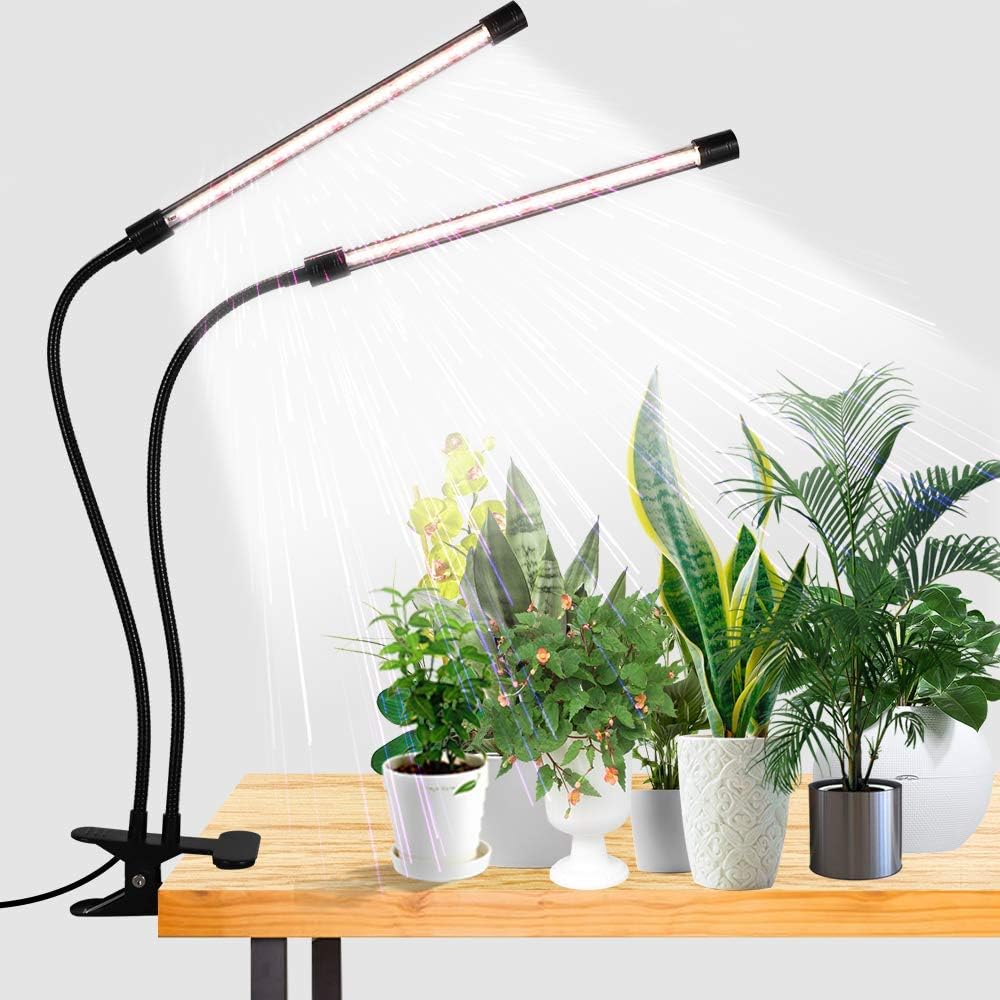
This GooingTop HY-021 is a compact clip-on grow light built for small houseplants, seedlings and shelf gardens. It uses 84 LEDs (white plus deep red) to deliver a 6000K full-spectrum output intended to mimic midday sun, with a high color-rendering output that also makes it pleasant as a reading lamp. Two flexible gooseneck heads and a strong clamp let you aim light precisely over pots and seed trays, while the attached remote provides 50%/100% dim levels and repeating timers at 4, 8 or 12 hours for hands-off scheduling. Practical benefits include low power draw (listed as roughly 10 W LED draw), a claimed 1 to 2 square meter coverage for seedlings, and an included timer that simplifies day/night cycles. Limitations are its design for small setups rather than large grow racks and the clip mounting limits placement compared with freestanding fixtures. The unit also relies on the corded remote instead of a smartphone app and the lifespan claim is typical of LEDs but not independently verifiable from the listing.
Best for: Buyers who want a simple, low-power, plug-and-play grow light to boost seedlings and a few houseplants on a desk or shelf and who value an easy-to-use timer and adjustable brightness.
Less Ideal for: Growers planning multi-shelf installations, larger vegetable grows, or who need networked or app-based control should consider larger bar lights or fixtures designed for commercial racks.
- Full-spectrum 6000K output with added 660 nm red LEDs to support vegetative growth and flowering
- Attached remote with dimming (50%/100%) and repeat timer settings (4/8/12 hours) for easy scheduling
- Flexible dual goosenecks and strong clamp enable precise positioning over small pots and seed trays
- High reported color rendering for comfortable viewing and accurate plant color assessment
- Low electrical draw around 10 W while covering small growing areas
- Clip-mount design and stated 1–2 m² coverage make it better suited to individual plants or small trays rather than large multi-shelf setups
- No smart app or wireless control option; remote is cord-attached which limits placement flexibility
Verdict: A compact, easy-to-use clip grow light that delivers full-spectrum light and convenient timer/dim controls for small indoor plant setups.
Aokrean Halo Full-Spectrum LED Grow Light with Base (2-Pack)

| Bulb Base | E26 |
|---|---|
| Number of Light Sources | 48 |
| Wattage | 10 watts |
| Power Source | Corded Electric |
| Timer | 3/9/12H |
The Aokrean Halo grow light is a compact LED lamp designed for indoor plant growth and decorative display. It ships as a two-pack and can be used either by inserting the stake into potting soil or by placing the pot on the supplied ABS base for a freestanding lamp. The unit uses 48 LEDs per light and offers three spectrum modes (white, warm white plus red, and mixed) plus ten brightness levels controlled by a touch/push button and a built-in timer with 3/9/12 hour cycling. The telescoping pole extends to cover taller small-to-medium pots and the 5V USB power and low 10W draw make it energy efficient and safe for continuous use. Practical benefits include flexible placement, multiple spectrum settings for seedlings through vegetative growth, and a small footprint that doubles as home decor. Limitations are its non-waterproof construction and modest light output suited to single pots or small clusters rather than a full grow shelf, and the base relies on pot weight for stability.
Best for: Buyers who want a simple, low-risk grow light for a few houseplants or seedlings and prefer plug-and-play controls, automatic timers, and a neat decorative look that fits on a windowsill or tabletop.
Less Ideal for: Gardeners who need high-intensity lighting for multiple larger plants, full shelves, or humid greenhouse conditions should choose a more powerful, waterproof fixture.
- Dual installation: stake into soil or place on included base for freestanding use
- Full-spectrum LEDs with three spectrum modes and 10 brightness levels for different growth stages
- Built-in timer with 3/9/12 hour cycles for automated daily light scheduling
- Low power draw (10 watts) and USB/5V power for efficient, low-heat operation
- Not water resistant so it must be kept away from wet environments
- Light output is modest and best for single small-to-medium pots rather than larger setups
Verdict: Aokrean Halo is a compact, easy-to-use full-spectrum grow light best suited to low-risk buyers who want a plug-and-play solution for a few indoor pots or seedlings.
Choosing the Right Grow Light for Bonsai: Key Factors to Consider
Spectral Quality and Balance
Bonsai respond to a mix of blue and red wavelengths for compact growth and flowering, plus some far-red for energy signaling. A lamp that offers a balanced spectrum approximates natural sunlight and helps leaves retain color and chlorophyll density. Without the right balance, internodes may elongate or leaves can lose vibrancy, which undermines the compact silhouettes bonsai growers aim for.
When evaluating spectral quality, consider whether the fixture reports a broad spectrum or provides multiple diodes tuned to different bands. Controls that let you adjust spectrum or blend channels are useful when you want different light recipes for growth, refinement, or seasonal rest.
Adjustability and Intensity Control
Bonsai benefit from precise intensity control because seedlings, young trees, and mature specimens all tolerate different light levels. Dimming and height adjustment let you tune PFD or PPFD at the canopy without moving pots constantly. That is helpful for staged training where nearby branches or newly wired limbs need gentler light.
Look for fixtures with reliable dimming ranges, memory settings, or integrated timers. Consistent, repeatable cycles support predictable growth and reduce the chance of shock after pruning or repotting.
Physical Footprint and Mounting Options
Many bonsai are grown on benches, window shelves, or compact stands; the light should match that footprint. A fixture that is too wide can cast uneven light and require multiple lamps, while one that is too focused might miss branches. Mounting versatility matters: adjustable arms, hangers, or goosenecks let you place the light exactly where you need it without stressing wiring or the tree.
Consider how the fixture secures to a shelf or frame and whether it allows quick height changes as the tree grows or as you move specimens for styling.
Heat Output and Temperature Management
Excess heat can dry small pots rapidly, damage fine roots, or scorch foliage on compact bonsai. Grow lights that run cool reduce the need for extra ventilation and lower watering frequency. Heat management also affects the longevity of the fixture when placed close to organic materials like wood stands.
Check for passive or active cooling systems, and whether the fixture needs clearance. Good thermal design keeps light above the canopy without creating hotspots that stress delicate growth.
Control Features and Timers
Scheduling is important for bonsai to simulate day length changes through seasons or to maintain consistent training cycles. Built-in timers, app control, or simple programmable controllers let you set daily photoperiods and recover quickly after power interruptions. Controls that integrate dimming and spectrum changes on a timer are especially useful for mimicking dawn and dusk transitions.
Ease of programming matters. If the controller is complex or unreliable, growers may bypass its features and lose the beneficial automated cycles that support stable growth.
Durability and Moisture Resistance
Indoor bonsai areas often experience humidity during watering and misting. Fixtures with sealed electronics or IP-rated protection resist moisture-related failures. Durable housings and robust connectors are important when lights are moved frequently for styling sessions or repotting.
Assess construction quality, cable strain relief, and whether replaceable parts are available. A fixture that tolerates routine handling and the occasional splash will last longer in regular bonsai care.
How Different Bonsai Types Use Light
Deciduous, coniferous, and tropical bonsai respond differently to light intensity and spectral balance. Deciduous species often need a seasonal ramp in day length and bright, cooler light during active growth. Conifers tolerate slightly lower light but still appreciate high-quality spectrum to maintain needle density. Tropical species can need warmer-spectrum light and steady intensity year-round when grown indoors.
Match your fixture to the species you keep. If you cultivate a mixed collection, favor a versatile lamp with adjustable spectrum and dimming so you can tune settings per tree type without moving plants frequently.
- Deciduous: brighter, cooler spectrum during growth periods
- Conifers: consistent spectrum with moderate intensity
- Tropicals: warmer balance and steady daily hours
Placement and Setup Tips for Bonsai Benches
Place fixtures high enough to provide even coverage and avoid hotspots directly above the canopy. Use an adjustable mount so you can increase intensity without changing the fixture when a tree needs more or less light. For multi-tree benches, stagger fixtures or use diffusers to avoid bright centers and dark edges.
Measure canopy light with a simple handheld meter or a mobile app that approximates PPFD to get consistent readings. Note readings at the pot rim, mid-canopy, and top of the tree when setting initial height.
- Allow for 6 to 12 inches clearance for most LED fixtures to start
- Use diffusing panels when a single lamp causes hot spots
- Document initial settings for each species to speed repeatable care
Seasonal Scheduling and Training Protocols
Use timers to simulate seasonal changes: longer days for active growth and shorter days for rest. When refining ramification after wiring or pruning, reduce intensity slightly and keep a stable photoperiod to avoid stress. Gradually increase hours and intensity when you want vigorous growth for back-budding or root work.
For flowering species, combine spectrum shifts with day-length adjustments to encourage bloom at desired times. Always change settings gradually over several days to reduce shock.
- Gradual transitions prevent leaf drop after major changes
- Shorter days and lower intensity mimic dormancy for temperate species
- Increase intensity briefly after repotting to support root recovery
Common Mistakes to Avoid
Putting a high-intensity lamp too close without accounting for heat and PPFD can scorch foliage or dry out small pots quickly. Conversely, relying on a fixture with inadequate spectrum leads to weak internodes and pale leaves. Avoid one-size-fits-all setups and instead match light output to tree size and species.
Neglecting mounting options or leaving fixtures permanently fixed at one height often leads to uneven growth as trees mature. Plan for adjustable setups that evolve with your collection.
- Do not assume a brighter lamp is always better
- Avoid fixtures without dimming for small or young trees
- Do not ignore thermal effects on soil moisture
Integrating Grow Lights with Natural Light
If you have a bright window, use supplemental grow light to fill gaps during cloudy days or extend day length. Combine natural and artificial sources by measuring canopy light and adjusting fixture output to avoid overexposure. Position lights to even out shadows when natural light is uneven across a bench.
During summer months with strong natural light, reduce artificial hours to avoid excessive daily totals that can stress trees. In winter, rely more heavily on the fixture to sustain growth and maintain leaf color.
- Use timers to overlap natural dawn/dusk with artificial light
- Reduce supplemental hours when natural light exceeds target PPFD
- Rotate trees periodically to balance natural light exposure
How We Chose the Best Grow Light for Bonsai
We prioritized criteria that reflect how grow lights actually perform with bonsai rather than generic lamp specs. Key evaluation points included spectral quality and plant-usable light distribution to support leaf health and branch formation, adjustable intensity and height options for staging training or rest periods, and footprint or mounting versatility so the light fits typical bonsai benches, shelves, or display tables. We also tested for heat management and durability to avoid stressing small pots or delicate wiring in humid indoor setups. Practical user controls and timers were considered because bonsai often need daily, repeatable cycles. Exclusions: full-spectrum shop lights meant for large vegetable setups, single-color grow strips not suited for foliage tone, and units lacking stable dimming or mounting options. The resulting shortlist favors fixtures that give predictable, controllable light without excessive size or heat for bonsai environments.
FAQ
How many hours of artificial light does a bonsai need each day?
It depends on species and natural light available. Many bonsai do well with 8 to 12 hours of combined natural and artificial light, while flowering or high-light species may need up to 14 hours during active growth. Use timers and adjust gradually based on leaf response.
Can a single grow light cover multiple bonsai on a bench?
Sometimes. Coverage depends on fixture beam angle and bench layout. For even growth across several trees, either use multiple fixtures or choose a lamp with a wide, diffused output and position it higher to broaden coverage. Check for hotspots and measure PPFD across the bench.
Will LED grow lights burn my bonsai leaves?
LEDs themselves do not emit as much radiant heat as older lamps, but high-intensity LEDs placed too close can raise leaf or soil temperature enough to cause damage. Keep a safe clearance, monitor for leaf discoloration, and use dimming to find a comfortable intensity.
Do bonsai need different spectrums for training versus maintenance?
Often yes. Higher blue ratios support compact, stocky growth useful during refinement, while slightly warmer spectra and increased red can encourage flowering or thicker foliage. Fixtures with adjustable spectrum allow you to shift settings without moving plants.
How should I position lights when repotting or after heavy pruning?
Use moderate intensity and steady photoperiods after repotting or major pruning to reduce stress. Avoid sudden full-intensity exposure for at least several days and monitor soil moisture closely since light and reduced foliage change water needs.
Is it necessary to use timers with grow lights for bonsai?
Timers are very helpful. They create consistent day lengths that support predictable growth patterns and reduce the chance of human error. Simple mechanical or digital timers are sufficient for most routines.
Final Verdict
When choosing a grow light for Bonsai, prioritize spectral balance and the ability to control intensity and timing. Those features let you shape growth, encourage ramification, and mimic seasonal cues without stressing small pots or delicate foliage. Tradeoffs are common: compact fixtures may limit coverage while larger units require more clearance and heat management. Focus on fixtures that match your species mix, bench layout, and how much adjustability you need, then tune settings gradually to get the predictable, healthy results bonsai require.
