

Note: This article contains affiliate links. If you click on these links and make a purchase, I may earn a small commission at no extra cost to you. This helps support my research and content. Read my full affiliate disclosure here.
If you want morning glories that climb high and bloom freely, the right trellis makes all the difference. Vining plants need a structure they can grip without damage, anchored well enough to stand up to wind and rain, and sized to match the planting area. This guide focuses on trellises for morning glories and highlights five shortlisted options that suit patios, fences, and garden beds. We evaluated how each trellis performs for climbing support, durability against weather, ease of installation, and how it affects plant health. Read on to find the style and build that fits your space and growing goals.
Top Picks at a Glance
| Best Overall The best all-around choice for most situations | Anothera 6 ft Adjustable Round Garden Obelisk Trellis |  |
| Best Quality Built to a higher standard if you want something more solid | ROOLLYA 6.3 ft Metal Garden Obelisk Trellis for Climbing Plants |  |
| Best Value The sweet spot between price and what you get | saffruff 30" Metal Plant Trellis for Climbing Plants (2 Pack) |  |
| Most Popular A crowd favorite that many people choose with confidence | Adorox Metal Garden Arch Trellis, Powder-Coated Black |  |
| Best Seller A high-volume bestseller chosen again and again | HENABLE 4-Pack Metal Trellis Set for Potted Climbing Plants (15 in) |  |
Anothera 6 ft Adjustable Round Garden Obelisk Trellis

| Material Type | Metal, Plastic |
|---|---|
| Item Highlight | Plastic-Coated Rustproof Steel Core |
| Size | 1 PACK |
| Item Dimensions W x H | 12.7"W x 69.2"H |
This round obelisk trellis is designed to support climbing plants in pots, planters, and garden beds while adding a decorative touch. It snaps together without tools and is adjustable so you can start low for young morning glory seedlings and extend it as vines grow. The plastic-coated steel frame is lightweight, resists rust and UV, and has smooth finishes that are gentle on stems. Long ground stakes and a four-piece bottom layer give the structure extra stability in typical garden soil, and the compact 12.7-inch base fits most containers and raised beds. The trellis is best for light to medium climbers like morning glories, clematis, and jasmine; very heavy or woody vines may need extra bracing or a more heavy-duty support. Assembly is simple but inserting the lower stakes can require some effort in compacted soil. The decorative bird topper is a nice visual flourish for patios and flower borders.
Best for: Gardeners who want an attractive, easy-to-assemble support for annual and perennial climbers and who value adjustability and container compatibility.
Less Ideal for: Growers who need a heavy-duty support for large woody vines or fruiting crops that put sustained weight on a frame should choose a sturdier metal or fixed trellis.
- Tool-free, modular assembly lets you add sections as plants grow
- Plastic-coated steel resists rust and UV and is gentle on stems
- Compact 12.7" base fits pots and raised beds
- Long ground stakes and reinforced bottom layer improve stability in garden soil
- Not intended for very heavy or woody vines without additional bracing
- Ground stakes can be difficult to push into compacted soil
Verdict: A simple, rust-resistant adjustable obelisk that gives morning glories and other light climbers tidy vertical support with minimal fuss.
ROOLLYA 6.3 ft Metal Garden Obelisk Trellis for Climbing Plants

| Item Highlight | 16mm Thick Steel Tubes |
|---|---|
| Finish Type | Unfinished |
| Size | large |
This ROOLLYA obelisk is a performance-focused metal trellis built to give vigorous climbers reliable vertical structure. Made from 16 mm thick steel tubing with a weather-resistant epoxy coating, the trellis resists bending and provides a solid frame for heavy vines and dense morning glory growth. The design lets you set the height to 35, 57, or 75 inches to match plant growth stages, and the pointed base stakes into soil for improved stability. Assembly is straightforward because tubes are pre-cut and pre-drilled, so you can install it quickly around potted plants or directly in garden beds. Practical benefits include durable load-bearing support, adjustable height for staged training, and a round 14-inch footprint that minimizes crowding while giving vines plenty of surface to climb. Limitations are that it is a single obelisk rather than a wide panel, so very sprawling plantings may need multiple units or additional trellises to prevent tangling across a larger area.
Best for: Gardeners who prioritize robust, long-lasting support for vigorous climbers and want an adjustable, easy-to-assemble solution for training morning glories in beds or containers.
Less Ideal for: If you need wide, continuous screening or support for very large plantings, this single obelisk may be insufficient and multiple trellises or a panel system would be better.
- 16 mm thick steel tubing offers strong resistance to bending for heavy vines
- Adjustable height settings (35/57/75 inches) to accommodate plant growth stages
- Weather-resistant epoxy coating for outdoor durability
- Pointed base stakes into soil for improved stability in garden beds
- Pre-cut, pre-drilled pieces make assembly quick and tool-light
- Single obelisk shape provides limited horizontal coverage for very sprawling plants
- Finish listed as unfinished which may show wear over long-term outdoor exposure
Verdict: Choose this trellis when you need a durable, adjustable metal obelisk that reliably supports vigorous morning glories and other heavy climbers.
saffruff 30" Metal Plant Trellis for Climbing Plants (2 Pack)

| Number of Packs | 2 |
|---|---|
| Unit Count | 2 Count |
| Finish Type | Matte Finish |
| Product Style | Modern |
This two-pack of 30-inch metal plant trellises provides simple, reliable support for potted climbers like pothos, philodendron, and small mandevilla. Each trellis slips into potting soil to guide vines upward and keep plants tidy in tight spaces such as balconies, patios, or living rooms. The metal frame and matte finish give a modern, low-profile look while resisting bending under normal houseplant loads. Because they are sold as a set of two, they are convenient for grouping multiple pots or creating paired supports for larger plants. Limitations are that the 30-inch height suits small to medium vines only and the thin frame is best for training stems rather than bearing heavy, woody growth; very large or fast-growing climbers will eventually need heavier support. Installation is tool-free but the trellis must be pushed into soil deeply enough to be stable in wind or if used outdoors. For budget-minded gardeners who want neat, minimal plant supports, these trellises cover the basics without fuss.
Best for: Buyers who want an affordable, no-fuss support for small to medium potted vines and value clean modern styling for indoor or balcony displays.
Less Ideal for: Gardeners growing large, woody climbers or those who need a trellis to bear heavy outdoor loads should choose sturdier, taller structures.
- Sold as a two-pack so you can support multiple pots or paired plants
- Durable metal construction with a matte finish that resists bending
- Simple push-in design requires no tools and saves space in small areas
- Minimalist rectangular design blends with indoor and outdoor decor
- 30-inch height is too short for large or tall climbing plants
- Thin frame is intended for training stems rather than supporting very heavy growth
Verdict: A budget-friendly two-pack of 30-inch metal trellises that gives small to medium potted climbers tidy, stylish support with no tools required.
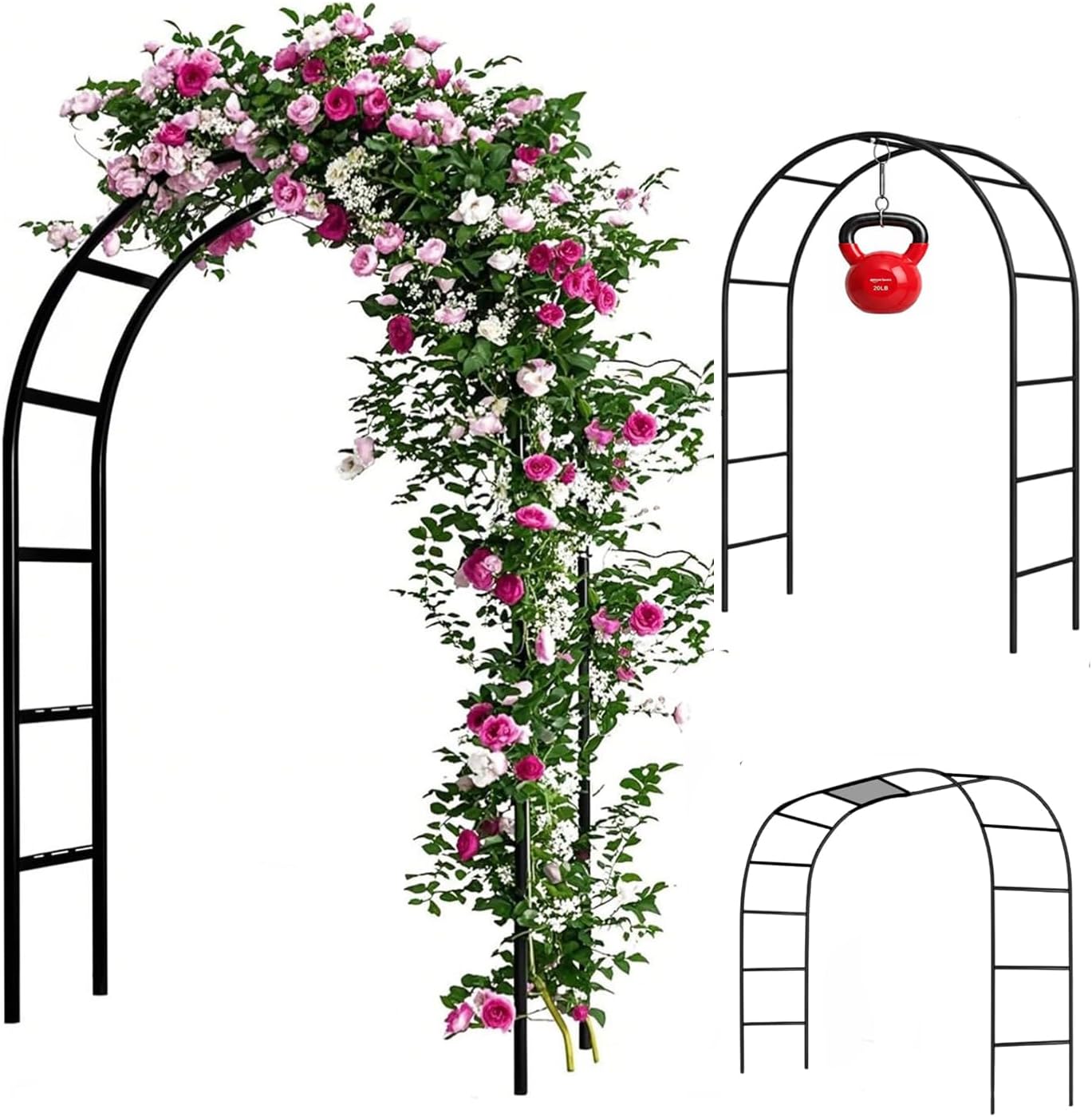
Adorox Metal Garden Arch Trellis, Powder-Coated Black
| Material Type | Metal |
|---|---|
| Finish Type | Powder Coated |
| Shape | Single Arch |
| Size | Standard |
This Adorox garden arch is a straightforward metal arbor that gives climbing roses, clematis, vines, or seasonal decorations a neat vertical framework. It arrives as sectional metal pieces with a powder-coated finish and assembles in simple steps to create a single arched entrance or focal point for a walkway, garden bed, or event backdrop. The open-frame design lets plants weave through the bars and provides height without blocking sightlines, while the powder coating helps resist rust in typical outdoor conditions. Because it is relatively lightweight and sectional, it is easy for two people to position and plant around, and it is also simple to dress with string lights or fabric for celebrations. Expect to secure it into the ground or use anchors before loading with heavy mature vines, since the slim metal sections will perform best when planted with lighter to moderate climbers rather than very heavy, established growth. Assembly is convenient but may require basic tools and a second person to steady the arch while tightening connections.
Best for: Buyers who want an attractive, easy-to-install arch to add vertical interest and support for climbing plants or seasonal decor, and who prefer a straightforward product with visible user feedback to inform the choice.
Less Ideal for: Gardeners seeking a heavy-duty permanent arbor to bear large mature vines or climbing shrubs should look for a sturdier, commercial-grade structure with integrated anchoring.
- Simple sectional design that is easy to assemble and position
- Powder-coated metal finish improves resistance to outdoor corrosion
- Open-arch framework allows vines and flowers to weave naturally and creates visual height
- Lightweight enough for two people to handle and decorative enough for events or pathways
- Relatively lightweight construction needs anchoring before supporting heavy, mature vines
- No built-in ground stakes or heavy bases included for long-term high-wind stability
Verdict: A lightweight, powder-coated metal arch that quickly creates a decorative entry or plant support for garden paths and small to moderate climbers.
HENABLE 4-Pack Metal Trellis Set for Potted Climbing Plants (15 in)

| Material | Metal |
|---|---|
| Finish Type | Lacquered |
| Number of Items | 4 |
| Included Accessories | 100 pcs ties |
These HENABLE trellises are a straightforward, no-fuss support for small potted climbers and vines. Each set includes four different decorative grid patterns made from lacquered iron and hand-welded for strength, with stakes that simply push into potting soil so no tools are required. They are intended for 5 to 8 inch planters and keep plants growing upward to reduce sagging and improve light exposure; the modern black finish works well for indoor decor or a small patio display. The build feels solid for the size and the rust-resistant paint helps longevity in humid conditions, though taller or heavier vines will need larger supports. The package also includes ties to secure stems as they grow. If you want an easy, compact way to train peas, ivy, morning glories, or small climbing houseplants, these make setup and styling quick and tidy. Expect limited height and load capacity, so use them for lightweight plants and pots rather than heavy outdoor vines.
Best for: Buyers who want an easy, low-effort way to train and display small climbing plants in indoor pots or on a small patio and prefer durable, ready-to-use supports.
Less Ideal for: Gardeners who need tall, heavy-capacity trellises for outdoor vegetable vines or large climbing roses should choose a sturdier full-size support instead.
- Simple push-in installation requires no tools
- Lacquered iron construction with hand-welded joints for durability
- Compact 15 inch height suits small indoor pots and tight patio spaces
- Includes ties to secure stems while plants climb
- Not tall or heavy-duty enough for large or vigorous vines
- Limited to small pots recommended in the product notes
Verdict: A compact, tool-free trellis set that makes training and styling small potted climbers quick and reliable.
Choosing the Right Trellis for Morning Glories: Key Factors to Consider
Structure Type and Openings
The shape and spacing of the trellis openings determine how easily morning glory vines can twine and gain purchase. Wide-meshed lattices let larger stems weave through and can support thicker growth, while finer meshes give more climbing points for younger tendrils. Panels with a regular grid pattern create predictable routes for vines, which helps even coverage and fuller flowering.
Consider the mature stem thickness and how quickly your plants grow. If you want rapid vertical coverage, choose a trellis with recurring vertical and horizontal elements so stems always find a place to wrap. Openings that are too large will let vines slip through and create heavy, unsupported bundles; openings that are too small can restrict stems or cause rubbing where they contact the material.
Material and Weather Resistance
Trellises are exposed to sun, rain, and temperature swings, so material choice affects lifespan and plant health. Metal options can offer long life but need rust-resistant coatings in humid or coastal areas. Wood looks natural and can be sturdy, but untreated wood will rot over one or two seasons depending on climate unless you choose rot-resistant species or protective finishes. Plastic and composite materials resist rot and insect damage but vary in UV stability and may become brittle over time.
Think about how long you want the structure to last and the local climate. In windy or salty environments, favor corrosion-resistant materials. If you prefer a natural aesthetic, select wood treated or naturally rot-resistant and expect periodic re-staining or sealing to keep it performing well.
Anchoring, Footing, and Wind Performance
Morning glories can create substantial sail area as they leaf out, so a trellis must be anchored to resist tipping or being torn from its footing. Ground-inserted posts need sufficient depth and, in loose soils, additional backfill or concrete footings. Wall-mounted trellises should have secure fastenings and be attached into studs or masonry. Freestanding panels may require cross-bracing or weighted bases to remain upright in gusts.
Consider prevailing winds in your garden and whether the trellis will be in an exposed bed or sheltered courtyard. For patio containers, choose bases that accept ballast or integrate with pot rims. A stable anchoring system prevents damage to vines and reduces the need for midseason adjustments.
Height, Width, and Garden Placement
Match trellis dimensions to both the planting location and the plant's growth habit. Morning glories will climb rapidly and can reach several feet in a single season, so a taller trellis speeds vertical coverage and encourages upward growth. Wider panels are better for creating screens or covering fence sections, while narrower towers work for small beds or containers.
Also plan for access when watering and deadheading. If a trellis is too tall for comfortable reach, you may need a step stool or prune lower growth to keep flowers accessible. Consider how the trellis pairs with nearby structures to avoid overcrowding and to ensure even sun exposure along the vine.
Installation and Maintenance Practicalities
Ease of installation affects how quickly the trellis becomes useful and how likely you are to maintain it. Some trellises ship as lightweight panels that simply slot into the soil, while others require assembly and hardware for mounting. If you expect to move plants or reconfigure beds seasonally, favor modular or portable designs that disassemble without damage.
Maintenance includes cleaning, tightening fasteners, resealing wood, or touching up metal coatings. Consider how easy it is to remove dead wood or to prune vines without damaging the structure. Low-maintenance options reduce season-to-season upkeep but may limit the natural look of the garden.
Best Trellis Styles for Different Garden Spots
Different garden locations call for different trellis forms. Against a sunny wall, flat panel or lattice trellises work well because they maximize vertical surface and can be securely anchored to studs or masonry. In the middle of a bed, freestanding obelisks and teepee-style supports give 360-degree access for vines and are excellent for creating a vertical focal point.
For containers on patios, slim tower trellises or ring-style supports fit in pots without taking too much root space. If your goal is a quick screen, choose wider panels or multiple modular sections that interlock to form a continuous barrier.
- Wall-mounted lattice: best for permanent vertical support and compact beds
- Freestanding obelisk: good for center-of-bed displays and even coverage
- Tower inserts: ideal for containers and small spaces
- Modular panels: useful for creating temporary screens or expanding coverage
Encouraging Even Coverage and Flowering
To get abundant blooms, guide young vines early so they spread across the trellis rather than bunch into a single mass. Train stems in different directions and tie in loose growth with soft twine until the vines start self-anchoring. This prevents shading and encourages more flowering sites.
Rotate or reposition trellises slightly if one side receives substantially more sun. Even light distribution helps the whole plant flourish and reduces the likelihood of long, bare lower stems.
- Start training stems when they are flexible, not woody
- Use soft ties to avoid cutting into tender stems
- Check ties regularly as stems thicken and adjust as needed
Protecting Trellises and Vines Through Weather
Plan for seasonal stresses like wind and heavy rain. Secure freestanding trellises with anchors or add support stakes to distribute load. In hurricane-prone or extremely windy regions, consider removing lightweight trellises before storms and reattaching afterward to avoid damaging both plants and structures.
For winter, consider whether to leave the trellis in place. Some materials can stay up year-round without issue, while others will last longer if taken down and stored in a dry place. If leaving the trellis up, prune vines back after frost to reduce windage and check attachment points for corrosion or loosening.
- Reinforce stakes and joints before peak growth season
- Inspect fasteners and coatings annually
- Remove or store delicate trellises before severe weather
Combining Trellises with Companion Planting
Trellises can be shared by compatible plants to create layered interest. Low-growing annuals at the base provide groundcover and help hide footings, while taller climbers like morning glories take the vertical space. Avoid pairing heavy vines with weaker plants that might be shaded out or smothered.
Think about root competition when planting multiple species near a single support. Use soil amendments and proper spacing to ensure all plants have access to nutrients and moisture. Shared trellising works well when plants have similar light and water needs.
- Plant low groundcover or herbs to fill the base of the trellis
- Avoid pairing two aggressive climbers on the same support
- Space plantings to reduce root competition and encourage airflow
Aesthetics and Finishing Touches
The visual style of the trellis contributes to the garden's overall look. Natural wood and rusted metal lend a rustic charm, while painted or powder-coated metal can create a crisp, modern backdrop for colorful blooms. Consider finish longevity alongside aesthetics; finishes that chip or fade may need touch-ups that alter the appearance over time.
Add simple finishing touches like planter boxes at the base or decorative climbing rings to guide growth. These elements can improve the planting environment and complement the trellis without compromising plant health.
- Choose finishes that complement surrounding hardscaping
- Use planter boxes to add soil volume for container situations
- Match trellis height and style to the garden design language
How We Chose the Best Trellis for Morning Glories
We selected trellises that work specifically with the growth habits of morning glories rather than general decorative screens. Morning glories are fast growers with twining stems that need continuous, climbable surface area and secure anchoring, so we prioritized structures that provide consistent footholds and steady support through the growing season. Our evaluation criteria covered material longevity, climbability, anchoring and stability, and installation flexibility. Material longevity includes resistance to rot, rust, and UV breakdown since these trellises remain outdoors. Climbability measures surface texture and openness so morning glory vines can grip and twine naturally without getting trapped or damaged. Anchoring and stability assess how well the trellis resists tipping or sagging under wind and plant weight. Installation flexibility looks at whether the structure can be mounted against a wall, inserted into soil, or used freestanding on patios. We excluded purely ornamental screens with no practical climbing surface and lightweight decorative items that cannot support vigorous vines. We also filtered out structures requiring complex, nonstandard tools to install. The final picks balance real-garden practicality with varied sizes and styles suitable for different planting situations.
FAQ
How tall should a trellis be for morning glories?
Morning glories grow quickly and often climb 6 to 10 feet or more in a season. Choose a trellis at least 6 feet tall for full-season displays, and consider taller supports if you want high coverage or to train vines along a wall or arbor.
Can morning glories climb wire or string trellises?
Yes. Morning glories can use wire, string, or twine as long as the material provides a consistent surface to wrap around. Avoid slick materials that repel contact and ensure wires are spaced so vines can loop and twine without passing through too-large gaps.
Do trellises need to be removed each winter?
It depends on the material and local climate. Durable metal or treated wood trellises can often remain in place, but lightweight or untreated pieces may last longer if stored. Removing dead vines and checking fastenings before winter protects the structure from added wind stress.
What is the best way to anchor a freestanding trellis?
Drive stakes or posts deep into firm soil and use cross-bracing or guy lines in exposed sites. For container trellises, use heavy pots or add ballast to the base. Anchoring prevents tipping as vines add sail area and minimizes seasonal repairs.
Will a trellis damage morning glory stems?
Most trellis materials are safe if they provide gentle support and edges are not abrasive. Smooth wood, coated metal, and soft twine are best for reducing rubbing. Inspect vines periodically and adjust ties to prevent girdling as stems thicken.
Final Verdict
Choose a trellis that balances climbable surface area, stable anchoring, and weather-resistant material for the best results with morning glories. Taller structures speed vertical coverage, while modular or container-friendly designs suit patios and small beds. Expect tradeoffs: the most durable materials may need less maintenance but offer a different aesthetic than natural wood. Prioritize climbability and anchoring first, then select a style and finish that fits your garden.
