

Note: This article contains affiliate links. If you click on these links and make a purchase, I may earn a small commission at no extra cost to you. This helps support my research and content. Read my full affiliate disclosure here.
If you want visibly faster color and fuller heads on hydrangeas, the right quick-acting fertilizer makes a difference in-season and after pruning. Fast-release formulas deliver nutrients to the root zone rapidly so plants can take them up within days rather than weeks, which is helpful when you need a short-term boost before blooms set or after transplanting. This guide covers six shortlisted fast-release fertilizer options chosen for hydrangeas and explains how we judged them on nutrient balance, salt safety, and ease of application. Read on to understand which traits matter most for different garden situations and how to use these products for strong, sustained flowering.
Top Picks at a Glance
| Best Overall The best all-around choice for most situations | Miracle-Gro Water Soluble Azalea, Camellia & Rhododendron Plant Food, 5 lb |  |
| Best Quality Built to a higher standard if you want something more solid | Jack's Classic Blossom Booster Water‑Soluble Fertilizer, 10-30-20, 8 oz |  |
| Best Value The sweet spot between price and what you get | TPS Nutrients Hydrangea Liquid Fertilizer, 8 oz |  |
| Best Budget The cheapest option that still gets the job done reliably | RAINFLOW 10-30-20 Blossom Booster Water-Soluble Fertilizer (11.28 oz) |  |
| Highest Rated A top-rated pick with lots of positive feedback | Miracle-Gro Water Soluble All Purpose Plant Food, 1.5 lb |  |
| Best Seller A high-volume bestseller chosen again and again | Miracle-Gro Watering Can Singles All Purpose Plant Food, 24 Packets |  |
Miracle-Gro Water Soluble Azalea, Camellia & Rhododendron Plant Food, 5 lb

| Item Form | Powder |
|---|---|
| Application Method | watering can or Miracle-Gro Garden Feeder |
| Target Species | Azaleas, Camellias, Rhododendrons, Gardenias, Hibiscus, Hollies, Hydrangeas, Orchids |
| Mixing Ratio | 1:144 (indoor), 1:18 (outdoor) |
| Coverage | Medium |
This water-soluble Miracle-Gro formula is designed specifically for acid-loving shrubs and flowering plants and is straightforward to use: mix into a watering can or fill a Miracle-Gro Garden Feeder and apply every 7 to 14 days while plants are actively growing. It lists a broad target range that includes azaleas, camellias, rhododendrons, gardenias, hydrangeas and even orchids and hibiscus, so you can use one product across much of an acid-loving border or collection. The powder form dissolves for quick uptake and the package provides mixing ratios for indoor and outdoor use, making dose control easy. Practical benefits are fast nutrient delivery and convenience for regular feeding of shrubs and container plantings. Limits to note are that this is a soluble feed meant for routine use rather than long-term slow release so it requires repeat applications, and it assumes you will follow the specified dilution to avoid overfeeding.
Best for: Gardeners who want a reliable, easy-to-apply feed for acid-loving shrubs and mixed container plantings and who are willing to commit to regular watering-can or feeder applications.
Less Ideal for: Those seeking a one-time, slow-release fertilizer or a product they can apply infrequently over months instead of every few weeks.
- Formulated specifically for acid-loving plants like azaleas and rhododendrons
- Water-soluble powder gives fast nutrient availability when mixed and applied
- Clear mixing instructions for indoor and outdoor use simplify dosing
- Works with a watering can or compatible Miracle-Gro Garden Feeder for convenience
- Requires repeated applications every 7–14 days during active growth
- Not a slow-release soil amendment for long-term feeding
Verdict: A straightforward, water-soluble fertilizer that delivers fast, targeted nutrition for acid-loving plants when used regularly.
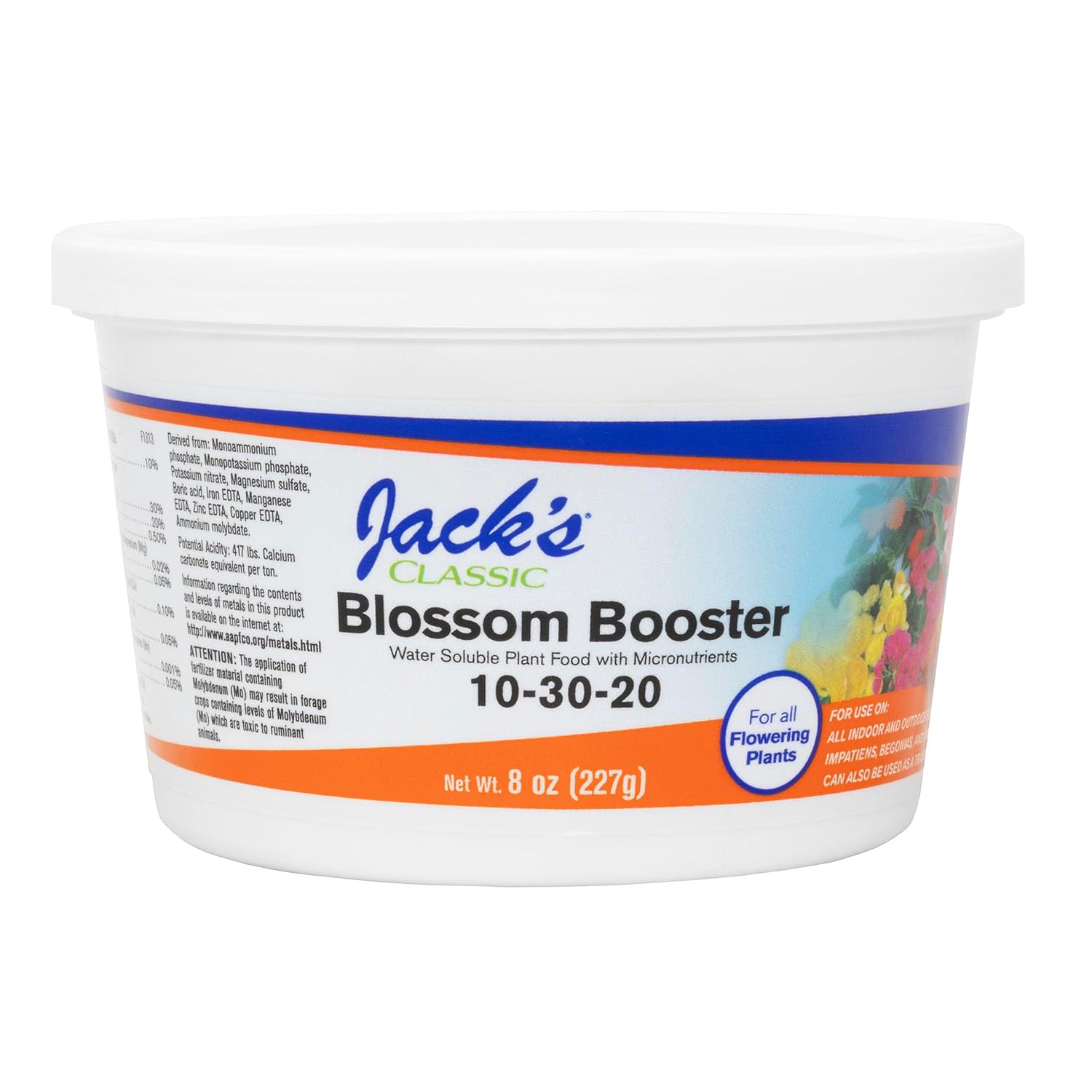
Jack's Classic Blossom Booster Water‑Soluble Fertilizer, 10-30-20, 8 oz
| Item Form | Powder |
|---|---|
| Application Method | watering or spraying on leaves |
| Specific Uses For Product | Plant Growth |
| Mixing Ratio | 10-30-20 |
Jack's Classic Blossom Booster is a water‑soluble powdered fertilizer designed to boost flowering by supplying a 10-30-20 NPK balance and micronutrients in a concentrated form. Gardeners mix the powder with water and apply it as a root feed or foliar spray; the included measuring spoon makes dosing straightforward. In practice it produces multiple gallons of solution from a small tub, so a single 8 oz container will treat many plants when used according to the mix rate. The high middle number signals a focus on bloom development, which is useful for encouraging more and brighter hydrangea flowers when used during the flowering season. Because it is fast‑acting and soluble, results can appear quicker than with granular slow‑release formulas, but it requires regular applications and careful measuring to avoid overfeeding. It is not a one‑and‑done soil conditioner so expect to feed on a schedule, and foliar application needs attention to timing and dilution. For growers who want a targeted, performance‑driven bloom booster, this delivers controllable, visible effects when applied correctly.
Best for: Gardeners focused on maximizing flower number and color who are comfortable with regular, measured feedings and want a controllable, fast‑acting bloom booster for shrubs like hydrangeas.
Less Ideal for: Casual gardeners who prefer low‑maintenance, slow‑release products or people who do not want to follow a regular feeding schedule.
- High phosphorus formula (10-30-20) tailored to encourage flowering and stronger blooms
- Water‑soluble powder yields many gallons of feed from a small container for efficient use
- Includes micronutrients so plants receive a broader nutrient profile than NPK alone
- Suitable for foliar or root applications for flexible feeding strategies
- Measuring spoon included for consistent, repeatable mixing
- Requires recurring applications and consistent measuring rather than single long‑term feeding
- Powder form needs careful mixing and handling to avoid spills or uneven dosing
Verdict: If you want a fast, controllable bloom booster to intensify hydrangea flowering, this concentrated water‑soluble 10-30-20 formula delivers visible results when used on a routine feeding schedule.
TPS Nutrients Hydrangea Liquid Fertilizer, 8 oz

| Item Form | Liquid |
|---|---|
| Application Method | Dilute in water and apply to soil |
| Coverage | Medium |
| Mixing Ratio | 1:200 |
| Unit Count | 8 Fluid Ounces |
This 8 oz liquid fertilizer is made specifically for hydrangeas and is mixed into water at a 1:200 ratio for monthly applications from early spring through late summer. It supplies balanced, fast-absorbing nutrients intended to encourage fuller blooms, richer flower color, stronger leaf and stem growth, and healthier root development. Typical use is diluting 5 mL per gallon of water and applying to soil around garden beds or container plants; the small concentrated bottle is convenient for spot treatments and patio pots. Practical benefits include targeted nutrition for acid-loving shrubs, an easy dilution guide, and a fast-absorbing liquid formula that reduces mess compared with granular feeds. Limitations are the small 8 oz volume, which means multiple bottles are needed for larger gardens, and the product assumes plants are not drought stressed when applied. You must follow safety instructions like wearing gloves and avoid use on dry plants. For spring feeding routines this product fits into a simple monthly schedule and pairs well with routine watering and soil care.
Best for: Gardeners who want a simple, targeted monthly fertilizer to boost hydrangea blooms and foliage in beds or patio containers and prefer a fast-absorbing liquid feed.
Less Ideal for: People managing large landscapes who need bulk fertilizer or those seeking an all-purpose feed for non-acid-loving plants.
- Formulated specifically for hydrangeas and other acid-loving flowering shrubs
- Fast-absorbing liquid that is easy to dilute and apply
- Clear mixing ratio and monthly application schedule for spring through summer
- Suitable for both garden beds and containers
- Small 8 oz bottle may not be economical for large gardens or many plants
- Not intended for use on drought-stressed or dry plants
Verdict: A concentrated, easy-to-use liquid feed that simplifies monthly spring-to-summer care for hydrangeas and patio shrubs.
RAINFLOW 10-30-20 Blossom Booster Water-Soluble Fertilizer (11.28 oz)

| Item Form | Granules |
|---|---|
| Application Method | Water-soluble |
| Target Species | Flowers |
| Unit Count | 11.28 Ounce |
This RAINFLOW 10-30-20 Blossom Booster is a small, water-soluble granule fertilizer formulated to push bloom production and enhance flower color for azaleas, hydrangeas, bougainvillea and similar ornamentals. You mix measured granules into water and apply to soil or potted plants, where the high phosphorus ratio supports bud set and visible flowering without complex application. The blue granules dissolve quickly for fast absorption, making it handy for seasonal feeding or targeted bloom boosts before shows or heavy flowering periods. Its compact 11.28 ounce package is convenient for home gardeners and greenhouse users who need a single-season supply or want to test a bloom-specific feed. Expect noticeably stronger bloom development when used during the flowering stage, but you will need to reapply according to plant needs since the small unit covers limited area compared with larger commercial bags. Also it is focused on flowering benefits rather than balanced all-season nutrition, so pair it with general-purpose feeds for vegetative growth if needed.
Best for: Home gardeners on a budget who want an easy-to-mix bloom booster for potted plants, beds, or seasonal flowering displays and who prioritize visible flower production over all-purpose feeding.
Less Ideal for: Large-scale gardeners or those seeking a single all-purpose feed for both foliage and long-term soil building should consider bulk or balanced fertilizers instead.
- High phosphorus NPK (10-30-20) targets bud set and stronger blooms
- Water-soluble granules dissolve quickly for fast nutrient uptake
- Compact 11.28 oz package is easy to store and carry for home gardeners
- Blue granules make measuring and mixing more straightforward
- Small unit size provides limited coverage for larger gardens
- Formulation emphasizes flowering so it is not a complete all-season fertilizer
Verdict: Choose this compact 10-30-20 water-soluble booster when you want an inexpensive, easy-to-apply feed that quickly increases bloom size and color.
Miracle-Gro Water Soluble All Purpose Plant Food, 1.5 lb

| Item Form | Powder |
|---|---|
| Application Method | Watering Can |
| Target Species | For all flowers, vegetables, trees, shrubs and houseplants |
| Mixing Ratio | 24-8-16 |
Miracle-Gro Water Soluble All Purpose Plant Food is a powder concentrate you mix with water to give a quick nutrient boost to flowers, vegetables, houseplants, shrubs and trees. It is typically dissolved in a watering can or used with a compatible garden feeder to soak soil at the base of plants, delivering nitrogen-heavy nutrition that shows effects faster than granular fertilizers. Notable features include an easy scooping method for indoor and outdoor dosing, compatibility with containers and in-ground planting, and clear directions for feeding every one to two weeks. In practice this makes the product a convenient option when you want visible growth and greener foliage quickly, and the 1.5 lb container covers roughly 600 sq. ft. Important limitations are that it is a fast-release, high-nitrogen formula best used as a regular quick feed rather than a long-term slow-release solution, and it requires careful measuring to avoid overfeeding. For routine maintenance combine with good watering and follow the label to avoid nutrient imbalance.
Best for: Buyers who prefer proven, easy-to-use feeding routines and want noticeable growth quickly for a variety of garden and houseplants, guided by established usage directions and broad user experience.
Less Ideal for: Gardeners seeking a single, long-term slow-release solution or those who prefer organic or low-nitrogen fertilizers for sensitive plantings should consider alternative products.
- Water-soluble powder starts working quickly at the roots when mixed and applied
- Clear, simple dosing for indoor and outdoor use with included scoop guidance
- Suitable for a wide range of plants including vegetables, flowers, shrubs and houseplants
- Covers a large area from a small container (about 600 sq. ft. per 1.5 lb)
- Fast-release formula means benefits are short-term compared with slow-release granular fertilizers
- Requires precise measuring and regular reapplication to avoid overfeeding
Verdict: A reliable, fast-acting water-soluble plant food for gardeners who want easy, repeatable feeding and quick visible results.
Miracle-Gro Watering Can Singles All Purpose Plant Food, 24 Packets

| Number of Packs | 24 |
|---|---|
| Unit Count | 10.24 Ounce |
| Item Form | SOLID |
| Application Method | watering can |
| Mixing Ratio | 1 teaspoon per 1 gallon of water |
Miracle-Gro Watering Can Singles are single-use, pre-measured fertilizer packets intended to make feeding roses and other garden plants simple and reliable. To use, tear a packet into a watering can, add the specified amount of water, then apply the solution while watering; the manufacturer recommends feeding every 7 to 14 days during active growth. The packets remove measuring errors and mess, which helps prevent accidental overfeeding. Because the formula is labeled for all flowers, vegetables, trees and shrubs, it fits into regular rose care routines for bloom and bush development. Practical benefits include instant solubility, clear application instructions for outdoor and indoor containers, and consistent coverage per packet for about 10 sq. ft. of garden. Limitations are that you must keep up with the every-1–2-week schedule for best results and that the product is sold as a general-purpose feed rather than a rose-specific bloom booster, so dedicated rosarians seeking targeted NPK ratios might prefer a specialized rose fertilizer.
Best for: Gardeners who want a low-risk, no-mess way to feed roses and mixed flower beds as part of routine watering and prefer simple, foolproof dosing.
Less Ideal for: Specialist rose growers seeking a targeted bloom-boosting formula or those who want a single, slow-release application instead of frequent liquid feedings.
- Pre-measured packets eliminate measuring and reduce mess and dosing errors
- Water-soluble formula mixes quickly in a watering can for immediate application
- Labeled for use on flowers, roses, shrubs, trees and vegetables so it suits mixed beds
- Clear directions for indoor and outdoor application and coverage per packet
- General all-purpose formula rather than a rose-specific NPK for bloom boosting
- Requires regular reapplication every 7–14 days to maintain results
Verdict: If you want a safe, fuss-free way to feed roses while you water, these pre-measured soluble packets make regular feeding simple and consistent.
Choosing the Right Fast Release Fertilizer for Hydrangeas: Key Factors to Consider
Nutrient Ratio and Bloom Promotion
Hydrangeas benefit from a fertilizer that prioritizes phosphorus and potassium relative to nitrogen when bloom development is the goal. A balanced but bloom-focused N-P-K helps encourage flower bud formation and sustained head size. Too much nitrogen will push leaf growth at the expense of flowers, while too little phosphorus can limit bud set.
Inspect label ratios and consider whether the formula is designed specifically for flowering shrubs. For quick-acting products, look for clear immediate-availability phosphorus content. If soil test results are available, match the product to the measured deficiencies rather than applying high-phosphorus mixes blindly.
Salt Index and Root Safety
Fast-release fertilizers can carry a higher salt load, which raises the risk of root desiccation or burn when applied improperly. Hydrangeas have relatively shallow root zones and can be sensitive to concentrated salts, so choosing a product with a lower salt index or using conservative application rates reduces stress.
To manage risk, always water thoroughly after applying a concentrated fast-release fertilizer unless the label instructs otherwise. Avoid placing granules directly against stems or roots. In pots or containers, reduce rate or frequency because salts build up more quickly in confined media.
Solubility and Uptake Speed
How a fertilizer dissolves determines how fast hydrangeas can use the nutrients. Water-soluble powders and readily soluble granules provide rapid uptake, showing results in days to a couple of weeks. Conversely, coarse granules that dissolve slowly will not deliver the immediate spike you might be seeking.
Consider whether you need an immediate pulse for a specific event, such as coaxing blooms after pruning, versus a gentler, repeatable application schedule. Solubility influences both speed and application method, for instance whether the product is suitable for foliar feeding, root drench, or broadcast application.
Application Method and Timing
Fast-release fertilizers come in several forms: water-soluble powders, liquid concentrates, and soluble granules. The form affects how you apply the product and how easy it is to dose correctly. Liquids and soluble powders are convenient for quick soil drenches or foliar feeds, while soluble granules can be broadcast and watered in.
Timing matters too. For hydrangeas, apply fast-release formulations when new buds are forming or after pruning to support recovery. Avoid late-season heavy feeding that can stimulate tender growth before winter. Follow label guidance for intervals and maximum seasonal rates to prevent overfertilization.
Acidity and Soil pH Considerations
Hydrangea bloom color and nutrient availability are influenced by soil pH. Some fast-release fertilizers contain ammonium-based nitrogen or sulfate that can slightly acidify the root zone over time, which may interact with desired bloom color effects for certain hydrangea types. If you are trying to manage color, pair fertilizer choice with a pH plan.
If soil pH is a concern, check whether the fertilizer has acidifying tendencies and monitor soil tests seasonally. Avoid making pH assumptions; instead, test and adjust intentionally with amendments separate from fast-acting fertilizer treatments.
Container Versus In-Ground Use
Containers concentrate salts and nutrients, making fast-release fertilizers riskier in pots than in beds. In containers you may need to cut recommended rates and increase irrigation frequency to flush accumulated salts. In-ground hydrangeas have more soil volume to buffer rapid nutrient pulses and salt loads.
If you tend container hydrangeas, favor water-soluble forms you can apply as diluted feeds and rinse periodically. For in-ground plants, broadcast soluble granules and water them in to move nutrients into the root zone while minimizing hotspots.
When to Use Fast-Release Fertilizer on Hydrangeas
Fast-release fertilizer is best used for targeted, short-term needs: stimulating bud set, recovering after transplanting, or giving a late-spring boost when growth is active. It is not a substitute for regular soil improvement or long-term fertility planning.
Apply fast-acting feeds during active growth periods and avoid heavy applications just before dormancy. If you need reliable, long-term feeding, consider pairing occasional fast-release applications with a baseline organic or slow-release program.
- Use after pruning or transplanting to speed recovery.
- Apply in spring as buds form, not late fall.
- Water in after application to reduce burn risk.
Safe Application Techniques
To protect roots and prevent localized burn, dissolve water-soluble products thoroughly and distribute evenly across the root zone. For granules, broadcast lightly and water immediately to move nutrients away from contact points on stems and roots.
In containers, cut the recommended rate by a third to half and perform periodic flushes with plain water. Always follow label dilution rates for foliar sprays and do a small patch test if you have never used a product on your plants.
- Avoid piling granules at the base of the stem.
- Always water in after applying concentrated granules.
- Reduce rate for container-grown hydrangeas.
Matching Fertilizer Form to Gardening Workflow
If you prefer quick foliar feeding, choose a product labeled for foliar use and follow dilution guidance. For gardeners who like to water in feeds, water-soluble powders or concentrates offer controlled dosing. If you want a quick broadcast application, choose granules that dissolve readily when watered.
Consider how often you will apply fertilizer. Liquids and soluble powders are ideal for repeat, measured feedings, while soluble granules work well for occasional boosts where you can irrigate them into the soil.
- Foliar sprays provide rapid uptake but require careful dilution.
- Water-soluble concentrates are accurate for repeated feeding schedules.
- Soluble granules are simple for spot or bed treatments.
Monitoring Plant Response and Avoiding Overfeed
After applying a fast-release fertilizer, watch for faster leaf growth and earlier bloom development, which indicate uptake. Also monitor for signs of stress such as leaf tip burn or faded foliage, symptoms that may indicate excess salts or improper application.
Keep records of application dates and rates, especially when using multiple feeding methods. If you see negative symptoms, flush the soil with water to leach excess salts and pause further feeding until the plant recovers.
- Look for increased bud swelling within one to two weeks.
- Leaf scorch can signal over-application or inadequate watering.
- Flush soil if you suspect salt buildup.
Combining Fast-Release Feeding with Soil Health Practices
Fast-release fertilizers are a short-term tool. For long-term vigor, combine them with practices that build soil organic matter, such as adding compost or mulches that retain moisture and release nutrients slowly. Healthy soil buffers rapid nutrient pulses and reduces burn risk.
Use soil tests annually to guide both quick feeds and broader amendment plans. Correcting deficiencies with targeted soil amendments reduces reliance on frequent high-rate fast-acting feeding.
- Layer compost or organic mulch to slow nutrient loss.
- Use fast-release products only as a supplement to soil improvements.
- Test soil pH and nutrients periodically to guide choices.
How We Chose the Best Fast Release Fertilizer for Hydrangeas
We selected fast-release fertilizers that suit hydrangeas by focusing on horticultural traits that influence bloom timing and plant safety. Key evaluation criteria included nutrient formulation, how quickly nutrients become available after application, salt index and root safety for acid-loving shrubs, and the clarity of application instructions for home gardeners. We also considered fertilizer particle size or solubility because that affects uptake speed and potential root burn risk. We excluded slow-release, controlled-release, or organic-only formulas that do not deliver a rapid nutrient spike, since the roundup is strictly for quick-acting products. We avoided products lacking clear N-P-K ratios or application guidance. Practicality in common garden contexts was important, so products meant only for commercial greenhouse injection or professional turf systems were filtered out. The end result emphasizes rapid availability, predictable nutrient balance for flowering, and straightforward, safe application methods aligned with home gardening practices.
FAQ
How often should I apply a fast-release fertilizer to hydrangeas?
Frequency depends on the product and form. Many fast-release liquid or soluble options are applied every two to four weeks during active growth. Granules used as quick boosts are usually applied less often. Always follow label directions and err on the side of lower frequency if you are unsure.
Can I use fast-release fertilizer on container hydrangeas?
Yes, but reduce the rate and feed more frequently at lower concentrations. Containers concentrate salts, so dilute solutions and flush the potting mix occasionally to prevent buildup. Monitor plants for signs of salt stress.
Will fast-release fertilizer change hydrangea bloom color?
Fertilizer itself does not directly set bloom color for varieties that respond to soil aluminum and pH. However, certain nitrogen forms may slightly alter soil acidity over time, which can influence color in sensitive varieties. Manage pH separately if color control is your goal.
Is foliar feeding a good way to deliver fast nutrients?
Foliar feeding can supply nutrients quickly, especially micronutrients, but it complements rather than replaces root feeding. Use foliar sprays as a short-term measure and adhere to dilution rates to avoid leaf damage.
What are signs I overfertilized my hydrangeas with a fast-release product?
Watch for leaf margin browning, curled or wilted leaves, slowed growth, or poor flowering. These can indicate salt injury or nutrient imbalance. If these signs appear, flush the soil with water and pause further fertilizer applications.
Final Verdict
Fast-release fertilizers are a valuable tool when you need a rapid nutrient boost for hydrangea flowering or recovery, but they are not a long-term soil management solution. Prioritize products with a bloom-friendly nutrient balance, low salt risk, and a soluble form that matches how you feed plants. Balance short-term applications with soil-building practices and careful timing. When you choose a fast-release product, focus on correct rate, proper watering after application, and monitoring plant response to get the quick results you want without stressing the shrubs.
