

Note: This article contains affiliate links. If you click on these links and make a purchase, I may earn a small commission at no extra cost to you. This helps support my research and content. Read my full affiliate disclosure here.
If you want insect protection without persistent chemicals, choosing a biodegradable bug spray matters for both your health and the life in your garden. The right spray reduces bites and crop damage while breaking down quickly so pollinators and beneficial insects face less exposure. This guide shortlists the top biodegradable options gardeners rely on and explains why each type earned a spot. We evaluated sprays for how long they last in active use, how clean and transparent their ingredient lists are, and how they perform around plants, children, and pets. Below you will find concise product summaries, practical advice for application, and the criteria we used to pick the six top contenders.
Top Picks at a Glance
| Best Quality Built to a higher standard if you want something more solid | Badger Bug Spray DEET-Free Citronella — Family Size 8 fl oz |  |
| Best Value The sweet spot between price and what you get | Badger Bug Spray Travel Size, DEET-Free Citronella (2.7 fl oz, 2-Pack) |  |
| Best Budget The cheapest option that still gets the job done reliably | OFF! Botanicals Plant-Based Insect & Mosquito Repellent, 4 oz |  |
| Highest Rated A top-rated pick with lots of positive feedback | Lemongrass Farms Trek Natural Insect Repellent Spray (8 oz, 2-pack) |  |
| Most Popular A crowd favorite that many people choose with confidence | Badger Bug Spray DEET-Free Citronella (4 fl oz) |  |
| Best Seller A high-volume bestseller chosen again and again | Murphy's Naturals Lemon Eucalyptus Insect Repellent Spray (4 fl oz, 2-pack) |  |
Badger Bug Spray DEET-Free Citronella — Family Size 8 fl oz
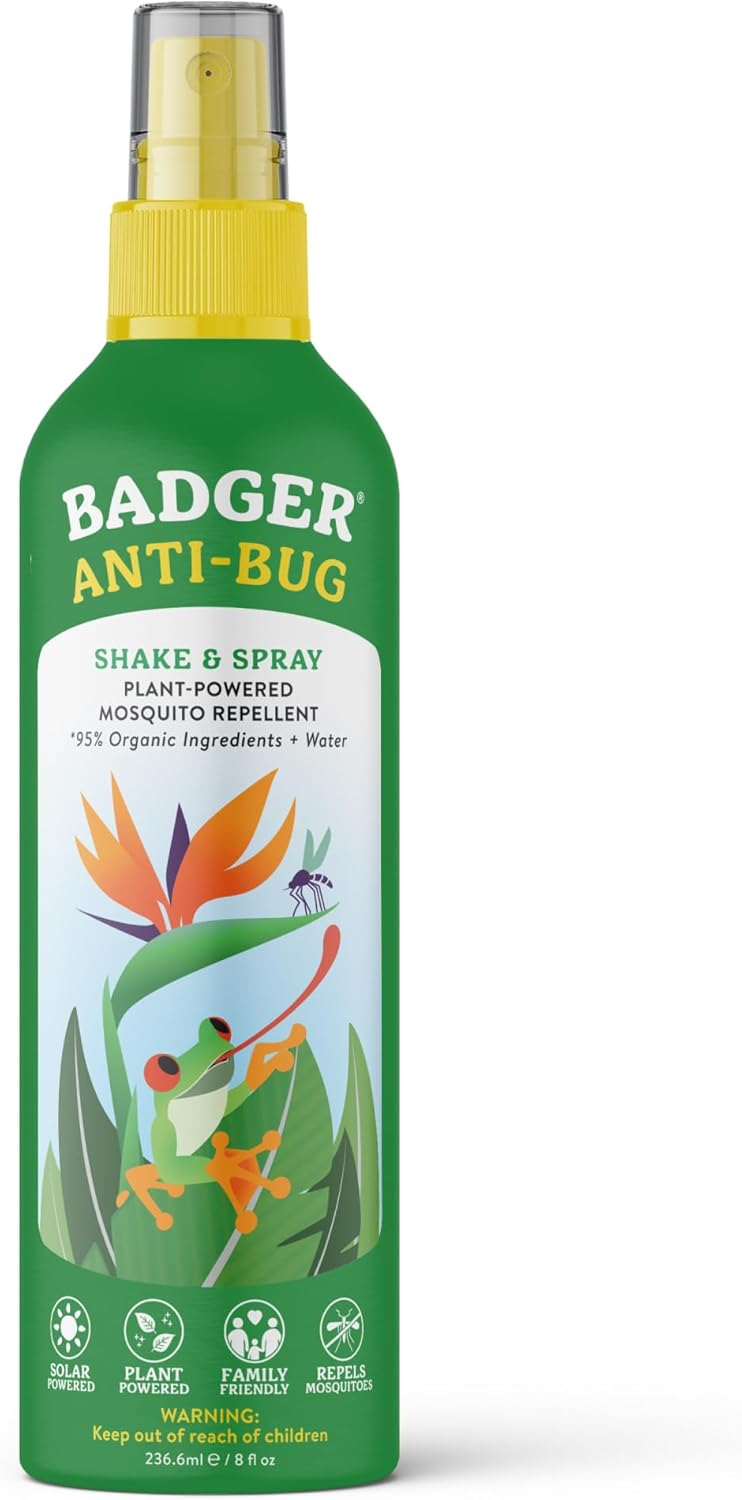
| Net volume | 8 fl oz |
|---|---|
| Active ingredients | Citronella, Lemongrass, Rosemary, Cedar, Geranium, Peppermint (plant oils) |
| Protection duration | About 3 hours |
| Bottle type | Pump spray in recyclable aluminum |
Badger Bug Spray is a family-friendly, DEET-free insect repellent formulated from cold-pressed plant oils and essential oils such as citronella, lemongrass, rosemary, and cedar. It is sold in a recyclable aluminum pump bottle and is meant to be sprayed on exposed skin or clothing; the manufacturer recommends shaking and reapplying approximately every three hours for continued protection. The product is lab tested to provide at least three hours of mosquito protection and is designed to be gentle on sensitive skin, which makes it suitable for use on children when applied carefully to hands first for facial application. Because it separates naturally, the bottle must be shaken before use and the mist pump requires periodic priming. The scent is woody-citrus rather than chemically medicinal, which many users prefer, but being an all-natural formula it is only tested for mosquitoes so effectiveness against ticks and other pests may be more variable. The aluminum bottle is travel friendly and less likely to leak than some aerosols, but this is a pump spray rather than an aerosol can so coverage is a finer mist and may require more frequent reapplication in heavy insect pressure.
Best for: Buyers who prioritize natural, low‑chemical repellents and want a family‑friendly spray that smells pleasant and is easy to carry for hikes, backyard use, and travel.
Less Ideal for: People who need long‑duration protection against ticks or heavy insect pressure, or who prefer aerosol sprays for broader, faster coverage, should consider different products.
- Plant-based, DEET-free formula made with recognizable essential oils
- Lab-tested to provide about three hours of mosquito protection
- Recyclable aluminum pump bottle that is travel friendly and less prone to leaking
- Gentle formulation suitable for family use and sensitive skin when used as directed
- Efficacy claims are tested primarily on mosquitoes so protection against ticks and other biting insects is less certain
- Natural formula separates and requires shaking before each use and occasional pump priming
Verdict: A pleasant-smelling, family-safe natural bug spray that delivers about three hours of DEET-free mosquito protection in a travel‑friendly aluminum pump bottle.
Badger Bug Spray Travel Size, DEET-Free Citronella (2.7 fl oz, 2-Pack)
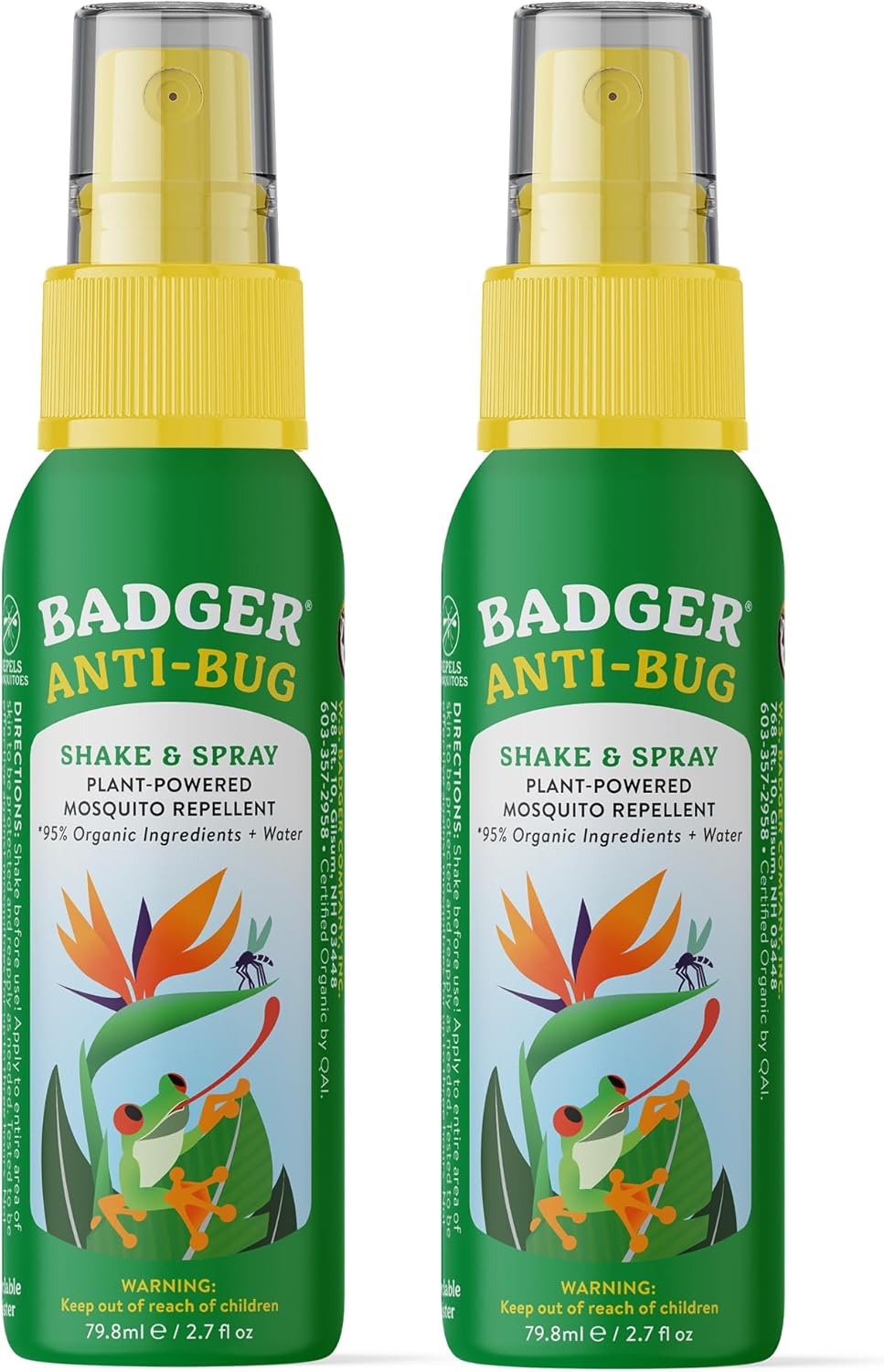
| Active Ingredients | Organic citronella, lemongrass, cedarwood, rosemary, soybean, castor, geranium, peppermint oils |
|---|---|
| Volume per Bottle | 2.7 fl oz (travel size) |
| Protection Time | Up to 3 hours |
| Packaging | 100% recycled aluminum bottle |
Badger Bug Spray is a compact, pump-spray insect repellent formulated from organic essential oils such as citronella, lemongrass, cedar and rosemary to keep mosquitoes and other biting insects at bay. In practice you shake the bottle, mist on exposed skin or onto clothing from a short distance, and reapply as needed—Badger reports about three hours of protection per application based on independent testing. The travel-friendly 2.7 fl oz aluminum bottles are TSA-compatible and fit easily in daypacks and carry-ons, while the pump delivers a fine, non-aerosol mist. The formula is family-friendly and free of DEET and other synthetic repellents, and the packaging is made from 100% recycled aluminum produced in a solar-powered facility. Expect a noticeable citrus-woody scent from the essential oils and natural separation of oil and water so shaking before use is required. Because efficacy claims are limited to mosquitoes, people in high tick or no-see-um areas may need a different, longer-lasting product for full protection.
Best for: Buyers who want a compact, travel-ready, non-chemical mosquito repellent that balances portability and natural ingredients for short outings and trips.
Less Ideal for: People who need multi-hour, high-intensity protection for long wilderness trips or for tick-heavy areas should consider longer-lasting or specifically tested alternatives.
- DEET-free formula made from organic essential oils
- Travel-size 2.7 fl oz bottles are TSA-friendly and packable
- Pump spray applies as a fine mist rather than an aerosol
- Certified family-friendly and suitable for use on children with proper application
- Sustainable packaging: 100% recycled and recyclable aluminum produced in a solar-powered facility
- Protection duration is about three hours and may be shorter in heavy mosquito pressure
- Natural oil-and-water formula separates and requires shaking before use
Verdict: A compact, DEET-free travel spray that gives convenient, natural mosquito protection for short trips and everyday travel.
OFF! Botanicals Plant-Based Insect & Mosquito Repellent, 4 oz

| Active Ingredient | p-Menthane-3,8-diol 10% |
|---|---|
| Net Volume | 4 ounces |
| Intended Use | Repels mosquitoes, black flies, gnats and no-see-ums |
| Application | Pump spritz bottle, topical use |
OFF! Botanicals is a compact, pump-spray mosquito repellent that relies on a plant-derived active ingredient (p-menthane-3,8-diol at 10%) to keep biting insects at bay. You use it like a typical topical repellent: shake, hold 4 to 6 inches from skin, spray with a sweeping motion and rub in where appropriate; reapply every two hours or after swimming or heavy sweating. Its clear formula contains no added dyes and the small 4 oz bottle is easy to tuck into a daypack for hiking, camping, or backyard use. The product documentation gives clear safety and application guidance, including face-application advice and precautions for young children. Limitations are the short reapplication interval needed for continued protection and the explicit warning not to use on children under three. If you prefer longer-lasting DEET-based options or want an aerosol mist, this pump spritz trades duration for a botanically inspired active ingredient and portability.
Best for: Shoppers who want a plant-based, portable mosquito repellent for short outdoor outings like hiking, camping, picnics, or backyard use and prioritize a simple, dye-free formula.
Less Ideal for: People who need multi-hour protection without frequent reapplication or who prefer long-lasting DEET-based repellents for heavy mosquito pressure.
- Botanically inspired active ingredient (p-menthane-3,8-diol) rather than synthetic DEET
- No added dyes for less visible residue on skin and clothing
- Convenient 4 oz pump-spray bottle that is easy to carry and apply
- Clear usage directions and safety information provided on the label
- Requires reapplication every two hours or after water exposure for continued protection
- Not labeled for use on children under three years old
Verdict: A portable, dye-free plant-based spritz that gives convenient short-duration protection for budget-minded outdoor users.
Lemongrass Farms Trek Natural Insect Repellent Spray (8 oz, 2-pack)

| Active Ingredients | Geranium 1.30%, Lemongrass 0.75%, Peppermint 0.75%, Cedarwood 0.75% |
|---|---|
| Type | Continuous non‑propellant spray |
| Intended Use | On skin and gear for outdoor activities |
| Made in | USA |
Lemongrass Farms Trek is a DEET-free insect repellent formulated from plant-based ingredients and four essential oils (geranium, lemongrass, peppermint and cedarwood). It comes in a continuous, non‑propellant spray can that is easy to tuck into a backpack for hiking, camping, picnics or backyard evenings. The formula is largely water and plant moisturizers so it feels light on skin and leaves a lemon‑mint scent rather than the medicinal smell of chemical repellents. Practical strengths are ingredient transparency and portability for outdoor activities where users prefer botanical protection and want to avoid aerosol propellants. Important limitations are that active oil concentrations are modest compared with standard DEET or picaridin products, so protection time can be shorter and you may need more frequent reapplication in high mosquito pressure. As with any topical essential oil product, patch testing is wise for sensitive skin or young children. For buyers prioritizing a biodegradable, non‑aerosol option, Trek offers a reliable natural alternative with clear labeling and easy on‑the‑go use.
Best for: Buyers who want a biodegradable, plant-based repellent for routine outdoor activities and who prioritize ingredient transparency and non‑aerosol packaging.
Less Ideal for: People who need long‑duration, high‑intensity protection against mosquitoes in heavy‑infestation areas should consider stronger repellent chemistries designed for extended wear.
- DEET-free formula made from recognizable plant-based ingredients and essential oils
- Continuous non-propellant spray that is portable for hiking and camping
- Light, water-based feel with a pleasant lemon-mint scent
- Clear ingredient list and branding aimed at family outdoor use
- Lower concentrations of active essential oils compared with conventional DEET formulas, so shorter protection window may require reapplication
- Not specifically labeled for infants or pets so extra caution and patch testing needed
Verdict: A portable, DEET‑free spray that gives reliable natural protection for everyday outdoor use when you prefer biodegradable, non‑aerosol formulations.
Badger Bug Spray DEET-Free Citronella (4 fl oz)

| Volume | 4 fl oz |
|---|---|
| Active ingredients | Citronella, Lemongrass, Cedarwood, Rosemary (plant oils) |
| Application | Pump spray fine mist |
| Packaging | Aluminum bottle, infinitely recyclable |
Badger Bug Spray is a natural, DEET‑free insect repellent formulated with cold‑pressed plant oils and essential oils such as citronella, lemongrass, cedarwood and rosemary. It is packaged in a recyclable aluminum pump bottle and applied as a fine mist to exposed skin or clothing; the brand recommends shaking before use because the formula can separate. In practice it gives light to moderate protection against mosquitoes for roughly three hours between applications, so it is suitable for walks, backyard activities, and short hikes. The pleasant woody citrus scent makes it more tolerable than many synthetic repellents and the travel‑friendly bottle is easy to carry. Limitations are that efficacy claims are tested on mosquitoes rather than a broad set of biting insects, reapplication is needed for multi‑hour outings, and the oil‑and‑water formula can leave a faint residue on fabric if sprayed too closely. For buyers prioritizing plant‑based ingredients and a tolerable scent over long‑lasting single application protection, this performs well.
Best for: Buyers who want a natural, skin‑friendly mosquito repellent they can use for short outdoor outings and who prioritize plant‑based ingredients and scent when choosing a spray.
Less Ideal for: People who need long‑duration, single‑application protection for multi‑hour activities or who require proven repellency against ticks and other non‑mosquito biting insects.
- Plant‑based DEET‑free formula using recognized repellent essential oils
- Pleasant woody citrus scent that is less harsh than chemical sprays
- Travel‑friendly, leak‑resistant aluminum pump bottle that is infinitely recyclable
- Independently tested to provide about three hours of mosquito protection
- Protection duration is limited to around three hours and requires reapplication for extended exposure
- Efficacy testing focuses on mosquitoes so results for ticks or no‑see‑ums are not guaranteed
- Oil and water can separate so product must be shaken and may stain fabric if sprayed too closely
Verdict: Choose this spray if you want a proven, DEET‑free, plant‑based mosquito repellent with a pleasant scent for short outdoor use.
Murphy's Naturals Lemon Eucalyptus Insect Repellent Spray (4 fl oz, 2-pack)

| Active ingredient | Oil of Lemon Eucalyptus (30%) |
|---|---|
| Protection duration (mosquitoes) | Up to 6 hours |
| Protection duration (ticks) | Up to 4 hours |
| Formulation | Spray, non-greasy |
This two-pack of Murphy’s Naturals spray uses a 30% oil of lemon eucalyptus formulation to repel mosquitoes and ticks without DEET or picaridin. You apply it as a light mist to exposed skin, clothing, or gear and reapply according to activity and label directions. The formula is non-greasy, has a fresh lemon scent, and is safe to use on camping and outdoor equipment because it does not damage plastics or fabrics. Practical benefits include family-friendly labeling, EPA registration of the active ingredient, and reasonably long protection windows for a plant-based repellent. Limitations to note are that protection on ticks is shorter than for mosquitoes so more frequent reapplication may be needed in high-risk tick areas, and the product must be applied correctly to exposed skin and avoided near eyes or broken skin. Users sensitive to essential oils should test a small skin area first.
Best for: Buyers who prioritize natural, EPA-registered alternatives to synthetic repellents and want a family-friendly spray for everyday outdoor activities like hiking, camping, and backyard use.
Less Ideal for: People who need the longest-possible continuous protection in heavy tick or mosquito zones or who require an odorless prescription-strength repellent should consider stronger alternatives.
- Uses 30% oil of lemon eucalyptus, an EPA-registered plant-based active ingredient
- DEET- and picaridin-free formula that is less likely to damage gear or plastics
- Non-greasy, light lemon scent that wears comfortably for outdoor use
- Family-friendly directions suitable for kids and adults when used as directed
- Tick protection duration is shorter than mosquito protection and may require more frequent reapplication
Verdict: A reliable plant-based spray for buyers who want EPA-registered, DEET-free protection for family outdoor use.
Choosing the Right Biodegradable Bug Spray: Key Factors to Consider
Ingredient Transparency
Knowing exactly what is in a biodegradable bug spray is the first step toward safe garden use. Look for full ingredient lists rather than vague 'natural' or 'plant-based' claims. Transparency lets you avoid compounds that may irritate skin, harm pets, or damage tender seedlings. It also makes it possible to assess whether the active ingredients are truly biodegradable or if they merely use marketing buzzwords.
Clear labeling helps when you need to check for potential interactions with other garden inputs such as foliar feeds or fungicides. When ingredients are disclosed, you can research persistence, breakdown pathways, and any known toxicity to non-target species.
Biodegradability and Environmental Impact
Biodegradable products differ in how and how quickly they break down. A material that degrades under ideal laboratory conditions may persist longer in cool, shaded garden soils. Check whether the product cites specific biodegradation standards or independent testing. Rapid breakdown reduces long-term exposure for soil microbes and aquatic life if runoff happens during rain.
Consider the environmental footprint of inert ingredients and solvents as well. Some carriers accelerate breakdown while others linger. Balancing effective short-term control with minimal long-term residues is central to selecting a truly low-impact spray.
Residual Protection Time
How long the spray protects after application determines how often you need to reapply and how well it controls persistent pests. Short-residual sprays require more frequent applications but tend to reduce environmental accumulation. Longer-residual formulas can be more convenient, especially for high-traffic areas, but they also increase exposure for beneficial insects.
Match the residual profile to your situation. Use short-residual sprays around flowering plants and in vegetable beds where pollinators visit. Longer-residual options may be appropriate for seating areas or pet runs where flowering is minimal.
Plant Safety and Phytotoxicity
Some biodegradable ingredients can still cause leaf burn, discoloration, or reduced fruit set if applied in full sun, during heat stress, or to sensitive species. Check label guidance for restrictions on use with edible crops, seedlings, or ornamental varieties known to be sensitive. Test-spray a small area or subset of plants before full application, especially when using a new formulation.
Timing matters too. Apply sprays in the evening or early morning to lower the risk of phytotoxicity and to reduce exposure to active pollinators.
Pollinator and Beneficial Insect Safety
One of the main reasons gardeners choose biodegradable sprays is to protect pollinators and beneficial insects. Even biodegradable actives can be harmful if they are broad-spectrum or if applied to blooms when bees and other pollinators are active. Prioritize sprays with lower toxicity ratings to bees and with clear instructions to avoid flowering plants during application.
Consider integrating sprays into an overall pest management plan that includes physical barriers, hand removal, and targeted treatments to limit non-target impacts.
Ease of Application and Compatibility
How a product is applied affects whether you will actually use it correctly. Ready-to-use pump or trigger bottles are convenient for spot treatments, while hose-end applicators and concentrated solutions work better for larger areas. Check compatibility with common sprayers if you plan to dilute concentrates.
Also consider storage and shelf life. Biodegradable formulations may separate or lose potency over time. Look for products with clear storage instructions and stable emulsions to reduce hassle in the garden.
When to Use Biodegradable Sprays in the Garden
Biodegradable bug sprays are best for situations where you need temporary insect suppression without long-lasting residues. Use them around patios, play areas, and vegetable beds where human or pet contact is likely and you want minimal lingering chemicals.
Reserve targeted treatments for outbreaks or for spot control of chewing pests and nuisance insects. For routine maintenance, combine sprays with cultural controls such as proper watering, mulching, and encouraging predator populations.
- Apply in low wind and during cooler parts of the day to limit drift and pollinator exposure
- Avoid spraying open flowers to protect bees and other pollinators
- Use spot treatments rather than broad blanket spraying when possible
Application Tips for Best Results
Shake or mix concentrates according to label instructions to ensure even distribution of active ingredients. For foliar sprays, aim for light, even coverage on both the top and underside of leaves where many pests hide.
Reapply based on the product's stated residual time and after heavy rain. For edible plants, pay attention to pre-harvest intervals and wash produce before eating.
- Test a small number of plants before treating an entire bed
- Wear basic protection like gloves if you have sensitive skin
- Keep pets and children away from treated areas until spray has dried
Integrating Sprays Into an IPM Routine
Biodegradable sprays are one tool within an integrated pest management approach. Use monitoring and threshold-based decisions to avoid unnecessary applications. Physical controls, companion planting, and selective traps can reduce reliance on sprays.
When sprays are needed, choose products targeted to the specific pest type and use application timing to minimize impacts on beneficial species.
- Inspect plants weekly to catch problems early
- Combine biological controls with spot treatments for effective long-term management
- Rotate active ingredients when possible to reduce the chance of resistance
Using Biodegradable Sprays Around Edibles and Ornamentals
Not all biodegradable sprays are labeled for use on food crops. When using on edibles, prioritize products with explicit guidance for fruit and vegetable application and observe any required pre-harvest intervals.
For ornamentals, watch for label notes about sensitive species and avoid applying during heat stress. Where possible, remove or shade blooms before spraying to protect pollinators.
- Rinse harvested produce before consumption
- Avoid spraying during bloom unless the product is known to be pollinator safe
- Use spot treatments on ornamentals to preserve beneficial insect habitat
Storing and Mixing Biodegradable Formulations
Store spray concentrates in a cool, dry place out of direct sunlight and away from drains. Biodegradable actives can break down if exposed to heat or moisture, reducing effectiveness over time.
Follow dilution and mixing directions precisely. Some biodegradable ingredients require emulsifiers or stabilizers to remain effective in water. Improper mixing can lead to separation and uneven application.
- Label any mixed solutions with the date and dilution ratio
- Do not dispose of leftover diluted spray into garden beds; follow disposal guidance
- Rinse application equipment thoroughly after use to prevent residue buildup
How We Chose the Best Biodegradable Bug Spray
We focused on practical, garden-tested characteristics that matter when selecting a biodegradable bug spray. Our editorial filters emphasized ingredient safety and biodegradability certifications, measurable residual protection time, formulation suitability for use on or near edible plants, and evidence of minimal harm to pollinators and beneficial insects. We also considered user-friendly features such as spray delivery, scent profile, and skin contact safety for gardeners and family members. Excluded items were conventional synthetic insecticides and products lacking clear biodegradability data or full ingredient disclosure. We avoided options that explicitly recommend avoiding use near flowering plants or that require protective gear for typical backyard application. The final list favors products with clear labels, laboratory or third-party biodegradability claims, and demonstrated efficacy in common garden scenarios. These criteria align with the scoring metrics used for each entry: Ingredient Transparency, Biodegradability & Environmental Impact, Residual Protection Time, Plant and Pollinator Safety, and Ease of Application.
FAQ
Are biodegradable bug sprays safe for bees?
Often they are less harmful than synthetic long-lasting insecticides, but safety depends on the active ingredients and how they are applied. Avoid spraying blooms and apply during times when pollinators are inactive to reduce risk.
Can I use biodegradable sprays on vegetables?
It depends on the product label. Some biodegradable sprays are approved for use on edible crops with specified pre-harvest intervals. Always follow label directions and rinse produce before eating.
How often will I need to reapply a biodegradable spray?
Residual protection varies by formulation and environmental conditions. Many biodegradable sprays require more frequent reapplication than synthetic alternatives, especially after heavy rain or irrigation.
Do biodegradable sprays eliminate the need for other pest controls?
No. They are most effective as part of an integrated pest management plan. Cultural controls, monitoring, and physical removal remain important to reduce overall pest pressure.
Are biodegradable sprays safe for children and pets?
Many formulations are designed to be gentler, but safety varies. Follow label precautions about reentry times and avoid using around young children or pets until the spray has dried.
Will biodegradable sprays harm soil health?
Most biodegradable options are formulated to minimize soil impacts, but persistence and breakdown pathways differ. Choosing products with verified biodegradability and avoiding overuse helps protect soil microbial communities.
Final Verdict
Prioritize sprays that balance short residual protection with transparent, biodegradable ingredient lists to limit exposure for pollinators, pets, and soil life. Match the product's residual profile and application format to where you will use it in the landscape, and integrate sprays into monitoring and cultural controls to reduce overall applications. Gardeners who focus on ingredient disclosure, labeled use on edibles, and application timing will get effective pest control while minimizing non-target harm. Use the decision factors above to choose the biodegradable bug spray that fits your garden priorities and routine.
